
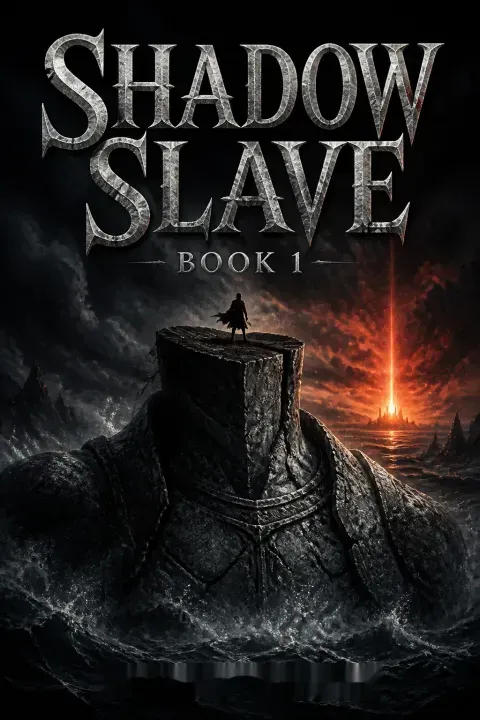


Plot Summary
Coffee Before the Long Sleep
At seventeen, Sunless1 has little to lose: he is poor, isolated, and certain that the Nightmare Spell’s sleepiness means death. He spends most of his savings on real coffee, discovers he hates it, then reports to the police rather than letting a monster emerge from his sleeping body.
An older officer restrains him and explains that the First Nightmare is a trial, not a simple fight, and that its people may feel real even if the Spell calls them illusions. Sunless1 has no family to contact. As exhaustion overwhelms him, the officer asks him to survive long enough for help to arrive. Sunless1 falls asleep, and the Spell carries him into a world he has never seen.
Sunless begins from a form of fatalism that is both practical and protective. Poverty has taught him not to expect rescue, so surrendering to the police is less an act of hope than an effort to control the manner of his likely death. The officer’s warning introduces the book’s central uncertainty: the Spell frames its trials as artificial, but their emotional and bodily costs resist that label. Sunless’s first response to danger is not heroism. It is wary observation, a habit formed by deprivation that will later prove more useful than optimism.
Slave Beneath the Black Moon
Sunless1 wakes shackled to a slave caravan climbing a frozen mountain. The Spell assigns him Temple Slave, an Aspect described as useless, while his rare Fated attribute draws unlikely events toward him. His shadow affinity lets him see at night, but offers no obvious weapon.
Among the chained prisoners are a violent convict called Shifty9 and an educated, courteous man called Scholar;8 a young soldier, Auro of the Nine,6 briefly offers Sunless1 water before a veteran slaver drives him off.
Sunless1 recognizes the camp from a vision of bones covering the road. Then rocks and ice crash down, followed by a many-eyed tyrant. One slave dies beneath the creature’s claws and begins transforming into a larva. Sunless1 wraps the broken chain around it and strangles it.
The Nightmare strips away the fantasy of a fair starting line. Sunless is not merely underpowered; the trial places him in a social position designed to deny agency, then gives him an Aspect that seems to confirm his worthlessness. Yet his attention to the caravan’s details becomes a resource: he recognizes the doomed campsite and anticipates danger. The transformation of a dead prisoner into a monster also collapses the distance between human victim and inhuman threat. Survival here requires Sunless to read people and systems as carefully as he reads physical danger.
The Wagon's Iron Noose
The first larva’s death brings no respite. More corpses mutate while the Mountain King tears through the caravan, and Auro6 cuts down the beasts near Sunless1 before throwing him the key to his shackles. Sunless1 frees Shifty9 and Scholar,8 then refuses to flee because the bonfire is their only protection from the cold. He studies the battlefield and sends the others to remove the wedges holding the supply wagon.
After fastening a loop of chain around the tyrant’s neck, he helps roll the wagon toward the cliff. Auro6 keeps the monster occupied long enough for the wagon to fall, dragging it over the edge. Sunless1 reasons that the creature survived its earlier leap and may return, so the survivors must climb toward the mountain pass.
Sunless’s first major victory comes through coordination rather than strength. He turns restraints, a wagon, a slope, and Auro’s combat skill into a weapon larger than any one survivor could wield. The chain is especially charged: it begins as an instrument of enslavement, then becomes the means by which the tyrant is pulled from power. Sunless’s insistence that the monster may still be alive shows the beginning of a different kind of courage. He does not mistake a successful maneuver for safety, and his refusal to trust appearances keeps the group moving.
A Mountain of Betrayals
The wagon is gone with most of the supplies, and the road over the mountain has collapsed. Scholar8 remembers an older pilgrim path, so the four survivors begin a punishing climb. Shifty9 grows sick from the altitude and falls to his death; the remaining men leave his body behind. They eventually find the path, but Sunless1 notices that Shifty’s9 corpse has vanished, proof that the Mountain King is still following them.
Scholar8 proposes using Sunless,1 already covered in blood, as bait. Auro6 instead identifies Scholar8 as a disgraced duke and breaks both his legs, then drags him away to draw the monster. Sunless1 is left with Auro,6 who admits he also plans to kill him, believing it kinder than letting the tyrant eat him.
The mountain turns survival into a moral sorting mechanism. Shifty’s death is not a dramatic sacrifice but the consequence of a body pushed beyond its limits, while Scholar’s polished manners conceal a willingness to trade another person’s life for his own. Auro complicates the distinction between goodness and violence: he protects Sunless from Scholar, then prepares to kill him under a claim of mercy. Sunless’s distrust is vindicated, but the scene offers no easy comfort. Everyone has reasons, and reasons do not erase the fact that someone else pays the price.
Blood on Shadow Altar
Sunless1 reveals that he poisoned the soldiers’ water with berries Scholar8 had warned were deadly. Shifty9 and Scholar8 succumbed, but Auro’s6 awakened core makes him immune enough to attack. Sunless1 escapes the cave by ringing the silver bell he received after killing the dying veteran slaver. The sound draws the blind Mountain King to Auro,6 while Sunless1 climbs toward the ruined temple on the summit.
Near death from cold and wounds, he collapses on its altar; his blood activates the faint divinity in his soul, and the dead Shadow God’s power tears the tyrant apart. The Spell appraises Sunless’s1 treachery as extraordinary, grants him the True Name Lost from Light, and evolves his worthless Aspect into a Divine one called Shadow Slave.
Sunless survives by refusing the moral categories his companions offer him. He poisons the water before anyone has openly betrayed him, then uses the bell not as a weapon but as a way to redirect a predator. His tactics are cruel, yet they emerge from a world where dependence has repeatedly become a trap. The altar changes the scale of the story: Sunless’s blood links a supposedly useless temple slave to divine power. The reward is not uncomplicated triumph. His new Aspect contains an inborn bond that could make another person his master, so power arrives with the threat of losing the freedom he has fought to preserve.
A Divine, Dangerous Boon
Back in the police station, Sunless1 wakes healed and learns from Master Jet,4 an Ascended government officer, that he has become a Sleeper. His Divine Aspect gives him Shadow Control, and his True Name could allow someone to bind him if they learned it.
Then his Flaw asserts itself: he cannot lie, and questions can force truths out of him. Jet4 recommends the Awakened Academy, where he can receive food, shelter, and preparation before the winter solstice.
She also warns him to keep his Aspect and Flaw private because people can exploit such knowledge. Sunless1 accepts the Academy’s offer, choosing its survival training over comfort or celebration. He enters with no possessions, no family backing, and one urgent priority: learn enough to live.
The reward reverses Sunless’s material circumstances while deepening his psychological danger. His Aspect offers an extraordinary capacity, but its hidden bond threatens the autonomy he values most; his Flaw attacks the very deception that has kept him alive. Jet’s advice recognizes a social truth of the new world: information about a power can be as dangerous as the power itself. Sunless’s choice of the Academy is therefore not an embrace of belonging. He accepts institutional help as a tactical bargain, taking shelter and instruction while guarding the parts of himself that others could use against him.
The Academy's Worst Sleeper
At induction, Sunless1 meets Cassia,3 a blind Sleeper, and Nephis,2 a quiet silver-haired girl2 whose True Name makes her the top-ranked student. Caster,5 a trained Legacy with an Ascended Aspect, ranks just below her.
Sunless’s1 truth-bound Flaw turns ordinary introductions into disasters, so he deliberately cultivates a reputation as a rude, delusional pervert. He boasts truthfully about killing a tyrant and receiving a Divine Aspect, phrasing the facts so extravagantly that the other students dismiss him as unstable. This lets him conceal his real achievements and True Name.
He also discovers that his shadow can scout through other shadows and strengthen his body or equipment. Instead of pursuing combat classes, he commits to wilderness survival, the preparation most relevant to his childhood outside the city’s protections.
The Academy makes speech a battlefield before the students even enter the Dream Realm. Sunless cannot lie, but he learns that truthful statements can still produce false conclusions when timing and framing are controlled. His performance is not a cure for the Flaw; it is an adaptation that preserves some room to maneuver. The student hierarchy also reproduces the inequalities of the outside world, with family resources shaping preparedness and reputation. Sunless responds by hiding in plain sight. He chooses to look ridiculous rather than impressive, because being underestimated is safer than being understood.
Hollow Before Solstice
Teacher Julius7 gives Sunless1 intensive lessons in shelter, fire, navigation, food, and the old languages used by the Spell. Sunless1 practices secretly with his shadow and observes Nephis’s2 remarkable fighting skill.
He learns that she belongs to the famed Immortal Flame clan and that Caster5 recognizes her as its last heir. As the winter solstice approaches, Instructor Rock11 leads the Sleepers past the Hollow, bodies whose souls have been lost in the Dream Realm.
The sight strips away the Academy’s heroic image: surviving the journey is not guaranteed, and failure may leave the body alive but empty. On his seventeenth birthday, Sunless1 enters a medical pod with the others. The Spell sends him into the Dream Realm, where he wakes alone in a lightless sea.
Preparation here is less about mastery than about correcting inherited blind spots. Sunless has street instincts, but not the practical knowledge needed to live outside a city; Julius gives him tools that privilege rarely teaches explicitly because privilege can outsource survival. The Hollow show the cost of failure in a form more unsettling than death: a person can remain physically present after their inner life is gone. Nephis’s reputation and Caster’s deference hint at histories Sunless cannot yet read. The solstice therefore marks both a threshold into danger and the end of the Academy’s illusion that training can make anyone safe.
The Headless Knight's Shore
Sunless1 surfaces in a starless ocean, escapes a gigantic sea creature, and shelters on the neck of a colossal headless knight statue. At dawn the tide drains away, exposing a labyrinth of crimson formations and hundreds of armored scavengers. Sunless1 chooses to cross the maze toward a distant light rather than remain trapped on the statue.
A wounded scavenger ambushes him; he kills it with a bone spear through its eye and gains an Awakened sword and Echo. Soon after, he finds Nephis2 guiding the blind Cassia3 with a golden rope. Cassia3 recognizes his voice, and Nephis2 allows him to join them. The three share water and a camp, then disclose enough of their abilities to cooperate, though Sunless1 and Nephis2 keep their Flaws secret.
The Forgotten Shore forces Sunless to exchange familiar urban survival for an environment governed by tides, darkness, and scale. His first choice to leave the statue matters as much as his kill: safety without possibility begins to resemble another kind of confinement. The meeting with Nephis and Cassia creates a fragile social unit, but it is not built on complete trust. Each reveals selected capabilities while withholding vulnerabilities. The golden rope is both practical aid and visible dependence, a sharp contrast to Sunless’s instinct to move alone. The group becomes possible not because their differences disappear, but because each person can contribute something the others lack.
The Centurion's Broken Shell
Nephis2 teaches Sunless1 that combat is about killing or preventing a killing, then trains him to repeat basic sword strikes until technique becomes instinct. Together they hunt scavengers, using her precision as bait and his shadow as scout and finisher.
Cassia’s3 visions point toward a human castle to the west. A storm catches the group in the labyrinth, and they race rising water to the cliffs; Nephis2 hauls Sunless1 from the flood with the rope. There they face an armored centurion.
Sunless’s1 Echo and Nephis’s2 sword help bring it down, but the creature nearly crushes him. Nephis2 heals his shattered body through a flame that burns her as she uses it. The group gains armor and confidence, but also learns how quickly cooperation can become dependence.
The group’s growth is measurable in practiced action: Sunless stops treating skill as a gift reserved for elites and builds it through repetition under pressure. Nephis’s lesson on combat strips away ceremonial ideas of honor and focuses attention on consequences. Yet their victory is not individualistic. Sunless’s scouting, Nephis’s fighting, Cassia’s information, and the Echo’s strength combine into a capacity none possesses alone. Nephis’s healing makes the cost of her power visible, complicating the image of effortless competence that first intimidated Sunless. The storm and the fight teach the same lesson: survival depends on accepting help without mistaking dependence for surrender.
The Tree's False Paradise
The group reaches the Ashen Barrow, where a vast black tree grows above dead coral and a metal-armored Carapace Demon receives offerings from lesser creatures. Cassia’s3 visions reveal that the demon once suffered a wound that left its chest armor weak. Sunless’s1 plan draws the demon away with a false centurion, then uses fire to summon a horror from the sea.
After that creature mauls the demon, Nephis2 pierces its exposed weakness and kills it. The friends eat the tree’s fruit, which grants strength and makes the island feel safe. In reality, the Soul Devourer is erasing their memories and enthralling them. Cassia3 briefly warns Sunless1 to remember five, but the warning soon vanishes from his mind.
The Soul Tree’s trap is powerful because it offers genuine relief. Its fruit nourishes the body, the island keeps ordinary monsters away, and the group can finally stop fighting for a moment. The coercion works by making captivity feel like care, not by imposing obvious pain. Sunless’s tactical success against the Carapace Demon is therefore followed by a subtler defeat: he mistakes comfort for safety and forgets what he already knows. Cassia’s compressed warning demonstrates how little agency remains once memory itself is under attack. The tree does not merely threaten their lives; it tries to remove the capacity to want anything beyond its shelter.
A Boat Made of Demon
A drop of ichor from the Vile Thieving Bird’s egg gives Sunless1 the Blood Weave lineage and lets him perceive hidden details in the Spell’s design. While examining his Attributes, he discovers the obscured label Enthralled and learns that the Soul Devourer is turning the group into thralls.
Cassia’s3 warning returns: five is the clue that helps him resist the tree’s mental pull. Nephis,2 briefly lucid, agrees that distance is their only escape and gives him names that will make her listen if she forgets again.
Sunless1 persuades her to build a vessel from the Carapace Demon’s armor, spine, and Cassia’s3 wind-making staff. When Nephis2 forgets the plan, he breaks his finger to restore focus, then forcibly carries the resistant Cassie3 to the boat as the tide rises.
Memory becomes a material resource in this section. Sunless’s new perception lets him see what the Spell conceals, but pain is still required to keep his own thoughts from slipping away. His choice to break his finger is a brutal act of self-preservation, while carrying Cassie against her wishes forces a harder question: when does rescue become coercion? The scene echoes the bonds and commands in his Aspect, but reverses their direction. Sunless uses force to free his friends from a power that has rewritten their desires. The escape begins as an ethically compromised act because the tree has made consent unreliable.
The Hand Above the Abyss
The demon-built boat carries the three west, and distance finally breaks the Soul Tree’s enthrallment. Then tentacles seize the hull. Nephis2 is dragged beneath the waves, and the vessel splinters. Sunless1 reaches a stone hand rising from the sea, but turns back rather than abandon Cassie.3
He finds her caught by a tentacle and cuts her free with the Midnight Shard. As they are nearly crushed in the depths, a burst of white light drives the sea horror away. Sunless1 swims with Cassie3 to the hand, where Nephis2 later climbs out of the water gravely mangled.
Her own white flame reconstructs her body, leaving her unconscious for two days. When she wakes, they see the city wall on the crater’s far side. Cassia’s3 vision has led them to the castle, but not to a Gateway.
Sunless’s return for Cassie marks a change in what survival means to him. Earlier, he treated self-preservation as the only reliable moral rule; now he risks his life because he chooses not to leave someone behind. Nephis’s return is not a clean rescue: her healing power saves her, but the process is violent and costly. The city wall offers the group a destination, not an answer. Their arrival completes the physical journey Cassia foresaw while withholding the expected release from the Dream Realm. Hope is fulfilled in its narrowest sense and denied in its larger promise.
The Cathedral's New Hermit
The castle proves to be full of Sleepers but has no Gateway, leaving its residents trapped on the Forgotten Shore. After an unspecified falling-out, Sunless1 leaves and survives alone among the city ruins. He hides in a cathedral beside a Black Knight,13 a deadly devil that patrols the hall and kills intruders.
Sunless1 hunts weaker monsters at night, gathers nearly four hundred shadow fragments, and stores more than a hundred soul shards. When six of Gunlaug’s12 armed followers find him and demand his Memories, he kills their leader with a returning kunai and flees into the cathedral.
The Black Knight13 slaughters the pursuing group. Sunless1 watches from above, then realizes the killings will draw attention. He remains alive, wealthy by the city’s standards, and newly exposed to human consequences.
Sunless’s solitude is both refuge and rationalization. He enjoys the freedom of answering to no one, yet the Black Knight’s presence means even his private sanctuary depends on a violent guardian he cannot control. His accumulated shards give him material security without belonging, a reversal of the scarcity that shaped his childhood. The encounter with Gunlaug’s followers shows that human danger has followed him into the ruins: his skill can end an immediate threat, but it cannot erase the social consequences. The story closes not with escape from the Dream Realm, but with Sunless settled into a precarious life whose apparent independence may soon attract scrutiny.
Analysis
Shadow Slave builds its fantasy around a conflict between survival and self-determination. Sunless1 enters the story believing that staying alive is the only measure that matters, a belief shaped by poverty, abandonment, and repeated exposure to people who treat weakness as permission to exploit. His first victories validate that worldview: he poisons water, manipulates enemies, and survives by anticipating betrayal. Yet the story gradually makes pure self-preservation feel inadequate. He returns for Cassie3 in the sea not because it is strategically safe, but because he chooses to. That choice marks a shift from merely resisting death to deciding what kind of person survival is meant to preserve.
The book’s systems turn psychology into plot mechanics. Sunless’s1 Flaw makes language dangerous, so he discovers that truthful framing can deceive without becoming a lie. The Soul Devourer intensifies the same problem at a larger scale: it does not simply imprison the group, but alters what they remember and want. Its paradise is coercive precisely because its victims experience the coercion as comfort. Against that force, memory becomes agency. Cassie’s3 warning, Sunless’s1 protected recollections, and his willingness to endure pain all function as ways to keep a self intact.
The relationships resist easy sentiment. Nephis’s2 help is genuine but tied to an uncompromising private purpose; Cassia’s3 dependence does not cancel her insight; Sunless’s1 distrust is both a defense and a barrier. Their teamwork is not a rejection of individual strength. It reveals that capable people survive by combining distinct strengths while accepting that trust remains risky. The ending extends this tension into the city: Sunless1 has gained resources and skill, yet chooses isolation after finding no Gateway and suffering an unspecified rupture. His refuge may look like freedom, but the Black Knight,13 Gunlaug’s12 power, and the arrival of armed strangers show that no private sanctuary is beyond consequence.
Review Summary
Shadow Slave receives mostly positive reviews, praised for its world-building, character development, and unique plot. Readers appreciate the dark fantasy elements, complex characters, and engaging storyline. Some criticize inconsistent character behavior and overuse of certain plot devices. The novel's pacing, vivid imagery, and foreshadowing are highlighted as strengths. While some find it juvenile or mediocre, many consider it one of the best web novels they've read, comparing it favorably to other popular works in the genre.
People Also Read




Characters
Sunless
The Fated SurvivorBorn into the impoverished outskirts, Sunless approaches danger with suspicion, dry humor, and a survival instinct sharpened by years of scarcity. He reads people quickly because trusting the wrong person has always carried a cost. His cleverness is practical rather than polished: he turns chains, shadows, and misdirection into tools when stronger opponents have the advantage. Socially, he is guarded and often inept, but not incapable of attachment; his loyalty becomes clearest when it conflicts with his instinct to protect himself. The tension between autonomy and connection drives him. He wants power partly to escape dependence, yet the people he chooses to protect make solitary survival feel increasingly insufficient.
Nephis
The Relentless HeirNephis is a disciplined, formidable young woman whose bearing can appear cold because she struggles to communicate and show emotion. Her confidence comes less from ease than from a willingness to endure discomfort and repeat difficult work until she improves. She is an exceptional fighter, yet does not treat strength as a reason to abandon people who need help. Cassie3 is her close companion, while Sunless1 becomes an uneasy ally whose caution challenges her appetite for risk. Nephis carries the weight of a distinguished family legacy, but her private aims matter more to her than social approval. Her combination of fierce purpose and awkward vulnerability makes her difficult to read and harder to dismiss.
Cassia
The Blind OracleCassia is a blind young Sleeper whose quiet manner can conceal sharp perception and emotional courage. She relies on a staff, a guiding rope, and the people she trusts, but she is not simply passive or dependent. Her sensitivity to hidden patterns gives the group access to knowledge they could not obtain by observation alone. She is affectionate toward Nephis2 and gradually builds a distinct bond with Sunless1, whose bluntness can be more reassuring than polished sympathy. Cassia’s vulnerability makes her acutely aware of the burden she places on others, yet she continues to participate, interpret, and choose. Her central struggle is to claim agency while living in a world that often measures usefulness by physical independence.
Master Jet
The Outskirt MasterAn Ascended government officer from the outskirts, Master Jet watches over Sunless1 during his First Nightmare and guides him through the transition to Academy life. Her directness is tempered by an understanding of how poverty limits preparation and choices. She does not romanticize the Awakened profession, and her warnings focus on practical risks: information can be weaponized, and wilderness skills may matter more than flashy combat training. Jet gives Sunless1 help without pretending that institutions can guarantee his safety. Her own disciplined service suggests a strong sense of duty, but her candid manner leaves room for skepticism about the systems she works within.
Caster
The Polished LegacyCaster is a well-trained Sleeper from an Awakened clan, with an Ascended Aspect and a polished, courteous manner. His friendliness does not erase the calculation beneath it; he observes status and capability closely, as someone raised to expect danger and responsibility. He recognizes Nephis’s2 family significance and treats her with deference, while his remarkable speed makes him a natural center of attention among the students. Sunless1 regards him with wary curiosity because Caster’s calm resembles the practiced composure of dangerous people. Caster represents the advantages of inherited preparation, but also the pressure to measure oneself against exceptional peers.
Auro of the Nine
The Soldier With A DutyAuro is a young Imperial soldier whose polished appearance and skill with a sword initially suggest a conventional hero. He shows Sunless1 a moment of kindness by offering water, then proves capable of swift, ruthless violence. Auro acts according to a duty he believes exceeds his own survival, and he judges people by what they have done rather than by their current vulnerability. That sense of justice can protect the powerless, but it does not make him gentle or uncomplicated. His contrast between courteous restraint and decisive force gives Sunless1 an early lesson in how easily virtue and danger can occupy the same person.
Teacher Julius
The Wilderness TutorTeacher Julius is an enthusiastic Awakened instructor who regards practical knowledge as a form of protection. His wilderness course ranges from fire-making and food preparation to navigation and ancient languages, and his patience lets Sunless1 learn what ordinary schooling never supplied. Julius is excitable, talkative, and sometimes indiscreet, but his teaching is rooted in experience rather than classroom prestige. He understands that a Sleeper can die from exposure before ever meeting a monster. His relationship with Sunless1 offers a rare model of mentorship that is generous without being sentimental.
Scholar
The Smiling PrisonerScholar is an educated, dignified prisoner who speaks with the calm authority of someone accustomed to being listened to. He offers practical observations about the mountain and its dangers, making himself initially appear dependable. Beneath that polish is a calculating survivalist who assesses people according to their usefulness. His contrast with Shifty’s9 open aggression demonstrates that danger does not always announce itself loudly. Scholar is most revealing when circumstances become desperate: his refined manners do not prevent him from treating another person as expendable.
Shifty
The Desperate ConvictShifty is a quick-eyed, foul-tempered prisoner who masks fear with insults and bravado. He is openly opportunistic, eager to claim whatever might improve his odds, and suspicious of anyone who appears weaker than himself. His roughness makes him easy to dismiss beside Scholar’s8 civility, but both men are responding to the same brutal economy of survival. Shifty’s bluntness at least makes his motives visible. He serves as an early warning that desperation can turn fellow victims into competitors.
Rain
The Missing SisterRain is Sunless’s1 younger sister, separated from him before the story begins. His memories of her are brief but emotionally charged, surfacing when Cassia’s3 dependence recalls their childhood closeness. Rain represents a family bond Sunless1 cannot easily discuss and a past he cannot simply recover by becoming stronger.
Awakened Rock
The Academy InstructorRock is a formidable Academy instructor who welcomes the Sleepers and teaches them how Nightmares differ from the wider Dream Realm. His blunt account of death, Gates, and the Hollow is intended to replace youthful confidence with informed caution. He represents the institution’s effort to prepare students while acknowledging that preparation cannot promise survival.
Gunlaug
The Castle's False KingGunlaug rules the human stronghold on the Forgotten Shore and demands tribute from the Sleepers who depend on its walls. Though he appears chiefly through the system his followers enforce, his power shapes the castle’s social order. He embodies the way safety can become a commodity controlled by someone willing to make the vulnerable pay for shelter.
The Black Knight
The Cathedral WardenThe Black Knight is a towering, silent guardian in dark armor who patrols a ruined cathedral and kills intruders. Sunless1 cannot tell whether the creature possesses humanlike thought, which makes its behavior difficult to predict. Its presence offers him protection from other monsters, but that protection depends on staying out of its path. The knight embodies the uneasy bargain at the heart of Sunless’s1 later refuge: safety purchased by proximity to another lethal force.
Plot Devices
The Nightmare Spell
Trials With Lasting CostsThe Nightmare Spell infects people through unnatural sleep and sends chosen Aspirants into trials drawn from the Dream Realm. Surviving the First Nightmare makes a person a Sleeper and grants an Aspect, a Flaw, and access to later stages of the Spell. The trials are presented as tests, but the people and pain within them feel real enough to shape a survivor. Beyond the First Nightmare, Sleepers must navigate the Dream Realm itself, where no promise of fairness applies. The Spell structures the world’s social order, because Awakened powers help defend humanity from monsters, while every new ability also brings a cost.
Fated and the Flaw
Power With A PriceSunless’s1 Fated attribute draws unlikely good and bad events toward him, making his life less predictable rather than simply fortunate. His Divine Aspect allows him to control and strengthen shadows, but its innate Shadow Bond could make him obedient to anyone who learns his True Name. His Flaw, Clear Conscience, prevents him from lying and can force him to answer questions. Sunless1 adapts by shaping truthful answers to mislead listeners and hiding his most important information. Together, these mechanics make self-knowledge and secrecy central survival skills. This device description reveals significant plot information.
Memories and Shadow Fragments
Rewards Become ResourcesThe Spell may grant Memories, magical objects that can be summoned from the user’s soul, and Echoes, forms of defeated Nightmare Creatures that can serve their owner. Ordinary Awakened strengthen their cores with soul shards, which also function as currency. Sunless’s1 unusual Shadow Core instead grows through shadow fragments absorbed when he personally defeats enemies. He can keep the soul shards he finds for trade, while his fragments improve his own powers. The system gives combat tangible rewards but makes improvement costly in danger. His later ability to inspect Memory enchantments creates further advantages, though it does not make him invulnerable.
The Soul Devourer
Comfort That Erases ChoiceThe Soul Devourer appears to be a protective tree on the Ashen Barrow, offering fruit that nourishes the body and strengthens the soul. Its influence gradually dulls memory, redirects desire, and makes its victims feel content to remain near it. Because the tree’s coercion resembles safety and rest, the group initially mistakes enthrallment for a welcome reprieve. Sunless’s1 resistance comes from a mental-protection enchantment, Cassia’s3 compressed warning, and his later discovery of the hidden Enthralled attribute. The tree turns memory into the contested ground of the escape, making the characters’ ability to remember their own intentions as important as physical strength.
The Forgotten Shore
A World Ruled By TidesThe Forgotten Shore is a vast region where a black sea floods the land each night and retreats by day, exposing a maze of crimson growth, monster carcasses, and scattered heights. The tidal rhythm dictates when the characters can travel, forage, or find shelter. Natural landmarks become temporary islands, while the open water hides creatures too powerful to fight directly. Cassia’s3 visions and Sunless’s1 shadow sense help them navigate, but neither can make the region safe. The setting repeatedly turns apparent refuge into a deadline: a camp is secure only until the water returns, and every journey requires a race against darkness.
FAQ
Synopsis & Basic Details
What is Shadow Slave: Book1 about?
- Aspirant's Perilous Trial: Shadow Slave: Book1 follows Sunny, a young man from the impoverished outskirts, as he is unexpectedly chosen by the Nightmare Spell. Transported into the treacherous Dream Realm for his First Nightmare, he must survive a deadly trial against monstrous creatures and deceptive humans, all while grappling with a seemingly useless Aspect and a mysterious side effect.
- Survival in a Ruined World: The narrative quickly shifts to Sunny's struggle for survival in the "Forgotten Shore," a desolate, ever-changing landscape of dark seas and crimson labyrinths. He navigates constant threats, from monstrous beasts to the harsh elements, learning to leverage his unique abilities and cunning to stay alive.
- Unlikely Alliances & Self-Discovery: As Sunny progresses, he forms a fragile alliance with other Sleepers, Nephis and Cassie, each bearing their own burdens and secrets. Their journey becomes a crucible for self-discovery, forcing Sunny to confront his cynical nature, adapt to new challenges, and redefine what it means to survive in a world where hope is a dangerous luxury.
Why should I read Shadow Slave: Book1?
- Deep Psychological Exploration: The novel delves into the psychological impact of extreme adversity, showcasing Sunny's internal struggles, his evolving morality, and his unique coping mechanisms, including a compelling exploration of his "cannot lie" Flaw. Readers interested in character-driven narratives will find Sunny's journey fascinating.
- Intricate World-Building & Lore: Guiltythree crafts a rich, mysterious Dream Realm filled with ancient ruins, enigmatic creatures, and hints of a forgotten history. The lore of the Nightmare Spell, Aspects, Memories, and the subtle rules governing this magical world are gradually unveiled, inviting readers to piece together its complex tapestry.
- Dynamic Combat & Strategic Depth: Beyond raw power, survival in Shadow Slave: Book1 hinges on cunning and teamwork. The action sequences are intense and strategically engaging, highlighting how Sunny and his allies use their unique abilities and intellect to overcome seemingly insurmountable odds against formidable Nightmare Creatures.
What is the background of Shadow Slave: Book1?
- Post-Apocalyptic Earth: The story is set decades after a series of devastating natural disasters and resource wars, which left Earth in a state of recovery. This backdrop establishes a harsh, stratified society where poverty is rampant and survival is a daily struggle, particularly for those in the "outskirts" like Sunny.
- The Nightmare Spell's Emergence: A few decades prior, the mysterious Nightmare Spell appeared, causing people to fall into unnatural slumbers and transform into monsters upon death. This event plunged the world into chaos, leading to the rise of the "Awakened"—those who survived the Spell's trials and gained supernatural powers.
- Societal Stratification & Dream Realm: The emergence of the Spell created a new social order, with "Awakened clans" and privileged citizens having access to resources and training that drastically increased their chances of survival in the Dream Realm. This stark contrast highlights Sunny's disadvantaged starting position and the immense odds stacked against him.
What are the most memorable quotes in Shadow Slave: Book1?
- "Ah! So bitter!": This seemingly mundane line from Chapter 1, uttered by Sunny after his first sip of real coffee, encapsulates his initial cynicism and the harsh, unromantic reality of his life. It foreshadows the bitter truths and difficult experiences he will face throughout his journey.
- "The essence of combat is murder.": Nephis's stark declaration in Chapter 42 strips combat down to its brutal core, reflecting the ruthless pragmatism required for survival in the Dream Realm. This quote defines a pivotal thematic element and influences Sunny's evolving combat philosophy.
- "Because I want to!": Sunny's defiant answer in Chapter 93, when questioned about his irrational decision to save Cassie, marks a profound emotional turning point. It signifies his rejection of pure self-preservation and the emergence of a deeper, more human motivation beyond mere survival.
- "You are the weapon.": Nephis's concluding wisdom in Chapter 57, delivered during a discussion on weapon mastery, emphasizes that true strength lies not in tools, but in the individual's will, skill, and adaptability. This quote encapsulates a core theme of personal growth and empowerment in the face of overwhelming odds.
What writing style, narrative choices, and literary techniques does Guiltythree use?
- First-Person Limited Perspective: The narrative is told exclusively from Sunny's point of view, immersing the reader in his cynical internal monologues, dark humor, and evolving perceptions of the world. This choice allows for deep psychological insight into his character, even as it limits external information.
- Sensory-Rich & Visceral Descriptions: Guiltythree employs vivid and often unsettling sensory details, particularly in describing the Dream Realm's environments and Nightmare Creatures. The "clamor of chains," "viscous drool," and "smell of salt" create a visceral and immersive experience, enhancing the horror and beauty of the setting.
- Subtle Foreshadowing & Thematic Echoes: The author masterfully weaves in subtle hints and recurring motifs, such as the "five" motif, the changing nature of light and shadow, and the cyclical patterns of destruction and rebirth. These elements often gain deeper significance later in the story, rewarding attentive readers and enriching the narrative's thematic depth.
Hidden Details & Subtle Connections
What are some minor details that add significant meaning?
- Sunny's Coffee Grimace: In Chapter 1, Sunny's reaction to real coffee ("Ah! So bitter!") is a seemingly throwaway line that subtly establishes his impoverished background and lack of exposure to simple luxuries. It also foreshadows the "bitter" journey and cynical outlook he maintains, even as he gains power.
- The "Worm-like Shapes" on Mountain King: Chapter 4 describes "strange shapes endlessly moving, worm-like, under the creature's skin." This detail subtly foreshadows the Puppeteer's Shroud's origin from a "Puppeteer Worm" (Ch. 15) and hints at the parasitic, insidious nature of some Nightmare Creatures, connecting to the later mind-controlling Soul Tree.
- The Headless Knight's Missing Head: The colossal statue in Chapter 31 is missing its head, a detail that gains significance when Sunny receives the Starlight Legion Armor (Ch. 54), which mentions "names and faces" of its seven valiant heroes being "erased." This hints at a deeper, tragic history of the Forgotten Shore and the potential fate of its champions.
What are some subtle foreshadowing and callbacks?
- Sunny's Initial Vision of Bones: In Chapter 2, Sunny's dream of seeing human bones littering the mountain road, followed by a slave caravan moving backward, directly foreshadows the caravan's demise and his own survival. It establishes the cyclical nature of death and rebirth in the Dream Realm.
- Nephis's "Star of Change" True Name: While initially translated as "Changing Star," Sunny later learns its deeper meaning can be "Ruinous Star" or "Star of Misfortune" (Ch. 28). This subtly foreshadows her destructive capabilities (her Aspect Ability's dual nature) and the potential for tragic outcomes associated with her path.
- The "Five" Motif and Cassie's Warning: Cassie's desperate plea to Sunny to "Remember! It's five!" (Ch. 84) is a crucial, yet initially ambiguous, piece of foreshadowing. It directly points to Sunny's hidden fifth Attribute, which is later revealed as "Enthralled" (Ch. 86), indicating the Soul Tree's mind-control and the insidious nature of its influence.
What are some unexpected character connections?
- Sunny's "Child of Shadows" and the Shadow God: Sunny's Attribute, "Child of Shadows," initially seems like a simple affinity. However, its connection to the "Shadow God's blessing" (Ch. 14) and his Divine Aspect "Shadow Slave" implies a profound, almost lineage-based link to a forgotten deity, explaining his unique powers and progression path.
- Nephis's Lineage and the Starlight Legion: Nephis's identity as "Nephis of the Immortal Flame clan" (Ch. 27) and her parents being "Smile of Heaven and Broken Sword" (Ch. 27) connects her directly to legendary figures who conquered Nightmares. This lineage is further linked to the "Starlight Legion Armor" (Ch. 54), suggesting a fated role in the Dream Realm's history and a deeper purpose for her journey.
- Sunny's "Blood Weave" and Weaver: The "Drop of Ichor" Memory (Ch. 81) and the subsequent "Blood Weave" Attribute (Ch. 85) reveal Sunny's inheritance of "Weaver's forbidden lineage." This hints at a connection to an entity beyond known gods, suggesting a unique, perhaps ancient, power related to the very fabric of existence, and explaining his enhanced healing and perception of Memory enchantments.
Who are the most significant supporting characters?
- Master Jet: Beyond her role as a monitor, Master Jet provides Sunny with crucial, pragmatic advice that directly shapes his survival strategy in the Dream Realm. Her warnings about keeping his Aspect secret ("The less they know about your Aspect, the better," Ch. 18) and prioritizing wilderness survival over combat training prove invaluable, highlighting the harsh realities of the Awakened world.
- Teacher Julius: This eccentric instructor, initially dismissed by Sunny, imparts vital knowledge about survival, Dream Realm lore, and even dead languages. His detailed explanations
Shadow Slave Series


About the Author


Download PDF
Download EPUB
.epub digital book format is ideal for reading ebooks on phones, tablets, and e-readers.








