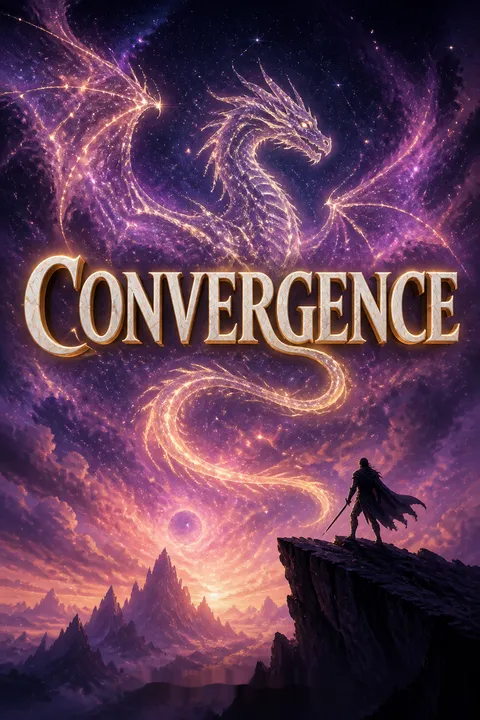


Plot Summary
Sentenced Above the Beastlands
The crisis at Xyrus Academy ends with Arthur having killed Lucas, the student transformed by a sudden surge of power, and rescued Tessia and the other students. The Council ignores the lives he saved and condemns him for excessive violence, stripping his mage status and ordering his imprisonment. His parents, sister Ellie, and Princess Kathlyn protest, but the decree stands.
Lance Varay seals Arthur's mana core and carries Sylvie away in an ice sphere; Lance Bairon, grieving his brother Lucas, watches Arthur with open hatred. As the lances fly south, Arthur sees Xyrus shrink behind him and realizes the academy life he had begun to build is over. He cannot tell his family when he will return.
Goodsky's Cell, Council's Lie
The lances bring Arthur to a hidden floating castle above the Beast Glades, where the Council debates whether to cripple him or kill Sylvie. Cynthia Goodsky, the former Xyrus director, is imprisoned nearby.
She recognizes that Lucas's transformation could not have come from any ordinary elixir and suspects a larger plan, but an unseen binding prevents her from explaining what she knows. Princess Aya secretly warns Arthur that the Council intends to blame both of them for the academy attack, execute Cynthia, and deliver him to an unknown power.
She also confirms that Tessia's father has taken Arthur's family somewhere safe. At the hearing, the Council sentences Arthur to provisional imprisonment and declares that he must surrender Sylvie as well.
Dwarven Kings Choose Their Master
Arthur's captors underestimate how little control they have over events. Dawsid Greysunder admits to King Blaine that he has pledged himself and his people to a powerful being, hoping for strength and wealth; Blaine supports the bargain partly from fear for his family and partly from envy of Arthur.
Before the plan can advance, the three-eyed asura Aldir attacks the Greysunders, defeats their lances, forces Dawsid to release them from his binding oath, then kills the king and queen.
Aldir joins Windsom in taking control of Dicathen's preparations. He explains that Agrona and the Vritra lead Alacrya, that their forces include asura-blooded descendants, and that a treaty prevents the asuras from fighting the war directly. Dicathen must defend itself.
Arthur Tells His Parents
Windsom frees Arthur and returns Sylvie to him, then takes him to the hidden refuge where his parents and Ellie are sheltering. Before leaving for Epheotus, Arthur tells Alice and Reynolds that he was once King Grey, a man from another world who died and was reborn as their child.
Alice initially believes trauma has made him ill; Reynolds accepts that Arthur is telling the truth but struggles with the question of whether the boy he raised is still his son. Arthur leaves them time to absorb the revelation and departs without saying goodbye again. He admits that the Leywins taught him how to love, something his former life never gave him. The family is left shaken, and Arthur carries their grief with him.
The Orb's Brutal Classroom
In Epheotus, Arthur is separated from Sylvie so she can recover and train under her grandfather, Lord Indrath. Windsom entrusts Arthur to Kordri, a Pantheon asura, and gives them access to an aether orb that accelerates time in a soul realm.
Kordri kills Arthur repeatedly there, teaching him to read attacks, endure killing intent, conserve movement, and fight without relying on magic. Arthur's practice stretches across years inside the orb while only months pass outside.
When the gifted young asura Taci joins as a sparring partner, Arthur must defend himself under strict limits and eventually learns to redirect Taci's force into a devastating throw. Kordri then adds three more pupils, forcing Arthur to manage several opponents at once and turn isolated technique into battlefield awareness.
Mirage Walk in the Wild
Windsom sends Arthur into an Epheotus forest with a bell and a list of beasts to hunt, forbidding ordinary mana attacks. To catch the alert raptor squirrels, Arthur learns to hide his mana and intent, then develops the first stage of Mirage Walk, which lets him burst forward without giving away his presence.
He struggles to catch a silver panther until he understands how predators exploit a prey animal's reflexes. A fight near a gorge sends him falling with his quarry into a titan bear's territory.
The bear is secretly controlled by a demon leech, which Arthur kills at great cost. After the leech's refined energy advances his core, he enters Sylvia's second will and sees aether. Myre heals his shattered legs and identifies his Realmheart Physique.
Myre Explains the Aether
While Myre mends Arthur, she explains that Realmheart lets him perceive mana and the purple particles of aether, but does not make aether easy to control. She identifies his affinity with spatium, the aspect associated with space, and warns that his human body cannot bear the strain of his self-invented Burst Step.
Arthur must abandon the technique rather than risk permanently crippling himself. Myre instead trains him to read the movement of mana before spells take shape, giving him a way to anticipate attacks.
When Windsom retrieves him, Arthur meets Wren, an eccentric weaponsmith who measures his magic and combat style. Wren embeds acclorite, Sylvia's feather, and one of Sylvie's scales in Arthur's palm, beginning a weapon that will grow around him.
Tessia Demands the Front
While Arthur trains, Tessia lives under the restrictions of a continent preparing for invasion. Her grandfather Virion and Aldir keep her away from the front, even as she grows stronger under Lance Varay and worries that her weakness helped put Arthur's friend Elijah in danger.
Tessia slips out with Varay and artificer Gideon to inspect a wreck on the eastern coast. Gideon proves it is not the missing Dicatheous but an unfamiliar metal vessel, likely built by Alacrya to carry troops across the ocean.
Virion later shows Tessia a recording of a disastrous battle and explains the deaths his orders have caused. He tests her in combat, sees her control of the Elderwood Guardian's will, and permits her to serve, provided she accepts the discipline of a soldier.
The Dungeon's Corpse Throne
Tessia joins a dungeon expedition with Darvus Clarell, Caria Rede, and Stannard Berwick, fighting mana beasts that the Alacryans have corrupted into an army. Their team learns that another squad has found a deeper passage guarded by hundreds of gnolls and orcs.
Before the assembled soldiers can reach the mutant's den, Arthur arrives with Sylvie and destroys the horde and its S-class leader. Tessia recognizes her childhood friend on a mound of corpses, but the strain of two years apart leaves her unable to approach until Sylvie runs into her arms.
Arthur confirms his identity and asks to rest, while the soldiers question how one boy could have killed so many beasts. The victory brings no easy celebration: the beast cores are gone, tensions rise, and Arthur's return changes the expedition's balance.
Home After Two Years
At camp, Darvus challenges Arthur to a duel, hoping to settle the injury to his pride. Arthur defeats him without visible effort, striking points that disrupt the flow of mana through Darvus's body.
Virion arrives and takes Arthur to the floating castle, where Aldir and the leaders brief him on the war and the Alacryan ship found off the coast. Afterward, Arthur meets his family again. Reynolds embraces him, Alice admits she still needs time to understand his revelation, and Ellie introduces Boo, the bear bond she received from Windsom.
Arthur also learns that Cynthia remains unconscious after revealing intelligence about Alacrya. The reunion offers affection without restoring the old ease: his family welcomes him back, but he must leave them again as the invasion approaches.
Ships on the Horizon
A soldier reports that ships have been sighted near Etistin, and Arthur rushes through the city's guards to reach the coast. He and Sylvie fly south, where the approaching fleet fills the horizon.
Arthur recognizes the consequence of advice he once gave Gideon: the steamship design that helped Dicathen now appears in Alacrya's hands, allowing the enemy to transport an army across the ocean. The vessels are no longer a hypothetical threat but an invasion force close to shore.
Arthur remembers Virion's warning not to blame himself, yet cannot separate his own ingenuity from the danger before him. He returns toward the fight determined to repair the damage he believes he helped cause. The war's scale has changed, and Dicathen's defenses may not be enough.
Cynthia's Last Vision
Cynthia's final vision returns her to the curse that has kept her from speaking freely. Voices demand intelligence about Alacrya, and the pain overwhelms her until Virion appears and apologizes for allowing her to reveal what she knew.
The vision shifts to their younger selves after the human and elven war, when Virion encouraged her dream of founding Xyrus Academy. Cynthia remembers how friendship had already weakened her loyalty to the people she served. Then a black spike pierces her chest and the memory collapses.
In the fortress, Virion wakes to a scream and finds Cynthia dead in her bed, impaled through the heart. Her death proves that the danger has penetrated the leaders' supposedly secure refuge, but the attacker and the full reach of the conspiracy remain unknown.
Analysis
Convergence turns Arthur's extraordinary talent into a problem of responsibility. The Council first treats his violence as evidence that he is dangerous, even though his actions saved the academy. Later, the asuras treat him as a necessary piece in a war they cannot fight directly. Both judgments reduce a person to utility. Arthur resists that reduction not through abstract rebellion, but by repeatedly choosing particular people: Tessia at the academy, his family in the refuge, and the soldiers whose lives his abilities might protect.
The novel's deepest conflict is between knowledge and control. Arthur's past-life discipline gives him unusual advantages, but the story repeatedly makes those advantages costly. The Aether Orb offers years of training at the price of psychological risk. Burst Step promises speed but threatens his body. Realmheart reveals aether without granting mastery over it. Even useful technology can escape its inventor's intentions: the steamship that Arthur helped Gideon imagine becomes evidence of an invading fleet. Skill creates consequences beyond the skilled person's control.
The family revelation gives this struggle an intimate counterweight. Arthur believes honesty is owed to Alice and Reynolds, yet telling them destabilizes the very bonds that made him more humane. Their response is neither instant acceptance nor rejection. They need time, while Arthur must leave. This keeps the emotional resolution provisional, much like the military one.
Tessia's parallel development challenges the idea that protecting someone means keeping them safe from action. Virion tries to shield her, then shows her the casualties and lets her choose the soldier's burden. By the ending, Arthur sees an armada approaching and accepts responsibility for the technology that helped make it possible. Cynthia's death closes the volume on a more disturbing note: the enemy can reach even the guarded center of Dicathen's leadership. The war is not resolved. The characters have only learned what their choices will cost.
Review Summary
Convergence receives mixed reviews, with an average rating of 4.37/5. Many praise the action, character development, and world-building. However, some criticize the extensive training arc, lack of character interactions, and pacing issues. Readers appreciate the expanding lore and new characters but note a shift in tone from earlier books. Some find the power scaling excessive and miss the charm of earlier installments. Despite criticisms, fans remain invested in the series and eagerly anticipate future developments.
People Also Read

Characters
Arthur Leywin
Reluctant war championA gifted young mage whose composure and tactical instincts exceed what others expect from his age. Arthur is driven by a fierce need to protect the people he loves, but he often treats his own safety as expendable. His practical mind can make him seem emotionally distant, especially when he turns danger into a problem to solve. His family and friendship with Tessia have softened the isolation he carried into this life, even as his sense of responsibility keeps drawing him toward risk. He learns from demanding mentors, yet resists being treated as a tool by those who want to use his unusual abilities.
Sylvie
Arthur's dragon bondArthur's bonded companion is a young dragon with a tender, communicative connection to him. She is affectionate and curious, but her powerful nature is still developing, and transformation places a heavy burden on her body. Sylvie gives Arthur both companionship and a reason to think beyond his own survival. Her bond with him is emotional as well as magical, allowing each to sense the other's fear and reassurance. Though she often sleeps through the events around her, her presence continually shapes Arthur's choices and marks his place in a conflict involving beings far older and stronger than either of them.
Tessia Eralith
Princess turned soldierThe elven princess is Arthur's childhood friend, a talented mage whose loyalty to him is matched by a growing commitment to her people. Tessia is compassionate enough to feel the weight of every soldier lost, yet stubborn enough to challenge the protections imposed on her. Her bond with the Elderwood Guardian gives her formidable power, though controlling it requires discipline. She wants to contribute rather than be sheltered, and the war forces her to measure courage against responsibility. Her emotional openness contrasts with Arthur's guardedness, making their separation and reunion especially difficult for her.
Virion Eralith
Burdened war commanderTessia's grandfather and a former elven king, Virion becomes Dicathen's principal field commander. He combines strategic patience with a grandfather's protectiveness, a tension that makes every decision about Tessia painful. Years of leadership have taught him that victories are purchased with lives, and he carries responsibility for the soldiers lost under his orders. His humor and warmth survive beneath the commander he must become, but he cannot always keep family feeling separate from military judgment. He values loyalty earned through shared experience and knows that protecting someone can also mean allowing them to face danger.
Windsom
Arthur's asuran guideA dragon asura serving the Indrath Clan, Windsom escorts Arthur into Epheotus and supervises much of his preparation. His manner is formal and often impatient, reflecting both the distance between asuras and lesser races and the urgency of the war. He believes Arthur must become strong enough to defend himself, but he also has to obey the decisions of more powerful authorities. Windsom offers knowledge in measured portions, balancing concern for Arthur with a soldier's preference for discipline. His role is mentor, messenger, and reminder that Arthur's training is entangled with political interests.
Aldir
Three-eyed asuran generalA powerful Pantheon asura sent to prepare Dicathen for war, Aldir is controlled, formidable, and blunt about the limits of the alliance. He assumes command with the calm of someone who views continents and armies on a scale ordinary leaders cannot match. His authority brings military structure, but his decisions can unsettle the people he is meant to protect. Aldir understands that the treaty restricting asuran intervention makes lesser races responsible for their own defense. He treats Arthur as a valuable potential combatant while insisting that training and readiness matter more than sentiment.
Cynthia Goodsky
Xyrus's guarded directorThe former director of Xyrus Academy is a respected mage and perceptive administrator whose knowledge reaches beyond the school's walls. Cynthia is observant, disciplined, and keenly aware that some truths carry dangerous consequences. Her restraint can look like evasiveness, but it also reflects years of navigating powers that constrain what she may reveal. She cares about the academy and its students, and her history with Virion gives her a personal connection to the leaders now directing the war. Her quiet intelligence makes her an important source of insight even when she cannot speak openly.
Alice Leywin
Arthur's unsettled motherArthur's mother is a healer whose love is expressed through care, touch, and fierce concern for her children. Learning that Arthur has memories from another life shakes the assumptions on which her maternal identity rests. Alice cannot immediately reconcile the infant she raised with the older consciousness he describes, and she needs time rather than easy reassurance. Her response is not a lack of love but the shock of grief and uncertainty. Her relationship with Arthur reveals how family can be rooted in years of care even when the meaning of identity becomes difficult to settle.
Reynolds Leywin
Arthur's conflicted fatherA former adventurer and Arthur's father, Reynolds is affectionate, direct, and deeply proud of his family. Arthur's revelation unsettles him because it challenges the simple idea that blood and birth alone explain their bond. Reynolds examines his own pride and the signs he had dismissed in his son, trying to understand whether he loved Arthur as he was or as the gifted child he hoped to have. His instinct is to protect Alice and Ellie, but he also recognizes that Arthur's honesty is an act of trust.
Ellie Leywin
Arthur's younger sisterEllie is Arthur's younger sister, spirited and increasingly independent as the family grows up under the pressure of war. She cares deeply about Sylvie and forms a bond with Boo, giving her a companion of her own. Ellie can be blunt with Arthur in the way younger siblings often are, but their affection remains evident in their teasing and quick reunions. Her presence reminds Arthur that the family he wants to protect is changing while he is away, and that his absence costs more than he likes to admit.
Kordri
Relentless combat mentorA respected Pantheon asura, Kordri trains Arthur in close combat and bodily control. His calm manner conceals a demanding instructor who uses repetition, pain, and precise correction to teach survival. Kordri sees Arthur's unusual capacity to learn, but also recognizes that stubbornness can become self-destruction. He teaches not merely how to strike, but how to conserve energy, widen awareness, and remain composed under pressure. His mentorship gives Arthur something he has rarely had: a teacher capable of challenging his instincts rather than simply praising his talent.
Myre
Aether-wise healerAn experienced dragon asura, Myre treats Arthur after his forest trial and teaches him about mana, aether, and Realmheart. She is warm and playful in ordinary company, yet exacting when training begins. Her knowledge is broad, but she is candid about the limits of what even dragons understand. Myre values practical experience and ordinary pleasures, resisting the idea that magic should replace every human act. Her care for Arthur combines healer's patience with a teacher's willingness to warn him away from dangerous ambition.
Wren
Eccentric weapon makerA reclusive asura weaponsmith, Wren is disheveled, brilliant, and socially odd. He studies Arthur with the detachment of an experimenter, then designs training scenarios that force the boy to respond under battlefield conditions. His bluntness often makes him seem cruel, but his methods are purposeful, aimed at exposing weaknesses before an enemy can exploit them. Wren is especially interested in how weapons reflect their users. His work links craft to combat, and his willingness to take an unusual risk with Arthur's weapon suggests a rare investment beneath his abrasive manner.
Blaine Glayder
Human king under pressureKing of the human kingdom and father to Curtis and Kathlyn, Blaine is a ruler aware of his own limitations. He wants to protect his family and preserve the Glayder line, yet his judgments are clouded by insecurity about his lack of magical strength. Arthur's power intensifies feelings Blaine would rather deny. He understands the political danger facing Dicathen but sometimes confuses private survival with public duty. His conflict shows how fear can make a leader defend a choice he knows is morally compromised.
Dawsid Greysunder
Ambitious dwarf kingThe dwarf king is proud, politically forceful, and hungry for a power he believes his people have been denied. He sees alliances through the promises they offer his kingdom, especially strength, wealth, and status. Dawsid's rhetoric about collective advancement masks a more personal appetite for authority. He is quick to condemn Arthur as dangerous while overlooking the danger of his own bargain. His ambitions expose how resentment, when dressed as national pride, can make submission to a stronger power feel like liberation.
Alduin Eralith
Tessia's diplomatic fatherThe elven king and Tessia's father, Alduin is a principled leader who speaks in defense of Arthur when the Council fixates on punishment. His instincts are paternal, but he understands that decisions must survive political scrutiny. He favors protecting people rather than sacrificing them to speculative fears, even when his position among the rulers is weak. Alduin's diplomacy and moral clarity make him an important counterweight to the more self-interested leaders, while his concern for Tessia and his people remains constant.
Merial Eralith
Tessia's protective motherTessia's mother is an elven queen whose public composure conceals the strain of seeing her daughter caught in political violence. Merial argues against treating Arthur and Sylvie as threats simply because they are powerful. Her perspective is shaped by family concern but does not end there; she recognizes the danger of rulers letting fear substitute for evidence. She and Alduin support Tessia while struggling to balance parental protection with the responsibilities of leadership.
Varay
Ice-wielding lanceOne of Dicathen's lances, Varay is a disciplined ice mage whose reserve can make her seem cold. She escorts Arthur as a prisoner, follows orders carefully, and later becomes a mentor to Tessia. Beneath her formal manner is a strong sense of duty and a capacity for loyalty. Varay expects those around her to take danger seriously, but she also recognizes competence when she sees it. Her role shifts between enforcer and teacher, reflecting the burden placed on the lances as both weapons and public servants.
Bairon
Vengeful lightning lanceA lightning-wielding lance and Lucas's older brother, Bairon carries grief with an aggressive, volatile edge. He sees Arthur through the lens of his brother's death and threatens him even while the Council needs Arthur alive. His contempt is personal, but his caution and combat ability show that he is more than a hotheaded rival. Bairon embodies the way family loyalty can harden into vengeance, particularly when public accounts of a violent event obscure the choices that led to it.
Taci
Arrogant asuran pupilA young Pantheon asura trained by Kordri, Taci is talented, proud, and accustomed to believing his race is naturally superior. He resents being paired with Arthur, whom he considers beneath his attention, and his arrogance shapes the early friction between them. Taci has genuine skill, but his limited experience makes him easier to read than he imagines. He serves as a demanding measure of Arthur's progress and as an example of how inherited status can distort a gifted student's understanding of effort.
Darvus Clarell
Proud axe fighterA noble-born fighter and Tessia's teammate, Darvus is talented, flirtatious, and accustomed to having his abilities admired. He can be lazy and boastful, but he is not indifferent to his companions; his readiness in battle contrasts with his immaturity around them. Arthur's presence presses on Darvus's pride, revealing how much of his confidence depends on being exceptional. His friendship with Caria is close, though he is slow to understand the depth of her feelings.
Caria Rede
Agile team peacemakerA nimble close-combat fighter raised to protect Darvus, Caria is bright, determined, and attentive to the emotional weather of her team. She often mediates between Darvus and others, using humor or bluntness to keep arguments from breaking into lasting resentment. Her loyalty to Darvus is complicated by feelings she has not found the courage to express. In battle, her agility and directness make her a fierce fighter rather than merely the group's peacemaker.
Stannard Berwick
Inventive ranged mageA small-framed conjurer with a limited mana capacity, Stannard compensates through an unusual ability to store spells inside beast cores and launch them with a crafted device. He is intelligent and cautious, often more aware of his fear than his bolder teammates are. Stannard's creativity gives his team firepower that his raw reserves cannot provide. He is also observant enough to notice the emotional consequences of battle and the unusual precision behind Arthur's fighting.
Olfred
Dwarven earth lanceA dwarf lance who escorts Arthur to the floating castle, Olfred is more conversational than Varay but careful about what he reveals. His earth magic lets him shape stone into a knight and construct shelters. He treats Arthur with measured courtesy, though he remains a servant of the Council and its orders.
Plot Devices
Aether Orb
Accelerated combat trainingThe orb separates Arthur's body from his soul and places him in a training realm where time moves much faster than in the physical world. Wounds and death there do not destroy his body, while the experience still teaches his reflexes and mind. Kordri uses the device to put Arthur through years of combat practice during a comparatively short period outside. Its benefit is inseparable from its danger: prolonged use could distort a young person's sense of time and development, so Arthur's unusual maturity makes him a special case.
Sylvia's Will and Realmheart
Perception beyond ordinary manaThe dragon will Sylvia entrusted to Arthur gives him access to powerful forms and unusual abilities. Realmheart lets him perceive elemental mana and the otherwise invisible particles of aether, improving how precisely he reads spells and the physical realm. The ability does not make aether simple to command: Arthur's human body struggles with its cost, and Myre warns him that insight matters more than raw force. The will therefore serves as both a source of power and a continuing lesson in the limits of borrowed strength.
Mirage Walk
Concealed movementA movement art associated with the Thyestes Clan, Mirage Walk hides the user's mana fluctuations and makes movement difficult to perceive. Arthur first learns its basic principle by studying prey animals in the forest, then adapts it into Burst Step, a sudden burst of speed. His version proves dangerous because it forces his muscles and bones beyond their limits. Myre warns him to stop using it, leaving the technique as a hard-earned but costly piece of knowledge rather than an easy solution to future battles.
Acclorite Weapon
A weapon grown for ArthurWren embeds an acclorite gem in Arthur's palm after combining it with a piece of Sylvia's feather and a scale from Sylvie. Rather than forging a finished sword, the weaponsmith expects the material to grow into a weapon shaped by Arthur's movements and development. Its final form is uncertain, and the process will take time, but the device makes Arthur's training physical and personal: his future weapon will be formed from the unusual bonds and abilities that define him.
Alacryan Invasion Routes
Troops bypass Dicathen's defensesThe Alacryans use concealed teleportation gates in Beast Glades dungeons to bring forces into Dicathen, while corrupted mana beasts serve as controlled soldiers. Their ability to build large metal ships adds a second route across the ocean. Together, the methods make the invasion difficult to predict and force Dicathen's leaders to defend both the frontier and the coast. The discovery of the ships also connects the war to Gideon's technology, which Arthur had once helped inspire, giving the military threat a personal cost for him.
FAQ
Synopsis & Basic Details
What is Convergence about?
- A Prodigy's Ordeal: Convergence follows Arthur Leywin, a reincarnated king, as he faces a harsh judgment from the Council of Dicathen for his immense power and dragon bond. Stripped of his mage title and imprisoned, Arthur is thrust into a larger cosmic conflict orchestrated by ancient, god-like beings.
- Unveiling a Cosmic War: The story quickly expands beyond local politics, revealing a looming war between the continent of Dicathen and Alacrya, led by the Vritra Clan of asuras. Arthur is chosen by benevolent asuras to be trained as a weapon, forcing him to confront his past, his identity, and the true cost of power.
- Journey of Transformation: Arthur undergoes brutal, accelerated training in the asura homeland, Epheotus, pushing his physical and mental limits. Simultaneously, his friends and family in Dicathen grapple with the escalating war, preparing for an invasion that Arthur inadvertently accelerated, setting the stage for his return and a fight for redemption.
Why should I read Convergence?
- Deep Character Evolution: Readers will witness Arthur's profound psychological and physical transformation, exploring the burdens of immense power and the struggle to retain humanity amidst cosmic conflict. His internal battles are as compelling as his external ones.
- Rich World-Building & Magic System: The novel expands on its intricate magic system, introducing the concept of aether and its manipulation, alongside detailed descriptions of asura society, their unique abilities, and the devastating scale of their power.
- High-Stakes Narrative: Convergence is a pivotal turning point in the series, escalating the conflict from regional disputes to an intercontinental war with devastating consequences, offering intense action, political intrigue, and emotional depth.
What is the background of Convergence?
- Post-Academy Disaster Setting: The story begins immediately after a major incident at Xyrus Academy, where Arthur's actions, though heroic, are deemed excessively violent by the Council, leading to his arrest and the stripping of his mage title. This sets a tone of political mistrust and fear of unchecked power.
- Unveiling Asura Influence: The narrative quickly reveals that the Council's actions are influenced by hidden asura factions. Dicathen is a continent unknowingly caught in a millennia-old conflict between different asura clans, with the Vritra Clan of Alacrya preparing a full-scale invasion.
- Technological & Magical Disparity: The story highlights the vast technological and magical gap between Dicathen and Alacrya, the latter having been secretly guided by the Vritra for generations. This disparity, exacerbated by Arthur's unwitting contribution of steam engine blueprints, underscores the immense challenge Dicathen faces.
What are the most memorable quotes in Convergence?
- "I'll definitely return home.": Spoken by Arthur to his family before his incarceration (Chapter 98). This quote encapsulates Arthur's unwavering resolve and deep familial love, serving as a core motivation throughout his arduous training and the looming war.
- "I'm sorry, boy… I would like to believe that it is for the good of this continent that you become a sacrifice.": Blaine Glayder's internal monologue (Chapter 101). This chilling quote reveals the Council's true, self-serving motivations and the moral compromises made by those in power, highlighting the theme of sacrifice and betrayal.
- "Aether is fundamentally different from mana... Aether would be the cup, while mana is the water that fills it.": Myre's explanation to Arthur (Chapter 118). This metaphorical quote is crucial for understanding the advanced magic system, symbolizing the deeper, more fundamental forces at play in the world and Arthur's unique connection to them.
What writing style, narrative choices, and literary techniques does TurtleMe use?
- Multi-Perspective Narrative: TurtleMe employs shifting points of view (Arthur, Blaine, Dawsid, Tessia, Stannard, Virion, Cynthia) to provide a comprehensive and nuanced understanding of events, character motivations, and the broader geopolitical landscape. This technique enriches the Convergence analysis by offering diverse insights.
- Detailed Internal Monologue: The author frequently delves into characters' thoughts and emotions, particularly Arthur's, revealing their psychological complexities, internal conflicts, and the heavy burdens they carry. This allows for deep character motivation explained and emotional resonance.
- Progressive Foreshadowing & World-Building: Subtle hints and revelations are strategically placed throughout the narrative, building suspense and gradually expanding the scope of the world. This includes the slow unveiling of asura society, their ancient conflicts, and the true nature of magic, enhancing the overall themes in Convergence.
Hidden Details & Subtle Connections
What are some minor details that add significant meaning?
- Floating Castle's Cold Ambiance: The Council's floating castle is described with "cold, emotionless" white light and walls covered in "mysterious designs carved onto every visible facet and corner" (Chapter 98). This detail subtly symbolizes the Council's detached, bureaucratic nature and their willingness to sacrifice individuals for perceived stability, reflecting their moral decay.
- Olfred's Guarded Amiability: Lance Olfred, despite appearing amiable and sharing a laugh with Arthur, remains "very guarded," conversing professionally without revealing crucial information (Chapter 98). This highlights the pervasive secrecy and mistrust even among allies, hinting at the deeper conspiracies that Arthur later uncovers.
- Wren's "Failure" Sword: Arthur's powerful sword, Dawn's Ballad, is casually dismissed by its creator, Wren, as a "failure" and an "experimental weapon" (Chapter 122). This seemingly throwaway detail underscores the immense power and advanced craftsmanship of the asuras, making Arthur's weapon, which is formidable by human standards, appear insignificant in the grander cosmic scale.
What are some subtle foreshadowing and callbacks?
- Varay's Mana Restriction Artifact: Varay's decision to place a mana restriction artifact on Arthur, stating "There are other ways you can make trouble" (Chapter 98), subtly foreshadows Arthur's later development of non-mana-based combat skills and movement techniques like Mirage Walk, which rely on physical prowess and internal mana control.
- Cynthia Goodsky's Binding: Director Goodsky's inability to speak about the conspirators due to a "binding" that causes her pain (Chapter 99) foreshadows her eventual comatose state and death, revealing the extreme measures taken by the Vritra to protect their secrets and silence those who betray them. This is a key Convergence plot point.
- Arthur's "King's Force": Kordri's training of Arthur under "King's Force" or "killing intent" (Chapter 111) is a callback to Arthur's past life as King Grey, where he was known for his overwhelming presence. This training refines his innate ability to project dominance, a skill that later paralyzes Darvus and other soldiers.
What are some unexpected character connections?
- Myre's Unexplained Care for Arthur: Myre, an ancient asura healer, shows an unusual level of compassion and personal investment in Arthur's recovery and training, even breaking asura rules to impart forbidden knowledge (Chapter 118). Her deep care for a "lesser being" is unexpected, hinting at a deeper, unrevealed connection or a profound belief in his potential beyond the asuras' pragmatic view.
- Aldir's Mentorship of Tessia: The cold and calculating asura general, Aldir, is revealed to be Tessia's personal mentor, guiding her combat development (Chapter 137). This connection is surprising given Aldir's detached nature and highlights Tessia's significant potential, as well as the asuras' strategic investment in key Dicathen figures.
- Wren's Creation of Dawn's Ballad: The eccentric asura Wren is revealed to be the creator of Arthur's sword, Dawn's Ballad, which he dismisses as a "failure" (Chapter 122). This unexpected link between Arthur's signature weapon and an asura craftsman adds a layer of cosmic irony and underscores the vast difference in power and perspective between the two races.
Who are the most significant supporting characters?
- Olfred: Beyond being a Lance, Olfred's brief, amiable yet guarded interaction with Arthur (Chapter 98) provides a rare glimpse into the Lances' individual personalities and the subtle tensions within their ranks, hinting at the internal divisions that later become apparent. His professional demeanor contrasts with Bairon's overt hostility.
- Myre: While already mentioned, Myre's significance extends beyond healing. Her willingness to defy asura secrecy and teach Arthur about aether and Realmheart (Chapter 118) makes her a crucial catalyst for Arthur's unique development, pushing him beyond the conventional limits of his training. Her compassion offers a counterpoint to the asuras' usual pragmatism.
- The Twin Horns (Helen, Durden, Jasmine, Adam, Angela): As Arthur's former adventuring party, their reunion with Tessia (Chapter 131) and later Arthur (Chapter 134) provides a grounding element of loyalty and camaraderie amidst the escalating war. Their presence highlights the human cost of the conflict and serves as a reminder of the bonds Arthur is fighting to protect.
Psychological, Emotional, & Relational Analysis
What are some unspoken motivations of the characters?
- Blaine Glayder's Envy and Insecurity: Blaine's internal monologue reveals his deep-seated envy of Arthur's innate talent, confessing, "I felt this soothing sensation of my dark envy being resolved with the death of this boy" (Chapter 101). His motivation to betray Dicathen stems not just from family protection, but from a profound insecurity about his own subpar magical abilities and a yearning for power he could never achieve naturally. This is a key Blaine Glayder motivation analysis.
- Dawsid Greysunders' Lust for Power and Immortality: Dawsid's true motivation for siding with Agrona is a desperate desire for "Immortality, unrivaled martial strength, and infinite wealth" (Chapter 101), driven by a past incident that crippled his mana core and left him feeling weak. His arrogance masks a deep-seated insecurity and a willingness to sacrifice his entire race for personal gain and a return to former glory.
- Arthur's Quest for Redemption: Beyond protecting his loved ones, Arthur's ultimate motivation becomes a profound need to "right his wrong" (Chapter 138) after realizing his steam engine blueprints enabled the Alacryan invasion. This guilt-driven resolve transforms his heroism from altruism to a personal quest for atonement, adding a layer of psychological complexity to his Arthur Leywin motivations.
What psychological complexities do the characters exhibit?
- Arthur's Dual Identity & Isolation: Arthur grapples with the psychological burden of his past life as King Grey, leading to a detached, analytical approach to situations that often conflicts with his growing human emotions. His rapid power growth further isolates him, as seen in his awkward reunion with Tessia and the fear he instills in others, highlighting the loneliness of being exceptional. This is central to Arthur Leywin psychological analysis.
- Virion's Burden of Command: Virion, as the military commander, exhibits immense psychological strain from making life-or-death decisions, confessing, "I have already done things—made choices—that I will never forgive myself for" (Chapter 129). His struggle between duty and his grandfatherly love for Tessia reveals the heavy emotional toll of leadership in wartime.
- Tessia's Insecurity and Drive: Tessia's determination to prove herself as a soldier is deeply rooted in her insecurity about being a "liability" and her desire to be worthy of Arthur's protection. Her internal conflict between her royal duties, her personal feelings, and her drive for strength showcases the psychological impact of external expectations and self-doubt.
What are the major emotional turning points?
- Arthur's Confession to His Parents: The raw, emotional scene where Arthur reveals his reincarnation to his parents (Chapter 106) is a major turning point. It shatters their perception of him, forcing them to grapple with a profound identity crisis, and leaves Arthur with deep regret, questioning if he made the right choice. This moment highlights the fragility of familial bonds under extraordinary circumstances.
- Blaine Glayder's Internal Betrayal: Blaine's internal monologue revealing his complicity with Agrona and his envy of Arthur (Chapter 101) is a significant emotional turning point for the reader. It exposes the moral rot within the Council and the depths of human weakness, shifting the perception of the ruling class from flawed leaders to active conspirators.
- Cynthia Goodsky's Sacrifice: Cynthia's self-induced coma and eventual death (Chapter 129, 138) after revealing Alacryan intel is a tragic emotional turning point. It underscores the brutal stakes of the war and the ultimate sacrifice individuals are forced to make, leaving Virion with profound guilt and a renewed sense of urgency.
How do relationship dynamics evolve?
- Arthur and His Family: From Distance to Acceptance: Initially, Arthur's relationship with his family is strained by his secret and his perceived emotional distance. After his confession, his parents struggle, but ultimately, his father's acceptance and his mother's plea for "time" (Chapter 137) show a shift towards a more honest, albeit still complex, understanding and renewed familial bond.
- Arthur and Tessia: Growing Power, Growing Distance: While their bond remains strong, Arthur's accelerated training and the immense power he gains create a palpable distance between him and Tessia. Her initial awe and later insecurity (Chapter 135) highlight the challenge of maintaining a normal relationship when one party undergoes such a profound, isolating transformation.
- Dicathen's Leaders: From Disunity to Forced Alliance: The Council's internal conflicts and betrayals (Blaine, Dawsid) are violently resolved by Aldir's intervention, forcing the remaining leaders (Virion, Alduin, Priscilla) into a pragmatic, if uneasy, alliance. This shift in power dynamics centralizes authority under Virion and Aldir, streamlining the war effort but also highlighting the loss of individual agency.
Interpretation & Debate
Which parts of the story remain ambiguous or open-ended?
- The Full Extent of Agrona's Plan: While Agrona's goal of conquering Dicathen is clear, the precise details of his long-term strategy, the full capabilities of his "mutts" and "Scythes," and his ultimate intentions for the lesser races remain largely ambiguous. This leaves readers to speculate on the true nature of the threat in Convergence.
- The Asuras' True Altruism: The asuras claim to be helping Dicathen to prevent a world-ending war, but their cold, utilitarian approach and the revelation of their ancient treaty leave open the debate about their true motivations. Are they genuinely benevolent, or are they merely protecting their own interests by using Dicathen as a shield? This is a key Convergence themes debate.
- The Nature of Arthur's Reincarnation: While Arthur explains his reincarnation, the why and how of his transmigration from King Grey to Arthur Leywin remain largely unexplained. The story hints at a larger cosmic force or destiny, but the exact mechanism and purpose of his rebirth are left open to interpretation.
What are some debatable, controversial scenes or moments in Convergence?
- The Council's Judgment of Arthur: The Council's decision to strip Arthur of his title and imprison him, despite his heroic actions, is highly debatable. Was it a necessary evil to control a potentially dangerous power, or a cowardly act of self-preservation and political maneuvering? This scene sparks debate on justice versus perceived security.
- Aldir's Assassination of the Greysunders: Aldir's swift and brutal assassination of the dwarf king and queen (Chapter 102), though justified by their betrayal, is a controversial act. It raises questions about the morality of "discarding the corrupted" and whether the ends justify such violent means, especially from beings who claim to be "gods."
- Arthur's Revelation to His Parents: Arthur's decision to reveal his reincarnation to his parents (Chapter 106) is a controversial choice. While it brings emotional honesty, it causes immense pain and confusion. Readers might debate whether this truth was necessary or if it caused undue suffering, especially given his imminent departure.
Convergence Ending Explained: How It Ends & What It Means
- The War Begins, Arthur's Guilt: Convergence culminates with the shocking revelation that the Alacryan fleet, built using Arthur's inadvertently provided steam engine blueprints, has arrived at Dicathen's western coast (Chapter 138). This signifies the immediate start of the full-scale invasion, filling Arthur with profound guilt and a new, personal motivation to fight.
- Cynthia Goodsky's Tragic Demise: The ending also features the sudden and brutal death of Cynthia Goodsky, murdered by an unknown assailant (Chapter 138). Her death, a direct consequence of her revealing Alacryan intel, underscores the ruthless nature of the enemy and the high stakes of the war, serving as a stark reminder of the sacrifices being made.
- Atonement as Motivation: Arthur's final resolve, "It would be to right my wrong" (Chapter 138), shifts his primary motivation from merely protecting his loved ones to a quest for personal redemption. The ending of Convergence sets Arthur on a path where his immense power is now fueled by a deep sense of responsibility and a desire to atone for his past actions, transforming him into a more complex and driven protagonist for the battles to come.
The Beginning after the End Series
About the Author
Download PDF
Download EPUB
.epub digital book format is ideal for reading ebooks on phones, tablets, and e-readers.








