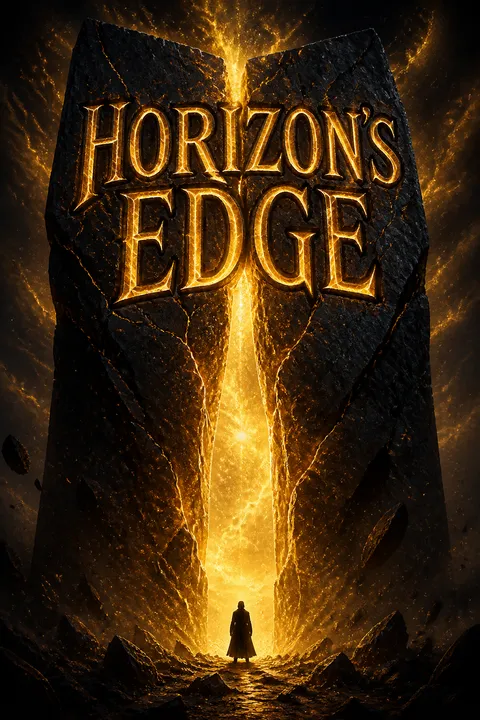


Plot Summary
Alea's Grave Changes Everything
Arthur buries Alea, the fallen Lance, and her companions in the dungeon where they died. Alea had been a lonely young woman, not merely the famous warrior people feared, and her terror at dying alone forces Arthur to face how little strength he has against the black-horned attacker. When Sylvie returns, larger and more formidable after fighting mana beasts, her affection briefly lifts the weight of grief.
Arthur leaves the dungeon without wearing the seal that concealed his power. Instead, he keeps a fragment of the demon's horn as a reminder that hiding will not protect the people he loves. He heads back toward Xyrus with fresh resolve, though he still has no way to stop the war he suspects is coming.
Alea's burial turns a battle's aftermath into a reckoning with personhood. Arthur remembers the Lance not as a symbol of strength but as someone whose last fear resembles his own old isolation. Her death alters his priorities: the horn shard makes grief portable, a reminder he can carry instead of sealing away. Sylvie's return offers comfort without erasing the loss. Their reunion gives Arthur a relationship worth protecting, while the demon's power makes clear that love has exposed a vulnerability he cannot yet defend.
Home Opens Its Door
Arthur finds himself unable to enter the Helstea home until his father, Reynolds, comes outside and reassures him that his family wants him back, even when he returns injured. Inside, Alice and his little sister Ellie meet him with tears, scolding, and fierce embraces.
Alice heals his wounds, and Arthur chooses to tell his parents what happened in the dungeon, including Alea's death and the threat of the demons. His mother's anguish makes him understand the cost his dangerous choices impose on them, while Reynolds insists that protecting allies is something to be proud of.
That night, Arthur trains instead of sleeping. His dark-yellow core cracks and reveals a brighter yellow stage, but the breakthrough still leaves him far below the demon's strength.
Home is not a refuge from consequence so much as a place where consequence becomes visible. Arthur's instinct is to treat himself as a burden and keep his family at a distance; Reynolds counters by making belonging a parental right rather than a reward for safe behavior. Alice's fear is not dismissed as weakness, and her healing turns care into an action rather than a sentiment. Arthur's overnight training shows how quickly he converts guilt into self-demand. The scene gives him a healthier reason to grow stronger, even as it leaves open whether love will steady him or deepen his fear of failure.
The Shop Behind the Alley
During a family shopping trip, Arthur slips away to inspect a potion shop recommended by Tabitha Helstea. He finds a shabby shack, a prank-loving old proprietor, and a black cat whose star-filled eyes seem far too aware. After Arthur fails to find anything useful, the proprietor gives him a clear, speckled orb instead of returning the silver coin Arthur accidentally handed over.
Outside, the alley and shack have vanished, replaced by a respectable Xyrus elixir shop that his family insists was there all along. The orb remains in Arthur's dimension ring, unexplained. At the academy, Director Cynthia Goodsky confirms that his classmates are safe, then admits Tessia is still unconscious after complications during her beast-will assimilation.
The disappearing shop places uncertainty inside an otherwise ordinary errand. Arthur approaches magic as a problem to inspect and classify, but the cat, the shopkeeper, and the orb refuse to behave like stable evidence. The scene's humor keeps the mystery from feeling like a simple omen, which makes the orb's later importance more effective. At the same time, Arthur's discovery that Tess is unconscious turns an oddity into a possible lifeline. The narrative links curiosity to responsibility: he does not collect the orb for its own sake, but because someone he cares about may need what he cannot yet understand.
An Orb Quiets the Forest
Arthur reaches Tessia's training room and finds her enclosed in a mass of dark vines, while Virion struggles to suppress the aura surrounding her. As Arthur approaches, the vines attack him with lethal force. His dimension ring burns, then releases the speckled orb he received from the strange shop.
It flies into Tess's cocoon and bursts through the vines, restoring her appearance and ending the immediate danger. Tess remains unconscious, but the orb has dramatically accelerated her mana core, pushing her close to silver.
When she wakes, the shock of discovering she is exposed releases a storm of emerald mana vines that damages the room. Arthur and Virion calm her before she collapses. Arthur also reunites with his friend Elijah, who is relieved to find him alive.
The orb functions as rescue and risk at once. It prevents Tess's beast will from consuming her, yet the sudden transformation bypasses the gradual process that would have taught her how to control its power. Her comic embarrassment triggering a destructive surge makes emotional regulation materially consequential, not simply a matter of temperament. Arthur's relief arrives alongside fresh uncertainty about what he has done by giving Tess the beast will and what the orb has changed. The scene also restores his bond with Elijah, grounding supernatural escalation in an ordinary friendship that the coming crisis will test.
Six Lances, Six Artifacts
While Tess sleeps, Virion explains why the Six Lances possess power beyond ordinary white-core mages. Centuries earlier, a deity gave six artifacts to the ancestors of the human, elven, and dwarven royal families.
The artifacts helped end the age when mana beasts ruled the continent, then became the source of magic and, eventually, the Lances' extraordinary strength. Each Lance is also bound by a soul oath to a royal family, which keeps such power from becoming an independent threat to the Council.
Virion believes dragons may ascend beyond the white-core stage and tells Arthur that Sylvie could become a deity. The history changes Arthur's understanding of the coming conflict: the demons are not merely a dungeon threat but part of a struggle reaching across continents.
Virion's history lesson reframes political stability as a construction held together by inherited power and enforced loyalty. The Lances look like individual champions, but their strength comes from artifacts distributed by royal ancestors and their allegiance is secured through a soul oath. The arrangement protects the kingdoms while also concealing how dependent their rulers are on an older, external source of authority. Sylvie's possible ascent unsettles Arthur's assumptions about what a bond can be. He is no longer simply raising a remarkable companion; he is responsible for a being whose nature could alter the balance of power.
Xyrus Frays at the Seams
While Arthur is occupied with Tess and the revelations around the Lances, Xyrus Academy's political tensions sharpen. Human students and nobles resent the academy's inclusion of elves and dwarves, and members of a radical group assault Denton, a student who had begun respecting Arthur's teaching. They later bomb the Tri-Union Hall, a monument to cooperation between the three races.
The Disciplinary Committee suspects Charles Ravenpor, but its members lack proof and discover that some professors will not act. Elsewhere, Goodsky hunts spies linked to the corruption of mana-beast dungeons. One captive confirms that the enemy's war plans have advanced far sooner than she expected, leaving the continent fewer than ten years to prepare.
The academy's fractures make the larger war legible at human scale. The attack on Denton punishes not an abstract political opponent but a student for changing his mind, while the bombing targets a shared memorial whose existence challenges racial hierarchy. Institutional caution then becomes part of the danger: the Committee has suspicions but cannot act without evidence, and adults are compromised by competing obligations. Goodsky's failed interrogation exposes the same weakness in a different register. The continent faces an external enemy, but its ability to respond is already eroded by resentment, secrecy, and delay.
A Dragon's Hidden Lineage
On his way to Elenoir, Arthur's teleportation journey plunges into darkness, where the black cat from the strange shop reveals himself as Windsom, an Asura. Windsom explains that Sylvie is the daughter of Sylvia, an Asura noble whose power was passed to Arthur, and that the Vritra clan has been secretly experimenting on the lesser races.
Their leader, Agrona, now commands forces in Alacrya and seeks to rule rather than observe. Windsom says another war is approaching and offers Arthur an alliance, with training in Epheotus once Arthur reaches the white-core stage.
Arthur accepts because refusing would not protect his family or continent. Windsom also identifies the orb as a rare elixir and gives Arthur a second one, meant to help him and Sylvie grow stronger.
Windsom turns private mysteries into geopolitical facts. Sylvie's lineage, Sylvia's disappearance, the altered beasts, and the emerging war become parts of one system rather than unrelated dangers. Yet his offer is not a neutral invitation: Arthur recognizes that the Asura can take Sylvie or leave Dicathen exposed whether he agrees or not. His consent therefore has the shape of constrained agency. The second orb promises advancement, but the arrangement makes power transactional, with Arthur's future training tied to a conflict he did not choose and a world whose rules exceed his understanding.
Green Power Breaks Loose
Windsom sends Arthur to the elven kingdom, where Tessia's newly strengthened beast will erupts again inside the royal residence. Emerald tendrils lash at anyone nearby, and Virion cannot overpower them. Arthur uses a wind-accelerated leap and a burst of heightened perception to reach Tess, then freezes the vines around them with Absolute Zero and breaks her free.
Virion explains that Tess's body has integrated the Elderwood Guardian's will too quickly for her to learn its limits. Arthur accompanies her to an inn while the royal family repairs the damage. He and Virion conclude that Tess needs rest and a way to control her power, not another attempt to force it into submission. Virion later gives her a seal to restrain the beast will.
Tess's power has become a problem of timing. The orb and assimilation give her capacity without the slow adaptation that normally turns capacity into skill, so the very success that seemed to save her now threatens her and those around her. Arthur's intervention depends on precision rather than domination: he separates Tess from the vines without treating her as an enemy. Virion's decision to use a seal acknowledges that temporary restraint can be protective, though it also leaves Tess vulnerable when the seal is active. Their response is practical, but no one mistakes it for a cure.
Rinia Spends Her Future
Arthur travels with Tess and her parents to Rinia's concealed home behind a waterfall. Rinia explains that true divination costs a seer's lifespan, then reveals that her sister spent her remaining years trying to keep Virion alive during an assassination campaign.
Rinia has also deliberately used her own power to inspect Arthur's future. She cannot give him a clean prediction, but warns that he will stand at the center of coming upheaval and must keep an end goal in view.
On the return journey, Tess overhears her father asking whether Arthur cares for her, and hears Arthur admit that he does. She nevertheless heads back to Xyrus before him, determined to resume her Student Council duties, while Arthur remains uneasy about her unstable core.
Rinia's account makes foresight an ethical injury rather than a convenient power. Her sister's sacrifice preserved Virion's life, but it consumed the future she might otherwise have lived; Rinia repeats that bargain when she looks into Arthur's path. Her warning offers orientation without certainty, shifting responsibility back to the person who must choose. The quiet romantic beat on the carriage adds another kind of future: Tess hears Arthur's feelings but continues toward her own obligations instead of turning the moment into a promise. Care, here, does not cancel independence or danger.
Lucas Joins the Masked Men
As Arthur prepares to return to Xyrus, the radical movement finds a more dangerous ally. Lucas Wykes, a talented but resentful student who feels eclipsed by his older brother, is brought to a hidden gathering led by the masked Draneeve.
Draneeve burns a subordinate for insulting Lucas, then offers him greater power and the chance to force Arthur into a fight. Lucas's pride and contempt for students of lower birth make the offer attractive. Draneeve proposes using Tessia, the elven princess and student leader, as bait, while his followers chant against the academy's multiracial policy.
At the same time, Kai's access to the Disciplinary Committee gives the conspirators information about its plans. Personal grievances and institutional betrayal now converge on the school.
Lucas is recruited by an antagonist who understands that humiliation can be converted into political violence. He has already been trained to measure himself against his brother and Arthur, so Draneeve offers not just power but a fantasy of finally controlling the terms of comparison. The radical group's racial rhetoric gives private envy a public justification. Kai's access adds a colder mechanism: the attack can succeed because people trusted with protection have become information channels. The scene shows how authoritarian movements recruit through a blend of grievance, status anxiety, and manufactured belonging.
The Academy Becomes a Cage
The attack begins with explosions and corrupted mana beasts pouring into Xyrus Academy. Kai's betrayal lets Draneeve's group trap the campus inside a red barrier that blocks escape and isolates the students from outside help.
Professors and student leaders fight through the halls while the attackers offer human students safety if they submit and target elves and dwarves for capture or death. At the bell tower, Draneeve gathers the survivors and displays a severed student's head. Theodore charges him in grief for Doradrea, but Draneeve breaks him and burns him before the crowd.
Then robed followers drag out Tessia and other captives. Elijah, unable to contain his rage, releases unfamiliar black magic that pierces the beasts and starts dissolving the barrier. Draneeve's fear is immediate, but his men take Elijah away through a portal.
The red barrier literalizes the siege's political logic: the academy's protective boundary becomes a prison controlled by those who have infiltrated it. Draneeve's spectacle turns the crowd into unwilling witnesses, using Theodore's punishment and the displayed head to make resistance appear futile. Elijah's power reverses that emotional script for a moment. It creates a breach, but also marks him as valuable or dangerous enough for Draneeve to remove rather than kill. The rescue is therefore incomplete. The school has survived the first assault only by losing people and allowing the enemy to carry its most mysterious defender away.
Arthur Reaches the Bell Tower
Arthur arrives with Sylvie in her full dragon form and sees the academy in ruins. Claire and the remaining students are still fighting, while Tessia lies bruised and unconscious among the captives. Arthur first checks that she is breathing, then turns on Lucas, who boasts of what he intended to do to her and taunts Arthur about Elijah's abduction.
Arthur enters his second phase, freezes Lucas's strongest attacks, and uses lightning and ice to overwhelm him. Instead of stopping when Lucas is defeated, Arthur crushes his limbs and pelvis, leaving him dying. The students watch in silence as Arthur's rage eclipses the rescue. Draneeve has already escaped with Elijah, so the retaliation secures no answers and brings the Lances down on Arthur.
Arthur's arrival delivers the rescue the story has been preparing for, but it does not restore moral order. He confirms Tess is alive, then allows Lucas's cruelty to dictate the scale of his own response. His old strength as a king makes the violence feel chosen rather than accidental: he knows how to restrain himself, yet decides not to. The crowd's fear replaces its relief, exposing the cost of protection when it becomes indistinguishable from punishment. Crucially, vengeance does not recover Elijah or expose Draneeve. Arthur gains dominance over the immediate threat while losing control of what others can trust in him.
Judgment at the Gate
Three Lances descend as the academy's barrier breaks. Bairon Wykes, Lucas's older brother, strikes Arthur into the bell tower and demands revenge, while the other Lances restrain him and imprison Sylvie in ice. Olfred prevents Bairon from killing Arthur before the Council can judge him.
With the attackers gone and the survivors questioned, the authorities bind Arthur and Sylvie, then let him briefly see his parents and Ellie beyond the academy gates. His family sees his injuries but cannot learn what happened.
A Lance reads the Council's order: Arthur's mana core will be restrained, his status as a mage revoked, and he will be jailed pending further judgment. The volume ends with the boy who fought to protect his home stripped of the power he used to do it.
The ending refuses a simple victory because Arthur's actions have made him both rescuer and public danger. Bairon's retaliation shows how inherited loyalty can override evidence, while Olfred and the other Lances insist on a formal judgment. Yet that procedure is not shown as neutral: Arthur is already bound and his identity as a mage is removed before the Council's final decision. His family can see him but cannot cross the barrier between concern and explanation. The cliffhanger converts the central question of strength into a question of legitimacy: who gets to decide whether power protects or threatens a community?
Analysis
This volume repeatedly asks whether protection can remain humane once the protected person becomes a source of danger. Arthur's family refuses to treat his injuries as the price of heroism, while Tess's beast will makes care concrete and difficult: she needs restraint as well as trust. Arthur understands that lesson in theory, but Lucas's attack on Tess and Elijah pushes him toward punitive violence. His response protects Tess in the immediate moment, yet leaves the academy afraid of its rescuer. That contradiction gives the climax its force. The conflict is not simply between weak and strong, but between different systems for deciding what strength is allowed to do.
The book also scales its threats from intimate loss to continental history. Alea's death teaches Arthur that reputation cannot protect an individual from terror; Virion's account of the Lances reveals that political power itself depends on artifacts, oaths, and hidden history. Windsom's disclosure then places Sylvie within a struggle among Asuras, while Goodsky's warning shows that the timetable is shorter than the continent believes. These revelations do not make the world clearer so much as expose how much of its apparent order has been built on incomplete knowledge.
Xyrus Academy becomes a small model of that wider instability. Racist students, compromised officials, a captured information network, and Draneeve's spectacle show how violence gains ground when institutions hesitate and resentment is given a mission. The ending denies Arthur a clean triumph: Elijah is gone, Tess is injured, and the Council strips Arthur of his magical status. His family's helpless presence at the gate sharpens the cost. He wanted strength to keep loved ones safe; the volume ends by asking whether power used in their defense can also estrange him from the community he means to protect.
Review Summary
Horizon's Edge received mixed reviews, with an average rating of 4.34 out of 5. Some readers praised the character development, world-building, and plot twists, while others criticized the pacing, multiple POV changes, and perceived decline in quality compared to earlier books. Common complaints included unearned revelations, clichéd elements, and an unsatisfying cliffhanger ending. Positive reviews highlighted the immersive storytelling and emotional impact, while negative reviews focused on inconsistent character behavior and overpowered villains. The book's reception was polarized, with some readers eagerly anticipating the next installment and others dropping the series.
People Also Read

Characters
Arthur Leywin
Reborn, reluctant guardianArthur is a gifted young mage who carries the memories of a former life as King Grey. His adult perspective gives him unusual discipline, but it can also tempt him to treat his present life as something he must manage alone. His relationships with his parents, Ellie, Elijah, Tessia, and Sylvie are teaching him to value attachment in a way he lacked before. He responds to danger by training and taking responsibility, yet his instinct to protect can turn into a need to control outcomes. His central tension is not whether he can become powerful, but whether he can use power without letting fear and old habits decide what justice looks like.
Sylvie
A dragon's chosen bondSylvie is Arthur's affectionate bond, a dragon with a playful temperament and growing intelligence. She calls Arthur her father and trusts him completely, yet her strength and unusual lineage make her far more than a pet or companion. Her transformations, appetite for training, and instinct to protect Arthur reveal a being whose abilities are developing faster than either of them fully understands. Sylvie offers Arthur comfort without sharing his adult assumptions about danger, which keeps their relationship tender and sometimes amusing. She is also the living connection between Arthur's life in Dicathen and powers that belong to a much larger world.
Tessia Eralith
Elven heir in trainingTessia is the elven princess, Virion's granddaughter, and a student leader at Xyrus Academy. She is warm and impulsive, but also proud of her competence and eager to stand beside Arthur rather than remain someone he must rescue. Her feelings for him coexist with ambitions and responsibilities that are her own. The Elderwood Guardian's beast will gives her extraordinary potential, while its difficult integration threatens her control and sense of bodily autonomy. Tessia's predicament makes her more than a romantic interest: she is navigating the cost of becoming powerful before she has the experience to direct that power.
Virion Eralith
Veteran king, protective elderVirion is Tessia's grandfather, a former elven king, and Arthur's mentor in both combat and political knowledge. His humor keeps him approachable, but it coexists with a long memory of war, royal duty, and personal loss. He protects Tessia without wanting her to inherit every burden he has carried, and he treats Arthur as a child when Arthur forgets that he is one. His account of the Lances and the continent's history shows a man who understands how power is organized beneath public appearances. Virion's affection is practical: he guides, corrects, and makes room for others to choose.
Windsom
Asuran envoy with an agendaWindsom is an Asura who first appears in an animal form and later reveals himself to Arthur. He is disciplined, proud, and accustomed to deciding which information lesser beings are ready to receive. His concern for Sylvia and Sylvie is genuine, but he approaches Arthur through the demands of an approaching war, not through friendship. Windsom's mixture of candor and condescension makes him a useful guide whose account cannot be mistaken for a neutral one. He represents a world with vastly greater power and longer political memory, where even a request for alliance can carry the force of an ultimatum.
Rinia
Diviner in self-exileRinia is an elven seer who has withdrawn from royal society to live behind layers of hidden defenses. She is wry, hospitable on her own terms, and deeply aware of the cost of interfering with the future. Her divination is not an effortless gift: deliberate visions consume her lifespan, a limit that shapes how carefully she chooses to look. Rinia's connection to Virion is affectionate and marked by shared grief, while her interest in Arthur comes from the unusual place he occupies in possible futures. She offers guidance without pretending she can remove uncertainty or make his choices for him.
Elijah Knight
Arthur's loyal schoolmateElijah is Arthur's closest friend at Xyrus, a good-natured student whose humor can disguise how seriously he takes his obligations. Unlike Arthur, he has no former life to draw on, and his friendship gives Arthur a rare chance to be a boy among peers. Elijah wants to become strong enough to stand beside his friend rather than watch him face every danger alone. His unusual affinity for earth magic and his determination to protect classmates show that his easygoing manner is not passivity. He is loyal, observant, and capable of surprising courage when people he cares about are threatened.
Cynthia Goodsky
The wary academy directorGoodsky directs Xyrus Academy and is a powerful wind mage with a guarded understanding of the continent's dangers. She wants the school to prepare students to serve others, even as many of them pursue status for themselves. Her concern for Arthur and her effort to keep him out of political matters reveal a protective streak complicated by secrets she cannot freely disclose. Goodsky also carries knowledge of a threat that has arrived earlier than expected, forcing her to balance preparation with concealment.
Reynolds Leywin
Arthur's devoted fatherReynolds is Arthur's father, a former adventurer whose joking manner has matured through raising a family. He recognizes that Arthur carries unusual burdens but does not demand explanations before offering support. His quiet reassurance at the door gives Arthur permission to return home without earning it through success or safety. Reynolds values loyalty and family affection over heroic reputation, and he tries to make that distinction clear to his son.
Alice Leywin
Healer and anxious motherAlice is Arthur and Ellie's mother, an Emitter whose healing magic reflects her instinct to care for others. She is loving, perceptive, and understandably frightened by how often Arthur returns home hurt. Her pain is not hostility toward his bravery; it comes from knowing that heroism may still cost her child. Alice's emotional openness gives the Leywin home its warmth, while her ability to heal offers an active form of protection that Arthur cannot replace with combat skill.
Ellie Leywin
Arthur's fearless little sisterEllie is Arthur's younger sister, energetic and deeply attached to him. His disappearance frightens her, and she responds with a child's directness rather than the careful composure expected of a royal or mage. Her bond with Sylvie gives her comfort, while her place in the family reminds Arthur that the people he wants to protect are not abstractions. Ellie is still growing into her own abilities, but her presence already changes the way Arthur thinks about the future.
Alea
A Lance marked by solitudeAlea was one of the Six Lances, a celebrated warrior whose reputation concealed a private longing for companionship. Arthur encounters her at the end of her life in the dungeon, where her vulnerability unsettles his assumptions about strength. Her role is brief but emotionally decisive: she makes the cost of the coming conflict personal and gives Arthur a sharper reason to reject complacency.
Lucas Wykes
Proud heir, hungry rivalLucas is a talented human student from the powerful Wykes family and the younger brother of Bairon. He is proud, status-conscious, and sensitive to comparisons that make him feel second best. His contempt for people he considers beneath him masks a deeper insecurity about whether his natural talent will ever be enough. Lucas is drawn to influence and recognition, making him vulnerable to anyone who promises that he can finally surpass his limits.
Draneeve
Masked recruiter from abroadDraneeve is a cruel, theatrical figure who directs an attack on Xyrus Academy and recruits people whose resentments serve his plans. He uses spectacle to control crowds, favors intimidation over persuasion, and treats human suffering as entertainment when it advances his purpose. His confidence depends on superior power and carefully arranged circumstances, but his reaction to Elijah's strange magic hints that even he recognizes forces he cannot easily command.
Claire Bladeheart
Disciplinary Committee captainClaire leads the academy's Disciplinary Committee and takes its promise of student safety seriously. Her family creed prizes humility, loyalty, resolve, and courage, yet the crisis tests whether those ideals can survive fear and incomplete information. Claire is a capable organizer who blames herself when her trust in the committee is exploited. Her struggle is not simply to become braver, but to learn how responsibility differs from believing she can prevent every failure.
Theodore
Hotheaded committee fighterTheodore is a forceful member of the Disciplinary Committee, quick to anger when students are threatened. His bluntness can make him seem reckless, but it comes from a sincere belief that authority should protect the vulnerable. He has little patience for procedure when people are being harmed.
Kathlyn Glayder
A principled royal studentKathlyn is a human princess and a member of the Disciplinary Committee. Her mother's lessons taught her to see people before their race or social rank, a principle she carries into the academy's conflict. She can be reserved and self-conscious, but she acts decisively when her brother Curtis is consumed by anger. Kathlyn's calm is a form of moral discipline, not indifference.
Curtis Glayder
Royal student and field leaderCurtis is Kathlyn's brother, a human prince, and a capable student who fights alongside his bond, the World Lion Grawder. He is brave and protective, but the academy siege pushes his grief toward impulsive retaliation. His sister's intervention reveals the loyalty beneath his anger and the discipline he must recover to protect others effectively.
Kai
The committee's quiet scoutKai is a Disciplinary Committee member skilled in stealth and gathering information. His quiet manner makes him useful in investigations, where listening and moving unnoticed matter more than public authority. The committee relies on his reports as tensions rise at school.
Bairon Wykes
Proud lightning LanceBairon is a member of the Six Lances and Lucas's older brother. His lightning magic and forceful bearing make him accustomed to being obeyed, while his family loyalty can overtake his judgment when Lucas is involved. Bairon is proud of his status and sensitive to challenges to it, creating friction with fellow Lances who insist that authority has limits.
Olfred
Lance with earthbound powerOlfred is one of the Six Lances, a dwarf whose earth and lava magic gives him a formidable presence. He is blunt, confident, and unwilling to let another Lance use rank or grief as an excuse to ignore the Council's authority. His confrontational humor masks a serious commitment to keeping powerful people answerable.
Jasmine Flamesworth
Former adventurer mentorJasmine is an experienced adventurer who once mentored Arthur. She is restrained and guarded in manner, but her concern for his adjustment to school reveals genuine affection. Her return with the Twin Horns reconnects Arthur to the life he lived before entering Xyrus Academy.
Professor Glory
A teacher who protects studentsProfessor Glory is a demanding teacher who places her students' safety ahead of her own comfort. She treats Arthur as an unusually capable pupil but does not forget that he is still a child. Her refusal to abandon students in danger makes her a respected adult in a school whose leaders are increasingly constrained.
Alduin Eralith
Tessia's protective fatherAlduin is Tessia's father and a former elven king. He combines political experience with the ordinary anxieties of a parent who wants his daughter to be safe. His warmth toward Arthur is direct, and he regards his daughter's independence as compatible with the need for family support.
Merial Eralith
Tessia's watchful motherMerial is Tessia's mother and a former elven queen. She is attentive to her daughter's well-being and carries the practical burdens of royal family life during a period of political instability. Her kindness toward Arthur reflects gratitude for the care he shows Tessia, alongside a mother's instinct to remain alert to what her daughter needs.
Plot Devices
Elderwood Guardian beast will
A will that fights backA beast will is power inherited from a mana beast and integrated into a mage's body. Tessia receives the Elderwood Guardian's will from Arthur, but her assimilation proceeds abnormally fast. The will becomes integrated before she has learned how to release or regulate it, so emotional surges produce uncontrolled emerald vines and threaten those nearby. The device externalizes the gap between acquiring power and mastering it. It also creates a difficult practical problem: a seal can restrain the will, but leaving it active risks another eruption, while suppressing it limits Tessia's ability to protect herself.
The speckled elixir orbs
An impossible catalystArthur receives a strange orb from an old shopkeeper in a shop that vanishes from its alley. The first orb enters Tessia during the crisis in her training room, halts the dangerous cocoon, and accelerates her mana-core development. A second, gold-flecked orb is left for Arthur with a note suggesting it will help him and Sylvie. Windsom later identifies the orbs as rare elixirs and warns that Tess's first dose was potent enough to endanger her body. Their effects provide a shortcut to growth, but their source and full costs remain uncertain.
The six royal artifacts
Power under royal oathA deity's ancient gift of six artifacts gives the ancestors of the three royal families the means to drive mana beasts from the settled lands and establish the first mages. The artifacts later become the hidden source of the Six Lances' exceptional strength. Each Lance is bound to a royal family through a soul oath, connecting personal power to political service. This device explains why a small number of warriors can exceed ordinary white-core limits and why the Council can constrain them. It also reveals that Dicathen's institutions rest on a history of power that most citizens do not know.
Divination's lifespan cost
A life-priced visionRinia can receive vague, involuntary glimpses of possible events, but deliberate divination consumes her own lifespan. Her sister used this power repeatedly to avert attempts on Virion's life, shortening her life in the process. Rinia spends some of her own remaining time to inspect Arthur's future, yet she withholds specifics because knowledge could alter the outcome. The limitation prevents prophecy from becoming an easy map through danger. Instead, foresight is a moral choice: the seer pays for insight, and the person who receives it must still decide what to do with incomplete guidance.
The academy's red barrier
The sealed school trapA magical barrier designed to control entry becomes the attackers' means of imprisoning Xyrus Academy. Kai's access to the barrier system allows the conspirators to create a red enclosure that prevents students from leaving and isolates the campus from help. The shield also turns the bell-tower gathering into a forced spectacle, letting Draneeve control where survivors gather and what they witness. Its eventual fracture creates an opening for resistance, but not before the attackers have captured students and killed others. The device transforms the academy's promise of safety into a mechanism of confinement.
The Beginning after the End Series




About the Author
Download PDF
Download EPUB
.epub digital book format is ideal for reading ebooks on phones, tablets, and e-readers.








