


Plot Summary
A Vision and Arrest
The relic shows Arthur a vision of Elenoir destroyed, his sister Ellie caught in the devastation, and Tessia fighting beside Nico. He cannot tell whether Ellie survived, but the image makes clear that the war has widened beyond the Vritra. When he exits the Relictombs, soldiers are waiting to arrest him for the deaths of Kalon and Ezra Granbehl and Riah Faline.
Caera tries to defend him, but her adoptive family has withdrawn her testimony to protect its standing. Arthur could overpower the guards, yet chooses the trial: fleeing would expose his strength, reveal too much about him, and close off his access to the Relictombs.
The vision turns Arthur’s private anxiety into a political crisis: he is no longer pursuing power for a distant war while his family waits safely elsewhere. His choice to accept arrest is strategic, but it also shows the cost of living through an alias. He must endure a system built to expose and exploit him without revealing the truth that would make him even more vulnerable. The scene’s tension comes from a mismatch between his extraordinary capacity to escape and his need to remain legible as an ordinary ascender.
Caera's Divided Loyalty
In the cart carrying Arthur to the Granbehl manor, Alaric has disguised himself as a guard and warns that the Granbehls may want compensation or leverage, not merely justice. Lord Granbehl punches Arthur before ordering him into a cell. Meanwhile, Caera returns to Highblood Denoir and demands help, but Corbett and Lenora refuse to involve their house in a trial that could embarrass them.
Her mentor, Scythe Seris, listens as Caera describes Grey’s strange power, ignorance of Alacryan customs, and use of aether. Seris recognizes that he is more than an unusual ascender, but withholds what she knows, leaving Caera caught between her family’s ambition and her growing concern for him.
Caera’s conflict is not simply between affection and obedience. Her foster family treats her as both daughter and asset, valuing the political worth of her Vritra ancestry while restricting her choices. Seris offers a different kind of authority: she asks Caera to observe carefully rather than surrender judgment. The contrast helps explain why Caera trusts her mentor yet keeps information from her adoptive parents. Arthur’s hidden power becomes a test of what each relationship is really built to protect.
The Relic Finds Ellie
For days, Lord Granbehl beats Arthur and the steward Matheson questions him, then sends the torturer Petras to cut and burn him. Arthur limits his healing by diverting aether to Regis, but the wounds still close far too quickly for a normal mage. Between interrogations, he practices shaping aether into a claw and watches the cracked relic absorb energy from the cell’s sparse atmosphere.
When it finally recharges, he uses it to find Ellie. The vision shows her alive in Dicathen’s underground sanctuary, reporting to a council about the failed rescue mission and Elenoir’s destruction. Arthur’s relief is immediate, but it cannot erase the loss of an entire homeland or answer what happened to Tessia.
The cell becomes a narrow laboratory where Arthur’s physical endurance and emotional helplessness coexist. He can heal from torture, but cannot use that strength to get the information he needs without risking his cover. The relic offers a more intimate kind of power: not victory, but witness. Seeing Ellie alive releases one fear while sharpening another, because the destruction he saw is confirmed and Tessia remains unresolved. The scene distinguishes survival from safety, a distinction Arthur will keep confronting.
Elenoir Is Gone
At the sanctuary council, Ellie recounts how she helped free elven prisoners, fought an Alacryan mage, and escaped the blast at Eidelholm inside a cracked phoenix-wyrm pendant. Bairon confirms that Elenoir has been reduced to a wasteland. Virion insists the Vritra caused the devastation, citing a vision from Elder Rinia, while Feyrith and other elves question how the asuras can still be called allies.
Through the relic, Arthur watches Ellie struggle with guilt and later sees his mother beside the sanctuary stream. He is relieved to find them both alive, but the sight of Tessia with Nico deepens his fear that Agrona has succeeded in using her as a vessel for someone else.
Ellie’s account exposes the difference between surviving catastrophe and understanding it. The council needs a usable explanation, but the elves need one that honors what they witnessed and lost. Virion’s account may preserve military cooperation, yet it asks the survivors to accept a story that conflicts with their own eyes. Arthur, watching without being able to intervene, experiences family as both solace and distance. The relic closes the gap of geography but not the gap between private knowledge and public truth.
Ada Names Her Grief
After a week of failed torture, Ada Granbehl visits Arthur in the dungeon. She accuses him of leading her brothers and Riah into danger, but her anger keeps breaking into grief. Arthur admits that his presence makes Relictombs zones more dangerous and that he had not cared enough about the risk to strangers.
He also tells Ada that punishing him may be a way to ease her guilt at surviving. She leaves without withdrawing her accusation. In parallel, Alaric and retired ascender Darrin Ordin ask Caera to testify. Corbett initially refuses, then agrees after learning Seris is interested in Grey, treating the promised help as a possible investment in his house.
Arthur’s admission is morally sharper than a simple denial of murder. He did not kill Ada’s family, yet he recognizes that his indifference helped shape the danger around them. Ada’s accusation therefore has a factual flaw and an emotional truth. Their exchange reveals that survival can feel like complicity to the person left behind. Caera’s family, by contrast, converts the case into an opportunity, making its sudden assistance conditional rather than compassionate.
The High Hall Cheats
At the High Hall, Darrin argues that the Granbehls have no physical proof and that the Relictombs are dangerous even for experienced ascenders. The judges restrict questioning, accept a false account from a former bandit, and let Lord Granbehl interrupt Ada when she begins to explain that Arthur saved her.
When she finally states that Arthur did not kill her brothers, the judges dismiss her testimony and clear the public from the room. They find Arthur guilty and demand his possessions before sentencing him to death. Arthur releases aetheric intent that freezes the guards. Then the High Justice arrives with evidence of bribery, voids the trial, and orders his release. Arthur breaks the supposedly unbreakable chains himself.
The courtroom’s corruption is not hidden behind legal complexity; it is enacted through procedural choices that decide who may speak and which facts count. Ada’s testimony threatens the verdict because it is both firsthand and inconvenient, so the judges erase it rather than refute it. Arthur’s restraint has reached its limit, but he still does not kill the officials. The distinction matters: he demonstrates overwhelming power while allowing institutional authority to expose its own fraud.
The Granbehls Strike Back
Outside the High Hall, Caera’s brother offers Arthur dinner, making clear that Denoir expects gratitude and future favors. Alaric and Darrin pull Arthur away before he can be drawn into another noble bargain. At the Relictombs portal, a woman in orange armor approaches under the pretense of wanting his autograph, then activates a force cage while armed ascenders surround the group.
Arthur tears through the barrier and kills the attackers with Regis, leaving their leader alive. He orders her to tell Titus Granbehl that this was his last act of mercy and warns that another attack will leave Ada with no family. The violence gives Arthur freedom, but it also makes his identity harder to conceal.
Arthur rejects the Denoirs’ soft captivity, then answers the Granbehls’ literal one with force. His response is frightening precisely because it is controlled: he chooses whom to spare and turns that survival into a message. Yet his threat to Ada’s family places him close to the same logic of deterrence used by the nobles he despises. The scene makes clear that a moral boundary can hold in one moment and strain in the next.
A Classroom for Cover
At Darrin’s rural estate, Arthur meets the retired ascender’s wards and sees a life organized around mentorship rather than conquest. Darrin explains that a teaching post at Central Academy would place Grey outside ordinary noble pressure and give him access to Alacryan libraries and the Relictombs. Arthur agrees to become a melee instructor.
Before leaving, he pours nearly all the aether he can gather into Sylvie’s egg, only to discover that its reservoir has another layer to fill. The breakthrough leaves him disappointed, but the failed attempt suggests a method: he later forces a second layer into his own aether core inside a lethal Relictombs geode, where an obelisk repeatedly drains and blasts the zone’s aether.
Darrin’s offer makes safety depend on an institution rather than a hiding place. Arthur accepts a role that protects him because it also serves his larger search, but his attempt to revive Sylvie exposes the emotional limit of that calculation. The egg requires more than he can give, and his frustration becomes an engine for experimentation. His later core breakthrough comes from adapting the same problem rather than abandoning it: growth is achieved by changing the structure that holds power.
The Geode's Price
On a solo ascent, Arthur enters a crystal geode where a black obelisk periodically pulls every trace of aether from the zone. The first pulse reduces Regis to a fading spark and leaves Arthur’s asuran body near collapse. He learns to shelter behind crystal growths, absorb their stored aether after each blast, and cross the floating islands between pulses.
After testing the explosion, he loses a hand and rebuilds it with aether. At the obelisk, he absorbs its exceptionally pure energy faster than it can release it, risking cracks in his core. He survives by shaping the flood rather than merely enduring it, forming a second core layer and emerging with far greater capacity.
The geode turns power into a question of relationship and control. Arthur’s familiar habit of treating the Relictombs as a training ground nearly kills him, and Regis’s near-erasure makes the danger relational rather than abstract. Survival requires timing, shelter, and a willingness to be changed by the aether instead of imposing a known technique upon it. The new core layer is not a reward for brute strength; it is a structural adaptation made under pressure.
Aldir Faces the Ashes
Aldir returns to the wasteland where Elenoir stood, remembering how Kezess ordered him to use the forbidden World Eater technique as a message to Agrona. Seris confronts him there, arguing that he has become an executioner who repeats his lord’s reasoning. She reveals that Arthur survived and is in Alacrya, forcing Aldir to consider a life beyond obedience to Kezess or Agrona.
After days of hesitation, he tells Kezess and Windsom what Seris disclosed. Kezess does not grieve or welcome the news: he orders that Arthur be tested as a possible tool, and killed if he will not serve. Aldir’s report makes Arthur’s survival a concern at the highest level of the asuran war.
Aldir’s crisis is not remorse alone; it is the collapse of a moral vocabulary that once made obedience feel like duty. At Elenoir, he sees the difference between carrying out an order and believing in it. Seris does not offer him a clean alternative, but she names the choice he has been avoiding. Kezess’s response confirms that even Arthur’s survival is evaluated through utility. In this world, power does not erase instrumental thinking; it magnifies it.
Cecilia Wakes in Tessia
Cecilia awakens in a body she does not recognize, with a mana core, glowing spellforms, and a beast will whose presence makes her ill. Nico tries to comfort her, but touch triggers vertigo and unease. When Agrona finds her lost in the fortress, he enters her mind, suppresses memories that frighten her, and selectively restores memories of Nico’s care.
He then sends her with Nico to investigate the High Hall. Cecilia’s extraordinary control over mana becomes evident, but she also senses how little of her new life is hers to direct. Her first days establish the central danger of Agrona’s method: he treats memory, identity, and magical power as things he can edit to produce obedience.
Cecilia’s disorientation is bodily as well as psychological. She cannot trust the face, core, or memories through which she experiences the world, and Agrona responds by treating confusion as a technical problem to solve. His comfort is real in effect but coercive in method: he decides which memories she can bear and which relationships she should value. The result is not simple deception. It is a person whose sense of self is being assembled around someone else’s purposes.
The Compass Is Stolen
At Central Academy, Caera admits that her adoptive parents and Seris have both asked her to watch Grey. She also tells him that she trusts him, and he accepts her as a partner rather than a spy. Together they steal a recently recovered, apparently useless silver sphere from the academy reliquary, replacing it with a convincing copy.
Arthur revives the relic with Aroa’s Requiem. Its crystal core dissolves into an open portal, while the second half appears to provide a way back. The pair test it, and Arthur returns bloodied from a Relictombs zone. The Compass gives him a place to enter and exit freely, but it also brings new risk: the academy is now both his refuge and the secret doorway to his work.
The theft marks a change in the relationship between Arthur and Caera. Their trust is not founded on full disclosure, which remains impossible, but on a choice to act together with clear knowledge of each other’s divided loyalties. The relic itself embodies the book’s larger tension between preservation and access: a dead object becomes useful only through Arthur’s unusual power. Once restored, it changes the practical meaning of captivity, letting him move between worlds while leaving his cover intact.
A Relic Demands Blood
Using the Compass to reach a zone where Caera’s brother Sevren died, Arthur and Caera find the millipede’s lair devastated and fight its larger, aether-armored successor. Caera buries Sevren’s dagger as a memorial.
Their next descent brings them into a maze ruled by Kage, who believes a blood sacrifice will open a sealed relic shrine. Rat, his supposedly timid servant, is secretly manipulating the factions. Arthur recognizes that the glyph requires blood from someone who harmed the djinn, lets Rat stab him, then uses Aroa’s Requiem to recover while the sacrifice unlocks the ward.
The relic becomes black, flexible armor that draws aether and stabilizes a collapsing zone. A djinn remnant teaches Arthur to form a true aether blade and awards him a keystone.
The relic’s price has been misread as a demand for indiscriminate violence. Arthur discovers that its language encodes history, making his own ancestry the key to a mechanism others have tried to force open with slaughter. His decision to let Rat stab him is tactical, but it also shows how readily he spends his body to control an outcome. The armor and blade offer new power, while the lesson attached to them challenges the very impulse that made him willing to bleed.
Ellie Breaks the Silence
In the sanctuary, Ellie overhears Virion and Windsom discussing the lie that blamed the Vritra for Elenoir’s destruction. Windsom says the story protects Dicathen’s alliance with the Indrath dragons, while Virion admits that he accepted it to preserve hope. Windsom also identifies Boo as a guardian beast whose power is to protect Ellie.
Later, Albold and Feyrith drug Ellie and restrain her, desperate to learn what she knows. Boo breaks the cuffs and drives them back. Feyrith’s grief over his family’s death persuades Ellie to reveal what she heard. Virion then admits the truth to the elves and offers them a vote on whether to accept the Indrath artifacts, rather than deciding their future alone.
Ellie’s decision to tell the elves is not a simple triumph of truth over deception. She knows the truth may deepen despair and fracture the sanctuary, but she also understands the injury of being managed through omissions. Virion’s eventual admission preserves his authority less by denying error than by sharing the decision that follows. The vote gives the refugees political agency at the moment when their choices are most constrained, although Rinia’s warnings make clear that participation cannot guarantee a safe outcome.
Nico Learns the Design
After the High Hall proceedings, Nico learns that the strange ascender called Grey is Arthur, his old friend and rival. Agrona explains that Arthur and Nico were chosen as anchors for Cecilia’s reincarnation, and that he erased Nico’s memories before sending him to Dicathen so the two men would become close without old resentments.
Tessia was selected as Cecilia’s vessel because of her connection to Arthur. Agrona also reveals that his first attempt to reincarnate Arthur failed, while Nico’s life was deliberately shaped through testing and manipulation.
Enraged that Arthur is alive and that Agrona has treated him as expendable, Nico asks to hunt him. Agrona permits it, expecting little danger, but Nico leaves determined to kill his former friend.
Nico’s anger has been cultivated by a system that gives him just enough power to believe he has agency while concealing the design governing his life. The revelation does not excuse what he does, but it changes the psychological shape of his grievance: betrayal by Arthur is only one story he has been given, and Agrona has deliberately arranged the conditions that make it persuasive. The tragedy is that Nico responds to manipulation by seeking a new act of control through revenge.
A Teacher Builds Fighters
Arthur begins teaching melee combat at Central Academy, where highblood students dismiss his class as an easy distraction. When he finds students bullying Seth Milview, he initially refuses to intervene beyond telling the boy to defend himself. Later, seeing Seth beaten again, Arthur forces the bully into the training ring and exposes how little technique the privileged students possess without mana.
Enola presses Arthur to teach seriously, and he shows the class how to punch and dodge with the whole body rather than rely on runes. Mayla, who already has an unusually strong emblem, joins the class. Caera becomes his assistant, while Valen and Seth begin to question the futures their families have assigned them.
Teaching makes Arthur confront the difference between training a person and equipping a future enemy. He wants to withhold useful knowledge, especially from Alacryan heirs, yet sees that Seth and Mayla are individuals rather than extensions of their bloods. His instruction is practical and unsentimental, but it gives students a competence not entirely borrowed from family status or magic. That is why the class becomes a small counterexample to the hierarchy surrounding it.
Seth Faces the Giant
At the Victoriad’s student tournament, Arthur’s class arrives masked and ready to represent Central Academy. Seth wins an early match with a quick trip and counterstrike, surprising both his opponent and himself. When Mayla faces Gregor of Blood Volkunruh, Gregor continues beating her after he has effectively won, leaving her badly injured.
Seth’s fear sharpens into anger as he is matched against Gregor next. He cannot overpower the larger fighter, so he uses the timing and defensive habits Arthur taught him. Gregor knocks him down and breaks his ribs, but Seth uses the attacker’s weight to drive a knee into his core, forcing him to forfeit. The class celebrates his victory while Mayla asks him to stay beside her as she recovers.
Seth’s victory is not a conventional rise from weakness to strength. His body remains outmatched, and his success depends on reading Gregor rather than pretending to equal him. The emotional trigger is Mayla’s injury, but anger alone is insufficient; Arthur’s teaching gives that anger a form. The match also reveals the difference between competition and cruelty. Gregor uses the tournament’s rules as cover for humiliation, while Seth learns to act without becoming a replica of the bully.
The Victoriad Turns Bloody
Scythe Seris tells Arthur to challenge her retainer Cylrit, hoping to make his strength visible without exposing him directly to Agrona. Instead, Nico interrupts the Victoriad and calls Arthur onto the field.
Arthur breaks Nico’s mana core with one decisive strike, then accepts Cadell’s challenge when the other Scythes question the result. Cadell’s soulfire and decay magic nearly overwhelms him, but Regis combines Destruction with Arthur’s aether blade, letting Arthur cut through Cadell’s defenses and kill him.
Arthur takes Cadell’s horns as proof. The battle destroys part of the coliseum and leaves spectators dead or injured. For Arthur, the killing settles an old debt to Sylvia, but his public victory makes his supposed anonymity impossible to maintain.
The fight converts private history into public evidence. Arthur’s vengeance against Cadell is personal, yet the arena makes every strike a political act that alters how Alacrya understands power. His victory depends on Regis’s independent growth and on a disciplined use of Destruction, but rage nearly makes him fight without judgment. The cost to spectators prevents the scene from becoming a clean triumph: defeating a monster in public can still make ordinary people pay for the spectacle.
Tessia Reaches Through
Agrona appears at the coliseum with Cecilia and traps Arthur in a mana-nullifying cage. Arthur breaks through and reaches Cecilia with his aether blade, but Tessia briefly regains control of her body and asks him to stop. He lowers the blade. Agrona mocks his attachment, then orders the Scythes to seize him. Arthur uses God Step to escape instead.
Afterward, Tessia recognizes the other consciousness inside her and suppresses its influence with mana. She also refuses Agrona’s assumption that Nico is useless, cleans his damaged core, and helps him begin drawing mana again. She tells Nico she will not abandon him, while insisting that both must pursue their own choices rather than remain mere tools.
The moment of mercy is also a moment of uncertainty. Arthur cannot know whether Tessia is recoverable, yet the brief return of her voice changes what he is willing to do. His refusal to kill Cecilia protects a possible future, but leaves him exposed to Agrona’s control. Tessia’s later act of restoring Nico’s core complicates the simple division between victim and accomplice: she is beginning to choose for herself, even while her body and memory remain contested.
The Sanctuary Faces Taci
After the refugees vote against using the Indrath artifacts, Aldir returns to the flying castle and finds Varay, Mica, and Aya among the survivors. Rather than kill them, he gives them the sanctuary’s location and warns them that the asuras may attack.
Kezess sends the young pantheon Taci to destroy the refugees. The three Lances delay him while Rinia leads a chosen group toward a hidden Relictombs portal; Aya dies after deceiving Taci with an illusion.
Arthur arrives through the portal, reunites with Ellie and Alice, then drags Taci back into the collapsing zone. There, Arthur kills him and finds Regis holding a scar in reality open long enough for him to return. He reaches his family alive, but Rinia is dead and the sanctuary is shattered.
The climax brings the novel’s competing forms of power into direct collision: divine command, political choice, sacrificial foresight, and personal loyalty. Aldir’s defection cannot undo Elenoir, but it interrupts the repetition of obedience. Rinia’s vision saves some people only because others keep moving through fear. Arthur’s return is both homecoming and rescue, yet it arrives after severe losses. The ending refuses a simple restoration: his family is reunited, but the world that receives him has changed.
Epilogue
Bairon wakes beneath rubble to find Mica alive, gravely wounded, and grieving beside Aya’s body. Varay also survived, though she is missing an arm and near collapse. Aya’s last act was to drain her core and create an illusion convincing Taci that he had killed the Lances, buying the refugees time to escape.
The three remaining fighters understand that they have been reduced to a fraction of their former strength, but they can still mourn their companion and continue the struggle she helped preserve.
The closing scene narrows a war between continents to three battered survivors and one absent friend. Aya’s final illusion is a tactical success purchased with her life, but the survivors cannot mistake survival for victory. Bairon’s grief gives the aftermath its moral weight: the Lances were meant to protect Dicathen, yet their power could only delay an asuran executioner. Their mourning also resists the logic that turns people into disposable pieces. They name Aya as a person, not merely as the cost of buying time.
Analysis
Reckoning makes power inseparable from the question of who gets to choose its use. Arthur’s growth is measurable in a layered core, a portable Relictombs portal, and an aether blade, but each technical advance is paired with a moral problem: whether to expose himself, whether to kill Cecilia, whether a teacher can help children whose society is at war with his own. The Alacryan students make that problem concrete. Seth, Mayla, Enola, and Valen are not abstractions called enemies; they are young people shaped by privilege, grief, illness, and family expectation. Arthur’s decision to teach them is a limited act of recognition, not a resolution of the war.
The novel also treats memory as a political instrument. Agrona edits Cecilia’s memories, Virion withholds the truth about Elenoir, and Nico’s history is revealed as a designed sequence of manipulation. Against these manufactured narratives, the relics offer partial forms of witness. Arthur can see Ellie but cannot speak to her; Rinia can see possibilities but cannot command them; the keystones demand insight without explaining themselves. Knowledge never arrives without a cost, and having it does not guarantee control.
Arthur’s relationship to violence remains deliberately unstable. He seeks to protect his family, yet his warnings to the Granbehls become threats, and his vengeance against Cadell nearly overwhelms his judgment. Regis’s intervention is more than an increase in combat power: it restores the partnership that keeps Arthur from confusing rage with justice. The final battle with Taci brings the book’s argument into focus. The asuras call their actions necessary, the Vritra call their own rule protection, and ordinary people are repeatedly asked to pay. Arthur’s return does not end that structure. It gives the people he loves another chance to act within it, while leaving him separated in the void and the fate of Tessia and Cecilia unresolved.
Review Summary
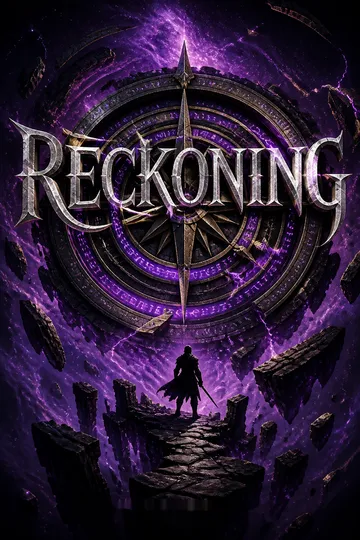
Reckoning receives overwhelmingly positive reviews, with readers praising the character development, world-building, and plot progression. Many consider it the best volume in the series, highlighting the engaging storyline, intense action scenes, and emotional depth. Readers appreciate the author's improved writing style and the complex political landscape. Some criticize the multiple POVs and pacing issues, but overall, fans eagerly anticipate the next installment, expressing deep investment in the characters and story.
People Also Read


Characters
Arthur Leywin, using Grey
The hidden aether wielderArthur is a former king reborn in Dicathen, now operating in Alacrya under the name Grey. He is disciplined, observant, and accustomed to treating emotional distance as protection. His aether core, combat skill, and ability to move through the Relictombs make him unusually powerful, but his strongest motives are personal: protecting his family, honoring those who sacrificed for him, and understanding what happened to Tessia. He can be ruthless when a threat becomes immediate, yet he is repeatedly unsettled by the people he has begun to know among his enemies. His central tension is whether strength can serve protection without turning its wielder into another instrument of domination.
Caera Denoir
The defiant Vritra-blooded allyCaera is an accomplished ascender and the adopted daughter of Highblood Denoir. Her hidden Vritra ancestry places her at the center of family ambition, but she resists being treated as a political asset. Curious, capable, and more emotionally perceptive than she initially lets on, she is drawn to Grey because he challenges her assumptions about power and the Relictombs. She keeps some secrets from him, yet repeatedly chooses honesty when it matters. Her loyalty is not blind: she wants to understand what Grey is doing while preserving the right to decide for herself whether she will stand beside him.
Regis
The irreverent living weaponRegis is a sentient companion formed from aether and bound to Arthur. He shares Arthur’s memories and emotions, but his humor, impatience, and appetite for action make him a distinct presence rather than a mere echo. Regis often punctures Arthur’s self-seriousness, while also noticing when fear or guilt is being disguised as strategy. His power can become devastating, especially when he uses Destruction, but that strength carries a cost. Regis wants to be Arthur’s partner and protector, not simply an extension of Arthur’s will, a need that becomes more important as Arthur’s power grows.
Eleanor Leywin
Arthur's brave younger sisterEllie is Arthur’s younger sister, a young mage learning to fight while living among Dicathen’s displaced survivors. She is courageous without imagining herself invulnerable, and her bravery often takes the form of acting despite fear and uncertainty. Ellie wants to help the people around her, especially the elves who have lost their homeland, but she is prone to blaming herself for events beyond her control. Her bond with Boo gives her protection and courage, while her affection for Arthur remains a measure of the home she hopes to recover. She gradually learns that telling the truth can be a responsibility, even when it brings conflict.
Tessia Eralith
The displaced elven princessTessia is an elven princess and one of Arthur’s oldest companions. She grew up under the obligations of royalty, yet her relationships with Arthur, Ellie, and her people matter more to her than ceremonial status. Her courage is often entangled with impulsiveness: she acts when people are in danger, sometimes before she has weighed what the action will cost. Tessia’s history with Arthur is emotionally complicated, shaped by affection, separation, and the pressures of war. She represents both the person Arthur hopes to protect and the independent will that cannot be reduced to his memory of her.
Cecilia
The powerful newcomerCecilia arrives in Alacrya with immense potential and a fractured sense of self. Her new body, unfamiliar magic, and unstable memories leave her struggling to tell which thoughts and emotions belong to her. She wants agency and a life that is genuinely her own, but Agrona and Nico both have strong reasons to shape her choices. Cecilia is not simply a weapon or a prize: she can question the people who claim to protect her and make decisions that surprise them. Her connection to Tessia’s body creates a conflict that neither she nor those around her can easily resolve.
Nico Sever
The wounded former friendNico is Arthur’s former friend, reincarnated in Alacrya and elevated into the rank of Scythe. He is brilliant and technically skilled, but his identity has been shaped by grief, resentment, and years of manipulation. He wants to protect Cecilia and settle accounts with Arthur, believing that power will finally prevent him from being helpless. Yet his anger often makes him easy to steer, particularly for Agrona, who understands how to turn old pain into a usable weapon. Nico’s tragedy lies in the gap between his desire to act freely and the forces that have defined his life for him.
Seris Vritra
The strategic ScytheSeris is a Scythe whose poise conceals a deliberate willingness to challenge the order around her. She mentors Caera, studies political weaknesses, and sees Arthur as a force that could change the balance between the Vritra and Indrath. Seris rarely reveals her full intentions, preferring to create situations in which others must choose for themselves. Her methods can look manipulative because they are: she uses debts, information, and public attention as tools. Yet she is not interested in simple obedience. She wants power to move away from the Sovereigns, even if she cannot fully predict what will replace them.
Agrona Vritra
The architect of reincarnationAgrona is the Vritra ruler of Alacrya and a master of both political and mental control. He presents himself as a protector of lessers against the asuras, but he treats people as resources whose memories, bodies, and loyalties can be shaped to serve his plans. His fascination with power is intellectual as well as imperial: he wants to understand and control forces that others consider unknowable. Agrona can offer tenderness and reassurance, but these gestures do not cancel the coercion beneath them. His greatest danger is his ability to make manipulation feel like care.
Aldir
The remorseful pantheon generalAldir is a warrior of the Thyestes clan and the only living wielder of the forbidden World Eater technique. He has spent his life understanding duty as service to Kezess, but the destruction of Elenoir leaves him unable to keep that belief intact. His remorse is restrained rather than performative; he does not pretend that regret can restore the dead. Aldir’s growing doubt makes him dangerous to the hierarchy he once served, because he can recognize that obedience has become a way to avoid moral judgment. His struggle is to act according to conscience without pretending the damage can be undone.
Kezess Indrath
The dragon sovereignKezess is the leader of the Indrath dragons and a ruler accustomed to making decisions on a scale that treats lesser lives as expendable. He sees the war with Agrona as a threat to Epheotus and believes preemptive destruction can protect his people. His authority depends on loyalty, secrecy, and the assumption that he alone understands the stakes. Kezess is not reckless in the ordinary sense; he is more dangerous because he can justify atrocities as rational necessities. His worldview leaves little room for the possibility that those beneath him might judge their own future.
Virion Eralith
The exhausted elven commanderVirion is Tessia’s grandfather and the commander of Dicathen’s surviving resistance. He has led through defeat, exile, and the loss of his homeland, carrying the burden of decisions that cannot satisfy everyone. His instinct is to preserve the people who remain, even when that requires withholding painful information or making choices that later invite anger. Virion is neither untouched by grief nor free of error. He is most compelling when his disciplined public authority cracks enough to reveal a grandfather and survivor beneath the commander.
Rinia Darcassan
The failing seerRinia is an elderly elf whose ability to see possible futures consumes her life force. She rarely gives simple answers, partly because the futures she sees are conditional and change as people act. Her evasions frustrate Ellie and Virion, but they are not signs of indifference; Rinia is trying to guide people through outcomes she cannot fully control. She is burdened by knowing what may happen without possessing the power to prevent it cleanly. Her compassion appears in the risks she takes, not in promises that everything will be well.
Bairon Wykes
The battle-scarred LanceBairon is a human Lance who once carried himself with aristocratic pride and a strong sense of personal grievance. Defeat and the collapse of his family’s loyalties have made him more disciplined and attentive to the people he serves. He remains forceful, but his authority is increasingly grounded in responsibility rather than status. Bairon is a practical defender who understands that courage often means staying in a dangerous place long enough for others to escape.
Alaric
The crooked ascender uncleAlaric is a retired ascender whose reputation for drunkenness and greed hides a shrewd understanding of Alacryan politics. He helps Arthur because there is profit in it, but his attachment grows beyond the bargain. The loss of his own Vritra-born son gives him a private history of how highbloods consume families while calling the process advancement. Alaric does not make himself a moral hero; he is useful because his motives are legible, and because he can still choose loyalty when it costs him.
Darrin Ordin
The ascender who investsDarrin is a wealthy former ascender who helps unnamed mages resist exploitation by powerful bloods. He believes that assistance should be passed on rather than repaid as a fixed debt, though he also expects people to become responsible for others. His rural home, wards, and young trainees reflect a life redirected from dangerous ascents toward teaching. Darrin sees survival as a collective skill, not merely the reward of the strongest fighter, and he challenges Arthur’s assumption that every Alacryan relationship must be transactional.
Ada Granbehl
The grieving Granbehl sisterAda is the youngest Granbehl sibling and the sole survivor of the ascent that killed her brothers and friend. She is observant, vulnerable, and caught between what she knows happened and what her family needs her to say. Grief makes her lash out at Arthur, but her accusation is also an attempt to give survival a cause she can understand. Ada has been raised inside a house that prizes status and family power, yet she is not simply a reflection of its values. Her uncertainty is the first space in which her own judgment can emerge.
Seth Milview
The overlooked student fighterSeth is a shy, bookish academy student who has little confidence in his body or social standing. His older sister’s role in the war makes him an uneasy reminder to Arthur of the people connected to Elenoir’s fall, but Seth himself is not responsible for her choices. He wants knowledge and belonging more than military glory. Under Arthur’s instruction, he learns to read opponents and use timing instead of strength. His slow confidence develops through concrete practice, friendship, and the discovery that others will cheer for him.
Mayla Fairweather
The gifted new ascenderMayla is a cheerful young mage from Maerin Town whose exceptional runes bring her into Central Academy and away from her family. Her optimism does not mean she is unafraid; she worries about leaving her sister and about the dangerous future her abilities may bring. Mayla is curious, kind, and quick to encourage others, especially Seth. Her talent gives her opportunities she never expected, but she must decide whether accepting them means abandoning the people she loves.
Valen Ramseyer
The heir seeking choiceValen is the director’s grandson and a highblood heir raised to become a leader. He is controlled, observant, and skilled at managing how others see him, but that polish conceals uncertainty about the life planned for him. Receiving a powerful rune intensifies his family’s expectations rather than making him feel free. Valen is capable of generosity and recognizes skill even in people beneath his station. His conversations with Arthur expose the difference between having power and having the right to choose what that power is for.
Enola Frost
The driven highblood studentEnola is a talented young fighter from Highblood Frost, accustomed to measuring herself through achievement and discipline. She initially sees Arthur’s class as a threat to her preparation for public competition, then discovers that his practical teaching improves her technique. Her ambition is genuine, but she is troubled by being sent toward a war against beings who can destroy entire countries. Enola wants to serve and prove herself without being treated as disposable material by her family.
Taci
The young pantheon weaponTaci is a young member of the Thyestes clan, trained in the aether realm and taught to see combat as the measure of his worth. He is disciplined, proud, and sincerely committed to the purpose his elders assigned him. His exceptional skill is paired with a narrow understanding of power: he sees the people he is sent to fight as obstacles rather than lives. Taci’s confidence has a childlike edge because it has never been meaningfully tested outside the world that trained him.
Cadell Vritra
Agrona's feared enforcerCadell is a Scythe known as Agrona’s personal enforcer. He is controlled, cruel, and accustomed to overwhelming opponents through soulfire and other decay-based magic. Unlike a loud bully, Cadell’s menace comes from his composure and certainty that he can use violence without consequence. His place in the Vritra hierarchy gives him both power and a sense of permission. For Arthur, Cadell is not an abstract enemy but a figure tied to some of the worst losses of the war.
Corbett Denoir
The calculating HighlordCorbett is Caera’s adoptive father and the head of Highblood Denoir. He is educated, politically cautious, and deeply aware that even the richest blood remains vulnerable to the Sovereigns. He values Caera, but his affection is entangled with the house’s status and the political meaning of her ancestry. Corbett is capable of reconsidering a position when new information changes its cost, as shown by his eventual assistance to Arthur. His pragmatism can look like cowardice, but it is also a survival strategy in a system where one misstep can destroy an entire family.
Sylvie
Arthur's absent dragon bondSylvie is Arthur’s dragon bond and one of the people whose sacrifice shaped his life. In this part of the story she remains within an iridescent, layered egg, beyond Arthur’s reach. He continues feeding it aether, hoping to restore her, even when the process drains him and produces no immediate result. Her absence affects Arthur as strongly as any present companion: he treats the egg as a promise he has not finished keeping. Sylvie’s bond with him represents a relationship built on mutual protection rather than ownership.
Plot Devices
The Far-Seer Relic
A window to loved onesThe cracked, multifaceted relic lets Arthur observe distant people by focusing on their names and images. It first shows him the destruction of Elenoir and leaves him fearing for Ellie; after it recharges, he confirms that Ellie survived and later watches both her and Alice in the sanctuary. The relic cannot resolve every uncertainty: it gives Arthur a view, not a conversation, and it fails to show him Tessia or Cecilia when he tries. Its limits make it emotionally potent. It offers evidence of survival while preserving the distance and helplessness Arthur is trying to escape.
The Relictombs Compass
A private route into dangerArthur and Caera steal a dead silver relic from Central Academy’s reliquary and use Aroa’s Requiem to restore it. Its two halves open a portal into the Relictombs and let Arthur return to the academy from within a zone. The Compass transforms his access to the ancient realm, allowing repeated expeditions without relying on public ascension portals. It also makes the academy a strategic base and gives Caera a continuing role in his journeys. The device does not make the zones safe: each still has its own rules, traps, monsters, and possible relics.
Layered Aether Core
Power built by changing structureArthur’s aether core does not progress like a mana core, so ordinary training cannot produce the growth he needs. A lethal geode forces him to absorb aether from an obelisk that repeatedly empties and replenishes the zone. By controlling the influx instead of resisting it, Arthur forms a second binding layer around his core, greatly increasing its capacity and efficiency. The process establishes a new path for his development, while also making his power more difficult to manage. His growth depends less on accumulating energy than on redesigning the vessel that contains it.
Djinn Keystones
Insight hidden in experienceKeystones contain the djinn’s teachings, but they do not provide simple instructions. Arthur must enter their strange inner spaces and discover what their forms are meant to teach. The first granted insight into Aroa’s Requiem; another leads him to a djinn who teaches him to form an aether blade and awards a further keystone. A later keystone appears as a void that Arthur cannot interpret until Caera’s mana reveals movement within it. The device makes knowledge an active test of perception, not an object that can be mastered by reading or possession alone.
Relic Armor and Destruction
A defense that becomes a weaponThe heavy battlerobes hidden in the blood-relic shrine transform into fitted black armor when Arthur touches them with aether. The armor attracts aether, protects him against many attacks, and stabilizes the collapsing zone around him. Later, Regis learns to combine his Destruction flames with Arthur’s aether blade, creating a weapon capable of cutting through Cadell’s decay magic. These tools do not remove the danger of combat; the armor can be pierced and Destruction can consume its user. Their value lies in extending Arthur’s options, not making him invulnerable.
FAQ
Synopsis & Basic Details
What is Reckoning about?
- Vision sparks a quest: Arthur is driven by a vision of destruction to protect his loved ones and uncover hidden truths.
- Accusation leads to trial: Framed for murder, Arthur navigates a corrupt legal system, seeking allies and exposing deceit.
- Alliances form and shift: Arthur forges bonds with unexpected allies while facing betrayal and manipulation from powerful figures.
Why should I read Reckoning?
- Intriguing blend of action: The story combines intense battles with political intrigue and personal struggles.
- Complex character dynamics: The characters are multifaceted, with hidden motivations and evolving relationships.
- Exploration of deeper themes: The book delves into themes of redemption, resilience, and the search for truth.
What is the background of Reckoning?
- Post-war Alacrya setting: The story takes place in Alacrya, a land shaped by a long and brutal war with Dicathen.
- Asuran influence and power: Asuras, powerful beings from Epheotus, exert significant influence over Alacryan society and politics.
- Relictombs and ancient magic: The Relictombs, dangerous dungeons filled with ancient magic and powerful beasts, are a key source of resources and power.
What are the most memorable quotes in Reckoning?
- "Ellie's alive. She had to be.": Arthur's unwavering determination to find and protect his sister.
- "It's all right. Just go. I'll be fine.": Arthur's selflessness and willingness to sacrifice for others.
- "We just have to let the Relictombs guide us.": Arthur's reliance on intuition and trust in the unknown.
What writing style, narrative choices, and literary techniques does TurtleMe use?
- First-person perspective: The story is told from Arthur's point of view, providing intimate access to his thoughts and feelings.
- Detailed world-building: TurtleMe creates a rich and immersive world with its own history, cultures, and magic systems.
- Action-packed and suspenseful: The narrative is filled with battles, political intrigue, and unexpected twists.
Hidden Details & Subtle Connections
What are some minor details that add significant meaning?
- Cracked relic foreshadows: The cracked relic Arthur finds hints at the broken state of the world and the challenges he faces.
- Alaric's dimension ring: Alaric taking Arthur's dimension ring highlights the importance of trust and resourcefulness.
- Steward's fidgeting reveal: Matheson's fidgeting with his sleeves reveals his frustration and unease.
What are some subtle foreshadowing and callbacks?
- Sylvie's egg's hunger: The egg's hunger foreshadows Sylvie's eventual return and the need for aether.
- Three Steps' training echoes: Arthur's aether manipulation practice recalls his training with Three Steps.
- Caera's disguise mirrors Ellie's: Caera disguising herself as Haedrig parallels Ellie's disguise as an Alacryan soldier.
What are some unexpected character connections?
- Alaric and Darrin's past: Alaric and Darrin's mentor-student relationship adds depth to their alliance with Arthur.
- Ada and Arthur's shared trauma: Ada and Arthur's shared trauma creates a complex bond despite their opposing sides.
- Petras and Taegan parallels: Petras's build and mannerisms are reminiscent of Caera's bodyguard, Taegan.
Who are the most significant supporting characters?
- Alaric's street smarts: Alaric's knowledge of Alacryan society and connections prove invaluable to Arthur.
- Darrin's moral compass: Darrin's sense of justice and influence within the Ascenders Association provide crucial support.
- Nessa's loyalty to Caera: Nessa's unwavering loyalty to Caera highlights the importance of personal connections amidst political turmoil.
Psychological, Emotional, & Relational Analysis
What are some unspoken motivations of the characters?
- Arthur's guilt drives him: Arthur's guilt over past failures fuels his determination to protect others.
- Caera seeks validation: Caera seeks validation and purpose beyond her family's expectations.
- Alaric seeks profit and purpose: Alaric seeks both financial gain and a sense of purpose in helping Arthur.
What psychological complexities do the characters exhibit?
- Arthur's detachment as defense: Arthur's detachment serves as a defense mechanism against emotional pain.
- Caera's internal conflict: Caera struggles with her loyalty to her family and her growing feelings for Arthur.
- Nico's rage and resentment: Nico's rage and resentment stem from past trauma and manipulation.
What are the major emotional turning points?
- Arthur's vision of Elenoir: Arthur's vision of Elenoir's destruction solidifies his resolve to fight Agrona.
- Arthur's reunion with Ellie: Arthur's reunion with Ellie provides a moment of hope amidst the chaos.
- Ada's testimony at trial: Ada's testimony at trial marks a turning point in her relationship with Arthur.
How do relationship dynamics evolve?
- Arthur and Caera's trust: Arthur and Caera's relationship evolves from suspicion to trust and mutual respect.
- Arthur and Regis's bond: Arthur and Regis's bond deepens through shared experiences and challenges.
- Arthur and Alaric's reliance: Arthur and Alaric develop a pragmatic but mutually beneficial partnership.
Interpretation & Debate
Which parts of the story remain ambiguous or open-ended?
- The nature of Fate: The true nature of Fate and its influence on events remains ambiguous.
- Sylvie's fate and return: The circumstances surrounding Sylvie's fate and potential return are unclear.
- The djinn's motives and goals: The djinn's motives and ultimate goals in creating the Relictombs are not fully explained.
What are some debatable, controversial scenes or moments in Reckoning?
- Arthur's treatment of Ada: Arthur's initial indifference towards Ada's suffering raises questions about his morality.
- Virion's decision to withhold truth: Virion's decision to withhold the truth about Elenoir sparks debate about leadership and deception.
- Arthur's near-killing of Cecilia: Arthur's near-killing of Cecilia raises questions about his control and the influence of his past.
Reckoning Ending Explained: How It Ends & What It Means
- Arthur's escape and new path: Arthur escapes the Victoriad and sets a new course, leaving Alacrya behind.
- The cost of power and sacrifice: The ending highlights the cost of power and the sacrifices required in the fight against Agrona.
- Uncertain future and hope: The future remains uncertain, but Arthur's determination to protect his loved ones offers a glimmer of hope.
The Beginning after the End Series


About the Author
Download PDF
Download EPUB
.epub digital book format is ideal for reading ebooks on phones, tablets, and e-readers.








