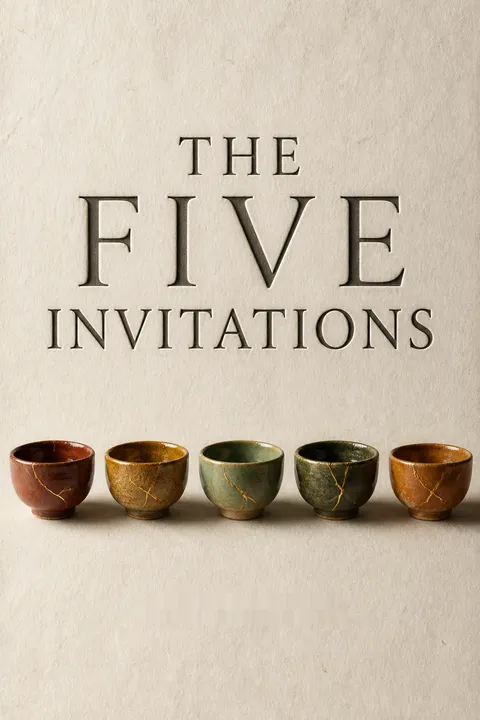


Key Takeaways
Use mortality as a daily editor, not a deadline for someday
Death sharpens the present. Frank Ostaseski, a hospice caregiver for thousands, argues that death is not merely an event at the end of life. Remembering that everything changes can help people notice what deserves attention now: loving someone openly, repairing a relationship, or dropping a grudge. Jack, a 45-year-old man diagnosed with terminal lung cancer after years of addiction, wrote that he had put too much off, assuming time would always be available. His story makes the book’s central claim concrete: waiting for the right circumstances can become a way of missing life.
Practice before crisis. The Five Invitations are five principles drawn from bedside care and offered as ways to live, not just prepare for dying. Their point is practical: do not rely on a future moment of perfect clarity to do the work that matters.
What's striking is how mortality functions here as a tool for prioritization, not as a demand to live frantically. That distinction matters: urgency can produce impulsive choices, while a clear sense of finitude can clarify which commitments deserve sustained attention. The idea resembles values-based approaches in psychology, where people identify what matters and then choose actions that express it. A useful test is whether contemplating death makes a person more present and generous, or merely more anxious. The book's invitation is strongest when awareness of an ending becomes a reason to participate, rather than a reason to panic.
Treat change as the condition that makes new life possible
Impermanence is ordinary. The book uses impermanence to mean that people, bodies, relationships, thoughts, and circumstances are continually changing. That can be painful, but it is also how renewal happens. Children collecting fallen leaves in the woods saw that old leaves make room for new growth. A painstaking sand mandala made by Tibetan monks was accidentally destroyed; the monks began again, since its beauty lay partly in the making and its lesson in letting go.
Identity changes too. Abigail, facing terminal brain cancer, first asked whether she could bring her china and rocking chair to hospice. When she faced the fact that she could no longer walk, she chose to move there. The scene shows how acknowledging present conditions can loosen the struggle to preserve an earlier version of life.
This account joins a spiritual idea to an observable feature of living systems: stability often depends on continual change, not on freezing a system in place. The mandala makes that principle memorable because its destruction does not erase the care invested in creating it. Still, acceptance should not be confused with passivity. Recognizing a changing reality can help people act more intelligently within it, including resisting preventable harm. The insight is not that loss is secretly pleasant, but that refusing to acknowledge loss can consume attention that might otherwise support adaptation, appreciation, or repair.
Put hope in your response, not in a guaranteed outcome
Hope need not predict. Ostaseski distinguishes mature hope from expectation. Expectation attaches well-being to a specific result, such as recovery; mature hope trusts that meaningful action remains possible even when the result is uncertain. Fred kept bringing his dying wife, Rachel, watermelon because he thought it would cure her cancer. When he discovered he had misunderstood the information behind the supposed remedy, he asked what he could still hope for. He answered that he wanted to love her fully and help her know how much their life together meant to him.
Stay available to the moment. The book calls this non-waiting: meeting what is happening without demanding that the next moment arrive in a preferred form. It is not giving up plans or refusing treatment. It is acting while remaining open to more than one possible future.
The distinction is useful because hope can either mobilize care or make emotional life hostage to outcomes beyond anyone's control. Fred's shift preserves agency: he cannot guarantee a cure, but he can choose how to be with Rachel. This aligns with a broader psychological distinction between controllable actions and uncontrollable results. A necessary nuance is that outcome-focused hope can be adaptive when it supports treatment or persistence. The problem is not wanting recovery. It is treating recovery as the only future that could make a life meaningful.
Meet pain directly before resistance turns it into suffering
Pain and suffering differ. The Buddhist term dukkha describes the stress and dissatisfaction that arise when people demand that changing life remain as they prefer. Pain can be physical or emotional; suffering can intensify when thoughts and resistance are added to it. Ostaseski summarizes the pattern as pain plus resistance producing suffering. Acceptance here means seeing what is happening clearly, not approving it or deciding nothing can be done.
Attention makes pain workable. When seven-year-old Jamie died of cancer, his parents were afraid to touch his body because they feared the grief that touch would unleash. With Ostaseski present, they slowly washed and dressed their son, pausing for memories and breaks. The ritual did not undo the loss. It let them meet it directly, with care, instead of remaining trapped in avoidance.
The distinction between sensation and the story surrounding it is a powerful way to understand why distress can grow beyond an initial injury or loss. It also resembles acceptance-based therapies, which help people notice painful thoughts without treating each thought as a command or fact. The claim needs careful handling: severe pain, trauma, and illness are not simply mindset problems, and some circumstances require immediate protection or treatment. The book is most convincing when acceptance means contact with reality that enables action, rather than an expectation that people should endure what could be changed.
Forgive to release your own burden, not to excuse harm
Forgiveness is not acquittal. It can release a person from carrying resentment without denying wrongdoing, removing consequences, or requiring renewed contact. Blaze had not seen her brother Travis in more than 25 years. When he confessed that he had harmed her as children, she told him she no longer wanted blame between them. Her forgiveness gave Travis room to face his past, but it did not make the past acceptable or erase it.
Start where you are. Ostaseski describes struggling to forgive a Guatemalan military officer who refused help for a dying child. His rage later frightened his young son. He did not force himself to feel forgiving; he practiced meeting the anger and grief honestly, sometimes starting with smaller resentments. Forgiveness took time and included recognizing his own helplessness. It was not a substitute for opposing injustice.
This framing avoids a common moral trap: pressuring harmed people to forgive as proof of virtue. Forgiveness is presented as a possible path to freedom from resentment, not an obligation or a verdict on the offender. It also separates inner release from reconciliation, which requires trust and participation from both parties. The account of the officer is particularly important because it retains moral clarity about the harm. Anger can identify injustice and motivate protection; the question is whether it remains useful or becomes a permanent captivity for the person carrying it.
Stop performing the helper; meet people as whole persons
Presence matters more than status. Ostaseski warns that a caregiving role can become a way to avoid fear and helplessness. While caring for his friend John, who had become confused and physically dependent, Ostaseski tried to control the situation and act like an expert. John finally told him he was trying too hard. When Ostaseski stopped managing the scene and admitted his own vulnerability, the two friends could meet each other more honestly.
Serve, do not take over. The book calls the urge to help partly to soothe the helper's own distress “helper's disease.” A nurse wanted medication for a dying woman chiefly because the nurse found the woman's sadness hard to witness. The example asks caregivers to check whether an intervention serves the patient or relieves the observer. Listening, asking before advising, and respecting a refusal can be forms of care.
This insight connects caregiving with the ethics of autonomy: good intentions do not guarantee that an intervention respects another person's needs. It also highlights the emotional labor involved in staying present without making another person's experience about the caregiver's discomfort. That restraint is not always enough; people still need skilled medical care, advocacy, and protection. The practical challenge is to pair competence with curiosity. A role can organize useful responsibilities, but it becomes harmful when it replaces attention to the person whose needs are supposed to guide the work.
Let grief move at its own pace, without grading its shape
Grief is not a checklist. The book describes grief through three recurring experiences: loss, losing, and loosening. Loss can arrive as shock and disbelief. Losing describes the disorientation and repeated sense of absence that may follow. Loosening is the gradual re-entry into life, not forgetting or leaving the deceased behind. These are not fixed stages or a timetable; people may experience them in different orders and return to them.
Accompaniment beats advice. Cindy died just as her father, Clyde, arrived after taking his first plane trip. He stayed beside her body through the night, told stories, and made funeral arrangements. Asked what had changed, he said the feeling had become familiar. His response points to how earlier losses can make grief recognizable, while also showing why no outsider should prescribe what grief ought to look like.
The refusal to turn grief into a predictable sequence is a humane correction to the desire for tidy recovery narratives. Grief can include anger, numbness, relief, fear, and love, sometimes within minutes. Treating these reactions as evidence of failure can compound distress. At the same time, the framework of loss, losing, and loosening can help name common experiences without claiming to explain every person's process. Its best use is descriptive, not diagnostic. Supporters can offer dependable presence and practical help while letting mourners set the rhythm.
Pair compassion with wisdom so care does not become overwhelm
Care needs two wings. Ostaseski presents wisdom and compassion as complementary: wisdom recognizes interdependence, while compassion responds to suffering. Empathy means feeling with another person; compassion adds a motivation to support their well-being. Without balance, empathy can become overload, while abstract wisdom can sound detached. A simple practice is to remember that another person has fears, needs, and hopes, then wish them well without assuming their experience is identical to yours.
Respond to the actual need. Catherine, who was dying, wanted her deceased mother present at her wedding. Rather than focusing only on the wedding plan, Ostaseski listened for what hurt and helped Catherine find ways to include her mother's memory. The example shows compassion as attentive, specific, and responsive, not a general impulse to fix whatever looks wrong.
This distinction helps explain why intense emotional resonance alone does not reliably produce helpful care. A caregiver can feel another person's distress and still miss what that person wants. Compassion adds perspective and a practical orientation toward the other's needs, while boundaries protect both people from exhaustion. The book's language of interdependence gives care a broad ethical basis, but it should not erase real differences in power, history, or resources. Connection does not mean sameness. Effective compassion notices common humanity while asking what this particular person needs now.
Find rest in attention, even when circumstances cannot be fixed
Rest is available mid-storm. Adele, an 86-year-old hospice resident, was struggling to breathe and rejected comforting phrases that did not fit her experience. Ostaseski asked whether she wanted to struggle less and invited her to notice the brief pause after each exhale. Her circumstances did not change, but attention to that small interval helped her settle. The point is not that breathing practice cures illness; it can offer a place to rest within an unchanged situation.
Notice what drives the mind. The book adapts three Buddhist obstacles into “demand, defense, and distract”: craving for a preferred result, pushing away what feels unpleasant, and turning away from reality. Mindfulness can help identify these habits before they dictate a response. A stressed executive began taking deliberate breaks for basic needs, using a short walk to return attention to the present.
The image of rest as a capacity rather than a reward after all tasks are complete is a direct challenge to productivity culture. Brief attention practices can create enough space to respond rather than react, especially when external control is limited. Still, contemplative practice should not be sold as a universal remedy for structural overload, dangerous working conditions, or untreated illness. Rest may require changing the situation, not merely changing one's relationship to it. The strongest version of the insight combines inward steadiness with practical action.
Stay curious in uncertainty, and let reality revise your story
Not knowing can open attention. “Don't know mind” is a Zen term for meeting experience with curiosity rather than a fixed conclusion. In a teaching story, a monk is asked why he is making a pilgrimage and answers that he does not know. His teacher treats that uncertainty as a form of intimacy with the journey. This is not ignorance or a rejection of expertise; it is a willingness to let new information change one's view.
Follow what is present. Isaiah, near death, described walking toward a red schoolhouse. Ostaseski did not correct him by insisting that he was in a hospital. He listened and accompanied him as far as Isaiah wanted. The episode does not prove a spiritual explanation for Isaiah's vision. It shows how humility can keep a caregiver from replacing another person's experience with a preferred interpretation.
Curiosity is a disciplined alternative to certainty, particularly when another person's experience is inaccessible or unfamiliar. It can reduce the urge to impose explanations and make room for better questions. This is also a useful principle in science and clinical practice: observations should remain distinct from interpretations, and confidence should track evidence. The book sometimes uses spiritual language for experiences that cannot be independently verified. Its practical wisdom does not depend on accepting those metaphysical claims. Respectful listening remains valuable even when the meaning of an experience is unknown.
Analysis
The book's argument is carried less by abstract doctrine than by repeated bedside encounters. Its five-part structure gives those stories a memorable architecture, while the stories keep the framework from becoming a slogan. A dying person wants watermelon, a brother asks forgiveness, a caregiver loses composure, a grieving father stays beside his daughter's body. In each scene, the lesson is not that death makes people serene. It is that attention, honesty, and relationship remain possible even when control disappears.
The most useful through-line is a shift from managing experience to meeting it. Mortality makes postponement harder to defend. Impermanence challenges the fantasy of a fixed self. Acceptance creates room to act, while forgiveness, compassion, and presence loosen the grip of resentment and fear. The book's caregiving ethic follows the same logic: begin with the person, not with a role, protocol, or idealized picture of a good death.
That ethic has limits worth keeping visible. Acceptance must not become a demand that people tolerate preventable harm, and spiritual interpretations should not displace clinical judgment or a patient's own beliefs. The author generally distinguishes these, but his contemplative vocabulary can make difficult claims about an essential nature or awareness sound more settled than they are. Readers can retain the practical discipline of attention without adopting a metaphysical account of consciousness.
The stories are also a quiet argument against the cultural isolation of death. The hospice is not presented as a place where suffering disappears, but as a community in which ordinary acts, such as preparing food, washing a body, listening, or sitting silently, regain moral weight. The result is a practical philosophy: do not wait for certainty, do not require pain to become meaningful before you care for someone, and do not mistake a person's condition for the whole person. Death matters here because it exposes what daily life already asks of us: to participate, respond, and love without guarantees.
Review Summary
The Five Invitations receives predominantly positive reviews, praised for its insightful teachings on death, life, and mindfulness. Readers appreciate Ostaseski's wisdom, drawn from his extensive hospice experience. Many find the book transformative, offering valuable perspectives on living fully and approaching death with compassion. Some criticize its repetitiveness and loose structure, while others struggle with its Buddhist influences. Overall, reviewers recommend it as a powerful, thought-provoking read that challenges societal taboos around death and encourages readers to embrace life's impermanence.
People Also Read






Glossary
The Five Invitations
Practices for living fullyOstaseski's five principles, distilled from decades of accompanying people who are dying. They encourage acting on what matters, welcoming experience rather than rejecting it, bringing the whole self to difficult situations, finding inner rest amid activity, and meeting uncertainty with an open mind. The author presents them as lived practices applicable to illness, grief, and ordinary transitions.
Dukkha
Stress and unsatisfactorinessA Buddhist term used in the book for the stress, anguish, or dissatisfaction connected with life. Ostaseski links it to treating changing, unreliable conditions as though they should provide lasting security or pleasure. Pain is part of human life, but resistance, fearful interpretation, and clinging can add further suffering.
Mature hope
Hope without fixed outcomesA form of hope grounded in trust, values, and the possibility of responding well, rather than in a guaranteed result. It differs from wishful expectation, which depends on a particular future, such as recovery. Mature hope can support meaningful action even when circumstances are painful and the desired outcome is uncertain.
Non-waiting
Open attention to unfolding lifeOstaseski's term for meeting the present without leaning toward a preferred future or clinging to a wished-for past. Non-waiting is not passivity or ordinary patience. It is alert receptivity that allows experience to reveal itself while a person remains engaged and able to act.
Metta
Cultivated loving-kindnessA Buddhist practice of deliberately nurturing benevolence and wishing well-being for oneself and others. Practitioners commonly repeat phrases of goodwill and gradually extend them beyond familiar loved ones. In the book, metta helps caregivers and people in distress access warmth and connection without treating love as a possession or exchange.
Helper's disease
Helping to soothe oneselfOstaseski's name for a caregiver's over-identification with being helpful. The role can lead someone to intervene, advise, or fix mainly to reduce their own discomfort, rather than to meet another person's actual needs. The remedy is not indifference, but self-awareness, listening, and respect for the other person's choices.
Loss, losing, and loosening
Recurring experiences in griefA non-linear way the book describes grief. Loss names the initial impact of bereavement; losing refers to disorientation and repeated experiences of absence; loosening describes a gradual ability to re-enter life while carrying the relationship inwardly. These are not mandatory stages, a timetable, or a sequence everyone follows.
Don't know mind
Curiosity without fixed conclusionsA Zen expression for an open, receptive way of meeting experience without allowing prior knowledge, assumptions, or agendas to dictate what must be happening. It does not mean rejecting expertise or choosing ignorance. It means remaining willing to learn from the situation and revise one's understanding.
Demand, defense, and distract
Three habits that obstruct restOstaseski's accessible labels for three recurring patterns that Buddhist teaching calls craving, aversion, and ignorance. Demand clings to desired outcomes, defense pushes away unwanted experience, and distract avoids seeing what is happening. Recognizing these habits can reveal how reactions sustain distress and create an opening for mindful choice.
FAQ
What's The Five Invitations about?
- Exploring death's lessons: The Five Invitations by Frank Ostaseski explores how the awareness of death can enhance our experience of life. It presents death as a teacher rather than just an end.
- Five key invitations: The book introduces five guiding principles for living fully: Don’t wait, welcome everything, push away nothing, bring your whole self to the experience, and cultivate don’t-know mind.
- Transformative power of love: Love is a central theme, illustrating its ability to heal and connect us, even amidst suffering and death.
Why should I read The Five Invitations?
- Personal growth and reflection: The book encourages readers to reflect on their lives and relationships, offering wisdom that can lead to personal transformation.
- Facing mortality: It demystifies death, promoting openness rather than fear, which can lead to a more meaningful life.
- Practical guidance: Provides actionable advice on living with intention and authenticity, relevant for improving life quality and relationships.
What are the key takeaways of The Five Invitations?
- Embrace impermanence: Recognizing life's impermanence helps us appreciate each moment, encouraging urgency and purpose.
- Cultivate compassion: Emphasizes compassion for ourselves and others, fostering deeper connections and understanding.
- Authenticity matters: Bringing our whole selves, including vulnerabilities, allows for genuine connections and personal fulfillment.
What are the Five Invitations in The Five Invitations?
- Don’t wait: Encourages acting on what matters without delay, emphasizing life's fleeting nature.
- Welcome everything, push away nothing: Teaches acceptance of all experiences, promoting learning and growth.
- Bring your whole self: Urges embracing all aspects of oneself, fostering deeper connections and authenticity.
- Find a place of rest: Suggests cultivating inner peace amidst chaos, aiding in navigating challenges.
- Cultivate don’t-know mind: Promotes openness to uncertainty, encouraging curiosity and flexibility.
How does Frank Ostaseski define "welcome everything, push away nothing"?
- Acceptance of all experiences: Emphasizes accepting both positive and negative experiences to learn and grow.
- Avoiding resistance: Resisting difficult emotions increases suffering; embracing challenges fosters resilience.
- Creating space for healing: Welcoming experiences creates space for healing and understanding, fostering compassion.
How does The Five Invitations address the concept of love?
- Love as a healing force: Illustrates love's power to heal and connect, even in the face of death.
- Love and vulnerability: True love requires vulnerability and authenticity, deepening relationships.
- Universal love: Encourages cultivating love that extends beyond personal relationships, leading to a fulfilling life.
What are the best quotes from The Five Invitations and what do they mean?
- “Don’t wait.” Reminds readers to prioritize values and relationships, acting on what matters most.
- “Welcome everything, push away nothing.” Encapsulates the message of acceptance and openness to all experiences.
- “Whatever we have done with our lives makes us what we are when we die.” Highlights the importance of living authentically and with intention.
How does The Five Invitations suggest we deal with suffering?
- Turn toward suffering: Encourages facing suffering rather than avoiding it, allowing for learning and healing.
- Cultivate compassion: Emphasizes compassion for ourselves and others during suffering, fostering deeper connections.
- Use suffering as a teacher: Suggests reflecting on suffering to gain insight and personal growth.
What role does mindfulness play in The Five Invitations?
- Awareness of the present moment: Encourages being present and aware, leading to greater appreciation and understanding.
- Cultivating acceptance: Mindfulness helps accept thoughts and feelings without judgment, fostering peace.
- Enhancing compassion: Deepens compassion for ourselves and others, allowing for authentic connections.
How does The Five Invitations address grief and loss?
- Understanding grief as a process: Presents grief as a journey, encouraging full emotional expression.
- Transformative potential of grief: Highlights how grief can lead to personal transformation and deeper connections.
- Practical advice for navigating loss: Offers insights and exercises to cope with grief, emphasizing community support.
What is the significance of "don’t know mind" in The Five Invitations?
- Embracing uncertainty: Represents openness and curiosity, letting go of the need for certainty.
- Cultivating presence: Encourages being fully present, fostering deeper connections and understanding.
- Pathway to wisdom: Allows insights to emerge naturally, free from rigid thinking.
How can I apply the teachings of The Five Invitations in my life?
- Practice mindfulness: Incorporate mindfulness to appreciate everyday moments and foster connections.
- Embrace vulnerability: Be open and authentic in relationships for meaningful interactions.
- Reflect on impermanence: Contemplate life's transient nature to approach challenges with acceptance and resilience.
Download PDF
Download EPUB
.epub digital book format is ideal for reading ebooks on phones, tablets, and e-readers.








