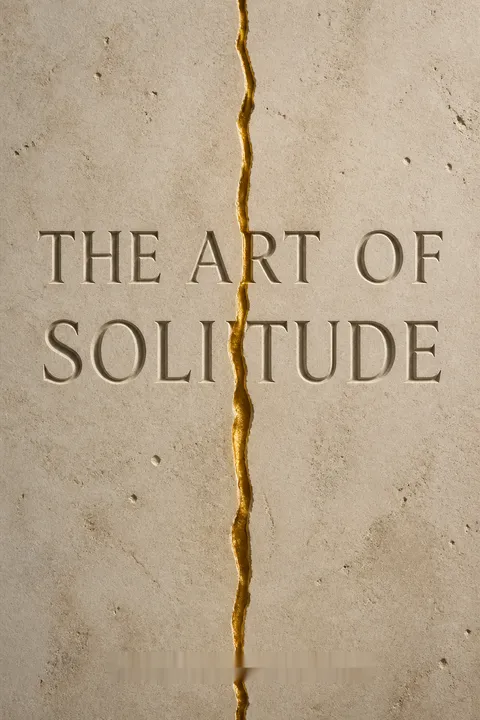


Key Takeaways
Practice solitude as an inner skill, not a change of address.
Aloneness is only the beginning. As a child, Batchelor privately explored imagined sensations and the restless stream of thought while lying awake. Years later, he spent five days alone in the Himalayan foothills, meditating and reciting Buddhist texts. Both experiences taught him that solitude is not simply being out of sight. It is a cultivated ability to meet one’s own mind without being trapped by fear, craving, or boredom.
Build a place within. The Four Eights, early Buddhist poems, describes a person physically hidden in a cell yet far from genuine solitude if consumed by private passions. A quiet room, a mountain retreat, or a busy home can all become settings for the practice. The decisive work is learning to inhabit oneself with steadiness and curiosity.
The distinction between physical privacy and inner solitude is useful in a culture where people can be alone while remaining mentally crowded by notifications, imagined audiences, and unfinished obligations. It also resists the easy romance of the cabin in the woods: changing scenery may remove interruptions, but it does not automatically change attention. Research on attention suggests that reduced stimulation can help restore focus, yet the book points to a deeper task, learning how to face what quiet reveals. Solitude is therefore a capacity, not a lifestyle badge, and its value depends on what a person can do with the space.
Quiet the crowd inside you before trying to escape the crowd outside.
Distance cannot do the inner work. Michel de Montaigne left public office and withdrew to a tower, hoping his mind would settle. Instead, it produced a disorderly parade of thoughts, and his early retreat brought depression rather than peace. He concluded that ambition, fear, and desire follow people into monasteries and caves. Solitude requires disentangling from these inner habits, not merely changing location.
Keep relationships, loosen dependence. Montaigne did not argue for abandoning family or possessions. He urged people to care for them without making their entire happiness depend on keeping them. His image of a private room at the back of life suggests a mental reserve: time and attention that remain one’s own. Such independence can make engagement with other people more willing, not less.
Montaigne’s account anticipates a modern distinction between solitude and loneliness: one concerns chosen space, the other a painful sense of disconnection. The same external situation can produce either, depending partly on a person’s expectations and resources. His emphasis on inner habits also resembles cognitive approaches that teach people to notice rumination rather than treat every thought as a command. Still, self-sufficiency should not become a moral test. People need relationships, and some cannot choose their isolation. The practical aim is not to need nobody, but to make room for an inner life that is not wholly governed by approval or fear of loss.
Notice a reaction early enough to choose what you do next.
Attention can create a pause. At a ten-day retreat led by S. N. Goenka, Batchelor learned to scan the body and observe changing sensations. A painful knee, for example, could be examined as physical pressure plus the mind’s judgment that the pressure was unbearable. When he watched closely, the sensation shifted, showing how bodily events and interpretations combine in experience.
Mindfulness has an ethical purpose. In Batchelor’s account, mindfulness is not merely concentration on breathing. It also means remembering one’s aspirations and noticing impulses before they become actions. The Buddhist poet Śāntideva compares this awareness to a gatekeeper who spots a disruptive impulse at the entrance to the mind. The practice is neither suppression nor automatic obedience: observe anger or sarcasm, accept that it has arisen, and decide whether to act on it.
The gap between stimulus and response is a central idea in emotion regulation. Naming a feeling and observing its bodily features can help prevent an impulse from being mistaken for an instruction. This section is especially strong because it joins attention to conduct: awareness matters not just because it feels calm, but because it can alter how someone treats others. The limit is equally important. Mindfulness cannot guarantee ethical behavior, and quiet observation can become a way to avoid action. Its value is tested in the moment a person must respond, especially when another person is affected.
Treat certainty as a claim to examine, not a refuge.
Inquiry begins with astonishment. Montaigne’s philosophical model starts from recognizing how little anyone fully understands, including oneself. He drew on Pyrrhonism, a skeptical tradition that suspends judgment when evidence does not settle a question. Its aim is not to deny everything, but to avoid being captured by rigid positions that feed fear, pride, or conflict.
Keep the question alive. The Four Eights criticizes people who treat a teaching or opinion as final and use it to rank everyone else. Batchelor connects this attitude to Zen practice, where a meditator asks, in effect, what this immediate experience is, without rushing toward a doctrinal answer. This is not indecision about every practical choice. It is a discipline of noticing when a belief has become more important than the reality it was meant to describe.
Epistemic humility is not the same as relativism. A person can remain open to revision while still acting on the best available evidence, which is essential in medicine, public policy, and ordinary decisions. Montaigne’s skepticism is valuable when identities and group loyalties reward certainty more than accuracy. Yet suspension cannot be applied uniformly: some claims are better supported than others, and delay itself can have consequences. The useful practice is calibrated confidence: state what is known, distinguish it from what is inferred, and stay alert to the emotional rewards that can make an opinion feel unquestionable.
Stay alone with the work until your inner audience grows quiet.
Creative solitude is active. Batchelor sees a shared quality in Johannes Vermeer’s quiet domestic scenes and Agnes Martin’s spare abstract paintings. Vermeer’s figures are absorbed in ordinary tasks, while Martin spent decades developing a disciplined visual language from simple lines and pale bands. Their work suggests that solitude can be attention to a small, immediate act rather than dramatic withdrawal from society.
The work talks back. An artist does not simply produce an object in isolation. The maker responds to what has been made, revising, noticing, and discovering what the work asks for. Batchelor describes this as a dialogue that becomes possible when imagined critics, ambitions, and self-consciousness recede. The practice has risks: Martin’s commitment to her vision sometimes separated her from other people, so artistic solitude is not proof that isolation itself is healthy.
Creative work needs both protected attention and exposure to the world it hopes to illuminate. Solitude can reduce the social performance that makes artists imitate prevailing tastes, while sustained engagement with a draft, canvas, or instrument provides the feedback that pure introspection lacks. This resembles deliberate practice: focused repetition, correction, and increasingly refined perception. The section also wisely complicates the familiar genius myth. Martin’s achievement does not establish that loneliness produces art, and her difficult circumstances matter. Solitude is most productive when it protects the work without turning sacrifice of relationships into an artistic credential.
Judge psychoactive medicines by context, risk, and their effects on conduct.
Substances can reshape solitude. Batchelor describes using tobacco, alcohol, cannabis, LSD, peyote, and ayahuasca at different stages of life. He found that drugs could intensify attention or imagination, but could also produce confusion, distress, habit, and dependence. His central argument is not that psychedelics are safe or that abstinence is foolish. It is that substance use should be considered within a broader practice of self-governance rather than reduced to a simple opposition between indulgence and virtue.
Setting and intention matter. In a Huichol peyote ceremony, ritual, fasting, music, other participants, and his own decades of meditation shaped the experience. After an ayahuasca ceremony, Batchelor unexpectedly stopped drinking wine and reported more than two and a half years without alcohol by 2019. This personal outcome is not a prescription or proof that ayahuasca treats addiction. He explicitly cautions against treating his experience as a general endorsement.
The book usefully asks why some intoxicants are socially normalized while others are prohibited, and whether policy should distinguish risks more intelligently. A fuller public-health approach would also weigh dependence, mental health, dose, setting, access to care, and unequal exposure to harm. Ritual context may provide meaning and support, but it cannot guarantee safety or turn a powerful substance into a benign one. Batchelor’s personal change is vivid precisely because it was unexpected; it remains an anecdote, not clinical evidence. The sound lesson is to replace moral slogans with informed, compassionate assessment while taking real risks seriously.
Measure meditation by how you meet life, not by unusual states.
Collectedness is not a trophy. Batchelor describes the jhānas, Buddhist meditative states involving deepening concentration and bodily well-being. On retreat, he experienced waves of rapture and calm, sometimes more clearly while walking or drinking tea than while formally sitting. Such states can be compelling, but chasing them can create expectation and disappointment. The book treats them as possible supports for insight, not as proof of spiritual achievement.
Judge the practice by its consequences. Batchelor says meditation has not erased his worries, fantasies, or irritations. Its value lies in changing his relationship to them: recognizing thoughts and moods as conditioned events rather than letting them dictate conduct. He also acknowledges that it is difficult to know whether changes come from meditation, aging, or other parts of life. The decisive question is whether practice helps someone respond more wisely and compassionately.
This distinction resembles the difference between peak experience and durable change. A temporary state can feel profound without producing better judgment, relationships, or behavior. The book’s emphasis on consequences provides a practical safeguard against spiritual status-seeking. It also models epistemic caution: a long-term practitioner may be too close to their own development to identify its causes. Others’ observations and careful research can complement introspection. The challenge is that ethical improvement is difficult to measure cleanly, but that difficulty does not make it irrelevant. It makes humility and everyday evidence more important.
Let solitude return you to other people with greater care.
Aloneness is not the destination. Batchelor contrasts inner solitude with the loneliness of Robert Kull, who spent a year on a remote Patagonian island. Kull found that wilderness could be beautiful and absorbing, but his connection to friends through email remained an invisible link to human life. The episode suggests that complete separation is less possible, and perhaps less desirable, than it first appears.
Independence can deepen solidarity. In Buddhist terms, solitude is a space of freedom from compulsive reactions, not a rejection of the world. The teaching of the raft makes the point: a tool that helps someone cross a river becomes a burden if carried forever. Practice and community are supports, not ends. Batchelor’s final paradox is that sustained attention to one’s own life can reveal its kinship with others, making care less performative and more immediate.
The idea that self-understanding can widen concern for others connects with traditions of reflective ethics: distance from immediate social pressure can make principles clearer, while contact with other people tests whether those principles are humane. Solitude can interrupt conformity, but it can also amplify self-absorption if no corrective relationships remain. The book avoids making either side absolute. Its strongest model is rhythmic: withdraw to regain perspective, then return to a shared world where consequences become visible. For people whose solitude is imposed rather than chosen, the same principle should not romanticize hardship or substitute contemplation for practical support.
Analysis
The Art of Solitude is less a manual than a literary collage. Batchelor places childhood memories beside Montaigne, Buddhist verse beside painting, and psychedelic ceremonies beside meditation retreats. Its form enacts its claim: each episode stands alone, yet adjacent fragments alter how the others are understood. The reader is asked to assemble a view rather than follow a single argument from premise to proof.
That view is a productive tension. Solitude means autonomy from compulsive thought, not escape from human responsibility. It can be practiced in a tower, a meditation hall, a studio, or the middle of ordinary life. Its methods differ: mindful attention, skeptical questioning, artistic labor, collectedness, and, in Batchelor’s personal account, carefully contextualized drug use. Their common aim is freedom to respond rather than reflexively react.
The book’s most persuasive moments are concrete. Montaigne discovers that retreat does not quiet his mind; Vermeer’s quiet rooms show attention embedded in domestic life; Kull’s remote island remains connected to friends; and Batchelor’s meditation does not eliminate his worries. These stories keep the argument from turning solitude into a glamorous cure. They also show why no single technique can stand in for a life.
The main limitation is evidentiary. The claims about contemplative practice and psychoactive substances often arise from autobiography, which can illuminate possibilities without establishing typical outcomes or causes. Batchelor acknowledges this uncertainty, especially when considering meditation’s effects. The book is strongest when read as an invitation to experiment carefully, not as a universal protocol. Its lasting insight is that solitude is neither withdrawal nor self-sufficiency: it is the inner room from which a person can meet the world without being wholly ruled by fear, craving, or borrowed certainty.
Review Summary
The Art of Solitude receives mixed reviews, with readers appreciating its philosophical explorations of solitude through Buddhism, art, and personal experiences. Many find the collage-like structure intriguing, while others find it disjointed. Batchelor's insights on meditation, Montaigne, and Vermeer are praised. Some readers are uncomfortable with his use of psychedelics. The book is seen as thought-provoking and well-written, though not always meeting expectations. It's recommended for those interested in contemplative practices and personal growth, but may not suit readers seeking a strictly religious perspective.
Glossary
viveka
Solitude or discernmentA Pali and Sanskrit term that can mean solitude, separation, or seclusion. Batchelor emphasizes the productive tension in its meanings: solitude separates a person from surrounding pressures, while discernment distinguishes what is happening from what is assumed. In the book, viveka names an inner space of freedom that supports clearer perception and less reactive engagement.
Four Eights
Four early Buddhist poemsBatchelor’s name for his literary translation of four eight-verse poems from the Aṭṭhakavagga, an ancient section of the Pali Canon. The poems challenge attachment to possessions, opinions, and claims of spiritual purity. Their formal pattern of four-line verses gives the work an austere structure that Batchelor connects with its teaching: disciplined form can interrupt habitual expression.
mindfulness
Remembering and observing clearlyIn Batchelor’s account, mindfulness is more than attention to present sensations. It includes remembering one’s ethical aspirations and noticing thoughts, feelings, and impulses as they arise. This awareness can reveal the difference between a sensation and one’s reaction to it, creating room to respond deliberately. The practice joins close observation with responsibility for conduct.
samādhi
Collectedness of mindA Buddhist term for a collected, stable quality of attention. Batchelor describes samādhi as a condition that can make the mind more lucid and steady, supporting contemplation and insight. It is not merely forceful concentration on a narrow object. In his account, collectedness can become embodied and influence attention beyond formal meditation sessions.
jhāna
Deepening meditative collectednessA Pali term meaning meditation, often used for four phases of deepening collectedness. In the book, these states involve qualities such as rapture, well-being, clarity, and equanimity. Batchelor’s retreat experiences suggest they are not simply intensified versions of ordinary concentration, and that they vary among practitioners. Their significance depends on how they support understanding and conduct.
nirvana
Freedom from reactive graspingA Buddhist term for the ending of greed, hatred, and confusion, and the freedom of mind associated with that ending. Batchelor interprets nirvana as a nonreactive openness within human experience, not a distant supernatural realm or final escape from life. It creates the capacity to meet situations without being overwhelmed by habitual desires, fears, and opinions.
ataraxia
Untroubledness of mindA Greek philosophical term for a settled state free from disturbance. Montaigne connects it with freedom from the pressure of opinions and the passions they can provoke. In the book, ataraxia is not numbness or indifference. It is a calm that makes possible clearer judgment and a less compulsive relationship to ambition, fear, and desire.
negative capability
Staying open amid uncertaintyJohn Keats’s term for the capacity to remain with uncertainties, mysteries, and doubts without urgently forcing them into a settled explanation. Batchelor uses it to describe a quality of solitude and a way of engaging with life. Letting go of rigid assumptions can expand the ability to respond imaginatively, rather than leaving a person passive or unable to decide.
Pyrrhonism
Skeptical inquiry without fixed judgmentAn ancient Greek skeptical tradition associated with Pyrrho. Its practitioners examine competing claims and suspend judgment when the evidence does not warrant certainty. Montaigne values this approach as a way to loosen the grip of opinion and attain greater tranquility. In Batchelor’s presentation, skepticism is ongoing inquiry, not the claim that all views are equally true.
FAQ
What is "The Art of Solitude" by Stephen Batchelor about?
- Exploration of Solitude: The book is a multifaceted exploration of solitude, treating it as a practice and way of life rather than a mere psychological state.
- Personal and Philosophical Journey: Batchelor weaves together personal stories, philosophical reflections, and encounters with art, meditation, and psychedelics to examine how solitude can foster autonomy, contemplation, and creativity.
- Middle Ground Approach: The author avoids extremes, focusing on solitude as a site of autonomy, wonder, and care, rather than as pure bliss or hellish isolation.
- Interdisciplinary Perspective: The book draws from Buddhist teachings, Western philosophy (especially Montaigne), art, and Batchelor’s own experiences to illuminate the complexity and value of being alone.
Why should I read "The Art of Solitude" by Stephen Batchelor?
- Timely Relevance: In an age of constant connectivity and distraction, the book offers a thoughtful guide to cultivating inner calm and self-sufficiency.
- Practical Wisdom: Readers gain practical insights into meditation, mindfulness, and the art of being alone, applicable to both spiritual seekers and secular readers.
- Rich Storytelling: Batchelor’s personal anecdotes, travel stories, and reflections on art and psychedelics make the book engaging and relatable.
- Philosophical Depth: The book provides a nuanced discussion of solitude, drawing on diverse traditions and thinkers, making it valuable for those interested in philosophy, psychology, and spirituality.
What are the key takeaways from "The Art of Solitude" by Stephen Batchelor?
- Solitude as Practice: Solitude is not just being alone, but an art that requires cultivation, mental training, and care for the soul.
- Integration of Wisdom and Compassion: True fulfillment comes from balancing solitude (wisdom) with engagement (compassion) with others.
- Mindfulness and Meditation: Mindful awareness and meditation are central tools for refining solitude and achieving inner freedom.
- Solitude’s Paradox: Deep solitude often leads back to a greater sense of connection and compassion for others, rather than isolation.
How does Stephen Batchelor define and approach solitude in "The Art of Solitude"?
- Solitude as a Way of Life: Batchelor treats solitude as an ongoing practice, not a static state, emphasizing its role in autonomy, contemplation, and inspiration.
- Beyond Isolation: He distinguishes true solitude from mere isolation or loneliness, highlighting the need for self-governance and mental training.
- Artistic and Philosophical Model: The book is structured like a collage, with each chapter standing alone, reflecting the differentiated yet interconnected nature of solitude.
- Solitude and Self-Knowledge: Solitude is seen as a means to self-knowledge, ethical reflection, and creative engagement with the world.
What role do meditation and mindfulness play in "The Art of Solitude" by Stephen Batchelor?
- Core Practices: Meditation and mindfulness are presented as essential disciplines for cultivating solitude, enabling one to observe and manage thoughts, emotions, and reactivity.
- Personal Experience: Batchelor shares his own journey with Vipassanā retreats, Zen practice, and the jhānas (states of meditative absorption), illustrating their transformative effects.
- Ethical Dimension: Mindfulness is not just about awareness but also about remembering and enacting one’s ethical aspirations.
- Embodied Practice: The book emphasizes that meditation is an embodied, ongoing process that shapes one’s relationship to experience, not just a technique for stress relief.
How does "The Art of Solitude" by Stephen Batchelor connect solitude with art and creativity?
- Art as Solitary Practice: Batchelor draws parallels between the solitary work of artists like Agnes Martin and Vermeer and the practice of solitude.
- Collage as Metaphor: The book’s structure mimics Batchelor’s collage-making, where each piece (chapter) stands alone yet forms part of a larger whole, mirroring the differentiated unity of solitude.
- Artistic Inspiration: Solitude is depicted as a fertile ground for inspiration, self-discovery, and the creation of meaningful work.
- Dialogue with Art: Reflections on specific artworks and artists serve as meditations on the inner life and the transformative power of being alone.
What philosophical influences shape "The Art of Solitude" by Stephen Batchelor, especially regarding Montaigne and skepticism?
- Montaigne’s Essays: Montaigne’s reflections on solitude, skepticism, and self-examination are a major influence, with Batchelor frequently quoting and analyzing his work.
- Pyrrhonian Skepticism: The book explores the value of philosophical doubt, suspension of judgment (epoché), and ataraxia (untroubledness) as foundations for solitude.
- Integration of Traditions: Batchelor bridges Buddhist and Western philosophical traditions, showing how both value inquiry, humility, and the limits of knowledge.
- Solitude and Ignorance: The embrace of “radical ignorance” is presented as a path to freedom from dogmatism and a deeper, more open engagement with life.
How does "The Art of Solitude" by Stephen Batchelor address the use of psychedelics and self-medication?
- Personal Accounts: Batchelor shares his experiences with peyote and ayahuasca in shamanic ceremonies, reflecting on their role in his contemplative journey.
- Nuanced Perspective: He does not advocate blanket use but seeks a more informed, compassionate, and culturally integrated understanding of psychoactive substances.
- Solitude and Altered States: The book discusses how psychedelics, when used in ritual and solitude, can catalyze self-examination, insight, and even the letting go of harmful habits.
- Critique of Abstinence: Batchelor critiques both religious and secular approaches that rely solely on abstinence or indulgence, advocating for self-governance and ethical discernment.
What is the significance of the "Four Eights" (Aṭṭhakavagga) in "The Art of Solitude" by Stephen Batchelor?
- Ancient Buddhist Text: The "Four Eights" are four eight-verse poems from the Pali Canon’s Aṭṭhakavagga, which Batchelor translates and includes as an appendix.
- Early Teachings on Solitude: These poems emphasize letting go of opinions, dogmatism, and attachments as essential to true solitude and freedom.
- Structural Inspiration: The metric and formal structure of the poems inspires the book’s collage-like organization and its aesthetics of emptiness.
- Practical Wisdom: The verses serve as practical guides for cultivating nonreactivity, self-sufficiency, and a middle way between extremes.
How does "The Art of Solitude" by Stephen Batchelor address the paradox of solitude and connection with others?
- Solitude Leads to Connection: The book argues that deep solitude often brings about a renewed sense of compassion and interconnectedness with others.
- No Man is an Island: Batchelor references thinkers like John Donne and Agnes Martin to show that true solitude is not about withdrawal but about returning to the world with greater clarity and care.
- Balance of Alone and Together: The art of solitude involves finding a healthy balance between independence and engagement, wisdom and compassion.
- Transformation Through Solitude: Solitude is depicted as a crucible for personal transformation that ultimately enriches one’s relationships and contributions to society.
What are the best quotes from "The Art of Solitude" by Stephen Batchelor and what do they mean?
- “Solitude is an art.” – Emphasizes that being alone well is a skill that requires cultivation, not just a circumstance.
- “Retreat into yourself, but first of all make yourself ready to receive yourself there.” (Montaigne) – Highlights the importance of self-knowledge and preparation before seeking solitude.
- “Blessed be all metrical rules that forbid automatic responses, force us to have second thoughts, free from the fetters of Self.” (W. H. Auden) – Suggests that structure and discipline (in poetry or life) can liberate us from habitual patterns.
- “Look long and hard enough at yourself in isolation and suddenly you will see the rest of humanity staring back.” – Captures the paradox that solitude, when deeply embraced, leads to empathy and connection.
What practical advice or methods does Stephen Batchelor offer in "The Art of Solitude" for cultivating solitude?
- Practice Mindfulness and Meditation: Regular meditation, especially mindfulness of breathing and body, is recommended as a foundation for solitude.
- Embrace Nonreactivity: Letting go of opinions, attachments, and reactivity is key to achieving inner freedom and self-sufficiency.
- Create Space for Reflection: Set aside time and physical space for solitary contemplation, whether through art, writing, or silent retreat.
- Balance Solitude and Engagement: Use solitude as a means to clarify values and intentions, then return to the world with renewed purpose and compassion.
About the Author

Download PDF
Download EPUB
.epub digital book format is ideal for reading ebooks on phones, tablets, and e-readers.








