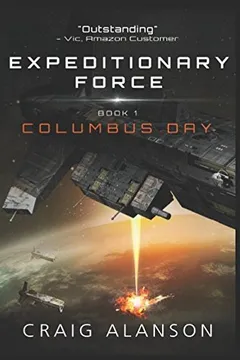


Plot Summary
Barney Van Ambush
Joe Bishop, a young Army infantryman home on leave in rural Maine, sees a damaged alien transport crash near his hometown as the Ruhar attack Earth’s industrial infrastructure. After a deputy’s gunfire brings a lethal response, Joe gathers local veterans and hunters, studies the invaders’ patrols, and devises an ambush with quarry dynamite.
The group blows out a diner wall, stuns two Ruhar, and drags one into a gaudy ice cream van. Joe tends the prisoner’s wound and gives him water and food instead of treating him as a monster. When another Ruhar ship searches for the missing soldier, a new battle in orbit forces it to leave. Joe delivers the captive to National Guard troops, expecting to return to ordinary military duty.
The invasion begins at the scale of a potato field, not a capital city, and that choice makes the catastrophe intimate before it becomes global. Joe’s first response is neither heroic certainty nor simple vengeance: he improvises with local knowledge, civilian labor, and whatever weapons the town owns. His treatment of the captive complicates the enemy category before he understands the political conflict around it. The ice cream van, absurd beside an alien war, also establishes the book’s central contrast: ordinary human ingenuity must operate inside a technological order it cannot control.
Winter Without Wires
The Kristang defeat the Ruhar in orbit, but they do not restore Earth. Power stations and industry lie damaged, fuel grows scarce, and Joe’s Maine community survives through wood stoves, bartering, local crops, and a government resettlement program.
His father loses his paper-mill job before the mill is repurposed as a regional power source. The Kristang refuse to share advanced technology, describing humanity as unready, while their ships depart because Earth lacks facilities they need.
Joe rejoins the National Guard, helps harvest crops, and guards supplies until orders send him to Ecuador. There, he reunites with fellow infantryman Jesse Colter and joins the United Nations Expeditionary Force, whose troops will ride a Kristang-built space elevator toward an unknown campaign.
Victory does not restore the world because the Kristang’s intervention was never humanitarian reconstruction. The winter turns alien warfare into daily material consequences: heat, fuel, work, and shelter become political facts. Joe’s family adapts through skills that once seemed provincial, while technologically advanced regions prove especially fragile. This reversal unsettles the usual equation between progress and security. The expedition offers Joe renewed purpose, but its departure also exposes a troubling dependency: humanity can leave Earth only by using another species’ infrastructure, under another species’ orders.
The Lightning Elevator
The space elevator carries thousands of human troops into orbit, where a Thuranin star carrier and wormholes shorten a journey that would otherwise take years. At Camp Alpha, an arid planet with punishing heat and heavier gravity, Joe reunites with his trusted fireteam: Colter, Sergeant Greg Koch, and Dave Czajka.
The promised alien arsenal proves modest. Humans receive modified M4 rifles, improved antiaircraft missiles, and tactical radios, then endure hard physical training and a disastrous war game in which orbital strikes kill whole units before they can respond.
Joe also reconnects with Shauna Jarrett, a logistics soldier seeking combat duty, and they begin a casual relationship. Lessons on the galaxy’s hierarchy and rules explain why client species fight proxy wars, while the Kristang still keep humans far from consequential missions.
Camp Alpha punctures the fantasy that crossing into space will transform human soldiers into effortless superwarriors. Joe and his comrades must improve through discipline and pain, while the equipment they receive marks their subordinate status. The war game makes that subordination bodily: a force can be competent on the ground and still be erased from above. At the same time, Joe’s reunion with his fireteam restores the social fabric that military upheaval has repeatedly broken. His connection with Shauna gives the expedition a private, fragile human dimension, even as the strategic lessons suggest there may be no clean route home.
A Farmstead Occupation
After a chaotic deployment scatters units across the planet Paradise, newly promoted Sergeant Joe Bishop takes four soldiers to Teskor as an Embedded Observation Team. Their assignment is to monitor the Ruhar civilians and keep the evacuation peaceful, not to conquer the village.
Joe meets Lester Cornhut, a farmer chosen to represent the community, and finds tidy homes, active fields, and children eager to see the strangers. The soldiers patrol in conspicuous gear while villagers wave from porches and fields.
Joe’s team discovers that the Ruhar grow meat from engineered, brainless organisms, an efficient practice that unsettles him. He brings a soccer ball from their supplies to the schoolchildren, and Lester’s family responds warmly. The encounter makes Joe suspect that occupying farmers is more morally complicated than his orders suggested.
Teskor turns occupation from an abstract assignment into a daily relationship. The Ruhar are not presented as a faceless military force here but as neighbors with crops, children, and routines that resemble Joe’s own rural upbringing. His discomfort with their engineered food shows how easily unfamiliar customs can become evidence of alienness, even when the practice is practical rather than cruel. Giving the children a soccer ball is a small gesture with a concrete effect: it creates trust without changing the power imbalance. Joe begins to see that humane conduct is not softness; it is a way of recognizing individuals inside a conflict designed to erase them.
Tea With the Burgermeister
The Ruhar regional governor, Bahturnah Lohgellia, meets Joe at Lester’s home and warns him that the Kristang monitor human communications and movement through their supplied radios. She explains that a recent wormhole shift made Earth reachable from Kristang territory, prompting the Ruhar to damage industrial sites before the Kristang could turn Earth into a military foothold.
Joe distrusts her account but passes it to intelligence officers, who confirm that the Kristang have concealed information. Bahturnah returns for further meetings, describing the Kristang’s clan politics, exploitation of Earth, and contempt for subordinate species.
She also reveals that the Kristang exclude women from authority through deliberate genetic control. As the intelligence threatens the alliance’s official story, Joe and Major Perkins are pulled from Teskor and separated from their units.
The tea meetings transform intelligence gathering into a test of whom Joe is willing to hear. Bahturnah’s claims are strategically self-serving, yet her details match evidence the Kristang have hidden, forcing Joe to hold suspicion and belief at once. The communications network becomes a political instrument: the apparent convenience of universal contact is also surveillance and control. Her account of gender engineering widens the moral breach between the two supposed allies. Joe cannot yet prove every accusation, but the important psychological shift is that loyalty no longer means accepting the official version without examination.
The Launcher Falls
At Fort Arrow, Joe is assigned to convoy escort and watches the Kristang thin their orbital protection. During a visit to a crashed ship in the jungle, a Ruhar fleet appears and hammers the base with railgun strikes and missiles.
Cut off from communications, Joe gathers stranded soldiers, reaches an ammunition store, and leads them through a service conduit toward the Launcher complex. He uses the access network to emerge above the base, then waits beneath a flight path with antiaircraft missiles. When two troop-carrying Whale dropships pass low, his improvised squad fires a massed volley and destroys both.
They retreat to the reactor complex as Ruhar gunships search for them. Soon the Ruhar ground troops lay down their weapons, because a returning Kristang force has retaken orbit. Hundreds of humans have died, but Joe’s stand draws senior attention.
The attack strips away the comforting idea that a military base is a protected rear area. Joe’s command emerges from a practical emergency: communications fail, familiar authorities vanish, and a mixed group of soldiers looks to the person who can make a decision. His improvised missile ambush is effective not because he possesses superior technology but because he reads the flight pattern and acts at the moment the enemy is vulnerable. The cost prevents the victory from becoming uncomplicated triumph. Joe has helped buy time, but the casualty count and the helplessness of people under orbital fire expose how small a ground force remains against control of space.
Eagles Over Paradise
After the Ruhar surrender, the Kristang urge UNEF to promote Joe for the ships his squad destroyed, valuing combat kills over his actual rank or experience. Major Perkins explains that they want a colonel as a symbol of human usefulness, so Joe accepts the field promotion despite feeling unqualified.
At a ceremony aboard the space station, a drunken Kristang officer calls humans weak and describes them as slaves, while praising the prospect of hunting Ruhar civilians. Joe and Chinese officer Chang endure the insult without provoking an immediate confrontation.
Back on Paradise, Joe is sent to give speeches, then assigned to coordinate crops for human survival. He discovers that public praise has made him a political prop, while planting potatoes may matter more to the force than his battlefield reputation.
The promotion is both recognition and appropriation. The Kristang honor Joe because his actions fit their martial values, then use his new rank to present humans as useful instruments. His discomfort is not false modesty alone; he recognizes the gap between authority on paper and the training he lacks. The drunken officer’s contempt gives private confirmation to Bahturnah’s warnings, making it harder for Joe to dismiss them as enemy propaganda. The shift from speeches to agriculture is telling: the celebrated warrior is most useful when helping his people remain alive, not when performing the image of a warrior for an audience.
Potatoes and Orders
While Joe coordinates crops across Paradise, hidden messages printed inside food packaging arrive from Earth. They report that the Kristang have seized farmland and lakes, attacked protests, and used orbital weapons against civilians.
Joe realizes the force is not protecting humanity from invasion; it is helping an occupying power exploit Earth. Then a convoy carrying seeds and soil supplies is attacked, and General Maitland orders Joe to execute eight Ruhar civilians in Habitrail as retaliation. Joe makes the order public and refuses, invoking the rules against murdering civilians.
Kristang hackers disable his radio and seize control of an escorting Chicken, which fires on a school. The pilot, Collins, dies after resisting the attack. Joe is arrested for disobedience, while the surviving soldiers return without him.
This is Joe’s decisive ethical break with the command structure. The fortune-cookie messages convert distant rumors into evidence, while the retaliatory order forces him to choose between career loyalty and the limits that make military service morally distinct from murder. His refusal becomes public rather than private, so the Kristang cannot quietly recast compliance as human consent. The school strike and Collins’s death reveal the cost of that defiance: a system that controls communications and weapons can punish people far beyond its intended target. Joe’s childhood memory of failing to protect a tortured animal helps explain why inaction now feels intolerable.
Prison Break by Bombardment
The Kristang imprison Joe and other dissenters, planning executions for men and torture for women. Before Joe’s own sentence is carried out, a Ruhar fleet attacks the prison base, cracking open his cell.
He finds Marine Staff Sergeant Adams, Indian pilot Desai, and Chang, then kills a Kristang guard who had tortured Adams. The four steal a Ruhar vehicle, but a checkpoint officer tries to return them to custody. Ruhar troops capture the group instead and take Joe to a warehouse.
There, a chrome cylinder speaks from a shelf: an ancient artificial intelligence Joe nicknames Skippy. Skippy has manipulated the attack, seeks help escaping, and proposes using his abilities to cut the Kristang off from Earth. Joe agrees to hear the plan, seeing a chance to act where UNEF command cannot.
The prison sequence collapses formal authority before it introduces a new kind of power. Joe’s escape is physical, but his release from the old alliance is intellectual: the Kristang’s punishment confirms that obedience has become complicity. Adams’s presence grounds the escape in the consequences of gendered abuse, while Joe’s killing of her torturer reveals how close moral restraint can sit to rage. Skippy’s entrance changes the scale of possibility, yet not the structure of trust. He is immensely capable and emotionally opaque, so Joe’s first task is not merely to use a weapon, but to judge whether the weapon has its own agenda.
A Beer Can’s Bargain
Skippy explains that he is an Elder-built intelligence hidden on Paradise, able to infiltrate alien systems but unable to operate vehicles directly. He offers a chain of impossible-seeming steps: escape the Ruhar base, steal a dropship, recruit a crew, capture a Kristang ship and a Thuranin carrier, then reach Earth and shut down the wormhole.
Joe and his companions stun the guards, seize a Dodo, and fly to a UNEF supply base. There Joe tells the gathered soldiers that the Kristang are Earth’s occupiers, then asks for volunteers.
Twenty-four soldiers from five nationalities join, including Chang, Adams, Desai, Major Simms, and French special forces officer Giraud. Once clear of the planet, Joe reveals Skippy’s existence and the true mission. The crew accepts the risk and begins preparing to board an alien warship.
The recruitment scene reframes leadership as the management of uncertainty. Joe cannot offer a conventional plan or verified intelligence; what he can offer is a candid account of what he knows and what remains uncertain. His speech works because it turns private suspicion into a shared political choice. The multinational crew also complicates the idea that humanity’s survival is a national contest: soldiers from rival countries accept one mission because the danger is common. Skippy’s power makes the mission possible, but Joe’s credibility persuades people to board.
The Frigate Taken
Skippy guides the Dodo through alien defenses to a Kristang frigate, where the crew must physically connect him to the ship’s systems. Joe stays near the docking bay while Giraud and Chang lead assault teams toward the control center and engineering.
A firefight erupts before Skippy takes full control, and the humans lose four people, including Indian soldier Arun Kurien and Chinese Sergeant Yu Qishan, who sacrifices himself to stop a Kristang from destroying the reactor. Once the ship is theirs, Skippy assumes control of its systems and directs them to a Thuranin star carrier.
There he puts the cyborg crew into a sleep cycle and seizes the carrier’s network. Joe separates fourteen attached Kristang vessels and sends them into a gas giant, destroying them, but the violence leaves him shaken by how easily the ship’s systems can erase lives.
The first boarding operation makes technological advantage no substitute for bodily risk. Skippy can open doors and alter systems, but people still have to cross corridors under fire, and the losses are not abstract entries in an after-action report. Yu’s sacrifice gives the mission a human measure that Skippy’s calculations cannot supply. Joe’s decision to destroy the Kristang ships illustrates the moral cost of command: he sees their crews as threats to Earth, yet he cannot make the killing feel clean. The captured carrier expands human capability while increasing the distance between what the crew can do and what it truly understands.
A Raider’s Preparation
The captured star carrier gives Skippy access to Thuranin data, including the location of a Kristang research base inside an asteroid. There, Skippy believes, are both a wormhole controller and a communications device that may help him find the Elder AI Collective.
The crew learns that the Kristang defenses are hardened and that the Thuranin suits will not fit human bodies. Giraud revises the assault around Kristang powered armor and Thuranin combat robots, which Skippy calls combots. Adams trains operators in a cargo bay with deliberately distracting music, while the crew practices in low gravity.
Joe remains uneasy about sending people into a fortress for a device whose purpose only Skippy understands. Still, he accepts the raid because the wormhole controller is their only known way to keep the Kristang from returning to Earth.
Preparation becomes a negotiation between human limits and machine assumptions. Skippy’s plans repeatedly omit the body: he forgets that humans need fitting space suits, while Giraud and Adams translate abstract capability into usable tactics. Joe’s authority here rests less on technical mastery than on recognizing what the experts around him can see. The asteroid raid also links two desires that are not equally shared: humanity needs the controller, while Skippy wants the communications node. That tension tests whether a bargain can remain fair when one partner knows far more than the other.
The Asteroid Raid
The Dutchman approaches the asteroid under cover of a decoy frigate, and Skippy blinds the Kristang sensor network long enough for two dropships to reach the research base. A maintenance worker spots the deception, triggering an alarm and a firefight.
Joe directs the assault remotely as Giraud’s team retrieves the wormhole controller and Chang’s team searches a disorganized room for Skippy’s communications node. Kristang attack from behind, killing Putri and Marsden and badly wounding Giraud and Chang.
The survivors recover both devices and escape in damaged dropships, but more crew members die during the retreat. Joe then detonates the base’s eight-megaton self-destruct charge to erase evidence of human involvement. The raid succeeds in securing the controller, yet Skippy cannot use the communications node to locate the Collective.
The raid is the book’s clearest demonstration that success and loss can occupy the same result. Joe obtains the device that may secure Earth, but the price is a depleted crew and a failed answer to Skippy’s personal search. His decision to destroy the asteroid protects humanity from exposure, while also expressing anger at the Kristang in a way he recognizes may not have been necessary. Skippy’s inability to make the communications node work is a reminder that ancient technology does not grant omniscience. Both human and AI must confront the limits of what they can recover from the past.
Earth’s Last Kristang
The surviving crew returns through the wormhole and finds two Kristang ships above Earth, while satellites and ground bases continue repressing human resistance. Skippy seizes the ships’ systems and turns the Kristang’s own maser satellites against their installations, though Joe accidentally authorizes a strike before realizing his hand rests on the weapons control.
The troop carrier’s surviving Kristang attempt to access biological weapons aimed at major cities, but Skippy sterilizes the agents and disables the missiles.
Joe contacts the U.S. president, who confirms the scale of the devastation on Earth and begins coordinating an international response. The Kristang’s remaining forces are trapped, their communications and technology crippled. The invasion is broken, but the crew must now decide whether to go home permanently or honor the promise that brought them together.
Earth’s return is not a simple homecoming. The blue planet has become a damaged political landscape, and military victory arrives through the same systems that had made the occupation so terrifying. Joe’s accidental authorization exposes the danger of placing irreversible power behind a convenient button, even when the operator is trying to help. The threatened bioweapons make the crisis existential, while Skippy’s intervention prevents the conflict from becoming an extinction event. The survivors can celebrate the defeat of the Kristang, but the victory raises a new ethical question: what obligations remain to people still stranded on Paradise?
A Home Left Behind
The president and military leaders learn that the Kristang have killed millions, attacked cities, and abducted humans for biological weapons testing. Joe argues that the Dutchman must leave again, first to shut down the wormhole permanently and then to help Skippy search for the Collective.
Some crew members worry that this will abandon UNEF on Paradise, but Skippy confirms that the Kristang have already stopped supplying them and the Ruhar are providing food until crops can grow. Joe promises not to forget them, while acknowledging that his small crew cannot rescue them now.
The governments agree to send an international team, and Army Chief of Staff Brenner restores Joe’s field promotion to colonel. Joe accepts command, tells volunteers the mission may never bring them home, and retains Chang as his executive officer.
The return to Earth offers Joe the comforts he has missed, but it does not restore the person who left Maine. He must choose between the immediate emotional pull of home and the larger obligation to prevent another invasion. The stranded soldiers on Paradise make that choice morally painful: Joe does not confuse inability to help with indifference, but he refuses to sacrifice the billions on Earth for a rescue he cannot accomplish. His promotion now has a different meaning from the Kristang’s earlier award. It recognizes responsibility rather than a kill count, and he accepts it only after making the risks clear to those who will follow.
The Wormhole Goes Dark
Before the wormhole resets, the Dutchman leaves Earth with a multinational crew, two and a half years of supplies, and the recovered controller aboard. Joe visits his family in Maine, shares a final meal, and returns to the ship knowing that home may be behind him for good.
The crew prepares procedures so humans can operate the vessel without relying on Skippy for every task, though they still cannot repair or fully understand its technology. At the wormhole, Skippy programs the passage and then permanently disconnects the network link on the far side.
Earth is no longer reachable by the Kristang through that route. The Dutchman’s crew, now committed to finding the Collective, asks where to go next. Skippy points toward a blue star, leaving the journey open and their destination uncertain.
The ending resolves the invasion’s central danger while refusing the emotional simplicity of a return to normal. Joe does come home, but only long enough to say goodbye and recommit himself to an uncertain voyage. Shutting the wormhole protects Earth by isolating it, a solution that is also a separation. The crew’s attempt to learn the ship’s basic systems expresses a modest hope for independence, even as their survival still depends on Skippy. The final blue star does not promise a new home or a clear mission. It marks the choice to proceed without guarantees, because the promise has become part of who Joe is.
Analysis
Columbus Day treats first contact less as a meeting of civilizations than as a sudden change in who controls material life. The Ruhar’s attack destroys infrastructure rather than simply targeting people, so survival becomes a question of power, food, energy, and access to transport. Joe’s Maine background gives him skills that matter in the first crisis, but the larger conflict repeatedly places him inside systems he cannot understand or control.
The novel’s most important moral problem is not whether violence is justified in general, but whether obedience can excuse violence against civilians. Joe’s refusal to execute Ruhar villagers separates military service from blind compliance. His choice costs lives and status, yet it restores a boundary that the Kristang try to erase. The book therefore distinguishes discipline from submission: discipline means acting responsibly under pressure, while submission means surrendering judgment to whoever holds superior force.
Skippy complicates that argument. He can save Earth because he possesses overwhelming technical power, but he is forgetful, emotionally isolated, and not naturally attentive to human consequences. Joe cannot replace Skippy’s intelligence, and Skippy cannot replace Joe’s judgment. Their alliance works because each gradually treats the other as more than a useful instrument. That relationship parallels the novel’s political challenge: cooperation requires recognizing agency across a profound difference in power.
The ending offers security through isolation, not victory over the galaxy. Earth is protected when Joe’s crew closes the wormhole, but the human expedition on Paradise remains stranded, and the Dutchman departs on a mission whose endpoint is unknown. The final departure preserves the novel’s central tension: survival demands action beyond home, while every step into the wider universe risks losing home altogether. Joe’s growth lies not in becoming an invincible commander, but in accepting responsibility without pretending uncertainty has disappeared.
Review Summary
Columbus Day receives mixed but generally positive reviews, averaging 4.25 stars. Many readers praise its humor, engaging characters, and entertaining military sci-fi premise, particularly the witty AI character Skippy, who appears midway through and is widely considered a highlight. The audiobook narration by R.C. Bray earns consistent acclaim. Common criticisms include poor editing, immature writing, weak character development, and an overly convenient plot. Readers either embrace its lighthearted, humorous tone or find it shallow and juvenile.
People Also Read






Characters
Joe Bishop
The reluctant field commanderJoe is a young Army infantryman from rural Maine, shaped by combat experience, outdoor competence, and a habit of improvising when official plans fail. He begins as a practical soldier who wants to serve and eventually pay for college, not as a natural strategist or political thinker. His decency appears in specific choices: he treats a captured Ruhar’s wound, tries to understand the villagers of Teskor, and refuses an order to kill civilians. Joe is uncomfortable with rank and praise, yet repeatedly accepts responsibility when others look to him. His defining tension is between obedience as a soldier and conscience as a human being. Humor helps him manage fear, loneliness, and the impossible demands of command.
Skippy
The ancient smart-ass AISkippy is a mysterious intelligence whose capabilities dwarf the technology of the species around him. He is vain, funny, impatient, and often careless about what humans need to know, yet his arrogance coexists with profound isolation. Joe’s habit of treating him as a person rather than a tool gives their alliance an unusual intimacy. Skippy wants answers about his origins and seeks contact with other intelligences like himself, while Joe needs his ability to protect Earth. Their bond is practical but emotionally consequential: each depends on the other, and each must learn to take the other’s needs seriously without pretending their differences have disappeared.
Bahturnah Lohgellia
The Ruhar truth-tellerBahturnah is a high-ranking Ruhar official who approaches Joe through the village of Teskor. Careful, patient, and politically astute, she chooses tea rather than interrogation as the setting for sharing information. She understands that Joe distrusts her and does not demand instant belief; instead, she offers explanations that can be checked against events. Her claims also serve Ruhar interests, so she is neither a neutral narrator nor a simple ally. She represents the possibility of cooperation across enemy lines, but insists that Joe examine the behavior of the Kristang rather than rely on labels like ally and enemy.
Lester Cornhut
Teskor’s welcoming farmerLester is a Ruhar farmer chosen to speak for his small village when human troops arrive. He is friendly without being naïve, and his continued planting reflects a community trying to preserve hope while facing evacuation. His family’s ordinary hospitality helps Joe recognize the civilians behind the military conflict. Lester also explains the practical pressures shaping Ruhar life, including their need to keep producing food. He is a local face of the enemy population, not a combatant, and his relationship with Joe makes occupying Teskor feel personal rather than merely tactical.
Chang
The steady Chinese officerChang is a professional Chinese Army officer whose experience and composure complement Joe’s improvisational leadership. He is cautious about the Kristang, concerned with the fate of his people, and willing to question plans that seem strategically unsound. His skepticism does not make him disloyal; he repeatedly commits to difficult tasks once he judges their purpose. Chang’s willingness to trust Joe grows through action rather than rank, and his presence gives the multinational crew a second center of authority. He helps Joe understand that command depends on credibility, clear roles, and respect across national boundaries.
Staff Sergeant Adams
The unflinching MarineAdams is a Marine noncommissioned officer whose discipline and blunt practicality make her a reliable force in crisis. She has little patience for self-pity or vague orders, and she is willing to challenge Joe when he avoids a decision. Her experiences under Kristang captivity inform her anger, but do not reduce her to it; she remains focused on survival, action, and the safety of the team. Adams helps turn unfamiliar technology into useful training and brings a grounded professional judgment to the crew. She respects command when it is earned, not merely displayed.
Captain Desai
The adaptable pilotDesai is an Indian Army pilot who repeatedly takes control of unfamiliar alien craft with limited instruction. She is cautious about her capabilities but does not let caution become paralysis. Her willingness to learn, especially when Skippy guides her through alien controls, makes her essential to the crew’s movement between worlds and ships. Desai also contributes clear practical judgment during planning, reminding Joe that technological power is useless without someone able to operate it. She is a professional whose courage appears as steady competence rather than bravado.
Shauna Jarrett
The combat-seeking soldierShauna is a fast, determined soldier who begins in logistics but is eager to qualify for combat duty. She and Joe share an attraction while stationed far from Earth, yet both understand that war and uncertain assignments make conventional commitment difficult. Shauna is direct about what she wants and does not let Joe’s assumptions define their relationship. Her personal history includes a frightening day in Phoenix, when she worried about her grandmother during the invasion. That experience helps explain why she volunteers to fight: she wants ordinary people to feel safer than they did when the sky changed.
Jesse Colter
Joe’s irreverent fireteam friendColter, nicknamed Cornpone by Joe, is an Army soldier from Arkansas and one of Joe’s closest comrades. His humor and easy confidence keep the fireteam’s hardships from becoming solemn, but he is also a loyal combat veteran who understands the cost of their work. Colter and Joe trade regional jokes, share the strain of training, and remain connected even after promotion separates their units. He embodies the familiar military bonds Joe repeatedly loses and rebuilds as the war carries him farther from home.
Sergeant Greg Koch
The demanding team leaderKoch is Joe’s experienced sergeant and former fireteam leader. He drives his soldiers through punishing training and provides the practical structure Joe needs when the unit reaches Camp Alpha. His authority comes from competence and familiarity, not ceremony. Koch’s presence reminds Joe that good leadership often means preparing people for hardship before the crisis arrives. He remains a trusted friend even when Joe’s promotion takes him into a different chain of command.
Major Simms
The pragmatic logistics officerSimms is a U.S. Army logistics officer whose practical thinking becomes crucial when the crew must turn captured ships into a functioning base. She is alert to supplies, medical constraints, and the moral consequences of command, often asking Joe to confront problems he would rather postpone. Her background is not infantry combat, but she understands that survival depends on systems as much as courage. Simms is frank, adaptable, and capable of challenging Joe without undermining him.
Lieutenant Giraud
The French assault plannerGiraud is a French special operations soldier who brings tactical experience to the crew’s most dangerous boarding operations. He plans carefully, recognizes the limits of inexperienced soldiers, and adapts when Skippy’s assumptions prove incomplete. Giraud does not mistake boldness for competence; he wants workable plans, realistic training, and a clear account of the risks. His professionalism gives Joe a critical partner in situations where Joe has responsibility but little formal preparation.
Major Perkins
The intelligence liaisonPerkins is a military intelligence officer who recognizes the value of Joe’s conversations with Bahturnah and protects him when the Kristang begin investigating the information flow. She is candid about the limits of her own authority and the pressures on UNEF, which makes her a rare source of institutional honesty. Her relationship with Joe is professional but trusting, built around information that neither can safely share through ordinary channels.
General Meers
UNEF’s hard-nosed commanderMeers commands the human expeditionary force on Paradise. He is politically alert and pragmatic, willing to use Joe’s promotion as a signal to the Kristang while warning him that the Army will still hold him accountable. Meers does not confuse symbolic gestures with real command ability, but he understands the diplomatic value of appearing competent to humanity’s powerful patrons. His decisions reveal the narrow choices facing UNEF, which depends on the Kristang for food, transport, and access to space.
The President
Earth’s exhausted leaderThe U.S. president leads a government displaced from Washington and struggling to restore national authority after the invasion. She is tired, but attentive to consequences and able to keep a crisis meeting focused when others panic. Her interactions with Joe and Skippy show a leader balancing security, international coordination, and the need to rebuild. She treats Joe as a soldier with useful knowledge rather than a convenient symbol, even as the extraordinary events around him make ordinary protocol difficult.
Lieutenant Collins
The defiant Chicken pilotCollins is a young pilot assigned to a captured Ruhar gunship. When Kristang systems seize control of her aircraft and direct it toward civilians, she resists the attack. Her final action forces Joe to confront the human cost of the Kristang’s supposed alliance and strengthens his refusal to obey orders that target civilians.
Plot Devices
The wormhole network
The galaxy’s shifting highwayThe wormholes allow starships to cross immense distances far faster than ordinary travel, but their locations shift rather than remaining fixed. A shift brings Earth within practical reach of the Kristang, changing the planet from an isolated world into contested territory. The network explains both the sudden invasion and the strategic logic of the proxy war. An Elder-built controller becomes the key to permanently shutting down Earth’s connection, turning a strange piece of ancient technology into the object that drives the final mission.
Kristang tactical radios
Convenience that becomes surveillanceThe radios provide universal translation, encrypted communication, and real-time battlefield coordination to human troops. Their usefulness encourages soldiers to rely on a network the Kristang control, allowing the patrons to monitor messages and movement. During the conflict, the radios also let Joe’s forces communicate across national languages and coordinate improvised operations. Their double function makes a mundane piece of equipment a political instrument: shared communication connects humans while also exposing them to the power of the supposed allies.
Skippy
An ancient mind with limitsSkippy is an Elder-built artificial intelligence with abilities that make the technological gap between humans and other species seem small. He can infiltrate networks, manipulate ships, guide jumps, and operate weapons, but he cannot directly pilot vehicles and often overlooks details that matter to biological beings. His immense capacity does not eliminate uncertainty: he has missing memories and cannot initially locate the Collective he seeks. His bargain with Joe provides the means to resist the Kristang, while their growing rapport makes trust and personhood central to the mission.
The fortune cookies
Paper messages evade censorshipThe Kristang search shipments for digital storage and destroy devices they suspect carry information, but fail to detect messages printed inside food packaging. The hidden notes provide UNEF with evidence that the Kristang are seizing Earth’s resources and suppressing resistance. Their unassuming form is essential: a familiar snack carries information through a system designed to inspect technological contraband. The messages turn private suspicion into verified political knowledge and force Joe to reconsider whom the expedition is actually serving.
Alien warship systems
Power humans cannot yet masterThe captured Kristang frigate and Thuranin star carrier give Joe’s crew access to weapons, transport, medical technology, and information far beyond human capacity. Skippy can control many functions, but the crew must still board ships, operate unfamiliar equipment, and protect systems they barely understand. Kristang nanovirus technology provides a concealed route into some ship controls, while Thuranin combots and powered suits make the asteroid raid possible. These systems repeatedly widen the crew’s choices while exposing how dependent they remain on Skippy’s knowledge.

Download PDF
Download EPUB
.epub digital book format is ideal for reading ebooks on phones, tablets, and e-readers.








