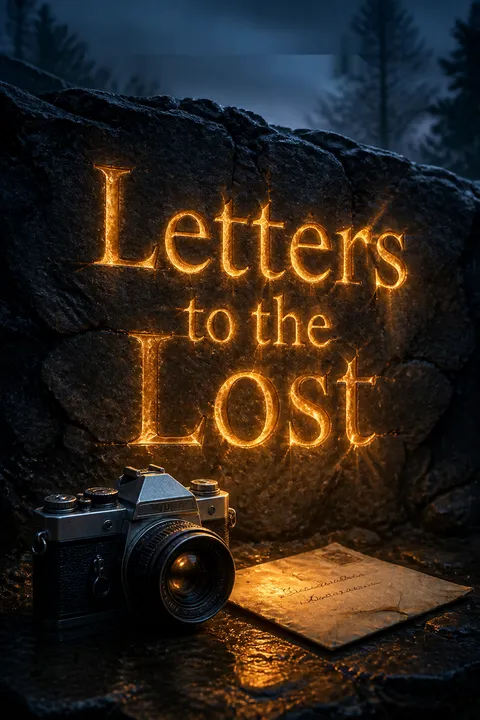


Plot Summary
Two Words at Zoe's Grave
Seventeen-year-old Declan Murphy is mowing a cemetery as court-ordered community service when he finds a letter beside Zoe Thorne's grave. Its writer, Juliet, describes her dead mother and a photograph of a child caught in terror. Declan recognizes the feeling of helplessness and adds a brief acknowledgment before leaving.
Juliet returns, sees that someone has read her private words, and is furious that a stranger has entered the one ritual that still makes her feel close to her mother. Rather than complain to the groundskeeper, she writes directly to the unknown intruder. The exchange begins with a violation, but Juliet's decision to answer turns her anger into an opening neither teenager expected.
The cemetery makes grief visible but not interchangeable: both teenagers visit the dead, yet each initially assumes the other's pain cannot be understood. Declan's note is compassionate in intention and intrusive in effect, a small act that reveals how easily empathy can cross into presumption. Juliet's choice to answer matters because it gives her agency without requiring her to surrender the private bond with her mother. Their correspondence starts not with romance but with a dispute over who has the right to enter another person's sorrow.
Coffee Across the Hall
At school, Juliet is still reading the cemetery stranger's reply when she rushes around a corner and collides with Declan, spilling hot coffee over both of them. Declan snaps at her, but when a teacher arrives, the school's view of his record dictates the outcome: he is sent to the principal while Juliet receives detention.
She knows she caused the collision and feels ashamed as well as wary of his anger. Declan later finds her latest letter at the grave and recognizes that he has treated her grief as if it were his to judge. He writes an apology, admitting that his own words were not meant for a stranger to read either. His apology does not erase the encounter, but it changes the terms of their next exchange.
The collision turns an abstract exchange into a face-to-face encounter shaped by reputation. Juliet sees Declan's volatility, while the teacher sees a repeat offender before considering what happened. Both are partially right, and that partial knowledge is the source of the friction. Declan's apology is an early act of accountability: he does not ask Juliet to absolve him, but acknowledges the boundary he crossed. The story begins testing whether people can revise their judgments when evidence arrives in fragments.
Grief Goes Digital
Through letters, Declan tells Juliet that his younger sister Kerry died after their father drove drunk, and that he believes he could have prevented it. Juliet explains that her mother, photojournalist Zoe, died in a hit-and-run while returning from an assignment.
When Juliet's father considers selling Zoe's camera equipment, Juliet panics, then admits she is not ready to let it go. Declan answers with memories of his own mother unable to discard Kerry's things, helping Juliet understand that her father may be grieving differently rather than deliberately erasing Zoe.
At his friend Rev's suggestion, Declan creates an anonymous email account. Their messages become faster and more intimate, while their real identities remain hidden, giving each room to speak without the other's school reputation intruding.
The letters give both teenagers a controlled form of closeness. They can disclose shame and anger while withholding the identifying details that would invite social judgment. Their different losses also unsettle simple comparisons: Juliet's father is withdrawing, while Declan's mother has tried to make a life around a death she cannot undo. The camera equipment and Kerry's untouched possessions function as material extensions of attachment. Letting go of an object can feel like consenting to a second loss, so the teenagers learn to interpret grief through what the other cannot yet discard.
A Dead Battery
After an argument with her best friend Rowan, Juliet finds her car will not start on a dark street. Rev Fletcher, Declan's quiet, broad-shouldered friend, offers help and summons Declan with jumper cables. Juliet distrusts Declan's reputation, but he diagnoses the battery and gets her car running.
His stepfather Alan arrives, accuses Declan of breaking curfew, and threatens to send him back to Cheltenham, a juvenile detention facility. Rev holds Declan back from escalating the confrontation; Juliet steps in with a calm explanation that gives everyone room to retreat.
The car starts, and Declan leaves without asking for thanks. Juliet is left with a contradiction: the boy she feared has helped her, while the adults around him seem ready to assume the worst.
This roadside episode makes character judgment physical. Juliet is literally trapped in a car, deciding whether a stigmatized boy is a threat; Declan is constrained by a curfew and a record that make even ordinary help look suspicious. Rev's intervention shows that loyalty can interrupt escalation without excusing anger. Juliet's own quick-thinking mediation also complicates her self-image as passive and fragile. The scene does not make Declan harmless or Alan wholly wrong. Instead, it shows how fear and reputation can turn a practical favor into a confrontation.
The Camera Comes Back
Photography teacher Mr. Gerardi asks Juliet to cover the school's Fall Festival, and she agrees to use his expensive Leica despite having avoided cameras since Zoe died. At first she cannot take a picture.
Rowan coaxes her into using the camera, and Juliet finally frames Declan and Rev apart from the festival crowd, catching sunlight behind them. Declan demands that she delete the image, and former photography rival Brandon Cho steps in when the argument grows tense.
Juliet keeps the photograph, then accepts Brandon's invitation to attend Homecoming with him and Rowan. Her first image is not a war-zone assignment or a tribute to her mother. It is a difficult, imperfect moment from her own school life, and taking it proves she can still look through a viewfinder.
The camera is both inheritance and pressure. Juliet has confused honoring Zoe with matching her mother's daring career, making any ordinary photograph seem inadequate. Her first shot restores a smaller, more attainable form of attention: she notices the distance between Declan, Rev, and the celebrating students. That composition becomes a literal image of social isolation, but also a return to the practice she had abandoned. Declan's demand to erase it exposes his own fear of being fixed in a public story he cannot control.
Homecoming in the Rain
Juliet attends Homecoming with Brandon, but her attention keeps straying toward Declan, who is at the dance with Rev. After Declan and Juliet trade barbed remarks, she retreats outside, then leaves the dance in distress.
A storm catches her at the cemetery, where her old car fails after losing a tire. She messages The Dark for help. Declan passes her stranded vehicle, recognizes it, and initially drives on, convinced the anonymous exchange was a setup.
He turns back, however, warms Juliet in his car, changes the tire in the rain, jump-starts her battery, and follows her home. He never reveals he is The Dark. Later that night, he finds his mother sick but able to talk with him, and her unexpected tenderness leaves him wanting a connection he has long believed was gone.
The roadside rescue reverses the earlier battery scene without making trust easy. Juliet is now the one stranded and dependent, while Declan has reason to believe she might be manipulating him. He chooses to return despite that suspicion, and his practical care contradicts the story his reputation tells. Their anonymity remains protective, but it also creates an ethical strain: Declan knows who Juliet is in person and online, while she does not. The night gives him a glimpse of renewed family warmth, but the underlying problems in both households remain unresolved.
Engines and Old Wounds
The next morning, Juliet accepts help from her father with a new battery and tires, and a hug opens a small breach in their months of silence. She tells Rowan about the anonymous correspondent and later thanks Rev for helping her.
Meanwhile, cemetery supervisor Frank Melendez asks Declan to inspect a neighbor's restored Chevelle. Declan identifies an oversized carburetor, impressing the owner and reminding himself that his knowledge of engines is real work, not a criminal past.
Frank then listens as Declan describes growing up around his father's repair shop and the drinking that shaped his family. In a long email to Juliet, Declan explains how, at thirteen, he began driving his father home to prevent drunk driving, and how his own refusal on one crucial day left Kerry in the car.
Mechanical skill offers Declan a language of competence that his school record denies him. He can diagnose an engine by listening, yet he cannot repair the family history that taught him to take adult responsibility as a child. Frank's attention matters because he responds to Declan as a capable person rather than a case file. Juliet's renewed connection with her father provides a parallel, though quieter, movement: accepting help does not erase grief, but it gives both of them a way to act together again.
A Verse He Cannot Read
Juliet responds to Declan's account by insisting that his parents, not a thirteen-year-old boy, were responsible for managing his father's drinking. In English class, a poem read at Kerry's funeral triggers Declan so sharply that he walks out. Teacher Mrs. Hillard follows him, gives him space to explain what the poem means, and offers a different assignment instead of punishing his distress.
Declan writes far more than required, recognizing that the poem has reached a truth he avoids. At the same time, Juliet considers Mr. Gerardi's proposed yearbook cover, built around her photograph of Declan and Rev. Their conversations are drawing them toward each other, but both still struggle to bring private understanding into public life.
The classroom reframes anger as a response to memory rather than proof of bad character. Mrs. Hillard does not demand a full confession; she makes disclosure possible by accepting a small, concrete explanation and changing the task. That distinction matters for someone accustomed to authority arriving as punishment. Juliet's defense of Declan likewise offers a counter-story, although she has not yet seen the whole of him. Their anonymous intimacy is beginning to influence how each behaves in the visible world.
The Yearbook Cover
Juliet visits Rev's home, meets his adoptive parents, and sees him caring for a foster baby. In the basement, she and Declan take turns at a punching bag, their attraction surfacing beneath their teasing.
When Juliet explains that Mr. Gerardi wants their photograph on the yearbook cover, Declan erupts. He wants no permanent record of the year he crashed his father's truck and landed in trouble; Juliet snaps back that her year has been terrible too.
Rev receives a call from Declan's stepfather and rushes him to the hospital, where Declan learns his mother is pregnant and that the adults have kept it from him. He feels displaced by a new family being formed without him, while Juliet is left wondering how much of Declan's real life she understands.
The photograph becomes a conflict over who gets to define a life. Juliet sees an image of isolation and friendship; Declan sees a public memorial to his worst year. Neither interpretation is false, but their inability to hear the other's stake turns the camera into a test of trust. The pregnancy revelation intensifies Declan's fear that he has already been replaced in his family. His anger is not merely resistance to change; it is an attempt to protect himself from hoping for a place that may not be offered.
May Twenty-Fifth Returns
Declan tells Juliet more about his father's drinking, his mother's silence, and the wedding night when he got drunk and drove a truck into an office building. Juliet learns that the crash happened on May 25, the same date Zoe died in a hit-and-run.
The coincidence makes her wonder whether Declan killed her mother. Brandon uses a newsroom crime database to compare the reports: the first call about Zoe's collision came before Declan even got behind the wheel, clearing him of involvement.
Juliet is relieved but still has no answer about who struck the taxi. Declan, meanwhile, deletes the anonymous email account after feeling he has become a fraud. Rev confronts him about treating himself as helpless, then admits his own fear that his abusive father might have made him dangerous.
The shared date briefly turns coincidence into accusation. Juliet's fear is understandable, but the timestamp is decisive: Declan's crash cannot have caused the earlier hit-and-run. The result clears one question without repairing either teenager's grief. Declan's deleted account shows how shame can convert a complicated person into a verdict against himself. Rev's admission of fear about repeating his father's violence complicates the story's inheritance motif: trauma can shape a person without dictating what they will do.
The Boarding Pass
Brandon finds no useful image on Zoe's digital memory cards, but suggests Juliet develop the film from her old camera in case it captured the hit-and-run. In the darkroom, Juliet discovers intimate photographs of Zoe with her editor, Ian, and a boarding pass showing that Zoe flew home three days earlier than the family expected.
The pictures explain why the taxi took Zoe home that night, but reveal no vehicle or driver. Juliet breaks down at her mother's grave, where Declan finds her and holds her while she explains the affair.
He still hides that he is The Dark. Afterward, Juliet tells her father what she found. Charles admits he already knew Zoe had been unfaithful, but stayed because Juliet loved her and he did not want to take her mother away from her.
The film changes the meaning of the family's memories without canceling their emotional truth. Juliet had treated Zoe's absence as the cost of courageous work; the boarding pass and photographs expose a private choice that complicates that idealized portrait. The hit-and-run remains unsolved, so the discovery offers no neat investigative reward. Instead, Juliet must grieve a mother who was loving and gifted, yet also capable of selfishness. Charles's disclosure shifts him from the muted figure in Juliet's memory to someone who carried a painful truth to protect her.
Names in Daylight
Declan finally emails Juliet under his real name, admitting that hiding behind The Dark let him avoid risking rejection. After helping Alan repair a broken-down car, Declan hears his stepfather apologize and explain that the family feared Declan might hurt himself.
They agree to try family therapy. Declan's mother also apologizes for keeping her pregnancy secret, and he accepts a small repair job from Alan as payment rather than charity. Juliet's father stays beside her after she tells him what Zoe's photographs revealed.
At school, Declan considers Mrs. Hillard's offer to join AP English, while Rev begins lowering the hood that has concealed him. When Declan and Juliet walk together, he admits his feelings; Juliet answers with her own, and they kiss.
The ending makes honesty an action rather than a sudden cure. Declan does not become free of guilt, and Juliet does not recover the mother she thought she knew. Instead, both begin to replace inherited roles with choices: Declan accepts help and work, Juliet lets her father share the truth, and Rev tests a more visible self. The kiss matters because it follows the disclosure of names and histories. Their connection no longer depends on the safety of being unknown; it can withstand being seen.
Analysis
Letters to the Lost treats grief as a problem of interpretation. Juliet and Declan each believe they know what another person's pain means, then discover that their first readings are incomplete. The letters help because they provide distance, but distance also permits concealment. Their eventual relationship becomes possible only when the private understanding formed online is tested against real behavior: Declan returning to Juliet's broken car, Juliet reconsidering his reputation, and both risking direct disclosure.
The book's images and objects make memory tangible. Juliet's letters, Zoe's camera gear, Kerry's belongings, and the yearbook photograph all hold emotional weight beyond their practical use. Keeping or discarding them can feel like choosing which version of the dead remains accessible. Photography sharpens this concern: a picture can record a real moment and still mislead anyone who mistakes it for a whole life. The novel extends that logic to people, whose reputations are often snapshots mistaken for character.
Declan's guilt is especially bound up with adult failure. As a child, he was made responsible for controlling his father's drinking, then blamed himself for the consequences. His later crash appears to confirm his fear that he is becoming his father, even though the evidence and his choices are more complicated. Juliet's guilt similarly turns her wish for her mother to come home into imagined responsibility for the fatal trip. Neither is relieved by a simple declaration of innocence. They begin to change when adults acknowledge what children should never have been asked to carry.
The ending offers repair without erasure. Zoe's infidelity complicates Juliet's memory, but does not nullify her mother's love or work. Declan's family cannot recover the years of silence, but Alan's apology and the prospect of therapy create a different future. The story's hope is not that grief resolves neatly. It is that people can revise their judgments, accept help, and choose relationships more honestly than the ones they inherited.
Review Summary
Letters to the Lost is a deeply emotional YA novel that resonates with readers. Many praise its compelling characters, especially Declan and Juliet, and their journey through grief and healing. The anonymous letter exchanges are highlighted as a powerful storytelling device. Reviewers appreciate the book's exploration of serious themes like loss, judgment, and redemption. While some found certain aspects clichéd, most agree it's a beautifully written, heartfelt story that leaves a lasting impact. The romance is described as sweet and well-developed, contributing to the book's overall appeal.
People Also Read









Characters
Juliet Young
The guarded letter writerJuliet is a high school senior and the daughter of photojournalist Zoe Thorne. She processes feelings through handwritten letters and images, habits rooted in the close correspondence she shared with her often-absent mother. After Zoe's death, Juliet's anger protects her from the helplessness beneath it, but it also strains her friendship with Rowan and her relationship with her father. She is observant, sharp with words, and more courageous than she believes, though she often measures herself against her mother's extraordinary career. Photography gives her a way to notice people without immediately having to approach them. Her growing trust in Declan asks her to risk being known beyond the private page.
Declan Murphy
The boy behind the recordDeclan is a seventeen-year-old mechanic's son serving community service after a destructive night that left him on probation. His temper and intimidating presence make it easy for classmates and adults to see only a threat, while his intelligence, practical skill, and fierce loyalty remain less visible. He carries guilt about his younger sister and resentment toward the adults who left him to manage problems beyond his age. Writing anonymously allows him to offer tenderness without risking face-to-face rejection, but it also lets him divide himself into a respectable confidant and a supposedly irredeemable boy. Declan's humor is dry, his care often arrives through action, and he longs for belonging while expecting to be cast out.
Rev Fletcher
The steady, watchful friendRev is Declan's closest friend, an adopted son in a generous foster family, and a quiet presence at Hamilton High. His hoodies, allergies, and reserved manner lead others to mistake him for a threatening loner, though he is patient with children and alert to other people's distress. His childhood abuse has made him careful about anger and physical force. Faith helps him make meaning of survival, but he does not impose belief on Declan. Rev often intervenes when Declan is about to escalate, yet his own fear of repeating his father's violence reveals that even the calmest friend can carry private dread.
Rowan
Juliet's steadfast best friendRowan is Juliet's longtime best friend, a conscientious student with a close and affectionate relationship with her mother. Her instinct is to help, sometimes by pressing Juliet toward the kind of recovery that looks reassuring to other people. That instinct can make Juliet feel managed instead of understood, but Rowan's loyalty survives their friction. She supports Juliet at Homecoming, helps her through the aftermath of grief, and remains present as their friendship begins to recover its teasing warmth. Rowan's care is sincere, even when she has to learn that support cannot follow a timetable.
Charles Young
Juliet's grieving fatherCharles is Juliet's father and Zoe's husband. After Zoe dies, he retreats into silence and practical decisions, leaving Juliet to interpret his grief as indifference. He is not naturally expressive, but his care surfaces in quiet offers of help and a willingness to let Juliet decide what to do with her mother's belongings. Their estrangement reflects different ways of surviving the same loss. Charles is a restrained, imperfect parent whose effort to reconnect matters precisely because it is small and hesitant rather than polished.
Abby Murphy
Declan's distant motherAbby is Declan's mother, a woman trying to build a new life after the loss of her daughter and her husband's imprisonment. She is loving but often passive in difficult family moments, and her fear of saying the wrong thing can leave Declan feeling abandoned. Her silence is not the same as a lack of concern, though he has little reason to know that for much of the story. Abby's relationship with Declan is shaped by guilt, grief, and a shared inability to begin the conversation they both need.
Alan
The rule-bound stepfatherAlan is Declan's stepfather, a practical insurance salesman who values rules and stability. He believes Declan needs firm limits, but his judgments harden when he assumes he understands the boy's history. Declan, in turn, resents Alan's authority and measures him against the father he lost. Beneath the friction is a man who loves Abby and wants to protect the family, though he is not skilled at earning Declan's trust. Their conflict grows from mutual contempt and incomplete knowledge rather than a simple struggle between a good child and a bad parent.
Frank Melendez
The cemetery's fair supervisorFrank supervises Declan's cemetery community service and initially seems to be another adult with power over his schedule. He is a devoted father to Marisol and husband to Carmen, and he combines blunt expectations with a willingness to see more than a court record. Frank recognizes Declan's mechanical ability, listens without rushing him, and offers practical support rather than empty reassurance. His approach gives Declan an example of authority that can set boundaries without reducing a teenager to his worst day.
Mrs. Hillard
The teacher who waitsMrs. Hillard teaches Declan English and refuses to treat his silence as proof that he has nothing to say. She challenges him to think about poetry, but when a text triggers painful memories, she gives him an alternate way to respond. Her patience is active rather than indulgent: she expects effort while making room for honest limits. By recognizing Declan's intelligence and writing, she offers him an academic future he has not assumed is open to him.
Mr. Gerardi
Juliet's photography mentorMr. Gerardi is Hamilton's photography teacher and a mentor who sees Juliet's ability even after she abandons the class. He invites her back through a manageable assignment, giving her a reason to handle a camera without demanding that she overcome grief at once. He values photography beyond fame or danger, and his conversations challenge Juliet's belief that only her mother's war reporting can make an image matter. He is encouraging, but he does not pretend that artistic work can erase loss.
Brandon Cho
The talented yearbook rivalBrandon is Juliet's former photography rival, a skilled student photographer with an internship and a playful, confident manner. Juliet initially sees him as irritating competition, but his genuine talent and decency become clearer when he supports her at the festival and Homecoming. He begins dating Rowan and later uses his newsroom access to help Juliet check the accident reports. Brandon is useful without taking over her decisions, a quality that helps both friends treat him as more than a romantic possibility.
Zoe Thorne
The absent photojournalistZoe is Juliet's mother, a celebrated photojournalist whose assignments took her into conflict zones around the world. She and Juliet maintained a close connection through handwritten letters, photographs, and stories from her travels. Her work taught Juliet to look for the emotional details a single image can hold, while her long absences left complicated needs between them. Zoe remains present through her photographs, equipment, and the standards Juliet sets for herself.
Kerry Murphy
Declan's remembered sisterKerry is Declan's younger sister, remembered as a spirited child who could fight with him and still rely on his protection. Her absence shapes his guilt and his ideas about responsibility. Declan's memories of their shared childhood reveal a tenderness he rarely shows in public.
Geoff and Kristin Fletcher
Rev's adoptive parentsGeoff and Kristin are Rev's adoptive parents and foster parents to young children. Their home is structured around patience, food, and practical care, and they welcome Declan as part of Rev's life. Their steady warmth provides a contrast to the guarded households at the center of the story.
Marisol
Frank's exuberant daughterMarisol is Frank and Carmen's young daughter. She approaches Declan without the fear or suspicion adults attach to his reputation, and her openness briefly loosens his guardedness.
Carmen Melendez
Frank's doctor wifeCarmen is Frank's wife and a doctor at the hospital. Her affectionate partnership with Frank offers Declan a glimpse of an adult relationship built on ease and mutual regard.
Ian
Zoe's former editorIan is Zoe's editor and professional contact. He is linked to her work and the photographs she leaves behind, making him part of Juliet's complicated understanding of her mother's life.
Plot Devices
Letters at the graves
A private bridgeJuliet writes to her mother at the cemetery, continuing a habit they shared while Zoe traveled. Declan finds one letter and writes back, accidentally creating a new correspondence. Handwriting and paper make their communication feel intimate, but the letters also preserve anonymity and slow the pace of disclosure. Their move to email lets them answer more quickly without giving up the protection of invented names. The device drives the relationship while making the eventual choice to reveal themselves consequential.
The anonymous account
A mask for honestyDeclan's account, The Dark, and Juliet's name, Cemetery Girl, allow each teenager to discuss grief, guilt, and family without the other's school reputation shaping the response. The screen enables unusually frank support, but it also lets Declan divide his identity and delay facing the risk of rejection. As their real-world encounters grow more intimate, the separation becomes difficult to maintain. The account is both shelter and obstacle, and abandoning it marks a turn toward accountable, face-to-face connection.
Cameras and photographs
Memory made visiblePhotography links Juliet to Zoe's work and gives the story a way to explore how a single image can invite judgments that lack context. Juliet's festival photograph captures Declan and Rev apart from the crowd, but its possible use on a yearbook cover feels very different to each boy. Later, Zoe's undeveloped film gives Juliet a reason to return to the darkroom. The photographs reveal private truths about Zoe, while leaving the hit-and-run itself unsolved.
The shared date
A false collisionThe date May 25 is carved on Zoe's grave and lodged in Declan's memory as the night he crashed his father's truck. Once Juliet discovers the overlap, she fears Declan may have caused her mother's death. Brandon's access to police reports supplies the exact timeline, showing that the hit-and-run was reported before Declan's crash. The date briefly converts coincidence into suspicion, then forces both teenagers to distinguish a chilling resemblance from evidence.
Letters to the Lost Series
About the Author
Other books by Brigid Kemmerer


Download PDF
Download EPUB
.epub digital book format is ideal for reading ebooks on phones, tablets, and e-readers.








