

Plot Summary
The Newspaper Prize
At Morris High, Lily Abbott keeps her head down, scribbling songs instead of listening in Chemistry. Her teacher, Mr. Ortega, finally bans her treasured notebook from class, while the nickname Magnet, coined by popular Cade Jennings after Lily’s humiliating P.E. performance, still follows her through the halls.
At home, her crowded family leaves little room to practice guitar or be alone. Then a newspaper notice offers five thousand dollars and a music course for a winning song. Lily wants both the money and a chance at college music studies, but she has never finished a song or let anyone read her lyrics. The contest turns a private wish into a deadline she cannot ignore.
Lily’s ambition is real, but she has built a protective distance around it: unfinished songs cannot be rejected, and solitude lets her imagine a life beyond family demands and school teasing. The contest makes that defense costly. Money and professional instruction connect artistic desire to material insecurity, so the opportunity is not merely a dream but a possible route out of dependence. Cade’s nickname also establishes the social problem she carries: other people have made her visible in a form she did not choose. Her later struggle to share her music will therefore be about more than confidence. It will mean reclaiming authorship over how others see her.
Lyrics Beneath the Desk
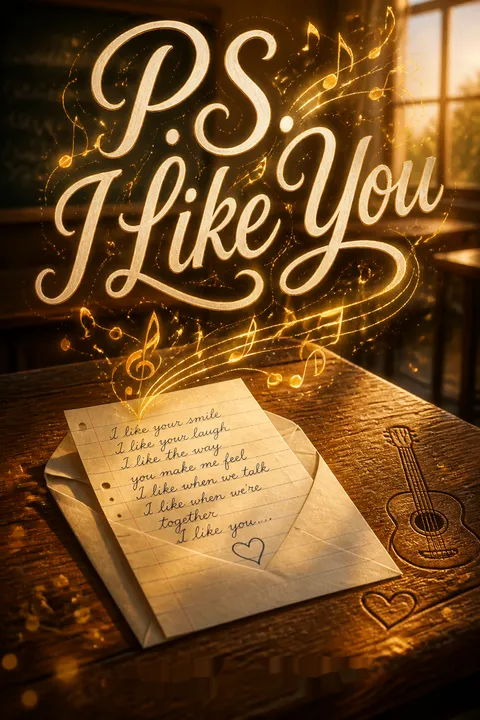
Unable to write in her notebook during Chemistry, Lily puts a line from a Blackout song on the desk. The next day, someone adds the song’s next lyric. Lily answers, and their pencil exchange becomes folded notes hidden beneath the desktop, a private diversion from Mr. Ortega’s lectures.
They trade recommendations, joke about forming a band, and discover that they share unusually specific musical tastes. Lily first mistakes her correspondent for a girl, then learns from a later note that he is a boy.
The change makes her self-conscious, but she continues writing. Behind the jokes, he describes a distant father, a demanding stepfather, and a home where approval feels unreachable. Lily’s anonymous listener begins to feel safer than anyone she knows in person.
The desk gives Lily a relationship with a useful boundary: she can reveal herself in writing without managing another person’s expression or her own nervousness. The exchange is reciprocal rather than simply confessional. Each recommends music, offers humor, and makes room for the other’s pain. That balance matters to Lily, who is accustomed to being the odd one out and a helper at home. The boy’s honesty invites her to answer honestly in return. At the same time, anonymity allows both to edit their identities. Their connection is sincere, but it begins inside a structure that will make their eventual recognition emotionally dangerous.
A Song Takes Shape
As the notes deepen, Lily tells her correspondent that she feels crowded out by family obligations, while he admits his father calls only around his birthday. She turns his abandonment into the beginnings of a song, Left Behind, and finds that the letters loosen lyrics she has struggled to write.
The contrast with face-to-face life is sharp: when best friend Isabel engineers a Halloween visit with David Feldman, Lily’s nervous jokes and chaotic house overwhelm the shy clarinet player. At a football game, she also freezes when her longtime crush, Lucas Dunham, speaks to her, and Cade interrupts before she can recover. On paper, Lily can be open and quick-witted. In person, she still expects embarrassment and retreats behind humor.
The song makes Lily’s listening active: she does not simply absorb the boy’s account, she transforms it into form. Yet she has not asked permission to make his private history into art, a question the story will later force her to face. Her awkward encounters with David and Lucas sharpen the difference between written intimacy and social performance. She is not secretly a different, effortlessly confident person on paper; the page simply gives her time to choose her words. The notes also help her see that creativity thrives on connection, not only on solitude. That discovery quietly challenges her belief that she must protect every unfinished thing from other people.
The Name on the Note
While delivering printed packets to Mr. Ortega’s Chemistry class, Lily sees Cade writing and hiding a folded note beneath the desk. She recognizes the place and realizes he is the boy who has been confiding in her.
The revelation collides with years of public hostility, and Lily cannot reconcile his thoughtful letters with the student who mocked her. Isabel then admits she had suspected Cade was the correspondent but withheld the truth because Lily seemed happy writing to him. Lily feels betrayed and leaves before they can settle it.
That same day, she finds her guitar broken in its case and assumes her younger brother Jonah caused the damage. The two blows arrive together: her private refuge is compromised, and the instrument that helps her write may be beyond repair.
The reveal does not simply identify the pen pal; it forces Lily to revise the moral story she has told herself about Cade. Because his public behavior has genuinely hurt her, the letters cannot erase that harm, but they make her certainty about his motives unstable. Isabel’s concealment compounds the shock by showing that even loving protection can become a form of control when it withholds information. The broken guitar intensifies the loss: Lily’s creative practice depends on an object she earned through work, while her family’s crowded life makes safeguarding it difficult. Her anger is understandable, but she has not yet learned how to distinguish accountability from the wish to keep everyone at a distance.
The Almost-Date Detour
After Lily and Isabel begin repairing their friendship, Isabel gives Lily listings for affordable used guitars, and Lily admits she has asked Lucas to a concert. She goes with Lucas, Isabel, and Gabriel, but their conversation stays tentative; his offer to help find a guitar repairer is kind without making them close.
Meanwhile, Cade coaches Lily’s younger brother Wyatt in baseball. When Lily accuses him of letting the team mock Wyatt’s bright pink cleats, Cade explains that he gave Wyatt the nickname Pink Lightning first so the other children would treat the shoes as deliberate rather than embarrassing.
Lily dislikes his method, but sees that his teasing can be protective. She still does not trust him, yet the coach is harder to dismiss than the school rival she expects.
This section tests Lily’s inherited assumptions through action rather than explanation. Lucas represents the romance she has rehearsed from afar, but the actual date does not produce the intimacy she imagined. Cade, by contrast, remains aggravating while displaying a motive she had not credited him with: he sometimes uses humor to divert a crowd’s cruelty. That does not make every joke harmless, and Lily correctly objects to the risk of turning protection into another public label. The distinction is psychologically important. She begins to understand that intention and impact can differ, while also seeing that good intentions do not automatically cancel consequences.
The Thanksgiving Truce
Wyatt invites Cade to Thanksgiving, bringing Lily’s school enemy into her crowded family home. Lily warns him about the noise, then agrees to a temporary truce. The meal quickly overwhelms him with cousins, competing dishes, and the family rabbit, Bugs Rabbit, but Cade joins the children in chasing the escaped animal and stays for hours.
Lily sees him relaxed among people who include him without demanding that he perform. Their banter softens, and he admits that baseball is his current plan, though he avoids discussing his family.
When the family prepares its blind taste test and Lily is expected to share a song, she panics because Cade is present and drives him away with another insult. He leaves before she can reveal what her music means to her.
The Abbotts’ disorder functions as an unplanned test of belonging. Cade does not need to be impressive in Lily’s home; he becomes useful by joining the rabbit chase and accepting the family’s eccentric rituals. Lily notices that care can look noisy and inconvenient, the opposite of the neglect Cade has described in letters. But intimacy also raises the stakes of being known. Her fear of performing in front of him overrides the warmth she has begun to feel, and she uses an insult to regain control. The scene exposes a central contradiction in Lily: she longs for someone to understand her, yet panics when understanding might become visible.
Sasha Finds the Margins
At school, Sasha, a popular classmate moving closer to Cade, takes Lily’s notebook during detention and reads her lyrics and notes about the anonymous exchange. She realizes Lily has been writing to Cade and warns her to stop, claiming he hates her and that they are together.
Lily denies having feelings, though she cannot make herself end the correspondence. Around the same time, Lily’s mother makes her deliver a handmade bracelet to Cade as an apology for her behavior at Thanksgiving. Cade wears it, and their argument over old grievances becomes unexpectedly personal.
After Sasha tells Cade that Lily hates him, he stops leaving letters. Lily is left without the one relationship that had made Chemistry bearable, and without knowing whether the silence is rejection or another misunderstanding.
Sasha’s theft converts Lily’s private creative space into social currency. The notebook contains not only poems but the evidence of how Lily thinks, so the violation threatens her sense of self as much as her reputation. Cade’s silence then demonstrates the vulnerability of communication mediated by assumptions: neither has asked the other what is true, and Sasha’s claim fills the gap. The bracelet adds a counterpoint. Lily’s mother insists that apology take material form, while Lily and Cade continue to hide behind jokes. The episode shows how indirect communication can offer safety, but also how easily silence and third-party interpretation can distort a relationship.
The Golf Course Confession
When a music-store repairer says Lily’s splintered guitar may cost hundreds to fix, Lucas offers food and comfort, but Lily admits she asked him out to distract herself from someone else. Cade arrives nearby, notices her distress, and drives her to the hotel golf course where he goes to think.
There he apologizes for deliberately insulting her at the Fall Fest and acknowledges that he has used helping people to feel important. In the dark, they clear up the letters: Cade knew Lily was his correspondent after hearing her play Blackout at Wyatt’s practice, but believed she hated him.
Sasha had told him so. Lily learns that his silence was not proof he preferred Sasha or rejected her. Their honesty brings them close, though neither has yet secured the trust to say everything plainly.
The guitar’s uncertain repair mirrors the relationship without becoming a simple symbol: both are damaged, but neither is automatically beyond recovery. Lily’s decision to end the date with Lucas is an act of self-recognition. She stops treating a crush as a solution to feelings she has not named. At the golf course, Cade takes responsibility for specific harms rather than asking Lily to ignore them, and Lily admits that her own judgments have hardened into habit. Their revelation about the letters matters because it corrects an actual false belief, not because it absolves either of their past behavior. Trust begins when each risks an unflattering truth.
A Letter Finally Names Her
After the correspondence falls quiet, Sasha gives Lily the letters she had taken from Cade’s car. Isabel admits she read them, then urges Lily not to destroy the connection out of fear. Lily’s family contributes money toward a replacement guitar, including coins from her brothers, restoring some hope in the contest.
She writes Cade a letter identifying herself and apologizing for years of misjudgment. Before she can get his reply, Mr. Ortega confiscates it because Lily’s Chemistry grade is poor.
With Isabel distracting the office staff, Lily sneaks into the classroom to retrieve it. Cade finds her there and reveals he had recognized her weeks earlier, but stayed silent because he thought she hated him. He tells her he likes her, and they kiss before she rushes back to Isabel.
Lily’s progress is supported by several kinds of care: Isabel returns privacy rather than claiming ownership of the letters, and her siblings contribute to a practical solution instead of merely praising Lily’s talent. The confiscated note makes the school’s ordinary rules an obstacle to emotional risk, but Lily chooses action over the comfort of endless interpretation. Her confession also corrects the imbalance in their correspondence. For weeks, each could disclose pain while concealing identity; now Lily signs her name and accepts the possibility of rejection. The kiss follows mutual clarification, not a magical cure. Their feelings become possible because both finally stop treating silence as reliable evidence.
The Gymnasium Betrayal
Lily and Cade begin dating, and Lily buys a used guitar with her family’s contribution so she can finish a contest entry. At a school rally, Sasha takes the microphone and presents Lily’s notebook as the winner of a poetry contest, though Lily never submitted it.
She identifies Lily as the author of Left Behind and publicly explains that the song draws on Cade’s absent father. The gym hears a private history Cade had shared only in letters. Lily reaches the stage too late to stop Sasha and sees Cade leave.
She tries repeatedly to contact him, then searches the school with Isabel, sick with the knowledge that her work has exposed someone she cares about. The song earns the crowd’s attention, but its public praise cannot undo the breach of trust.
The rally turns a private act of creation into a spectacle, stripping Lily and Cade of control over what their words disclose. Sasha weaponizes a real artistic achievement by presenting it without consent and attaching it to Cade’s family history. Lily’s simultaneous shame and pride are not contradictions to resolve: the audience responds to the song’s craft, while Cade has reason to feel exposed. The scene also complicates Lily’s fear of sharing. Public recognition does arrive, but through coercion rather than chosen vulnerability. The novel distinguishes being heard from being respected. Art can carry truth powerfully, yet the artist remains responsible for considering whose truth she is carrying.
A Song Spoken Aloud
Wyatt finally admits he broke Lily’s original guitar while trying to learn from it. Lily and Wyatt apologize to Jonah for blaming him, then Lily searches for Cade and finds him at the hotel golf course.
She explains why she wrote about his past and gives him a letter, while Cade shares the reply from his father: a polite message that avoids responsibility and promises only a vague future visit. Lily helps him face what the letter does and does not offer.
Later, with a used guitar in hand, she lets Cade read her notebook and sings Left Behind for him, changing its ending from abandonment to self-determination. He encourages her to submit it, and Lily enters the contest. The outcome is unknown, but she has finished the song and chosen to let it be heard.
The resolution gathers the book’s separate forms of unfinished business without pretending they can all be repaired in the same way. Wyatt’s confession permits Lily to stop punishing Jonah for an act he did not commit, while Cade’s father offers no complete reconciliation, only evidence that Cade must decide what contact he can accept. Lily’s response is supportive but not rescuing: she helps him read the letter clearly, then allows him to choose. Her performance marks a different relationship to exposure than Sasha’s rally stunt. This time Lily shares the song with the person whose story shaped it, listens to his response, and submits work under her own name.
Analysis
P.S. I Like You treats anonymity as both refuge and hazard. Lily and Cade can become emotionally candid because the desk letters postpone the social judgments they have learned to expect. Yet the same concealment lets each mistake silence for rejection and lets Sasha manipulate what they believe about one another. The novel does not claim that written intimacy is more authentic than face-to-face life; instead, it shows how writing gives people time to articulate what their public roles suppress. Lily’s humor, Cade’s swagger, and Isabel’s matchmaking all function as social strategies, useful until they prevent direct truth.
The book also links creativity to consent. Lily’s song emerges from listening carefully to Cade, but its public exposure demonstrates that sympathetic interpretation does not give her ownership of his private history. Sasha’s rally stunt makes the distinction brutal: the song can be artistically strong and still be used in a way that harms its subject. Lily’s final choice to share the work with Cade and submit it herself transforms exposure into agency, though it does not erase the earlier breach.
Family care is similarly practical rather than idealized. The Abbotts interrupt Lily, frustrate her, and sometimes fail to protect what matters to her. They also supply the money for another guitar, make room for guests, and help her correct the wrong blame placed on Jonah. Cade’s father, by contrast, replies with affection that avoids accountability. The contrast does not make one household perfect and the other irredeemable. It clarifies that love becomes dependable through attention and repair, not sentiment alone. Lily’s growth lies in letting others witness her work while still deciding what she owes them, what she must apologize for, and which parts of another person’s story are not hers to claim.
Review Summary
P.S. I Like You is a sweet, fluffy YA romance that most readers found enjoyable and cute. The story follows Lily, who exchanges anonymous letters with a classmate in Chemistry. Many praised the charming characters, family dynamics, and slow-burn romance. While some found it predictable and cliché, others appreciated its light-hearted nature. The main character received mixed reactions, with some finding her relatable and others annoying. Overall, readers praised West's writing style and ability to create an engaging, feel-good story.
People Also Read






Characters
Lily Abbott
Restless young songwriterLily is a junior who writes songs, sews thrifted clothes, and uses humor to manage the embarrassment she feels at school. She loves her large, noisy family but resents how little time and space she can claim for herself. Her guitar gives her a rare sense of competence, yet she guards her lyrics so closely that even her best friend has never read them. Lily is observant and generous, especially toward people she loves, but she can turn an old grievance into a fixed verdict. Her central tension is between wanting to be understood and fearing the loss of control that comes with being seen.
Cade Jennings
The polished school rivalCade is a popular senior with easy charm, athletic confidence, and a reputation for teasing people in front of an audience. Lily has long experienced him as arrogant and cruel, particularly because his jokes helped make her nickname stick. Away from that public role, he is funny, musically curious, and privately burdened by a distant father and an exacting stepfather. He tries to help others, sometimes without noticing that his intervention can embarrass them. Cade wants approval from people who have not reliably given it, and his confidence often conceals how much their judgment still matters.
Isabel Gonzales
Lily’s loyal best friendIsabel is Lily’s closest friend, a warm and energetic presence who enjoys romance and believes Lily deserves someone who appreciates her. She is attentive to other people’s moods and persistent about drawing Lily into social life, sometimes crossing a boundary because she thinks she knows what will help. Her affection is genuine, but her matchmaking and protective choices can become controlling when she withholds information. Isabel offers a steadier home and a perspective outside Lily’s crowded family, while their friendship asks her to balance care with honesty.
Ashley Abbott
The practical older sisterAshley is Lily’s nineteen-year-old sister, a college student who shares a room with her and often teases her about clothes, dating, and family life. Their styles differ, but Ashley sees Lily’s talent and understands how easily embarrassment can become an excuse to retreat. She alternates between exasperating bluntness and practical support, using humor to draw Lily out without pretending that confidence comes easily.
Wyatt Abbott
The eager baseball brotherWyatt is Lily’s ten-year-old brother, competitive with Jonah and excited by baseball. He looks up to Lily and is drawn to the music she makes, though his curiosity can lead him into trouble. His need to be taken seriously sits beside the impulsiveness of a child who is still learning how his actions affect others.
Jonah Abbott
The youngest family sparkJonah is Lily’s seven-year-old brother, affectionate, imaginative, and accustomed to being indulged as the youngest. He loves stories, Halloween, and the family rabbit, and he seeks Lily’s attention even when she is trying to work. His presence brings both warmth and interruption to her life.
Emily Abbott
The inventive, stretched-thin motherEmily makes and sells jewelry while managing a busy household and an unpredictable family budget. She is affectionate and creative, but her children’s needs often compete with the time and resources she has. Her efforts to teach responsibility sometimes collide with Lily’s wish for protected space and recognition.
Lily’s father
The gentle furniture makerLily’s father designs furniture as a freelancer, so work and income can be uneven. He is playful, generous with his children, and fond of family traditions that turn ordinary meals into competitions. His quiet belief that there is room for everyone in the family contrasts with Lily’s occasional feeling that no room belongs to her.
Gabriel
Isabel’s steady boyfriendGabriel attends a different high school and treats Isabel with patience and affection. He includes Lily in plans without making her feel like a burden, providing a calm counterexample to her suspicion that couples have no room for anyone else.
Lucas Dunham
The distant music crushLucas is a senior Lily admires from afar for his relaxed manner, long hair, and alternative clothes. He is kind and plays guitar, but Lily knows little about him beyond the image she has built while watching him around school. His presence reveals how easily a private fantasy can stand in for actual knowledge.
Sasha
The status-conscious classmateSasha is a stylish student in Cade’s social circle who is accustomed to attention and moves confidently through school. She is alert to status and to the private connections forming around her. Her polished ease contrasts with Lily’s unconventional clothes and discomfort in groups.
David Feldman
The shy clarinet playerDavid is a quiet classmate and marching-band clarinetist whom Isabel tries to pair with Lily. He is gentle and bookish, but their first social encounter is overwhelmed by Lily’s crowded house and anxious humor.
Mr. Ortega
The chemistry enforcerMr. Ortega teaches Lily’s Chemistry class and tries to keep her attention on the subject by restricting her notebook. His rules create the unlikely conditions for Lily’s desk correspondence, even as he later intervenes when her classwork suffers.
Lauren
Lily’s chemistry neighborLauren sits beside Lily in Chemistry and notices the writing on their desk. She is a nearby observer of Lily’s school life, representing the classmates who see fragments of her behavior without knowing the private story behind them.
Plot Devices
The Chemistry desk letters
Anonymous intimacy engineLily and Cade exchange folded notes beneath the Chemistry desk, beginning with lyrics from a shared favorite song and moving toward music, family pain, and creative ambition. The physical hiding place gives them privacy and builds anticipation between school days. It also lets each writer disclose feelings while concealing identity, which creates the central dramatic irony: they come to know one another in writing while misreading each other in public. The letters allow emotional closeness, but their anonymity leaves room for silence, assumptions, and third-party interference.
The songwriting contest
Dream with a deadlineThe contest offers a cash prize and a music course, giving Lily’s abstract ambition a concrete deadline and practical stakes. Because her family has limited money and her guitar is damaged, entering is tied to both artistic confidence and material opportunity. Her eventual song, Left Behind, grows from Cade’s account of his absent father, forcing Lily to consider who owns the emotional truth behind a lyric. The contest’s outcome is not given; its importance lies in Lily finishing and submitting work she once kept private.
The Magnet nickname
Public image and injuryCade coins Magnet after Lily struggles in P.E., and the nickname survives long after the original incident. It condenses the school’s habit of turning an awkward moment into a durable public identity. Lily responds with jokes and defiance, but the memory helps explain why she is wary of performance and humiliation. Cade’s later account of why he made the joke complicates her interpretation without erasing its effect. The nickname establishes the gap between what someone intends, what an audience enjoys, and what the person targeted must carry.
The man bracelet
Apology made tangibleLily’s mother gives Cade a handmade bracelet as an apology for Lily’s behavior at Thanksgiving. Cade wears it to school, turning a small family craft into a visible reminder of their uneasy connection. In Cade’s kitchen, Lily has to fasten it around his wrist, and their argument over the bracelet leads them to discuss the old reasons for their hostility. The object’s function is deliberately modest: it cannot settle the past, but it brings them into close conversation and makes apology something they must negotiate rather than simply announce.
Lily’s broken guitar
Creative stakes made physicalLily’s guitar is the instrument she earned through months of babysitting, and playing it gives her a rare sense of peace and ability. Its destruction threatens her songwriting at the same moment she is trying to enter the contest. The family’s mistaken blame of Jonah strains Lily’s patience, while Wyatt’s later confession requires the siblings to repair their trust. Lily’s relatives contribute toward a used replacement, showing care through practical help. The guitar makes her artistic ambition tangible, but the story ultimately locates her voice in the work and courage she brings to the instrument.
FAQ
Synopsis & Basic Details
What is P.S. I Like You about?
- Secretive Pen Pal Romance: P.S. I Like You follows Lily Abbott, a high school junior who secretly writes song lyrics in her Chemistry notebook to escape her chaotic family life and boring classes. When her teacher bans the notebook, she starts a clandestine correspondence with an anonymous pen pal by writing on her desk.
- Unveiling Hidden Selves: Through their shared love for obscure music and candid discussions about personal struggles, Lily and her pen pal form a deep, anonymous connection. The story explores how this hidden exchange allows them to reveal vulnerabilities and aspects of themselves they keep guarded in real life.
- Identity, Perception, and Love: The narrative builds as Lily grapples with the shocking revelation of her pen pal's identity—Cade Jennings, her long-time nemesis. This forces her to confront her preconceived notions about him and ultimately leads to a journey of self-discovery, challenging perceptions, and the unexpected blossoming of love.
Why should I read P.S. I Like You?
- Relatable Teenage Angst: Readers will connect with Lily's struggles with self-consciousness, family chaos, and the universal desire for genuine connection, making P.S. I Like You a deeply empathetic read. Her journey to find her voice and confidence resonates with anyone navigating the complexities of high school and self-identity.
- Charming Enemies-to-Lovers Trope: The novel masterfully executes the popular enemies-to-lovers trope, offering a fresh take by building the emotional intimacy through anonymous letters before revealing the true identities. This creates compelling tension and a satisfying payoff as Lily and Cade learn to see beyond their initial animosity.
- Celebration of Creativity and Authenticity: At its heart, the book champions the power of creative expression, particularly through music and writing. Lily's songwriting journey, fueled by her anonymous connection, highlights the importance of embracing one's passions and finding courage in vulnerability, a key theme in P.S. I Like You.
What is the background of P.S. I Like You?
- Contemporary High School Setting: The story is set in a modern American high school, Morris High, in Arizona, providing a familiar backdrop for teenage experiences like classes, social cliques, sports rallies, and the ubiquitous presence of cell phones and social media. This setting grounds the universal themes of self-discovery and first love in a relatable context.
- Focus on Family Dynamics: A significant aspect of the background is the contrasting family lives of Lily and Cade. Lily's large, boisterous, and financially unpredictable family provides constant chaos and a lack of personal space, while Cade's family, marked by divorce and a demanding stepfather, presents a facade of perfection that hides deeper emotional neglect.
- Author's Signature Style: Kasie West is known for her contemporary young adult romances that often feature witty dialogue, relatable protagonists, and a focus on internal character development alongside the romantic plot. P.S. I Like You exemplifies her ability to craft charming, heartfelt stories with emotional depth, making it a quintessential Kasie West novel.
What are the most memorable quotes in P.S. I Like You?
- "I've turned waiting into a form of art. Tied twisted lines around my broken heart. To keep me hanging on for one more day.": This lyric from Lily's song "Left Behind" powerfully encapsulates her emotional state, reflecting her long-held hopes and the pain of perceived abandonment, a central theme in P.S. I Like You and a key insight into Lily Abbott's character arc.
- "People easily accept things that they want to be true.": Lily's astute observation about human nature, particularly in the context of Cade believing Sasha was his pen pal, highlights the novel's exploration of perception versus reality and the self-deception people engage in to maintain comfortable narratives.
- "P.S. I like you. A lot.": This simple yet profound line, delivered by Cade, serves as the emotional climax and the literal title drop. It signifies the culmination of their anonymous connection breaking through real-world barriers, confirming their mutual affection and the power of their unique bond, providing the ultimate P.S. I Like You ending explained moment.
What writing style, narrative choices, and literary techniques does Kasie West use?
- First-Person, Present Tense Narrative: The story is told from Lily Abbott's perspective in the present tense, immersing the reader directly into her thoughts, anxieties, and immediate reactions. This choice enhances the feeling of intimacy and allows for a deep exploration of Lily Abbott's psychological complexities and internal monologue.
- Dialogue-Driven and Witty Banter: Kasie West's writing is characterized by sharp, engaging dialogue, especially in the letter exchanges and the verbal sparring between Lily and Cade. This witty banter not only provides humor but also serves as a crucial tool for character development, revealing personalities and building romantic tension.
- Symbolism and Metaphor: The novel subtly employs symbolism, particularly through music and writing, to represent deeper themes. Lily's guitar symbolizes her identity and dreams, while the anonymous letters become a metaphor for authentic connection and the freedom found in vulnerability, enriching the P.S. I Like You analysis.
Hidden Details & Subtle Connections
What are some minor details that add significant meaning?
- The "Edict" Word: Early in the novel, after Mr. Ortega bans her notebook, Lily immediately writes "edict" on a page, noting it's "a good word. Not used enough." This seemingly throwaway detail subtly establishes Lily's deep connection to words, her rebellious spirit against authority, and her unique way of processing the world, foreshadowing her role as the "word girl" in the anonymous correspondence.
- Lucas's Chemistry Textbook: When Lily finally confronts Lucas, she notices he's holding a Chemistry textbook and he mentions "second time's a charm." This detail, initially a red herring for Lily, subtly confirms he is taking Chemistry, but his senior status means he's not in her class, thus ruling him out as the pen pal. It highlights Lily's tendency to project her desires onto him, missing the true connection right under her nose.
- Cade's "Man Bracelet": The bracelet Lily's mom makes for Cade, initially a forced apology gift, becomes a recurring symbol. Cade wears it visibly, even using it to tease Lily, but later admits it reminded him of their conversation where she "spelled out [his] shortcomings." This object subtly represents Cade's internal shift and his willingness to acknowledge his flaws, a key element in Cade Jennings' character development.
What are some subtle foreshadowing and callbacks?
- Cade's "Saving" Behavior: Early interactions show Cade "saving" the freshman from bullies or "helping" Lily at the football game, which she perceives as arrogance. Later, he explains he thought he was helping, a callback that reveals his underlying (though misguided) protective instinct, stemming from his own family issues, providing insight into Cade Jennings' motivations.
- Lily's "Suspects" List: Lily creates a list of potential pen pals, including George (divorced parents, songwriting) and Travis (reverse psychology). This list, while incorrect, foreshadows the eventual reveal of Cade, who embodies elements of both: a difficult family life and a penchant for reverse psychology in his letters, subtly hinting at the complex Cade Jennings character analysis.
- The "Balance Each Other Out" Motif: Cade writes in a letter that he and his pen pal might "balance each other out." This phrase is echoed by Isabel when she encourages Lily to pursue Cade, stating, "You two would... balance each other perfectly." This recurring idea subtly foreshadows their eventual romantic pairing, emphasizing their complementary personalities and the deep connection forged through their anonymous correspondence.
What are some unexpected character connections?
- Cade and Wyatt's Bond: Despite Lily's animosity towards Cade, her younger brother Wyatt quickly forms a strong bond with him as his baseball coach. Cade's genuine kindness and mentorship towards Wyatt, including giving him the "Pink Lightning" nickname (which Cade defends as a protective measure), reveals a softer, more responsible side of Cade Jennings that Lily rarely sees, challenging her perception of him.
- Ashley's Dating "Rules": Lily's older sister, Ashley, shares her "tried and proven" dating theory: "mysterious, then intriguing, then funny." This unexpected insight into Ashley's romantic philosophy highlights Lily's own insecurities and awkwardness, contrasting sharply with the organic, authentic connection Lily forms with Cade through their letters, which defies such calculated "rules."
- Mr. Ortega's Observance: Mr. Ortega, initially perceived as a monotone, oblivious teacher, reveals a surprising awareness of Lily and Cade's letter exchange. His confiscation of Lily's final letter, stating "You and Cade think I'm blind?", shows he was subtly aware of their secret all along, adding an unexpected layer to his character and making him an unwitting catalyst for their eventual confrontation.
Who are the most significant supporting characters?
- Wyatt Abbott: Lily's younger brother is more than just a source of chaos; he's a catalyst for emotional growth. His accidental breaking of Lily's guitar and subsequent confession forces Lily to confront her anger, guilt, and the importance of family over material possessions. His innocent invitation of Cade to Thanksgiving also provides a crucial setting for Lily to see a different side of Cade, impacting Lily Abbott's character arc.
- Ashley Abbott: Lily's older sister serves as a foil and a source of unexpected wisdom. Her "rules" for dating highlight Lily's insecurities, while her unwavering support, culminating in her and her brothers pooling money for a new guitar, demonstrates deep familial love and encourages Lily to pursue her dreams, reinforcing themes in P.S. I Like You about family support.
- Mr. Ortega: Though a minor presence, Mr. Ortega is the accidental architect of the central romance. His ban on Lily's notebook initiates the letter exchange, and his later confiscation of Lily's final letter forces a face-to-face confrontation between Lily and Cade, directly driving the plot towards its resolution. He represents the subtle ways authority figures can inadvertently shape personal destinies.
Psychological, Emotional, & Relational Analysis
What are some unspoken motivations of the characters?
- Cade's Need for Approval: Beneath his confident, often arrogant exterior, Cade Jennings' motivations are deeply rooted in a desire for approval, particularly from his demanding stepfather and his absent biological father. His letters reveal a vulnerability about his family life, and his efforts to "help" others, even if misguided, stem from a need to feel valued and significant, a coping mechanism for feeling "Left Behind."
- Lily's Avoidance of Vulnerability: Lily's reluctance to share her finished songs, her awkwardness in social situations, and her initial desire for anonymity in her correspondence all point to a deep-seated fear of judgment and vulnerability. Her "Magnet" nickname and past humiliations have made her wary of exposing her true self, especially her creative passions, which are central to Lily Abbott's psychological complexities.
- Isabel's Protective Instincts: Isabel's initial jealousy and attempts to set Lily up with David, rather than encouraging her connection with Cade, are driven by a protective instinct. She remembers the pain of her own relationship with Cade and how it affected Lily, leading her to try and shield Lily from potential heartbreak, even if it meant lying or manipulating situations.
What psychological complexities do the characters exhibit?
- Cade's Dual Persona: Cade presents a stark contrast between his public persona—charming, popular, and often a "jerk"—and his private self revealed in letters—vulnerable, thoughtful, and deeply affected by his family's neglect. This duality highlights his psychological complexity, showing how he uses a confident, almost arrogant facade to mask deep-seated insecurities and a longing for genuine connection, a common Cade Jennings motivation.
- Lily's Self-Consciousness and Authenticity: Lily struggles with profound self-consciousness, particularly regarding her appearance, her "weird" interests, and her awkward social interactions. Yet, she also possesses a strong sense of authenticity, expressed through her unique style and her unfiltered thoughts in her letters. Her journey is about reconciling these two aspects, learning to embrace her true self despite her fears, a core part of Lily Abbott's character arc.
- The Paradox of Anonymity: The anonymous correspondence itself is a psychological device, allowing both Lily and Cade to shed their public masks. In the safety of anonymity, they reveal their deepest fears, dreams, and vulnerabilities, demonstrating how the absence of immediate judgment can foster profound emotional intimacy and self-expression, a key P.S. I Like You analysis point.
What are the major emotional turning points?
- The Guitar's Destruction: The breaking of Lily's guitar by her brother, Wyatt, is a devastating emotional turning point. It symbolizes the shattering of her creative outlet and her dreams, plunging her into despair. This event forces her to confront her anger, her family dynamics, and ultimately, her reliance on her music for solace, leading to a deeper appreciation for her family's support.
- Sasha's Public Reading of "Left Behind": Sasha's malicious act of reading Lily's deeply personal song lyrics about Cade's absent father to the entire school is a moment of intense humiliation and vulnerability. While initially horrifying, it inadvertently validates Lily's talent and forces Cade to confront his private pain publicly, serving as a catalyst for their eventual honest conversation and a crucial misunderstanding and miscommunication plot point.
- Isabel's Confession of Jealousy: Isabel's admission that she was "always jealous of you and Cade" (even of their fighting) is a significant emotional turning point for their friendship. It reveals the underlying tension and insecurity in their bond, allowing for a deeper, more honest reconciliation. This moment frees Lily from guilt and empowers her to pursue her feelings for Cade without reservation, highlighting the strength of their relationship dynamics.
How do relationship dynamics evolve?
- Lily and Cade: From Nemeses to Soulmates: Their relationship undergoes the most dramatic evolution, starting as mutual antagonists ("enemies-to-lovers") who constantly bicker. Through anonymous letters, they develop a deep emotional connection based on shared vulnerabilities and understanding. The reveal of their identities forces them to reconcile their public animosity with their private intimacy, culminating in a relationship built on authenticity and mutual respect, a central P.S. I Like You analysis.
- Lily and Isabel: Tested and Strengthened Friendship: Their best friendship is tested by Isabel's jealousy over Lily's connection with Cade and Lily's secretiveness. However, through honest communication and Isabel's eventual selfless encouragement, their bond is strengthened. Isabel's actions, like finding guitar ads and pushing Lily to confront Cade, demonstrate her unwavering loyalty and desire for Lily's happiness, showcasing healthy relationship dynamics.
- Cade and His Family: Acknowledging Neglect: Cade's relationship with his absent father and demanding stepfather is a source of deep pain and shapes his public persona. His decision to write a letter to his father and later confront him, encouraged by Lily, marks a significant step towards healing and self-acceptance. This evolution highlights the themes in P.S. I Like You about confronting past hurts and seeking closure.
Interpretation & Debate
Which parts of the story remain ambiguous or open-ended?
- Cade's Father's Future Involvement: While Cade receives a letter from his father, the response is somewhat dismissive and non-committal. The story leaves it ambiguous whether Cade's father will genuinely try to reconnect or if this will be another cycle of disappointment, leaving the long-term impact on Cade Jennings' character arc open to interpretation.
- The Songwriting Competition Outcome: Lily decides to enter the songwriting competition with "Left Behind," but the novel concludes before the results are known. This leaves the outcome of her professional aspirations open-ended, focusing instead on her personal growth and newfound confidence as the true victory, rather than external validation.
- Sasha's Long-Term Intentions: Sasha's motivations for publicly exposing Lily's song and Cade's private life are complex. While she claims revenge, her actions also inadvertently boost Lily's confidence and force Cade to be vulnerable. The story doesn't fully explore whether her actions were purely malicious or if there was a misguided attempt to "help" Cade by exposing his hidden self, leaving her ultimate impact debatable.
What are some debatable, controversial scenes or moments in P.S. I Like You?
- Cade's "Saving" Lily at the Football Game: Cade pulls Lucas away from Lily, claiming he was "saving" her because she looked uncomfortable. This moment is debatable because while Lily perceives it as Cade being a jerk, Cade genuinely believes he's helping. It highlights the subjective nature of perception and how good intentions can be misinterpreted, a key misunderstanding and miscommunication point in P.S. I Like You analysis.
- Sasha's Public Reading of Lily's Song: This scene is highly controversial due to its public humiliation of both Lily and Cade. While Sasha's actions are clearly malicious, some might argue it inadvertently serves as a catalyst for Lily's confidence and forces Cade to confront his hidden vulnerabilities, leading to a positive outcome despite the cruel delivery. This raises questions about the ethics of "tough love" and the role of antagonists.
- Isabel's Initial Jealousy and Deception: Isabel's decision to withhold the truth about Cade being the pen pal, driven by her past with him and her desire to protect Lily, is a debatable moment for their friendship. While her intentions are rooted in care, her deception causes pain and mistrust, prompting readers to consider the boundaries of friendship and the impact of well-meaning lies.
P.S. I Like You Ending Explained: How It Ends & What It Means
- Reconciliation and Mutual Understanding: The P.S. I Like You ending explained centers on Lily and Cade finally breaking down their walls. Cade reveals he knew Lily was his pen pal since Thanksgiving, having recognized her music, and explains he stopped writing because he liked her (the real Lily) and felt like he was "cheating" on her by writing to an anonymous person. Lily, in turn, confesses her feelings and they share their first kiss, signifying the triumph of genuine connection over preconceived notions.
- Lily's Self-Acceptance and Empowerment: The ending marks a significant milestone in Lily Abbott's character arc. With Cade's love and her family's support (symbolized by their collective effort to help her get a new guitar), Lily gains the confidence to embrace her songwriting talent. She decides to enter the competition with "Left Behind," a song inspired by Cade's vulnerability but transformed into a testament to her own resilience and refusal to be "Left Behind" by her dreams.
- The Power of Authenticity and Vulnerability: The novel concludes with Lily and Cade's relationship openly acknowledged, built on the foundation of their authentic selves revealed through letters. Their final exchange of "I think I love you" and the promise of Cade writing a song about it, underscores the central themes in P.S. I Like You: that true connection flourishes when individuals are brave enough to be vulnerable, look beyond surface appearances, and communicate honestly, even when it's scary.

Download PDF
Download EPUB
.epub digital book format is ideal for reading ebooks on phones, tablets, and e-readers.








