


Plot Summary
Prom Parking Lot Panic
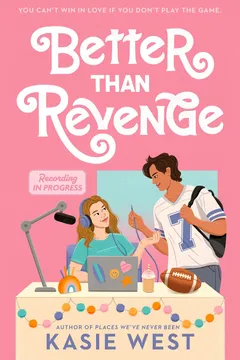
At senior prom, Gia Montgomery clings to Bradley, the long-distance boyfriend her friends have never met, as he ends their relationship in the parking lot. She had wanted him to enter with her and prove Jules wrong about his existence, but Bradley leaves her alone with the problem.
Afraid that telling the truth will hand Jules another reason to undermine her, Gia approaches a stranger waiting in a car and asks him to pose as Bradley. He agrees to change into a suit and accompany her inside. Gia tells herself the deception will last only two hours, yet her panic exposes how much she depends on her friends believing the polished version of her life.
Gia’s first crisis is not simply a breakup. It is the sudden collapse of a carefully maintained social claim. She treats her friends’ belief as something she must manage, not a trust she can rely on. Her choice to recruit a stranger gives her immediate control over the evening, while making the difference between public image and private hurt harder to face.
A Borrowed Boyfriend
At the gym, Gia introduces the stranger as Bradley and steers him through a night of dancing, posed affection, and Jules’s pointed questions. He handles the performance with ease, but his blue eyes and unfamiliar face make Gia nervous that someone will notice the mismatch. When his sister, Bec, recognizes him and confronts Gia for using her brother, Gia decides to confess.
Before she can reach her friends, the stranger stages a loud, convincing breakup, turning the truth into a public spectacle instead. Claire comforts Gia, while Jules watches with new suspicion. The stranger leaves without Gia learning his name. Her friends accept the apparent breakup, but the lie has acquired witnesses and consequences she cannot neatly control.
The fake breakup lets Gia escape immediate exposure, but it also shows how quickly performance can become its own trap. The stranger’s theatrical skill protects her and deepens the deception at once. Jules’s attention remains fixed on inconsistencies, while Claire responds to Gia’s visible pain. Their different reactions foreshadow a conflict that the prom-night lie cannot settle.
Bec Names the Price
The next week, Gia discovers that the stranger’s sister is Bec, a student in her government class whom she failed to recognize at prom. Bec resents Gia for laughing when her friends dismissed Nate’s band during prom auditions, and she refuses to pass along Gia’s contact information.
Then she presents Gia with an invitation to a party hosted by her brother’s ex, Eve, and demands the favor Gia had promised: attend as his girlfriend. Gia follows Bec home, where she finally meets the brother again. He would rather go alone, but agrees to let Gia come as a friend. During the drive, he reveals his name is Hayden and explains that he waited in the prom parking lot because he worried she would be stranded.
Bec’s demand turns an impulsive promise into a test of reciprocity. Gia has treated people as supporting cast in her effort to preserve status, yet Bec makes her confront the harm done to Nate and her brother. Hayden’s reason for helping her also complicates Gia’s assumptions: he acted from concern, not attraction or a wish to be paid.
Eve's Beachside Game
At Eve’s graduation party, Gia discovers that Eve is still with Ryan, the friend who helped fracture Hayden’s relationship with both of them. Hayden claims Gia as his girlfriend to make Eve jealous, and Gia joins the performance when Eve sits close and needles him with old memories. They dance, retreat behind the rocks, and talk about betrayal, family, and loneliness.
When Eve finds them, Hayden nearly kisses Gia, but stops when she asks him not to unless he means it. He leaves with a clearer view of Eve and Ryan, while Gia realizes the act has begun to feel personal. On the drive home, Hayden helps her decide she does not need to return Bradley’s calls, and they agree their revenge has gone far enough.
The party gives Hayden a brief sense of agency over a betrayal that once made him feel powerless, but the performance cannot restore the friendship he lost. Gia’s request that he mean a kiss draws a boundary inside the charade. For the first time, she is not merely trying to control how others see her; she is asking whether an intimate gesture could be honest.
The Friend Group Splinters
Trying to follow through on Claire’s suggestion that she reach out to Jules, Gia invites Jules to help her prepare for Hayden’s party, but Jules denies receiving the invitation. At a group surfing outing, Jules accuses Gia of flirting with Claire’s date, Tyler, and mocks Bec’s friends when the groups meet on the beach.
Gia objects and pulls her friends away, but she cannot pretend she has done enough to repair the damage. Meanwhile, a professor calls to say Gia’s brother, Drew, has won a UCLA film award. Drew discourages the family from attending, but Gia suspects he is trying not to inconvenience them. She persuades her parents to let her travel with Hayden, Bec, and Nate to surprise him.
Gia’s attempt to be kinder does not immediately make her a reliable ally. She challenges Jules’s cruelty, yet the earlier humiliation of Nate’s band remains part of her history. The surfing scene forces her to see that resisting one insult is not the same as repairing a pattern. Her decision to support Drew similarly marks a move from maintaining appearances toward taking action.
Drew's Film Turns Inward
At UCLA, Gia watches Drew receive the university’s top award for a short film about young people measuring self-worth through online approval. His footage shows Gia checking likes and threatening to delete a post that attracts too little attention.
The audience laughs, and Gia recognizes herself in the behavior he has edited into a public lesson. Drew has not warned her how the footage would be used; afterward, he defends the film rather than apologizing.
Their parents praise its social message, leaving Gia feeling more exposed than understood. Hayden takes her home, and his mother, Olivia, listens as Gia admits she fears she has no depth. Olivia urges her to learn from other people’s lives instead of wishing for tragedy to make her wiser.
Drew’s argument about digital validation lands because it is built from Gia’s real behavior, but the film’s insight does not excuse his use of her without meaningful consent. The audience’s laughter turns a private sibling dynamic into public humiliation. Olivia offers a different model of depth: curiosity about other people, rather than suffering treated as a credential.
A Story Beyond the Screen
After confronting Drew by phone and leaving her parents a link to the film, Gia escapes to the library and starts reading about Cleopatra, trying to find the depth she believes she lacks. She then meets Hayden for ice cream and watches him draw out the story of Blake, the student working behind the counter.
When Jules arrives, she needles Gia about Hayden and reveals that her mother is preparing to move again, as she has done repeatedly for new relationships. Later, Gia and Hayden take Bec to Will’s yard, where they throw baseballs at wrecked cars to release anger. As Hayden guides Gia’s throw, they admit they sometimes feel lonely even among friends. He invites her to see him perform in a play, and she accepts.
Gia’s growth begins less with a grand revelation than with a change in attention. She tries to study a famous life, then sees Hayden listen patiently to an ordinary one. Jules’s family instability makes her hostility more legible without excusing it. The baseballs give Gia and Hayden a physical outlet for feelings they have usually hidden behind competence, jokes, or performance.
Spencer's False Story
At Hayden’s performance of Into the Woods, his friend Spencer joins Gia and asks her to accompany him to a baseball fundraiser, explaining that Hayden has told him about their fake-date arrangement. Spencer then makes a crude proposition, and Gia slaps him.
She leaves before Hayden returns from the restroom, after seeing him talking with Eve and believing he is choosing his ex over her. On a bus to the beach, Gia answers Bradley’s call and realizes she no longer wants to revive their relationship.
Hayden tracks her down using the location feature on her phone. He says Spencer described her departure as jealousy and insists that his friend’s account seems more credible. Gia tells Hayden what Spencer actually did, but Hayden’s doubt convinces her that he does not trust her.
The rupture is sharpened by two competing histories: Hayden’s fear of losing another friend and Gia’s fear that honesty will not protect her from being misjudged. Spencer exploits Hayden’s loyalty, while Gia’s earlier lies make her account harder to trust. The painful irony is that she has begun to speak plainly just as Hayden falls back on the familiar story that she is unreliable.
The Boyfriend Appears
After Hayden doubts her, Gia’s friends learn about the prom deception in the worst possible way. Drew arrives at an In-N-Out with the real Bradley, hoping to make amends, while Jules has helped arrange the meeting. Bradley greets Gia and meets her friends, proving he existed, but also exposing that the boy at prom and the so-called blind date were Hayden.
Claire feels betrayed; Laney leaves with her, and Jules admits she wanted Claire to have a better friend. Gia apologizes at Claire’s home and later by text, but Claire warns that their college roommate plans may change. At home, Drew’s initial defense of his film gives way to an apology, and Gia begins a more honest conversation with him and their mother.
The reveal separates two truths Gia has tried to merge: Bradley was real, but she lied about who accompanied her to prom and about how she met Hayden. Jules’s vindication does not erase her own role in manipulating the confrontation. Gia’s loss of her friends is the consequence she feared, and it forces her to distinguish an explanation from an excuse.
The Camaro Takes the Blows
When Claire does not forgive Gia immediately, Bec takes her to Will’s yard to throw baseballs. Bec secretly uses Gia’s phone to summon Hayden, then drives away and leaves Gia to manage the dogs and wait alone. Gia finds the balls left from their earlier visit and hurls them at Will’s prized Camaro, turning her anger toward Hayden, Jules, Drew, and herself into dents in the car door.
Hayden arrives and admits that he let loyalty to Spencer overrule what he knew of Gia. Gia tells him she still wants college and a future of her own, even though her old plan has fallen apart. She chooses to kiss him, and they begin again without pretending their feelings are part of a role.
The Camaro has become a shared object of release, so Gia’s attack on it expresses both anger at Hayden and attachment to the memories they made there. Her decision to forgive him is not a denial of the harm: she names what she wants for herself before choosing him. The reconciliation depends on clearer accountability than their earlier acts of staged affection.
The Rally Without a Mask
Gia apologizes to Drew, and he finally acknowledges that filming and presenting her without asking properly was wrong. She also tells her mother that the family’s habit of acting fine keeps them from knowing one another; her mother responds with an embrace rather than another polished reassurance. At the final school rally, Gia admits to the student body that she lied to her friends because she feared losing them.
Claire, Laney, and Jules do not accept the apology at once, but they attend the sober graduation party Gia organized. Hayden and Bec arrive, and Claire gives Gia a small sign that reconciliation may still be possible. As the band plays, Gia dances with Hayden, no longer required to prove she has a date or a perfect life.
The public apology risks the very reputation Gia once tried to protect, making accountability an action rather than a private feeling. Yet forgiveness remains unfinished: Claire’s tentative smile is not a reset, and the story does not pretend one speech repairs months of mistrust. Gia’s new confidence rests instead on tolerating uncertainty while continuing to show up honestly.
Analysis
The novel builds its romance out of a problem of credibility. Gia believes that being loved depends on maintaining a convincing public self, so she treats a breakup, a missing boyfriend, and her friends’ doubts as crises to manage. Her temporary solution works in the room and fails in the relationships: every new performance adds another person who can be hurt by the truth.
The book’s social-media critique is deliberately intimate. Drew’s film does not invent Gia’s dependence on approval, but its public use of her image reproduces the very reduction it criticizes. Gia is both recognizable and wronged. The conflict asks readers to hold those facts together: insight does not excuse the filmmaker’s lack of care, and humiliation does not erase the behavior that made the film persuasive.
Hayden’s romance with Gia develops through repeated acts of attention: waiting in the parking lot, listening to her, and helping her notice other people’s stories. Their central rupture comes when he lets loyalty to Spencer overpower what Gia tells him. The betrayal echoes his own history, but his fear does not make his judgment harmless. Reconciliation becomes possible only when he admits that he was wrong and Gia chooses him without pretending the hurt never happened.
The supporting relationships broaden the same question of accountability. Bec asks Gia to notice the harm she caused Nate. Claire’s anger shows that long friendship does not guarantee automatic forgiveness. Drew and the Montgomery parents must confront how their polished family habits suppress difficult feelings. By the end, Gia has not restored every relationship or secured her old college plan. She has learned to risk being seen without controlling every response, a less perfect but more durable form of belonging.
Review Summary
The Fill-In Boyfriend received mixed reviews, with an average rating of 3.89 out of 5. Many readers found it to be a cute, fluffy romance with good character development for the protagonist, Gia. However, some criticized Gia's initial shallowness and the predictable plot. Readers appreciated the exploration of themes like social media validation and friendship dynamics. The love interest, Hayden, was well-received. While some felt it wasn't West's best work, many still enjoyed it as a light, entertaining read that tackles relatable teenage issues.
People Also Read





Characters
Gia Montgomery
The polished class presidentGia is a senior student body president who is socially skilled, ambitious, and accustomed to managing how others see her. She values her close friends and family, but often assumes affection depends on appearing composed and desirable. That belief makes her quick to conceal embarrassment and slow to admit uncertainty. Her leadership, online presence, and carefully arranged future give her a sense of control, even as she struggles to recognize what she wants beyond approval. Gia’s central psychological conflict is not popularity versus loneliness so much as performance versus intimacy: she wants to be known, yet fears what people might see if she stops directing the scene.
Hayden
The observant theater studentHayden is Bec’s older brother, an aspiring actor with a playful manner, a thoughtful eye for other people’s discomfort, and a complicated history with his former girlfriend and closest friends. He enjoys performance, but his instinct to be helpful is not simply an act: he notices when someone is stranded or hiding hurt. His loyalty is one of his strengths and one of his vulnerabilities, since he can trust familiar friends even when their choices deserve scrutiny. Hayden’s ease with teasing and games coexists with a serious concern about belonging, giving him a gentleness that Gia initially mistakes for pity.
Bec
Hayden's sharp-edged sisterBec is Hayden’s younger sister, a government-class student whose dark clothes and blunt humor help keep other people at a distance. She is protective of her brother and wary of girls who treat him casually, but her judgments are shaped by her own uncertain place among peers. Her creativity appears in the photographs and sea glass she keeps, details that complicate her abrasive school persona. Bec values directness, loyalty, and being acknowledged; she is less interested in looking agreeable than in finding out whether someone means what they do.
Claire
Gia's oldest friendClaire is Gia’s closest friend and expected college roommate. Warm and attentive, she often tries to mediate between Gia and Jules, believing both deserve patience. Her steadiness can make Gia feel safe, but it also means Claire sometimes smooths over conflict rather than confronting it directly. Claire wants her friendships to last through graduation and into college, and she takes trust seriously. She is not merely Gia’s source of comfort: her reactions help show when Gia’s choices have injured someone who genuinely cares for her.
Jules
The relentless skepticJules is a newer member of Gia’s friend group, perceptive, competitive, and quick to test a story for weak points. She and Gia repeatedly vie for influence, while Claire and Laney become the ground over which their conflict plays out. Jules’s probing can expose real inconsistencies, but suspicion also becomes a way to challenge Gia’s place in the group. Her difficult home life gives her a strong need for security and belonging, though she does not easily reveal that need. She is capable of both pointed cruelty and sincere concern, making her harder to reduce to a simple rival.
Laney
The gentle longtime friendLaney is one of Gia’s longtime friends, a softer presence in the group who often seeks harmony. She is close to Claire and shares the group’s plans for college, though she will attend community college rather than UCLA. Her sensitivity to being left behind makes her attentive to the changes coming after graduation. Laney offers Gia companionship and comfort, but her quietness can leave her caught between stronger personalities.
Drew
Gia's filmmaker brotherDrew is Gia’s older brother, a UCLA student and aspiring filmmaker who likes to provoke reactions from their careful, conflict-averse family. He has talent and a strong point of view, but can mistake a compelling argument for permission to use other people’s private lives. His teasing often hides a desire to make the family confront what it avoids. Gia’s relationship with him is affectionate but strained by their different approaches to honesty, ambition, and accountability.
Bradley
Gia's long-distance boyfriendBradley is Gia’s real boyfriend, a UCLA student she met during a film festival visit. Their long-distance relationship gives Gia affection and excitement, but he remains mostly separate from her school life and friends. He is charming and easy to talk to, yet the distance between their worlds leaves Gia uncertain about how fully he wants to know her.
Olivia
Hayden's candid artist motherOlivia is Hayden and Bec’s mother, a painter whose unconventional studio and lively manner contrast with Gia’s composed household. She treats difficult feelings as material to be understood rather than signs of failure. Olivia’s openness makes her a reassuring adult presence, especially for teenagers who are unused to saying what hurts.
Nate
Bec's musician friendNate is a drummer in a local band and one of Bec’s closest friends. Quiet and good-natured, he is slow to notice the affection Bec has for him. His experience with Gia’s careless judgment gives their relationship a history that cannot be repaired by a casual apology alone.
Eve
Hayden's complicated exEve is Hayden’s former girlfriend, an expressive young woman whose connection to Ryan complicates her history with Hayden. She is comfortable with teasing and old shared memories, which can blur the line between affection and provocation. Her presence brings Hayden’s unresolved hurt into the open.
Ryan
Hayden's former best friendRyan was Hayden’s closest friend from childhood. His history with Eve lies behind the fracture in Hayden’s social world. He remains part of the old group, carrying the ease of shared memories alongside the tension of a damaged friendship.
Spencer
Hayden's charming old friendSpencer is one of Hayden’s longtime friends, socially confident and quick with teasing. He belongs to the group Hayden grew up with, though his easy charm can conceal an unkind streak. His history with Laney gives Gia reason to question how well she knows him.
Mr. Montgomery
Gia's peacekeeping fatherGia’s father is affectionate and gentle, often reaching for humor or familiar metaphors when his children are upset. His warmth helps make home feel secure, but his instinct to avoid confrontation can leave serious hurts unaddressed.
Mrs. Montgomery
Gia's composed motherGia’s mother is a real estate agent who values routine, appearance, and keeping family life orderly. She cares deeply for Gia, though her preference for calm can make disagreement feel unwelcome. Her polished exterior is part of the family’s shared habit of presenting everything as fine.
Daniel
Gia's student council deputyDaniel is Gia’s vice president on student council and a former date. He respects her competence, but can see that her polished leadership sometimes keeps people at a distance.
Marcus
Nate's determined bandmateMarcus is the charismatic lead singer of Nate’s band. He takes the group’s work seriously and remembers when people dismiss it, but he is willing to reconsider when someone approaches with genuine respect.
Blake
The ice cream counter workerBlake is a student who works at his family’s ice cream shop. His dry humor and matter-of-fact account of growing up around ice cream give Gia a small example of how curiosity can turn a stranger into a person with a story.
Mrs. Reynolds
Bec's welcoming motherBec’s mother welcomes Gia into the house and makes space for Bec’s feelings. Her home offers a more openly expressive contrast to Gia’s orderly family life.
Plot Devices
The fill-in boyfriend
A cover becomes a connectionGia’s improvised request that a stranger pose as Bradley launches the plot and gives the central relationship an unusual beginning. The arrangement first protects her from Jules’s doubts, then becomes a favor for Hayden at Eve’s party. Because each performance requires the pair to act close while concealing their actual motives, the device steadily tests the boundary between convenient pretending and genuine trust.
Social media and Drew's film
Public approval made visibleGia’s posts and concern about likes establish how strongly she measures her image through online attention. Drew’s film turns that habit into public evidence, forcing her to confront herself through other people’s laughter. The device is more than a critique of technology: it exposes how a private need for reassurance becomes visible, countable, and vulnerable to judgment.
Twenty Questions
A game that invites honestyGia and Hayden use Twenty Questions while driving, turning their banter into a small structure for curiosity. The game first delays Hayden’s name and lets Gia learn about his family; later it becomes a recurring way to test what they know about one another. Its playful rules give both characters room to approach vulnerability indirectly, while their willingness to bend or argue over the rules reveals their personalities.
Will's broken-down cars
Anger given a targetWill lets Hayden and Bec pay to throw baseballs at abandoned vehicles, making the yard a place where anger can become physical without being aimed at a person. Gia first uses the damaged cars to vent after Drew’s film, then returns to the yard after her trust in Hayden breaks. The battered Camaro gathers memories of attraction and conflict, so striking it expresses both pain and attachment.

Download PDF
Download EPUB
.epub digital book format is ideal for reading ebooks on phones, tablets, and e-readers.








