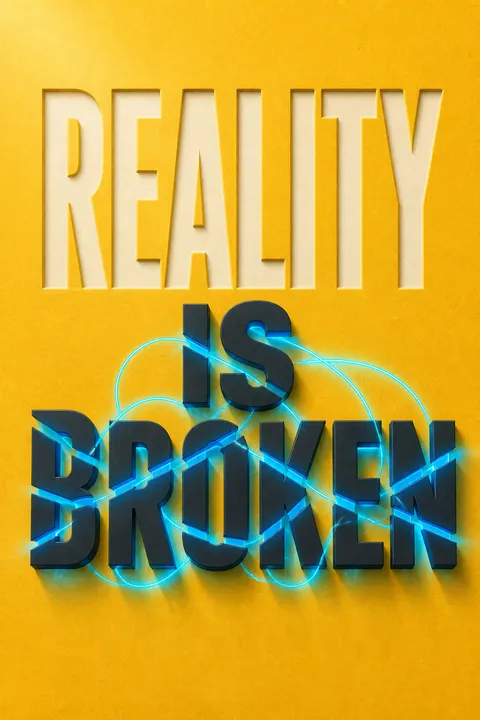


Key Takeaways
Treat games as prototypes for a more engaging reality, not exits from it.
Games answer a real hunger. The book opens with Herodotus's account of the ancient Lydians, who supposedly played games on alternate days during an eighteen-year famine to ease their suffering. Historians question whether the story is factual, but its point endures: games can offer structure, agency, and company when life feels unmanageable.
Bring the design home. McGonigal argues that games meet needs many people find missing in ordinary life: meaningful effort, clear signs of progress, social connection, and the feeling of contributing to something larger. Rather than shame people for playing or build ever more absorbing virtual worlds, she proposes using game design to make real activities more engaging and purposeful.
The opening reframes gaming as a signal, not simply a problem: people may be drawn to games because they provide experiences that workplaces, schools, and communities fail to offer. That is a useful diagnostic question for designers and leaders: what need is the game meeting, and why is the surrounding institution not meeting it? The Lydian story is explicitly uncertain, so it works best as a thought experiment rather than historical evidence. The book's strongest claim is not that games solve hardship, but that their design reveals practical ways to make effort feel more worthwhile.
Make effort voluntary, legible, and just difficult enough to absorb attention.
Structure makes challenge inviting. The book describes a game as an activity organized around an objective, constraints on how to reach it, feedback about progress, and the choice to take part. Golf illustrates the logic: players could put the ball in the hole by hand, but agree to use clubs from a distance. The self-imposed difficulty is the point.
Feedback keeps effort alive. Tetris offers no final victory, yet players keep returning because each move produces immediate signals: rows vanish, the score rises, and the pace tightens as skill improves. That balance can create flow, a state of focused engagement when a challenge stretches but does not overwhelm a person's abilities. In games such as Portal, players even learn the rules by testing what the world permits.
This model makes a powerful distinction between difficulty and needless friction. A chosen obstacle can feel energizing because the participant understands the aim, sees the consequences of action, and can stop. That combination has clear relevance to training and education, where feedback can turn vague effort into visible learning. Yet the same tight feedback loop can encourage compulsive play if stopping is made difficult or if the activity never feels complete. Good design therefore requires more than engagement. It also needs meaningful consent, appropriate limits, and a reason for the effort beyond keeping attention locked in.
Choose intrinsically rewarding work over prizes that quickly lose their shine.
The activity can be its own reward. An autotelic activity is done for the satisfaction of doing it, rather than for money, status, or another outside payoff. The book contrasts this with extrinsic rewards, which can lose their appeal as people adapt to them. It argues that lasting well-being is more likely to come from work that is engaging, strengths-building, socially connected, and meaningful.
Games package those rewards. World of Warcraft players spend hours improving characters through quests, battles, exploration, and group missions. The book describes this as blissful productivity: satisfying effort with clear results. It also draws on experience-sampling research, where people report what they are doing and feeling in the moment, to argue that active, challenging pastimes can feel better than passive leisure.
The distinction between reward for an activity and reward from an activity is useful well beyond games. It helps explain why a visible contribution or growing competence may motivate more deeply than a bonus alone. But the contrast should not be made absolute. Pay, recognition, and material security matter, especially when work is undercompensated or burdensome. The practical lesson is to enrich work with autonomy, skill, and visible purpose, not to use intrinsic motivation as an excuse to avoid fair compensation. Game-like satisfaction cannot make exploitative conditions acceptable.
Make setbacks informative so people stay hopeful without mistaking hope for proof.
Failure can invite another attempt. In a study described in the book, 32 players of Super Monkey Ball 2 showed strong positive reactions when their characters crashed spectacularly. The amusing animation made failure visible and active, rather than silent or humiliating. Players could laugh, understand that their choices mattered, and try again. McGonigal reports that players fail far more often than they succeed in many games, yet remain engaged.
Hope needs calibration. Games work best when players believe success is possible and can learn from each attempt. Rock Band lets players see how far they made it through a song and choose a difficulty suited to their ability. This resembles flexible optimism: adjusting effort when evidence changes, instead of giving up immediately or insisting every goal is attainable.
A well-designed failure can reduce shame by separating a poor result from a fixed judgment about the person. That principle can improve feedback in classrooms, workplaces, and skill training. The crucial condition is that failure must be interpretable and reasonably fair. If outcomes feel arbitrary, repeated attempts can produce frustration rather than resilience. The book is also right to distinguish optimism from certainty: persistence is valuable when it responds to evidence. A humane system should make experimentation safe while allowing people to revise or abandon goals that are unrealistic or harmful.
Use shared goals to turn weak ties into real social connection.
Play gives contact a purpose. The asynchronous word game Lexulous let players take turns whenever convenient, giving relatives and faraway friends a low-effort reason to check in. In World of Warcraft, research cited in the book found that players spent much of their time on solo tasks while still valuing the sense of sharing a world with others. McGonigal calls this ambient sociability: company without constant conversation.
Scale can add meaning. Halo 3 players coordinated online toward a collective milestone of ten billion fictional enemy kills. The target had no direct material value, but players experienced their individual efforts as part of a shared achievement. The book argues that games can create belonging both through everyday interaction and through participation in something seemingly enormous.
A shared task can make social contact less awkward because it gives people something to do together before they have to decide what to say. That is one reason lightweight play can suit distant friends, introverts, or people with limited time. Still, simulated togetherness is not the same as care in a person's daily life, and a fictional collective victory is not equivalent to public service. Games can open a door to connection, but relationships deepen through attention, reciprocity, and support beyond the scoreboard.
Gamify chores and recovery only when choice and dignity remain intact.
Real life can borrow game structure. An alternate reality game, or ARG, brings game goals and feedback into ordinary settings rather than confining play to a virtual world. In Chore Wars, household members turn cleaning tasks into optional quests, earn experience points, and compete to improve their characters. The work still gets done, but the framing can replace nagging with playful choice.
Recovery can become active. After a concussion, McGonigal created SuperBetter, a game that invited her to identify symptom triggers, choose small positive activities, set manageable goals, and recruit friends for specific support. She reported that her symptoms improved by roughly 80 percent in two weeks, but this was one person's experience, not a clinical trial. The game's value was also emotional: it helped her feel involved in recovery rather than simply waiting.
These examples show how a game can reorganize an experience without changing its underlying task. A household can make routine work more cooperative, while a person coping with illness can use small goals to regain a sense of agency. The safeguard is choice. If employers, caregivers, or institutions impose game systems to extract more effort, playful feedback can become surveillance with cartoon graphics. Health applications also need to complement professional care, not promise treatment through points. Dignity, privacy, and the option to stop are part of sound design, not optional extras.
Make kindness and difficult advice playful enough to practice together.
A game can rehearse a better habit. McGonigal calls happiness hacking the practice of translating positive-psychology advice into game mechanics. In Cruel 2 B Kind, players secretly try to eliminate one another with friendly gestures such as compliments or offers of help. The surprise makes kindness playful, while the group gives participants company as they approach strangers.
Play can change a place's meaning. Tombstone Hold 'Em adapts poker for cemeteries, using tombstones as cards and encouraging players to notice names, dates, and the condition of the grounds. The unusual setting makes reflection on death social rather than solitary. Top Secret Dance-Off similarly used disguises and absurd dance challenges to help people participate without needing to look skilled.
The method is valuable because it lowers the social cost of trying something unfamiliar. A playful frame can make gratitude, movement, or reflection feel less like a prescribed self-improvement routine and more like a shared experiment. But surprise and spectacle do not guarantee welcome. Compliments can feel intrusive, cemetery games can conflict with mourners' needs, and public participation must account for bystanders. The right design tests how the activity lands on people who did not sign up, not only on enthusiastic players. Playful permission is strongest when paired with respect.
Give crowds meaningful tasks, visible impact, and rewards that renew themselves.
People contribute when progress is clear. During Britain's parliamentary expenses scandal, the Guardian invited the public to review a large release of scanned documents through an online game. More than 20,000 people examined over 170,000 documents in the first 80 hours. Players could classify records, flag suspicious claims, and see how their work contributed to the investigation. The effort helped sustain public scrutiny as MPs faced repayment demands and political consequences.
Games can organize different kinds of help. Free Rice converted correct vocabulary answers into donated rice, while Folding@home used PlayStation 3 processing power for protein research. Foldit went further by asking players to solve protein-folding puzzles themselves; a study reported that players outperformed specialized algorithms in several challenges. The common thread is a task people can do, with progress they can understand and a larger purpose they can see.
These cases show that game design can help turn scattered attention into useful collective labor. Clear tasks and visible results reduce the coordination burden that often sinks public participation projects. But participation counts are not the same as impact, and the book's examples differ in how directly player actions produce public benefit. Strong projects need transparent reporting about what contributions accomplished, who verifies results, and who owns the outcome. Intrinsic motivation may be renewable, but human attention is limited. A worthwhile mission should earn that attention rather than merely capture it.
Practice collaboration and future scenarios before crises force improvisation.
Games can train group problem-solving. McGonigal defines collaboration as combining cooperation, coordination, and creating something none of the participants could produce alone. In The Lost Ring, players across countries solved clues, translated documents, and revived a fictional ancient sport by organizing real-world teams. The project gave people different ways to contribute, from research to coaching.
Forecasting turns imagination into rehearsal. World Without Oil asked roughly 1,900 players to simulate an oil shortage, share local consequences, and test responses. Superstruct invited thousands to imagine organizations for future global threats, while EVOKE challenged young people to develop social innovations. These games did not predict the future with certainty. They helped participants consider risks, discover possible responses, and connect personal abilities to large problems.
The strongest idea here is rehearsal without pretending rehearsal is prophecy. A scenario can expose dependencies, reveal overlooked expertise, and help groups practice coordination before a real emergency. This is valuable in complex systems, where plans often fail because people have never tested them together. Yet a compelling simulation can create false confidence if its assumptions are too narrow or its participants too similar. Forecasting games need diverse voices, clear uncertainty, and pathways from ideas to real decisions. Their success is measured not by dramatic stories alone, but by learning that survives outside the game.
Analysis
Reality Is Broken makes a provocative reversal: the popularity of games is not merely evidence that people want to avoid life. It may reveal how poorly many real institutions organize attention, agency, feedback, and belonging. McGonigal's most durable contribution is therefore a design lens. A task becomes more compelling when people can choose it, understand what to do, see the effects of their effort, and connect that effort to others.
The book also tracks a change in scale. It moves from the individual psychology of challenge and flow, through everyday applications such as chores and recovery, to crowdsourcing and global forecasting. The progression matters. Game mechanics are not presented only as a way to improve mood; they are also proposed as infrastructure for coordinating people. Examples such as the parliamentary expense investigation and Foldit make that proposal concrete, while World Without Oil and Superstruct show how play can support collective imagination.
The argument is most persuasive when it treats games as prototypes and invitations. It is less convincing when it implies that games reliably produce happiness or that engagement itself is public value. A system can be absorbing and still be manipulative, inequitable, or irrelevant to the underlying problem. Metrics can reward visible activity instead of meaningful outcomes, and playful framing cannot repair poor wages, inaccessible institutions, or inadequate health care by itself.
The book's practical test is consequently not whether an experience has points or levels. It is whether the design preserves genuine choice, gives participants useful agency, treats failure fairly, and produces benefits that can be recognized outside the game. Games can help people rehearse cooperation and make effort legible. They cannot substitute for institutional accountability or material solutions. Their promise lies in making worthwhile action more inviting, then connecting that action to consequences that matter in the real world.
Review Summary
Reality is Broken receives mixed reviews. Many praise McGonigal's innovative ideas about harnessing games for social good and her insights into game psychology. However, some criticize her overly optimistic tone and lack of addressing gaming's downsides. Readers appreciate her exploration of how games can improve real-world problem-solving and engagement, but some find her arguments repetitive or unconvincing. The book is seen as thought-provoking for both gamers and non-gamers, offering a fresh perspective on gaming's potential to create positive change, despite occasional skepticism about the practicality of her grand vision.
People Also Read




Glossary
Flow
absorbed challengeA state of deep, focused engagement in which a person works near the edge of their abilities. The challenge is demanding but still manageable, and clear feedback helps sustain attention. The book treats games as a reliable way to create flow because they can adjust difficulty and show progress quickly.
Fiero
triumph after difficultyA strong feeling of pride and exhilaration that follows overcoming a meaningful obstacle. McGonigal describes it as a distinctive emotional reward of games, often expressed physically through an energetic celebration. The harder the challenge that a player overcomes, the more intense the feeling can be.
Autotelic
rewarding in itselfDescribes an activity undertaken for the satisfaction found in doing it, rather than for an external payoff such as money, status, or praise. In the book, games are examples of autotelic activity when the challenge, learning, and social experience are rewarding in their own right.
Alternate reality game
game played in real lifeA game that brings goals, rules, and feedback into players' everyday environments instead of keeping the experience inside a virtual world. Examples in the book include turning chores into quests, using social missions to support recovery, and organizing public activities around kindness or community participation.
Happiness hacking
gameful happiness practiceThe practice of translating findings from positive psychology into game mechanics. The aim is to make activities associated with well-being, such as kindness, dancing, or reflecting on mortality, more engaging and social. A happiness hack adds challenges and structure to help people try an activity they might otherwise avoid.
Participation bandwidth
capacity to contributeThe limited time, attention, and mental effort people can offer to collective projects. The book argues that organizations compete for this capacity and that clear goals, satisfying tasks, visible progress, and social connection can make people more willing to contribute. It also warns that an overload of requests can thin participation across projects.
Collaboration superpowers
advanced group-work abilitiesThe heightened abilities to cooperate toward shared goals, coordinate people and resources, and create outcomes together. McGonigal argues that online games provide repeated practice in these behaviors. She describes especially capable collaborators as people who reach out effectively, identify useful partners, and remain productive amid complexity.
Massively multiplayer foresight
crowd-based future rehearsalA process in which large groups use games to examine possible futures, contribute different perspectives, and explore responses to complex problems. Instead of claiming to predict exactly what will happen, these games invite participants to test scenarios and develop ideas that may help communities prepare for change.
Super-empowered hopeful individual
hopeful, capable change-makerA person who feels optimistic about improving the future and capable of taking action toward that improvement. The book links this outlook to networked tools and collaborative projects that let individuals combine their efforts. Hope becomes more practical when people can see how their contribution joins a larger effort.
FAQ
What's Reality Is Broken about?
- Exploration of Gaming's Impact: The book explores how games can meet human needs that reality often fails to satisfy, such as engagement, community, and purpose.
- Games as Happiness Engines: Jane McGonigal argues that games are designed to maximize happiness and can be used to enhance real-life experiences.
- Reinventing Reality: The author suggests using game design principles to address real-world issues, making life more engaging and fulfilling.
Why should I read Reality Is Broken?
- Challenging Misconceptions: The book challenges the stereotype that games are a waste of time, showing their potential for personal and societal growth.
- Practical Applications: McGonigal offers insights on applying game mechanics to everyday life to boost motivation and satisfaction.
- Inspiring Change: It encourages readers to rethink their approach to life and work, suggesting a more gameful world.
What are the key takeaways of Reality Is Broken?
- Games Provide Structure: Games offer clear goals, rules, and feedback systems that can enhance real-life engagement and satisfaction.
- Community and Connection: The book highlights the role of games in fostering stronger relationships and communities.
- Epic Meaning: McGonigal emphasizes the importance of being part of something larger, which games can facilitate through collective goals.
What are the best quotes from Reality Is Broken and what do they mean?
- “Reality doesn’t motivate us as effectively.”: This highlights how real life often lacks the structured rewards and challenges that games provide.
- “Games are clues to the future.”: McGonigal suggests that game design can inform improvements in real-world experiences.
- “We can play any games we want.”: This emphasizes the power of choice in engaging with life, encouraging active participation in shaping experiences.
What are the four defining traits of a game according to Reality Is Broken?
- Goal-Oriented: Games have specific outcomes that provide purpose and direction.
- Rules and Limitations: Restrictions in games encourage creativity and strategic thinking.
- Feedback System: Real-time feedback motivates players to continue and improve.
- Voluntary Participation: Players willingly engage, ensuring enjoyment and self-direction.
How does McGonigal define "fun failure" in Reality Is Broken?
- Positive Emotional Response: Fun failure involves enjoying the process of failing in a game, which can lead to excitement and motivation.
- Learning Opportunity: Failure provides feedback that helps players improve skills and strategies.
- Agency and Control: Experiencing failure reinforces a sense of agency, fostering optimism about success.
What is the concept of "flow" in Reality Is Broken?
- Optimal Engagement: Flow is being fully immersed in an activity where challenges match skill levels.
- Happiness and Satisfaction: Achieving flow leads to feelings of accomplishment and control.
- Game Design: Games are designed to facilitate flow, enhancing real-life engagement.
How can games improve social connectivity according to Reality Is Broken?
- Building Relationships: Games create opportunities for interaction and bonding over shared experiences.
- Community Engagement: Multiplayer games encourage collaboration and teamwork.
- Positive Emotions: Playing games with others evokes prosocial emotions, enhancing happiness.
What is the significance of "epic meaning" in Reality Is Broken?
- Connection to Larger Causes: Epic meaning involves feeling part of something bigger, achievable through collective gaming efforts.
- Motivation for Action: Players are more engaged when their actions contribute to a larger goal.
- Awe and Inspiration: Epic experiences in games evoke awe, linked to life satisfaction and purpose.
How does McGonigal suggest we can "hack" happiness in Reality Is Broken?
- Game Mechanics for Real Life: Applying game design principles to daily activities makes them more engaging and rewarding.
- Collective Participation: Involving others in happiness activities enhances motivation and support.
- Intrinsic Rewards: Focusing on activities with intrinsic rewards leads to lasting happiness and fulfillment.
What is the concept of "happiness hacks" in Reality Is Broken?
- Definition of Happiness Hacks: Strategies using game mechanics to enhance well-being and social interaction.
- Examples Provided: Games like Cruel 2 B Kind encourage kindness, transforming mundane activities into meaningful experiences.
- Long-term Benefits: Engaging in happiness hacks can lead to lasting behavioral and mindset changes.
How does Reality Is Broken address the relationship between gaming and mental health?
- Positive Effects of Gaming: Gaming can alleviate symptoms of depression, anxiety, and loneliness by providing purpose and community.
- Game Mechanics for Recovery: Games like SuperBetter support mental health recovery by encouraging goal-setting and progress tracking.
- Long-term Benefits: Skills developed through gaming can improve resilience and coping strategies, benefiting mental health.
About the Author

Download PDF
Download EPUB
.epub digital book format is ideal for reading ebooks on phones, tablets, and e-readers.








