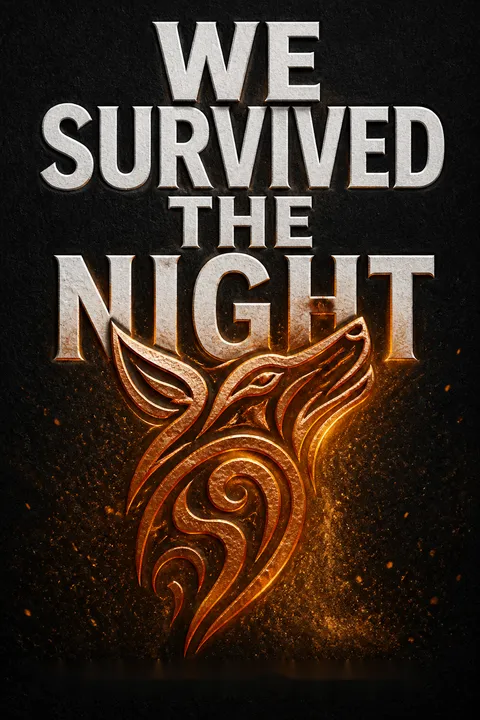


Key Takeaways
Place family survival inside the history that tried to erase it.

A brutal beginning. In 1959, night watchman Tony Stoop heard a newborn crying at St. Joseph’s Mission, a residential school for Indigenous children in British Columbia. He found the baby in a garbage burner. The child, called Baby X in the records, was Julian NoiseCat’s father. The book places this family secret within a system that forcibly separated Indigenous children from their families and cultures.
Silence has a history. In 2021, Williams Lake First Nation investigators examining missing students at the school gathered testimony and records about babies conceived there who were aborted, adopted out, or put in the incinerator. The author’s grandmother, Kyé7e, was punished for abandoning her newborn, while no one else was punished for the school’s infanticides. Telling the story does not undo the harm, but it exposes how institutions can leave families carrying blame for violence they did not create.
What’s powerful here is the refusal to make survival a tidy ending. A rescued child is evidence of life, but also a witness to a system that made his survival improbable. The story joins the intimate scale of one family to the administrative scale of compulsory schooling and institutional power. That pairing matters: trauma is not merely private pain when policies help produce it. At the same time, recovering a story cannot restore what was lost. Its value lies in making denial harder and accountability more precisely directed.
Treat Indigenous stories as knowledge, not folklore left behind.

Stories carry history. The author uses Coyote Stories, accounts that explain how the world and its peoples were made and transformed, as a way to understand both family life and Indigenous history. Two Secwepemctsín terms clarify the tradition: lexéy’em are oral histories of remembered events and genealogy, while tspetékwll are stories of creation, transformation, and supernatural events. The categories can overlap, as lived experience meets mythic interpretation.
Coyote stays complicated. In one story, Coyote proposes that people die only temporarily, but Raven’s view prevails and death becomes part of the world. In another, Coyote’s abandoned son, Stump, finds grandparents in the Sky World who help him return home. These tales are not presented as decorative fables. They preserve teachings about human behavior, kinship, rivers, and change, and are read alongside archaeology, linguistics, and environmental history.
The book challenges a familiar hierarchy in which written records count as history and oral traditions are demoted to belief. Its strongest move is not to claim that every story supplies a literal timeline, but to show how stories preserve observations, social laws, and interpretations across generations. Scientific evidence can enrich that reading without serving as a certificate of legitimacy. Oral knowledge and academic research ask overlapping but not identical questions. Respecting both means comparing them carefully, rather than forcing one to translate itself into the other’s terms.
Widen the circle when fathers fail, without denying the wound.

A son left behind. The story of Coyote and Stump gives the author a cultural language for his own father’s absence. Coyote abandons Stump in the Sky World; Spider and Sky Woman welcome him as family and help him find his way home. In Julian’s life, his mother repeatedly brings him to Canim Lake, his father’s community, despite her uncertainty and other people’s doubts about whether she belongs there.
Kin can make a home. In Oakland, the Intertribal Friendship House gives Julian access to Native community, dancing, and ceremony. Koko, his mother’s partner, teaches him to dance, make regalia, and play baseball, helping him feel connected to an Indigenous life. Yet Koko also threatens Julian’s mother with a blade. The book refuses the easy choice between gratitude and anger: chosen family can be life-giving without becoming innocent or replacing the pain of abandonment.
This section treats belonging as something practiced, not simply inherited. A child’s identity is shaped by the people who show up, teach skills, and bring him into community, even when biological family relationships are fractured. That is a useful corrective to the idea that kinship is only genetic. The necessary caution is that gratitude should not be mistaken for consent to harm. The author’s account makes that tension visible: community care can sustain a person, while boundaries remain essential to safety.
Recover language and names because they map people back onto land.
Words hold geography. In Secwepemctsín, the root used in the name Secwépemc refers to both people and land. The language makes a relationship explicit that English can make easier to overlook: identity is tied to a particular place and to generations who lived there. Julian’s family name, NoiseCat, began as a missionary’s alteration of Newísket, an ancestral name whose meaning is no longer known with certainty.
Learning restores more than vocabulary. Julian’s grandmother teaches him Secwepemctsín, including the morning greeting Tsecwínucw-k, meaning that someone survived the night. He also learns family words that his father remembers from his own childhood with Alice, the grandmother who raised him. A name may have several possible meanings, or its meaning may be lost. Recovering the language does not magically reverse colonization, but speaking it reconnects family memory, place, and a living community.
Language revitalization is often discussed as preserving a collection of words. This account shows its deeper work: language can encode relationships among people, place, and responsibility that are less visible in dominant languages. A greeting can carry a community’s history of danger and endurance; a place-name can keep ancestry attached to a landscape. There is also an honest limit here. Relearning a language cannot recover every lost name or restore fluent speech across generations. The effort matters without requiring a fantasy of complete return.
Let kinship, not racial purity tests, define Indigenous belonging.
Recognition is not identity. The Lumbee of North Carolina number about 55,000, yet they lack full federal recognition in the United States. Their community formed through the survival and intermarriage of Indigenous peoples, alongside some non-Indigenous ancestors who joined Native communities. Lumbee accounts connect their history to the Roanoke colonists, though archaeological evidence for that connection is suggestive, not conclusive.
The rules were built to shrink nations. The book describes a federal assessment in which an anthropologist inspected Robeson County residents’ bodies and classified their supposed degree of Indian ancestry. Such racial tests conflict with the Lumbee’s own account of identity, which emphasizes community and kinship. The legal dispute has real consequences: the book estimates federal recognition would have brought $846 million in support from 2012 to 2016. Still, recognition remains contested, including by other tribes with political and economic concerns.
The Lumbee case exposes the difference between belonging to a people and satisfying a government’s test for belonging. That distinction is crucial wherever states turn ancestry into a bureaucratic gate. The chapter also avoids an easy solution: self-identification alone does not settle every question of citizenship, history, or shared resources, and intertribal disagreements have material stakes. The deeper challenge is to let Indigenous nations define their own membership without treating biological fractions as objective truth or pretending political boundaries never require difficult decisions.
Treat land theft as ongoing when mines still displace families.
Dispossession continues. A study cited in the book estimates that Indigenous nations in the United States and Native Hawaiians have lost 98.9 percent of their lands. In Canada, reserves make up about 0.2 percent of the country. These figures frame the author’s account of the Ouje-Bougoumou Cree, who were repeatedly moved as mining and logging expanded around their homes in Quebec.
A new village cannot settle everything. Chief Abel Bosum helped secure a recognized Ouje-Bougoumou community in 1992 after decades of displacement. Yet the Wapachee family still lives and hunts on its ancestral trapline, where a proposed mine threatens a mountain central to their food and way of life. Some family members see work and income in the project; others fear further loss. The divide shows how extraction can force communities to choose among imperfect options, even when the costs fall unevenly.
This story complicates the comforting idea that colonization is a completed historical event. When a family must relocate hunting camps so a mine can proceed, the past is still structuring present choices. The conflict also resists a simple opposition between tradition and progress: jobs and community revenue matter, while so do land, food, and cultural continuity. A serious assessment of development asks who decides, who benefits, and who bears irreversible costs. Calling a project green or modern cannot answer those questions by itself.
Protect ecosystems by making resource use answerable to relatives.
Fish connect whole communities. In a Coyote story, salmon are trapped by witches who keep them from traveling upriver. Coyote breaks the weir, giving inland communities access to fish and establishing responsibilities among people who share a river. The term k’wseltktenéws means obligations to relatives. In this worldview, relatives include more than human family: a river’s fish sustain people, forests, and other life.
Harvesting can either renew or deplete. Tlingit communities cultivate herring eggs by placing young hemlock trees in shallow water, where herring spawn. This allows eggs to be collected without killing the fish. Commercial fishing, by contrast, takes herring in large quantities, including fish that would otherwise reproduce. In Sitka, the conflict pits community knowledge and subsistence against state models and commercial interests. The book reports that commercial operations account for 99 percent of herring production, while acknowledging disagreement over how the fishery should be managed.
Kinship offers a practical environmental ethic: taking from a shared system creates obligations to the other people and species that depend on it. That is more demanding than a general appeal to stewardship because it asks who has authority, who gets the catch, and whether the resource can reproduce. The herring dispute also shows that good intentions are not enough. Different groups can agree that fish matter while disagreeing about evidence and governance. A durable system needs both ecological limits and legitimate decision-making.
Make sovereignty practical through governance, ceremony, and control of place.
Authority takes daily work. The Nuxalk Guardian Watchmen patrol their coastal territory, monitor wildlife and safety, and collect information that supports Indigenous environmental governance. In 2017, they traveled 14,723 kilometers on 139 patrols. Their presence is more than symbolic: it makes the Nuxalk responsible stewards visible on their own lands and waters.
Representation opens doors, not every lock. Nuxalk potlatches transfer hereditary titles and publicly affirm family responsibilities to particular places. Mary Simon, an Inuk leader, helped secure permanent participation for Indigenous organizations on the Arctic Council, then became Canada’s first Indigenous governor-general. In the United States, Deb Haaland became the first Native American cabinet secretary. These are significant changes, but representation in state institutions is not identical to control over land or resources. The book shows sovereignty being pursued through ceremony, law, public service, and direct action.
The chapter makes sovereignty concrete by showing it as a capacity exercised through patrols, information, titles, and political negotiation, rather than a slogan. Formal representation can change what institutions hear and who is present when decisions are made. Yet an Indigenous official inside a settler government still works within that government’s limits. The distinction between access and authority matters. These examples are strongest when read not as proof that reconciliation is complete, but as evidence that Indigenous governance persists and can acquire new tools.
Adapt tradition carefully so crisis cannot sever its transmission.
Practice keeps knowledge alive. During the COVID-19 pandemic, Diné medicine people described the virus as the ghost of an enemy and urged families to maintain prayer while limiting gatherings. David and Bess Tsosie offered some ceremonies remotely when relatives could not safely visit. Their choices preserved connection, but also raised questions about which teachings could be shared through a screen and which required in-person instruction.
A cornfield carries memory. The Tsosies grew corn from seeds passed down through family, including a line preserved after the 1864 forced march known as the Long Walk. In 2020, they tended the crop during the pandemic, hauling water and protecting it from animals before harvesting about a hundred ears. Their corn pollen ceremonies tied food, family, and prayer together. The book does not present tradition as a replacement for adequate healthcare; it shows how cultural practice sustained people when healthcare and social infrastructure failed them.
This example highlights a central question of cultural continuity: how can a practice change enough to survive without losing the relationships that give it meaning? The Tsosies adapt access while debating what should remain embodied and taught person to person. That is a more useful model than either freezing tradition or treating every innovation as harmless. The pandemic also exposes the limits of spiritual resilience. Ceremony can strengthen connection and care, but it cannot compensate for structural shortages in water, electricity, or medical treatment.
Name inherited harm clearly, then choose what not to pass on.
The narrator is implicated. Julian’s father promises to break cycles of addiction and abandonment, but leaves his children as alcohol takes over his life. Julian grows up grieving that absence, then recognizes versions of his father’s drinking and destructive behavior in himself. After a dangerous night and a hockey injury, he stops drinking. The change is not presented as a cure for family history, but as a decision about what he will carry forward.
Love does not erase the record. The author returns to live with his father as an adult, listens to his stories, and tries to rebuild a relationship. His father remains charming, generous, unreliable, and capable of causing pain. Coyote, the family’s trickster ancestor, gives the book a way to remember people without dividing them into heroes and villains. The closing hope is modest and specific: survival matters, but so does making different choices while there is still time.
The book’s final moral position is more demanding than either condemnation or unconditional forgiveness. Understanding how colonial violence shaped family behavior can explain patterns without absolving people of responsibility for repeating them. The narrator’s sobriety gives that distinction practical force: inheritance is real, but it is not destiny. The story also warns against romanticizing Coyote-like charisma when it harms others. Acceptance can preserve a relationship, but it should not require silence about injury or the abandonment of boundaries.
Analysis
This book is at once a memoir, a family history, a political report, and an argument about what counts as knowledge. Its architecture moves between Julian NoiseCat’s intimate life and wider Indigenous histories, using Coyote as the hinge. The trickster is neither a mascot nor a simple emblem of resilience. He creates, damages, evades responsibility, and sometimes makes a better world by accident. That unstable character lets the author describe ancestors without smoothing them into heroes, while also refusing to treat their failures as proof of cultural deficiency.
The book’s most important formal choice is to treat oral histories as active thinking. Coyote stories explain kinship, ecology, and change; reported histories and scientific findings add another kind of evidence. The effect is not merely to insert Indigenous material into a conventional history. It asks readers to notice how a hierarchy of evidence can make some peoples’ accounts disappear before debate even begins. The book is strongest when its specifics do the work: a family name altered by missionaries, a salmon weir, a hereditary title, or a mountain facing a proposed mine.
Its political cases resist a single answer. The Lumbee seek recognition while the criteria for recognition remain entangled with race and federal power. The Wapachee family faces conflict over development that promises jobs but threatens land-based life. Mary Simon’s and Deb Haaland’s appointments matter, yet occupying an office does not transfer sovereignty. These tensions give the book credibility because it does not mistake visibility for justice or cultural continuity for immunity from material hardship.
The Coyote analogy has a productive risk. It can make inherited male harm feel culturally inevitable, as if abandonment and violence were simply ancestral traits. NoiseCat counters that danger by exposing his own behavior and choosing sobriety, but the distinction remains essential: context explains conduct; it does not excuse it. The book’s deepest claim is not that survival makes everything acceptable. It is that telling the whole story, including the damage and the love, gives descendants a better chance to choose what survives them.
Review Summary
We Survived the Night receives widespread acclaim (4.34/5) for its innovative blend of memoir, journalism, and Indigenous folklore. Readers praise Julian Brave NoiseCat's weaving of his father's traumatic origins—found as a newborn in a residential school incinerator—with Coyote trickster tales and contemporary Indigenous issues. The narrative explores father-son relationships, intergenerational trauma, and cultural resilience. While some find the shifting between personal story and journalistic essays disjointed, most consider it profound, beautifully written, and essential reading that offers crucial insights into Indigenous life across North America.
People Also Read




Glossary
Coyote People
Coyote’s Indigenous descendantsThe author uses Coyote People for Interior Salish communities who understand themselves not only as tellers of Coyote stories but as descendants of the trickster. The name links family genealogy, place, language, and cultural memory. It also signals an imperfect inheritance: Coyote is creative and consequential, but selfish, unreliable, and frequently harmful.
lexéy’em
Remembered oral historiesLexéy’em are Salish oral histories recounting events remembered by the storyteller, often including personal experience and genealogy. In the book, this form carries family stories and accounts of lived events. It is paired with tspetékwll, though a single narrative can draw on both kinds of knowledge.
tspetékwll
Creation and transformation storiesTspetékwll are Salish stories about creation, transformation, supernatural beings, and a more distant or mythic past. They explain how the world and its peoples came to have their present forms. NoiseCat treats them as serious Indigenous knowledge about human nature, place, and change, not as disposable fantasy.
k’wseltktenéws
Obligations to relativesK’wseltktenéws names obligations among relatives in the author’s Secwepemc context. These responsibilities connect people across extended families and communities, including duties to share resources and support one another. In the salmon stories, the term helps express why a river’s fish cannot be treated as belonging only to whoever can catch them first.
Fourth World
Indigenous worlds and communityGeorge Manuel popularized Fourth World to describe an international Indigenous community connected by shared political interests and colonial experiences. In the book, the term also resonates with the world created in Coyote stories, where Indigenous peoples live among Coyote’s transformations. It emphasizes Indigenous presence across borders without suggesting that distinct nations are interchangeable.
stsq’ey
Paper and rightsStsq’ey means paper and is also associated with rights in Secwepemctsín. A Coyote story imagines Creator giving Coyote written paper for guidance, which Coyote loses and settlers find. The story plays on the power of documents in colonial law, where rights can appear to depend on written proof controlled by the state.
k’é
Diné clan relationshipsK’é is the Diné system of clan relationships that guides how people identify and relate to one another. Clan ties shape kinship, social responsibilities, and appropriate ways to address others. The book shows how pandemic restrictions on gatherings affected k’é as well as ordinary social contact, making isolation a cultural and spiritual strain.
General Theory of Indian Relativity
Survival as explanationThis is NoiseCat’s ironic name for his father’s survival-based way of understanding his life. Having escaped death and achieved success against severe odds, his father treats survival as an explanation for both his accomplishments and destructive behavior. The phrase helps the author examine how trauma can explain a person’s actions without making those actions harmless.
Tsecwínucw-k
You survived the nightTsecwínucw-k is a Secwepemctsín morning greeting that means someone survived the night. The author learns it from his grandmother, who used the phrase with his father as a child. It becomes a compact expression of family affection, cultural persistence, and the book’s attention to survival without mistaking survival for the end of hardship.
Download PDF
Download EPUB
.epub digital book format is ideal for reading ebooks on phones, tablets, and e-readers.








