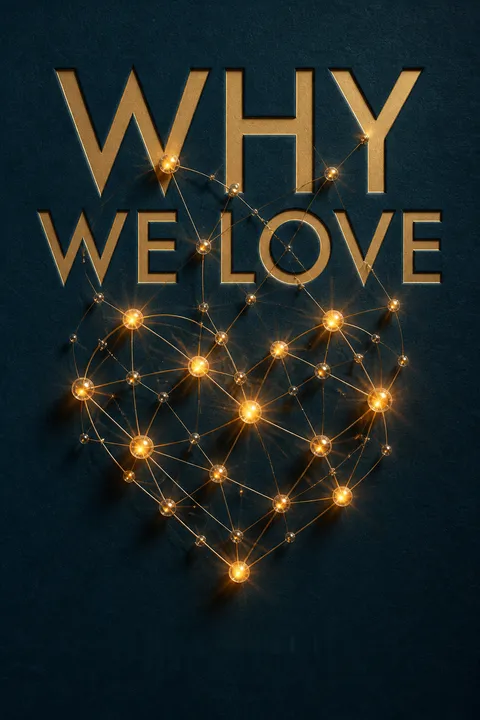


Key Takeaways
Treat love as a survival system, not a single feeling to define.
Love solves a human problem. Anna Machin resists reducing love to one brain chemical or cultural idea. Her wider account begins with dependence: human infants need years of care, learning happens through other people, and daily survival relies on cooperation. In the book's evolutionary framing, love is a biological incentive that helps people form and maintain relationships despite the effort and friction of living together.
More than romance. These relationships include children, parents, friends, partners, communities, pets, and religious figures. Love can be a feeling, a set of bodily processes, and a motive to act. No single explanation captures all of these forms, which is why the book offers several scientific and social perspectives instead of a tidy formula.
The strength of this framing is its refusal to make romantic love the whole story. It also separates the function of love from the meaning people give it: evolutionary explanations may describe why bonding helps a species, but they cannot settle what a particular bond means to the people in it. The idea of biological incentive is illuminating, though it risks making tenderness sound like a trick of nature. That tension is productive. A mechanism can be real without making the experience false or less valuable.
Invest in close ties: supportive relationships track with 50% lower mortality risk.
Relationships affect health. A 2010 review pooled 148 studies examining social relationships and mortality among people with chronic illness. It found that supportive social connections were associated with a 50 percent lower risk of mortality. A later review of 145 studies linked social capital, including trust, belonging, reciprocity, and participation, with health and longevity. These findings describe population-level associations, not a guarantee that any one friendship prevents illness.
Time sets a limit. The book uses Dunbar's Number for the approximate 150 people a person can actively maintain relationships with. The network has layers: about five emotionally central people, around fifteen close companions, then wider circles of roughly forty-five and 150. People devote a disproportionate share of their social time to the innermost circle, where practical and emotional support are concentrated.
This turns social connection from a pleasant extra into a matter of public health. The layered network is especially useful because it distinguishes having many contacts from having dependable people. Still, the health statistics should not be read as a personal prescription or as proof that isolated people are responsible for their illness. Income, access to care, disability, and social conditions also shape both relationships and health. The practical lesson is to protect meaningful contact, while recognizing that communities and institutions affect who can sustain it.
Build bonds through repeated contact, touch, laughter, and shared rhythm.
Bonding has chemistry. In Machin's account, oxytocin can lower inhibition around new relationships, while dopamine contributes reward and motivation. A drop in serotonin during early attraction may help explain intense preoccupation, though its precise role remains unsettled. Beta-endorphin, the body's natural opioid, is proposed as especially important in maintaining longer bonds and producing warmth, comfort, and pain relief.
Doing things together matters. Human studies described in the book link beta-endorphin activity with social touch. Other experiments use changes in pain tolerance as an indirect sign of endorphin release: rowers, dancers, and comedy audiences showed greater pain tolerance after shared activity, especially when acting in synchrony. The proposed mechanism connects bodily reward with the urge to return to people who make interaction feel good.
The chemical account gives ordinary rituals a memorable explanation: a shared laugh or dance can reinforce connection without either person needing to make a grand declaration. Synchrony also links intimate bonding with group life, from choirs to teams. Yet the chemicals are not a complete translation of love. Some findings rely on indirect measures, small samples, or animal research, and the same neurochemical can have different effects in different contexts. The most useful reading is that the body supports bonding, not that chemistry can predict the fate of a relationship.
Give children a secure base, then let them explore.
Attachment shapes security. Attachment is an enduring emotional bond in which a person seeks proximity to a particular figure, finds reassurance in that relationship, and may feel distress when separated. In the Strange Situation, researchers observe how a young child explores an unfamiliar room, reacts to a caregiver leaving, and responds when the caregiver returns. Securely attached children use the caregiver as a safe base, seek comfort when upset, and resume exploration.
Care matters, but patterns can change. The book describes avoidant, resistant, and disorganized childhood patterns alongside secure attachment. Twin studies of young children suggest that their early attachment is shaped largely by environment, especially shared caregiving conditions. Adolescent attachment shows more genetic influence. Adult romantic attachment is also described through anxiety and avoidance, but these styles are not fixed labels: supportive relationships and deliberate work can shift how a person relates.
The secure-base idea captures an important paradox: dependable care can make independence easier, not harder. It offers parents a useful aim beyond constant protection, namely responding reliably enough that exploration feels possible. Attachment categories, however, are research tools rather than diagnoses or moral rankings. A child's behavior in one unfamiliar room cannot summarize a whole family relationship, and caregiving is shaped by circumstances as well as individual choices. The framework is most helpful when it prompts curiosity about needs, not when it becomes a label to pin on a child or partner.
Treat friendship as core infrastructure, not a consolation prize.
Friends are chosen bonds. Machin challenges the idea that friendship ranks below partners and children. Her research found that women reported greater emotional intimacy with a same-sex best friend than with a male partner, while men's closest friendships offered ease and humor. Friends can also become a chosen family: networks of care and commitment that matter especially to people rejected by, or excluded from, their biological families. For LGBTQ+ young people, chosen family often provides a safer place to discuss identity and relationships.
Love crosses species. In an attachment study, dogs showed patterns resembling secure, avoidant, and ambivalent attachment to their human caregivers. In an fMRI study of fifteen dogs, most showed reward-system activity to their owner's praise that equaled or exceeded their response to food. The book treats this as evidence that a dog's bond is not merely a bid for treats.
This section widens the reader's idea of family without claiming that every close friendship or pet relationship is identical to a human partnership. Chosen family is especially significant because it is not simply a substitute for biological kin; it can be a deliberate structure of mutual care. The dog studies also give emotional recognition a scientific foothold, though a scanner cannot establish exactly what an animal experiences. The broader point is not that all bonds are interchangeable, but that care and attachment can appear outside the conventional couple-and-children template.
Read love through both biology and culture, never genes alone.
Genes influence odds, not destinies. The book focuses on OXTR, the gene for the oxytocin receptor. A meta-analysis involving 6,631 people found that the rs53576 variant was associated with measured empathy, with people carrying more G alleles scoring higher. The author stresses that such findings describe tendencies, not fixed outcomes. Genes interact with upbringing, mental health, age, and other genes, while epigenetic processes can alter how genes are expressed.
Culture shapes expression. A study in a remote Cambodian community found that people readily recognized several emotions portrayed through movement but rarely identified the American demonstrator's gestures as love. Other studies describe cultural differences in how people define love and which relationships they can safely acknowledge. A small brain-imaging study found similar romantic-love activation across heterosexual and homosexual participants, but the social risks of expressing love vary sharply by culture.
The most responsible feature of this section is its warning against biological determinism. A group-level association cannot tell an individual how empathetic or loving they will be, and differences in allele frequency should never be treated as rankings of whole populations. Culture also does more than decorate a biological impulse: it can shape what people recognize as love, what they disclose, and what they risk by doing so. Biology and culture are best treated as interacting influences, not rival explanations competing for sole ownership.
Stop assuming romance must be exclusive, or necessary, to live fully.
One script does not fit all. A zero-sum view of romantic love assumes that one partner's love for another must reduce what remains for the first. In a study described by Machin, participants judged a woman in a polyamorous relationship as less loving and trustworthy than a woman in a monogamous relationship, even though these were their assumptions about the arrangement, not direct measures of the partners' feelings. A review of 33 studies found broadly similar psychological wellbeing and relationship quality in consensual non-monogamous and monogamous relationships.
Romance is not compulsory. Polyamory involves multiple loving relationships with the knowledge and consent of those involved. Aromantic people do not experience romantic attraction, but may want deep friendship, a shared home, children, or a queer platonic partner. These identities challenge the assumption that a good life requires one exclusive romantic match. Evidence remains limited, and different people define their relationships in different ways.
This section usefully separates social expectation from evidence about relationship quality. It does not prove that every arrangement suits every person; it shows that monogamy is not the only route to intimacy or wellbeing. The key distinction is consent and honest negotiation, rather than counting partners. Aromantic experience also reveals how easily romantic norms can make other forms of commitment invisible. A society can affirm diverse relationships without treating any one structure as automatically healthier or more enlightened than another.
Recognize love's public forms, from faith to fandom, as meaningful attachments.
God can be an attachment figure. In one study, fifteen Carmelite nuns recalled an intense religious experience in a brain scanner. Areas involved in reward, emotion, and social thought were active, overlapping with areas associated with human love. A separate study of 20 Danish Christians found that personal prayer, unlike reciting a formal prayer or nursery rhyme, recruited brain regions involved in interpreting another person's thoughts. These findings suggest that believers may experience prayer as interaction with a responsive presence.
A bond need not be mutual. A parasocial relationship is a one-sided connection with a public figure, built through repeated exposure and emotional investment. Research on teenagers suggests that a celebrity can offer identity support, particularly when real-world support is scarce. Such bonds may provide comfort, but the celebrity does not share the relationship in the way a friend or partner does.
These examples show how human attachment can reach beyond face-to-face relationships, while also clarifying that similarity in brain activity does not make every bond equivalent. Religious belief, prayer, fandom, and reciprocal friendship have different sources of meaning and different limits. The distinction between felt connection and mutual relationship is especially important for parasocial bonds. Recognizing their emotional force need not imply that a celebrity knows the fan or that a brain scan can prove the existence of a divine partner.
Do not confuse intensity, exclusivity, or chemistry with safety.
Jealousy can turn coercive. The book presents jealousy as a response that can motivate relationship repair, but also lead to surveillance, accusations, and control. It describes the Dark Triad, a cluster of narcissistic, psychopathic, and Machiavellian traits associated with manipulative behavior and cost-imposing attempts to retain a partner. Survivors of intimate partner violence report staying because of attachment, hope for change, fear of being alone, or concern for children. Intensity alone does not make a relationship loving or safe.
There is no reliable love spray. Oxytocin can increase trust and cooperation in some settings, but studies also find effects that favor an in-group over outsiders. MDMA can make people report greater closeness while reducing their ability to identify some negative emotions. The author warns that using drugs to manage love carries risks of coercion and unintended harm, especially when one person controls the choice or information.
This is a vital correction to romantic stories that frame possessiveness as proof of devotion. The book connects individual coercion with group influence: emotional bonding can support care, but it can also make people easier to manipulate. That does not mean jealousy or group ritual is inherently abusive; context, power, and behavior matter. The clearest practical test is not how intense a bond feels, but whether it preserves safety, consent, and the ability to maintain outside relationships.
Let love mobilize difficult action, not just decorate your feelings.
Love drives behavior. Machin argues that love is better understood as a lasting motivation than as a single emotion. Like hunger, it can prompt action when a fundamental need is unmet, and dopamine helps connect reward with motivation. The book's stories make that drive concrete: after his wife died because a mountain blocked the route to medical care, Dashrath Manjhi spent 22 years carving a path through it. Saroo Brierley used Google Earth to search for the Indian hometown from which he had been separated as a child, eventually finding his birth family.
Creativity can advertise ability. The book also presents Geoffrey Miller's theory that art and humor may have evolved partly as displays of intelligence and creativity that attract mates. Love can inspire art, while art can signal traits people value. These are evolutionary interpretations, not explanations for every artist or every act of devotion.
The stories make motivation visible in actions whose difficulty would otherwise seem irrational: the work is not merely endured, but organized around a person who matters. That perspective helps explain why love can change priorities and identity. Evolutionary accounts of art add another layer, but they should remain hypotheses about broad patterns, not universal explanations of creative work. Art can signal attractiveness and still be play, grief, worship, or an attempt to understand experience. Motive is rarely singular.
Analysis
The book's central achievement is not a final definition of love, but a map of the levels at which love operates. It moves between evolutionary function, neural reward, attachment, personal testimony, cultural rules, and ethical danger. That movement matters because each level corrects the blind spots of the others. Biology explains why bonding is persistent, but not why one relationship feels singular. Interviews reveal private meanings, but cannot by themselves establish universal mechanisms. Cultural analysis shows that love is publicly regulated, while the neurochemical story reminds readers that cultural rules act on bodies with deep social needs.
The strongest synthesis is that love is both an incentive and an interpretation. The body can reward contact and make separation painful; people and societies then interpret those sensations through ideas of family, romance, faith, gender, and obligation. This explains why love can support wellbeing, but also why attachment can keep someone in a damaging relationship. The same drive that sustains care can expose people to manipulation when power and consent are unequal.
The evidence is uneven by design. Some claims rest on large reviews, others on small imaging samples, animal studies, or early research on groups long excluded from mainstream relationship science. Brain activation is not a direct readout of subjective experience, and a population-level genetic association cannot forecast one person's capacity to love. The book often signals these limits, and readers should preserve them rather than convert intriguing findings into rules.
Its most useful practical implication is not to optimize one ideal romance. It is to notice and tend the relationships that actually provide security, reciprocity, belonging, and care. Those bonds may be romantic, familial, platonic, spiritual, or interspecies. The book's expansive approach is persuasive precisely because it refuses to make one approved relationship form the measure of a fully human life.
Review Summary
Why We Love receives mixed reviews, with an average rating of 3.75/5. Readers appreciate the scientific approach to love, covering neuroscience, genetics, and various types of relationships. Many find it informative and well-researched, praising its accessibility and scope. However, some criticize its heavy focus on evolution and biology, perceiving it as heteronormative and lacking in LGBT perspectives. The book's thoroughness is both praised and criticized, with some finding it tedious or oversimplified in parts. Overall, readers value its insights into the science behind human connections.
People Also Read




Glossary
Dunbar's Number
Approximate active network limitThe approximate number of people with whom a person can maintain an active social relationship, commonly given as 150. The book describes a layered network, with a small inner circle of close supporters, followed by wider circles of friends and acquaintances. Time and cognitive capacity help constrain the network's size.
beta-endorphin
Natural opioid linked to bondingA naturally produced opioid involved in pain regulation and reward. Machin presents it as an important support for long-term social bonds because it is associated with warmth, comfort, and pleasure during social contact. Research discussed in the book links its activity to touch and suggests that shared, synchronized activity can strengthen bonding effects.
attachment
Enduring bond seeking securityA lasting emotional bond with a particular person who is sought for closeness, comfort, and security. Attachment relationships can provide a safe base for exploring the world and a safe haven in distress. The book discusses attachment between children and caregivers, romantic partners, friends, and dogs, while noting that not every close relationship is an attachment.
The Strange Situation
Observed child-caregiver attachment testA structured procedure developed by Mary Ainsworth to assess attachment in young children. Researchers observe a child's exploration of an unfamiliar room, response to a caregiver's departure, and behavior when the caregiver returns. These observations are used to classify patterns such as secure, avoidant, resistant, and disorganized attachment.
biobehavioural synchrony
Coordinated bodies and behaviorA pattern in which closely bonded people coordinate not only their behavior, such as gaze, gesture, and vocal rhythm, but also aspects of their physiology and brain activity. The book discusses synchrony between parents and children and between romantic partners, presenting it as one way biological and social processes reinforce close bonds.
chosen family
Supportive, deliberately chosen kinA network of close relationships treated as family despite the absence of biological ties. The term has been used especially for people excluded from or rejected by their families of origin, including LGBTQ+ people. Chosen family can provide emotional support, practical help, advice, and a durable sense of belonging.
parasocial relationship
One-sided bond with a media figureAn emotionally meaningful connection formed with a public figure whom the admirer may never meet. The relationship is one-sided, but repeated exposure through media can create familiarity, attachment, and a sense of support. The book describes particular importance for young people who lack accessible real-world peers or role models.
Dark Triad
Three exploitative personality traitsA grouping of narcissism, psychopathy, and Machiavellianism. In the book, these traits are associated with self-interest, low concern for others, manipulation, and exploitative behavior. Research discussed by Machin links Dark Triad traits with more cost-inflicting attempts to retain a romantic partner, although these associations do not mean every person with one trait behaves abusively.
zero-sum view of romantic relationships
Love treated as a limited resourceThe belief that love given to one romantic partner must be taken away from another, so that a person cannot love multiple partners fully. The book describes research in which participants assumed that a woman in a polyamorous relationship loved her established partner less. This belief is contrasted with polyamorous accounts of love as capable of extending across relationships.
Attachment to God Inventory
Measure of religious attachmentA questionnaire developed to assess how people relate to God along dimensions of attachment anxiety and avoidance. The measure adapts ideas from adult romantic attachment research to a religious relationship. Studies discussed in the book used it to examine whether believers seek closeness with God, worry about divine rejection, or avoid intimacy in that relationship.
FAQ
What's Why We Love: The New Science Behind Our Closest Relationships about?
- Exploration of Love's Complexity: The book examines love from psychological, biological, and cultural perspectives, emphasizing its multifaceted nature.
- Ten Responses to Love: Dr. Anna Machin presents ten different academic-backed responses to the question "What is love?" showcasing its vastness.
- Types of Love: It covers romantic, platonic, spiritual, and parasocial love, highlighting their roles in our lives.
Why should I read Why We Love by Dr. Anna Machin?
- Comprehensive Understanding: The book offers a 360° view of love, integrating insights from anthropology, psychology, neuroscience, and sociology.
- Real-Life Experiences: It includes real people's love stories, making academic insights relatable and grounded in everyday experiences.
- Relevance to Modern Life: Encourages readers to reconsider the importance of all forms of love in a world dominated by social media interactions.
What are the key takeaways of Why We Love?
- Love as a Survival Mechanism: Love is essential for human survival, rooted in our need for cooperation and social bonds.
- Neurochemical Basis of Love: Neurochemicals like oxytocin, dopamine, and beta-endorphin play roles in forming and maintaining relationships.
- Attachment Styles Matter: Different attachment styles affect our ability to love and be loved, impacting relationship navigation.
What are the best quotes from Why We Love and what do they mean?
- “Love and compassion are necessities, not luxuries.”: Highlights love and compassion as essential for human survival and well-being.
- “To love is to survive.”: Emphasizes love's biological and evolutionary importance in forming bonds.
- “Love is biological bribery.”: Suggests love is driven by neurochemicals that ensure social cooperation.
How does Dr. Anna Machin define love in Why We Love?
- Multi-Layered Definition: Love is a complex interplay of biological, psychological, and social factors, not a single definition.
- Love as a Need: It should be viewed as a fundamental human need, akin to food and air.
- Cultural Constructs: Cultural influences shape our understanding and expression of love, impacting experiences and priorities.
What role do neurochemicals play in love according to Why We Love?
- Key Neurochemicals Identified: Oxytocin, dopamine, and beta-endorphin are crucial in forming and maintaining love.
- Biological Bribery: Neurochemicals motivate us to seek and maintain relationships, highlighting evolutionary advantages.
- Impact on Behavior: These chemicals influence behaviors and emotional responses, shaping connections and love experiences.
How does attachment theory relate to love in Why We Love?
- Foundation of Relationships: Attachment styles developed in childhood influence love experiences in adulthood.
- Four Attachment Styles: Secure, preoccupied, fearful-avoidant, and dismissing-avoidant styles affect relationship approaches.
- Intergenerational Influence: Attachment styles can be passed down, affecting parenting and future love experiences.
What are the different types of love explored in Why We Love?
- Romantic Love: Examines romantic love's complexities, neurochemical underpinnings, and societal expectations.
- Platonic Love: Highlights the importance of platonic love for emotional support and companionship.
- Familial and Spiritual Love: Explores bonds between parents and children and connections to higher powers or communities.
How does culture affect our experience of love in Why We Love?
- Cultural Definitions: Different cultures have unique definitions and expressions of love, influencing perceptions and relationships.
- Mate Preferences: Cultural shifts affect mate preferences and valued partner attributes, evolving standards over time.
- Social Norms and Rules: Cultural norms dictate acceptable love expressions, aiding in relationship navigation.
What insights does Why We Love provide about love and health?
- Health Benefits of Love: Strong social connections and loving relationships are linked to better health outcomes.
- Social Capital: Quality and size of social networks significantly impact life satisfaction and happiness.
- Neurochemical Influence on Health: Neurochemicals released during social interactions enhance immune function and reduce stress.
How does Why We Love address the darker sides of love?
- Jealousy and Possession: Love can lead to negative emotions like jealousy, manifesting in controlling behaviors.
- Abusive Relationships: Examines love's exploitation in abusive relationships, highlighting unhealthy dynamics.
- Cultural Narratives: Critiques romanticized possessive love narratives, suggesting they perpetuate harmful behaviors.
What insights does Why We Love provide about love and parenting?
- Parental Love: Emphasizes secure attachments between parents and children for healthy emotional development.
- Impact of Parenting Styles: Different styles influence a child's attachment style and future relationship abilities.
- Role of Oxytocin: Oxytocin release during parenting strengthens bonds, promoting love and attachment.
Download PDF
Download EPUB
.epub digital book format is ideal for reading ebooks on phones, tablets, and e-readers.








