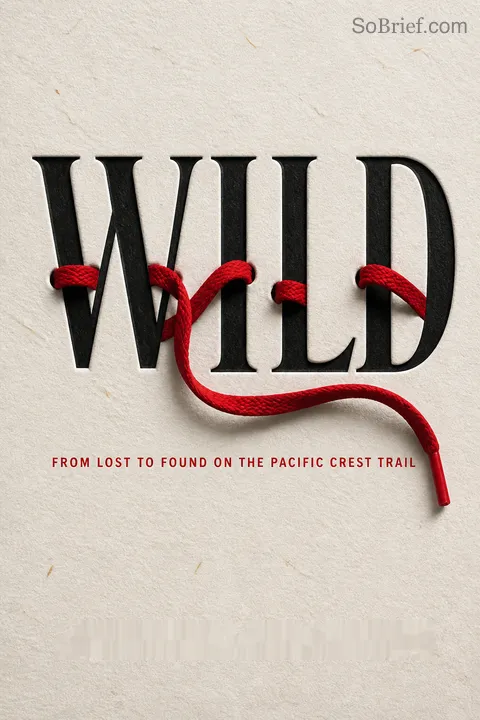


Key Takeaways
Walk into the wild to re-enter life, not to erase grief.
The walk begins in loss. At twenty-six, after her mother dies and her family and marriage unravel, Strayed has used heroin and is facing an unwanted pregnancy. A Pacific Crest Trail guidebook, first noticed by chance, gives her a concrete path toward change. She plans to walk roughly 1,100 miles alone, from the Mojave Desert to the Columbia River, despite having never taken a long backpacking trip.
The trail offers no reset. She expects to think her way through sorrow, but the first demands are practical: water, blisters, food, and the next mile. The hike does not restore her former life or cancel her mistakes. It gives her a way to inhabit the life she has, and to feel connected to the world again.
What's striking is that the trail helps not by supplying an answer, but by replacing an unmanageable question with immediate tasks. That resembles behavioral activation, the idea that purposeful action can make engagement possible even before mood improves. Yet the book is not evidence that an extreme hike is a general treatment for grief, addiction, or crisis. Strayed's route includes serious hazards, and her survival depends partly on luck and other people's help. The durable insight is narrower and more useful: movement can reopen participation in life without pretending that loss has been solved.
Let grief contain anger without making love false.
Love was not the whole story. Strayed's mother, Barbara, was only forty-five when doctors diagnosed advanced lung cancer. She died forty-nine days after the first diagnosis. Her daughter had loved her intensely and cared for her through the illness, but grief also left her furious, disoriented, and unable to hold her family together.
Anger joins the mourning. On her mother's fiftieth birthday, hiking in Oregon, Strayed mentally catalogs her mother's flaws: her overconfidence, occasional harshness, and failure to prepare her daughter for college. The outburst does not erase the mother's generosity. It allows her to remember a person, not a saint, and to recognize that the love was real alongside the failures and regrets.
Grief is often described as a sequence of stages, but this scene makes it feel more like competing truths that arrive together. The psychology of continuing bonds offers a helpful frame: a relationship with someone who has died can remain active, changing as the survivor revisits memories and unresolved conflict. Affection does not require a spotless account of the dead. The caveat is that anger can be difficult to express safely, particularly when survivors feel pressure to protect a loved one's reputation. Strayed's private reckoning shows that honest remembrance can be a form of attachment, not betrayal.
Test the load before the wilderness tests you.
Careful shopping was not preparation. Strayed spent months buying specialized gear and absorbing advice at an outdoor store, but she had never actually backpacked overnight. On her first day, she could barely lift her loaded pack. Water alone weighed 24.5 pounds, and the pack carried a camera, extra tools, books, and other items she would later discard.
Reality corrected the plan. She struggled across the desert, carried too much water, used the wrong fuel in her stove, and eventually asked fellow hiker Albert to help sort her supplies. He removed items she had thought essential. Her boots were also too small; the resulting injuries became severe enough that she hiked in improvised footwear while waiting for a replacement pair.
This is a vivid lesson in the difference between information and competence. Reading about equipment can create a sense of mastery while leaving basic skills untested. In risk management, a useful plan is tested against actual conditions, not merely made detailed on paper. Strayed learns through costly feedback, including injuries that were avoidable. The story should not be read as proof that enthusiasm can substitute for preparation. It shows the opposite: a willingness to revise matters, but field testing and sound judgment can prevent some of the needless suffering.
When every direction holds danger, choose the next step deliberately.
Some moments offer no clean exit. Early in the hike, a Texas longhorn bull charges toward Strayed on a narrow trail. She scrambles into brush, blows her whistle, and the animal disappears. She has no way to know whether it ran north or south. Turning back and continuing both mean moving toward a possible encounter, so she chooses to continue toward her destination.
Persistence still needs judgment. Later, record snow in the High Sierra makes the route dangerous for a solo hiker with limited training and inadequate equipment. Strayed chooses to bypass that section instead of insisting that determination alone will protect her. She keeps moving, but changes her route when conditions exceed her abilities.
The bull gives the memoir its sharpest image of a decision made without a safe option. Such moments reward attention to what can be controlled, rather than fantasies of certainty. But the snow decision matters just as much: courage is not the same as refusing to retreat. Safety research often distinguishes persistence from escalation, where past effort pressures someone to keep investing in a worsening situation. The book's stronger principle is not always to push forward. It is to make the next choice honestly, including the choice to change course.
Give your attention a physical task when grief turns abstract.
The body sets the agenda. Strayed begins the hike expecting long stretches of reflection, but pain and exertion repeatedly occupy her mind. She counts steps, searches for water, treats blisters, and works out where the trail goes. On Hat Creek Rim, she reaches a water tank to find it empty, then has to drink muddy reservoir water treated with iodine.
Attention narrows to survival. In the early weeks, her emotional questions do not disappear so much as lose their grip while she handles immediate needs. The task is often simply to walk, eat, and make camp. This is not a claim that hardship cures grief. It shows how a concrete demand can interrupt rumination long enough for a person to keep functioning.
A demanding physical task can make attention more concrete: the mind tracks sensation, sequence, and immediate consequence instead of endlessly rehearsing the past. That is one reason embodied practices, from walking to manual work, can help people feel present. The distinction between grounding and deprivation is crucial, however. Strayed's dehydration and injuries are dangers, not therapeutic techniques, and the trail does not reliably protect her from harm. The insight is to find a manageable task that anchors attention, not to seek suffering as a shortcut to emotional clarity.
Accept help without confusing independence with isolation.
The solo hike has many companions. In Pacific Crest Trail language, a trail angel is someone who helps hikers with practical support. Ed, who spends summers near Kennedy Meadows, feeds Strayed and helps her connect with other hikers. Strangers offer rides, food, shelter, and advice. This unplanned generosity is sometimes called trail magic: unexpected help that makes a difficult stretch easier.
Help does not remove risk. Strayed also encounters men whose attention makes her feel unsafe. In one frightening episode, she brings three fellow hikers with her to a ranger's cabin rather than visiting alone. The trail is solitary, but her ability to continue depends on knowing when to accept support and when to protect herself.
The memoir complicates the ideal of self-reliance. Strayed carries her own pack, makes her own decisions, and still depends on a web of ordinary kindness. This resembles distributed resilience: people and resources around an individual help absorb shocks that no one person can manage alone. Her encounters also resist a sentimental conclusion that strangers are simply safe or benevolent. Generosity and danger coexist. Independence is better understood as having agency within relationships, including the ability to set boundaries, than as never needing anyone.
Choose an identity that tells the truth about your wandering.
A blank line becomes a choice. While preparing for divorce, Strayed realizes she does not want to keep her married, hyphenated name or return to the name she had before. She chooses Strayed, a word that can suggest wandering from a path, being without a home, or moving without a clear destination. The name fits her circumstances, but it also gives her a way to claim them.
Identity is more than a label. She tries the name out in conversations and guest books before making it official. Choosing it does not instantly make her healed or certain. It marks a willingness to stop treating her unsettled life as evidence that she is only broken, and to see what she has learned while lost.
The act resembles narrative identity, the way people organize experience into a story about who they are and what their actions mean. A chosen name can make a new story easier to inhabit, especially after a major transition such as divorce. But the label is not the transformation itself. A name can clarify possibility, or become a performance that conceals unresolved pain. Strayed's choice feels convincing because it acknowledges difficulty rather than replacing it with a polished heroic identity.
Let the wild offer belonging without demanding that it explain itself.
Nature does not arrange a rescue. On the Pacific Crest Trail, the mountains, animals, and weather do not respond to Strayed's needs. She experiences both their indifference and their beauty: a fox watches her in the snow, a deer approaches, and vast stretches of trail make her feel at once small and present. She comes to value the act of walking through the landscape, not only reaching a destination.
Meaning remains uncertain. Doug gives her a dark feather, and a woman in a bus station tells her that a raven or crow feather symbolizes a void where new things begin. Strayed finds comfort in such signs while remaining unsure whether they reveal anything beyond her own hopes. The wild gives her a place to belong without supplying a cosmic explanation.
This distinction protects the book from turning nature into a benevolent therapist. The landscape has no obligation to comfort her; its power comes partly from being larger than her private crisis. Environmental psychology often examines how contact with natural settings can restore attention and reduce mental fatigue, but that does not require believing the forest has a message. Symbols can still matter as tools for reflection. Their value need not depend on proving that the universe sent them.
Do not mistake a necessary choice for a painless one.
Good intentions cannot guarantee a gentle outcome. Nearly three years after her mother dies, Strayed finds the family's elderly horse, Lady, dangerously thin and weak. Strayed and her brother Leif decide the horse must be put down. With little money and limited options, they use a rifle, believing they can end her suffering quickly.
The death is far from clean. The first shots do not kill Lady, and the siblings have to endure her struggle before she dies. Strayed later regrets that they chose to handle it themselves instead of insisting on a veterinarian. She does not regret wanting to end the horse's suffering, but she cannot pretend that their decision or its consequences were harmless.
This episode captures ethical distress: the pain that can follow a consequential act when a person believes the action violated their own standards, even under constraint. Its force comes from refusing a comforting rewrite. At the same time, hindsight can make past options appear more available than they were; cost, timing, and responsibility narrowed the family's choices. The scene is not a simple lesson in what they should have done. It shows why serious decisions deserve both preparation and compassion for the people who must make them.
Let the finish arrive before its meaning does.
The destination is specific. In September 1995, Strayed reaches the Bridge of the Gods over the Columbia River after walking roughly 1,100 miles from the Mojave. She has bypassed about 450 miles of the snowbound High Sierra, so this is not a full thru-hike of the 2,663-mile Pacific Crest Trail. It is the end of the journey she set out to make.
Understanding takes longer. At the bridge, she knows she has endured the walk but cannot yet explain what it means. The memoir's closing perspective looks back from later years, when the significance of the hike has become clearer. Completion gives her a fact to carry forward, not an instant revelation or a guarantee that grief will stay behind.
A finish line can provide evidence of capability before it provides a coherent account of change. The book's retrospective structure makes that gap visible: the young hiker reaches the bridge, while the narrator writing years later can interpret the event differently. This is a useful corrective to stories that demand an immediate lesson from every crisis. At the same time, retrospective meaning is constructed, not merely uncovered. Memory links episodes into a pattern, and that pattern can be true without being the only possible account.
Analysis
Wild is a memoir of grief and physical endurance, but its structure is less a recovery formula than a braid. The trail narrative moves north from the Mojave while memories move backward through the mother's illness, childhood, marriage, addiction, and divorce. That arrangement keeps the reader inside two kinds of uncertainty: whether Strayed can manage the next stretch, and what earlier events have made this walk necessary. The distance gives the story momentum, while practical problems repeatedly puncture the idea that suffering will automatically produce insight.
The book's most persuasive claim is embodied rather than abstract. Grief makes ordinary life feel uninhabitable; walking creates a daily structure in which food, water, shelter, and movement become immediate concerns. This does not end mourning. It changes what attention can hold at a given moment. The narrative's frankness about poor preparation, sexual choices, drug use, and the killing of Lady prevents a neat redemption arc. Strayed does not become admirable by being flawless. She becomes legible by refusing to hide the costs of her decisions.
The wilderness is neither a savior nor a blank backdrop. Its indifference strips away social roles, while the kindness of people met along the route supplies the care the landscape cannot. That tension also corrects the fantasy of solitary self-sufficiency: the hike is alone, but never entirely unsupported. Its hazards matter as much as its beauty. Strayed's survival should not be mistaken for evidence that underprepared risk is wise, or that a demanding trek is a universal answer to grief.
The ending resists instant closure. Reaching the Bridge of the Gods completes a chosen journey, not the entire Pacific Crest Trail, and does not resolve every relationship or loss. Meaning arrives through lived experience and later reflection. Wild's central achievement is to show recovery as renewed participation in an imperfect life, not a return to the life that existed before catastrophe.
Review Summary
Wild receives mixed reviews, with many praising Strayed's honesty, vivid writing, and emotional depth in recounting her transformative 1,100-mile hike on the Pacific Crest Trail. Readers appreciate her raw portrayal of grief, self-discovery, and resilience. However, some criticize her unpreparedness, self-indulgence, and perceived exaggeration of events. The book resonates strongly with many readers, particularly women, for its empowering message and unique female adventure narrative. Despite polarizing opinions, Wild is widely regarded as a compelling memoir of personal growth and healing.
People Also Read









Glossary
trail angel
Hiker-supporting helperA person who offers practical assistance to hikers on a long-distance trail, often without payment. Help can include food, a place to camp, transportation, or information. In Strayed's account, Ed, who spends summers near Kennedy Meadows, welcomes hikers and provides meals and support.
trail magic
Unexpected kindness on trailThe informal PCT term for a fortunate, unplanned act of help or generosity encountered on the trail. It may be a meal, a useful gift, or assistance from strangers. The phrase describes the hiker's experience of unexpected kindness, not a supernatural force.
Monster
Strayed's backpackStrayed's nickname for her enormous, heavily loaded backpack. At first it is so heavy that she struggles to lift it, and it worsens her pain and injuries. As she sheds unneeded gear and grows stronger, the pack becomes a familiar companion and a measure of what she can carry.
Range of Light
John Muir's Sierra Nevada nameJohn Muir's name for the Sierra Nevada, a mountain range that Strayed crosses on her hike. The phrase emphasizes the region's brightness and dramatic landscape. In the memoir, the High Sierra is a major destination, but record snowfall forces Strayed to bypass much of it.
ten thousand things
The world's myriad formsA phrase associated with the Tao Te Ching that refers to the countless distinct things and forms in the world. Strayed uses it to describe the vastness of existence and, by comparison, the immeasurable love her mother gave her. It connects intimate family experience to a larger view of the world.
FAQ
What's Wild: From Lost to Found on the Pacific Crest Trail about?
- Personal Journey of Healing: Cheryl Strayed embarks on a solo hike of the Pacific Crest Trail (PCT) to find herself after her mother's death and her marriage's end.
- Physical and Emotional Challenges: The narrative details her struggles with the physical demands of the trail and her emotional battles with grief and loss.
- Connection to Nature: The wilderness serves as a backdrop for her transformation, highlighting nature's role in her healing and self-discovery.
Why should I read Wild: From Lost to Found on the Pacific Crest Trail?
- Inspiring True Story: Strayed's memoir is a testament to resilience, offering hope to anyone facing adversity or personal loss.
- Rich Descriptions: The book vividly captures the beauty and challenges of the Pacific Crest Trail, inspiring a sense of adventure.
- Universal Themes: Themes of grief, self-acceptance, and identity resonate with a wide audience, providing connection and understanding.
What are the key takeaways of Wild: From Lost to Found on the Pacific Crest Trail?
- Embrace Your Journey: Strayed emphasizes the importance of facing life's challenges as a path to healing and self-discovery.
- Power of Solitude: Solitude on the trail leads to profound personal insights, allowing Strayed to confront her fears and emotions.
- Nature as a Healer: The book highlights nature's therapeutic effects, suggesting that wilderness immersion can provide clarity and solace.
What are the best quotes from Wild: From Lost to Found on the Pacific Crest Trail and what do they mean?
- Confronting Fear: “I knew that if I allowed fear to overtake me, my journey was doomed.” This quote emphasizes the necessity of courage in overcoming personal challenges.
- Vulnerability and Grief: “I was alone. I was barefoot. I was twenty-six years old and an orphan too.” It captures Strayed's vulnerability and sets the stage for her transformative journey.
- Perseverance: “To keep walking.” This mantra underscores the importance of perseverance, encouraging readers to continue forward despite setbacks.
How does Wild: From Lost to Found on the Pacific Crest Trail address the theme of grief?
- Personal Loss: Strayed's grief over her mother's death drives her to hike the PCT as a way to process her emotions and find closure.
- Reflection and Healing: The trail provides a space for reflection, where Strayed confronts her past and ultimately finds healing.
- Connection to Others: Her journey reflects on relationships, illustrating how grief can isolate yet connect individuals through shared experiences.
What challenges does Cheryl Strayed face on the Pacific Crest Trail?
- Physical Struggles: Strayed endures blisters, injuries, and the physical toll of carrying a heavy pack, testing her endurance.
- Emotional Turmoil: The solitude forces her to confront her grief and regrets, leading to deep emotional struggles.
- Navigational Difficulties: She grapples with navigating the trail, especially in snow-covered areas, adding to her vulnerability.
How does Wild: From Lost to Found on the Pacific Crest Trail explore the concept of solitude?
- Self-Discovery: Solitude allows Strayed to reflect on her life, leading to moments of clarity and self-awareness crucial for healing.
- Confronting Fears: Isolation forces her to confront fears and insecurities, empowering her to face life's challenges.
- Connection to Nature: Solitude fosters a deeper connection to herself and the environment, providing solace and insight.
What role does nature play in Wild: From Lost to Found on the Pacific Crest Trail?
- Therapeutic Environment: Nature serves as a healing backdrop, providing space for Strayed to process grief and find peace.
- Symbol of Freedom: The wilderness represents freedom and adventure, contrasting with the constraints of her past life.
- Challenge and Growth: Natural challenges mirror her internal struggles, illustrating how overcoming obstacles leads to personal growth.
How does Cheryl Strayed’s background influence her journey in Wild: From Lost to Found on the Pacific Crest Trail?
- Family Dynamics: Her tumultuous family history, including her mother's death, shapes her motivations and emotional landscape.
- Past Experiences: Her experiences with love, loss, and addiction inform her resilience and quest for redemption on the trail.
- Literary Influences: As a writer, Strayed's love for literature enriches her narrative, providing depth and insight into her journey.
How does Strayed’s experience on the PCT change her?
- Personal Growth: The hike transforms her from a woman lost in grief to someone empowered and self-aware.
- Resilience: She learns to push through pain, discovering her strength and resilience along the way.
- New Perspective: By journey's end, she gains a new perspective on life, love, and loss, embracing her future with hope.
How does Wild: From Lost to Found on the Pacific Crest Trail explore the concept of self-identity?
- Reclaiming Self: Strayed seeks to rediscover who she is outside of her roles as daughter, wife, and mother.
- Transformation: The trail acts as a crucible for transformation, where she sheds her past and emerges with a clearer sense of self.
- Naming Herself: Choosing the last name “Strayed” symbolizes her journey of wandering and searching for her true self.
What does the title Wild signify in Cheryl Strayed's memoir?
- Embracing Wildness: The title reflects both the wilderness of the PCT and Strayed’s untamed spirit on her journey.
- Freedom and Untamed Nature: It symbolizes the freedom found in nature and the untamed aspects of life she learns to embrace.
- Personal Wildness: The title speaks to her journey of breaking free from societal expectations and embracing her true, wild self.
About the Author
Other books by Cheryl Strayed


Download PDF
Download EPUB
.epub digital book format is ideal for reading ebooks on phones, tablets, and e-readers.








