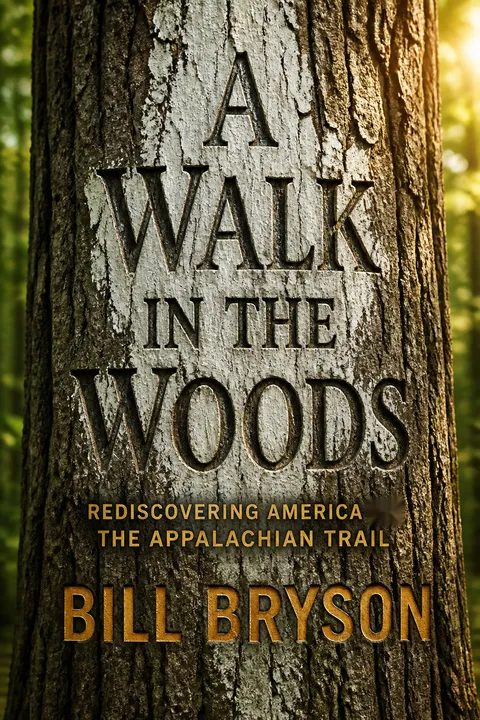


Key Takeaways
870 miles fell short of Katahdin, but succeeded as a journey

The goal changed. Bryson began with the grand ambition of walking the Appalachian Trail from Georgia to Maine. He and his friend Stephen Katz made it through snow, rain, heat, and hundreds of miles of hard trail, but skipped a long section between Georgia and Virginia and eventually left Maine without reaching Katahdin. By the end of the hiking season, Bryson had covered 870 miles, about 39.5 percent of the trail.
The experience still counted. The trip made him fitter, deepened his respect for wilderness, introduced him to parts of America he had barely known, and gave him a renewed friendship with Katz. The book’s central claim is not that finishing is irrelevant. It is that an unfinished attempt can still deliver much of what the journey promised.
What's striking is how the book separates a goal's value from its completion status. In project work, education, and rehabilitation, an outcome measure can reveal progress while obscuring what a person learned or gained along the way. Bryson's mileage makes that tension concrete: 870 is a fraction of the route, yet a substantial journey in ordinary human terms. The counterpoint is that partial completion should not automatically be romanticized. The trip mattered because it changed his knowledge, habits, and relationships, not simply because he started.
A forty-pound pack turns seven miles into a serious undertaking

Weight changes the walk. Bryson’s equipment shopping became an expedition in itself: a costly backpack still needed extra straps and a rain cover, and every supposedly small item added weight. He set out carrying roughly forty pounds, then discovered that even seven miles could feel punishing on rocky trails with steep climbs. The trail was not a casual country stroll with an inn at the end of the day. Every necessity had to be carried, used, and packed again.
Enthusiasm is not conditioning. Katz arrived carrying a huge duffel full of candy and was out of breath almost immediately. In the account, about 2,000 people started from Springer Mountain in a typical spring, but no more than 10 percent completed the whole trail. The gap between imagining a hike and living one was not a character flaw. It was a practical reality.
The pack works as a physical lesson in accumulated costs. In ergonomics, small loads repeated over time can matter more than any one object's weight, because the body must stabilize and carry the whole system step after step. The same logic applies to equipment choices, work projects, and travel plans: accessories create dependencies, and convenience at the point of purchase can become friction in use. Bryson's comic shopping scene also has a limit. Good gear matters, but no purchase substitutes for training, judgment, or a realistic plan.
Companionship is care, friction, and accountability, not just company

The friendship was imperfect. Bryson recruited Katz, an old friend he had barely seen in years, partly because he feared hiking alone. Katz was out of shape, frequently hungry, and prone to tossing unwanted gear and food into the woods. The two irritated each other, but they also waited for one another, shared supplies, and kept going together through bad weather and difficult miles.
Hardship demanded care. After they left another hiker, Mary Ellen, behind on the trail, Katz felt guilty about the possibility that she was alone and frightened. In Maine, Bryson searched for Katz when they lost contact, and Katz was relieved when he found him. Their bond did not make the journey easy. It made their obligations to each other harder to ignore.
A shared ordeal can turn affection into observable behavior: waiting, lending water, searching, apologizing. That makes the book's friendship story more persuasive than a simple claim that hardship brings people closer. It also shows why companionship is not automatically protective. Bryson and Katz sometimes misread each other's needs, and they made a careless choice about Mary Ellen. In social psychology, cooperation depends partly on trust and repeated acts of reciprocity. The trail supplies those tests, but it does not guarantee that people pass them.
Walking makes distance physical and ordinary comforts astonishing
The scale became real. On foot, a mile stopped being an abstract unit and became a stretch of rocks, roots, hills, and effort. The woods also changed time: days narrowed to walking, finding water, cooking, and sleeping. Without constant access to shops and services, a hot shower, clean clothes, a cold drink, or fresh bread could feel like an extravagance.
Deprivation sharpened attention. At the Walasi-Yi Inn in Georgia, Bryson and Katz were almost transfixed by the refrigerator and then delighted by sandwiches, soda, and a shower. Yet the trail offered its own rewards: the quiet after snowfall, a glimpse of wildlife, or a view from a summit. The contrast did not make ordinary life worthless. It made its conveniences visible, and made the natural world harder to treat as mere scenery.
The experience resembles a basic principle of perception: contrast changes what stands out. A drink becomes memorable not because its recipe changes, but because thirst and scarcity alter the conditions under which it is noticed. Walking also makes distance embodied, replacing a map's number with fatigue and terrain. This can restore attention to places that routine makes invisible. Still, deprivation is not inherently enlightening. It can also exhaust, narrow judgment, and make people unsafe. The book's insight is strongest as a description of changed perception, not a prescription to seek hardship.
Read the Appalachian forest as a vulnerable history, not endless green scenery
The woods are not untouched. Bryson sets the beauty of the trail against a record of loss. The Appalachian chestnut, once a major presence in the eastern forest, was devastated by an introduced fungus. He reports that roughly four billion trees, about a quarter of the region's forest cover, were lost in a generation. In the Smokies, he describes dying Fraser firs, endangered freshwater mussels, and grassy mountaintop balds being overtaken by woody growth.
Protection is complicated. The landscapes along the trail bear the marks of logging, disease, development, pollution, and management decisions. Bryson criticizes public agencies for neglect and sometimes for misguided intervention, including a poisoning project that wiped out native fish in a creek. The view from a mountaintop may look timeless. The ecology beneath it is neither permanent nor separate from human choices.
This section invites readers to see landscape as a process rather than a backdrop. Environmental history shows how forests carry the effects of trade, settlement, introduced species, and public policy long after the original decisions disappear from view. Bryson's chestnut example makes ecological vulnerability vivid: a forest can look abundant even as a defining species vanishes. His anger at park agencies is understandable, though management failures can reflect limited budgets and competing goals as well as bad judgment. A protected boundary is not proof that an ecosystem is healthy.
A wilderness trail survives through volunteers, persistence, and public protection
Vision needed execution. Benton MacKaye proposed a long Appalachian hiking trail in 1921 as part of a broader plan for outdoor work camps and communities. The trail itself took shape when Myron Avery organized clubs and volunteers, mapped routes, and pushed construction forward. The Appalachian Trail was formally completed in 1937, but it later faced rerouting, logging, development, and the loss of land access.
Maintenance is collective work. Volunteers still maintain the trail, its shelters, bridges, signs, and markers. Public protection also helped secure a corridor as private land agreements became unreliable. Bryson presents the AT as an unusually durable undertaking, not because it escaped change, but because people kept repairing and defending it. Its existence depends on ongoing labor that most hikers can enjoy without seeing.
The trail is a compelling example of a commons: a shared resource that remains usable through coordination, rules, and recurring care. Elinor Ostrom's research on commons governance emphasizes that durable shared resources often depend on local participation and clear responsibilities, rather than either pure privatization or distant control alone. The AT's volunteer network fits that pattern. Yet volunteer labor can conceal costs and uneven capacity. Celebrating the volunteers should also prompt a practical question: what stable funding and institutional support lets their work continue without making the resource dependent on exhaustion or goodwill alone?
Prepare for cold, rain, and bad decisions before fearing bears
The dramatic danger distracts. Bryson spends much of the preparation period imagining bears, snakes, and other threats. He does learn that black bear attacks are uncommon, while emphasizing that any encounter still deserves respect. On the trail, more immediate dangers came from exposure, steep terrain, and mistakes. A sudden storm left him and Katz navigating deep snow, while a later change in weather on Mount Lafayette found him without his waterproofs and wearing cotton clothes.
Judgment can fail under stress. The book describes hypothermia as a gradual loss of clear thinking, which can lead a cold, wet, tired person to make worsening decisions. Katz also became lost after leaving the trail in search of water. The lesson is practical: prepare for changing conditions, carry what is needed, and do not let vivid animal stories crowd out ordinary risks.
Humans often judge danger by how memorable a story is, not by how likely or preventable the hazard may be. The book's bear anecdotes exploit that tendency, then redirect attention toward weather and decision-making. This is a useful safety correction: exposure can impair the very judgment needed to escape it. The account also distinguishes caution from panic. Animal encounters remain unpredictable, and a low probability does not make a high-consequence event meaningless. Good preparation weighs likelihood, severity, and what actions can reduce risk.
Good maps turn anonymous woods into a legible landscape
A line is not enough. Bryson complains that some Appalachian Trail maps used a 1:100,000 scale while omitting useful details such as roads, streams, and landmarks. During a snowstorm, he struggled to work out whether a road could take him around a mountain to a shelter. Later, maps for the New York and New Jersey trail sections were more detailed and easier to read. Knowing the names and relationships of features helped him feel oriented and interested in the landscape.
Navigation shapes experience. A hiker who cannot tell where he is may experience the forest as an undifferentiated mass. A clear map makes routes, choices, and nearby features visible. Bryson's criticism is especially sharp because maps are not just souvenirs or conveniences in remote country. They are part of safety equipment, and their limits can become consequential when weather or confusion narrows a hiker's options.
Maps do more than represent terrain. They direct attention by deciding which features receive names, detail, and prominence. In cognitive science, external representations can reduce the mental work required to hold spatial relationships in memory, freeing attention for observation and decision-making. Bryson's contrast between poor and useful maps shows that orientation can enrich both safety and curiosity. A map still cannot replace judgment or field skills, and excessive reliance on any one tool creates its own vulnerability. The strongest navigation practice combines readable information with the ability to interpret the landscape.
Design towns so walking is a real choice, not an obstacle course
The trail revealed a contradiction. Bryson cites a figure that Americans walked an average of only 1.4 miles a week, while most trips outside the home were made by car. In Waynesboro, he tried to walk from downtown to Kmart for insect repellent. The route had no sidewalks or safe crossings, forcing him through parking lots, over barriers, and across busy roads. He arrived muddy and shaken, and the store did not even sell what he needed.
Infrastructure decides what is practical. A town can look compact on a map yet make walking difficult or dangerous. Bryson's point is not simply that people should choose to walk more. The built environment can remove that choice. Paths, crossings, and nearby services matter as much as individual intention when daily movement is shaped by streets designed primarily for cars.
This episode turns a broad complaint about car dependence into a testable question: can someone reach an ordinary destination safely on foot? Urban planning research often treats walking as an outcome of street connectivity, land use, and pedestrian infrastructure, not merely personal motivation. Bryson's failed errand makes that distinction tangible. His national statistic reflects the period described in the book, not a current measurement. The larger point remains useful: exhorting people to walk cannot compensate for routes that expose them to traffic or make basic destinations inaccessible.
Let people and nature share a landscape without forcing either into a corner
America's choices often look stark. Bryson contrasts places where nature is aggressively altered, such as the proposed dam at Tocks Island, with the Appalachian Trail's commitment to protected wilderness. The dam plan would have displaced residents and transformed a river valley, though its cancellation left some of the acquired land as a protected trail corridor. In Luxembourg, by contrast, Bryson recalls walking among woods, farms, villages, and inns, with nature and everyday life interwoven.
Neither extreme is the whole answer. He argues that beauty need not be either exploited or sealed away from human contact. A route can include working landscapes and communities as well as wild stretches. The challenge is to avoid turning nature into either a commercial backdrop or a forbidden realm, while recognizing that conservation, public safety, and local livelihoods can pull in different directions.
The most original environmental argument here is against a false binary: either dominate nature or exclude people from it. Landscape planning increasingly asks how habitat protection, recreation, and human use can coexist at different scales. That perspective helps explain why the trail's protected corridor can be valuable while still feeling culturally narrow to Bryson. The Luxembourg comparison is evocative, but not a universal template. Dense settlement can bring its own ecological costs, and some habitats require limited access. The insight is not that every landscape should be mixed, but that separation should be a choice, not a reflex.
Analysis
A Walk in the Woods is a travel memoir that keeps changing its apparent subject. It begins as a comic account of an ill-prepared man buying gear and recruiting an old friend, then widens into trail history, ecology, geology, conservation policy, and the design of American towns. The hike supplies the narrative spine, while Bryson's detours keep asking what kind of country the trail passes through and what has happened to it.
That structure is also the book's summarizing challenge. Its comedy is not decorative: it makes fatigue, fear, and equipment failures memorable. But the humor can undercut the authority of the ecological and historical claims, especially when sharp judgments about agencies or communities arrive beside statistics without much room for qualification. The adaptation therefore needs to preserve both the pleasure of the voice and the distinction between a personal encounter, a cited figure, and a broad argument.
The central tension is between completion and attention. Bryson starts with a distance-based ambition, then learns that the trail cannot be conquered into meaning by simply covering every mile. Its scale changes what food, comfort, friendship, and landscape feel like. At the same time, the book resists treating wilderness as a timeless sanctuary. Forests are shaped by disease, logging, policy, and public access, while roads and towns shape whether walking is possible at all.
The result is less a manual for thru-hiking than a case for encountering place at human speed. The unfinished route is not proof that goals do not matter. Rather, it shows that a goal can be a doorway into knowledge that was not visible from the start. The book's strongest achievement is to make 870 miles feel simultaneously incomplete on a map and substantial in a life.
Review Summary
A Walk in the Woods receives mixed reviews, with many praising Bryson's humor and storytelling. Readers appreciate his witty observations, historical insights, and the entertaining dynamic with his hiking companion, Katz. The book offers a blend of travelogue, nature writing, and social commentary. Some criticize Bryson's occasional snarkiness and digressions into historical and scientific information. While not universally loved, most find it an enjoyable and informative read that captures the challenges and joys of hiking the Appalachian Trail.
People Also Read








Glossary
Trail Magic
Unexpected help on trailA term hikers use for an unexpected stroke of good fortune or generosity on the trail, especially when circumstances feel difficult. Bryson uses it for the moment when a car stops to give him and Katz a ride after they have failed to get picked up. The phrase captures the sense that small acts of help can feel extraordinary in a demanding journey.
thru-hiker
One-season end-to-end hikerA hiker who attempts to walk the entire Appalachian Trail in a single hiking season. The book contrasts thru-hikers with people who complete the trail in separate stretches. A thru-hike typically takes months, requires carrying or resupplying food and equipment, and must be timed around seasonal conditions at the trail's northern and southern ends.
section hiker
Hiker completing trail segmentsA person who completes the Appalachian Trail in separate sections rather than in one continuous season. The sections may be hiked over years, with breaks between them. The term describes a different way of completing the route, not a lesser form of hiking. The book notes that one section hike took forty-six years.
white blaze
Painted trail markerA rectangular white paint mark used to show the route of the Appalachian Trail on trees and other surfaces. The blazes help hikers follow the trail through woods and identify turns or crossings. Bryson describes the markers as a simple, recurring sign of the route, though they do not eliminate the need for maps, attention, and sound judgment.
Hundred Mile Wilderness
Remote Maine trail sectionA 99.7-mile stretch of the Appalachian Trail in Maine between Monson and the area near Abol Bridge, below Mount Katahdin. The book describes it as the trail's most remote section, without stores, houses, telephones, or paved roads. Hikers must carry substantial food and supplies, and help may be difficult to reach if something goes wrong.
felsenmeer
Field of broken rockA geological term meaning a sea of rocks. In the book, it describes the jagged, unstable slabs scattered across parts of Pennsylvania, fractured by repeated freezing and thawing during a cold climate period. Crossing such terrain requires careful foot placement and can make a heavily loaded hike especially tiring.
orogeny
Mountain-building episodeA geological term for a period of mountain formation, usually involving the deformation and uplift of Earth's crust. Bryson describes the Appalachian Mountains as having formed through several major episodes, including the Taconic, Acadian, and Alleghenian. These ancient mountain-building events help explain why the Appalachians are geologically old and far more eroded than younger ranges.
FAQ
What is A Walk in the Woods by Bill Bryson about?
- Hiking the Appalachian Trail: The book follows Bill Bryson’s attempt to hike the 2,100–2,200-mile Appalachian Trail, stretching from Georgia to Maine, capturing his adventures, challenges, and the beauty of the American wilderness.
- Blend of Humor and Reflection: Bryson’s narrative mixes humor, satire, and personal reflection, making the journey both entertaining and insightful.
- Exploration of Nature and History: The story delves into the history, ecology, and environmental issues of the Appalachian region, offering readers a deeper understanding of the trail and its significance.
- Themes of Friendship and Perseverance: The relationship between Bryson and his companion Katz, along with their personal struggles, adds emotional depth and relatability to the adventure.
Why should I read A Walk in the Woods by Bill Bryson?
- Engaging and Humorous Writing: Bryson’s witty, accessible style and comic storytelling make the book enjoyable for a wide audience, even those unfamiliar with hiking.
- Insight into American Wilderness: The book provides vivid descriptions of the Appalachian Trail, blending natural history, environmental issues, and cultural observations.
- Relatable Human Experience: Bryson’s candid portrayal of his fears, struggles, and friendship with Katz makes the journey accessible and emotionally resonant.
- Educational and Thought-Provoking: Readers gain knowledge about conservation, American history, and the challenges of preserving wild spaces.
What are the key takeaways and reflections from A Walk in the Woods by Bill Bryson?
- Respect for Nature: Bryson develops a deep appreciation for the scale, complexity, and fragility of the American wilderness.
- Limits and Acceptance: The narrative acknowledges the physical and mental limits of the hikers, emphasizing that value lies in the journey, not just completion.
- Balance of Adventure and Comfort: The book contrasts the hardships of the trail with the comforts of civilization, highlighting the mixed emotions of leaving the wilderness.
- Personal Growth and Connection: Bryson’s experience leads to greater patience, humility, and a renewed sense of connection to the land.
Who is Katz in A Walk in the Woods by Bill Bryson, and what role does he play?
- Old Friend and Companion: Katz is Bryson’s friend from Iowa who joins the hike after years apart, providing companionship and comic relief.
- Source of Humor and Contrast: Katz’s lack of preparation, physical struggles, and impulsive behavior create many of the book’s funniest and most memorable moments.
- Symbol of Friendship and Resilience: Despite his flaws, Katz’s perseverance and evolving relationship with Bryson highlight themes of loyalty and human vulnerability.
- Emotional Depth: Katz’s battle with sobriety and his impact on the journey add emotional complexity to the story.
What are the main challenges faced by Bill Bryson and Katz on the Appalachian Trail in A Walk in the Woods?
- Physical and Environmental Hardships: The duo faces rugged terrain, unpredictable weather, insects, and the sheer length of the trail, testing their endurance.
- Equipment and Logistical Issues: They struggle with heavy packs, lost gear, water scarcity, and the need to adapt their supplies and strategies.
- Wildlife and Health Risks: Encounters with bears, snakes, and diseases like Lyme disease and hantavirus add to the dangers.
- Psychological and Interpersonal Struggles: The isolation, monotony, and Katz’s personal challenges, including alcoholism, strain their friendship and resolve.
How does Bill Bryson describe the Appalachian Trail and its environment in A Walk in the Woods?
- Vast and Varied Wilderness: The trail traverses diverse landscapes, from southern mountains to New England forests, with changing seasons and ancient geology.
- Enclosing and Spooky Woods: Bryson describes the woods as “cubic,” pressing in from all sides, creating a sense of vulnerability and awe.
- Wildlife and Natural History: The book features encounters with animals like moose and bears, and reflections on lost species and ecological changes.
- Human Impact and Conservation: Bryson discusses the balance between preserving wilderness and allowing human access, critiquing environmental management and highlighting conservation efforts.
What is the history and significance of the Appalachian Trail as described in A Walk in the Woods by Bill Bryson?
- Visionaries Behind the Trail: The trail was conceived by Benton MacKaye in 1921 as a retreat for urban workers, and built under Myron Avery’s leadership with volunteer labor.
- Trail’s Construction and Evolution: Completed in 1937, the trail has been rerouted and maintained by volunteers, making it a symbol of grassroots conservation.
- Cultural and Historical Context: Bryson connects the trail to broader American history, including Civil War sites and the evolution of hiking culture.
- Enduring Spirit: The Appalachian Trail represents resilience, adventure, and the ongoing challenge of preserving wild spaces in America.
What dangers and wildlife encounters does Bill Bryson describe in A Walk in the Woods?
- Bear Attacks and Animal Hazards: Bryson recounts stories of bear attacks, differences between black bears and grizzlies, and the unpredictability of wildlife.
- Other Wildlife and Insects: Encounters with snakes, bobcats, coyotes, wild boar, and disease-carrying insects like ticks are detailed.
- Environmental and Human Risks: The book addresses dangers from weather, accidents, illness, and rare but real threats from other people on the trail.
- Preparation and Caution: Bryson emphasizes the importance of knowledge, proper equipment, and respect for the wilderness to mitigate risks.
What environmental and conservation issues does A Walk in the Woods by Bill Bryson address?
- Threats to Forests: The decline of tree species due to disease, pests, and climate change is a recurring concern, with warnings about the future of the Appalachian ecosystem.
- Critique of Forest Management: Bryson criticizes the U.S. Forest Service for prioritizing logging and road building over conservation, leading to habitat loss and inefficiency.
- National Park Service Challenges: Underfunding, neglect, and mismanagement in national parks are discussed, alongside the dedication of rangers and volunteers.
- Balance of Preservation and Access: The book explores the tension between protecting wilderness and allowing public enjoyment, highlighting ongoing conservation debates.
What historical and cultural insights does A Walk in the Woods by Bill Bryson provide about the Appalachian region?
- Civil War and Industrial Heritage: Bryson recounts the history of Harpers Ferry, John Brown’s raid, and the impact of coal mining and environmental disasters like the Centralia mine fire.
- Development of Wilderness and Tourism: The rise and fall of grand hotels, the evolution of hiking culture, and contrasts with European attitudes toward nature are explored.
- Trail Towns and Local Culture: The book features small towns along the trail, revealing diverse attitudes toward hikers and wilderness.
- Connection to American Identity: The trail is situated within the broader context of American land use, history, and recreation.
How does friendship and companionship shape the journey in A Walk in the Woods by Bill Bryson?
- Central Relationship: The friendship between Bryson and Katz is the emotional core, providing support, humor, and conflict throughout the hike.
- Support and Conflict: Katz’s struggles with sobriety and fitness challenge their partnership, but shared hardships deepen their bond.
- Reflection on Companionship: Bryson reflects on the importance of having a companion in the wilderness, highlighting both vulnerability and strength.
- Human Connection: The journey is as much about human relationships as it is about the physical adventure.
What are some memorable anecdotes and quotes from A Walk in the Woods by Bill Bryson, and what do they mean?
- Comic Incidents: Stories like losing a walking stick, Katz’s shoelace antics, and the “Breakfast of Champions” on Mount Washington add humor and humanity.
- Notable Quotes: “It takes about five months, and five million steps, to walk the trail from end to end,” emphasizes the trail’s vastness and challenge.
- On the Woods’ Atmosphere: “Woods are not like other spaces. To begin with, they are cubic…” captures the unique, enclosing nature of the forest.
- On the Trail’s Spirit: “We hiked the Appalachian Trail,” reflects the sense of accomplishment and the value of the journey, regardless of completion.
About the Author
Other books by Bill Bryson







Download PDF
Download EPUB
.epub digital book format is ideal for reading ebooks on phones, tablets, and e-readers.








