

Key Takeaways
At 67, Grandma Gatewood walked 2,050 miles with a homemade sack
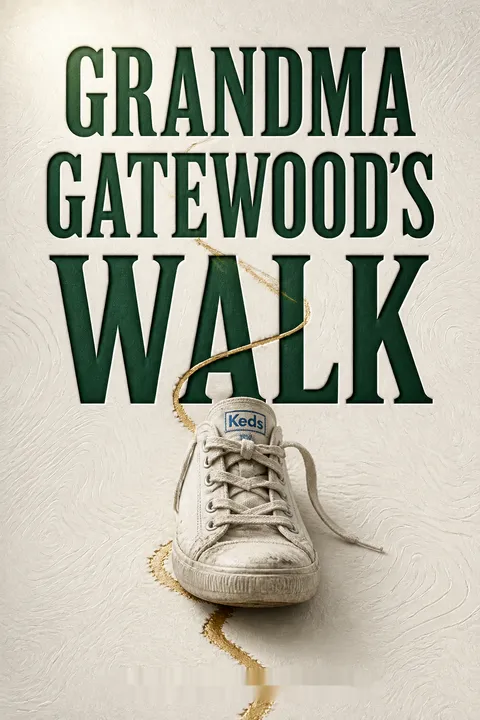
An unlikely departure. In May 1955, Emma Gatewood left Ohio for the Appalachian Trail, a 2,050-mile footpath from Georgia to Maine. She was sixty-seven, a mother of eleven and grandmother of twenty-three, carrying a small denim sack she had sewn herself. She had no map, tent, or sleeping bag, and wore canvas sneakers. But she had prepared in her own way: after starting with walks around the block, she had built up to ten miles a day by April.
A public first. On September 25, after 146 days, she reached Katahdin, Maine. She became the first woman to hike the entire trail alone, and the first person to complete it twice and then a third time, once in sections. Her feat drew national attention to a trail few Americans knew.
The achievement is compelling partly because it resists a tidy lesson. Gatewood’s resolve was extraordinary, but her lack of basic equipment and her encounters with dangerous weather were not a sound template for a modern hike. Her story is better read as evidence that age and social expectations can underestimate a person’s capacity, not as proof that preparation is optional. The distinction matters: courage can open a door, while planning helps keep someone alive after walking through it.
Turn a failed attempt into evidence about what the next one requires
The first try went wrong. In 1954, at sixty-six, Gatewood started hiking south from Katahdin. Poorly marked paths led her astray; she had no map, and after crushing one lens of her glasses, she struggled to find her way. With food running out, park rangers searched for her and helped her leave the wilderness. She returned to Ohio shaken and ashamed, telling almost no one about the attempt.
A second start. The following spring, she began in Georgia, walking north and learning as she went. The trail’s white blazes, painted marks that indicated its route, gave her a way to check whether she was still on course. She also carried a spare pair of glasses, a lesson drawn directly from her earlier ordeal. This time, she reached Maine.
The useful shift is from judging a setback as a verdict to treating it as information. Gatewood’s first attempt exposed concrete vulnerabilities: navigation, vision, and supplies. Her return shows persistence joined to adaptation, rather than persistence as mere repetition. In fields such as aviation and medicine, near misses are valuable when they produce changes in practice. The analogy has limits: a person can learn from a failure only if the experience leaves room to try again, and not every risk is worth repeating.
A long walk can be an act of escape, not a bid for applause
A hidden history. Gatewood’s hiking story began long before the trail. Her husband, P.C. Gatewood, repeatedly beat and controlled her. In 1937, she fled to California, eventually returned to Ohio, and endured years more of abuse. After a final assault in 1939, she left again, was briefly jailed, and later secured a divorce. Her children remembered the violence, although public profiles of their mother usually did not mention it.
A private answer. Decades later, with her children grown, she chose to walk the Appalachian Trail. She gave reporters several explanations, including that she loved nature or simply wanted to go. Ben Montgomery suggests that escape from a life of coercion may also have mattered. The book cannot settle her private motive; it shows how a woman’s journey carried meaning beyond the explanations she gave the public.
Gatewood’s history complicates the familiar hero story. The hike can be seen as an assertion of autonomy after years in which her choices and body were controlled, without reducing every later decision to trauma. That distinction respects both the evidence and the person: a difficult past may shape someone’s freedom without explaining all of their desires. Public biography often rewards neat motives, but people can act from several reasons at once, some clear to them and others kept private.
Judge a trail by its maintenance, not its beautiful promise
The path was rough. Gatewood first encountered the Appalachian Trail in a magazine article that made the route sound accessible, well marked, and supplied with shelters. The reality was different. She faced overgrown stretches, washed-out paths, missing markers, damaged shelters, and long days without reliable food or water. In Maine, storm-felled trees and poor trail markings slowed her even as her knee worsened and cold weather arrived.
Criticism had consequences. Gatewood told reporters plainly that the trail was in worse condition than she had expected. By her second hike, she found parts of the route better maintained. Her public complaints helped focus attention on the labor required to keep a long-distance trail usable. A path is not preserved by a beautiful map alone. It depends on continual work by clubs, wardens, and volunteers.
Gatewood’s experience makes infrastructure visible. A public trail is not simply wilderness waiting to be enjoyed; it is a maintained system whose bridges, markings, and shelters determine who can use it safely. Her blunt criticism turned a personal inconvenience into a public question about stewardship. At the same time, trail conditions vary, and one hiker’s account cannot substitute for systematic inspection. The broader point remains strong: access depends on unglamorous maintenance, and praise for nature should include recognition of the people who care for it.
Accept help without handing over control of your route
Kindness was uneven. Along the trail, some residents refused Gatewood food or a place to sleep; others offered meals, laundry, and shelter. She usually accepted help while insisting that a ride return her to the exact point where she had left the path. That rule let her receive practical assistance without giving up the walk she had chosen.
The river crossing. In Vermont, hurricane rain left a stream too dangerous for Gatewood to cross alone. Two young Navy hikers she had met days earlier found her waiting at another flooded crossing. They secured her belongings and guided her through the current, holding her as they moved against the flow. In a different storm, she shared shelter and forded swollen streams with a group of young Black men from a Harlem church. The journey was solitary by choice, but never entirely self-sufficient.
This is a useful picture of agency that does not confuse independence with isolation. Gatewood maintained ownership of her goal while relying on other people for food, shelter, and safety. Social science often distinguishes autonomy from self-sufficiency: autonomy means directing one’s choices, not doing every task alone. The account also avoids making hospitality look universal. She was turned away repeatedly, and her reception depended on whom she met, where she was, and what they assumed about her.
Protect footpaths as cars make walking disappear from daily life
A changing country. The Appalachian Trail took shape as American life increasingly favored roads and automobiles. Its visionary, Benton MacKaye, imagined a long wilderness route that could counter the spread of cities. He also proposed a highway designed for motorists, an irony that reflects the period’s competing ideas about access and development. By 1955, Americans owned sixty-two million vehicles, and doctors and athletic leaders were warning that children were walking less.
A counterexample on foot. Gatewood’s trek brought attention to the trail just as cars and television were reshaping how people experienced distance and nature. Her journey showed that a continuous footpath could offer a different kind of movement: slower, exposed to weather, and dependent on the landscape. The book connects her public story to a broader question: what kinds of mobility should a society build and preserve?
The contrast between the highway and the footpath is more than a nostalgic choice between cars and walking. Roads expand access for some purposes, while trails preserve forms of movement that depend on time, bodily effort, and shared land. Both systems require planning and maintenance. The history also cautions against treating wilderness as empty: the region’s landscapes were inhabited, and Native communities were dispossessed as settlers and parks reshaped them. Conservation is meaningful, but its history should include questions about whose access it protects.
Let the public see your feat without letting it define you
Fame brought interruptions. Once a local newspaper reported Gatewood’s hike, reporters and photographers began trying to find her along the trail. She answered questions and sometimes welcomed attention, especially when it helped publicize the path. But the repeated interviews delayed her walking, and the question she could never fully answer was why she had gone.
The cost of a spectacle. Her later walk across the Oregon Trail drew even larger crowds. Near Portland, she became so tired of being photographed and questioned that she walked away from some reporters and struck one photographer with her umbrella, then apologized when she saw he was hurt. The episode shows both her impatience and her humanity. She could value recognition without wanting to become a performance staged for strangers.
Public recognition can amplify an achievement while narrowing the person behind it. Gatewood’s shifting explanations and occasional refusal to cooperate resist the demand that every remarkable act come with a clean, marketable motive. That tension is familiar in contemporary media: a person gains influence by becoming visible, then is pressured to remain legible to an audience. The story does not make publicity simply harmful. It helped people notice the trail. It shows instead that attention is useful when the subject retains some control over its terms.
Keep choosing hard journeys after the headline has passed
One hike became several. Gatewood returned to the Appalachian Trail in 1957 and completed it for a second time. In 1964, at seventy-six, she completed it for a third time, including one hike made in sections. She also walked roughly 2,000 miles from Missouri to Oregon in 1959, and in 1960 followed Vermont’s Long Trail north into Canada. These were not repetitions of one feat; each demanded fresh work, weather judgment, and endurance.
Work closer to home. Gatewood helped establish the Buckeye Trail in Ohio, scouting and marking about thirty miles herself. She negotiated access across farms, cleared the route, and made ways to cross fences. Her energy outlasted the headlines. She kept hiking and building paths even as she grew older, while refusing the idea that age alone disqualified her from physical work.
Gatewood’s later projects shift the story from personal achievement to contribution. Walking a route proves what one body can do; marking a route helps other bodies follow. That distinction echoes the difference between individual excellence and institution-building. Her example is especially striking because the labor was practical, local, and persistent rather than ceremonial. Still, endurance should not be treated as the only measure of a worthwhile life. The point is not that everyone must keep testing their limits, but that age is a poor substitute for asking what a person can and wants to do.
Show who belongs on the trail by walking it
A wider invitation. Gatewood’s hikes helped make the Appalachian Trail familiar to people who had never considered attempting it. She became an example for older walkers, women, and hikers carrying very little gear. Her story also reached beyond newspaper fame: hikers interviewed decades afterward described her as a reason they believed they, too, could take on the trail.
A living memorial. In 2013, 4,305 people joined the annual winter hike at Ohio’s Hocking Hills, where Gatewood had often led walks. Her public presence had made a long-distance trail seem less like the preserve of young men with expensive equipment. The book does not assign her sole credit for the growth in hiking, but shows how a single visible person can alter what an audience imagines is possible.
Representation works here through a concrete image: an older woman, in ordinary sneakers and a homemade pack, moving through terrain where earlier accounts centered men. That image can expand a person’s sense of who belongs before any formal invitation arrives. Yet inspiration is not access by itself. Time, money, health, safety, and welcoming infrastructure still shape who can hike. Gatewood’s legacy is most useful when it prompts both imagination and practical work to make outdoor spaces genuinely reachable.
Analysis
Grandma Gatewood’s Walk is a reported biography, a history of the Appalachian Trail, and an inquiry into a motive its subject never fully disclosed. Those strands are difficult to compress because the feat is not the whole story. Gatewood’s journey gains meaning from the life that preceded it, the poor condition of the trail, the strangers who intermittently helped her, and the postwar culture that increasingly organized movement around automobiles.
The book’s strongest interpretive choice is to keep uncertainty around Gatewood’s reason for walking. She said she loved nature, wanted to see what lay beyond the next hill, and simply wanted to go. Montgomery also considers the possibility that the walk offered distance from domestic abuse and the duties that had consumed much of her life. The two explanations need not compete. Her choices can be both ordinary pleasures and acts of self-reclamation. Resisting a single motive allows her to remain a person rather than a lesson engineered for easy inspiration.
The narrative also corrects a familiar version of heroism. Gatewood was determined, but not invulnerable. She became lost, struggled with bad equipment and worsening injuries, and depended on people whose help was never guaranteed. That record complicates the romantic image of the lone walker. Her independence was real, but it operated within relationships and public infrastructure. Even a solitary hike required trail markings, shelters, food sources, and occasional rescue.
Her public criticism of trail conditions adds a civic dimension. By describing the gap between the trail promised in print and the route she actually encountered, she helped turn attention toward maintenance. Her later work blazing an Ohio trail extended that impulse from witness to builder. The result is not merely a story about proving that an older woman could endure a difficult journey. It is about how a private decision can change public imagination, while also making visible the material conditions that allow others to follow.
Review Summary
Grandma Gatewood's Walk tells the inspiring story of Emma Gatewood, who at 67 became the first woman to solo thru-hike the 2,050-mile Appalachian Trail in 1955, later completing it three times. Carrying minimal supplies in a homemade sack, she hiked in tennis shoes without tent or sleeping bag. Reviews praise Emma's determination and inspiring story, noting she survived an abusive marriage before finding freedom on the trail. While readers universally admire Emma, opinions on the writing vary—some find it well-researched and engaging, others criticize the structure, authorial intrusions, and melodramatic elements, suggesting the story deserved better telling.
People Also Read





Glossary
thru-hike
End-to-end single journeyA hike covering an entire long-distance trail in one continuous trip, rather than completing it through separate section hikes. In the book, the Appalachian Trail’s early thru-hikes were unusual achievements, and the first reported continuous hike was completed by Earl Shaffer in 1948.
white blazes
Painted trail markersShort white marks painted on trees, rocks, or other surfaces to identify the Appalachian Trail’s route. The marks were essential navigation aids, especially on a trail that could be overgrown or poorly maintained. Gatewood initially lacked a map, so recognizing and following these blazes helped her stay on the intended path.
two-thousand-miler
Full-trail completerA term for someone who has covered the entire Appalachian Trail, whose length is more than two thousand miles. The book uses it for people who complete the route, whether in one continuous journey or in sections. Gatewood completed the trail three times, though not all of those hikes were continuous thru-hikes.
100-Mile Wilderness
Remote Maine trail stretchA long, isolated section of the Appalachian Trail in Maine. The book describes it as remote enough that hikers needed to carry provisions for an extended stretch, since towns and reliable resupply points were scarce. Gatewood passed through it late in her 1955 hike, while injured and facing difficult terrain.
Gatewood Cape
Cape doubling as shelterA lightweight rain cape that can also serve as a shelter, named in recognition of Gatewood’s minimalist approach to hiking. The book identifies it as an outdoor product inspired by her example. It reflects the enduring influence of her preference for carrying little, while not implying that her improvised equipment was always safe or adequate.
Download PDF
Download EPUB
.epub digital book format is ideal for reading ebooks on phones, tablets, and e-readers.








