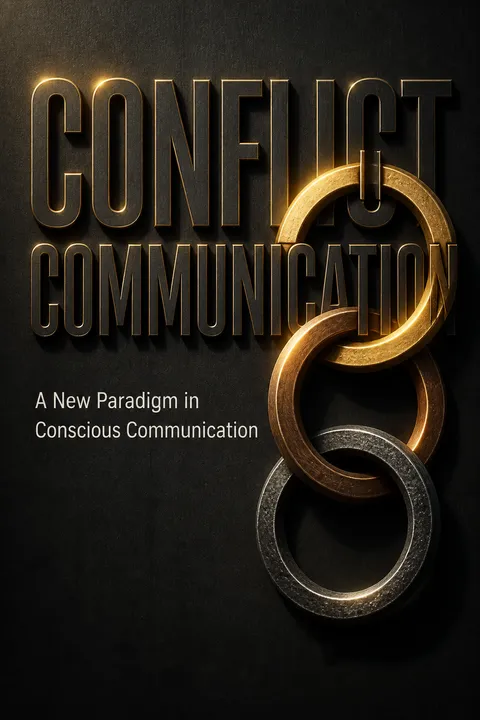


Key Takeaways
Treat recurring conflict as a script before treating it as a fresh argument
Notice the pattern. Miller’s central claim is that conflict responses are often subconscious, patterned, and organized around keeping a group stable, not solving the problem at hand. A couple may replay the same argument about chores for years. Each partner can predict the other’s lines, yet the argument keeps returning because its familiar rhythm reassures the relationship’s social instincts, even while frustrating both people.
Familiar is not effective. The same pattern appears at work: a manager asks for a report, an employee gives the same excuse, and the manager repeats the same reprimand. The first practical move is to notice the repetition. A familiar argument may be maintaining a relationship or hierarchy, rather than resolving the stated issue. Once seen, it becomes possible to choose whether to continue.
The useful shift is from judging a conflict by its latest sentence to asking what the repeated exchange accomplishes. In systems thinking, recurring behavior can stabilize a system even when it harms its members; the argument is a kind of homeostasis. That lens can replace blame with curiosity and make a new response easier to design. Still, repetition does not prove that a conflict is merely ritual. A recurring dispute can also point to a real unresolved need, unequal labor, or a boundary repeatedly ignored. Pattern recognition should open inquiry, not excuse the status quo.
Use the three-brain model as a map, not a literal brain diagram
Three competing priorities. Miller uses three labels to make conflict reactions easier to recognize. The Lizard represents bodily survival and habit; the Monkey represents emotion, belonging, and status; the Human represents deliberate reasoning and problem-solving. In a threat, the Lizard may freeze or act quickly. In a status dispute, the Monkey may push someone to defend pride. The Human can compare options, but Miller argues it is slower and can be recruited to justify choices already made.
A model for noticing. These are teaching categories, not three separate organs. The book connects the Monkey to social fears such as humiliation and exclusion, and the Human to the ability to plan toward abstract goals. Its practical question is not which brain is “you,” but whether the response fits the problem or simply answers an older survival or social alarm.
The model’s strength is practical compression: a person can spot that an insult has shifted attention from the task to status, without needing a neuroscience lecture. It also resembles dual-process accounts, which distinguish fast, automatic judgments from slower, more effortful reasoning. But the claim that emotion switches off good judgment is too absolute. Emotion can distort attention, yet it also supplies information about risk, values, and other people’s needs. The better use of the metaphor is diagnostic: pause when strongly activated, then test the interpretation with evidence and context.
Distinguish social status conflict from predatory danger before choosing a response
Two different conflicts. Social conflict occurs within a group and often concerns belonging, hierarchy, or rule enforcement. Miller calls the familiar status ritual that can lead to a fistfight the “Monkey Dance ”: staring, challenging words, posturing, closing distance, and sometimes contact. Its gestures are often meant to establish position, not to cause serious injury. Asocial conflict, by contrast, treats another person as a target rather than a group member. A predator may seek money, access, or the experience of hurting someone.
Do not use one script for both. A calm apology or a face-saving exit may defuse a social challenge. Such tactics cannot be relied on when someone is hunting, panicking, or seeking force. Miller’s practical distinction is stark: social de-escalation may reduce status pressure, while a predatory threat requires attention to safety, escape, and the other person’s actual intent.
This distinction is valuable because it prevents a common category error: assuming every hostile person is simply upset and reachable through better phrasing. Conflict research and crisis practice both benefit from separating motive, setting, and capacity rather than treating “aggression” as one uniform behavior. Yet real situations can be ambiguous, and a person’s intent cannot always be read from posture or words. The safest application is probabilistic: treat social cues as clues, not proof, and favor distance, witnesses, and exit options when uncertainty carries serious consequences.
Interrupt a bad script by noticing activation, pausing, and checking the effect
Catch the switch. Miller identifies signs that the Monkey may be directing the exchange: strong emotion, suddenly liking or disliking the other person, defending who is right instead of solving the issue, labeling, and making excuses for one’s own side. These signals do not prove that a person is irrational, but they are reasons to slow down. Active listening helps because a pause between hearing and answering keeps the first reaction from automatically becoming the next line in the argument.
Choose, then reassess. Once a script is visible, ask where it usually ends and whether that outcome is useful. A person can alter a branch, take a different role, or stop playing the exchange altogether. Then check what happens: is the other person calming down, or becoming more agitated? Miller’s rule is pragmatic. Keep a tactic only while it is working and safe.
This is a compact feedback loop: monitor state, choose an intervention, observe the result, and adjust. It shares a family resemblance with mindfulness-based approaches, which train people to notice thoughts and bodily reactions without immediately acting on them. The instruction to check effects is especially strong because de-escalation is not a magic phrase but an interaction that changes as both people respond. The caveat is that pausing may not be enough under intense fear or immediate danger. A communication tool should never become a reason to remain in an unsafe encounter.
Decline the hook without surrendering the task or humiliating the other person
Separate bait from motive. A hook is an excuse someone can use to justify behavior they already want to perform. A person looking for a fight may treat a mild reply as disrespect; a supervisor intent on reprimanding someone may seize on a small mistake. The hook is not necessarily the true cause. Miller recommends avoiding insults, sarcasm, and visible triumph, all of which can supply fresh reasons to escalate.
Protect dignity, not the argument. A measured apology can acknowledge distress without accepting blame for everything. A cooperative phrase can redirect attention to the shared task. Miller’s example of bringing a cost-saving proposal to a senior officer shows why this matters: presenting a solution as proof that the boss had failed threatened status, while asking for the boss’s help could have preserved dignity and kept the proposal in play.
The insight fits negotiation research on face: people often resist a proposal less because of its substance than because accepting it would publicly lower their standing. Protecting the other person’s dignity can make change easier without requiring agreement about who was right. The ethical boundary matters, however. Appeasement can become manipulation or enable an abusive hierarchy if the goal is merely to keep the powerful person comfortable. A useful test is whether the tactic preserves both parties’ agency and moves toward a legitimate shared outcome.
Translate between mission-driven teams and organizations built to preserve themselves
Two organizational logics. Miller distinguishes Goal-Oriented groups, whose status comes from solving the mission, from Longevity-Oriented groups, whose work includes maintaining the institution, its relationships, and its procedures. Both can exist in one organization. Line staff may hear a budget warning as a request for practical solutions; administrators may mean it as reassurance that leadership is containing risk.
Read the local rules. Miller’s own cost-saving proposal went nowhere after he bypassed the chain of command, crossed departmental territory, and appeared to challenge a senior officer’s authority. The idea was sound, but the approach triggered status and protocol concerns before its merits could be considered. When entering a new group or presenting an unconventional idea, learn who decides, what rituals matter, and how to invite participation without disguising the facts.
This framework captures a familiar organizational tension: frontline units optimize immediate performance, while central administration manages continuity, liability, and legitimacy. Organizational sociology often describes similar differences between operational work and institutional maintenance. Seeing both as necessary can reduce contempt and improve translation across levels. The framework can also be misused to label every procedural objection as mere status defense. Some protocols protect safety, fairness, or accountability. The practical question is which rule serves the mission, which protects the institution, and whether either is being applied consistently.
Listen to collect the other person’s account before preparing your rebuttal
Make listening observable. Active listening means receiving information accurately while encouraging the other person to continue. Miller warns that listeners often jump ahead because they recognize a familiar story or prepare their reply before the speaker finishes. That can cause them to miss important details and confuse expectations with what was actually said. A short pause, a clarifying question, or a paraphrase in ordinary language can check understanding without sounding like a memorized formula.
Build from shared ground. Open questions invite fuller answers; closed questions are useful when confirming a specific fact. Miller’s example of speaking with someone who hears voices is to acknowledge that the experience is real to that person without claiming to share it, then discuss what both can observe. The aim is not agreement on everything. It is enough common ground to communicate and identify the next useful step.
Listening is both relational and epistemic. A speaker who feels heard may disclose more, while the listener gains a better basis for decisions. In investigative interviewing, open prompts can reduce the risk of leading someone toward the interviewer’s assumptions. The method also encourages intellectual humility: a familiar story may resemble earlier cases without being identical. There is a tension, however, between rapport and truth. Miller’s reminder that information is not automatically accurate is essential; good listening gathers an account, then checks it against other evidence.
Set a clear boundary, then enforce it instead of debating its legitimacy
Make the limit explicit. Miller describes boundary-setting as necessary when people follow different social rules, have difficulty controlling behavior, are on incompatible interaction scripts, or deliberately exploit social expectations. Clear, simple language is especially important when someone is distressed or confused. A boundary that is softened into a long explanation can sound negotiable, particularly to someone testing whether “no” will be respected.
Match the response to the risk. In an ordinary misunderstanding, explanation and a respectful correction may help. With a person who deliberately ignores a limit, repeated discussion may give them more opportunity to pressure, distract, or approach. Miller advises backing up the boundary with an action, including leaving when possible, and treating attempts to prevent departure as a serious warning. Communication is useful only when it serves safety and the person remains receptive.
The distinction between stating a limit and enforcing it is central to effective boundary work. Behavioral learning helps explain why: if a stated limit is repeatedly followed by negotiation without consequence, the other person may learn that persistence works. But enforcement need not mean punishment or force; it can mean ending the conversation, seeking help, or changing the setting. Context matters. A person who misses a social cue is not the same as one intentionally exploiting it, so proportionate boundaries should be paired with attention to intent and capacity.
Use intuition as a signal, then identify the details that produced it
Turn hunches into evidence. Miller argues that fast, unconscious perception can notice small changes before a person can explain them. His “articulation exercise” is to revisit a hunch and name the observable cues behind it: a vehicle drifting toward a lane, a change in someone’s posture, or an unusual rhythm in a conversation. Doing so helps conscious reasoning evaluate the signal rather than dismissing it or treating it as certainty.
Reputation is evidence too. The book also stresses that trust grows from repeated behavior, not self-description. Miller contrasts a blunt supervisor who reliably helped colleagues with a polished supervisor who undermined them. Over time, consistent conduct becomes a practical guide to how someone is likely to act. Neither intuition nor reputation is infallible, so both should be updated when new evidence appears.
This combines two forms of learning: implicit pattern recognition and social evidence accumulated over time. Expert intuition can be useful when it arises from repeated experience with meaningful feedback, but it is less reliable in unfamiliar settings or when stereotypes shape perception. Articulating the cue makes a hunch testable and helps separate perception from interpretation. Reputation works similarly, as a compressed record of past behavior, though it can be distorted by rumor or unequal power. The strongest judgment treats both as hypotheses, not verdicts.
Use communication tools to solve problems, not to win a status contest
Tools need a purpose. Miller describes tactics such as apologizing, building rapport, and giving someone a small, legitimate role in a decision. A tactical apology acknowledges that the other person is upset and can reopen a stalled conversation without conceding every disputed fact. Rapport can be built through genuine common interests and respectful attention, rather than false promises or manufactured intimacy.
Keep the goal visible. The book’s “Brown M&Ms” example describes how a band used a simple, visible contract requirement to check whether a venue had followed detailed safety instructions. Miller also describes offering a supervisor a small, harmless correction so the supervisor can satisfy a need to review work. Such maneuvers can reduce friction, but they are best used transparently and proportionately. The point is not to outsmart people. It is to make cooperation easier while keeping the real task intact.
The tactics illustrate a broad feature of communication: every message shapes what the other person notices, feels, and does. In that sense, influence is unavoidable, but its ethics depend on purpose, honesty, and respect for choice. The venue example is a useful low-cost signal, similar to a checklist item that reveals whether a larger process was followed. Small accommodations can also preserve relationships. Yet tactics become corrosive when they conceal material facts or turn colleagues into targets to manage. Effectiveness is not, by itself, a moral standard.
Analysis
Conflict Communication is a practice-oriented manual built from the author’s work in corrections, tactical response, and training, rather than a controlled scientific program. Its core contribution is a shift in attention: instead of asking only what people say during conflict, examine the social pattern, status pressure, institutional role, and risk level shaping the exchange. That shift makes mundane disputes and dangerous confrontations legible through a shared vocabulary.
The book’s most useful design choice is pairing an explanatory model with a decision habit. The Lizard, Monkey, and Human shorthand helps readers notice survival reactions, belonging needs, and deliberate problem-solving. The book then turns recognition into action: identify the script, ask whether it serves the goal, choose a different response if needed, and check the result. Its distinction between social conflict and predatory or survival-driven threat is particularly important because it limits the reach of conversational techniques. Not every conflict is a misunderstanding awaiting the right phrase.
The model also has clear limits. Its brain categories are metaphors, not a faithful account of neural architecture, and the assertion that emotion makes sound judgment impossible is stronger than the evidence warrants. Emotion can narrow attention, but it also supports moral judgment, empathy, and detection of danger. Likewise, interpreting another person’s motive from body language or group behavior is uncertain. The book is strongest when its categories prompt questions, not when they are treated as diagnoses.
A second tension concerns the deliberate manipulation of status and rapport. Asking for help, apologizing strategically, and finding common ground can lower defensiveness, but these tactics can also reinforce unfair hierarchies if preserving someone’s comfort takes priority over truth or accountability. The book’s own emphasis on reputation, boundaries, and task-focused outcomes offers a useful ethical test: communication should improve the chance of solving a real problem while preserving safety and agency. Used that way, ConCom is less a catalog of magic words than a training in seeing the social water around a conflict.
Review Summary
ConCom by Rory Miller receives high praise for its insightful approach to conflict communication. Readers appreciate Miller's experience-based advice on de-escalating potentially violent situations and navigating social dynamics. The book's breakdown of human behavior into "lizard," "monkey," and "human" brain responses resonates with many. While some find the writing style occasionally disjointed, most consider it a valuable resource for understanding and managing conflicts in various settings, from personal relationships to professional environments.
People Also Read







Glossary
Lizard, Monkey and Human
Three conflict-response modesMiller’s shorthand for three overlapping tendencies in human behavior. The Lizard represents survival reactions, bodily habits, and immediate threat response. The Monkey represents emotion, belonging, and status. The Human represents slower, deliberate reasoning and problem-solving. The labels are explanatory metaphors for noticing different priorities, not literal descriptions of three separate brain structures.
Monkey Dance
Ritualized status challengeA patterned form of social confrontation that can progress from staring and verbal challenges to posturing, closing distance, contact, and sometimes a fight. Miller presents it as a status ritual with recognizable stages, rather than as a skilled or efficient way to fight. Apologies, withdrawal, or intervention by others can interrupt the sequence.
Social conflict and asocial conflict
Group dispute versus predationMiller’s distinction between conflict within a social group and force directed at someone treated as outside the group. Social conflict often concerns status, belonging, or rules and may follow rituals that limit harm. Asocial conflict is more like predation: the person seeks a tangible reward or the experience of causing harm. The distinction guides whether social de-escalation is likely to help.
Monkey Problems
Status and protocol frictionMiller’s term for conflicts driven less by the stated practical issue than by social concerns such as status, territory, group membership, or unwritten rules. He identifies patterns including status checking, dominance, outsider rejection, and disputes over special treatment. Recognizing a Monkey Problem can explain why good evidence or a useful proposal is rejected before its substance is considered.
Goal-Oriented groups
Mission-first teamsGroups in which standing depends mainly on contribution to a defined task. They value problem-solving, skill, and results, and may form around a mission before dispersing once it is complete. Miller contrasts them with groups focused more heavily on preserving the institution, its relationships, and its procedures. Real organizations often contain both orientations.
Longevity-Oriented groups
Institution-preserving groupsGroups whose central concern is maintaining the organization over time. Status tends to reflect rank, service, and adherence to shared procedures; relationship-building and continuity matter alongside the immediate task. Miller argues that administrators often work within this orientation, while frontline staff may be more mission-focused. Neither type is inherently unnecessary, though friction arises when each mistakes the other’s priorities for incompetence.
Hooks
Excuses for acting outA hook is a reason or provocation that someone uses to justify behavior they already feel motivated to perform. It may be minor or interpreted expansively, such as treating a refusal as an insult. In Miller’s account, the desire to act out can come first, followed by a search for a defensible excuse. Avoiding fresh provocation can reduce opportunities for escalation, though it cannot control another person’s intent.
Articulation exercise
Explain the cue behind intuitionA practice of revisiting a hunch and identifying the observable details that may have prompted it. Someone who senses danger in traffic, for example, reviews the vehicle’s movement and surrounding conditions instead of dismissing the feeling or assuming it is certainly correct. Miller presents the exercise as a way to connect rapid, unconscious perception with conscious evaluation and improve future judgment.
FAQ
What's "Conflict Communication: A New Paradigm in Conscious Communication" about?
- Overview: "Conflict Communication" by Rory Miller explores a new approach to understanding and managing conflict through conscious communication. It emphasizes recognizing subconscious patterns and scripts in human interactions.
- Purpose: The book aims to equip readers with tools to identify and alter these patterns, improving personal and professional relationships.
- Structure: It is divided into sections covering background concepts, fundamental principles, and practical tactics for managing conflict effectively.
Why should I read "Conflict Communication"?
- Practical Tools: The book provides actionable strategies for resolving conflicts, which can be applied in various settings, from personal relationships to professional environments.
- Insightful Framework: It offers a unique perspective on human behavior, helping readers understand the subconscious scripts that drive conflict.
- Improved Interactions: By applying the concepts, readers can enhance their communication skills, leading to more productive and harmonious interactions.
What are the key takeaways of "Conflict Communication"?
- Subconscious Scripts: Human responses to conflict are often subconscious and follow predictable patterns, which can be identified and altered.
- Three Brains Model: The book introduces the concept of the Lizard, Monkey, and Human brains, each playing a role in conflict dynamics.
- Practical Techniques: It provides specific tools and techniques, such as active listening and tactical apologies, to manage and resolve conflicts effectively.
How does Rory Miller define the "Three Brains" in conflict communication?
- Lizard Brain: This is the oldest part of the brain, focused on survival instincts and physical responses. It is triggered by fear and operates on a primal level.
- Monkey Brain: Corresponding to the limbic system, it is concerned with social behavior, status, and emotions. It often drives conflict through subconscious scripts.
- Human Brain: The neocortex, responsible for rational thought and problem-solving. It is slower but capable of overriding the other two brains with conscious effort.
What is the significance of "scripts" in conflict communication according to Rory Miller?
- Predictable Patterns: Scripts are subconscious patterns of behavior that people follow during conflicts, often without realizing it.
- Stability Over Happiness: These scripts prioritize group stability over individual happiness, leading to repetitive and unresolved conflicts.
- Recognizing and Altering: By recognizing these scripts, individuals can choose to alter them, leading to more effective conflict resolution.
How can "active listening" improve conflict communication?
- Intelligence Gathering: Active listening involves receiving information accurately and encouraging the other person to keep talking, which helps gather valuable insights.
- Emotional Acknowledgment: It requires acknowledging both your own and the other person's emotional states, which can de-escalate tension.
- Clarification and Engagement: By paraphrasing and asking clarifying questions, active listening ensures understanding and keeps the conversation focused on resolving the issue.
What is the "Tactical Apology" and how is it used in conflict communication?
- Empathy Without Responsibility: A tactical apology involves saying, "I'm sorry you're upset," which shows empathy without assuming responsibility for the issue.
- Script Completion: It helps complete the conflict script, allowing both parties to move forward and address the real problem.
- Leadership and Maturity: Offering a tactical apology can demonstrate leadership and maturity, often diffusing tension and facilitating resolution.
How does Rory Miller suggest handling "Monkey Problems" in conflict situations?
- Identify the Problem: Recognize when conflicts arise from status, territory, or protocol issues, which are common Monkey Problems.
- Address the Monkey Brain: Use strategies like raising the other person's status or acknowledging their role to appease the Monkey brain.
- Focus on the Human Problem: Shift the focus from the Monkey issues to the actual problem that needs solving, using rational and respectful communication.
What are the "Levels of Coercion" in violence as described by Rory Miller?
- Nice to Lethal: The levels range from nice (subtle social coercion) to lethal (extreme physical violence), each with increasing intensity.
- Comfort with Violence: People are comfortable at their level and often see the level above as wrong or violent.
- Understanding Levels: Recognizing these levels helps in assessing threats and understanding the dynamics of conflict and violence.
How can understanding "Social vs. Asocial Violence" aid in conflict communication?
- Social Violence: This involves communication and is often about status and group dynamics, with an audience present.
- Asocial Violence: Predatory and without witnesses, it involves a calculated risk/reward assessment by the aggressor.
- Appropriate Response: Understanding the type of violence helps in choosing the right response, whether it's de-escalation or self-defense.
What are some of the best quotes from "Conflict Communication" and what do they mean?
- "Your responses to conflict are subconscious, scripted, and for the good of the group." This highlights the automatic nature of conflict responses and the importance of recognizing and altering them for better outcomes.
- "You are physically incapable of making a good decision if you care." Emphasizes the impact of emotions on decision-making, advocating for a rational approach to conflict.
- "The Lizard, the Monkey, and the Human." Refers to the three-brain model, illustrating the different aspects of human behavior in conflict situations.
How can "Conflict Communication" by Rory Miller change my approach to conflict?
- Increased Awareness: By understanding the subconscious scripts and brain dynamics, you become more aware of your own and others' behavior in conflicts.
- Improved Skills: The book provides practical tools and techniques to manage and resolve conflicts more effectively.
- Empowerment: With these insights and skills, you can take control of conflict situations, leading to more positive and productive interactions.
About the Author
Download PDF
Download EPUB
.epub digital book format is ideal for reading ebooks on phones, tablets, and e-readers.








