


Key Takeaways
Treat uncanny coincidences as questions to investigate, not orders to obey.
A chance encounter starts the journey. In the guide's adventure narrative, a restless man meets an old friend recently returned from Peru with news of an ancient manuscript. The timing pulls him toward a journey. The First Insight presents this as an awakening: repeated coincidences may connect with unresolved questions and life direction. The guide recommends recording these events and noticing what was already on the mind when they occurred.
Curiosity, not certainty. The guide uses Carl Jung's term synchronicity for meaningful coincidences whose causal link is not apparent. Ask what an encounter or opportunity brings into focus, then see whether it leads to useful learning. The practical point is not that every odd event is a cosmic instruction, but that a surprising event can prompt reflection and responsible action.
Coincidences can feel revelatory partly because attention is selective: once a concern becomes important, related details stand out. That does not make the experience worthless. A meeting can become meaningful through the question it helps someone ask or the action it inspires. The useful safeguard is to treat significance as a hypothesis, not a command. Reflection can enrich judgment, while surrendering decisions to supposed signs can weaken it.
Use restlessness to question the worldview that equates security with progress.
A historical lens. The guide describes Western culture as moving from medieval religious authority toward scientific materialism and a focus on technological security. It interprets modern spiritual searching as a response to the limits of that outlook. Its historical sketch links 1960s social upheaval, 1970s psychological introspection, and 1980s spiritual experimentation to a renewed interest in meaning and inner experience.
From explanation to experience. The claim is that greater comfort and knowledge have not answered every human question. Restlessness may signal a desire for purpose, connection, or a richer way of seeing the world, rather than simply a need for another achievement. The guide suggests examining the assumptions beneath daily concerns, including beliefs about competition, material success, and what counts as a secure life.
The historical story makes an effective case that societies inherit assumptions about what is real and worthwhile. It is also a deliberately broad, Western-centered account, not a universal history: spiritual traditions and scientific inquiry have often coexisted, and the decades it describes contained competing movements. Its lasting value lies less in the timeline's precision than in the invitation to ask which cultural defaults still shape personal choices.
Train attention on beauty, but don't mistake spiritual metaphor for physics.
Attention changes experience. The guide describes the universe as dynamic energy and argues that thoughts and intention can affect the energy people experience and project. Its most accessible exercise is to study a plant, landscape, or person's distinctive qualities until appreciation becomes vivid. Breathing slowly and noticing color, shape, and detail are offered as ways to feel more alert and connected.
Evidence needs care. The guide invokes plant experiments by Cleve Backster and energy photography as support for the idea that living things respond to human attention. Those claims are not established by the examples presented in the text. The practical exercise does not depend on accepting them: focused attention can deepen appreciation of nature and change how a person feels, even if no invisible field is detected.
This distinction protects the book's strongest practice from its weakest evidential leap. Attention reliably shapes what people notice and how they interpret an encounter; an attentive walk can make an ordinary tree feel newly vivid. That subjective change matters. But findings in modern physics do not, by themselves, establish that human intention directly steers external events. The experience of connection can be valuable without being presented as a laboratory result.
Name your attention-seeking pattern before it turns conversation into a contest.
A learned strategy. The guide calls recurring tactics for gaining another person's attention and emotional energy control dramas. It groups them as forceful intimidation, persistent questioning and criticism, withdrawal into aloofness, or helplessness that invites rescue. A child may learn one pattern in response to family dynamics and repeat it in adult relationships, often without noticing the effect.
Recognition creates options. Instead of diagnosing someone else, observe your own reactions: Do you become defensive, try to dominate, disappear from the conversation, or make another person responsible for your distress? The guide connects this idea with transactional analysis, which describes Parent, Child, and Adult modes of interaction. Its practical advice is to state what is happening, attend to the feelings underneath it, and choose a more direct response.
The typology is useful as a mirror because it turns vague conflict into observable behavior. It resembles broader work on family systems, where familiar roles can persist long after the original setting has changed. The labels should remain prompts, not diagnoses: people can withdraw or argue for many reasons, and a single interaction does not define a personality. The goal is greater choice, not a new vocabulary for blaming others.
Use spiritual practice to cultivate steadiness, not chase extraordinary states.
A peak experience opens a door. In the adventure, the protagonist escapes danger and reaches a mountaintop, where he feels unusually light, secure, and connected to everything around him. A priest helps him understand this as a glimpse of mystical awareness. Back in ordinary life, the feeling fades, and he has to learn to reconnect gradually rather than demand that the peak experience return.
Small practices matter. The guide recommends quiet reflection, conscious breathing, time in nature, and appreciation of beauty as ways to regain a sense of openness. It treats love and buoyancy as signs of connection with a universal spiritual source. Readers can use the practices without assuming that an intense feeling proves a metaphysical claim or that ordinary sadness means failure.
Peak experiences can give people a lasting sense of perspective, but their intensity is not a dependable measure of truth or character. The guide's emphasis on gradual practice is more robust than its language of cosmic certainty. A stable routine of attention and reflection is less dramatic than a mountaintop revelation, yet it is easier to carry into relationships, work, and difficult decisions. Extraordinary states should not require dangerous crises.
Turn your parents' unfinished lessons into clues, not a script.
Read the family history. The guide's parental review asks readers to examine what each parent valued, achieved, feared, and left undone. A life question is the recurring inquiry that emerges from this history and a person's own experiences. The guide uses Albert Camus as an illustration: his father's death in war and his quiet childhood are presented as part of the background to writing about alienation and social suffering.
Meaning without imitation. A personal timeline can reveal repeated interests, turning points, and reactions to family expectations. The exercise is to identify what was learned, what still feels unfinished, and what might be chosen differently. The guide treats family history as preparation for a personal contribution, not merely a list of injuries or obligations. Its strongest practical move is turning inherited patterns into material for reflection.
Narrative psychology shows why this exercise can help: people often make sense of their lives by linking past events with present aims. That coherence can support agency, but it can also encourage hindsight to make a messy history look inevitable. Parents' struggles do not prove that a child was destined to solve them. Meaning-making is most humane when it recognizes harm clearly and finds a direction without excusing it.
Ask a precise question, then test the answer against reality.
Questions focus attention. The Seventh Insight advises keeping current questions in mind and watching for clues in conversations, daydreams, intuitions, and dreams. In the story, the imprisoned protagonist recalls a dream of being swept down a river and reaching a beach where a missing key appears. Instead of reading it as a literal prediction, he compares its movement with his current situation and considers whether resisting every change is keeping him stuck.
Record and evaluate. The guide suggests writing down questions, dreams, and coincidences, then looking for patterns and possible next steps. It distinguishes a persistent intuition from an impulse that feels urgently demanding. A sensible test is to treat an impression as one source of information, alongside evidence, practical constraints, and advice from people who understand the situation.
Journaling can improve self-observation by making repeated concerns and reactions visible. Dreams may also help people explore emotions they have not fully articulated. Neither process guarantees prophecy: memory is reconstructive, and ambiguous symbols can be fitted to many outcomes after the fact. The guide's most grounded principle is to ask a clear question and examine what a possible answer reveals, without letting a dream or hunch replace practical judgment.
Give others attention that restores agency instead of feeding dependence.
Attention can change a conversation. The Eighth Insight asks people to look beyond a surface impression, listen closely, and respond to another person's strengths rather than compete for attention. The guide argues that each encounter can carry useful information. In groups, it recommends sharing the floor, keeping discussion open, and allowing different members to contribute instead of letting one person control the exchange.
Support is not rescue. The guide's group exercises invite people to bring a concern, receive perspectives, and offer encouragement. It explicitly says this is not a substitute for qualified medical help. The same distinction applies to ordinary relationships: focused attention may help someone think more clearly, but it does not make the listener responsible for solving that person's problems. Boundaries keep care from becoming control.
This ethic connects with active listening and the idea of psychological safety: people often think more clearly when they feel heard rather than judged. A group can be a useful setting for shared reflection, especially when members respect boundaries and disagreement. The claim that every encounter carries a destined message is harder to verify. Treating people as worthy of attention is sound; treating them as instruments for one's own growth is not.
Keep romantic love from replacing the inner source you expect it to complete.
Romance can become a substitute. The guide argues that the excitement of falling in love can feel like a surge of energy, leading partners to expect one another to meet needs left unmet in childhood. When one person becomes the sole source of reassurance or self-worth, affection can turn into monitoring, blame, or fear of abandonment. The guide calls this codependency when attention becomes fixed on controlling another person's feelings or behavior while one's own life is put aside.
Build a fuller life. Its suggested counterweights are time alone, friendships that are not organized around sexual attraction, honest communication, and continued attention to personal goals. The guide describes integration of masculine and feminine qualities as becoming a full circle, its metaphor for feeling more whole without requiring a partner to complete the self.
The warning against making a partner responsible for all emotional needs is valuable, but the book's account leans heavily on gendered parental roles and spiritual energy. Contemporary attachment thinking offers a more relational picture: healthy dependence and mutual support are not defects, and secure partners can help each other grow. The useful distinction is between interdependence and control, not between needing connection and achieving perfect self-sufficiency.
Raise children with honest attention, meaningful responsibility, and room to become themselves.
Children need participation. The guide argues that children flourish when adults offer consistent attention, speak honestly, set clear limits, and take their questions seriously. It also recommends giving them age-appropriate responsibilities and involving them in family decisions, rather than either doing everything for them or treating mistakes as proof of incompetence. The aim is to help children see themselves as capable, connected, and able to ask for help.
Parenting is modeling. Adults are encouraged to share their values and spiritual questions without forcing a child to adopt every belief. The guide also warns that constant criticism can make children compete for attention rather than develop confidence. Its practical emphasis is on respect, meaningful contribution, and supportive boundaries, so a young person can gradually make choices and learn from their consequences.
The emphasis on autonomy, competence, and belonging aligns with influential approaches in developmental psychology. Children benefit from being treated as participants, not projects. Yet the guide's focus on parental attention can understate structural pressures such as work schedules, poverty, and limited access to childcare. A stronger account combines attentive parenting with reliable support networks and material conditions that give families time to practice it.
Treat the predicted spiritual future as a direction, not a guarantee.
A vision of what might change. The Ninth Insight imagines a culture that protects natural places, automates basic production, and gives people more time to pursue work they find meaningful. It predicts less attachment to money and status as spiritual awareness grows, and describes human evolution as a rise toward a more spiritual form of existence. At the novel's close, the manuscript appears lost, but the protagonist is urged to carry its message into his life.
An ethical horizon. The guide's future is a spiritual prophecy, not a demonstrated forecast. Its practical challenge is to ask whether present choices protect the environment, distribute opportunity fairly, and make room for meaningful work. The book places confidence in inner transformation as a source of social change, while its own exercises begin at a smaller scale: attention, honest relationships, and daily action.
Utopian visions can help societies imagine alternatives to scarcity and ecological damage. Their weakness is treating technological progress and personal awakening as if they automatically produce justice. Automation can free time, but its benefits depend on ownership, access, and public choices. The Ninth Insight is most persuasive as a moral direction: build systems that support human flourishing and the living world, while remaining honest about the political work required.
Analysis
This companion guide is a spiritual workbook arranged around an adventure parable. Its unnamed traveler moves from curiosity about a Peruvian manuscript through danger, mystical experience, family reflection, and a vision of a transformed society. Each stage converts a story event into an exercise: notice coincidences, track recurring patterns, examine parental influence, ask better questions, and change how attention is given in relationships. The structure makes abstract ideas memorable because the reader sees them tested under pressure, rather than receiving only a list of beliefs.
The book's central proposition is that human beings can participate consciously in a meaningful, interconnected universe. That proposition carries practical value when translated into attention, journaling, emotional self-awareness, and care for others. The same text also blends claims from physics, psychology, religious mysticism, ecology, and prophecy. These fields do not provide interchangeable evidence. Reports of plant sensitivity, quantum language, and future spiritual transformation require much more support than the guide offers. The strongest adaptation therefore preserves the exercises while distinguishing them from claims about measurable reality.
The guide's distinctive psychological insight is that people often seek attention through repeated interaction patterns learned in childhood. Its typology can help readers notice their own behavior, though it becomes reductive if used to label other people. Its relationship advice is similarly strongest when it recommends direct communication and boundaries, and weakest when it treats gendered parental roles as a universal map.
The book is ultimately less useful as a prediction of what the universe intends than as a discipline of interpretation. Coincidences, dreams, and intuitions can reveal what a person is already attending to, but they cannot reliably certify destiny. When treated as prompts rather than proof, the Nine Insights offer a coherent practice: notice, question, reflect, connect, and act with greater care. The future vision then serves as an ethical horizon, not a promise that history will take care of itself.
Review Summary
The Celestine Prophecy receives mixed reviews, with an average rating of 3.86 out of 5. Many readers find it thought-provoking and inspiring, praising its ability to encourage self-reflection and spiritual growth. Some appreciate its accessible approach to spiritual concepts, while others find it lacking in depth or relying too heavily on "magical thinking." The accompanying experiential guide is often recommended for deeper understanding. Critics note the book's slow start and occasionally repetitive nature, but many readers still find value in its insights and perspective on life's interconnectedness.
Glossary
The Nine Insights
A spiritual growth sequenceThe book's named progression from noticing meaningful coincidences to imagining a transformed human culture. Across the sequence, readers examine cultural assumptions, energy, conflict, mystical experience, family patterns, intuition, relationships, and collective change. The insights function as a spiritual map for interpreting life, not as a scientifically validated model of how events unfold.
Synchronicity
Meaningful coincidenceA term associated with Carl Jung for meaningful connections between events that do not appear to have a direct cause-and-effect link. The guide uses synchronicity to describe coincidences that seem relevant to a person's questions or direction. It encourages readers to reflect on these events, while the existence of a personally meaningful connection does not prove that the universe sent an objective message.
Control Dramas
Repeated attention-seeking patternsThe guide's name for habitual ways people try to draw attention and emotional energy from others. Examples include intimidating, persistently criticizing, withdrawing into distance, or presenting oneself as helpless. The guide connects these habits to family experiences in childhood and recommends noticing them in oneself to make more direct choices in relationships.
Life question
A recurring personal inquiryThe guide's term for a central question that appears to organize a person's interests, difficulties, and sense of purpose. It is explored through a timeline of significant events and a review of parental strengths, values, and unfinished concerns. The concept is intended to help readers identify a direction for growth, rather than establish a fixed destiny.
Full circle
Integrated inner qualitiesA metaphor in the guide for feeling more whole through integrating qualities it associates with masculine and feminine energy. In relationships, this means developing a steadier inner life instead of expecting a romantic partner to supply every missing quality or emotional need. The guide's terminology is gendered, though its broader point concerns self-development and dependence.
Morphogenetic field
A proposed organizing fieldA hypothesis associated with biologist Rupert Sheldrake, cited in the guide's discussion of how learned patterns might influence similar systems elsewhere. The text applies the idea to the possibility that individual changes in consciousness could make similar changes easier for others. It remains a speculative theory and should not be treated as established evidence for collective spiritual evolution.
FAQ
What's The Celestine Prophecy about?
- Spiritual Adventure: The Celestine Prophecy by James Redfield is a spiritual adventure novel that follows a man's journey to discover an ancient Peruvian manuscript containing nine insights about human existence and spiritual awareness.
- Nine Insights: These insights predict a new era of consciousness, focusing on life's interconnectedness and the energy flowing between us.
- Cultural Transformation: The book emphasizes recognizing and interpreting coincidences, suggesting they guide us toward our true destiny.
Why should I read The Celestine Prophecy?
- Personal Growth: It encourages readers to explore their spiritual journeys and understand the deeper meanings behind their life experiences.
- Awareness of Energy: Introduces the concept of energy dynamics in human interactions, helping readers connect with others and the universe.
- Cultural Relevance: With over ten million copies sold, it has significantly impacted spiritual literature and resonates with those interested in self-discovery.
What are the key takeaways of The Celestine Prophecy?
- Understanding Coincidences: Coincidences are meaningful events that can guide us toward our purpose.
- Energy Dynamics: Humans often compete for energy, leading to control dramas that drain vitality and hinder spiritual growth.
- Connection to the Universe: We can connect to a higher source of energy beyond interpersonal dynamics for greater spiritual fulfillment.
What are the best quotes from The Celestine Prophecy and what do they mean?
- "The truth shall set you free." Understanding and embracing spiritual truths liberates us from ignorance and fear.
- "We are all connected." Highlights the interconnectedness of all beings and the importance of recognizing shared energy and experiences.
- "Life is about passing a spiritual test." Reflects the idea that earthly experiences are opportunities for spiritual growth and learning.
What are the nine insights in The Celestine Prophecy?
- First Insight: Recognizes the significance of coincidences as meaningful events guiding us toward our destiny.
- Fourth Insight: Explains human energy competition and how we manipulate others to gain energy.
- Ninth Insight: Represents the ultimate understanding of our purpose and integrates all previous insights into a cohesive spiritual framework.
How does the concept of energy work in The Celestine Prophecy?
- Energy as a Universal Force: Everything in the universe is made up of energy, which humans can perceive and interact with.
- Interpersonal Energy Dynamics: Humans often compete for energy in relationships, leading to control dramas that drain vitality.
- Connection to Higher Energy: By connecting with a higher source of energy, we can transcend these dynamics and experience greater spiritual fulfillment.
What is a control drama in The Celestine Prophecy?
- Definition of Control Drama: A pattern of behavior used to manipulate others for energy, often unconsciously learned in childhood.
- Types of Control Dramas: Includes intimidator, interrogator, aloof, and poor me, each representing different strategies for gaining energy.
- Breaking Free: Recognizing and understanding control dramas is essential for spiritual growth and connecting with higher energy sources.
How does The Celestine Prophecy address interpersonal relationships?
- Energy Projection: Individuals can project energy to uplift others, creating a positive feedback loop that enhances spiritual growth.
- Control Dramas: Recognizing and overcoming control dramas is crucial for healthier interactions and authentic connections.
- Conscious Communication: Emphasizes the importance of being aware of energy dynamics and messages shared in relationships.
What is the role of coincidences in The Celestine Prophecy?
- Guidance Mechanism: Coincidences guide individuals toward their spiritual paths, indicating they are on the right track.
- Increased Awareness: Encourages readers to interpret coincidences as messages related to their life questions for personal revelations.
- Interconnectedness: Illustrates the interconnectedness of all beings and events, reinforcing that every encounter has a purpose.
How can I apply the insights from The Celestine Prophecy in my life?
- Awareness of Coincidences: Pay attention to coincidences and reflect on their meanings as they may guide you toward your purpose.
- Energy Management: Be mindful of energy dynamics in relationships, striving for mutually beneficial connections.
- Spiritual Practices: Engage in practices like meditation and mindfulness to connect with higher energy sources.
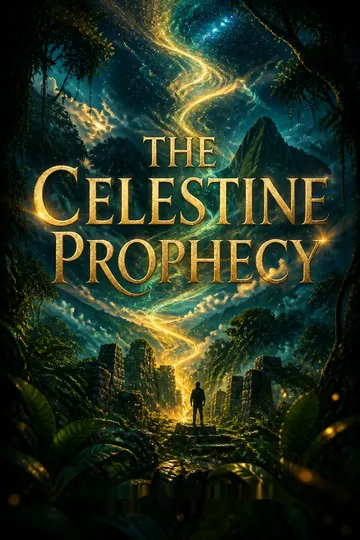
What is the significance of Machu Picchu in The Celestine Prophecy?
- Symbol of Spiritual Awakening: Represents a place of great energy and spiritual significance, serving as a backdrop for enlightenment.
- Connection to Ancient Wisdom: Symbolizes the ancient wisdom of the Incas and their understanding of energy and spirituality.
- Destination for Transformation: The journey to Machu Picchu is portrayed as transformative, where characters gain deeper spiritual insights.
What does the Ninth Insight reveal about the future of humanity in The Celestine Prophecy?
- Cultural Evolution: Predicts a significant cultural evolution where humans live in harmony with nature and each other.
- Energy Awareness: As humanity evolves, individuals will become more aware of their energy dynamics and interconnectedness.
- Transformation of Existence: Suggests that raising vibrations will lead to a new way of living, redefining human existence and relationships.
Celestine Prophecy Series


About the Author

Download PDF
Download EPUB
.epub digital book format is ideal for reading ebooks on phones, tablets, and e-readers.








