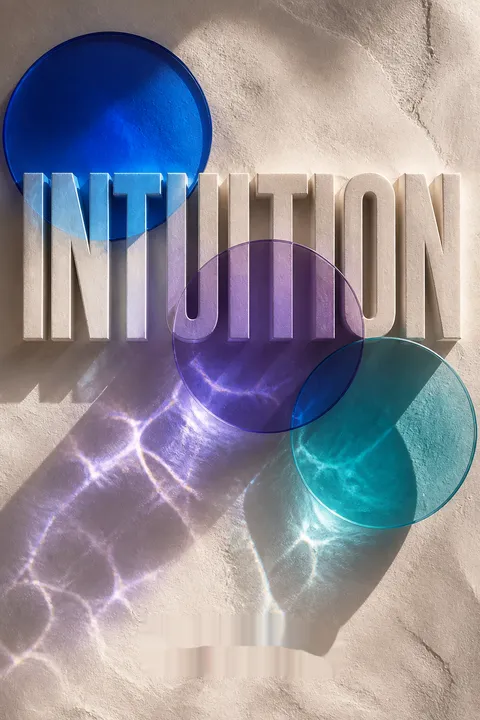


Key Takeaways
Use reason for what it can prove, and intuition for what it cannot settle.
Two kinds of knowing. Osho distinguishes reasoning, which connects evidence through steps, from intuition, which he describes as an immediate insight without a consciously traceable chain. He also separates what is understood from what may someday be explained, and what he believes remains beyond explanation. Intuition, in this account, is a response to that last domain, not a faster calculation. The mind may notice that an insight arrived, he argues, without being able to explain its source.
A useful boundary. This is a spiritual and philosophical claim, not an established scientific division of reality. The practical lesson is more modest: reason is powerful within its limits, while some judgments and meanings are difficult to reduce to explicit steps. Openness to intuition need not mean rejecting evidence.
The most productive version of this argument is epistemic humility, not a claim that intuition has privileged access to invisible truths. People can recognize a pattern before they can explain how they recognized it, but that feeling can also be mistaken. The distinction invites a useful question: is an intuition offering a personal interpretation, or making a factual claim that can be checked? Keeping those categories separate preserves the value of sudden insight without turning confidence into proof.
Keep intellect as a tool, not the ruler of body, heart, and life.
Three interacting faculties. Osho maps instinct to the body's automatic capacities, such as breathing and digestion; intellect to deliberate thought and practical problem-solving; and intuition to a deeper, meaning-making awareness associated with the heart. He places these beneath a witnessing presence, the part that can notice them without being identical to any one of them. His image is a hierarchy of functions, not a demand to abandon thinking.
Restore their proper jobs. Instinct sustains the organism, intellect helps navigate ordinary tasks, and intuition points toward values, creativity, and connection. Osho argues that trouble begins when the thinking mind tries to dominate everything, including bodily needs and emotional life. His aim is coordination: let reason serve life rather than dictate what counts as life.
This model is memorable because it asks not simply whether a faculty is good, but whether it is doing the right job. Planning is useful for a budget and less useful as the sole judge of love, grief, or beauty. The framework also resists a common false choice between rationality and feeling. Its limitation is that the faculties do not always speak with one clear voice, so harmony may require judgment and negotiation rather than a simple inner ranking.
Trade inherited knowledge for direct attention to what is actually here.
Information is not experience. Osho distinguishes knowledge, which can be collected from other people, from knowing, which comes through direct encounter. A person can learn a flower's name and facts about it while barely noticing the flower itself. Labels can help organize experience, but they can also replace attention with recognition and memory.
Practice not-knowing. Meditation, in this account, means becoming alert without immediately filling the moment with judgments, comparisons, and stored explanations. Osho connects this openness with wonder: when the mind is not busy defining an experience, it may feel less separate from it. He does not ask readers to adopt his ideas as new doctrine. The point is to see for oneself whether familiar knowledge is clarifying an experience or standing between the observer and it.
The distinction is valuable as a reminder that a description is not the thing described. Naming a feeling, for instance, can help someone examine it, but a label can also prematurely close inquiry. Still, knowledge is not inherently a barrier: expertise can sharpen attention and reveal details that a beginner misses. The practical balance is to use concepts as lenses that can be set down, rather than treating either unfiltered perception or accumulated information as infallible.
Peel away the six filters that make perception feel more certain than it is.
An onion of interpretation. Osho describes personality as layers that shape what reaches awareness. He identifies trained senses, social and religious conditioning, borrowed rationalizations, shallow sentiment, repressed instinct, and dulled intuition. He borrows the term buffers for mental filters that protect familiar assumptions from unsettling experience. For example, someone may hear another person's words while ignoring facial expressions that contradict them, or mistake a familiar belief for firsthand knowledge.
Inspect the filter, not just the conclusion. The book's proposed response is to become more attentive to sensation, loosen fixed beliefs, distinguish real feeling from display, and notice where fear or repression distorts perception. Its imagery encourages curiosity about how a conclusion formed. It does not establish that perception can become perfectly unbiased; even careful observers interpret through bodies, histories, and context.
The onion image usefully turns self-examination into a question about mediation: what shaped this impression before it felt like mine? That question can improve listening and reduce the reflex to treat conviction as direct access to reality. Yet filters also make perception possible. Attention must select, and social learning supplies concepts that help people communicate. The goal is therefore not to strip away every influence, but to recognize which influences are useful, which are distorting, and what evidence could change the view.
Do not mistake a vivid inner picture for a view of reality.
Imagination can feel convincing. Osho separates intuition, which he presents as awareness of what is present, from imagination, which creates images and experiences. He argues that fasting, isolation, and intense expectation can make visions feel real, and uses this to challenge the assumption that a powerful spiritual experience proves an external presence.
A cautionary anecdote. He recounts a university professor who became intoxicated after consuming drug-laced festival refreshments, then developed a persistent fear that police were coming for him. The fear eased after an inspector staged an arrest and pretended to destroy a file. In the story, the man's experience felt compelling but did not accurately describe what was happening. The distinction is practical: vividness and certainty are features of an experience, not independent evidence that its interpretation is true.
This is one of the book's strongest calls for discernment, even though its broad accusations against religious visionaries outrun what anecdotes can establish. A person's experience can be psychologically real without proving the external explanation attached to it. That distinction also works beyond spirituality: dreams, fears, and hunches may reveal concerns worth examining while remaining unreliable as reports about the world. A respectful test is to ask what evidence would support the interpretation, and what evidence would count against it.
After effort reaches a wall, give the mind room to incubate.
Insight after exertion. Osho argues that sustained reasoning can prepare a problem, while relaxation can make room for a solution that deliberate thought has not found. His central illustration is Archimedes, who, after struggling to determine whether a crown was pure gold, noticed water displaced by his body in a bath and connected displacement with measurement. The insight came in a relaxed moment, but it depended on a real problem he had already been working to solve.
Alternate effort with release. The book treats meditation and relaxation as ways to stop conscious thought from crowding out less deliberate mental activity. This does not make rest a guaranteed source of answers. It suggests a rhythm: define the problem, work on it seriously, then step away rather than endlessly repeating the same unsuccessful approach.
The image of insight arriving in the bath captures an important distinction between generating a solution and noticing one. A pause can interrupt fixation and allow a problem to be approached from a different angle. The story should not be read as evidence that every breakthrough comes from a mystical source; its own sequence includes preparation, attention, and an apt observation. The practical value lies in treating rest as part of serious work, not as a replacement for it.
When reasoning stalls, pause and listen before forcing the next move.
An inner guide. Osho uses this term for intuitive direction that seems to arise from within before deliberate reasoning can explain it. He recommends becoming quiet enough to notice such responses rather than letting anxious repetition masquerade as thought. In his account, the response may feel bodily and immediate, while a reasoned decision often arrives through conscious analysis.
The burglar's lesson. A Zen story tells of a novice burglar whose father locks him inside a chest during a robbery and abandons him. With the household searching, the son imitates a cat, escapes when the chest is opened, then throws a stone into a well to mislead his pursuers. The tale presents alert improvisation, not a reusable procedure. Osho's receptive or feminine language describes a mode of responsiveness, not a reliable rule about gender or brain type.
The story shows why a prepared rule can fail when a situation changes: the son's escape depends on noticing what is possible in that moment. That kind of flexibility is valuable in emergencies and creative work. But an inner nudge is not automatically wise, especially when fear, urgency, or desire is intense. The book's invitation to listen inwardly is strongest when paired with proportionate caution: pause where possible, examine the stakes, and check the impulse against available facts.
Judge success by inner well-being, not public victory.
Two measures of success. Osho contrasts social achievement, which depends on status and recognition, with the inner contentment he calls happiness or bliss. Following intuition, he says, does not guarantee wealth, influence, or approval. His example is Jesus, whose public execution could look like defeat by conventional measures, while Osho portrays his inner state as undiminished. Likewise, he presents Buddha's departure from royal life as a worldly loss but a deeper gain.
Choose the measure deliberately. The argument asks readers to notice what they are sacrificing for applause. If recognition is the only measure, a person can meet external goals while feeling inwardly depleted. Osho's alternative is to treat well-being as a more meaningful test than reputation, without claiming that a particular choice will produce conventional success.
This reframing exposes how easily public approval can become a proxy for a life that feels worthwhile. It also separates outcomes from the quality of the process: a decision may be meaningful even when it is not rewarded. Happiness, however, cannot be the only ethical measure. Short-term pleasure can conflict with responsibility to others, and hardship can accompany valuable commitments. The idea works best when inner well-being is considered alongside honesty, care, and the consequences of one's choices.
Follow a direction lived now, rather than a destination borrowed from the past.
A path is not a target. In the book's closing distinction, a destination is a fixed outcome chosen in advance, often from familiar ideas about achievement. Direction is a sense of movement that emerges through fully engaging with the present. Osho argues that a rigid destination can turn old assumptions into a script for the future, while attentive action leaves room for what has not yet been imagined.
Rinzai's final lesson. A Zen master, asked to summarize his teaching as he lay dying, responds with a sudden shout and then indicates that the present moment itself contains the teaching. The story compresses the book's emphasis on immediacy: the next step is not always visible before the current one is lived. This is not an argument against planning, but against mistaking a plan for life itself.
The distinction helps separate useful goals from identities built around a single forecast. A destination can coordinate effort, but it can also make a person discount new information simply because it disrupts the plan. Direction keeps attention on whether present actions remain alive and worthwhile. The tension matters: institutions and shared projects often require commitments beyond the present moment. A flexible plan can preserve direction without pretending that uncertainty has disappeared.
Make political power serve truth and practical human needs.
Power is more than government. Osho calls any effort to establish superiority political, whether it appears in public office, workplaces, or relationships. He contrasts force, which makes strength decisive, with argument and inquiry, which seek what is right. At the highest level in his model, insight is not a contest to defeat another person but a way to see a shared problem clearly.
The river story. Two armies prepare to fight over a river that divides their kingdoms. Buddha points out that both sides need water and that the river keeps flowing, so each can use it without claiming the whole. Osho uses this to favor practical cooperation over possession. He imagines intuitive leaders guiding intellectual intermediaries who can translate insight into political decisions, a proposal that raises its own question about accountability.
The river episode makes the book's political ideal concrete: replace a status contest with an examination of what people actually need. It also shows how insight can interrupt assumptions that keep conflict going. Osho's proposed hierarchy of wise guides, scholars, and rulers is more problematic. Claims to superior insight can themselves become a source of power, so public decisions need transparent reasons, contestable evidence, and participation from those affected. Wisdom is useful in politics only when it remains answerable to others.
Analysis
Intuition: Knowing Beyond Logic is a spiritual argument organized around a practical provocation: the mind is a useful instrument, but not the whole of human judgment. Osho moves from a distinction between reasoning and sudden insight to a broader account of bodily instinct, emotional and aesthetic sensitivity, meditative awareness, and political life. Anecdotes do much of the explanatory work. A bath, a locked chest, a contested river, and an ordinary flower become small tests of whether readers can notice when habitual thought is narrowing their options.
The book is most persuasive when read as a critique of overconfidence and repression. It asks readers to distinguish direct experience from secondhand belief, rest from rumination, and flexible responsiveness from rigid plans. Its recurring invitation to question how an impression formed remains useful even for readers who reject its spiritual metaphysics. The book's language of an unknowable realm can give mystery a place without requiring every valuable experience to be fully explained.
Its central weakness is that it uses intuition to mean several different things: unconscious pattern recognition, aesthetic receptivity, moral insight, and access to a universal consciousness. These meanings are not interchangeable. A solution that arrives without conscious steps may reflect learning outside awareness; it does not by itself show that the mind has contacted a supernatural source. The book's anecdotes can illustrate possibility, but cannot establish paranormal abilities or sweeping claims about science, religion, or human nature.
The same caution applies to its account of gender and brain hemispheres. Its contrast between receptive and analytical modes can work as metaphor, but literal claims that women or one brain hemisphere own intuition oversimplify complex capacities. The strongest contemporary reading therefore keeps Osho's challenge while revising its certainty: reason should not monopolize judgment, and intuition should not be exempt from scrutiny. Together, reflective analysis and attentive awareness offer a more dependable guide than either alone.
Review Summary
Intuition: Knowing Beyond Logic by Osho receives mixed reviews. Many readers praise its profound insights on trusting one's inner guide and transcending rational thinking. They find it life-changing and appreciate Osho's unique perspective on intuition. However, some criticize his controversial views, repetitive content, and perceived lack of credibility. The book challenges conventional thinking, emphasizing meditation and self-awareness. While some readers are deeply inspired, others find it confusing or disagree with Osho's radical ideas about spirituality and human nature.
People Also Read







Glossary
Intuition
Immediate, non-stepwise awarenessOsho uses intuition for a form of awareness that reaches an insight without a consciously traceable sequence of reasoning. He associates it with the heart, creativity, and a deeper level of consciousness, and distinguishes it from imagination, which creates mental images. The book's account is spiritual philosophy, not a demonstrated scientific faculty.
Instinct
The body's inborn guidanceInstinct refers to the body's automatic, inherited capacities, including processes such as breathing and digestion. Osho treats it as a natural source of bodily guidance that should not be needlessly suppressed by social rules or deliberate thought. In his model, instinct is distinct from intellectual reasoning and from intuition.
Intellect
Deliberate, stepwise reasoningIntellect is Osho's term for conscious thought that uses language, logic, memory, and analysis. He considers it valuable for practical tasks, communication, and science, but limited when treated as the sole source of meaning or judgment. His central prescription is not to discard intellect, but to keep it in a supporting role.
Knowing
Directly experienced understandingKnowing means understanding gained through one's own direct encounter, rather than through information received from other people. Osho contrasts it with knowledge, which can be accumulated without firsthand experience. He connects knowing with attentive, meditative awareness, while allowing that concepts and facts remain useful for practical purposes.
Buffers
Filters protecting familiar beliefsBorrowed from Gurdjieff, buffers are mental filters that keep a person from confronting experiences that might unsettle familiar beliefs or self-protective stories. Osho uses the term for layers of interpretation that shape perception before it becomes conscious. His metaphor encourages examining how assumptions influence what seems obvious.
Inner guide
Intuitive direction from withinThe inner guide is Osho's name for an intuitive response that appears to arise from a deeper source than deliberate thought. He encourages quieting mental chatter to notice it and describes it as a potential source of direction. The term names a spiritual practice, not a guarantee that every inner impulse is accurate.
Shunyata
Meditative emptinessShunyata means emptiness in Osho's discussion of meditation. It is not sleep or blank unconsciousness, but an absence of the usual stream of mental contents and, in its fullest form, of the ordinary division between observer and observed. He presents it as a condition for direct contact with truth.
Samadhi
Transcendent awarenessSamadhi is the culminating meditative state in Osho's account. He describes it as arising when ordinary mental contents and the usual subject-object division fall away, leaving a heightened form of awareness rather than unconsciousness. The book treats samadhi as spiritual realization, not as a state established by scientific measurement.
FAQ
What's "Intuition: Knowing Beyond Logic" about?
- Exploration of Intuition: The book by Osho delves into the concept of intuition, which is described as a form of knowing that transcends logic and intellect.
- Beyond Rationality: It emphasizes that intuition is an irrational and unscientific phenomenon that cannot be explained by the intellect.
- Intuition vs. Intellect: Osho contrasts intuition with intellect, suggesting that intuition is a higher form of understanding that can penetrate the intellect but not vice versa.
- Mystical Approach: The book takes a mystical approach, suggesting that intuition is connected to the unknowable aspects of existence.
Why should I read "Intuition: Knowing Beyond Logic"?
- Understanding Intuition: It provides insights into how intuition works and its significance in transcending logical reasoning.
- Personal Growth: The book encourages readers to explore their inner guide and develop a deeper connection with their intuitive self.
- Philosophical Insights: Osho offers a unique perspective on the limitations of intellect and the potential of intuition, which can be enlightening for those interested in philosophy and spirituality.
- Practical Advice: It includes practical strategies for tapping into intuition, such as meditation and relaxation techniques.
What are the key takeaways of "Intuition: Knowing Beyond Logic"?
- Intuition as a Higher Reality: Intuition is a higher form of reality that can penetrate the intellect but cannot be explained by it.
- Intellect vs. Intuition: The intellect is limited to the known and the unknown, while intuition deals with the unknowable.
- Inner Guide: Everyone has an inner guide that can be accessed through intuition, leading to personal growth and understanding.
- Living Intuitively: The book encourages living in the moment and trusting one's intuition for a more fulfilling life.
How does Osho define intuition in "Intuition: Knowing Beyond Logic"?
- Beyond Intellect: Intuition is defined as a phenomenon that is beyond the intellect and cannot be reduced to logical explanations.
- Sudden Leap: It is described as a sudden leap from one point to another without any logical steps or causality.
- Higher Penetration: Intuition is a higher reality that can penetrate the intellect, but the intellect cannot penetrate intuition.
- Unknowable Realm: It operates in the realm of the unknowable, dealing with aspects of existence that cannot be fully understood.
What strategies does Osho suggest for developing intuition in "Intuition: Knowing Beyond Logic"?
- Peel the Onion: This involves removing layers of conditioning and corruption to reach one's true being.
- Function from the Feminine: Embrace the intuitive, receptive, and non-logical aspects of the mind.
- Move from Thinking to Feeling: Shift focus from intellectual reasoning to emotional and intuitive understanding.
- Relax and Meditate: Use relaxation and meditation to quiet the mind and allow intuition to surface.
What is the role of intellect according to "Intuition: Knowing Beyond Logic"?
- Limited Use: Intellect is useful for practical, mundane tasks but is limited in understanding higher realities.
- Servant, Not Master: It should serve as a tool for consciousness, not dominate it.
- Barrier to Intuition: Over-reliance on intellect can block access to intuition and deeper understanding.
- Expression, Not Explanation: Intellect can express insights gained through intuition but cannot explain them.
How does Osho differentiate between knowledge and knowing in "Intuition: Knowing Beyond Logic"?
- Knowledge as Theory: Knowledge is seen as theoretical and often second-hand, based on others' experiences.
- Knowing as Experience: Knowing is direct, personal experience that comes from within.
- Division by Knowledge: Knowledge creates distance and division, while knowing bridges and connects.
- Curse of Knowledge: Osho suggests that knowledge can be a curse, creating barriers to true understanding.
What are the barriers to intuition mentioned in "Intuition: Knowing Beyond Logic"?
- Corrupted Senses: Physical senses are corrupted by societal conditioning, limiting perception.
- Conditioning and Beliefs: Social, political, and religious conditioning create barriers to intuitive understanding.
- Pseudoreasoning: Rationalizations and borrowed reasoning hinder access to true intuition.
- Repression and Corruption: Repressed instincts and corrupted intuition block the natural flow of intuitive insights.
What is the significance of the "inner guide" in "Intuition: Knowing Beyond Logic"?
- Innate Guide: Everyone has an inner guide that can lead them to truth and understanding.
- Beyond Intellect: The inner guide operates beyond the intellect and can be accessed through intuition.
- Trust and Surrender: Trusting the inner guide requires surrendering the intellect and embracing intuition.
- Path to Truth: The inner guide is seen as the true path to personal growth and enlightenment.
How does Osho view the relationship between intuition and success in "Intuition: Knowing Beyond Logic"?
- Happiness Over Success: Intuition leads to happiness and fulfillment, regardless of worldly success.
- Success Redefined: Success is redefined as inner bliss and contentment, not external achievements.
- Intuitive Living: Living intuitively may not always lead to conventional success but ensures personal happiness.
- Ego vs. Bliss: The book contrasts ego-driven success with the bliss of living through intuition.
What are the best quotes from "Intuition: Knowing Beyond Logic" and what do they mean?
- "Intuition is a jump—it is not something that comes to you in steps." This highlights the sudden, non-linear nature of intuition.
- "Reason is an effort to know the unknown, and intuition is the happening of the unknowable." It contrasts the limitations of reason with the boundless potential of intuition.
- "To know means to be silent, utterly silent, so you can hear the still, small voice within." This emphasizes the importance of silence and inner listening for accessing intuition.
- "The unknowable is the beauty, the meaning, the aspiration, the goal." It underscores the value of embracing mystery and the unknowable in life.
How does "Intuition: Knowing Beyond Logic" relate to meditation and spirituality?
- Meditation as a Tool: Meditation is presented as a key tool for accessing intuition and transcending the intellect.
- Spiritual Growth: The book links intuition to spiritual growth and the realization of one's true self.
- Beyond Mind: It encourages moving beyond the mind to experience deeper spiritual truths.
- Integration of East and West: Osho integrates Eastern spiritual wisdom with Western scientific understanding to explore intuition.
About the Author
Other books by Osho





Download PDF
Download EPUB
.epub digital book format is ideal for reading ebooks on phones, tablets, and e-readers.








