


Plot Summary
Prologue
In a dream, Gibs circles a farmhouse whose brass doorknob turns without opening. Behind it lies something he must reach, but his limbs move as if trapped in water. In the yard, he digs up a body with a blank, featureless face.
He wakes sweating, his hand cut by the glass he smashed in his sleep. The nightmare leaves him unable to rest, and the image of the buried stranger follows him into the morning.
The dream makes a private wound feel like a physical place: a house he cannot enter, a body he cannot leave buried. Its blank face withholds explanation while still making the dead feel intimate, a fitting shape for a story in which people carry losses they cannot yet name. Gibs wakes with an actual cut, so the boundary between memory and bodily consequence is already porous. The dream also previews the book’s central pressure: survival demands that people uncover what they would rather keep hidden, but some discoveries cannot be made without pain.
The Bowl Sets Its Limit
Gibs’s sleeplessness is already fraying his judgment when the Bowl’s leaders meet Otto Warren, the commander of a traveling military group, to discuss how many people their greenhouses might feed. The estimates are uncertain, so Jake and the other residents limit the transfer to twenty, refusing to promise more than their harvest can sustain.
Patricia asks to stay with five orphans in her care, and Amanda makes room for them. Andrew also chooses to remain, while Warren prepares to lead the others onward. The decision begins with an act of welcome, but it makes the community’s central weakness plain: its shelter is growing faster than its food supply.
The limit is not a failure of generosity but an attempt to keep generosity from becoming a promise the Bowl cannot honor. Jake’s insistence on uncertain yields exposes a governing principle: care must be measured against material capacity. Amanda’s intervention for Patricia’s orphans complicates that arithmetic, because the community refuses to reduce children to calories. The scene also establishes a contrast with the larger groups soon to arrive. The Bowl negotiates its growth through consent and caution, yet its inability to produce reliable surplus leaves it vulnerable to people for whom a careful estimate may not be enough.
Warren Leaves a Warning
Warren’s departure draws the Bowl and the remaining soldiers together for a long, reluctant farewell. He leaves Wang a powerful sniper rifle and promises to find safer ground, while Lum stays behind to remain with Samantha. After the convoy descends, Jake warns Gibs that the group’s new arrivals should not be trusted automatically.
He then reveals that Edgar, a member of the commune, had privately offered Warren help in taking control of the Bowl. Gibs confronts Edgar in his camper, threatens him, and makes clear that endangering his people will not be forgiven. The visitors are gone, but the warning leaves the community looking inward as well as outward.
Warren’s gift turns departure into inheritance: Wang receives not only a weapon but recognition as family. Yet the warmth of the farewell sits beside Jake’s suspicion, showing how trust in this world is never simply emotional. It is also a security decision with consequences for everyone inside the walls. Gibs’s confrontation with Edgar protects the community in the immediate sense, but his threat offers no route to repair the relationship. The scene foreshadows a recurring problem: people who believe they are acting for the group may undermine it when they decide the group’s leaders are too cautious or too weak.
A Hanging Makes Law
In Colorado Springs, Clay Barton faces Willy Dingle, who admits stabbing Albert Rooney after a quarrel over a faulty music player. With no reliable witnesses and a community divided between the former gang members and everyone else, Clay decides that letting the killing pass would invite more violence.
He sentences Willy to death, then has to finish the execution himself when the first attempt at hanging fails to kill him. The scene establishes Clay’s governing instinct: order must be visible, even when the machinery of justice is crude and brutal. His decision calms one immediate dispute, but it also shows the cost of leadership built around making punishment impossible to ignore.
Clay is not simply imposing law; he is trying to manufacture its credibility in a society that has no institutions left to inherit. The failed hanging makes that project grotesquely concrete. A sentence meant to prevent future violence becomes another act of violence that Clay must personally complete. His public performance is intended to reassure the larger community, yet the spectacle also teaches his followers that authority depends on a leader willing to cross lines others hesitate to approach. The scene’s moral discomfort is structural: in a fragile community, the need for visible order can turn a practical decision into a permanent test of the person who makes it.
The Ledger Turns False
Riley Hall discovers that Stacy Morris, a clerk who tallies the community’s goods, secretly visits a woman at Isabelle’s tents. Riley and Danielle use the affair to blackmail Stacy into altering the food accounts, making the shortages appear more severe and pressing Clay to move his people toward Jackson.
Elton and Danielle grow closer while she continues working for Ronny’s faction, leaving her divided between affection and complicity. Soon after, a fire destroys several homes on the settlement’s outskirts, including Stacy and Moira’s. The deaths are treated as an accident, but the fire removes the clerk who could expose the false figures. Clay’s people leave Colorado with a crisis already sharpened by deception.
The altered ledger turns scarcity into a political instrument. Riley and Danielle do not invent the community’s food problem, but they distort its measurements so that Clay’s choices are made under pressure they have deliberately intensified. Stacy’s private life becomes leverage because the group’s improvised economy depends on trust in bookkeeping. The fire deepens the moral damage: a scheme that began with falsified numbers ends with people who might reveal it dead. Danielle’s relationship with Elton makes the conspiracy psychologically legible without excusing it. She is not merely a spy; she is trying to keep intimacy while serving a cause that steadily makes intimacy unsafe.
Two Families Face Truth
A researcher’s questions make Amanda reconsider Jake’s reactions to earlier violence. She confronts him and discovers that he kept Jeff’s death secret, leaving an identification bracelet as proof. Jake explains that he judged Jeff too dangerous to release and concealed the killing to spare the community a choice he believed would damage them.
Amanda is hurt by the lie but accepts that she might have chosen the same outcome, and asks for no more secrets between them. Elsewhere, Alish tells Greg she is pregnant. He approaches his estranged brother Alan first, hoping for reconciliation, but Alan rejects the news. Greg returns to Alish with no easy solution, only the decision to stand beside her and their child.
These two private revelations place love under different kinds of strain. Jake’s secrecy arises from a protective logic that treats moral knowledge as a burden he can carry on behalf of others. Amanda can understand the choice and still feel its cost, so reconciliation requires a promise about future honesty rather than a verdict on the past. Greg and Alish face the opposite problem: they must make a private relationship publicly legible, even though its history is complicated and Alan’s rejection makes family recognition uncertain. Both stories resist clean absolution. Care can motivate concealment, but it cannot erase the need for the people affected to know what happened.
Jackson Becomes the Destination
As scavenged food dwindles in Colorado Springs, Clay’s leaders decide they must move, despite the homes and systems they have built. The journey toward Jackson, Wyoming takes months. Vehicles break down, people desert, and every town yields less than the last. When the enormous convoy finally reaches Jackson, Clay divides his people between the upper and lower parts of the city and posts guards at the main approaches.
He has relied on Ronny’s claim that Jackson offers farmland and a chance to settle, but the streets are nearly empty and the promised food source remains unlocated. The migration has traded a known shortage for a new uncertainty, with hundreds now dependent on Clay finding a way forward.
The road exposes the difference between movement and progress. Clay can organize a convoy, repair vehicles, assign sectors, and keep a large group together, but none of those skills can make food appear. His authority rests on promising a destination, and Jackson tests whether that promise was knowledge or merely hope. The scale of the migration matters: hundreds of people create a community too large to redirect easily, while every departure carries supplies and morale away. By reaching the city, Clay has not solved the crisis. He has concentrated it, giving the next encounter the pressure of a population with nowhere simple to go.
Jackson Gets Claimed
The Bowl’s scouts watch Clay’s armed convoy divide Jackson into guarded sectors, then report hundreds of newcomers to Jake. Gibs leads a small group to meet them. Clay declares the city his group’s territory but proposes trade, while Gibs withholds the location and food stores of the mountain community.
The Bowl’s leaders debate whether to wait, negotiate, or hide; Edgar argues that shared knowledge could help both sides. Convinced the others are too wary, he slips down to Jackson alone and offers to broker a deal with Riley. Riley welcomes the proposal, but Ronny’s faction turns Edgar into a prisoner and tortures him for information. Edgar’s attempt at diplomacy instead exposes the Bowl’s location.
The first meeting is a contest over information as much as territory. Clay openly claims Jackson, yet he also offers trade; Gibs recognizes that either gesture could be strategic and refuses to reveal what the Bowl can provide. Edgar’s choice exposes a different danger: a person may see caution as obstruction and try to repair it through private action. His willingness to cross the boundary is not simply treachery; he wants recognition and usefulness after being socially isolated. But negotiation without shared consent becomes vulnerability. The scene shows how mistrust can create the very secrecy that makes a community easier to penetrate.
Pap Takes In Cuate
Pap hears children attacking a filthy, nearly mute boy and drives them off, then follows the child into the woods. He waits until the boy accepts food, washes him, cuts away his infested hair, and gives him clean clothes. Since the child cannot remember his name, Pap calls him Cuate, after a childhood friend.
The boy begins to follow him and eventually trusts him enough to stay. Pap’s rough tenderness stands apart from his public role as Clay’s formidable enforcer. Cuate also becomes a quiet reminder that survival is not only about defending a group; it means noticing the vulnerable person who has no group at all.
Pap’s care is expressed through practical acts rather than reassurance: he waits, feeds, cleans, clothes, and gives the boy a name. The sequence matters because Cuate cannot offer the usual exchange of gratitude or explanation. Pap has to act without knowing the child’s history or even his age. This is a counterweight to Clay’s public use of force, though not a simple redemption of Pap’s violence. He is capable of tenderness and brutality, and the novel refuses to make those capacities cancel each other out. Cuate’s presence tests whether family can be made through sustained care rather than blood or shared history.
Stories Before the Ambush
Despite Samantha’s fears about Clay’s armed newcomers, Lum leads George, Lizzy, and Rose on a short wilderness outing. George uses a knee brace, while Lum teaches the girls snares and fire-making. Around the campfire, George tells his family’s lonely Wendigo legend, and Lum follows with a comic mountain tale about Jack and a witch.
The stories give the children different ways to understand fear and resilience. The next day, Lum lets a deer escape rather than kill it when the group has enough food. The trip feels ordinary and safe, which is precisely why the sudden arrival of armed strangers will shatter it.
The outing gives the story a pocket of ordinary life before violence breaches it. The adults teach practical skills, but the stories teach emotional habits: George’s Wendigo tale makes loneliness frightening, while Lum’s Jack story lets cunning and kindness defeat a threat. Lum’s choice not to shoot the deer also shows restraint as a survival skill, not a luxury. These details prepare the reader to understand what the attack destroys. The children are not simply exposed to danger; they have been learning how to live in a world that demands judgment. The ambush will turn that education into an unbearable test.
The Camp Is Taken
Two armed men, Riley and David, enter the campsite after dark. Riley shoots Lum, then shoots George when he tries to protect Lizzy. They strike Lizzy and carry her away, while Rose hides nearby, waits until the men have gone, and uses Lum’s pistol to make her escape. She reaches the Bowl injured and tells the others what happened.
George dies beside her after sending her back to warn the community. His final instructions turn Rose from a frightened child into the only witness who can identify the attackers. The Bowl’s safety has been breached, and the search for Elizabeth becomes an immediate rescue mission.
The attack collapses the distance between a lesson and its cost. George’s stories about fear and survival cannot shield the children; his last practical instruction, however, gives Rose a task she can perform. That task does not make her grief smaller. It makes her grief functional, which is both a form of courage and an unfair burden placed on a young person. The killers’ choice to take Lizzy rather than simply flee reveals the assault as deliberate leverage. The Bowl’s response will therefore involve more than retaliation. It must recover a child while deciding how much violence it can commit without becoming indistinguishable from its attackers.
The Theater Goes Dark
Jake, Amanda, and Rebecca raid the Movieworks cinema, where Riley’s group has been watching guards and plotting against Clay. They kill the men who resist and Jake captures Riley, who reveals that Ronny is holding Lizzy at a church. A larger team reaches the church and finds sixteen dead newcomers outside, then discovers Ronny chained to a bed and Edgar mutilated in a workroom.
Edgar admits he went looking for trade and inadvertently exposed the Bowl. Amanda shoots him, ending the suffering she believes cannot be repaired. Jake learns that Lizzy has already been moved, and the team must return to the Bowl before Clay’s group can exploit the confusion.
The rescue mission reveals that violence is not divided neatly between one hostile group and one innocent one. Riley’s faction is conspiring against Clay, yet its internal struggle has produced torture and executions. Edgar’s fate is more tragic because his original aim was cooperation; his desire to matter made him easy to manipulate. Amanda’s decision to kill him is framed as mercy, but it is also an act of control over a situation already stripped of humane options. Jake’s methods leave a similar moral residue. The raid saves information, not the child, and forces the Bowl to act without the reassuring clarity of a simple enemy.
A White Flag Misfires
Clay brings Elizabeth back up the mountain under a white flag, intending to return her and negotiate. Greg mistakes the approach for an ambush and fires from the Bowl before Clay can explain. The exchange kills three people from each side, wounds Alish, and draws O.B. into a machine-gun fight from the ridge.
Otis finally walks into the open and persuades Clay to stop the shooting and return Elizabeth. O.B. refuses Clay’s account of the crisis, abandons his command, and disappears into the mountains. The would-be reconciliation becomes a battlefield, and both groups enter the next negotiation carrying fresh dead and a deeper distrust.
The white flag fails not because its meaning is obscure, but because the two groups have learned to read gestures through prior violence. Greg’s fear is understandable, yet his first shot makes Clay’s peace offering look like another attack. The deaths that follow are therefore caused by more than individual error; they emerge from a communication system in which no signal can be trusted. Otis’s intervention briefly restores a human exchange, while O.B.’s departure shows that even Clay’s own allies no longer accept his judgment. The moment establishes how quickly survival logic can convert a plausible misunderstanding into irreversible loss.
One Week for the Harvest
After the firefight, Clay’s people occupy the Bowl, search homes, and collect weapons. He gives the residents a week to devise a way to share their harvest with the hundreds starving in Jackson; otherwise, he will take it. Amanda asks permission to hold Christian meetings, using the gathering as a plausible way to keep the residents in contact.
The arrangement gives her a space to organize without openly challenging Clay. Barbara, who manages the crops, knows the arithmetic offers no fair division: the harvest can sustain the Bowl through winter and preserve seed for spring, but it cannot feed Clay’s entire population. Negotiation becomes a countdown with no mathematically safe answer.
Clay’s ultimatum is coercive, but it is rooted in a real scarcity rather than a fabricated excuse. That makes the conflict harder than a simple struggle against a tyrant: the Bowl’s food could relieve immediate hunger while destroying its future capacity to grow. Amanda’s religious pretext turns a private belief into public infrastructure, a meeting place where people can coordinate under surveillance. The act is tactical, but it does not require the community to become insincere about the words it uses. Meanwhile, Barbara’s calculations expose the moral trap in Clay’s proposal. A just distribution cannot be made from a supply that is insufficient for everyone.
Otis Pays for the Cache
During a search of the Bowl’s homes, Clay’s men discover a hidden duffel of weapons in Otis’s bus. Clay confronts Otis and demands to know where Jake is. Otis refuses to betray him, even when Clay points a pistol at his head. Ben rushes to protect his father, and Pap shoots Otis, claiming he acted to spare Clay from carrying out the threat himself.
Clay is horrified, but the death cannot be undone. The discovery has exposed the resistance’s weapons and taken away one of its steadiest fathers. For Ben, the occupation has become personal; for Clay, Pap’s loyalty has crossed into an act he did not authorize.
Otis’s refusal is an assertion of moral agency under coercion: he will not purchase his own safety by delivering Jake. Pap’s shot, intended as a service to Clay, instead reveals the danger of loyalty when it outruns judgment. Clay’s horror distinguishes his intended rule from the violence his command enables, but that distinction offers little comfort to Ben or the community. The hidden duffel has transformed planning into exposure, and the killing sharpens the resistance’s motive from defense of a harvest to defense of one another. The scene asks whether authority can remain responsible for violence it did not order but made possible.
The Counterplot Takes Shape
At their clandestine meetings, the residents argue over how to hide the children and use the weapons without giving Clay an early warning. Jake returns to help, while Wang reaches the ridge with a sniper rifle and Fred carries him up the steep approach. Rebecca lures Paul away from his post, then Tom takes his uniform and weapon; Brian stages a drunken fight with Carlo to draw more guards toward the tents.
Alan prepares the fougasse at the valley entrance to disrupt reinforcements. Each part depends on timing rather than strength. When Brian takes Carlo’s beating without abandoning the act, the scheme gains enough confusion for Wang and the others to move into position.
The resistance succeeds initially through role assignment, not heroic force. Rebecca uses a performance that exposes her to danger, Brian accepts a beating, Fred carries Wang, and Alan trusts a fragile device to work under pressure. Their contributions are asymmetrical, matching their different abilities and vulnerabilities. The plan also depends on a difficult emotional bargain: they must act as though ordinary social behavior continues while preparing to kill people at close range. Brian’s ruse makes that contradiction especially visible. What looks like a senseless assault is, to the resistance, the necessary distraction that allows a disabled sniper and a small group to approach a much larger force.
The Valley Explodes
Wang opens fire from the ridge as Gibs and the others move against the guarded homes. Fred reaches the Bowl and joins the fight, while Alan tries to complete the fougasse circuit at the entrance. His improvised trigger fails at first, but he reconnects the wires as Clay’s reinforcements arrive.
The explosive blast destroys the incoming convoy and scatters its force, giving the defenders a chance to finish the attack before more men can regroup. Pap dies in his struggle with Fred. Clay survives and meets Jake inside the cabin after the battle; the remaining invaders are told to leave. The Bowl keeps its harvest and home, but its victory is paid for in lives and trust.
The final victory comes from a fragile system of interdependent actions: Wang’s elevated sightline, the ground assault, Fred’s return, and Alan’s improvised electrical repair. No single fighter can carry the outcome alone. The fougasse is especially consequential because it turns the valley’s geography into a weapon, but its failure nearly leaves the defenders exposed. Clay’s survival prevents the ending from becoming a simple revenge fantasy. He is defeated in control of the Bowl, not erased as a human being, and the retreat leaves the community with a harder question than victory alone can answer: what did survival require them to become?
Epilogue
The surviving newcomers leave Jackson the next morning, a long, quiet procession carrying their children and dwindling supplies. The Bowl sends one scouting truck after them with seed, potatoes, and directions toward a warmer region. Alan survives the blast at the valley entrance, though he is left deaf and unsteady.
After several days, he chooses to leave with Gibs, who is searching for Pinch, a woman he once knew. They drive out together, while Jake, Amanda, and the others remain in the Bowl and begin the work of living with what they have done.
The ending refuses to equate victory with restoration. The Bowl survives, but the procession leaving Jackson carries the consequences of its defense beyond the valley. Sharing seed and directions acknowledges that the defeated are still people with futures, even after they threatened the community’s survival. Alan’s deafness makes the cost intimate and lasting, while Gibs’s departure extends his unresolved grief into a new journey rather than sealing it with a neat farewell. His search for Pinch is not a cure for what happened. It is a decision to keep moving after the people who made the Bowl feel like home have changed or died.
Analysis
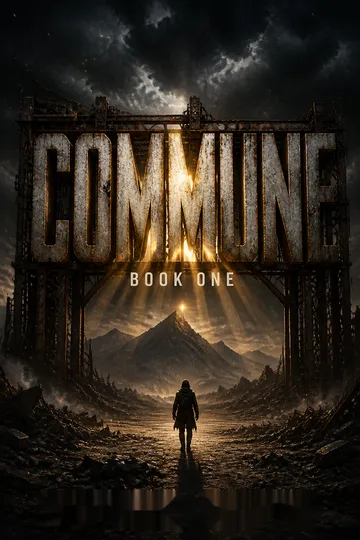
Commune: Book Four treats survival as an argument over who gets to define necessity. Clay’s people need food, the Bowl has it, and neither side can solve the problem through goodwill alone. The novel refuses the comfort of a purely villainous antagonist: Clay’s coercion grows from a real fear that hundreds will starve, while Jake’s refusal to share the harvest protects a small community by exposing a larger one to hunger. This is not moral equivalence. It is a study of how legitimate need can become permission for domination.
The book also links knowledge to power. The false ledger moves Clay’s convoy; Edgar’s attempt to negotiate gives away the Bowl; the greenhouse crop becomes an object of occupation; and the Bible meetings let Amanda coordinate under surveillance. Information is never neutral because people use it to decide who deserves trust, food, or protection. Even stories carry practical force. George’s Wendigo tale teaches that care can become a form of captivity, while the Jack story celebrates clever resistance. Those inherited stories shape how the characters interpret danger before they can name it.
The deepest conflict is inside the people who do what they believe is necessary. Jake conceals a death to spare others a terrible choice. Amanda accepts his explanation but demands an end to secrecy. Gibs, whose instincts have long helped him survive, becomes disturbed by the gap between what feels right and what seems unavoidable. Clay’s attempt to keep authority orderly collapses when Pap acts without permission. The final victory preserves the Bowl, but does not restore its innocence. The novel’s question is not whether violence can be avoided in every crisis; it is whether people can still recognize the cost of violence after they have learned to depend on it.
Characters
Gibs
The wary MarineA former Marine whose blunt humor and practical instincts make him one of the Bowl’s most trusted defenders. Gibs carries old grief and troubled sleep, but he is especially alert to the ways a group can mistake familiarity for safety. He respects Jake’s judgment even when he resists it, and he is quick to protect children and friends. His strength is not certainty so much as an ability to act under pressure; his vulnerability is the suspicion that survival has changed him in ways he cannot accept. He values loyalty, competence, and candor, and he is most unsettled when those values no longer point toward a clear choice.
Jake
The guarded strategistJake leads the Bowl through careful planning, literacy, and a talent for anticipating what desperation may do to people. He keeps his emotions close and can conceal decisions even from those he loves, believing that some knowledge can protect a community from moral injury. Amanda is his partner, and his relationships with Gibs and the other residents are built on earned trust rather than effortless affection. Jake’s apparent calm can make him seem remote, but it is also a discipline that lets him face choices others cannot. He wants people to preserve their capacity for hope, even when he doubts whether he himself can return to it.
Amanda
The fierce motherAmanda is a capable defender, a mother to Elizabeth, and one of the Bowl’s sharpest readers of people. She is practical rather than devout, yet she understands how shared rituals can provide both comfort and coordination. Her partnership with Jake is shaped by intense loyalty and a demand for honesty; she can accept painful choices without accepting secrecy as their permanent cost. Amanda’s anger is not a lack of control so much as a force she works to direct toward protection. She wants her daughter safe, her community intact, and a voice in decisions that affect them. When events strip away those aims, she acts before fear can immobilize her.
Clay
The exhausted commanderClay leads the larger Jackson group with a volatile mixture of wit, political instinct, and exhaustion. He believes order is necessary because he has watched communities fail when no one accepts responsibility for hard choices. His speeches can turn practical problems into performances, partly to command attention and partly to keep his own doubts at bay. Clay wants food, stability, and a settled home for the people who follow him, but his confidence in coercion makes him dangerous even when his fears are legitimate. He can recognize a capable opponent and negotiate, yet his need to control outcomes often outruns his ability to understand what his actions cost.
Elizabeth
The watchful daughterElizabeth, usually called Lizzy, is Amanda’s daughter and one of the youngest members of the Bowl’s original community. She is small, sharp-eyed, and more observant than many adults assume. Her relationship with Amanda is affectionate but not simple; she wants independence even as her mother’s protectiveness grows under constant threat. Elizabeth learns practical skills from the people around her, including how to move through the wilderness and how to use a knife responsibly. Her quietness is often mistaken for passivity, but she notices changes in tone, motive, and danger. She represents the future the adults claim to be protecting, while reminding them that children have their own perceptions and judgments.
Otis Cotting
The steady fatherOtis is a veteran and father to Ben, known for a practical manner and a deep concern for the people in his care. He prefers measured action to bravado and understands how quickly fear can turn a crowd. His affection for Ben shapes his decisions, while his loyalty to the Bowl keeps him involved in dangers he would rather avoid. Otis can act as a bridge between people who distrust one another because he listens before he judges. He is not fearless; his strength lies in continuing to act while fully aware of what he might lose.
Pap
The oversized enforcerPap is Clay’s huge, Texas-raised lieutenant, a man whose rough speech and physical presence make him seem simpler than he is. He is loyal to Clay but not incapable of independent affection or judgment. His care for Cuate reveals patience and tenderness that his role as an enforcer usually conceals. Pap believes in direct action and personal obligation; he is less comfortable with abstract arguments than with doing a tangible job. That directness can make him a dependable protector, but it can also lead him to act before considering what his loyalty may cost others.
Cuate
Pap's foundlingCuate is a young, nearly mute boy with little memory of his life before Pap finds him. Underfed and wary, he observes more than he says and trusts slowly. Pap gives him food, shelter, a name, and the patient care he has lacked. Cuate’s attachment to Pap grows through routine rather than promises: meals, clean clothes, and the security of an adult who returns. He is physically small but not merely a symbol of innocence; he notices danger and forms his own judgments about the people around him.
Wang
The patient marksmanWang is a resourceful defender whose humor and patience often soften tense situations. He lives with Monica and becomes a trusted presence in Rose’s life, while his acquired rifle and field skills make him valuable to the Bowl. A serious injury has changed how he moves, but not his determination to contribute. Wang is willing to accept help when it is offered in good faith, though he resists being treated as helpless. His loyalty is practical and affectionate: he protects the people he loves while expecting them to recognize his agency.
George
The patient teacherGeorge is an older teacher who brings books, stories, and reflective patience to the Bowl. He lives with grief for his late wife and often uses learning to make the world more legible to younger people. His damaged knee limits his mobility, though he refuses to let age reduce him to a passive dependent. George’s manner is gentle without being sentimental; he wants young people to think carefully about fear, consequence, and the stories they inherit. He is one of the community’s living links to a world before the collapse.
Lum
The mountain guideLum is a skilled outdoorsman who teaches children how to read the land, set snares, and make fire. His rural humor conceals a strong sense of responsibility, particularly toward Samantha and the children who accompany him. Lum values competence learned through practice rather than abstract instruction. He respects nature enough to leave a deer untouched when the group does not need it. His stories carry the rhythms and judgments of his childhood, giving the Bowl’s children a living connection to traditions beyond their immediate crisis.
Rose
The growing scoutRose is Monica’s daughter and a capable young hunter whose responsibilities have expanded quickly in the post-collapse world. She is strong-willed and thoughtful, sometimes struggling to reconcile the practical demands of survival with her discomfort about killing animals. Her friendship with Elizabeth gives both girls room to test their independence while relying on one another. Rose watches adults closely and can act decisively when necessary, but she is still a young person who needs the protection and care the community sometimes assumes she no longer requires.
Fred
The gentle giantFred is a physically imposing builder whose slow smile and instinct for forgiveness make him a source of stability. He continues to visit people others have rejected, believing that connection can keep a damaged person from disappearing entirely. His kindness is not weakness; he can fight when necessary and will put himself between danger and the people he loves. Fred’s loyalty to the Bowl is expressed through steady labor and personal care rather than grand declarations. He often offers others a second chance before they believe they deserve one.
Greg
The divided brotherGreg is Alish’s partner and Alan’s older brother. He wants a family and a repaired relationship with Alan, but the brothers’ history makes ordinary closeness difficult. Greg tends to speak plainly about what he wants, yet he is still learning how to take responsibility for the emotional consequences of earlier choices. His growing commitment to Alish and their child gives him a future to defend, while his bond with Alan keeps pulling him toward unresolved hurt. Greg’s courage is most visible when he chooses to remain beside loved ones under pressure.
Alish
The determined partnerAlish is Greg’s partner, a thoughtful woman whose personal history makes her wary of how others may interpret their relationship. She is direct about her fears and capable of tenderness without surrendering her judgment. Her pregnancy forces private hopes into public view, while her physical vulnerability in a dangerous community does not diminish her agency. Alish values her family traditions but does not allow others to define her faith or identity for her. She and Greg build their relationship through honest decisions rather than social approval.
Ronny
The patient schemerRonny is a calculating organizer within Clay’s group, skilled at creating leverage and waiting for the right moment to use it. His rivalry with Clay is shaped by resentment, ambition, and a belief that he can solve problems through control. Ronny is capable of occasional tenderness, especially toward people he sees as vulnerable, but that softness exists beside a strong appetite for power. He often tells himself that his plans are necessary, revealing how easily self-justification can disguise a desire for revenge.
Riley
The unnerving operatorRiley is a disquieting member of Ronny’s circle whose erratic humor and unreadable manner make others wary. He is observant, manipulative, and able to turn ordinary vulnerabilities into instruments of control. Riley’s outward playfulness can shift abruptly into menace, leaving people unsure which part of him is performance. He treats other people’s discomfort as a source of information and sometimes entertainment. His presence tests the distinction between eccentricity and danger, a distinction the other characters cannot safely assume.
Danielle
The divided loverDanielle is a capable fighter whose growing love for Elton complicates her work for Ronny’s faction. She is not innocent of the schemes that threaten both groups, but she is also not emotionally detached from the people caught in them. Her instinct for survival has made her skilled at reading loyalties and concealing her own. Danielle’s central struggle is whether affection can coexist with complicity, and whether honesty can still repair a relationship after trust has been used as cover.
Elton
The reluctant leaderElton is a dependable scavenger and partner to Danielle who becomes responsible for a strained community when its usual leadership is absent. He prefers practical work to command and is uncomfortable making decisions that place people at risk. His gentleness can look like passivity until a crisis requires him to set priorities and speak plainly. Elton wants to protect the people who depend on him without losing his capacity for affection. His relationship with Danielle forces him to distinguish love from trust, and trust from the wish to believe.
Edgar
The excluded mediatorEdgar is an educated, socially isolated resident of the Bowl who wants his knowledge to matter. He can recognize useful opportunities, but his need for influence makes him underestimate how others may interpret his actions. Edgar believes negotiation can create mutual benefit and is frustrated by leaders who treat caution as the only responsible choice. His intelligence does not protect him from self-deception. He is most comfortable imagining himself as the rational person in the room, even when personal resentment is quietly steering his decisions.
O.B.
The veteran gunnerO.B. is an elderly former soldier with a machine gun, a sharp eye for terrain, and little patience for display. His quiet manner hides a lethal competence developed through decades of military experience. He judges people by what they do under pressure and is willing to refuse orders he considers morally or strategically indefensible. O.B. shares Clay’s goal of protecting people but does not accept that leadership alone makes a decision right. His independence unsettles the group around him, especially when he chooses to walk away.
Rebecca
The adaptable allyRebecca is Monica’s partner and a friend to Amanda, though the women’s relationship begins with mutual misreadings. She has learned to use appearance and social fluency as tools, but she is more than the role others project onto her. Rebecca can act under pressure even when violence frightens her, and she is willing to take personal risks for the people she loves. Her confidence is not unshakable; she needs others to help her process what survival asks of her. She offers the group a form of courage built on adaptation rather than fearlessness.
Patricia
The orphan's guardianPatricia cares for a group of orphaned children and refuses to abandon them when the road becomes dangerous. She is practical, protective, and willing to ask for help when their safety requires it. Her concern for the children makes her attentive to education and routine, not just immediate survival. Patricia can appear cautious beside the more hardened adults, but her care is an active form of leadership. She treats the children as people with futures, even when the surrounding world pressures everyone to focus only on the next meal.
Stacy Morris
The compromised tallymanStacy is a clerk responsible for tracking goods in Clay’s community. His private relationship becomes leverage in a political scheme, exposing how fragile trust is in an economy built on hand-kept records and reputation.
Olivia Lee
The valley medicOlivia is the Bowl’s most experienced medical worker and must often treat injuries without proper equipment or diagnostic tools. She is candid about the limits of her training, but she works to expand her knowledge, especially of medicines and local plants. Her care for the residents combines professional caution with personal concern. Olivia’s insistence on acknowledging what she does not know is a form of competence in a world where false confidence can be fatal.
Plot Devices
The Bowl's greenhouses
Food becomes leverageThe greenhouses are the Bowl’s answer to scavenging and its chief protection against winter. They make the settlement more sustainable, but their crops are tightly matched to the residents’ needs, with little surplus to trade. When Clay’s much larger community arrives hungry, the greenhouses become both a bargaining point and a threat. Their existence explains why the Bowl can survive independently, while their limited yield makes it impossible to feed everyone. The plot turns agriculture into a question of political power: who controls the harvest, who decides its distribution, and whether a community can remain generous without destroying its future.
The altered food ledger
Scarcity is manufacturedClay’s group depends on handwritten tallies and a shared credit system to track scavenged goods. Riley and Danielle exploit that system by pressuring Stacy to falsify food counts, making the shortage appear more urgent and helping push the group toward Jackson. The deception works because the records are not merely administrative: people use them to decide whether the community is viable. Once the numbers are corrupted, leaders cannot easily tell how much danger is real. The ledger therefore turns misinformation into a force that moves hundreds of people, while Stacy’s private life supplies the leverage that makes the falsification possible.
The prayer meetings
Faith masks coordinationAmanda tells Clay that the Bowl’s residents gather as Christians and asks permission to meet in her cabin. The claim gives them a legitimate reason to assemble under occupation, share information, and discuss resistance. The meetings draw on real practices and memories, but they also serve a tactical purpose: Clay is less likely to treat a religious gathering as an immediate threat. Otis reads from the Bible in ways that can comfort the group while carrying messages about endurance and forgiveness. The device shows how rituals can remain emotionally meaningful even when they are also used to conceal plans.
The fougasse
The pass becomes a weaponThe Bowl’s defenders prepare an improvised explosive at the narrow valley entrance, intending to stop or scatter reinforcements before they can reach the settlement. Alan wires the trigger, but the line is damaged, forcing him to repair it under pressure as a truck approaches. The device converts the geography of the mountain pass into a defensive advantage, buying the smaller group time against Clay’s larger force. It is also a fragile plan: the defenders have no margin for a failed connection or an early arrival. Its blast changes the battle, but the preparation reveals how much the final victory depends on improvised engineering.
Wang's sniper rifle
Distance buys a momentWarren leaves Wang a long-range Army sniper rifle when his group departs, recognizing Wang as family and giving him a tool suited to his precision. Later, Fred carries Wang up the mountain so he can reach a high firing position despite his disability. From that ridge, Wang can observe the tents and strike targets before they organize. The rifle does not make the Bowl invulnerable; it gives a small number of defenders an advantage in timing and visibility. Its importance lies in the chain of trust around it: Warren’s gift, Wang’s skill, and Fred’s physical support all contribute to its use.
Commune Series



Download PDF
Download EPUB
.epub digital book format is ideal for reading ebooks on phones, tablets, and e-readers.








