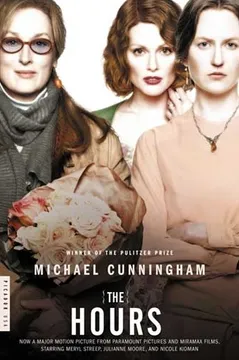


Plot Summary
Prologue
In 1941, Virginia Woolf leaves notes for her husband, Leonard, and her sister, Vanessa, then walks to a river with a heavy stone in her coat. Voices and the terror of another illness press her onward, though she pauses to notice the fields and sheep before entering the water.
Leonard finds her note and rushes to the river, but her body has been carried beneath a bridge. Above her, a mother and young son watch a stick float away while soldiers cross overhead. The book opens with Virginia’s death, then turns back to the lives and imagined lives shaped by her writing.
The opening makes the novel’s central tension physical before it becomes literary: a person can be overwhelmed by suffering and still perceive the color of a field, the feel of water, the passing life above her. Virginia’s attention does not cancel her despair, nor does her death make her last perceptions meaningless. The ordinary scene on the bridge places her beneath a world that continues without understanding what has happened. By showing the ending first, the book asks readers to look for the pressure that precedes such a choice, without reducing it to one cause or treating it as an artistic emblem.
Clarissa Buys the Flowers
On a bright June morning in New York, Clarissa Vaughan, fifty-two, leaves her partner Sally cleaning at home and goes to buy flowers. That evening she plans to host a party for Richard Brown, her closest friend, a poet receiving the Carrouthers Prize while AIDS and mental illness have left him fragile.
Clarissa invites Walter Hardy, a healthy, irrepressible novelist whose tastes Richard dislikes, because she cannot bear to exclude him. On her walk she enjoys the city, briefly waits outside a film trailer hoping to see its famous occupant, then chooses flowers at a shop. The errand gives the day its shape: Clarissa can prepare a beautiful room for Richard, even as she fears he may no longer be able to join her in it.
Clarissa’s pleasure in flowers and city streets is not mere decoration around the illness. It is an active method of staying in contact with a world that Richard is slipping away from. Her party is care made visible: she arranges food, guests, and ceremony because she cannot cure him. Inviting Walter also shows that her kindness is not purely serene. She notices social slights and status, and sometimes acts from guilt as much as generosity. The day begins with her trying to turn ordinary hospitality into a form of protection, while knowing that neither beauty nor careful planning can guarantee Richard’s presence.
Virginia Finds Her First Line
In 1923, Virginia Woolf wakes at Hogarth House in Richmond with a dream of a park and a vanished sentence in her mind. She avoids the mirror that can intensify her fear, takes coffee instead of breakfast, and climbs to her study to write. Leonard, her husband and fellow publisher, urges her to eat while examining printing proofs; his practical vigilance both protects her and reminds her that her recovery is being measured.
Virginia begins a novel about one ordinary day in a woman’s life and decides that her heroine, Clarissa Dalloway, may die by suicide. She also longs to return to London, convinced the quiet suburb is keeping her safe at the cost of the intensity that makes her feel alive.
Virginia’s writing begins as an effort to hold two incompatible truths together: the mind needs shelter, but excessive shelter can become another kind of erasure. Leonard’s attention to food and routine is loving, yet Virginia experiences care as a possible limit on her freedom. Her first plan to kill Clarissa is not a settled thesis; it is an artistic hypothesis she will test against the day’s own evidence. The opening line arrives through the same ordinary materials that surround her, coffee, proofs, and domestic time. Her work depends on entering daily life closely, even while illness makes that closeness dangerous.
Laura Enters the Kitchen
In 1949 Los Angeles, Laura Brown wakes on her husband Dan’s birthday with Virginia Woolf’s Mrs. Dalloway beside her bed. Pregnant with a second child, she feels unable to move from reading into the duties of wife and mother, though she believes she should be making breakfast. Dan has already prepared cereal for himself and their three-year-old, Richie, and placed roses on the table.
His easy kindness makes Laura feel more indebted, not less trapped. Once Dan leaves for work, she stays with Richie and begins baking a birthday cake, hoping to make something as beautiful and reassuring as the homes she thinks her family deserves. When Richie spills flour and fears he has ruined everything, Laura comforts him and continues the task.
Laura’s conflict is not a lack of love for her family. She loves Dan and Richie, yet experiences the expected role of contented homemaker as a performance she cannot reliably inhabit. Dan’s considerate gestures sharpen that conflict because they give her no obvious villain to resist. Reading Woolf provides a private space in which Laura can recognize a self beyond household duty, but it also makes her compare her inner life with an imagined artistic one. The cake becomes a small experiment in authorship: Laura wants to transform common ingredients into proof that she can create something worthy, not simply maintain what already exists.
Richard Fears the Party
Clarissa climbs the stairs to Richard’s dim, cluttered apartment and finds him troubled by voices, uncertain whether he has eaten, and confused about whether the evening’s ceremony has already happened. The new AIDS drugs have helped his body more than his mind. Clarissa reminds him that the party is still ahead and that his poetry, not only his illness, earned the prize.
Richard doubts that distinction. He believes his novel failed because it left nearly everything out and then forced a shocking ending onto its heroine. He also regrets not writing more fully about Clarissa, his oldest friend, and the many lives they might have shared. Clarissa steadies him, promises to help him dress, and leaves to prepare the flowers.
Richard’s anxiety exposes the moral uncertainty surrounding recognition. The prize should confirm his artistic worth, but he suspects that other people are rewarding the spectacle of his illness and endurance. His criticism of his novel is also a fear that art cannot contain the abundance of actual lives, especially Clarissa’s. Clarissa responds by insisting on his work and offering practical companionship, yet she cannot make his shame disappear. Their friendship has lasted through desire, distance, and illness, but it cannot remove the asymmetry between the person who fears an ending and the person who must keep arranging the day around him.
Kitty Needs a Favor
While Laura works on Dan’s cake, her neighbor Kitty arrives needing someone to feed her dog while doctors investigate a growth in her uterus. Kitty, usually confident and socially assured, admits that she may need surgery and does not know what the doctors will find. Laura embraces her, and the comfort becomes unexpectedly intimate: Laura kisses Kitty’s forehead, then their lips touch before Kitty draws back.
Richie watches. After Kitty leaves, Laura throws away the first cake and feels sudden relief at being able to begin again. Later, unable to read or settle at home, she leaves Richie with a neighbor, drives into Los Angeles, and checks into a hotel under the pretense that Dan will join her.
Kitty’s visit unsettles Laura’s assumption that other women possess the domestic certainty she lacks. Kitty’s illness briefly makes their roles less fixed: Laura becomes the person who can offer care, while the popular neighbor accepts it. Their near-kiss brings desire into a relationship otherwise organized by routine and social respectability, but it does not settle what either woman wants. Throwing out the cake is a small act of refusal, not a cure. Laura then takes that refusal farther by renting a room where nobody knows what she is supposed to be. Her escape is both a search for privacy and a confrontation with the possibility of leaving life altogether.
A Thrush Gets Its Bed
Virginia’s sister Vanessa arrives early at Hogarth House with her children. In the garden, they find a dying thrush and arrange grass and yellow roses around it. Virginia watches Angelica take charge of the little funeral while Quentin gently lays down the bird. The scene leaves Virginia drawn toward its small, quiet image of death, but Vanessa’s presence and the children’s care also make the afternoon feel briefly sufficient.
Later, over tea, Virginia recognizes that Clarissa Dalloway should not die. Her heroine loves the ordinary world too much to abandon it. Virginia instead imagines that another character, a poet whose perception makes life unbearable, will die. The change begins to separate her fictional Clarissa’s fate from her own.
The thrush’s burial gives Virginia a concrete encounter with mortality that neither romanticizes death nor makes it distant. Angelica’s ceremonial care, Quentin’s gentleness, and Vanessa’s refusal to lie to the children offer different ways of meeting loss. Virginia is moved, but the family’s ordinary presence also interrupts her attraction to death. The episode changes her novel because she allows experience to challenge the design she first imposed on it. Clarissa’s survival is not proof that suffering is unreal; it is an artistic recognition that Virginia’s heroine has a different relation to life than Virginia herself does.
Louis Comes Back
Louis Waters, Richard’s former lover and Clarissa’s old friend, arrives unannounced after five years away. He is moving back to New York and agrees to attend Richard’s party, though he has not visited either friend during his absence. Clarissa and Louis revisit their youthful summer with Richard, when Richard loved them both and Clarissa eventually chose a different life.
Louis resents the small role he believes Richard gave him in a novel about Clarissa, then admits he has fallen for Hunter, a former student. As he speaks, Louis breaks down, grieving not only the uncertain affair but the years he spent trying to be indispensable to Richard. Julia arrives, and Louis leaves before he can recover his composure.
Louis’s return brings an older form of longing into the present, where Richard’s illness has made every postponed conversation feel costly. He measures his life through the attention Richard gave him, and his complaint about the novel reveals a wish to be remembered as more than a supporting figure. His new attachment to Hunter repeats the pattern of desire for a younger man, but Louis understands that the affair may be less enduring than the feeling he has invested in it. Clarissa offers affection without pretending to repair the past. Their encounter shows how memory can preserve a bond and still leave its participants stranded in different versions of what happened.
Laura Borrows a Room
In the Normandy Hotel, Laura reads Mrs. Dalloway in a turquoise room far removed from her house, child, and birthday preparations. The neutral quiet comforts her, then allows a dangerous thought to form: she could end her life there and leave her family to discover how unhappy she had been.
She rejects the thought because she loves Richie, is pregnant, and understands the harm her death would cause, yet she is relieved to recognize that continuing is a choice rather than an obligation without alternatives. Laura returns to the neighbor’s house before anyone raises an alarm. Richie runs to her in tears, and she carries him home. His anxious devotion makes her feel both loved and watched.
The hotel does not solve Laura’s distress. It makes her daily identity temporarily disappear, and that distance lets her examine suicide as a possibility without confusing the thought with an action. Her refusal is grounded in attachment and consequence, not in a sudden cure or a revelation that domestic life has become easy. Richie’s tears then restore the emotional cost of absence: he experiences Laura as the center of his world, while she experiences that dependence as both tenderness and pressure. The scene resists a simple opposition between escape and responsibility. Laura needs to know she could leave before she can return deliberately.
Julia Chooses Mary
After Louis leaves, Clarissa’s daughter Julia returns with Mary Krull, an activist and teacher whom Clarissa distrusts. Clarissa resents Mary’s moral certainty and fears that Julia has given the older woman a place in her life that Clarissa cannot claim.
Mary sees Clarissa as a comfortable lesbian who believes respectability offers protection; Clarissa sees Mary as domineering and self-aggrandizing. Their civility barely conceals mutual contempt.
Julia nevertheless draws them into the same room and prepares to go shopping with Mary, while Clarissa asks her to remember Richard’s party. Mary follows Julia with an unspoken, unreturned desire. Clarissa is left worrying that her daughter’s affection and confidence may always remain partly beyond her reach.
The conflict is not simply a generational disagreement about politics. Clarissa and Mary are competing accounts of how a queer life can survive: one values durable home, work, and mutual care; the other distrusts accommodation to the institutions that have excluded her. Each recognizes something real in the other and uses that recognition as a weapon. Julia’s independence intensifies the dispute because neither woman can claim her as evidence that her own model has prevailed. Mary’s desire for Julia remains private, while Clarissa’s maternal anxiety is expressed through manners and invitations. The scene shows how love can become entangled with the wish to be chosen.
Virginia Misses the Train
After the family visit, Virginia leaves Hogarth House alone, unable to settle beneath the ordinary routines of dinner and evening. She walks toward Richmond station intending to take a train to London, where crowded streets and public life seem to offer the freedom she has lost in the suburbs. She buys a ticket but cannot bear the wait, and Leonard finds her outside the station before she leaves.
His worry moves her; she sees how much her disappearance frightens him, even as his caution has kept her confined. They walk home together, and Virginia tells him they should move back to London. Leonard does not agree immediately, but he accepts that the question must be discussed rather than dismissed.
Virginia’s departure from the house is a real act of agency, even though she does not complete the journey. The station makes her dilemma tangible: waiting safely is also a form of losing time, while leaving risks illness and anguish for Leonard. His arrival does not simply rescue her or defeat her. It reveals the mutual dependence obscured by their roles as patient and caretaker. Virginia chooses to make her need explicit, converting an impulsive escape into a negotiation about where she can live. The proposed move toward London becomes a compromise between the risk of intensity and the danger of being protected into disappearance.
Sally Leaves Oliver’s Lunch
At lunch with movie star Oliver St. Ives, Sally hears him propose a thriller with a gay hero and invite Walter Hardy to write it. Sally doubts the project and feels Oliver’s admiration for her fading as he turns to Walter. She leaves before she can plead to remain useful. Walter, meanwhile, buys a costly blue shirt for Evan, whose health has improved on new medication.
Sally sees the purchase as both extravagant and loving, then hurries home with yellow roses. Clarissa has bought roses too. Their matching bouquets make them laugh, and for a moment their long partnership feels enough. Sally’s fear of losing Clarissa has sharpened her desire to return to the life they have built.
Sally’s lunch makes professional exclusion echo the novel’s wider concern with being overlooked. She has helped Oliver think through the project, yet his attention shifts to Walter once a practical opportunity appears. Sally recognizes the gendered structure of the conversation but also admits how much she wants the glamour of Oliver’s regard. Walter’s gift for Evan complicates her judgment of him: his vanity coexists with real devotion. The roses Sally carries home are not a grand gesture so much as a return to a shared domestic language. Their accidental duplication lets Clarissa and Sally experience affection without needing to resolve every fear aloud.
Richard Leaves the Window
When Clarissa comes to help Richard dress, she finds the apartment bright and the sick poet perched on a fifth-floor windowsill. He has mixed Xanax and Ritalin, feels unusually elated, and says he cannot face the hours still ahead. Clarissa tells him he need not attend the party or the ceremony and tries to draw him back inside.
Instead, Richard asks her to recount the simple morning when she bought flowers. The memory returns them to their youthful intimacy, and he tells her how much he loves her. Then he slides from the sill and falls. Clarissa runs downstairs, finds him dead on the pavement, covers his head with his robe, and stays beside him before calling for help.
Richard’s death is preceded by a request for an ordinary story, as though the day’s smallest details might briefly counter the future he cannot bear. Clarissa offers the flower errand, not a grand account of their friendship, and Richard connects it to their youth. His fall is devastating partly because the moment before it remains intimate and recognizable. Clarissa’s delay beside his body shows shock rather than indifference: she cannot immediately cross from private loss into public procedure. His death also breaks the arrangement around which her day was built. The party can no longer be a celebration of his presence.
Laura Keeps the Birthday
That evening, Laura sits with Dan and Richie as they celebrate Dan’s birthday with the second cake she has made. Dan praises it, and Richie helps him cut it; the family’s ordinary pleasure briefly feels complete to Laura. She imagines that setting the table has given the day a shape and that the household may be enough.
After the celebration, while getting ready for bed, she sees the sleeping pills in the medicine cabinet and considers how easily a person might stop struggling. She does not take them. Pregnant and unable to sleep beside Dan’s expectation of ordinary intimacy, she hesitates before climbing into bed. The scene ends not with certainty but with Laura continuing through a night she has not resolved how to live.
The birthday dinner offers Laura a real moment of belonging, but the novel refuses to make that moment a cure. The cake, plates, and family affection matter precisely because they are temporary, not because they erase her dissatisfaction. Her attention to the pills returns the earlier hotel thought in a more private setting, where nobody can interrupt or witness her indecision. She neither dramatizes nor dismisses the danger. By going toward bed without a clear emotional resolution, Laura remains suspended between obligation and choice. The later shape of her life will make this pause consequential, but the scene itself preserves uncertainty rather than supplying a tidy explanation.
Virginia Rewrites Clarissa
Later that evening in Richmond, Virginia sits with a book and remembers kissing Vanessa after their tea. The kiss was brief, but it carries the intensity Virginia wants from London and from life: closeness that is neither easily named nor safely contained. She decides that Clarissa Dalloway will not die.
Clarissa will have loved a woman when young, carry the memory of that kiss, and continue living amid the ordinary pleasures of the city. Virginia assigns death instead to a poet whose unusual vision makes survival harder. The fictional choice does not predict Virginia’s own future, already shown in the prologue, but it gives her novel a conclusion that belongs to its heroine rather than to its author.
Virginia’s revision marks a distinction between writing from experience and making every character a copy of the writer. Her own attraction to death cannot be transferred automatically to Clarissa, whose love of daily life has become visible through the novel’s imagined events. Vanessa’s kiss supplies no simple answer about desire; its force lies in its ambiguity and in the life it briefly opens. Virginia converts that charged moment into artistic form, allowing a character to survive without pretending that the author is safe. The decision demonstrates the novel’s deepest craft principle: imagination is not escape from reality, but the discipline of recognizing that another person may need a different ending.
Laura Meets the Woman
After Richard’s death, Clarissa’s home holds only a handful of people and the untouched food intended for a larger party. Laura Brown is there, now an elderly retired librarian living in Toronto. She has outlived Dan, whose liver cancer killed him, and Julia, who died in a car accident. Laura also reveals that she left her family years earlier to live alone.
She has read Richard’s poems and novel, and Clarissa realizes that Laura understands how her life became part of his writing. They acknowledge, without pretending that the past can be repaired, that they did what they could. Clarissa returns to the kitchen, helps feed the remaining guests, and accepts another hour among the living.
The meeting turns Richard’s literary obsession into a conversation between the people who shaped it. Clarissa has been the subject of his fiction, while Laura was the mother whose choices haunted his imagination; neither woman is reducible to the character he made from her. Laura’s departure from her family carries lasting costs, and her survival does not retroactively make it painless or correct. Clarissa’s care for her is therefore not absolution. Their clasped hands offer a modest recognition that people act with limited knowledge and mixed motives. The abandoned party becomes a gathering of those still able to eat, remember, and continue.
Analysis
The Hours organizes three lives around a deceptively modest unit: a day. Virginia writes one, Laura tries to inhabit one, and Clarissa spends one preparing a celebration for someone who may not be able to attend. Their stories meet through Mrs. Dalloway, but the novel resists treating literature as a simple mirror. Laura’s reading gives her a private vocabulary; Richard’s fiction turns Clarissa into an imaginative subject; Virginia revises her heroine when her own experience tells her that Clarissa should live. Art transmits feeling across time, yet it cannot fully possess the people from whom it draws meaning.
The book also refuses a clean opposition between domestic life and freedom. Cakes, meals, flowers, caregiving, and parties can be acts of love, but they can also become demands that narrow a person’s sense of possibility. Laura’s longing is not disproved by her attachment to Richie, just as Clarissa’s ordinary pleasures do not make her shallow. Virginia’s wish for London is not merely artistic ambition; it is a claim to risk, company, and sensory life. Each woman discovers that staying alive does not necessarily mean being content, and that leaving can carry costs no one else can fully measure.
Death is present as event, possibility, illness, and imagined form. The novel neither reduces suicide to a single motive nor allows it to become a beautiful solution. Richard’s death devastates Clarissa; Laura’s thoughts remain unresolved; Virginia’s fictional decision to spare Clarissa does not change Virginia’s own future. The final meeting between Clarissa and Laura offers no verdict on the lives they have chosen. It offers recognition instead: people can love others, fail them, and still have acted with the limited understanding available to them. The consolation is not permanence, but the occasional hour in which the world becomes vivid enough to be worth meeting again.
Review Summary
The Hours received widespread acclaim for its lyrical prose and intricate interweaving of three women's stories, connected through Virginia Woolf's Mrs. Dalloway. Readers praised Cunningham's exploration of mental health, sexuality, and the search for meaning in everyday life. Many found the novel deeply moving and beautifully written, though some struggled with its stream-of-consciousness style. The book's examination of mortality and the fleeting nature of happiness resonated strongly with many readers. Overall, it was hailed as a masterful tribute to Woolf's work.
People Also Read









Characters
Clarissa Vaughan
The devoted hostClarissa is a New York publisher, Sally’s long-term partner, Julia’s mother, and Richard’s oldest friend. At fifty-two, she is attentive to beauty in streets, flowers, and small domestic rituals, yet she is not unaware of vanity, privilege, or the ways she seeks approval. She makes care practical by arranging Richard’s party and attending to his daily needs. Her past with Richard includes a youthful romantic experiment that became a lifelong friendship, leaving her with both deep affection and questions about the life she did not choose. Clarissa’s central strength is her capacity to remain present with other people, though that generosity is sometimes tangled with self-doubt and a fear of being ordinary.
Virginia Woolf
The searching novelistVirginia is a writer living with Leonard in suburban Richmond in 1923. Her imagination is exacting and expansive, but recurrent headaches, voices, and fear of relapse make ordinary routines feel precarious. She resists the limits imposed by illness and care, while knowing that Leonard’s vigilance comes from love. Writing gives her a rare sense of command over perception, though she worries that the page cannot contain everything she sees. As she invents Clarissa Dalloway, Virginia tests how fiction can honor a life unlike her own. Her need for London represents more than a preference for city life: she wants noise, contact, and the possibility of being fully engaged with the world.
Laura Brown
The restless homemakerLaura is a pregnant wife and mother in postwar Los Angeles, raising young Richie and married to Dan, a returning war veteran. She is intelligent, inward, and hungry for a life that does not fit neatly into the household role she has accepted. Reading Virginia Woolf gives her a language for her private intensity, while ordinary tasks such as baking a birthday cake become tests of her ability to create and belong. Laura loves her family, but love does not erase her sense of confinement. She is highly observant of other people and harshly vigilant toward herself, often measuring her inner life against the graceful woman she thinks she ought to be.
Richard Brown
The embattled poetRichard is Clarissa’s oldest friend, a poet and novelist living with AIDS and the cognitive effects of illness. His wit and intensity once made him an exhilarating companion; now periods of confusion and frightening perceptions disrupt his sense of time and self. He is proud of his writing but doubts whether it has captured the people and world he meant to portray. Clarissa remains his most constant support, and their bond carries the history of youthful intimacy without fitting a simple romantic category. Richard’s need to be taken seriously as an artist coexists with his fear that others see only his suffering.
Sally
Clarissa’s steady partnerSally is Clarissa’s partner of many years and a producer of public television. Practical, intelligent, and quietly affectionate, she shares Clarissa’s home and helps shoulder the work of the day. She is less drawn to public recognition than Clarissa, though an encounter with the famous Oliver St. Ives reveals that she too can feel overlooked and hungry for influence. Sally’s care is often expressed through action: cleaning, returning home, noticing what Clarissa needs, and protecting the life they have made together. Her steadiness should not be mistaken for emotional simplicity; she understands that deep attachment makes loss imaginable long before it arrives.
Leonard Woolf
Virginia’s vigilant husbandLeonard is Virginia’s husband, literary collaborator, and caretaker. He oversees their publishing work and watches her health closely, pressing her to eat and worrying when she disappears. His discipline can feel controlling to Virginia, particularly when it keeps her in the quiet suburb she longs to leave. Yet his fear is rooted in years of accompanying her through severe illness, and he respects the importance of her writing even when he worries about its cost. Leonard’s care is practical, sometimes severe, and deeply invested in preserving Virginia’s ability to work and live.
Louis Waters
Richard’s former loverLouis is a drama teacher and former lover of Richard who once shared a formative summer with Richard and Clarissa. He is emotional, self-conscious, and sensitive to the way other people tell the story of his life. His years away have not freed him from the old triangle, and his return brings tenderness, resentment, and regret back into Clarissa’s home. Louis seeks meaningful love but repeatedly invests himself in relationships that may not offer the permanence he wants. His tears and theatrical self-awareness can seem self-absorbed, yet they also reveal how much he fears becoming a minor figure in other people’s memories.
Julia Vaughan
Clarissa’s independent daughterJulia is Clarissa and Sally’s adult daughter, a serious and self-possessed young woman who dresses in a style of her own and keeps some distance from her mother. Clarissa worries that Julia resents the family arrangement that left her without a known father, but Julia is not simply defined by that history. She moves confidently among friends and expects to make her own choices. Her warmth can appear suddenly, as when she embraces Clarissa, while her reserve leaves her mother unsure how much of her inner life she can reach. Julia’s independence draws both Clarissa’s admiration and her anxiety.
Vanessa Bell
Virginia’s grounding sisterVanessa is Virginia’s older sister, a mother whose confident presence contrasts with Virginia’s more precarious life. She is affectionate but not sentimental, able to speak plainly to her children about death and to move through domestic situations with a practiced ease Virginia both admires and resents. Vanessa’s visits offer Virginia companionship and a glimpse of a family life she does not have. Their bond contains old intimacy, rivalry, and mutual knowledge, making Vanessa both a source of comfort and a reminder of the paths the sisters have taken differently.
Dan Brown
Laura’s devoted husbandDan is Laura’s husband and Richie’s father, a steady, affectionate veteran who has returned from war and built a conventional household in California. He rises early, works reliably, and tries to spare Laura effort, including on his birthday. His kindness is genuine, but his contentment with home and routine makes it difficult for him to recognize the distance Laura feels from the life they share. Dan embodies security as a lived practice, not a deliberate demand, which is why Laura’s conflict with domestic life remains so difficult to explain.
Richie Brown
Laura’s watchful young sonRichie is Laura and Dan’s three-year-old son. He is affectionate, sensitive to small changes, and intensely attentive to his mother. Laura delights in his love but can also feel overwhelmed by his dependence and by the sense that he notices more than she wants him to. His participation in making Dan’s cake gives him a small responsibility that feels enormous to him. Richie’s devotion makes Laura’s private wishes carry immediate emotional weight, without turning either mother or child into a simple emblem of innocence.
Kitty
Laura’s troubled neighborKitty is Laura’s neighbor, a socially confident woman whose friendly visit brings a serious medical uncertainty into Laura’s day. She has the assurance of someone accustomed to being admired, but fear makes her briefly willing to accept tenderness from Laura. Their intimacy complicates the ordinary friendship between neighboring wives without resolving what either woman wants. Kitty is also concerned about her husband and the life they have planned together, even as she tries to remain composed about the hospital.
Mary Krull
Julia’s fierce mentorMary is an activist and university teacher who becomes close to Julia. She is politically uncompromising, suspicious of respectability, and impatient with the accommodations she believes older lesbians have made to a hostile culture. Clarissa experiences Mary’s certainty as judgment, while Mary sees Clarissa’s stable home and professional life as evidence of misplaced faith in social acceptance. Beneath Mary’s public force is a private vulnerability: she desires Julia and knows that Julia does not return that desire.
Walter Hardy
The buoyant novelistWalter is a commercially successful gay novelist, an energetic social presence, and Evan’s devoted partner. Richard and Sally find his optimism and interest in fame shallow, but Clarissa values his kindness and his refusal to perform cynicism. He is capable of vanity and social calculation, yet his attention to Evan is concrete and generous. Walter’s invitation to Richard’s party tests the difference between literary prestige and personal loyalty, while his chance to write a thriller reveals that he can move comfortably through opportunities others are reluctant to take.
Evan
Walter’s recovering partnerEvan is Walter’s partner, whose health has begun to improve with a new medication regimen. His tentative recovery gives Walter a reason to imagine dancing, going out, and buying him a special gift. Though he appears briefly, his presence shows how illness shapes the practical hopes and attentions of those who love someone sick.
Oliver St. Ives
The famous actor activistOliver is a movie star who has publicly come out and become a visible gay activist. His celebrity gives him unusual power to initiate projects and redirect attention. Sally respects his public importance but is wary of the confidence with which he assumes a gay hero can be inserted into a conventional thriller. His lunch with Sally and Walter reveals how fame can make even a casual professional conversation feel like a contest for recognition.
Nelly Boxall
Virginia’s formidable cookNelly is the Woolfs’ cook and housekeeper, a capable, proud woman whose grievances and authority make Virginia uneasy. She understands the household’s routines and knows how to make her labor felt when she believes she has been treated unfairly. Virginia finds Nelly difficult to manage partly because domestic command does not come naturally to her, and partly because Nelly’s competence exposes how much Virginia depends on others.
Angelica Bell
Vanessa’s imaginative daughterAngelica is Vanessa’s youngest child. During the garden gathering, she gives the dying bird’s resting place a careful arrangement of grass and roses, then turns toward the possibility of finding a nest. Her shifting attention and ceremonial instinct impress Virginia, who sees in her both a child’s freedom and an early model of the imaginative care that can surround loss.
Quentin Bell
Vanessa’s thoughtful sonQuentin is one of Vanessa’s sons. He carries the injured thrush and treats it with notable gentleness, even while accepting that it cannot be saved. His practical tenderness gives Virginia a direct glimpse of how a child can face death without either cruelty or false reassurance.
Julian Bell
Vanessa’s eldest sonJulian is Vanessa’s eldest child, a handsome and confident teenager whom Virginia sees as the natural hero of his family’s story. His ease and physical assurance sharpen her awareness of the differences between his life and her own, as well as Vanessa’s uncomplicated pride in her children.
Plot Devices
Mrs. Dalloway
A novel within the novelVirginia’s developing book links three lives without making them identical. Laura reads Mrs. Dalloway in 1949 and uses it to imagine a self beyond domestic routine. Clarissa Vaughan’s day echoes the fictional heroine’s flower errand and party, while Richard’s writing turns Clarissa into a figure shaped by his own memory. Virginia’s changing plan for her heroine also becomes a way to distinguish artistic invention from autobiography. The embedded novel carries ideas and images between the three timelines, while each woman’s circumstances alter what those images mean.
One June Day
A clock for three livesThe book follows a day in each of its central timelines, using errands, meals, work, and evening gatherings to give intimate reflection a firm structure. Clarissa’s flower shopping and party preparations, Laura’s birthday tasks, and Virginia’s writing and family visit unfold in parallel. The limited span makes small decisions consequential without forcing the characters into the same plot. Repeated hours also expose different relationships to time: Clarissa tries to keep Richard present, Laura tries to escape the day assigned to her, and Virginia weighs safety against the life she wants to resume.
Flowers and Parties
Care made visibleFlowers connect errands, memory, hospitality, and grief. Clarissa gathers them for Richard’s party, while Sally’s matching bouquet becomes an unplanned expression of devotion. Virginia’s fictional flower errand gives her novel its first shape, and Laura’s birthday roses make visible the family life she is trying to inhabit. Parties similarly gather people around someone whose private suffering cannot be repaired by public recognition. The device gains its full force when Richard cannot attend the celebration Clarissa planned, leaving flowers and food as evidence of care that outlasts the expected occasion.
The Birthday Cake
Domestic art under pressureLaura’s attempt to bake Dan a cake turns a familiar household task into a measure of her hopes for herself. She wants to make something beautiful and reassuring, but the first cake disappoints her and she throws it away after Kitty’s visit. The replacement is better, yet still cannot settle Laura’s unease. Its function is not to prove that domestic work is meaningless or that Laura lacks love. Instead, the cake shows how much emotional weight she has placed on performing a role that others accept as ordinary and easy.
Thresholds and Windows
Choices between staying and leavingDoors, hotel rooms, stations, and windows mark moments when characters consider crossing out of an established life. Laura enters a hotel room to claim privacy and think about death; Virginia approaches a train that would take her to London; Richard sits at an open window while facing the hours he cannot bear. The prologue establishes the river as another such threshold. These spaces make abstract choices physical, but they do not carry one fixed meaning: a room can offer shelter, a station can promise freedom, and an opening can become a point of irreversible loss.
Download PDF
Download EPUB
.epub digital book format is ideal for reading ebooks on phones, tablets, and e-readers.








