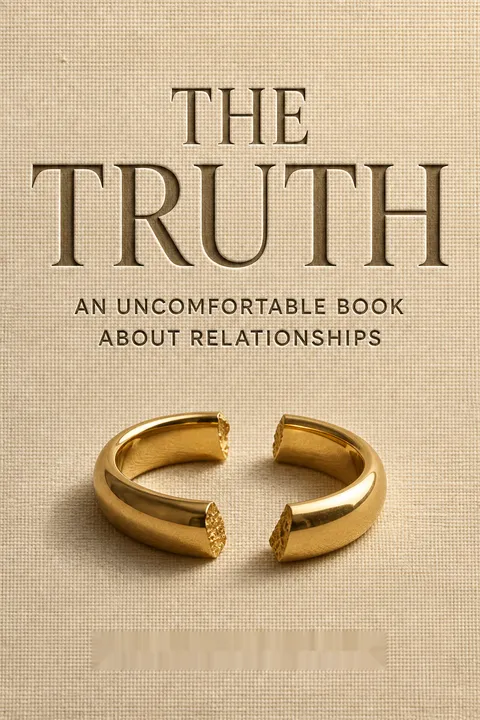


Key Takeaways
Your relationship style cannot fix the wounds you bring into it.
A crisis becomes a mirror. Neil Strauss begins after cheating on Ingrid, the partner he loves, then follows his confusion through sex addiction rehab, therapy, and experiments with open relationships. He initially treats monogamy as the problem: perhaps exclusivity is unnatural, perhaps another arrangement will let him keep both freedom and love. Yet each new structure exposes the same habits: secrecy, avoidance, and a hunger for control.
The deeper question changes. Strauss discovers that changing the relationship format cannot, by itself, change the person behaving inside it. His story is not a case against nonmonogamy or a proof that monogamy suits everyone. It is a search for the motives underneath his choices, and for a way of relating that does not repeat his childhood patterns.
The memoir’s most useful turn is from arguing about the ideal institution to examining the person making the argument. That shift resembles systems thinking: changing one component may leave the underlying pattern untouched. Yet the claim needs a boundary. Relationships can genuinely be mismatched, and a harmful dynamic is not always a personal wound in disguise. The practical test is whether a proposed change addresses a real incompatibility or merely offers a fresh setting for the same secrecy, resentment, and escape.
Treat childhood explanations as clues, not courtroom verdicts.
Family roles can travel. In rehab, Lorraine asks Strauss to map his family history. He recalls a controlling mother who confided adult troubles to him, limited his independence, and made him keep his father’s secrets, alongside a distant father who rarely intervened. He begins to see how secrecy and restriction shaped his adult mix of craving closeness and fleeing it.
A name is not proof. Lorraine calls this parent-child role reversal “emotional incest,” meaning an adult relies on a child for partner-like emotional support. The term does not mean sexual contact. Strauss finds the concept clarifying, but the book also shows how quickly a therapist’s interpretation can become a total story about a person. The useful move is to investigate patterns, not accept a label as a diagnosis.
Family history can make present behavior more intelligible without making it inevitable. That distinction matters: explanation can reduce shame and increase responsibility at the same time. The risk is narrative overreach. A vivid theory may organize scattered memories so neatly that uncertainty disappears, especially when delivered in an intense therapeutic setting. A sound interpretation should remain testable against current behavior, alternative explanations, and the person’s own experience, rather than turning every disagreement into evidence for the theory.
A secret affair steals your partner's right to choose reality.
Betrayal includes concealment. Strauss initially tells himself that hiding an affair protects Ingrid from pain. When evidence reaches her, the lie has also denied her the ability to decide what kind of relationship she is in. His delay, evasions, and partial admissions prolong the damage because he is still trying to manage her knowledge and reactions.
Truth restores agency. In couples therapy, Ingrid asks for honesty, trust, and loyalty. Strauss cannot promise perfect resistance to temptation, but he finally admits his uncertainty and explains that he is seeking help. The admission does not erase the affair or guarantee forgiveness. It changes the terms: Ingrid can respond to what is real instead of being kept inside his private version of events.
This account distinguishes privacy from deception. Privacy protects a person’s interior life; deception withholds information that materially changes another person’s consent. That distinction is useful well beyond romance, including work and friendship. Still, honesty is not a license to unload every detail without care. Timing, purpose, and the other person’s needs matter. Disclosure should return meaningful choice to the harmed partner, not merely relieve the confessor’s guilt or force an immediate decision.
No relationship structure makes dishonesty harmless.
Rules depend on agreement. Strauss tests monogamy, polyamory, swinging, and casual group encounters. He finds very different expectations in each world, from couples who permit shared sexual experiences to partners who allow outside relationships only under specific conditions. None is automatically honest or emotionally safe. A supposedly open couple can still conceal, break agreements, or use jealousy as leverage.
Define the arrangement together. Polyamory, a term for multiple loving relationships conducted with participants’ knowledge, is not the same as secretly keeping a side partner. Swinging commonly centers shared sexual experiences, while polyamory may include separate romantic attachments. The labels matter less than clear consent, truthful communication, and the freedom to decline. Strauss’s early mistake with Ingrid was proposing a new format as a solution to his wishes without first creating a shared choice.
This is a strong corrective to moral shorthand. Exclusivity does not prove intimacy, and openness does not prove sophistication. In either structure, fairness depends on whether participants understand the agreement and can renegotiate it without coercion. The memoir also reveals a practical asymmetry: people may welcome sexual novelty in theory but experience it differently once attachment is involved. A relationship contract is therefore not a one-time conversation. It is an ongoing consent process.
Every added partner multiplies relationships, not just pleasure.
A group is a network. Strauss gathers three women he barely knows in a San Francisco rental, expecting a shared household to feel like one relationship. In fact, a four-person group contains six distinct pairwise relationships: each person relates to three others, and the three women must also build relationships with one another. A conflict between any two can affect the whole group.
Coordination is emotional work. Polyamorous adviser Pepper encourages house meetings, advance plans for parties, and direct communication between the women rather than routing every decision through Strauss. He calls each partner’s partner a metamour. Their trust can stabilize the group, but it cannot be assumed. Strauss discovers that logistics, boundaries, jealousy, and competing needs consume more attention than the fantasy of effortless communal love suggested.
The network model clarifies why adding people creates more than a simple increase in options. Each new connection introduces another relationship to maintain, and tensions can propagate through the group. The arithmetic is not a prediction of failure, however. Strong communication, time, and shared expectations can make complex networks workable. The more important warning is against treating people as interchangeable parts in one person’s fantasy. A group succeeds only when every participant has meaningful agency and relationships of their own.
If you demand freedom, practice tolerating your partner's freedom too.
Freedom feels different in both directions. Strauss argues that partners should not own one another’s sexuality. But when Sage takes a trip with two men, he discovers that approving the principle is easier than living with jealousy, uncertainty, and the possibility that she may enjoy herself without him. He notices his desire for a half-open relationship: broad freedom for himself, reassuring limits for her.
Feelings still need care. Sage’s trip exposes the gap between intellectual permission and emotional security. Strauss must distinguish allowing a partner to choose from pretending not to care. He learns that jealousy is information to examine, not automatic authority to control another person. Likewise, the partner’s freedom does not excuse lying. Their arrangement can only work if both people can speak honestly and accept that the other may make choices they dislike.
The memoir usefully separates permission from emotional readiness. A person can endorse autonomy and still feel threatened when a partner exercises it. That does not make the principle false, but it does make the work more demanding than slogans about abundance suggest. Jealousy can contain insecurity, but it can also signal a broken agreement or unmet need. Treating every uncomfortable feeling as personal pathology risks silencing legitimate concerns instead of turning them into a clear conversation.
Novelty can numb loneliness without curing it.
Pleasure has diminishing returns. After leaving Ingrid, Strauss pursues sexual variety through parties, swinging, polyamory, and a group household. Some experiences are thrilling, yet the excitement does not consistently become closeness or contentment. On his birthday, surrounded by sexual opportunity and unable to think of anything new to try, he realizes that repeated novelty has not answered his deeper question about happiness.
Separate intensity from fulfillment. Lorraine offers a practical distinction: choices driven by old wounds tend to bring drama and trauma, while choices that fit a person’s needs can bring steadiness. Strauss eventually recognizes that he used sex and new partners to escape feelings of worthlessness, fear, and loneliness. His conclusion is personal, not universal: more partners did not resolve what he was trying not to feel.
This arc resembles the difference between immediate reward and durable well-being. Excitement can be genuinely pleasurable while still functioning as avoidance, so the question is not whether novelty is good or bad. It is what job novelty is doing. The account also resists a simplistic conclusion: a satisfying life may include sexual variety, but variety cannot guarantee emotional connection. Repeatedly escalating stimulation is a poor substitute for identifying the need underneath it.
Use therapy to build agency, not to borrow someone else's certainty.
Treatment helps and harms in the story. Strauss enters a program that treats masturbation, pornography, fantasy, and infidelity as signs of sex addiction. Some staff members impose rigid rules and labels; Lorraine’s experiential exercises help him connect present behavior with childhood memories. He later explores other approaches, including EMDR, cognitive behavioral therapy, and somatic experiencing, while recognizing that not every method works for every person.
The goal is a life, not a label. Strauss describes anhedonia, a state in which pleasure and emotional responsiveness feel absent, after intensive work on old patterns. He gradually begins rebuilding through self-care, relationships with friends, reading, exercise, and attention to emotional, social, physical, intellectual, sexual, and spiritual needs. His experience supports seeking skilled help, but not surrendering judgment to a therapist or a program.
The book’s strongest therapeutic insight is that insight alone rarely changes behavior; repeated practice, boundaries, and support matter. Its caution is equally important: the memoir’s clinical language is not evidence that every patient’s behavior is an addiction or that one therapist’s formulation is correct. A responsible treatment relationship should allow questions, track outcomes, and respect consent. Readers should treat the described methods as personal experience, not as a substitute for individualized professional care.
Choose commitment from clarity, then rebuild trust through actions.
The ending is a choice, not a verdict. After exploring alternatives, Strauss recognizes that he wants a committed life with Ingrid. He returns to therapy, limits the channels that kept old sexual options constantly available, works on childhood wounds, and learns to care for himself without immediately reaching for another relationship. He proposes not a universal rule about monogamy, but a shared commitment to honesty, respect, and the relationship they are choosing.
Reunion does not erase injury. Ingrid remains wary, and the couple has to face the history Strauss tried to hide. A ritual in which they bury objects representing secrets, memories, and control gives them a way to mark a new beginning, but trust depends on conduct beyond the ceremony. Their eventual marriage is this memoir’s outcome, not proof that every couple should reconcile or choose exclusivity.
The resolution earns its force by refusing to treat commitment as a cure delivered by a wedding. Trust is rebuilt through repeated, observable behavior, while the injured partner retains the right to leave. Strauss’s final preference for monogamy becomes credible only after he stops presenting it as society’s command and begins choosing it as his own. The broader lesson is not that one structure wins, but that a relationship needs a truthful agreement and people capable of living it.
Analysis
The Truth is a memoir arranged as an argument that repeatedly changes its mind. It opens with a man who treats infidelity as evidence against monogamy, enters a sex addiction program, rejects its most rigid claims, and pursues polyamory and swinging as possible solutions. The experiments do not simply supply examples of relationship styles. They function as tests that expose how the narrator carries secrecy, fear of engulfment, approval seeking, and a need to control the terms of intimacy into each new setting. The structural achievement is this gradual conversion of an abstract debate into a personal one.
The most durable insight is ethical rather than biological: desire may be common, but deception removes a partner’s ability to make an informed choice. The book also makes a valuable distinction between relationship form and relationship quality. Its final commitment to monogamy is specific to Strauss and Ingrid, not a universal prescription. The memoir’s strongest scenes show how difficult it is to honor that distinction when jealousy, shame, and old family roles are active.
Its clinical and scientific claims require more caution than its narrative insights. The treatment setting sometimes presents contested categories, such as sex addiction and emotional incest, with unjustified certainty. The author later recognizes that he was vulnerable to adopting whichever expert’s story matched his current fears. His evolutionary arguments are also selective, and evidence that desire for novelty exists cannot establish that any one relationship structure is natural or best. A memoir can report what helped one person; it cannot validate a diagnosis or treatment model for everyone.
The ending is therefore less a solution to modern relationships than a change in the narrator’s capacity to choose. He stops asking which structure will deliver happiness without vulnerability and starts building a relationship around truth, self-knowledge, and mutual agreement. The lesson is not to imitate his destination. It is to notice when a debate about freedom is masking an effort to avoid responsibility, grief, or dependence.
Review Summary
The Truth receives mixed reviews. Many praise Strauss's honesty and vulnerability in exploring relationships, sex addiction, and personal growth. The book offers insights into attachment styles, therapy, and non-monogamy. Some find it entertaining and thought-provoking, while others criticize Strauss's narcissism and privileged perspective. The graphic sexual content and Strauss's journey through various relationship models are divisive. Some readers appreciate the psychological insights and humor, while others find the book self-indulgent or morally questionable. Overall, it's seen as a raw, sometimes uncomfortable exploration of modern relationships.
People Also Read








Glossary
Emotional incest
Role reversal with a parentA term used in the book for a parent relying on a child as a confidant, caretaker, or substitute emotional partner. It describes a boundary problem, not sexual contact. The concept helps Strauss interpret his mother’s dependence on him, though the memoir does not establish it as a formal diagnosis.
Love addict
Anxious pursuit of attachmentIn the treatment model presented in the book, a love addict fears abandonment and may become intensely dependent on a partner for reassurance and self-worth. The label is paired with love avoidance in the memoir. It is a therapeutic framework used there, not a universally accepted clinical diagnosis.
Love avoidant
Defensive distance from intimacyIn the book’s framework, a love avoidant wants connection but retreats when closeness feels engulfing. The person may seek intensity, work, sex, or other distractions while maintaining emotional distance. Strauss uses the term to understand his ambivalence, but it should not be treated as a stand-alone clinical diagnosis.
Genogram
Map of family patternsA genogram is a diagram of family relationships across generations. In the memoir, therapist Lorraine uses one to record relatives, relationship dynamics, major events, and recurring roles. The map helps Strauss notice patterns such as emotional distance, overcontrol, and unspoken family rules that may shape his adult relationships.
Chair work
Guided experiential dialogueChair work is a therapy exercise in which a person imagines speaking to someone significant, often a parent, from an empty chair. In Strauss’s sessions, guided imagery and emotional expression help him revisit childhood experiences and articulate anger or grief. The book reports his subjective experience, not proof that the technique works for everyone.
Anhedonia
Reduced capacity for pleasureAnhedonia refers to diminished ability to experience pleasure or interest. In the memoir, Strauss uses the term for a numbed, emotionally empty period after intensive trauma-focused work. His experience should not be confused with a diagnosis based on the narrative alone, or with a recommended therapeutic goal.
Compersion
Joy in a partner's joyCompersion is a term used in some nonmonogamous communities for feeling happiness when a partner enjoys another relationship. Strauss encounters it as an ideal to practice rather than an emotion that necessarily comes naturally. The book shows that embracing the idea does not immediately remove jealousy or make an agreement workable.
Metamour
A partner's other partnerA metamour is someone’s partner’s partner, without necessarily being romantically or sexually involved with them. In the memoir, adviser Pepper emphasizes trust between metamours because their relationships affect the stability of a shared polyamorous network. The term names a relationship connection, not a required level of friendship.
Burning period
Adjustment after opening a relationshipThe burning period is the term Pepper uses for the difficult adjustment some couples experience after opening a formerly exclusive relationship. The book describes it as a period when jealousy, guilt, insecurity, and changed expectations must be addressed. The phrase is community vocabulary, not a scientifically established fixed duration or universal stage.
Four adjustments
Communication reframing practicesA relationship framework presented at a polyamory conference. It asks participants to replace judgment with compassion and acceptance, shame with reassurance, criticism with appreciation, and blame with understanding. The practices are intended to reduce defensiveness and improve interaction, though using kinder language cannot by itself resolve unequal power or broken agreements.
S.A.F.E. SEX
Rules for safer intimacyA framework attributed in the book to Patrick Carnes. It defines safer sex as not secretive, abusive, used to alter feelings, or empty of a committed intimate relationship. Strauss questions how the model treats casual consensual sex, illustrating how a therapeutic framework can embed moral assumptions as well as describe behavior.
FAQ
What's The Truth: An Uncomfortable Book About Relationships about?
- Personal Journey: Neil Strauss shares his four-year journey through infidelity, exploring various relationship styles and the impact of his actions on himself and others.
- Exploration of Relationships: The book examines monogamy, polyamory, and emotional enmeshment, questioning societal norms around love and commitment.
- Introspection and Healing: Strauss delves into psychological healing, addressing childhood trauma and its effects on adult relationships.
Why should I read The Truth: An Uncomfortable Book About Relationships?
- Honest Reflection: The book offers a candid look at relationships, making it relatable for those who have struggled with commitment or infidelity.
- Insightful Concepts: Readers gain insights into psychological concepts like love addiction and attachment styles, aiding in personal relationship understanding.
- Engaging Style: Strauss's humorous and engaging storytelling makes complex topics accessible and compelling.
What are the key takeaways of The Truth: An Uncomfortable Book About Relationships?
- Understanding Commitment: The book emphasizes the importance of understanding commitment and its implications in relationships.
- Impact of Childhood Trauma: Strauss highlights how childhood experiences shape adult relationships, encouraging recognition of these patterns for healthier choices.
- Navigating Modern Relationships: It discusses challenges like technology and societal expectations, urging readers to define their own love and intimacy.
What are the best quotes from The Truth: An Uncomfortable Book About Relationships and what do they mean?
- Human Connection: “People are made to need each other. But they haven’t learned how to live with each other.” This highlights the struggle of maintaining connections.
- Self-Reflection: “I am not the hero in this tale. I am the villain.” Strauss emphasizes the importance of accountability in personal growth.
- Emotional Disconnection: “The only thing worse than being alone is being with someone who makes you feel alone.” This underscores the need for genuine intimacy.
How does The Truth: An Uncomfortable Book About Relationships address the concept of love addiction?
- Understanding Love Addiction: It is characterized by an obsessive need for emotional connection, often leading to unhealthy relationships.
- Cycle of Pain: Love addicts may repeatedly seek relationships that lead to disappointment, fueled by unresolved trauma and low self-worth.
- Path to Recovery: Strauss emphasizes self-awareness and therapy as crucial for overcoming love addiction and cultivating self-love.
What is emotional incest as defined in The Truth: An Uncomfortable Book About Relationships?
- Definition: Emotional incest occurs when a parent relies on a child for emotional support, making the child a surrogate partner.
- Impact on Relationships: This dynamic can lead to unhealthy attachments and intimacy struggles in adulthood.
- Breaking the Cycle: Recognizing emotional incest is crucial for healing and developing healthier relationships.
How does The Truth: An Uncomfortable Book About Relationships redefine love and relationships?
- Love as Fluid: The book suggests love can be shared among multiple partners without diminishing its value.
- Challenging Norms: Strauss advocates for a more open-minded approach, challenging traditional notions of love and commitment.
- Emotional Connection: Emphasizes authenticity and vulnerability as essential components of meaningful relationships.
What role does communication play in The Truth: An Uncomfortable Book About Relationships?
- Foundation of Relationships: Effective communication is portrayed as the cornerstone of successful relationships.
- Conflict Resolution: Open dialogue helps resolve conflicts and misunderstandings, fostering healthier dynamics.
- Building Trust: Communication fosters trust, crucial for maintaining healthy relationships.
How does The Truth: An Uncomfortable Book About Relationships illustrate the impact of childhood experiences on adult relationships?
- Trauma and Attachment Styles: Childhood trauma shapes attachment styles and relationship patterns in adulthood.
- Reparenting the Inner Child: Strauss discusses nurturing the inner child to heal old wounds and break unhealthy patterns.
- Understanding Patterns: Recognizing these patterns is crucial for personal growth and creating healthier relationships.
What methods or advice does The Truth: An Uncomfortable Book About Relationships offer for personal healing?
- Therapeutic Techniques: Strauss discusses methods like EMDR and somatic experiencing to process trauma.
- Self-Reflection Practices: Encourages journaling and self-reflection to understand patterns and triggers.
- Building Healthy Boundaries: Emphasizes setting boundaries and being honest about personal needs.
How does The Truth: An Uncomfortable Book About Relationships redefine the idea of commitment in relationships?
- Commitment as a Choice: Strauss argues for commitment as a conscious choice, allowing for greater authenticity.
- Emotional Investment: True commitment involves emotional investment and vulnerability, beyond societal expectations.
- Flexibility in Relationships: Suggests commitment can take many forms, with mutual understanding as key.
How does The Truth: An Uncomfortable Book About Relationships address the concept of polyamory?
- Exploration of Polyamory: Strauss shares experiences in polyamorous settings, highlighting communication and emotional boundaries.
- Lessons Learned: Emphasizes the need for emotional intelligence and honesty in navigating multiple relationships.
- Personal Reflection: Concludes that polyamory may not suit him, valuing deeper emotional connections over variety.
About the Author



Download PDF
Download EPUB
.epub digital book format is ideal for reading ebooks on phones, tablets, and e-readers.








