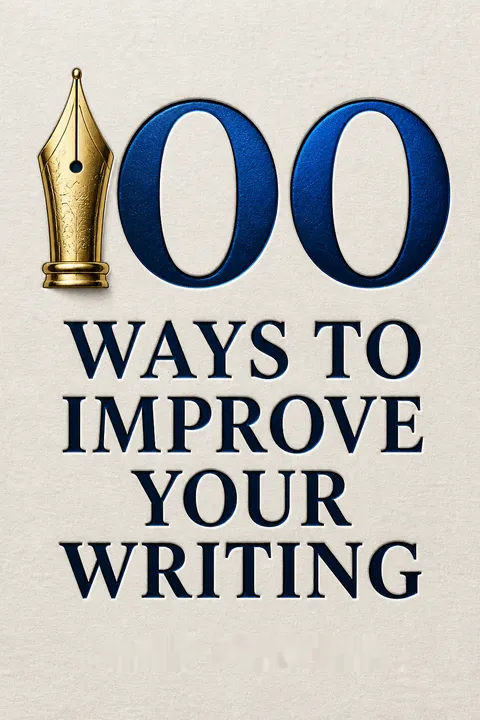


Key Takeaways
Write for the reader's task, not to display your own skill
Start with the reader. Writing succeeds when it does the job the writer intends: inform, persuade, amuse, instruct, or move someone to act. But communication is completed in the reader's mind, not the writer's. A specialist's terms may be precise for colleagues and meaningless to customers. Before drafting, identify what the reader knows, cares about, and needs to do. Use the language and context you share with that person, not the vocabulary that best advertises your expertise.
Make the writer approachable. Clear, conversational prose helps readers trust the person behind the words. Respect their time, explain unfamiliar terms, and show awareness of their circumstances. A practical guide, for instance, should acknowledge where beginners commonly struggle rather than pretending every step is easy. The goal is not to charm every reader. It is to make the exchange feel useful, honest, and human.
What's compelling is the shift from writing as self-expression to writing as a relationship with a particular reader. This resembles user-centered design: a product is judged by whether people can use it, not by the elegance of its blueprint. The same test can sharpen prose: what should a reader understand or do after this sentence? Likability is not a substitute for truth, however. A polished, friendly voice can make weak claims seem credible. The strongest version of this principle pairs warmth with visible evidence and treats reader trust as something to earn, not a rhetorical effect.
Do the reading, reporting, and thinking before you face the blank page
Gather before drafting. Provost argues that a writer needs more information than will appear in the finished piece. Check reference books, consult people who know the subject, observe details directly, and ask librarians for help finding sources. Reading both within a field and for a general audience teaches how writers translate specialized material into accessible language. Listening to everyday conversation reveals how people actually speak and what they care about.
Prepare away from the desk. A reporter in the book mentally shaped a news story while driving from a late meeting to the newspaper office, then wrote it quickly on arrival. Journals, lists, conversations, and low-pressure writing exercises can also generate material or loosen a stalled draft. One practical habit is to rehearse the lead and order of ideas before sitting down. Protect a substantial, quiet block of time when possible, rather than relying only on scattered minutes.
This approach treats writing as more than typing: observation and selection are part of the craft. The reporter's commute story makes a useful distinction between composing and recording. A writer can solve structural problems before opening a document, freeing attention for sentences later. It also anticipates the value of external cognition: a list or notebook holds details that working memory might otherwise have to juggle. Still, preparation can become an elegant form of avoidance. The test is whether research and planning resolve a real uncertainty. When they merely postpone a rough first draft, beginning imperfectly may be the better next step.
Choose one slant, then make the opening earn the reader's attention
Narrow the subject. A slant is the particular angle through which a writer approaches a subject too large to cover completely. A piece about workplace changes, for example, might focus on what a new schedule means for employees rather than recounting every board meeting. A strong lead is the opening that draws readers into the piece by giving them something to care about, such as a human consequence or a revealing fact.
Make the promise honest. Put the most relevant information where readers can find it, and do not use a dramatic opening that the rest of the piece cannot support. Establish a tone and keep it coherent. Writers may need several pages to find their real beginning while drafting; those warm-up passages are useful if they help the writer start, but they need not survive revision. Test the opening by removing early sentences until the story truly begins.
The slant solves a central problem of nonfiction: a subject is not yet an argument, story, or useful article. Choosing an angle imposes a productive limit, much as a research question makes an investigation manageable. The lead then functions like a contract, setting expectations about relevance and tone. That contract is especially important in an attention economy, where a sensational opening can attract clicks while damaging credibility. Not every piece needs a dramatic hook. A clear, immediate statement may serve a busy reader better than suspense, provided the opening gives a truthful reason to continue.
Give every paragraph a job, and make the piece easy to navigate
Put structure to work. In pyramid construction, the central facts or conclusion come first, followed by supporting detail in descending order of importance. This suits short reports and material that may be cut, because the ending can be shortened without removing information essential to the beginning. A topic sentence can help a writer define a paragraph's main point, then check that each sentence supports it.
Move without clutter. Short paragraphs make ideas easier to locate and give the page breathing room. Transitions connect one scene or idea to the next, but routine movement does not need a travel itinerary. A repeated bridge word can link neighboring paragraphs by carrying a key term from one thought into the next. Use an outline or even a short checklist to track essential points. When the piece has delivered its purpose, test the final sentences by asking whether the reader loses anything if they are removed.
This is architecture in service of attention. Readers rarely experience a text in the order its writer discovered it, so a deliberate hierarchy reduces the effort required to find the point. The inverted pyramid is particularly effective when readers may stop early or editors must shorten copy. Its limitation is that not all writing should reveal its full conclusion at the outset: narrative and discovery can depend on sequence. The useful distinction is between intentional suspense and accidental delay. Even a story with a gradual reveal benefits from clear local structure, so readers can follow what is happening without having to reconstruct the logic themselves.
Make prose sound human by tuning its rhythm, not copying a persona
Write for the ear. Prose has rhythm as well as meaning. Read it aloud to hear repeated sentence patterns, awkward sounds, abrupt shifts, or a long sentence that leaves the reader breathless. Mix short, medium, and long sentences, and vary their construction. This creates movement and emphasis instead of a steady march of identical clauses. Conversational writing borrows the warmth and directness of speech while keeping the compression and care that ordinary conversation lacks.
Show selectively. Concrete actions and details let readers infer a person's qualities instead of receiving a label from the writer. This often takes more words, so use it where the scene or evidence matters. Fragments can add force when used sparingly, but complete sentences should carry most of the work. Style grows from the subject, the choices of language, and the writer's own habits. Imitating another writer too closely makes the prose feel like a costume rather than a voice.
The musical metaphor offers a practical editing method: sound exposes problems that a silent reread can miss. It also explains why sentence variety is not merely decoration. A short sentence can land a point; a longer one can accumulate qualifications or momentum. The advice to sound conversational is strongest when understood as a reader's experience, not a transcript of speech. Real speech contains repetition and digression that may frustrate on the page. Likewise, showing is not automatically superior to telling. A quick summary can preserve pace; a vivid scene earns its space when readers need to witness a consequential moment.
Give words force with precise nouns, active verbs, and evidence
Choose words that carry weight. Short, familiar language usually makes ideas easier to grasp, while a dense word conveys substantial meaning in little space. Prefer a precise noun to a vague noun padded with adjectives, and choose a verb that names the action rather than leaning on an adverb to explain it. Active voice often makes the actor and action clear. Passive voice still has a purpose when the receiver of an action deserves emphasis or when it improves the flow.
Make claims visible. Specific details sharpen a picture, but too many details bog it down. Statistics can establish scale and context when readers can understand them; facts let readers judge an argument rather than merely accept the writer's conclusion. Put the sentence's most important information where it receives emphasis, often near the end. These are tendencies, not mechanical rules: clarity, intended tone, and the reader's needs decide which choice works.
The advice is a compact theory of information density. A specific noun can carry identity, setting, and implication at once, while a strong verb can replace a pile of modifiers. This is why concise prose can feel vivid rather than merely brief. Evidence also changes the reader's role: instead of being asked to trust a conclusion, the reader can inspect its basis. Precision has limits, though. A statistic without context can create a false impression of certainty, and active voice can obscure an unknown or irrelevant actor. The goal is not to maximize force at every turn, but to make each word's contribution legible.
Earn attention with people, fair opinions, concrete examples, and credible sources
Give ideas human stakes. Readers often connect more readily to a person than to an abstract system. A story about a policy can begin with a person affected by it; a guide can address the reader directly. Anecdotes make broad ideas graspable by showing a particular incident, while examples clarify what a general claim means. Useful details, such as dates, locations, and instructions, give writing practical value.
Show how you know. An author may state an opinion openly and still represent opposing views fairly. Name the sources that matter most, especially when a claim challenges common assumptions or could affect a decision. Quotes can bring a source's perspective and voice onto the page, but they should be trimmed carefully without changing the speaker's meaning. A strong title helps readers see the subject, scope, and appeal of the piece before they begin.
The combination of human stories and named evidence addresses two different kinds of persuasion. A person makes consequences imaginable; sources let readers assess the basis for claims. Together they can prevent data from becoming bloodless and anecdotes from standing in for proof. There is a familiar risk in beginning with a vivid individual: readers may mistake one case for a representative pattern. A responsible piece signals whether its story illustrates, explains, or statistically represents a wider reality. Opinion can also sharpen attention, as long as the writer distinguishes personal judgment from verifiable fact and gives readers enough material to disagree intelligently.
Keep the reader's trust: avoid jargon, fake suspense, and broken promises
Do not make readers fight the prose. Jargon and stale clichés force readers through language that says less than it appears to say. Excessive parenthetical remarks, footnotes, punctuation gimmicks, and wordplay can pull attention away from the subject. Use a tone that fits the material and remain consistent with the expectations set by the title and opening.
Do not hide what matters. A transition can skip routine events, but it cannot fairly conceal a consequential event the reader needs to understand. Nor should a writer withhold basic information solely to manufacture a surprise. The reader should be surprised by what happens, not made to feel tricked about what the story has been showing. When a connection between sections feels awkward, the problem may be missing explanation rather than a shortage of clever transitional phrases. A reader's trust is part of the work's structure.
This section's deeper concern is not a list of forbidden devices, but the ethics of attention. Suspense and surprise are legitimate tools; deception is different because it retroactively changes what readers thought they understood. The distinction resembles fair play in games: an audience accepts uncertainty when the rules are stable, but resents a hidden rule introduced to force a reaction. Some jargon is indispensable among specialists, and footnotes can be essential in scholarly writing. The practical question is whether a device serves the intended reader and genre. When it mainly advertises the writer's cleverness, it usually taxes trust.
Edit aloud, cut dead weight, and bend rules only for a reason
Revise after the first rush. Read every word aloud to catch clumsy rhythm, confusing sentences, tonal shifts, and errors that visual familiarity has hidden. If possible, set the draft aside for a day before judging it again. Then remove words that do no useful work and check whether each paragraph advances the subject. Ask whether the opening is clear, whether claims have support, whether technical terms need explanation, and whether the ending has earned its place.
Use rules as tools. Check grammar and punctuation carefully: tense consistency, agreement, possessives, modifiers, commas, semicolons, and quotation marks can all affect meaning or credibility. But perfect grammar cannot rescue lifeless prose, and a deliberate departure can suit a character or voice. Before breaking a rule, make sure the meaning remains clear and the choice improves the writing. The final test is not rule compliance alone, but whether the reader received what the piece promised.
Revision here is both mechanical and interpretive. Reading aloud engages a different channel from silent proofreading, while time away helps loosen the writer's attachment to intended meaning and expose what actually appears on the page. The distinction between rules and goals is especially useful: conventions lower friction between writer and reader, but rigid obedience can flatten voice. The danger is using artistic freedom as a defense for preventable confusion. A purposeful irregularity should produce a discernible effect, such as characterization or tone. If a reader cannot tell what the sentence means, intention alone does not make the choice successful.
Analysis
Provost's book is a practical craft manual organized as a sequence of compact interventions: prepare before drafting, solve the reader's problem, shape the material, strengthen the language, and revise for effect. Its unifying argument is not that every writer should obey a universal style, but that writing is an act of communication whose choices should be judged by their consequences for a reader. The rules are therefore best understood as defaults that reduce confusion and wasted effort, not as laws detached from context.
The book's most durable insight is its insistence that craft begins before the sentence. Research, observation, audience awareness, and a manageable angle determine what the prose can do. Its attention to sound is equally valuable: reading aloud turns rhythm and clarity into things a writer can hear, not merely abstract standards. The work also connects persuasive writing to trust. Strong openings must deliver, facts should support claims, and narrative transitions should not conceal information readers are entitled to understand.
Some advice reflects its period and can be too categorical. Short words, active voice, and brevity are useful tendencies, but technical writing sometimes needs specialized vocabulary, and passive constructions can responsibly emphasize affected people or unknown actors. The book's skepticism toward grammatical change also sits uneasily beside its recognition that language evolves through use. Those tensions do not weaken its central method. They reinforce the final practical test: know the convention, understand what it buys, and deviate only when the alternative communicates better. Readers gain most by treating each tip as a diagnostic question: what is this sentence doing, for whom, and at what cost?
Review Summary
100 Ways to Improve Your Writing receives mostly positive reviews for its concise, practical tips on enhancing writing skills. Readers appreciate the book's humor, clear examples, and versatile advice applicable to various writing forms. Many find it useful for both beginners and experienced writers, praising its organization and easy-to-implement suggestions. Some criticize it for dated content or overly simplistic advice. Overall, reviewers recommend it as a handy reference for anyone looking to refine their writing, from students to professionals.
People Also Read


Glossary
slant
A focused subject angleA slant is the specific aspect or perspective a writer chooses when a subject is too large to cover completely. It gives a piece manageable limits and helps determine which facts, examples, and scenes belong. A clear slant prevents an article or story from wandering across every possible dimension of its topic.
lead
An attention-holding openingThe lead is the opening sentence, paragraph, or longer opening passage that draws readers into a piece. It gives them a reason to care, often by presenting relevant information or a person they can identify with. Its promise must be supported by the material that follows, and its length should suit the whole work.
pyramid construction
Most important information firstPyramid construction places the central point and essential facts near the beginning, then follows with supporting information in decreasing order of importance. It is useful for short reports and writing that may be cut, since material at the end can be removed with less damage to the reader's understanding.
bridge word
A repeated word connecting ideasA bridge word is a significant word used in one paragraph and repeated in the transition to the next. The repetition signals a connection between neighboring thoughts and helps readers follow the shift. It works best when the shared word reflects a real link, rather than disguising a missing explanation.
dense word
A word rich in meaningA dense word conveys an idea that might otherwise require several words. Choosing one can make a sentence more concise and forceful, provided the word is familiar and precise for its intended readers. Density is not a license for obscure vocabulary: a compact word that readers do not understand fails to communicate.
FAQ
What's "100 Ways to Improve Your Writing" about?
- Comprehensive Guide: The book by Gary Provost offers 100 practical techniques to enhance writing skills, covering everything from style to grammar.
- Diverse Writing Tips: It includes advice for various writing forms, such as essays, novels, business letters, and even ransom notes.
- Structured Approach: The book is organized into chapters, each focusing on different aspects of writing, like overcoming writer's block or developing a strong beginning.
- Target Audience: It's suitable for anyone looking to improve their writing, whether they are students, professionals, or aspiring authors.
Why should I read "100 Ways to Improve Your Writing"?
- Practical Advice: The book provides actionable tips that can be immediately applied to improve writing quality.
- Broad Applicability: It covers a wide range of writing styles and purposes, making it useful for various writing needs.
- Expert Author: Gary Provost is an experienced writer and teacher, offering insights from his extensive career.
- Self-Improvement: Reading this book can help you become a more effective communicator, which is valuable in both personal and professional contexts.
What are the key takeaways of "100 Ways to Improve Your Writing"?
- Writing Techniques: Learn specific methods to enhance style, clarity, and impact in your writing.
- Overcoming Challenges: Discover strategies to tackle common writing obstacles like writer's block and grammatical errors.
- Reader Engagement: Understand how to make your writing more appealing and relatable to your audience.
- Editing Skills: Gain insights into self-editing to refine and polish your work effectively.
How does Gary Provost suggest overcoming writer's block?
- Copy Something: Copying passages from admired works can help you understand the writer's choices and get inspired.
- Keep a Journal: Regular journaling exercises your writing muscles and helps generate ideas.
- Talk About Writing: Discussing your writing projects with others can provide new perspectives and ideas.
- Physical Activity: Simple exercises like stretching can refresh your mind and improve focus.
What are some ways to develop a strong writing style according to Gary Provost?
- Think About Style: Focus on how ideas are expressed, not just the ideas themselves.
- Listen to Your Writing: Read your work aloud to ensure it has a pleasing rhythm and flow.
- Vary Sentence Length: Mix short, medium, and long sentences to create a dynamic and engaging narrative.
- Show, Don’t Tell: Use descriptive language to allow readers to draw their own conclusions.
What are Gary Provost's tips for writing a strong beginning?
- Find a Slant: Focus on a specific aspect of your subject to avoid rambling.
- Write a Strong Lead: Craft an opening that hooks the reader and sets the tone for the rest of the piece.
- Set a Tone: Establish a consistent mood or style from the start and maintain it throughout.
- Begin at the Beginning: Avoid unnecessary preambles and start with the most engaging part of your story.
How does "100 Ways to Improve Your Writing" address grammatical errors?
- Respect Grammar Rules: Understand that grammar rules exist to aid clear communication.
- Avoid Tense Changes: Maintain consistent verb tenses to avoid confusing the reader.
- Subject-Verb Agreement: Ensure verbs agree with their subjects in number and person.
- Common Mistakes: Be aware of frequent errors like dangling modifiers and split infinitives.
What are some powerful writing techniques from "100 Ways to Improve Your Writing"?
- Use Short Words: Shorter words often have more impact and are less pretentious.
- Active Verbs: Choose verbs that convey action and energy to engage readers.
- Specific Nouns: Use precise nouns to create vivid imagery and clarity.
- Positive Statements: Frame sentences positively to emphasize what is, rather than what isn’t.
How can I make my writing more likable according to Gary Provost?
- Be Likable: Present yourself as someone readers would enjoy spending time with.
- Write About People: Focus on human stories and experiences to engage readers.
- Show Your Opinion: Don’t be afraid to express your views, as it adds personality to your writing.
- Use Anecdotes: Share short, relevant stories to illustrate points and make your writing relatable.
What are the best quotes from "100 Ways to Improve Your Writing" and what do they mean?
- "Make yourself likable." This emphasizes the importance of connecting with your readers on a personal level.
- "Show, don’t tell." Encourages writers to use descriptive language to allow readers to experience the story.
- "Use short words." Highlights the power of simplicity in making writing more impactful.
- "Read your work out loud." Suggests that listening to your writing can help identify areas for improvement.
How does Gary Provost suggest editing your own work?
- Read Aloud: This helps catch awkward phrasing and ensures the writing flows well.
- Cut Unnecessary Words: Remove words that don’t add value to make your writing more concise.
- Ask Questions: Evaluate your work by questioning clarity, coherence, and engagement.
- Perfect Manuscript: Ensure your final draft is free of errors and presented professionally.
What are some common pitfalls to avoid in writing according to "100 Ways to Improve Your Writing"?
- Avoid Jargon: Use clear language instead of industry-specific terms that may confuse readers.
- Avoid Clichés: Strive for originality to keep your writing fresh and engaging.
- Don’t Intrude: Avoid inserting yourself into the narrative unless it adds value.
- Don’t Cheat: Be honest with your readers and provide all necessary information upfront.
Download PDF
Download EPUB
.epub digital book format is ideal for reading ebooks on phones, tablets, and e-readers.








