

Key Takeaways
Treat finite life as a reason to say what matters now
Mortality clarifies priorities. In a therapist’s exercise, Chandler imagined himself on his deathbed and spoke aloud to the people he loved. He broke down as he recognized how much affection he had felt but never expressed. The exercise changed how he treated his family: he began telling his father what he appreciated while there was still time, including through letters when his father was ill.
Turn insight into action. The point is not to dwell on death, but to use the certainty of an ending to distinguish urgent-looking distractions from what deserves attention. Love, contribution, and unfinished conversations often become clearer when imagined time is scarce.
What's powerful here is mortality as a focusing device, not a threat. Research on time perspective suggests that people often prioritize emotionally meaningful relationships when they experience time as limited. That shift can prompt ordinary, concrete acts: a call, an apology, or a thank-you. The exercise is not universally calming, however. For someone prone to intense anxiety or grief, imagining a deathbed may overwhelm rather than clarify. Its value lies in the next step: translate the emotional insight into a manageable act of care.
Build motivation by moving; action shapes who you become
Movement makes identity. Chandler’s central argument is that motivation need not arrive before action. Repeated behavior helps form the person who can keep doing it. He recalls Aristotle’s idea that people learn a practice by performing it: one becomes more capable of courage by taking courageous actions, not by waiting to feel courageous.
A vision needs motion. In 1976, Chandler asked Arnold Schwarzenegger what he would do after bodybuilding. Schwarzenegger described a future as a leading film star and explained that he pictured the person he wanted to become, then behaved in ways consistent with that picture. The lesson is not that confidence magically guarantees success. A chosen direction becomes motivating when it is paired with real steps.
The link between action and identity resembles a basic principle in behavioral science: behavior provides evidence about the self. A person who repeatedly follows through has more grounds to see themselves as reliable. This can make action a better starting point than waiting for confidence. Still, identity is not built by effort alone. Skills, resources, health, and opportunity affect what actions are possible, so a motivating vision should guide adaptation rather than become a test of personal worth.
Make your future vivid, then act as if it is buildable
Imagine a specific destination. Chandler argues that people can create a vision rather than wait for inspiration to arrive. A school poetry assignment asked children to invent exaggerated, flattering versions of themselves. Chandler saw this playful fantasy as a way to picture possibilities that felt inaccessible when framed as a serious prediction. A vivid image can become a working direction, even if it changes over time.
Give the image a next step. Visualization is useful when it connects to behavior. Chandler describes his daughter coaching a nervous friend to picture herself diving before attempting a dive. The friend tried it. The practical sequence is to imagine the action clearly, notice what stands in the way, and then attempt a real, appropriately scaled step.
Mental rehearsal is useful because it gives attention a target and can make an unfamiliar action feel less abstract. In sport and performance, imagery is often paired with physical practice, not treated as a replacement for it. That distinction matters: visualization can support preparation, but it cannot ensure an outcome or remove external barriers. The strongest version combines a vivid picture with feedback from reality, allowing the plan to change as new information appears.
Rehearse tougher conditions so the real challenge feels manageable
Practice above the difficulty. As a boy, Chandler dreaded facing fast pitches in Little League. His friend Rett found a perforated plastic golf ball that could be pitched faster than a baseball. The boys took turns hitting it. When Chandler returned to an actual game, the pitch seemed slower, and he hit a home run. The deliberately difficult practice had changed his experience of the real task.
Use preparation deliberately. The same principle can apply to a presentation, interview, or difficult conversation: practice with a demanding audience, a timer, or realistic questions before the consequential moment. The goal is not to make preparation punishing. It is to turn the real challenge into familiar territory by meeting a tougher version in a controlled setting.
This resembles graded exposure, where a person approaches a feared situation in manageable steps rather than avoiding it indefinitely. Rehearsal can reduce uncertainty and reveal skills that ordinary practice misses. The qualification is important: harder is not always better. Training that is unsafe, exhausting, or far beyond current ability can increase fear or cause injury. Effective preparation stretches capacity while keeping enough control for learning to occur.
Turn ambitions into daily actions you can control
Connect scales of time. Chandler’s circle game links a life ambition to a yearly target, a monthly target, and a daily action. His example is financial: decide what long-term savings would mean, calculate an annual contribution, then determine what to do today. The point is to make the future less like a distant wish and more like a chain of actions.
Measure the process. Chandler calls small, controllable steps process goals. A person might decide to make several important calls before lunch, then track whether those calls happened. He also recommends planning work rather than leaving the day to emergencies. A daily action is not the whole outcome, but it offers a practical place to begin and a way to adjust the larger plan.
Breaking a long-range aim into behaviors resembles implementation planning: specifying what action happens and when reduces the gap between intention and execution. The method also distinguishes controllable inputs from outcomes affected by other people or chance. A caveat: neat arithmetic can create false certainty. Savings rates, health goals, or business targets may change with real conditions. The framework works best as a revisable map, not a promise that every daily effort guarantees the desired result.
Keep thinking past the first obstacle; partial solutions still count
Break the all-or-nothing spell. Chandler contrasts two people facing a chaotic garage. Both initially decide that cleaning the whole space in one day is impossible. One quits. The other keeps thinking, divides the garage into sections, and commits to one section at a time. The difference is not instant optimism. It is continued problem-solving after the first discouraging thought.
Give worry a task. Chandler recommends asking what small action is available now. A person overwhelmed by several work concerns might spend five minutes on each: outline a document, arrange a meeting, or send a message. These actions may not finish the problems, but they replace helpless rumination with information and movement. Optimism, in this account, is the habit of searching for a workable part.
The useful insight is not that every problem has an easy answer, but that stopping at the first impossibility judgment hides intermediate options. This is close to cognitive reappraisal: examining an initial interpretation and generating alternatives. It can restore agency without denying difficulty. Yet persistent effort is not always wise. Some constraints are real, and a rational response may be to ask for help, renegotiate a goal, or stop investing in an unworkable plan.
Rehearse fear instead of waiting to feel brave
Let courage follow practice. Chandler dreaded speaking in public, although he wanted to teach. He joined an acting class, learned a monologue, and performed it for friends and family before presenting it to the class. At first he was frightened; repetition made the performance more familiar. The class’s warm response gave him evidence that he could do something he had long treated as impossible.
Use a role as rehearsal. Chandler also learned from acting that a person can practice a way of speaking or behaving before it feels natural. That does not mean pretending to have no fear. It means choosing the next action despite fear, then learning from the result. A manageable risk can build confidence more reliably than waiting for a perfect mood.
This approach fits exposure-based learning: feared situations often become more tolerable through repeated, deliberate contact. Rehearsal also separates a person’s current feelings from their capacity to act. The important limit is pacing. For some fears, especially those connected to trauma or serious distress, unsupported exposure can backfire. Gradual practice, meaningful choice, and appropriate help make the difference between useful courage-building and needless overwhelm.
Choose what enters your mind, or let noise choose your outlook
Notice your mental inputs. Chandler urges readers to identify what reliably lifts their energy, such as a particular song, book, or activity, and make it accessible rather than waiting for motivation to appear by accident. He suggests using driving time for learning and taking breaks from sensational news, which he believes can distort a person’s sense of everyday life.
Make attention intentional. His point is broader than media avoidance: people can choose some of the material that shapes their thoughts. A useful practice is to keep a short list of energizing inputs and return to it when attention feels scattered. Chandler also recommends quiet time without screens or conversation, giving people space to notice what they themselves think and want.
Attention is a limited resource, and repeated exposure can make some topics feel more common or personally relevant than they are. Deliberate media habits can therefore protect concentration and mood. Still, avoiding news entirely may narrow civic understanding or leave important events unnoticed. A more balanced approach is intentional intake: choose credible sources, set a time limit, and distinguish being informed from repeatedly consuming emotionally charged updates.
Replace habits by meeting their needs in better ways
Look for the function. Chandler argues that a stubborn habit often persists because it seems to provide something useful, such as relief, courage, or a pause from stress. Simply ordering it to disappear may leave that need unmet. He describes people in recovery replacing alcohol with support, friendship, and practices that offer structure, rather than relying on willpower alone.
Redesign the response. The same reasoning applies to other habits: identify what the behavior does for you, then test a healthier way to get that benefit. Chandler also tells of tap dancer Peg Leg Bates, who developed a distinctive act after losing a leg. His story illustrates that a limitation can sometimes be incorporated into a new strength, though the useful lesson is adaptation, not that every hardship is secretly beneficial.
This functional view is consistent with behavior analysis, which asks what consequence keeps a behavior going. Replacements can work because they preserve a real need while changing its cost. The approach avoids treating people as weak for struggling with a habit. Its limits also deserve respect: addiction and compulsive behavior may require professional care, social support, or medical treatment. Not every impairment can be reframed into an advantage.
Build better relationships by listening, serving, and modeling change
Make attention a gift. Chandler recommends entering conversations with genuine questions rather than rehearsing a speech. Good follow-up questions show interest and can help the other person explain what matters to them. He also tells how his young daughter eased a classmate’s embarrassment over an ink mark by putting one on her own nose, turning mockery into a shared joke.
Change your part first. Chandler argues that attempts to control other people often fail, while changing one’s own behavior can alter a relationship. His approach is to offer attention, encouragement, or useful help, and to demonstrate the conduct being requested. This is not passive agreement. It is taking responsibility for the contribution one can make instead of waiting for someone else to begin.
Curiosity and perspective-taking can lower defensiveness because they signal that the other person is not merely an obstacle to be managed. The daughter’s gesture works through solidarity: she shares the social risk rather than lecturing the group. Modeling can be more persuasive than advice, especially in families and teams. But self-responsibility has a boundary. It should not be used to excuse another person’s harmful behavior or imply that one individual can repair a relationship alone.
Choose work that energizes you and turns that energy into service
Look for what makes you come alive. Chandler spent years in advertising while repeatedly asking what made him happy. A memory of giving a talk about recovery, and feeling unusually engaged afterward, helped him recognize his interest in speaking and teaching. He began offering workshops before a full-time opportunity existed, using small acts to move toward work that felt more meaningful.
Connect energy with contribution. Chandler’s idea of purpose is not pleasure alone. It joins what engages a person with what can help others. A useful starting question is what activity produces sustained interest, then how that ability might serve a real need. The answer may not require an immediate career change. It may begin as a project, a volunteer role, or a new responsibility within existing work.
This account connects intrinsic motivation, the sense of doing something for its own sake, with prosocial purpose, the sense that one’s effort benefits others. Together, they can sustain engagement more effectively than status alone. Still, meaningful work is not always paid work, and people may lack the freedom to choose an ideal occupation. Purpose can be cultivated within constraints, while practical needs such as income, caregiving, and security remain legitimate priorities.
Analysis
This book is less a single motivation theory than a field guide to initiating action. Its repeated claim is that motivation is not merely a feeling one waits for. Attention, rehearsal, planning, movement, and relationships can be arranged so that action becomes more likely, and action then gives a person evidence about who they are. The varied anecdotes, from plastic practice balls to a difficult conversation with a teenager, keep that claim grounded in ordinary situations.
The book’s strongest practical contribution is its insistence on converting abstraction into a next move. A life purpose becomes a daily task; a frightening presentation becomes a rehearsal; a discouraging mess becomes one section to clean. This resembles modern approaches that emphasize behavioral activation and implementation planning, though Chandler delivers them through stories rather than clinical terminology. The advice is memorable partly because it treats motivation as something people can design into a day.
Its limitations come from the same confident, individual-centered voice. The book often presents optimism, planning, and will as broadly available choices. They are useful capacities, but illness, poverty, discrimination, exhaustion, and obligations can constrain action in ways that mindset alone cannot solve. Some stories also imply that an inspiring outcome validates a method, when anecdotes cannot establish that a technique works for everyone. Its media skepticism can help readers reclaim attention, but constant disengagement from public information would be a poor substitute for selective, informed participation.
The most durable reading is therefore neither literal nor dismissive. Treat the exercises as experiments, not universal laws. Use visualization alongside practice, optimism alongside honest assessment, and personal responsibility alongside recognition of external conditions. The book’s deeper promise is not that anyone can command every result. It is that people can often recover some agency by choosing what to notice, what to attempt, and what to do next.
Review Summary
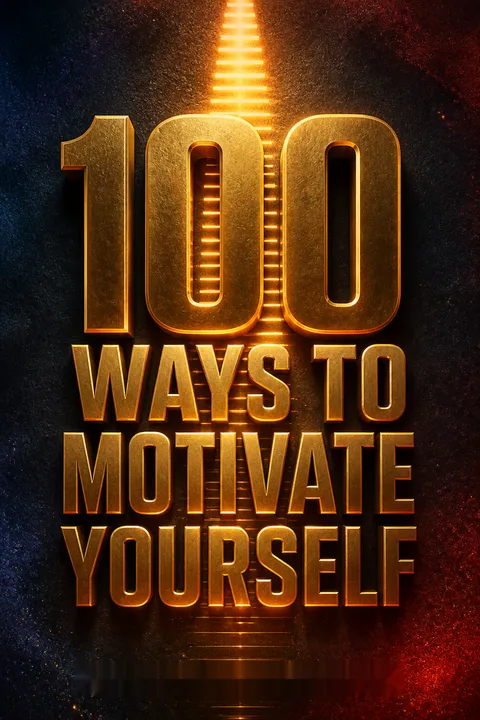
100 Ways to Motivate Yourself receives mostly positive reviews, with readers praising its practical ideas and inspirational content. Many found the book life-changing, appreciating its simple yet effective techniques for self-motivation. Some readers noted the book's honesty and lack of "magic" solutions. Critics mentioned outdated content and poor translation in some editions. Overall, reviewers recommend the book for its ability to positively impact one's mindset and actions, with many suggesting multiple readings to fully benefit from its advice.
People Also Read









Glossary
Visoneering
Turning imagined goals into actionChandler uses visioneering to mean engineering a dream into reality through deliberate mental imagery and action. A person forms a clear picture of a desired outcome, rehearses it mentally, and uses that picture to guide behavior. The concept treats visualization as a practical aid to action, not as a guarantee that the imagined outcome will occur.
process goals
Actions within immediate controlProcess goals are small actions a person can directly perform, such as completing a set number of calls or preparing specific questions before a meeting. Chandler contrasts them with outcome goals, which describe broader results. Process goals give daily work structure and a sense of progress while keeping attention on behavior a person can control.
power goal
A vivid, motivating targetA power goal is a large, specific objective made vivid enough to create energy and direction. Chandler describes it as more than a vague wish: the person can imagine its details, write it down, and use it to organize action. The goal’s value is measured partly by whether it mobilizes effort, while still requiring a workable plan.
five percent solution
Small changes that accumulateThe five percent solution is Chandler’s method of approaching personal change through modest improvements rather than dramatic reinvention. He suggests asking what a small increase in a quality, such as purposefulness, would look like today. Repeated small adjustments can make change feel manageable and reduce the discouragement that follows unrealistic overnight transformations.
Relation-Shift
Redirecting attention toward othersRelation-Shift is Chandler’s term for moving attention away from self-consciousness and toward another person’s needs, strengths, and goals. The shift can mean listening more carefully, offering encouragement, or helping someone else act. Chandler argues that this outward focus can improve both the relationship and the helper’s own engagement.
circle game
Linking goals across timeThe circle game is a planning exercise that connects a long-term aim to yearly, monthly, and daily targets. The person checks whether the shorter-term actions plausibly support the larger objective. Chandler presents it as a brief way to keep present behavior aligned with future aims, while the plan remains open to adjustment as circumstances change.
biocomputer
The mind as a programmable systemChandler uses biocomputer as a metaphor for the human mind. The metaphor emphasizes that repeated thoughts, chosen inputs, and practiced habits can shape a person’s expectations and responses. It encourages conscious attention to what one reads, hears, and rehearses, though it should not be taken as a literal account of how the brain functions.
FAQ
What's "100 Ways to Motivate Yourself" about?
- Self-Motivation Techniques: The book offers 100 practical strategies to help individuals motivate themselves and change their lives for the better.
- Personal Growth Focus: It emphasizes personal development and self-improvement through actionable advice and exercises.
- Diverse Methods: The methods range from mental exercises to physical activities, all aimed at enhancing motivation and achieving personal goals.
- Author's Experience: Steve Chandler shares insights from his own life and experiences, making the advice relatable and applicable.
Why should I read "100 Ways to Motivate Yourself"?
- Practical Advice: The book provides concrete steps and exercises that can be easily integrated into daily life to boost motivation.
- Wide Applicability: Whether you're looking to improve your career, personal life, or mental well-being, the book offers strategies that can be applied to various aspects of life.
- Inspiration and Encouragement: Chandler's writing is designed to inspire and encourage readers to take control of their lives and pursue their dreams.
- Proven Techniques: The methods are based on Chandler's extensive experience as a motivational speaker and trainer, ensuring they are tried and tested.
What are the key takeaways of "100 Ways to Motivate Yourself"?
- Self-Responsibility: The book emphasizes taking responsibility for one's own motivation and life changes.
- Action-Oriented: Motivation is linked to action; the book encourages readers to take small, consistent steps toward their goals.
- Mindset Shift: Changing one's mindset from pessimism to optimism is crucial for self-motivation.
- Continuous Learning: The importance of lifelong learning and personal growth is highlighted as a means to stay motivated.
How does Steve Chandler suggest creating a vision in "100 Ways to Motivate Yourself"?
- Visualize Success: Chandler advises creating a clear mental picture of who you want to be and living into that vision as if it were already true.
- True Lie Technique: He suggests telling yourself a "true lie" by imagining a future self that is successful and motivated, which can help in manifesting that reality.
- Focus on the Positive: Keeping your eyes on the prize and maintaining a positive outlook are essential components of creating a motivating vision.
- Incremental Steps: Break down the vision into smaller, manageable goals to make the process less overwhelming and more achievable.
What is the "deathbed exercise" mentioned in "100 Ways to Motivate Yourself"?
- Imagining Final Moments: The exercise involves imagining yourself on your deathbed and considering what you would want to say to loved ones.
- Clarifying Priorities: This visualization helps clarify what truly matters in life and what you might regret not having done.
- Motivational Impact: By confronting mortality, the exercise can motivate you to live more fully and take action on important goals.
- Emotional Release: It can also be an emotional experience that releases pent-up feelings and leads to personal insights.
How does "100 Ways to Motivate Yourself" address the concept of fear?
- Run Toward Fear: Chandler suggests that facing and running toward your fears can lead to increased confidence and personal growth.
- Fear as a Signal: Fear should be treated as a signal to open your eyes wider and take action, rather than something to avoid.
- Overcoming Stage Fright: The author shares personal experiences of overcoming his fear of public speaking by confronting it directly.
- Empowerment Through Action: Taking action in the face of fear is presented as a way to empower oneself and build self-motivation.
What role does creativity play in "100 Ways to Motivate Yourself"?
- Unexpected Solutions: Creativity is about finding unexpected solutions to challenges, not necessarily being original.
- Daily Creativity: The book encourages incorporating creativity into daily life to enhance motivation and problem-solving skills.
- Interactive Relationships: Creative thinking can improve relationships by allowing for more interactive and engaging communication.
- Self-Creation: Viewing life as a creative process where you can design and shape your own experiences is a key theme.
How does Steve Chandler suggest using "interactive listening" in "100 Ways to Motivate Yourself"?
- Engage Actively: Interactive listening involves actively engaging in conversations by asking thoughtful questions and showing genuine interest.
- Create Opportunities: By being interactive, you create opportunities for deeper understanding and connection with others.
- Motivational Conversations: Such interactions can lead to motivational insights and ideas that might not emerge in passive listening.
- Personal Growth: Interactive listening is a tool for personal growth, as it encourages open-mindedness and continuous learning.
What is the significance of "embracing willpower" in "100 Ways to Motivate Yourself"?
- Acknowledge Its Existence: Chandler emphasizes recognizing that everyone has willpower, and it's a matter of developing it.
- Discipline Equals Freedom: Developing self-discipline is equated with becoming your own disciple, leading to greater freedom and motivation.
- Small Acts of Will: Practicing small acts of willpower daily can strengthen it over time, making larger challenges more manageable.
- Positive Language: Reframing how you think about willpower and discipline can make it a more positive and motivating concept.
What are some of the best quotes from "100 Ways to Motivate Yourself" and what do they mean?
- "Action will be all that matters." - This quote emphasizes the importance of taking action over merely thinking or feeling.
- "We don’t see things as they are, we see things as we are." - It highlights the subjective nature of perception and the power of mindset.
- "The more you sweat in peacetime, the less you bleed in war." - Preparation and hard work in non-crisis times lead to better outcomes during challenges.
- "If you can dream it, you can do it." - Encourages the belief that visualizing success is the first step toward achieving it.
How does "100 Ways to Motivate Yourself" suggest handling negative thinking?
- Debate Pessimism: The book advises learning to debate your own pessimistic thoughts by building a case for optimism.
- Convert Negatives to Positives: Identify what you don't want in life and convert those negatives into positive goals.
- Power of No: Recognize the power of saying no to things you don't want, which can be a strong motivator for change.
- Use Negativity Constructively: Negative thinking can be a starting point for identifying areas of life that need improvement.
What is the "circle game" exercise in "100 Ways to Motivate Yourself"?
- Four Circles: Draw four circles representing your day, month, year, and life, and write down goals for each.
- Daily Focus: The exercise emphasizes the importance of daily actions in achieving long-term goals.
- Mathematical Connection: Ensure that the goals in each circle are mathematically connected to ensure progress.
- Unified Vision: This exercise helps create a unified vision for your life, linking daily activities to lifelong aspirations.
About the Author
Other books by Steve Chandler


Download PDF
Download EPUB
.epub digital book format is ideal for reading ebooks on phones, tablets, and e-readers.








