

Key Takeaways
Treat this memoir as a ruler's defense brief and a record of Iran's upheaval
Written in exile. The Shah begins with the months after he left Iran in January 1979: the Bahamas refused to extend his visa, Mexico revoked its welcome, and the United States admitted him for cancer treatment before he moved to Panama and, finally, Egypt. Ill, displaced, and receiving reports of executions at home, he presents the book as both personal testimony and an explanation of how his government fell.
A declared purpose. He argues that Western governments abandoned a crucial ally, that Iran's history was poorly understood, and that the revolution destroyed reforms meant to modernize the country. His account moves from ancient Persia through his father's state-building, his own oil and social programs, and the 1978-79 crisis. It is an intimate narrative, but also an argument for his legacy.
What's striking is how exile shapes the book's entire logic: political defeat becomes both a national catastrophe and a personal betrayal. Memoir can preserve details that official histories miss, especially the author's fears, conversations, and sense of diplomatic isolation. It is also a form of advocacy. The Shah has strong reasons to emphasize foreign betrayal and the benefits of his rule, so his claims about motives and responsibility require comparison with other accounts. Reading the book as testimony rather than a neutral verdict lets its vivid perspective remain valuable without mistaking certainty for proof.
Iran's geography made weakness an invitation to outside powers
A strategic crossroads. The Shah describes Iran as a country between Europe, Asia, the Indian subcontinent, and the Persian Gulf, with a central plateau ringed by mountains and deserts. This position enabled trade and empire, but also made Iran a route through which stronger powers could pursue their own interests. He traces a long history of invasions, shifting borders, and competition, arguing that a weak central government repeatedly left the country vulnerable.
A national story. His history emphasizes Persian cultural continuity: conquerors, he says, often adopted Persian traditions, while Iran absorbed outside influences without losing its identity. He presents ancient rulers such as Cyrus and later dynasties as evidence that tolerance and statecraft were part of this inheritance. The history is intended to explain why Iranian independence matters, not simply to recount dynasties.
The geographic argument offers a useful corrective to histories that treat Iran as a passive setting for decisions made elsewhere. Location creates strategic importance, but it does not predetermine political outcomes: institutions, alliances, and domestic coalitions shape how geography matters. The Shah's account also uses cultural continuity to make a political case for national unity. That is persuasive as a lens on identity, though it smooths over internal differences and conflict. A national tradition can be a source of solidarity, but it can also be selectively curated by whoever claims to speak for the nation.
A strong state can restore unity, but coercive modernization leaves debts
His father's rebuilding project. The Shah credits Reza Shah with restoring central authority after years of disorder and foreign influence. He describes a new army, roads, a navy and air force, schools, hospitals, factories, and the Trans-Iranian railway, completed in 1938. He also says his father ended foreign control over institutions such as currency and customs, while limiting the clergy's power in secular affairs.
A throne under occupation. Iran declared neutrality during the Second World War, but Britain and the Soviet Union invaded in 1941 to secure a supply route to the Soviet Union. Reza Shah abdicated, and his son took the throne at 21. The younger Shah frames the invasion as another assault on independence. His account shows the speed with which state-building can be undone when a country lacks the power to defend its neutrality.
The chapter illustrates a central state-building tradeoff: the same capacity that builds railways and administers a country can also concentrate authority and suppress competing institutions. Reza Shah's projects, as described, created durable public infrastructure, but the memoir gives less attention to whose interests were displaced or how dissent was handled. Political scientists distinguish state capacity, the ability to implement decisions, from political legitimacy, the belief that power is rightful. A government can improve the first while neglecting the second, leaving impressive structures that cannot secure consent.
The 1946 Azerbaijan crisis made sovereignty a lived question
A test after occupation. The Shah recounts Soviet troops remaining in northern Iran after the Second World War, while Moscow supported separatist movements in Azerbaijan and Kurdistan. Iranian forces were initially blocked from entering rebel-held areas. He describes the crisis as a struggle over whether Iran would remain a unified state or become a zone of foreign influence, a fear reinforced by earlier British and Russian efforts to divide the country.
A risky decision. After Soviet forces withdrew in 1946, the Shah says he backed a military advance to restore government control, despite warnings that Moscow might intervene again. Rebel forces dispersed, and their leaders fled across the border. He presents the outcome as a victory for Iranian unity and a signal of the emerging Cold War. The episode also shaped his enduring belief that independence required both public loyalty and military strength.
The episode makes sovereignty concrete: it concerns who can police territory, choose leaders, and decide whether a region remains part of the state. The Shah's account captures how security dilemmas can form, as one government's defensive move looks threatening to another and invites escalation. It also frames military success as proof of popular unity, a claim that merits independent scrutiny. Restoring borders may preserve a state, but durable unity usually requires political inclusion as well as force. The distinction matters wherever central governments face separatist claims and outside support.
Mossadegh's oil nationalism won a cause, then lost control of the crisis
Nationalization and deadlock. In 1951, after years of anger over the British-controlled oil industry, Iran nationalized its oil assets. The Shah says he supported the principle but wanted negotiation to follow. He appointed Mohammad Mossadegh prime minister, then portrays him as refusing compromise even when Britain accepted a 50-50 profit arrangement. The oil blockade halted production and sales, depriving the government of revenue and stalling the country's development plan.
A struggle over power. The Shah describes Mossadegh as increasingly concentrating authority: limiting the legislature, restricting the press, extending martial law, and weakening constitutional checks. After Mossadegh resigned in 1952 and returned amid unrest, the Shah says the crisis became a contest over the monarchy as well as oil. This is the Shah's highly critical account of a nationalist leader whose popularity rested on a genuine demand for control over Iran's resources.
The episode separates a policy goal from the governing capacity needed to achieve it. Nationalizing an industry can assert sovereignty, but production, technical expertise, shipping, and markets still determine whether that sovereignty pays. The Shah is persuasive about the economic danger of a prolonged impasse, yet his depiction of Mossadegh also serves to legitimize the monarchy's own authority. Both propositions can be true: a popular cause can be mishandled, and an opponent's political failures do not automatically justify every measure taken against him. The book's self-interested framing is essential context.
Oil control built national leverage while tying prosperity to a volatile resource
From concession to control. The Shah traces foreign influence in Iranian oil from the 1901 D'Arcy concession, which promised the government 16 percent of profits, through the British-controlled company that followed. After the 1953 crisis, a 1954 agreement gave Iran a 50 percent share of consortium profits. A 1957 petroleum law widened the National Iranian Oil Company's role, and in 1973 the consortium became a buyer while the Iranian company took over operations.
A larger price, a larger bet. The Shah says Iran's oil revenue reached about $22 billion in 1977. He defended the 1973 price increases as overdue and argued that oil should be conserved for higher-value uses while other energy sources were developed. But the book also shows how heavily Iran's modernization depended on oil income, making investment and public programs vulnerable to falling production or political disruption.
The story anticipates a resource-governance problem: control over extraction is not the same as a diversified economy, and revenue can strengthen a state while making it dependent on a single export. The Shah's insistence on a fairer producer share challenged the assumption that consumers alone should set the terms. His argument for conservation also recognizes that cheap energy can discourage alternatives. Yet price gains can intensify inflation, geopolitical friction, and expectations that governments may struggle to meet. Sovereignty over a resource is most secure when paired with transparent revenue management and a broader productive base.
The White Revolution expanded opportunity through land, schools, health, and women's rights
Reform from above. The White Revolution was the Shah's program to change landholding and expand public services. Land reform, carried out in stages, made about 2.5 million peasant families owners of land they worked, according to his account. Other measures extended voting rights to women, introduced worker profit-sharing, and created rural Literacy, Health, and Development Corps. By 1978, he says, student enrollment had grown from 1.5 million to more than 10 million.
Justice closer to home. The Houses of Equity were village-level courts staffed by locally chosen residents. The Shah reports that by the end of 1977 more than 10,000 such bodies served 19,000 villages and had resolved about three million disputes. The reforms aimed to make land, education, health care, and basic justice more accessible, particularly outside Iran's major cities.
The reforms show why material access matters to political life. Land ownership, schooling, health care, and local dispute resolution can increase people's practical ability to participate in society, not merely improve statistics. The Houses of Equity are especially revealing: they bring decision-making closer to those affected and reduce the cost of using formal institutions. Still, the figures come from the ruler defending the program, and access does not by itself guarantee quality or equal influence. Evaluating reform requires asking not only what services existed, but who controlled them and whether people could criticize the government delivering them.
Reforms without political participation can create progress without durable consent
Modernization's political limit. The Shah presents his program as a rapid route out of poverty and illiteracy, but the book records the tight controls surrounding it. SAVAK, the state security and intelligence organization, monitored perceived threats; the Shah says it employed fewer than 4,000 people in 1978 and that abuses were stopped when he learned of them. He also describes ending multiparty politics through the Resurgence Party in 1974, later admitting that the single-party experiment was a mistake.
A growing mismatch. By the late 1970s, students, merchants, religious groups, and political opponents were challenging the government. The Shah's efforts to control inflation included student price inspectors and tribunals for violations, actions that angered some shopkeepers. He describes these measures as efforts to manage a fast-changing society, but also shows how an ambitious reform program could be experienced as orders imposed from above.
This tension is central to the memoir: social transformation was expansive, while political competition remained narrow. In institutional terms, the state could gather information and execute projects but had weak channels for hearing opposition before it became a street movement. Security agencies may contain violence in the short term, yet surveillance can make public compliance look like consent. The Shah's admission that the single-party system failed is significant, but the account gives limited space to how political exclusion itself contributed to discontent. Development is more resilient when citizens can contest decisions without being treated as threats.
In 1978, concessions and force both failed to rebuild legitimacy
A spiral of protest. The Shah describes demonstrations, strikes, and attacks on public buildings accelerating through 1978. He announced free elections, replaced prime ministers, freed prisoners, and eventually declared martial law. Opposition groups used forty-day mourning gatherings after deaths to organize further protests, while the oil strikes cut daily production from about 5.8 million barrels to 1.7 million by late December, according to his account.
The choice he recounts. The Shah says he rejected repeated calls to use overwhelming force, fearing that firing on demonstrators would make him rule through bloodshed. He also describes receiving contradictory assurances from Western officials and failing to secure a coalition government with opposition leaders. He left Iran in January 1979, hoping his departure would reduce violence. The narrative treats the collapse as a convergence of domestic opposition, institutional paralysis, and foreign misjudgment.
The collapse exposes a problem of political feedback. When leaders hear criticism mainly through security channels, they may mistake the absence of open dissent for stability, then face a crisis when discontent becomes visible. The Shah's restraint may have limited immediate bloodshed, as he believed, but the memoir cannot establish what alternative choices would have produced. Nor can foreign signals alone explain the loss of domestic legitimacy. Its strongest insight is less a verdict about who caused the revolution than a portrait of decision-making under uncertainty, with institutions too weak to reconcile competing claims.
Judge revolutionary promises by institutions, not the slogans that launch them
After the monarchy. The Shah describes the new Islamic Republic through its revolutionary tribunals, summary executions, arrests, and restrictions on political rights. He argues that the system contradicted its promises of justice and that it dismantled institutions built under his rule. He reports that former officials and military leaders were executed without ordinary legal protections, and contrasts this with the due process he says existed under his government.
A warning, not a neutral audit. The closing chapters present the revolution as a danger to Iranian culture, economic development, and religious life. The Shah's comparisons are self-exculpatory, and his account of abuses under his own government is limited. Still, his focus on courts, political authority, and the treatment of opponents raises a durable question: after a revolution claims to speak for the people, what safeguards prevent the new rulers from exercising power without accountability?
The book's closing challenge is institutional rather than merely ideological: a government must be judged by how it treats people who cannot protect themselves from it. Due process is not a decorative feature of liberal politics. It constrains the state's power to label opponents as enemies and punish them without evidence or appeal. At the same time, a former ruler's denunciation of his successors cannot substitute for an honest account of his own security apparatus. The useful standard is consistent scrutiny: examine law, evidence, and accountability under both regimes, rather than letting one government's cruelty excuse another's.
Analysis
Answer to History is a political memoir written in exile, but its deeper structure is an argument about sovereignty. The Shah links Iran's vulnerability to its geography and history, then narrates his father's centralization, the Soviet and British occupation, the Azerbaijan crisis, the oil struggle, and the White Revolution as successive efforts to prevent national disintegration. The final chapters recast the 1979 revolution as the result of domestic opposition and Western abandonment, and warn that revolutionary rule can destroy the very freedoms it claims to restore.
The book's particular value lies in its view from the center of power. It records how the Shah interpreted diplomatic signals, feared Soviet expansion, and understood oil revenues as the means to transform Iran. Its account of the White Revolution is unusually concrete: land distribution, rural education and clinics, women's political rights, village courts, industrial ownership, and large-scale energy projects. These details reveal the governing ambition behind the monarchy, not just its slogans.
Its central limitation is equally important. The Shah is both witness and defendant. He presents his policies in their most favorable light, attributes many opponents' motives to foreign influence or ideological manipulation, and gives comparatively little attention to how political exclusion, security practices, and concentrated authority helped generate opposition. His claims about what the West intended, and what a different response might have achieved, are interpretations rather than independently established facts.
The most useful reading therefore holds two truths in view. Iran's development and independence were genuine concerns, and rapid modernization did produce programs with significant reach. Yet administrative achievement cannot stand in for political legitimacy, and a ruler's fear of disorder can itself narrow the channels through which a society negotiates change. The book is less a final history of the revolution than a revealing document of how a fallen ruler explained it: with strategic clarity, personal anguish, and a powerful interest in vindication.
Review Summary
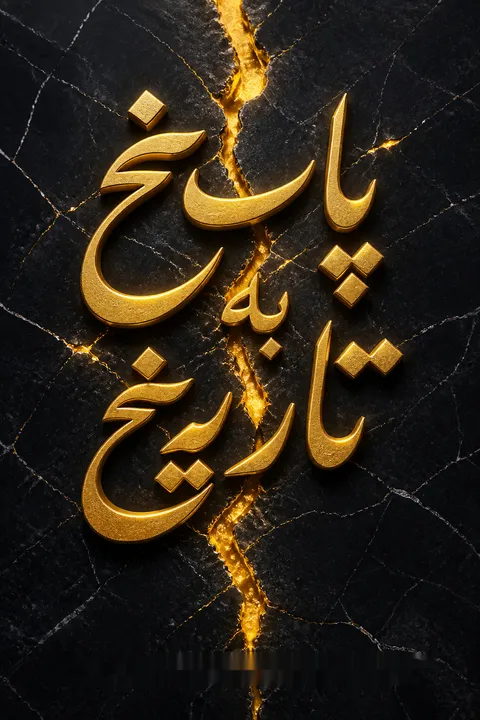
پاسخ به تاریخ presents Mohammad Reza Pahlavi's perspective on his reign and fall. Readers find it informative but biased, with some praising his vision and others criticizing his portrayal of events. The book is seen as a defense of his actions and policies, offering insights into Iran's modernization efforts. Many note the contrast between his claims and the revolution's occurrence. The translator's footnotes are controversial, with some finding them intrusive. Overall, the book is considered valuable for understanding Iran's recent history, despite its subjective nature.
People Also Read







Glossary
White Revolution
State-led social reformsThe Shah's name for a wide program of reforms launched in 1963 and expanded over the following years. It included land redistribution, women's voting rights, worker profit-sharing, rural education and health services, local courts, and measures affecting forests, water, housing, and public administration. The Shah presented it as a peaceful route to rapid modernization and greater social equality.
Houses of Equity
Village-level justice councilsLocal courts created under the White Revolution to resolve minor disputes in villages. Five residents, selected by villagers for honorary service, heard cases without the costly procedures of formal courts. The Shah said these bodies made justice more accessible to rural people and reduced the burden on the national judiciary.
Literacy Corps
Rural education serviceA White Revolution program that sent conscripts and volunteers to teach in communities lacking adequate schools. The corps also helped build or repair schools and undertake other local projects. The Shah described it as a supplement to the regular education system, intended to reduce rural illiteracy and make public services reach remote areas.
SAVAK
State security and intelligence agencyThe Persian abbreviation for the Organization for State Security and Information, created to gather intelligence and counter subversion. The Shah says it was established in response to communist activity and argues that its role and size were exaggerated by his opponents. He acknowledges that abuses occurred, while maintaining that he ordered torture stopped when he learned of it.
Great Civilization
Vision of a modern IranThe Shah's aspirational name for the society he hoped Iran would become through economic growth, education, technology, cultural development, and social reform. He imagined a modern, powerful country that remained rooted in Persian and Islamic traditions, relied less on oil, and could offer its people a high standard of living.
The Unholy Alliance of Red and Black
Communist and clerical oppositionThe Shah's political label for what he saw as cooperation between communist or leftist movements, represented by the color red, and reactionary religious forces, represented by black. He used the phrase to explain opposition to his modernization program and the coalition that challenged his rule. It is his interpretation of the opposition's motives, not a neutral description of every group involved.
FAQ
What's "Answer to History" about?
- Personal Account: "Answer to History" is a memoir by Mohammad Reza Pahlavi, the last Shah of Iran, detailing his perspective on the events leading to his overthrow in 1979.
- Historical Context: The book provides insights into Iran's political landscape, the Shah's policies, and the international dynamics that influenced Iran's history during his reign.
- Political Analysis: It discusses the Shah's views on the geopolitical struggles between the U.S. and the Soviet Union, and how these affected Iran.
- Personal Reflections: The Shah reflects on his achievements, mistakes, and the betrayal he felt from both domestic and international actors.
Why should I read "Answer to History"?
- Firsthand Perspective: It offers a unique, firsthand account of a pivotal moment in Middle Eastern history from the perspective of a key figure.
- Understanding Iran's Past: The book provides context for understanding the socio-political changes in Iran and the roots of its current political climate.
- Geopolitical Insights: Readers gain insights into the Cold War dynamics and how they played out in the Middle East.
- Personal Reflection: It is a personal narrative that explores themes of power, betrayal, and the complexities of leadership.
What are the key takeaways of "Answer to History"?
- Shah's Vision: The Shah aimed to modernize Iran through his White Revolution, focusing on land reform, women's rights, and economic development.
- Geopolitical Struggles: The book highlights the impact of U.S. and Soviet interests in Iran and the Shah's attempts to navigate these pressures.
- Internal Challenges: It discusses the internal opposition from religious and political groups, which eventually led to his downfall.
- Legacy and Regret: The Shah reflects on his legacy, expressing regret over certain decisions and the ultimate failure to maintain his rule.
What are the best quotes from "Answer to History" and what do they mean?
- "Some books of history become part of history; some books of current events are themselves current events." This quote underscores the dual nature of the book as both a historical account and a reflection on contemporary events.
- "I am not a man to go where I am not wanted." Reflects the Shah's feelings of betrayal and isolation, particularly from the United States.
- "The forces against me, however, proved stronger, although they were gathered without unified motive or larger purpose." Highlights the complex and multifaceted opposition he faced, both domestically and internationally.
- "I pray for those who remain blind to falsehood and deceit." Indicates the Shah's hope for enlightenment and understanding among his people and critics.
How does Mohammad Reza Pahlavi describe his exile in "Answer to History"?
- Health Struggles: The Shah describes his declining health and the medical treatment he sought in various countries during his exile.
- Political Isolation: He felt politically isolated, particularly by the U.S., which he believed had abandoned him.
- Emotional Turmoil: The exile was a period of emotional turmoil, marked by reflections on his reign and the events leading to his overthrow.
- Search for Asylum: The book details his search for a country willing to grant him asylum, highlighting the geopolitical tensions of the time.
What is the "White Revolution" as described in "Answer to History"?
- Modernization Effort: The White Revolution was a series of reforms initiated by the Shah aimed at modernizing Iran and improving social and economic conditions.
- Key Reforms: It included land reform, women's suffrage, and the nationalization of forests and water resources.
- Opposition and Challenges: The reforms faced significant opposition from traditional and religious groups, contributing to political unrest.
- Legacy: The Shah viewed the White Revolution as a crucial step towards creating a "Great Civilization" in Iran.
How does "Answer to History" portray the relationship between Iran and the U.S.?
- Strategic Alliance: Initially, the Shah describes a strong strategic alliance with the U.S., particularly during the Cold War.
- Betrayal: He felt betrayed by the U.S. during the final years of his reign, believing they supported his opposition.
- Economic and Military Ties: The book discusses the economic and military support Iran received from the U.S. and how this influenced Iranian policies.
- Human Rights Criticism: The Shah addresses the criticism from the U.S. regarding human rights, which he felt was part of a larger geopolitical strategy.
What role does the Soviet Union play in "Answer to History"?
- Geopolitical Rival: The Soviet Union is portrayed as a constant geopolitical rival, seeking to expand its influence in Iran.
- Support for Opposition: The Shah accuses the Soviets of supporting communist elements within Iran, contributing to internal instability.
- Diplomatic Relations: Despite tensions, the Shah describes efforts to maintain diplomatic and trade relations with the Soviet Union.
- Cold War Context: The book places Iran's struggles within the broader context of the Cold War, highlighting the strategic importance of Iran.
How does "Answer to History" address the internal opposition in Iran?
- Religious Opposition: The Shah discusses the significant opposition from religious leaders, particularly Ayatollah Khomeini.
- Political Dissent: He describes the political dissent from various groups, including communists and nationalists.
- Failed Reforms: The book reflects on how his reforms, intended to modernize Iran, were met with resistance and ultimately contributed to his downfall.
- Complex Alliances: The Shah highlights the complex alliances between different opposition groups, which he believes were manipulated by external forces.
What insights does "Answer to History" provide on the Iranian Revolution?
- Unexpected Overthrow: The Shah expresses surprise at the speed and intensity of the revolution that led to his overthrow.
- Role of Religion: He emphasizes the role of religious leaders in mobilizing opposition and framing the revolution as a return to Islamic values.
- Western Influence: The book suggests that Western countries, particularly the U.S., played a role in the revolution by withdrawing support.
- Personal Reflection: The Shah reflects on his own mistakes and misjudgments that may have contributed to the revolution's success.
How does "Answer to History" depict the Shah's view on modernization?
- Vision for Iran: The Shah had a vision of transforming Iran into a modern, industrialized nation with a strong economy and social infrastructure.
- Challenges Faced: He faced significant challenges, including resistance from traditionalists and logistical issues in implementing reforms.
- Economic Growth: The book details efforts to boost economic growth through oil revenues and industrialization.
- Cultural Tensions: The Shah acknowledges the cultural tensions that arose from rapid modernization and Westernization efforts.
What lessons does "Answer to History" offer for current and future leaders?
- Balance of Power: The importance of balancing modernization with cultural and religious values to maintain social harmony.
- Geopolitical Awareness: The need for leaders to be aware of international dynamics and how they can impact domestic stability.
- Listening to Opposition: The value of listening to and addressing the concerns of opposition groups to prevent unrest.
- Legacy and Reflection: The significance of reflecting on one's legacy and learning from past mistakes to guide future decisions.
Download PDF
Download EPUB
.epub digital book format is ideal for reading ebooks on phones, tablets, and e-readers.








