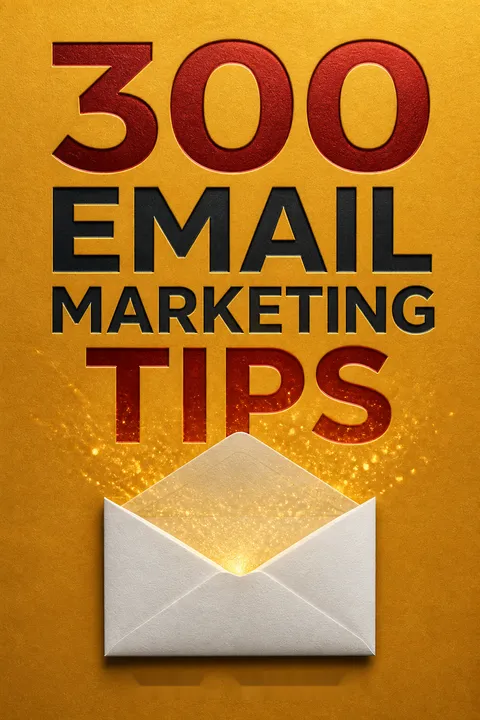


Key Takeaways
Build an email relationship that earns sales, not a list that looks impressive.
Trust beats headcount. Kothand argues that a list is valuable because it gives a business repeated, direct contact with potential buyers, not because it has a large subscriber total. She reports seeing a small list bring in $4,000 a month while a list of 16,000 subscribers earned about the same. A subscriber may buy immediately or months later, so ongoing relevance matters more than a single sales pitch. Email also gives a business a direct channel that is less vulnerable to changes in social platforms.
The aim is movement. Kothand describes a path from stranger to reader, subscriber, customer, and advocate. Her five-part process starts with attracting visitors, capturing their email, offering an initial purchase, welcoming them, and sending relevant follow-up. The job is to help the right people take the next step, not simply collect addresses.
The distinction between audience size and audience readiness is central to useful marketing. A smaller, well-matched list can outperform a large, disengaged one because relevance lowers the distance between attention and action. This aligns with customer-relationship thinking: value accumulates through repeated, useful contact rather than a single exposure. Still, an email list is not fully owned in the literal sense. The sender depends on an email provider, mailbox rules, and consent practices. Direct access is an advantage, not immunity from platform risk or subscriber choice.
Choose lead magnets that attract the buyers your offer can actually help.
Make the connection obvious. A lead magnet is a free resource exchanged for an email address. Its subject should point toward a paid offer, so the people who request it are more likely to care about that offer. Kothand contrasts a homeschooling business offering a teaching-plan resource with one offering an unrelated essential-oil guide. The first gives subscribers a clear reason to be interested in a later homeschooling product; the second requires the business to manufacture that connection.
Keep the promise narrow. An effective lead magnet is quick to use, specific, and focused on one problem the audience already recognizes. It should produce a small, practical improvement and relate to an existing or plausible future product. A resource that attracts many sign-ups but leads nowhere may increase list size while adding little business value.
This is a useful application of market segmentation before a sales conversation begins. The resource itself signals a reader's interest, making it a lightweight qualification tool. The important distinction is between attracting people who share a topic and finding people willing to pay for a solution. Those groups overlap, but they are not identical. Testing which subscribers later click, reply, or buy can reveal whether the magnet is drawing likely customers or simply appealing to a broad appetite for free material.
Fix the conversion path before buying more traffic.
Repair the leak first. More visitors will not build a list if the sign-up offer is unclear or difficult to find. Kothand recommends placing opt-in forms where readers already pause, including popular articles, the About page, and the site footer. She also recommends a dedicated landing page, a focused page with fewer distractions than a typical website. In her own results, landing pages converted 30% to 80% of visitors, compared with 5% to 20% for embedded forms. Those are her reported ranges, not a guarantee for every business.
Sell the resource clearly. A landing page should state the resource's main benefit, describe what it helps the reader do, and show a visual or relevant proof. Use the language readers use for their problem. Then track sign-ups against visits and adjust the offer or page before assuming that traffic volume is the problem.
The broader principle is conversion before acquisition: improving a weak step in a journey can make existing attention more productive. This resembles funnel analysis in product design, where teams locate the point at which users abandon a process rather than reflexively buying more traffic. The author's conversion figures are personal experience and may reflect differences in traffic source, audience, and page design. A disciplined test should compare similar visitors and keep the promise consistent, rather than treating one impressive percentage as a universal benchmark.
Make the first email sound like the reason subscribers signed up.
Continue the same experience. Welcome emails receive unusually high attention. The book cites an average open rate of about 50%, making this a valuable moment to establish the brand's voice and explain what subscribers can expect. The email should deliver the promised resource, briefly show why the sender can help, and give a clear preview of what comes next. Credibility need not mean credentials: relevant experience and useful lessons can establish trust.
Open a real conversation. A specific question can invite a reply and reveal what subscribers need, but it should be one the sender is prepared to answer. A short teaser can create interest in the next message, provided the promised point is actually delivered. Avoid stacking requests for surveys, follows, and favors into a first contact. Too many choices dilute the one action that matters most.
A welcome email is a small but meaningful onboarding experience. In service design, onboarding reduces uncertainty by explaining what happens next; the same logic applies here. A clear expectation about frequency, content, and access can prevent disappointment and make a new subscriber feel recognized. The cited open-rate figure comes from studies available to the book's 2019 publication context, and should not be read as a current universal norm. More importantly, an open is attention, not proof of trust or intent to purchase.
Move subscribers toward a decision, not through a preset email count.
Build a sequence around readiness. A nurture sequence is a planned series of automated emails that develops a relationship and guides a subscriber toward a defined action. Kothand describes subscribers at different stages: some do not recognize a problem, some know the problem but not the available solutions, and others are comparing solutions or already understand the offer. The sequence should meet readers where they are, explain the problem, make the solution understandable, and address reasonable objections.
Earn the ask. Each message should advance the reader's understanding rather than serve as a container for another free download. Small commitments, such as replying or clicking to express interest, can help identify active readers. The number of emails depends on the offer's complexity and the questions it raises. Seven messages are not a reliable formula for every product or audience.
This approach treats persuasion as learning rather than pressure. A well-designed sequence helps people evaluate whether a solution fits, which is more durable than manufacturing urgency before the reader understands the problem. The stages of awareness are useful planning categories, not fixed psychological boxes; people can know a problem well and still be skeptical of a particular seller. Measuring where readers disengage, and listening to their questions, makes the sequence an adaptive teaching tool instead of a rigid script.
Let your calendar prepare buyers before a promotion arrives.
Connect email to the business plan. An email editorial calendar turns the question of what to send into a planning problem. Kothand suggests organizing messages around upcoming offers, monthly themes, or a specific business goal. For a promotion, useful context can begin two or three weeks before the offer opens, giving readers time to understand the issue and evaluate the proposed solution. For a business without products yet, a theme can help create a coherent run of useful emails.
Separate ongoing from timely. A sequence is automated for recurring purposes such as onboarding or an evergreen offer. A broadcast is sent for something time-sensitive, such as a live promotion. New subscribers should not be dropped into a campaign whose context they have not received. Tagging people by sequence status helps prevent duplicate welcomes and irrelevant launch messages.
The calendar connects content strategy with operational discipline. It makes promotion less like an interruption and more like a continuation of topics subscribers have already encountered. This is similar to spaced learning: ideas become easier to assess when introduced in stages rather than delivered all at once. Planning, however, can become a substitute for publishing. A modest three-month plan is useful only if it leaves room to respond to current audience questions and new information rather than treating the calendar as a contract.
Use small first purchases to turn subscribers into customers.
Offer a low-risk first step. A tripwire is a relatively inexpensive product presented soon after someone subscribes, often for less than $50. It might be a guide, template, or short lesson. Its purpose is not merely immediate revenue: a purchase introduces the subscriber to the buying experience and lets the business demonstrate the quality of its work. The offer still needs to fit the reason the person subscribed, and its value should justify the price.
Design the route to the offer. A tripwire can appear on the page shown after sign-up or inside a relevant email sequence. For products sold continuously, an evergreen funnel uses an ongoing pathway of content, emails, and a sales page. Kothand reports typical conversion rates ranging from 1% to 8%, with 2% to 3% as an average in her discussion. A small sample is not enough to conclude that a product has failed.
A low-priced purchase can reduce uncertainty on both sides: the buyer tests the seller, while the seller learns which subscribers will pay. That makes the first offer a form of behavioral evidence, not just a discounted product. The book also advocates evergreen countdown timers to create urgency. Such tools require care. If a deadline appears personal but never expires in a meaningful way, it can undermine the very trust the sequence is meant to build. Clear conditions and honest pricing preserve the value of urgency.
Judge email by action, and remove the dead weight.
Separate attention from results. An open rate indicates that a message was opened; a click-through rate indicates that a reader followed a link. Neither alone proves that an email produced a sale or other business outcome. The book reports different historical benchmarks from HubSpot and Mailchimp, illustrating that averages vary by source and industry. Its practical advice is to ask whether the email's purpose is clear, whether readers click, and whether the resulting activity supports the business goal.
Recheck inactive subscribers. Kothand cites annual list decay of about 22.5% and recommends identifying people who have not engaged for three to six months. Send a short re-engagement series, invite them to confirm they want to stay, and remove those who do not respond within a defined period. This improves the usefulness of engagement figures and avoids paying to maintain contacts who no longer want the messages.
The strongest measurement lesson is to distinguish proxy metrics from outcomes. Opens and clicks can diagnose parts of a message, but purchases, qualified inquiries, or meaningful replies are closer to business value. Open tracking is also less dependable in contemporary email systems because privacy features can register opens without a person reading the message. List cleaning should therefore rely on more than opens alone, including clicks, replies, and purchase behavior. A re-engagement campaign is both a hygiene measure and a final, respectful check of consent.
Automate relevance by tagging what subscribers click, buy, and need.
Use behavior to tailor messages. Segmentation means grouping subscribers by shared characteristics or actions so that messages can be more relevant. A person who requests a resource on one topic can be tagged as interested in it; a click on a product page can mark a potential customer; a purchase can trigger a customer welcome sequence and remove that buyer from sales messages for the same product.
Let systems serve people. Kothand also recommends using automation to request feedback after a purchase, identify highly engaged subscribers, and learn interests through simple one-click surveys. These systems reduce forgotten follow-ups and help a business find possible advocates or testers. The underlying categories should remain manageable: product purchased, topic interest, resource downloaded, and current sequence status are practical starting points.
Automation is most useful when it encodes a meaningful distinction, not when it merely increases message volume. Behavioral signals can make communication timely, much as recommendation systems use past choices to predict relevance. But a click is an imperfect signal: curiosity, accidental taps, and genuine purchase intent can look similar. The safest use is to treat tags as hypotheses, then offer useful options and allow preferences to change. Personalization works best when it gives subscribers control rather than making them feel watched.
Write for the skimmer, with one obvious next step.
Make the message easy to move through. Kothand recommends short paragraphs, one thought at a time, and an opening that reaches the subject quickly. A conversational voice can make an email feel like an extension of the sender's wider content. A postscript can restate the main action, invite a reply, or create interest in a later message. Plain-text emails may also display more reliably across devices than elaborate designs, though visual templates suit some businesses, especially retail.
Match the parts to their jobs. The subject line earns attention; the email body should make the click worthwhile. Use one central call to action, even if the link appears more than once for convenience. Too many competing requests make the reader choose among the sender's priorities instead of taking the intended step.
The advice reflects a cognitive constraint: readers scan before deciding whether to invest attention. White space, concrete openings, and a single action reduce the effort required to understand a message. That does not mean every email must be short or plain. A detailed explanation can earn attention when the audience wants depth, while visual design can be essential in product-led commerce. The useful test is not whether a format is fashionable, but whether it renders clearly, serves the reader, and makes the intended action unmistakable.
Analysis
This book's most valuable idea is not a clever subject line or a particular automation. It is the insistence that email marketing is a connected operating system. A resource attracts a particular kind of reader, the sign-up experience establishes expectations, messages build understanding, an offer invites action, and follow-up distinguishes a buyer from a prospect. When one link is weak, more traffic or more automation may simply amplify the weakness.
The book is unusually concrete for a business guide. It follows a small-business owner from attracting a subscriber to serving customers, and its practical examples make the system imaginable without requiring a sophisticated marketing department. Its strongest corrections are to treat relevance as more valuable than list size, to reject a universal email count, and to regard unsubscribe activity as information rather than catastrophe.
Its limits matter. Several performance figures are drawn from studies or industry benchmarks cited in 2019, and the author's own conversion ranges cannot predict another business's results. Open rates are particularly fragile as a modern measure because privacy protections can distort tracking. The book's recommendations for evergreen timers also sit in tension with its emphasis on trust: a countdown that implies a false deadline may win a purchase while weakening credibility.
A careful reader should treat the proposed metrics and tactics as hypotheses to test, not laws. The book's durable method is diagnostic: identify the audience, connect the resource to a real offer, find where readers stop moving, and improve that step. Start with one relevant magnet, a sound welcome, and a purposeful follow-up path. Add complexity only when the business has a clear reason to segment, automate, or expand. That approach preserves the book's central promise while avoiding the trap it warns against: building an elaborate marketing machine before shipping something useful.
Review Summary
300 Email Marketing Tips receives mostly positive reviews, with readers praising its practical, actionable advice for email marketing. Many find it valuable for beginners and small business owners, appreciating its concise format and comprehensive coverage. Some experienced marketers consider it basic but still useful for inspiration. A few critics find it too simplistic or casual. Overall, reviewers commend the book for its clear, no-fluff approach to email marketing strategies, helping readers improve their campaigns and connect with their audience effectively.
People Also Read







Glossary
5-Step Activation Process
Subscriber-to-customer pathwayKothand's name for a basic email marketing journey: attract traffic to a relevant resource, capture an email address, optionally present an initial offer, send a welcome message, and follow with emails designed to guide the subscriber toward a chosen action. It frames email marketing as connected steps rather than isolated tactics.
lead magnet
Free email sign-up resourceA piece of content or another useful incentive offered in exchange for a reader's email address. In the book's strategy, it should address a recognized problem, offer a quick and specific benefit, and connect naturally to the business's products or services so it attracts likely customers rather than unrelated freebie seekers.
content upgrade
Resource tied to an articleA sign-up incentive that expands or supports a particular piece of content. For example, an article about meal planning could offer a printable planning schedule. Unlike a general resource, a content upgrade is linked to the subject the reader is already exploring, which can make its relevance immediately clear.
nurture sequence
Automated relationship-building emailsA planned series of emails sent automatically after a person subscribes or takes another defined action. Its messages can introduce the business, develop the reader's understanding of a problem, share relevant material, address objections, and guide the subscriber toward a chosen next step or offer.
tripwire
Low-cost first purchaseA relatively inexpensive product offered near the point when someone joins an email list. Common formats include templates, short guides, and lessons. It gives a subscriber a low-risk way to become a buyer and gives the business an early opportunity to demonstrate its expertise and product quality.
evergreen funnel
Ongoing automated sales pathwayA continuously available route from an entry resource through follow-up emails to an offer. Unlike a live launch, it is not restricted to a single scheduled sales period. Kothand describes it as a combination of relevant entry points, a sales page, an email sequence, delivery and payment processes, and optional retargeting.
microcommitment
Small sign of interestA modest action a subscriber takes before making a larger decision, such as replying to an email, clicking to express interest, or completing a brief survey. These actions can help a business distinguish active readers from passive ones and build familiarity with taking clear next steps.
segmentation
Grouping subscribers by relevanceDividing a mailing list into groups based on shared conditions or behavior, such as the resource someone requested, links they clicked, or products they purchased. Segments allow a business to send more pertinent messages, avoid irrelevant promotions, and adapt follow-up to different subscriber interests.
broadcast
One-time timely emailAn email sent to subscribers as a specific, time-sensitive message rather than as part of an automated sequence. Examples include live-launch announcements and timely promotions. The book contrasts broadcasts with automated sequences used for onboarding, ongoing nurturing, and offers that remain available.
FAQ
What's "300 Email Marketing Tips" about?
- Comprehensive Guide: "300 Email Marketing Tips" by Meera Kothand is a detailed guide on how to effectively use email marketing to convert subscribers into buyers and grow a six-figure business.
- Structured Approach: The book is organized into sections that cover branding your email list, creating lead magnets, capturing traffic, and more, providing a step-by-step approach to mastering email marketing.
- Practical Tips: It offers 300 actionable tips, strategies, and ideas that are designed to help entrepreneurs and marketers enhance their email marketing efforts.
- Focus on Results: The book emphasizes the importance of building a quality email list that drives sales, rather than just focusing on the number of subscribers.
Why should I read "300 Email Marketing Tips"?
- Proven Strategies: The book provides strategies that have been tested and proven to work, helping you avoid common pitfalls in email marketing.
- Increase ROI: With insights on how to achieve a high return on investment, the book is valuable for anyone looking to maximize their email marketing efforts.
- Comprehensive Coverage: It covers all aspects of email marketing, from list building to monetization, making it a one-stop resource for marketers.
- Author Expertise: Meera Kothand is an experienced email marketing strategist, and her expertise is evident throughout the book.
What are the key takeaways of "300 Email Marketing Tips"?
- Email's Value: Email marketing is a powerful tool with a high conversion rate, often outperforming social media in terms of ROI.
- Quality Over Quantity: Building a list of engaged subscribers is more important than having a large number of unengaged ones.
- 5-Step Activation Process: The book outlines a process to attract, capture, and convert subscribers effectively.
- Branding and Trust: Establishing a strong brand and building trust with subscribers are crucial for successful email marketing.
How does the 5-Step Activation Process work in "300 Email Marketing Tips"?
- Traffic Generation: It starts with driving traffic to your website or landing page using a compelling lead magnet.
- Lead Capture: Capture this traffic through opt-in forms or landing pages to build your email list.
- Initial Offer: Present a one-time offer or tripwire to convert subscribers into buyers early on.
- Welcome Email: Send a welcome email to new subscribers to set expectations and build rapport.
- Follow-Up Sequence: Use a series of follow-up emails to nurture subscribers and guide them towards your end goal.
What are the best quotes from "300 Email Marketing Tips" and what do they mean?
- "Email gives you more than one opportunity to sell": This highlights the ongoing potential of email marketing to engage and convert subscribers over time.
- "You own your email list": Emphasizes the control and direct access you have to your audience, unlike social media platforms.
- "Email helps establish trust": Underlines the role of email in building a relationship with subscribers, moving them from strangers to brand advocates.
- "The quality of subscribers is more important than the quantity": Stresses the importance of having an engaged and relevant audience rather than just a large list.
How can I create a compelling lead magnet according to "300 Email Marketing Tips"?
- Alignment with Offers: Ensure your lead magnet aligns with your business strategy and future offers to attract the right audience.
- Quick Win: Design it to provide a quick win or instant gratification for your subscribers.
- Specific and Consumable: Make it highly specific to your target audience and easily consumable to avoid overwhelming them.
- Transformation Focus: It should lead your audience through a change, addressing a problem they are already aware of.
What are the tips for writing effective emails in "300 Email Marketing Tips"?
- Skimmable Content: Write emails that are easy to skim, using short paragraphs and bolding important points.
- Conversational Tone: Use a conversational tone to make your emails more relatable and engaging.
- Clear Call to Action: Ensure each email has a clear and simple call to action to guide subscribers on what to do next.
- Use of P.S.: Utilize the postscript to reinforce the call to action or build anticipation for the next email.
How does "300 Email Marketing Tips" suggest you measure email performance?
- Open and Click-Through Rates: Focus on these metrics to gauge how well your subject lines and content resonate with your audience.
- Engagement Over Vanity Metrics: Prioritize engagement and actions taken by subscribers over mere open rates.
- Regular List Cleaning: Regularly clean your list to remove inactive subscribers and improve overall engagement rates.
- Analyze and Adjust: Continuously analyze your email performance and make necessary adjustments to improve results.
What is the role of a welcome email according to "300 Email Marketing Tips"?
- First Impression: It serves as the first communication with new subscribers, setting the tone for future interactions.
- Brand Consistency: Ensure the welcome email reflects your brand's voice and style to maintain consistency.
- Expectation Setting: Clearly state what subscribers can expect from your emails and how often they will hear from you.
- Engagement Invitation: Encourage subscribers to engage by asking questions or inviting them to connect on social media.
How can I monetize my email list as per "300 Email Marketing Tips"?
- Tripwire Strategy: Use a low-ticket product offered immediately after sign-up to convert subscribers into buyers.
- Evergreen Funnels: Set up evergreen funnels to continuously sell products without the need for live launches.
- Urgency and Scarcity: Implement urgency through countdown timers to encourage quick purchasing decisions.
- Retargeting Ads: Use retargeting ads to remind potential buyers of the benefits they missed by not purchasing.
What are the common mistakes in email marketing highlighted in "300 Email Marketing Tips"?
- Ignoring Branding: Failing to maintain a consistent brand voice across emails can confuse subscribers.
- Overloading with Information: Providing too much information or too many calls to action can overwhelm subscribers.
- Lack of Segmentation: Not segmenting your list can lead to irrelevant content being sent to subscribers, reducing engagement.
- Neglecting Follow-Up: Not having a follow-up sequence can result in missed opportunities to nurture and convert subscribers.
How does "300 Email Marketing Tips" suggest you handle unsubscribes?
- Welcome Unsubscribes: Understand that not all unsubscribes are bad; they help maintain a list of engaged subscribers.
- Analyze Reasons: Consider reasons for unsubscribes, such as email frequency or relevance, and adjust your strategy accordingly.
- Focus on Engagement: Prioritize building a list of engaged subscribers who are more likely to convert into buyers.
- Regular List Maintenance: Regularly clean your list to remove inactive subscribers and improve overall email performance.
About the Author

Download PDF
Download EPUB
.epub digital book format is ideal for reading ebooks on phones, tablets, and e-readers.








