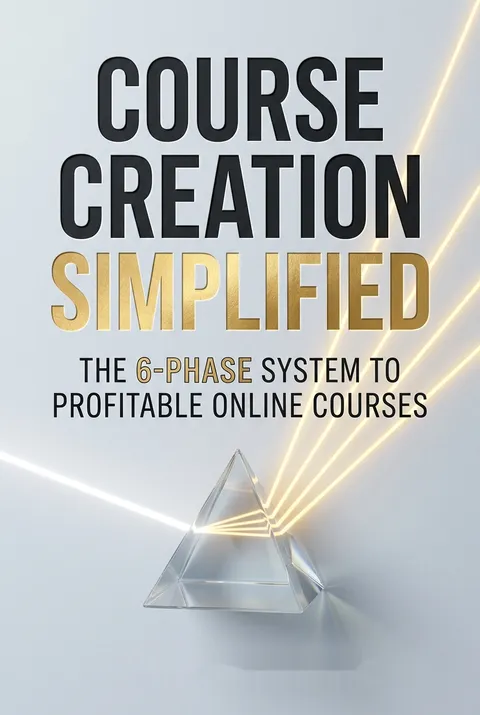


Key Takeaways
Publish before confidence arrives, then improve the course with real feedback
Readiness is not a feeling. Naraine argues that expertise does not eliminate self-doubt, even after dozens of courses. Waiting to feel fully prepared can keep a project in endless revision. A firm publication date turns a vague intention into a concrete task, while the knowledge that digital courses can be edited after release loosens perfectionism’s grip.
Progress beats polish. Naraine’s first course took six months to earn its first $1,000, but publishing it gave him evidence that teaching online could work. The practical lesson is to release the strongest version possible by the deadline, then respond to student questions and improve weak spots. A finished course can help someone; a private draft cannot.
The book’s case for shipping is strongest when treated as a learning strategy, not a blanket defense of rough work. In product development, a minimum viable product tests assumptions with real users, but it still needs to be safe and useful enough to justify their time. A course can be revised, yet a poor first experience can also damage trust. The productive balance is a narrow, complete course that solves one defined problem, followed by improvement based on evidence rather than anxious speculation.
Design for one recognizable learner instead of trying to teach everyone
Specificity creates connection. A customer avatar is a detailed picture of the learner a course is designed to serve, including their goals, frustrations, circumstances, and everyday language. It is not a claim that nobody else can benefit. It gives the creator a clear person to imagine while choosing examples, setting expectations, and deciding what to leave out.
Relatability matters. Naraine contrasts a naturally gifted fitness professional with a former beginner who has overcome a similar struggle. Many learners may prefer the latter because that instructor understands the obstacles from the inside. A focused course for busy executives or technology-shy beginners can feel more useful than a broad survey, even when it contains less material.
A well-defined learner resembles user-centered design: solutions improve when builders understand the person who must use them. The avatar can also counter the expert’s curse, the tendency to forget how confusing basic steps once felt. Still, imagined personas can become stereotypes if they are never checked against actual learners. The book’s recommendation to speak with prospective students is therefore essential, not optional. Specificity should sharpen empathy, while conversation keeps the creator from mistaking a fictional profile for a real market.
Test demand with a short course, not months of research
Check the market first. Naraine recommends examining existing course listings, student ratings, and competitor reviews to find unmet needs. Short social posts, videos, and live question sessions can reveal which topics draw genuine interest. He warns that research can become procrastination, so he suggests limiting initial testing to about two weeks.
Let a small release teach you. His approach is to publish a concise course, sometimes only 40 to 60 minutes, and watch how learners respond. One of his short confidence courses began at roughly 40 minutes and grew to more than five hours after promising feedback. The first version was a market test, not a lifelong commitment. Strong audience response justified investing more effort; weak response offered information before a major build.
This is a practical application of iterative design: test a small, consequential version before committing substantial resources. The course itself measures more than likes on a post, because enrollment and completion reveal different kinds of interest. Yet early sales are noisy. A topic can be valuable but poorly positioned, or attract curiosity without producing learning. Useful tests therefore combine market signals with qualitative feedback, such as what students expected, where they struggled, and whether they achieved the promised result.
Build the curriculum backward from the learner’s desired result
Start at the destination. Instead of drafting lectures in the order they occur to the instructor, define what students should be able to do when finished. Gather their frequent questions, brainstorm possible lessons, group related ideas, arrange those groups in a sensible sequence, and clarify what each section should accomplish. This makes the curriculum a path toward an outcome rather than a storage unit for everything the teacher knows.
Make the plan visible. Naraine suggests using paper or sticky notes to move lesson ideas between sections. In a presentation course, for instance, fear management and speech design might become separate clusters, each containing focused lessons. The visual map makes duplication and irrelevant material easier to spot. Keep useful ideas that do not serve this course for another project instead of forcing them in.
Backward design is common in instructional practice: specify the intended learning, decide what evidence would demonstrate it, and then plan teaching activities. It helps distinguish a course from a collection of interesting lectures. The book’s emphasis on learner questions is especially valuable because it connects structure to actual confusion. One caution is that a clear sequence does not guarantee learning. Students also need practice, feedback, and chances to retrieve and apply ideas, not only a tidy outline.
Make every lesson useful enough to earn the learner’s next few minutes
Small lessons reduce friction. Naraine recommends videos around three to nine minutes in many cases, divided into sections that make the learning path easy to navigate. Short lessons can make starting feel manageable, but their real value depends on the teaching inside them. Each video should address the learner’s problem, explain the idea clearly, and lead toward a next step.
Teach for use, not display. Personal stories can build trust, while case studies help learners see how an idea works. Exercises turn passive viewing into practice, and optional resources such as templates or summaries can support application. Naraine urges instructors to give away their strongest methods rather than withholding useful material to protect consulting work. Stories and credentials belong only when they clarify the lesson or help students trust its source.
Brief lessons can reduce perceived effort and make progress easier to fit into a busy day, but shortness is a design choice, not a learning law. A complex skill may require sustained explanation, deliberate practice, or several rounds of feedback. The more durable principle is alignment: each segment should have a clear purpose and connect to learner action. The book also correctly treats generous teaching as a trust signal, although a course’s value depends on guidance and practice, not simply how many secrets it reveals.
Choose production quality that serves the lesson, not your perfectionism
A studio is optional. Course production can involve a paid professional, a revenue-sharing partner, a skills exchange, do-it-yourself filming, or a combination. Naraine’s father and brother built a home setup for under $300 and filmed a successful course on an iPhone 4. The point is not that every setup will produce identical results, but that expensive equipment is not a prerequisite for useful teaching.
Prioritize what students notice. Clear audio matters because learners cannot follow a lesson they cannot hear. Technical courses may need screen recordings, while business or personal-development courses often benefit from seeing the instructor. If partners share revenue or responsibilities, define duties, payment, and decision-making before work begins. Decide on equipment quickly, then put the energy into understandable content and reliable sound.
The distinction between necessary quality and prestige quality is economically important: production spending should solve a learner problem, not soothe a creator’s insecurity. A phone camera may be sufficient, while poor audio can make even elegant footage unusable. The trade-off is context-dependent. A polished production can support a premium brand or accessibility needs, but it cannot substitute for sound instruction. Partnerships also deserve the book’s caution: collaboration can lower upfront costs while creating long-term disputes if ownership and responsibilities remain vague.
Rehearse privately until the camera feels like a familiar tool
Practice without an audience. Naraine calls a private rehearsal course a pajama draft: record every lesson in casual clothes, with no plan to publish the footage. Outline each video in bullet points, practice explaining it aloud, and allow mistakes rather than restarting constantly. The deliberately disposable recording reduces the pressure of imagining a permanent public performance.
Use practice to become natural. The author advises deleting the rough files without judging them, then filming the real course after the material feels familiar. He also recommends imagining a specific learner behind the lens, preparing the body and voice, and speaking conversationally rather than memorizing every sentence. The goal is not flawless performance. It is calm, clear delivery that keeps attention on the student’s problem.
The rehearsal method resembles exposure practice: a feared situation becomes more manageable through repeated, lower-stakes contact. It also separates two tasks that can overwhelm beginners when combined, learning the material and evaluating a public performance. The instruction not to review rough footage protects confidence, though selective review can be useful when it targets a specific behavior, such as audio clarity or pacing. A creator can preserve the low-pressure spirit while still using deliberate feedback rather than relying on confidence alone.
Choose a platform by your audience, assets, and business objective
Marketplaces trade control for reach. Platforms such as Udemy and Skillshare offer built-in audiences and simpler publishing, but creators have less control over pricing, customer data, and promotions. Naraine describes Udemy as a volume model, with many courses selling at discounted prices. In his account, instructors could receive a much larger share when they brought the buyer themselves, but platform terms can change and should be checked.
Hosting tools trade reach for control. Thinkific, Teachable, and Kajabi let creators shape prices, pages, and customer relationships, but generally do not provide a ready-made marketplace. They work best when the creator can attract an audience. A hybrid approach can pair a lower-priced marketplace course with a more extensive course sold through a creator-controlled site. For a beginner without an audience, Naraine favors starting where discovery is built in.
This decision is a classic platform trade-off. Marketplaces reduce the cost of customer acquisition, while owned systems preserve more control over pricing and relationships. Neither is automatically superior: the right choice depends on whether the creator has an audience, marketing capacity, and tolerance for dependence on an intermediary. The important strategic risk is confusing platform access with ownership. A marketplace can generate discovery, but building a direct relationship with learners provides resilience if its algorithms, commissions, or policies change.
Build trust before asking strangers to buy your biggest offer
Marketing is a sequence. A marketing funnel is the path from first contact to purchase and continued engagement. Naraine suggests beginning with a useful free resource, such as a checklist or mini-course, then offering an affordable course before asking a more familiar customer to consider a premium class, coaching, or an event. The progression gives people a chance to assess the teaching before making a larger commitment.
Prepare before launch. Contact people who genuinely fit the audience and offer access in exchange for honest feedback. Build a social presence, collect email subscribers with a valuable free resource, and use relevant podcasts, groups, collaborations, or speaking engagements to reach new learners. A course page with early students and reviews can reduce buyers’ uncertainty. Promotions, previews, and bonuses may help, but scarcity claims should be truthful or they erode credibility.
The funnel model captures a real feature of trust: people usually need evidence before making a costly commitment to an unfamiliar teacher. Free samples and smaller purchases lower uncertainty, while an email list gives the creator a direct channel that social platforms do not guarantee. Still, an audience is not merely a pool to convert. Good marketing should help prospective learners judge fit, including who the course is not for. Honest previews and accurate promises build better expectations than pressure tactics.
Make completion concrete with deadlines, accountability, and responsive updates
Design around follow-through. Naraine recommends setting a realistic publication date, telling other people about it, and tracking progress. An accountability partner or group can create useful social pressure; some people may also put money at risk if they miss a commitment. These systems reduce the number of daily decisions between intention and action. A vivid reason for creating the course can keep the work connected to its purpose when enthusiasm dips.
Keep listening after launch. Reviews are evidence about how learners experience the product. Thank positive reviewers, assess criticism for useful patterns, report abusive comments when appropriate, and respond respectfully to mixed or negative feedback. Repeated student requests can guide course updates. The course is not finished as a business asset simply because it is published: an annual review can catch outdated material and opportunities to make the learning clearer.
The emphasis on external structure reflects a basic insight from behavioral science: intentions are fragile when action requires repeated decisions. Deadlines, visible progress, and social commitments make behavior more observable and easier to resume after setbacks. Accountability can also become counterproductive if public pressure turns a missed target into shame. The stronger version combines a firm commitment with flexible tactics: protect the publication date where possible, but use learner feedback to change the product rather than defending the original plan.
Analysis
This book is most useful as an operating manual for moving from expertise to a teachable product. Its central contribution is not a novel theory of education, but the joining of tasks that aspiring instructors often treat as separate problems: choosing a learner, testing demand, building a curriculum, presenting on camera, selecting a platform, and sustaining promotion. The sequence matters. A specific audience informs the course promise; that promise shapes the curriculum; student response then informs improvement. The creator is not asked to solve every business problem before publishing, but to make a series of reversible decisions.
The narrative of Naraine’s first course gives the method emotional force. He presents publication as both a business experiment and a way to extend teaching beyond one’s immediate location and working hours. The strongest practical ideas are his limits on research, his use of small early releases, and his attention to direct learner feedback. Those choices counter the common failure mode of polishing a large product for a market that has not demonstrated interest. The book is also optimistic about online education, course income, and the value of visibility. That optimism can motivate, but should not be mistaken for a forecast. A course does not automatically create passive income, credibility, or a dependable audience. Sales depend on topic demand, distribution, quality, pricing, competition, and persistent maintenance. Marketplace platforms bring reach while retaining substantial control; creator-owned platforms give control without supplying buyers. These are structural trade-offs, not details that enthusiasm can erase.
A useful reading is therefore neither ‘anyone can get rich teaching online’ nor ‘wait until the market is certain.’ It is: create a small, honest learning experience for a defined group, make its promise testable, and let evidence determine the next investment. The book’s confidence advice is most persuasive when connected to that experimental stance. A first course need not prove the instructor’s worth. It needs to help learners and generate information for the next iteration.
People Also Read








Glossary
customer avatar
Profile of an ideal learnerA customer avatar is a specific representation of the learner a course aims to serve. It describes relevant goals, difficulties, beliefs, circumstances, and language so the creator can make focused decisions about examples, content, and promotion. It is a planning tool, not proof that every learner in a group is identical.
pajama draft
Private, low-stakes course rehearsalA pajama draft is a practice recording of course lessons made with no intention of publishing the footage. The creator outlines and records the material in casual clothing to reduce pressure, rehearse delivery, and become familiar with the camera. Naraine recommends deleting the rough recordings rather than treating them as the final performance.
idea dump
Unfiltered lesson brainstormingAn idea dump is an early collection of possible course material, gathered without judging or organizing it. Ideas can include audience questions, stories, examples, exercises, references, and guest contributions. The creator later selects and groups relevant material into a coherent curriculum, leaving unrelated ideas for other projects.
marketing funnel
Customer journey toward purchaseA marketing funnel is the sequence of experiences through which a potential customer moves from discovering a creator to considering and buying an offer. In the book’s example, a free resource can introduce the teaching, an affordable course can deepen trust, and a premium course or service can serve people ready for a larger commitment.
personal transformation economy
Guidance valued beyond informationNaraine uses this phrase for a market in which information is widely available, while learners pay for trusted guidance that helps them make progress. In this view, a course competes through its structure, clarity, instructor relatability, and ability to support change, rather than by claiming exclusive access to facts.
Download PDF
Download EPUB
.epub digital book format is ideal for reading ebooks on phones, tablets, and e-readers.








