

Key Takeaways
When life feels bankrupt, start with one person you can thank.
A genuine low point. In December 2007, John Kralik's law firm was losing money, clients owed him large sums, his marriage was unresolved, and he felt estranged from his adult sons. He was exhausted, broke, and worried about losing time with his young daughter. On a New Year's hike, lost among the trails above Pasadena, he heard an unexpected instruction: notice what he still had before focusing on what he wanted.
One modest commitment. Kralik remembered his grandfather's silver-dollar lesson: write a thank-you note for a gift, and another dollar would follow. He decided to find one person to thank each day, using the stationery gathering dust in his office. It was not a plan to solve every problem. It was a small action he could take when the larger problems felt immovable.
The power of this beginning lies in its scale. Faced with problems he could not immediately fix, Kralik chooses an action that is specific, finite, and directed toward another person. That resembles a basic principle of behavioral activation: action can precede a better mood rather than wait for it. Still, gratitude should not be sold as a substitute for material help, professional care, or practical change. The practice matters here because it gives him a foothold, not because it makes the crisis imaginary.
Write the thank-you note before your mind files kindness as ordinary.
A note made him look. Kralik's first note thanked his older son for a single-cup coffee maker. While preparing to mail it, he realized he did not know his son's address or much about his daily life. He called to ask for the address, and his son came to lunch, where he repaid a forgotten $4,000 loan. The repayment was not caused by the note, but the note helped Kralik notice the distance between them and opened a conversation.
Record what matters. Kralik began tracking notes, recipients, addresses, and reasons for gratitude in a spreadsheet. Writing by hand slowed him down; naming the actual kindness made it harder to dismiss as trivial. The project eventually took fifteen months to reach 365 notes, and the record helped him see how many ordinary acts he had previously overlooked.
Specificity separates gratitude from a vague mood. Naming the coffee maker, the loan repayment, or a friend's patience requires attention to the person and the circumstances, not just a general sense of positivity. The spreadsheet also turns memory into a record that can be revisited when attention narrows toward what is wrong. There is a useful distinction here: the note does not manufacture generosity or control another person's behavior. Its clearer effect is to make existing relationships more visible and easier to engage.
Use gratitude to notice what hardship has not erased.
A cramped home, seen anew. Kralik's young daughter called their small, overheated apartment the best place to live. She built a fort behind the couch, filled it with books and art supplies, and made small paper animals for classmates. Reading Pollyanna together, Kralik reconsidered the novel's glad game: finding something to value in a painful situation without pretending the pain is absent. Pollyanna herself grieves, and at times cannot find anything to feel glad about.
The relationship was real. Kralik's daughter was not making the apartment luxurious. She was showing him that their time together mattered more to her than its defects. He began to see the apartment through her eyes, and wrote her a note thanking her for the joy she brought to difficult evenings. Gratitude changed his attention, not the facts of their circumstances.
This is strongest when gratitude is understood as reappraisal, a way to give more than one meaning to a situation, rather than as forced cheer. The apartment remains hot and uncomfortable; the daughter simply experiences it as a place of closeness and play. That distinction protects the idea from becoming a demand to feel grateful for suffering. Some hardship is unjust or overwhelming, and a person may not be ready to find a bright side. The more humane practice is to notice what remains without denying what hurts.
Praise effort specifically, and relationships gain room to breathe.
Recognition crossed the counter. Kralik thanked Scott, a Starbucks employee who remembered his name and usual coffee. Scott initially assumed the envelope contained a complaint, because customer service work brought plenty of them. The note surprised him. A courtroom clerk later saved Kralik's note about her fair treatment of lawyers, while a teacher appreciated his recognition of the care she gave his daughter.
Work became more human. Kralik also thanked his paralegal for keeping the law office functioning during a chaotic move. She replied with appreciation, and colleagues began exchanging their own notes about one another's work. The point was not that every recipient became a close friend. It was that specific acknowledgment made often invisible contributions visible, including in relationships shaped by stress, hierarchy, or routine.
Recognition is a social signal: it tells another person that their effort registered, not merely that a task was completed. That can strengthen trust and make cooperation feel less anonymous. The examples also expose a limit. Gratitude cannot replace fair pay, manageable workloads, or professional respect. In workplaces, praise becomes hollow if it is used to extract more labor without addressing those conditions. Its best role is as an addition to justice, not a cheaper substitute for it.
Thank paying clients to see which work can sustain your firm.
Gratitude sharpened business judgment. Kralik began thanking clients who paid promptly and lawyers who referred good cases. One client pinned his note about timely payment on a bulletin board; the company's bills were paid faster for a time. A referring attorney told him the notes reminded him to send more work. These interactions made Kralik more attentive to who paid, which matters suited his small firm, and where billing problems were growing.
Appreciation became practical. Kralik had resisted collecting overdue bills and had taken on clients whose work strained the firm. As he tracked gratitude, he also made more deliberate choices about cases, partnered with a trusted colleague, and focused on clients who valued the work. The firm recovered, though not through notes alone: management decisions, new work, and help from colleagues were essential parts of the turnaround.
This section shows gratitude functioning as a management tool, not just an emotion. Paying attention to reliable clients creates better information about where time and effort are producing a sustainable practice. It also helps counter a common bias: the loudest or most difficult client can consume more attention than the dependable ones. But the narrative cannot establish that thank-you notes caused the firm's recovery. Kralik also changed his client selection, accepted a partner, and benefited from circumstances. Appreciation helped him notice and act on those levers.
Let gratitude loosen resentment without pretending injustice is harmless.
A different response to debt. Kralik remained consumed by a large unpaid bill from clients who were fighting each other. They proposed settling it with a claim against another lawyer, whose own finances had collapsed amid serious family problems. After reading Doctor Hudson's Secret Journal, an old novel about helping people in difficulty, Kralik chose to accept the claim and release liens that were blocking the lawyer from borrowing working capital. He also agreed to accept repayment without interest when the lawyer was back on his feet.
Anger stopped running the case. Kralik did not recover the full amount he was owed. But he felt less trapped by the dispute and could redirect attention toward clients and colleagues who were contributing to the firm's future. His lesson was that resentment was costing him energy, even when it did not change the behavior of the people who had wronged him.
The distinction between releasing resentment and declaring an injury acceptable is crucial. A person can choose not to be governed by anger while still naming a debt, setting boundaries, or seeking accountability. Kralik's decision was unusually generous and may have suited his values, but it should not be treated as a universal financial strategy. Helping someone in crisis can be meaningful; doing so without a clear view of risk can also deepen harm. The useful question is not whether generosity always pays, but what action permits a person to move forward without self-deception.
Do not mistake gratitude for protection from loss.
New trouble still arrived. In 2008, the bank that was Kralik's biggest client failed, and its collapse threatened a large share of his firm's revenue. Later, Grace ended their relationship. Kralik stopped writing notes for two weeks and wondered whether the project had failed him. His gratitude had not prevented financial upheaval, heartbreak, or grief.
The response had changed. A note from a former pro bono client reminded him of a relationship he had neglected to value. He also recognized the skill and commitment of the employees carrying the firm through the crisis. The problems remained serious, but they no longer defined every part of his life. The project had not made him invulnerable; it had helped him recover a broader view after fear and disappointment narrowed it.
This is an important correction to any magical reading of the memoir. Gratitude does not guarantee good outcomes, and a string of setbacks does not prove someone has failed to be grateful enough. Its more defensible value is in emotional regulation: attention can widen again after a loss, making room for relationships, choices, and sources of support alongside pain. The pause in Kralik's practice also makes the account more credible. A useful routine can falter under stress without becoming worthless.
Let friends turn appreciation into action, from a note to a marathon.
Old friendships became present tense. Kralik's college friend Neil contacted him because he feared Kralik was sinking into depression and invited him to train for a triathlon. Kralik was not ready for the race, but the invitation revived their friendship and encouraged him to run. His friend Paul, who had recurring brain tumors and continued working and running, also inspired him to train.
Training gave gratitude legs. Kralik joined the Leukemia and Lymphoma Society's Team in Training, raised more than $5,000, and completed the Napa Valley Marathon in the rain in five hours and nineteen minutes. Other runners helped him finish. At the end, he stopped to hug his daughter. The effort joined friendship, service, and physical challenge in a way that a written note alone could not.
The transition from appreciation to shared activity matters. A relationship can deepen when gratitude is followed by time, effort, and participation, rather than remaining a private feeling or a polished message. Training also supplies structure and companionship, which can make an intimidating goal more manageable. The marathon is not a template for everyone: age, disability, health, and resources shape what activity is possible. The transferable idea is to let another person's concern become a suitable next step, not to copy the scale of Kralik's achievement.
Notice the wax-paper sandwich: ordinary care outlasts status as proof of love.
The expected ending was not the real one. Kralik eventually bought a modest house with a new fort for his daughter and was appointed a judge, a career goal he had pursued for years. Grace returned to his life, though their future remained uncertain. These were major changes, but they did not turn the year into a flawless reward for good behavior.
A small scene said more. At a Dodgers game, Kralik and Grace watched an older woman unwrap a sandwich in waxed paper and gently tend to her husband. The gesture moved them more than the celebrity drama nearby. Kralik had completed 365 notes in fifteen months, and continued writing them. The lasting measure was not that gratitude delivered every wish. It was that he could value care, connection, and the ordinary life already within reach.
The final image usefully resists the tidy success story. A judicial appointment and a house are concrete achievements, but they cannot guarantee intimacy or happiness. The sandwich instead makes care legible through an unremarkable act of attention. That is a quieter and more durable standard than status, though it should not romanticize deprivation or imply that material security is unimportant. The memoir's mature claim is not that small gestures replace big needs. It is that a life can contain both unmet desires and forms of love worth seeing.
Analysis
The book's most persuasive argument is not that gratitude attracts prosperity. Its own sequence of events cannot prove that: some improvements follow thank-you notes, some have independent causes, and serious losses continue. The more credible claim is behavioral. Writing forces Kralik to identify who did what, recall relationships beyond the latest conflict, and communicate appreciation in a form another person can receive. That practice changes his attention, but also changes his conduct. He calls his son, listens to a friend, notices dependable clients, and makes more discriminating choices about work.
This distinction matters because gratitude can be misunderstood as compulsory positivity. Kralik's strongest examples do not deny pain. He remains financially anxious, grieves a breakup, and sees the limits of his generosity. Pollyanna's glad game is useful precisely because the book recognizes that some moments offer no easy reason for gladness. The practice is not a claim that every hardship is secretly a gift. It is a way of keeping hardship from becoming the only available account of a life.
Research on gratitude exercises generally suggests possible benefits to subjective well-being, but effects vary by person and context. A memoir cannot isolate the impact of notes from social support, improved business decisions, exercise, or changing circumstances. Nor should a reader infer that a note can remedy unpayable bills, depression, or a broken relationship. Kralik's story is more useful as a case study in an accessible practice than as a controlled demonstration of cause and effect.
The notes also work outward. They recognize labor that routine tends to hide, restore neglected contact, and sometimes invite a reply. That reciprocity is powerful, but it is not guaranteed, and gratitude should not become a strategy for extracting kindness or unpaid effort. The book's durable contribution is a disciplined form of attention: notice a concrete good, name the person responsible, and let that recognition inform the next choice. The result may not be the life someone requested. It can still be a life they are better able to inhabit.
Review Summary
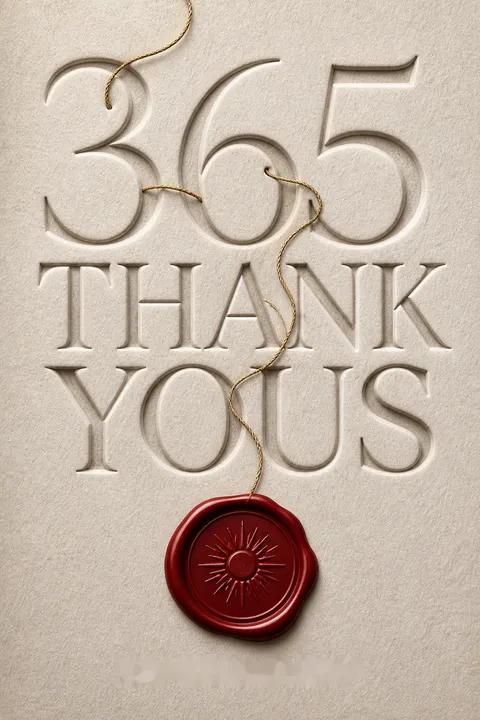
365 Thank Yous is a memoir about how writing daily thank-you notes transformed John Kralik's life. Most readers found it inspiring and uplifting, praising Kralik's honesty and the book's simple but powerful message about gratitude. Many were motivated to write more thank-you notes themselves. Some critics felt the writing was repetitive or self-indulgent, but most appreciated Kralik's journey from despair to contentment through expressing gratitude. The book resonated with readers as a reminder to appreciate life's blessings, both big and small.
People Also Read



Glossary
Extreme thank yous
Thanks beyond conventionKralik's name for notes that etiquette would not require, such as thanking people who return a lost wallet, serve coffee, or perform a routine act of care. The practice widened gratitude beyond formal gifts and major favors, helping him notice how much everyday life depended on other people's attention.
glad game
Finding value amid difficultyA game in Eleanor H. Porter's novel Pollyanna, in which the character looks for something to appreciate in each circumstance, including painful ones. Kralik and his daughter read the novel together. He understands the game not as denial of suffering, but as a deliberate attempt to notice value that hardship can obscure.
investments
Secret acts of generosityIn Doctor Hudson's Secret Journal, investments are secret acts of financial help given to people in need, with no expectation of immediate repayment or recognition. Kralik uses the idea to reconsider a claim against a financially distressed lawyer, releasing liens and interest. The book presents this as an ethical inspiration, not a reliable financial formula.
FAQ
What's "365 Thank Yous" about?
- Overview: "365 Thank Yous" by John Kralik is a memoir about how the author transformed his life by writing one thank-you note every day for a year.
- Personal Struggles: At the start, Kralik was facing numerous personal and professional challenges, including a failing law practice, a difficult divorce, and financial struggles.
- Gratitude Project: Inspired by a voice during a New Year’s Day walk, he embarked on a project to express gratitude, which led to unexpected positive changes in his life.
- Impact: The book details how this simple act of gratitude improved his relationships, career, and overall outlook on life.
Why should I read "365 Thank Yous"?
- Inspiration: The book offers an inspiring story of personal transformation through the simple act of gratitude, which can motivate readers to adopt similar practices.
- Practical Advice: It provides practical insights into how expressing gratitude can lead to tangible improvements in one’s life, both personally and professionally.
- Emotional Connection: Readers may find emotional resonance with Kralik’s struggles and triumphs, making it a relatable and uplifting read.
- Self-Reflection: It encourages self-reflection and the recognition of the positive aspects of one’s own life, fostering a more grateful and positive mindset.
What are the key takeaways of "365 Thank Yous"?
- Power of Gratitude: Regularly expressing gratitude can lead to significant positive changes in one’s life, including improved relationships and career success.
- Self-Improvement: The act of writing thank-you notes helped Kralik become more self-aware and appreciative of the people and opportunities around him.
- Unexpected Benefits: Kralik experienced unexpected benefits, such as financial stability and personal happiness, as a result of his gratitude project.
- Simplicity and Consistency: The book emphasizes that simple, consistent actions, like writing thank-you notes, can have profound effects on one’s life.
How did John Kralik's life change through his gratitude project?
- Improved Relationships: Writing thank-you notes helped Kralik mend and strengthen relationships with family, friends, and colleagues.
- Career Success: His law practice saw improvements as clients began paying their bills more promptly, and he received new business opportunities.
- Personal Growth: Kralik experienced personal growth, becoming more positive and self-aware, which improved his overall well-being.
- Unexpected Opportunities: The project led to unexpected opportunities, such as a judicial appointment, which he had long desired.
What is the "silver dollar" lesson from Kralik's grandfather?
- Grandfather's Lesson: Kralik’s grandfather taught him that writing thank-you notes could lead to receiving more of what one is thankful for, symbolized by receiving more silver dollars.
- Early Experience: As a child, Kralik received a silver dollar from his grandfather with the promise of more if he wrote a thank-you note, which he did once but failed to continue.
- Rediscovery: This lesson resurfaced during Kralik’s gratitude project, reinforcing the idea that expressing gratitude can lead to more positive outcomes.
- Application: The silver dollar lesson became a metaphor for the benefits Kralik experienced through his year of writing thank-you notes.
How does Kralik incorporate the "glad game" from Pollyanna into his life?
- Pollyanna Influence: Kralik and his daughter read "Pollyanna," which introduced him to the "glad game," a practice of finding something to be glad about in every situation.
- Perspective Shift: This game helped Kralik shift his perspective from focusing on his problems to recognizing the positives in his life.
- Daughter's Role: His daughter’s natural positivity and their shared reading experience reinforced the practice of gratitude and optimism.
- Practical Application: The "glad game" became a part of Kralik’s daily life, complementing his thank-you note project and enhancing his overall outlook.
What role does self-reflection play in "365 Thank Yous"?
- Self-Examination: Kralik’s project led him to examine his own character flaws and recognize the good in those around him, which he had previously overlooked.
- Acknowledging Others: Writing thank-you notes forced him to acknowledge and appreciate the contributions of others, improving his relationships.
- Personal Growth: This self-reflection was crucial for Kralik’s personal growth, helping him become more empathetic and understanding.
- Continuous Improvement: The process of self-reflection and gratitude became a continuous journey, leading to ongoing personal development.
How does Kralik's gratitude project affect his professional life?
- Client Relationships: Writing thank-you notes to clients improved his relationships with them, leading to more timely payments and new business opportunities.
- Work Environment: The project fostered a more positive work environment, as Kralik also expressed gratitude to his staff and colleagues.
- Career Opportunities: His improved outlook and relationships contributed to career advancements, including a long-desired judicial appointment.
- Professional Reputation: The consistent practice of gratitude enhanced his professional reputation, making him more respected and appreciated in his field.
What are some of the most impactful thank-you notes Kralik wrote?
- To His Sons: Thank-you notes to his sons helped mend and strengthen their relationships, leading to unexpected acts of kindness and support from them.
- To His Ex-Wife: Writing to his ex-wife helped ease tensions and improve their co-parenting relationship, benefiting their daughter.
- To Clients: Notes to clients who paid their bills on time led to improved business relationships and financial stability for his law practice.
- To Friends and Colleagues: Thank-you notes to friends and colleagues reinforced his support network, providing emotional and professional benefits.
What are the best quotes from "365 Thank Yous" and what do they mean?
- "Until you learn to be grateful for the things you have, you will not receive the things you want." This quote encapsulates the central theme of the book, emphasizing the importance of gratitude in achieving personal fulfillment.
- "I was learning that it was the hatred in my heart, not the hatred others held for me, that could truly destroy me." This reflects Kralik’s realization that internal negativity is more damaging than external circumstances, highlighting the power of self-reflection and gratitude.
- "The brevity of a small card isolates your gratitude from your other more complex, and less admirable, thoughts." This quote underscores the simplicity and focus of writing thank-you notes, which helps cultivate genuine appreciation.
- "By being thankful for what I had, I realized that I had everything I needed." This statement illustrates the transformative power of gratitude, showing how it can shift one’s perspective from lack to abundance.
How does Kralik's story illustrate the concept of "good karma"?
- Positive Outcomes: Throughout the book, Kralik experiences positive outcomes as a result of his gratitude, which he attributes to the concept of "good karma."
- Reciprocal Kindness: His thank-you notes often lead to reciprocal acts of kindness, reinforcing the idea that positive actions attract positive responses.
- Unexpected Benefits: Kralik’s project results in unexpected benefits, such as financial stability and personal happiness, which he sees as manifestations of good karma.
- Mindset Shift: The concept of good karma is intertwined with Kralik’s mindset shift, as he learns to focus on gratitude and positivity, leading to a more fulfilling life.
How can readers apply the lessons from "365 Thank Yous" in their own lives?
- Start Small: Begin by writing thank-you notes for small acts of kindness or gifts, gradually incorporating gratitude into daily life.
- Be Consistent: Consistency is key; make gratitude a regular practice to experience its full benefits.
- Focus on Positivity: Shift focus from problems to positive aspects of life, using gratitude as a tool for personal growth and improved relationships.
- Reflect and Appreciate: Use the practice of gratitude to reflect on personal relationships and appreciate the contributions of others, fostering a more positive and fulfilling life.
Download PDF
Download EPUB
.epub digital book format is ideal for reading ebooks on phones, tablets, and e-readers.








