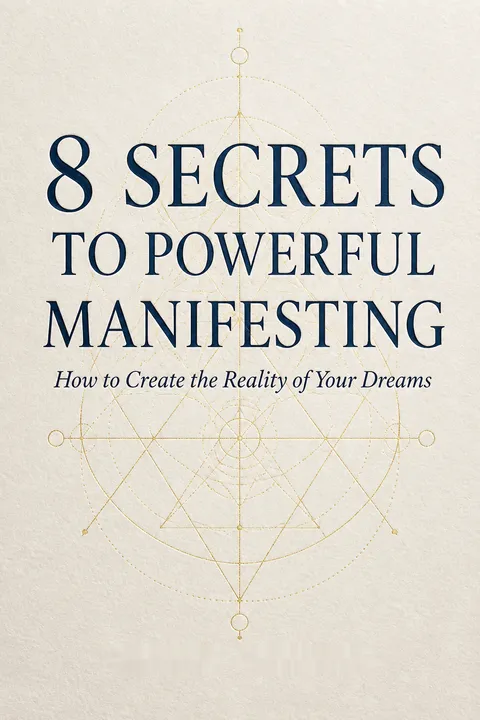


Key Takeaways
Treat manifestation as self-mastery: change the inner pattern before chasing the prize
The inner life leads. Morris’s story begins with a childhood trauma: at 13, she heard her father’s despair during a suicide attempt and wrongly concluded that she was not lovable enough to keep him safe. Years of avoidance and damaging relationships followed. After an abusive boyfriend threw a glass during an argument, she confronted how little she valued herself and began rebuilding her life around healing, service, and spiritual practice.
Morris defines manifestation broadly as shaping reality consciously or unconsciously. She argues that past programming, the beliefs, thoughts, and emotional imprints built through experience, can steer choices away from what someone says they want. She calls this counter-manifesting: producing unwanted patterns while trying to pursue desired outcomes. Her central advice is to do inner work before relying on wishful thinking or visual aids.
The memoir gives the method emotional stakes: its central promise is not that trauma makes someone powerful, but that a painful history need not dictate every later choice. This resembles trauma-informed approaches that distinguish a person’s learned survival responses from their identity. That distinction can restore agency without denying harm. A necessary guardrail is that agency is not blame. A person’s hardship, illness, or abusive treatment is not proof of faulty thinking or deficient energy. The book’s strongest practical claim is more modest and persuasive: noticing patterns and changing responses can widen the range of available actions.
Check your emotional weather before it quietly chooses your next move
Make feelings observable. Morris’s first practice, energetic check-ins, is a scheduled pause to notice mood, body sensations, and the story attached to them. She recommends asking six questions: How do I feel? Why? Am I replaying the past? Am I worrying about the future? What do I expect to happen? Could this feeling come from someone else?
Her starter schedule is three check-ins a day for 15 days, followed by hourly checks during an eight-hour window for another 15 days. The point is curiosity, not constant self-surveillance. For instance, a tense morning might be linked to a difficult conversation, or to fear about a future event. Naming the source can make a reaction easier to examine before it becomes an automatic decision.
This practice has a strong parallel in emotion labeling: naming a feeling can create distance from it and make it easier to choose a response. The six prompts also separate present evidence from memory and prediction, a useful corrective to treating anxiety as a forecast. The practice works best as a brief check, not an obligation to monitor every passing mood. Frequent self-scanning can amplify rumination for some people. A practical adaptation is to use the questions when a reaction feels unusually strong, persistent, or confusing, and then return attention to the task at hand.
Untangle the old belief beneath today's oversized reaction
Find the knot. Morris describes dense energy as a tangle of past programming, current pressures, and protective personas. A persona is a role or self-state that forms around a need, such as feeling safe, included, or in control. The aim is not to erase a memory, but to understand the belief and need that shape a present reaction.
After noticing a trigger, she suggests asking: What am I telling myself? Which persona is active, and what does it need? How could that need be met in a healthier way? For example, a public rebuke from a supervisor might awaken a fear of financial ruin. Instead of quitting impulsively, the person could update a résumé, review savings, or take a walk if the fear exceeds the actual threat. The repeated process is meant to make alternative responses easier to access.
The useful psychological move is to treat a reaction as meaningful without treating its first interpretation as fact. This overlaps with parts-based therapy, where protective responses are approached as strategies with histories and needs, rather than defects to suppress. The book’s persona language may help readers become compassionate observers of their own reactions. Still, trauma does not always yield to brief reflection, and some people need professional support to work safely with painful memories. The method is best understood as a self-inquiry tool, not a universal shortcut or a replacement for care.
Interrupt a trigger long enough to choose, not merely react
Create a pause. A pattern interrupt is an activity used to shift attention and emotional state when a trigger sparks a familiar negative reaction. Morris groups them as physical, spiritual, and mental or emotional. Examples include taking a brisk walk, praying, breathing slowly, listening to music, or turning a frustrating scene into an absurd mental cartoon.
The goal is not to pretend the problem has vanished. A pause can make reflection possible, after which a person can check in and examine the belief underneath the reaction. Morris tells of a client who clapped three times when intimacy triggered painful memories from an abusive marriage. The gesture helped her pause, then respond more openly with a new partner. The author also advises finding several interrupts that suit one’s temperament, since a technique that helps one person may do little for another.
This is a concrete form of state regulation. Movement, paced breathing, and sensory attention can give the mind a brief break from a rehearsed response, while humor can reduce the emotional intensity of a situation. The memorable idea is that a pause creates room for choice, not that a person can instantly control every emotion. The book’s claim that emotions last only about 90 seconds should not be taken as a rule for grief, panic, or trauma. An interrupt can help someone ride out a surge, but recurring distress may need deeper support.
Build self-love through honest boundaries, not a prettier self-care routine
Respect your limits. Morris treats self-love as more than comforting rituals. It means trusting one’s judgment, speaking to oneself with care, and setting boundaries with people or situations that repeatedly cause harm. She describes her own pattern of over-accommodating others, including staying connected to people who treated her badly. Recognizing this as a response shaped by fear and people-pleasing helped her change it.
Self-care can support that shift, but a bath or a treat cannot substitute for confronting an unhealthy pattern. Morris suggests starting with basic needs such as rest, nourishing food, meaningful connection, and spiritual practice. She also distinguishes self-love from selfishness: caring for oneself should not mean ignoring everyone else. In her account, feeling worthy of care makes it easier to act with compassion without using self-sacrifice as proof of goodness.
The distinction between self-care and self-respect is important. Research and clinical practice often treat self-compassion as compatible with accountability: a person can acknowledge a mistake without making shame the price of improvement. Boundaries also protect relationships from resentment by clarifying what conduct is acceptable. The author’s emphasis on love gives these ideas emotional force, although love should not be used to pressure someone to remain in a harmful relationship or forgive before feeling ready. Self-love is most useful here as a basis for discernment, not as a demand to feel positive.
Want the feeling beneath the object, then choose a goal that fits
Clarify the desire. Morris argues that a desired object may stand for an emotional state. A mansion might represent achievement, while reunion with an ex might represent feeling loved. Asking why the goal matters can reveal a more authentic aim and sometimes a better route to it.
She defines intentional energy as the emotional and mental motive behind a goal. Her process is to choose one goal, check whether its motive feels hopeful rather than driven by fear or shame, write that it is in progress, add specific details and a deadline, and draw or visualize the desired outcome. She prefers visualization while falling asleep or waking. In her own example, she pictured a family home and later received an offer from its owner. The story illustrates her belief in manifestation, not a guarantee that visualization causes an offer.
The exercise of asking what a goal represents resembles values clarification: it helps separate a chosen outcome from the need it is supposed to satisfy. That can make goal pursuit more flexible. Someone seeking a promotion for recognition might discover that meaningful contribution matters more, or that recognition can come from several directions. The emphasis on genuine motivation also guards against empty affirmations that conflict with what a person believes. The spiritual explanation of energy is a matter of faith, however. Journaling and imagery may focus attention, but they cannot ensure external events or control other people’s choices.
Turn a wish into a plan, and treat obstacles as useful information
Give desire a route. Morris’s manifestation blueprint is a plan for pursuing a goal while preparing for emotional setbacks. She recommends adopting a reasonable expectation that progress is possible, identifying practical next actions, and deciding how to respond if a step triggers fear or discouragement. The plan should stay flexible rather than become a rigid script.
One client wanted to launch a bath-salt business but had drawn up roughly 15 steps, some dependent on money she did not have. By questioning which tasks were truly necessary, she reduced the list to three and launched within two weeks. The example shows how a goal can stall under unnecessary complexity. Morris also interprets chance encounters and coincidences as possible guidance. A grounded use is to treat them as prompts to investigate an opportunity, then judge it by evidence, resources, and fit.
The blueprint’s practical value lies in converting a vague wish into a sequence of doable actions and contingency plans. This resembles implementation planning, which links a goal to concrete behavior and makes follow-through less dependent on mood. The bath-salt example also highlights a common planning trap: preparation can feel productive while postponing the risky act of starting. The spiritual reading of coincidence can be personally meaningful, but it should not replace due diligence. A meeting, dream, or repeated number is not proof that an investment, treatment, or relationship is wise.
Replace inherited life rules with beliefs you can test in real life
Make beliefs revisable. Morris uses rules to mean broad assumptions that guide behavior, often without conscious notice. A rule such as love always hurts can shape whom someone trusts; a rule that financial success demands endless work can restrict career choices. She recommends identifying the rule in important areas, then replacing it with a more useful belief in manageable steps.
Her three questions are: Is this belief true? Does it need to remain true? What new belief could be accepted now? A person who assumes a strained parent will never change might begin with a modest rule about speaking without yelling, rather than forcing an immediate belief in a healed relationship. Morris suggests testing new rules in everyday situations and revising them periodically, rather than insisting on an affirmation that feels false.
This is one of the book’s most testable practices. Beliefs influence what people notice and attempt, but they are not laws of nature; treating them as hypotheses allows experience to update them. Gradual revisions can be more credible than replacing a harsh assumption with an implausibly cheerful one. The risk is mistaking every adverse result for a mindset problem. Structural limits, other people’s behavior, and chance also matter. A sound new rule should guide action while remaining responsive to evidence, not require denial of genuine constraints.
Borrow your future self's perspective, then act on its concrete advice
Rehearse a wiser response. Morris’s final practice asks a person to imagine a future version of themselves who has already handled a current problem. In a quiet, safe imagined place, the person describes the issue, asks what to do next, and notices the future self’s qualities and advice. The guidance can then be translated into a real action.
Morris describes using this exercise to picture a more capable version of herself while building her business. She borrowed practical qualities from that image, including clearer communication and regular journaling. Another client imagined a calmer stepmother persona and used it to respond thoughtfully when a child’s biological mother made a hurtful comment. The method can function as mental rehearsal: it makes a desired response easier to picture and practice, without requiring belief that alternate realities literally exist.
Future-self exercises connect imagination to behavior. Psychological distance can help people think beyond an immediate emotional reaction, while mental rehearsal can make a chosen response feel more familiar. The practice is especially useful when the imagined self offers specific, values-consistent steps rather than vague reassurance. The book also presents a spiritual account involving simultaneous realities, but that claim is not established by the exercise itself. Its practical value does not depend on proving it. Advice from an imagined future self should still be checked against safety, evidence, and the real constraints of the situation.
Analysis
The book’s most coherent contribution is its sequence: notice an emotional reaction, investigate the belief and need beneath it, regulate the immediate response, clarify what a goal is meant to provide, and take practical steps. That sequence makes manifestation less like passive wishing and more like a blend of self-reflection, emotional regulation, and goal pursuit. The author’s story gives the system a memorable rationale. She interprets major life changes as evidence that healing and spiritual alignment made new possibilities available, while the reader can also see how leaving an abusive relationship, rebuilding self-trust, and changing daily behavior alter what choices become possible.
The book is strongest when it stays close to those observable mechanisms. Scheduled reflection, journaling, boundaries, gradual belief revision, and reducing unnecessary steps can all help people act with greater intention. The future-self exercise is also useful as a way to rehearse a response. Its spiritual vocabulary may give some readers meaning and motivation, but it should not be confused with scientific explanation.
That distinction matters because the book invokes neuroscience, quantum physics, auras, and bodily energy to support claims that go far beyond what those fields establish. Neuroplasticity does not demonstrate that intention changes external particles in the way described here, and quantum observation is not evidence that thoughts directly create everyday events. Likewise, emotional distress should not be treated as the cause of serious illness or as proof that someone failed to manifest correctly. Those claims risk turning misfortune into personal blame and may discourage appropriate medical or psychological care.
A balanced reading preserves the practical toolkit while loosening the promise of control. A person can influence attention, habits, relationships, and decisions, but cannot guarantee a partner’s behavior, a cure, or an opportunity through vibration. The most defensible lesson is that inner work can improve how someone meets uncertainty and acts within it. Hope can be a motive for action, not a substitute for evidence, support, or luck.
Review Summary
"8 Secrets to Powerful Manifesting" received mostly positive reviews, with readers praising its practical approach to manifestation and energy awareness. Many found the book insightful and transformative, appreciating the author's scientific explanations and actionable strategies. Some readers reported positive life changes after implementing the techniques. However, a few critics found the content repetitive or overly "woo-woo." Overall, reviewers appreciated the book's emphasis on self-awareness, positive thinking, and personal growth, though some felt the manifesting claims were exaggerated.
People Also Read






Glossary
Past programming
Learned beliefs and responsesMorris’s umbrella term for beliefs, thoughts, and emotional imprints shaped by personal experience and by social, cultural, religious, or family influences. She argues that these patterns can quietly guide present reactions and expectations. In her approach, identifying past programming helps a person examine whether an old interpretation still fits current circumstances.
Counter-manifesting
Unwanted patterns from inner conflictThe author’s term for producing outcomes that conflict with conscious wishes because underlying beliefs, emotions, or expectations pull behavior in another direction. For example, someone may say they want a healthy relationship while acting from a deep expectation of rejection. Morris uses the concept to emphasize examining hidden assumptions rather than relying on positive declarations alone.
Energetic check-ins
Scheduled emotional self-observationBrief pauses for noticing current feelings, bodily sensations, their likely causes, and assumptions about the past or future. Morris proposes six prompts to help distinguish immediate experience from old fears or absorbed moods. She recommends practicing at set times until the process becomes more spontaneous, while approaching it with curiosity rather than judgment.
Personas
Protective roles tied to needsMorris’s term for self-states or roles that arise around emotional needs, often after difficult experiences. A person may, for example, react from a role organized around avoiding rejection or maintaining safety. Her method asks what the role is trying to protect and how its need might be met in a healthier way, rather than trying to erase it.
Pattern interrupts
Actions that disrupt automatic reactionsShort physical, spiritual, or sensory activities used to shift attention and emotional state when a trigger starts a familiar reaction. Examples include walking, breathing, prayer, music, or humor. In Morris’s framework, the interruption creates a pause for reflection; it is a tool for regulation, not a substitute for understanding persistent or severe distress.
Emotional/vibrational ladder
A hierarchy of emotional statesMorris’s model placing emotions such as fear, shame, or anger lower, and emotions such as peace, joy, and love higher. She encourages moving upward by a manageable step rather than forcing immediate happiness. The model combines emotional language with spiritual claims about vibration; its practical use is as a prompt to notice and shift mood, not a measured physical scale.
Intentional energy
The motive behind an actionThe author’s term for the emotional and mental motive supporting a goal or behavior. She distinguishes motives driven by fear, guilt, or scarcity from those grounded in hope, self-respect, or care. Examining this motive can reveal whether a stated goal actually serves the emotional state a person wants, and may suggest a more fitting goal.
Manifestation blueprint
A flexible goal and response planA practical plan for turning a stated goal into action. In Morris’s framework, it includes an expectation that progress is possible, the next steps, and a response to triggers or setbacks. The plan is meant to reduce confusion and keep action aligned with the person’s aims, while remaining open to revision when a step proves unnecessary or unsuitable.
Subconscious reel
A repeating inner narrativeMorris’s name for the stream of thoughts and assumptions that a person may repeat without noticing, often shaped by past programming. She argues that this inner narrative can conflict with conscious goals and influence behavior. Bringing it into awareness allows a person to question its assumptions and decide whether they remain useful.
Future self
An imagined wiser version of oneselfA version of oneself imagined as having already navigated a present challenge. Morris’s meditation invites a person to picture this self, ask for advice, and notice its qualities. The advice is then translated into present action. The practice can be understood as guided reflection or mental rehearsal without assuming that a literal alternate reality has been contacted.
FAQ
What's "8 Secrets to Powerful Manifesting" about?
- Manifestation Guide: The book is a comprehensive guide on how to manifest your dreams and desires by aligning your energy and mindset with the universe's highest good.
- Eight Secrets: It introduces eight powerful secrets that help individuals create the reality they desire by understanding and elevating their energetic vibrations.
- Personal Growth: The book emphasizes personal growth, self-love, and the importance of clearing past programming to achieve a fulfilling life.
- Practical Techniques: It provides practical techniques and exercises to help readers implement the secrets and transform their lives.
Why should I read "8 Secrets to Powerful Manifesting"?
- Transformative Potential: The book offers transformative potential by teaching you how to harness your energy to manifest your deepest desires.
- Practical Advice: It provides practical advice and exercises that are easy to follow and can be integrated into daily life.
- Personal Stories: The author shares personal stories and experiences, making the concepts relatable and inspiring.
- Holistic Approach: It combines elements of psychology, spirituality, and science to offer a holistic approach to manifesting.
What are the key takeaways of "8 Secrets to Powerful Manifesting"?
- Energetic Awareness: Becoming aware of your emotional and energetic states is crucial for manifesting.
- Self-Love: Practicing self-love and maintaining a high vibration are essential for attracting positive outcomes.
- Intentional Energy: Embracing intentional energy that is genuine and detached from the outcome is key to successful manifesting.
- Action Steps: Taking guided action steps and creating a manifestation blueprint are necessary to bring your goals to fruition.
What are the eight secrets of powerful manifesting according to Mandy Morris?
- Energetic Check-Ins: Regularly check in with your emotional and energetic states to maintain a high vibration.
- Detangle Dense Energy: Clear past programming and negative beliefs to free your energy.
- Manage Triggers: Use pattern interrupts to shift your emotions and redirect your energy when triggered.
- Seek Self-Love: Cultivate self-love to raise your vibration and attract positive manifestations.
- Embrace Intentional Energy: Set goals with genuine, high-frequency intentions detached from the outcome.
- Create a Manifestation Blueprint: Develop a plan with action steps to guide you toward your goals.
- Rewrite the Remaining Rules: Revise limiting beliefs and rules that no longer serve you.
- Embody Your Future Self: Visualize and step into the persona of your future self to solve problems and manifest desires.
How does Mandy Morris suggest managing triggers in "8 Secrets to Powerful Manifesting"?
- Pattern Interrupts: Use physical, spiritual, or mental/emotional pattern interrupts to shift your energy when triggered.
- Emotional Awareness: Recognize triggers as feedback and opportunities for growth rather than setbacks.
- Macro and Micro Triggers: Identify both obvious (macro) and subtle (micro) triggers to address them effectively.
- Neuroscience Insight: Understand that triggers are linked to past programming and can be managed by rewiring your brain.
What role does self-love play in "8 Secrets to Powerful Manifesting"?
- High Vibration: Self-love is essential for maintaining a high vibration, which is necessary for manifesting positive outcomes.
- Healing Power: It helps heal past traumas and negative beliefs, allowing you to operate from a place of authenticity.
- Daily Practice: Incorporate self-love practices like affirmations, gratitude, and self-care into your daily routine.
- Unconditional Acceptance: Embrace unconditional love for yourself to align with the universe's energy and attract abundance.
How does Mandy Morris define intentional energy in "8 Secrets to Powerful Manifesting"?
- Driving Force: Intentional energy is the driving force behind your actions and desires, influencing the movement of particles to manifest.
- Positive Intentions: It should be genuine, high-frequency, and detached from the outcome to ensure successful manifesting.
- Emotional State: Align your intentional energy with the emotional state you wish to achieve, rather than focusing solely on material goals.
- Sustained Vibration: Consistently maintain a high vibration by infusing daily activities with positive intentional energy.
What is a manifestation blueprint according to "8 Secrets to Powerful Manifesting"?
- Game Plan: A manifestation blueprint is a strategic plan that outlines the steps needed to achieve your manifestation goals.
- Expectation Mindset: Cultivate a mindset of positive expectation, believing that your goals are already on their way to you.
- Action Steps: Follow guided action steps provided by the universe to move closer to your desired outcome.
- Trigger Management: Use the blueprint to address triggers and maintain a high vibration throughout the manifestation process.
How does Mandy Morris suggest rewriting the rules in "8 Secrets to Powerful Manifesting"?
- Identify and Revise: Identify limiting beliefs and rules that no longer serve you and revise them to support your goals.
- Incremental Steps: Create intermediate rules that gradually lead you to your ideal beliefs, reducing anxiety and fear.
- Testing and Adjusting: Test new rules in real-life situations and adjust them as needed to ensure they align with your desired outcomes.
- Ongoing Process: Continuously reassess and update your rules to reflect your growth and evolving priorities.
How can embodying your future self help in manifesting according to "8 Secrets to Powerful Manifesting"?
- Future Visualization: Visualize and embody a future version of yourself that has already achieved your goals.
- Guided Meditation: Use meditation to connect with your future self and receive guidance on solving current problems.
- Positive Personas: Create positive personas based on your future self to navigate challenges and maintain a high vibration.
- Mind-Body Connection: Strengthen the mind-body connection by reinforcing new behaviors and beliefs through visualization.
What are the best quotes from "8 Secrets to Powerful Manifesting" and what do they mean?
- "You are not a victim of circumstance." This quote emphasizes the power of personal choice and the ability to create your reality.
- "Your achievements are limitless when your mind partners with the universe." It highlights the potential for success when you align your energy with the universe's highest good.
- "Love is a high-frequency emotion and highly memorable feeling." This quote underscores the importance of self-love and unconditional love in manifesting positive outcomes.
- "Manifestation is not about attracting what you say that you want but what you vibrationally are." It stresses the significance of maintaining a high vibration to attract desired manifestations.
How does "8 Secrets to Powerful Manifesting" integrate science, psychology, and spirituality?
- Holistic Approach: The book combines elements of science, psychology, and spirituality to offer a comprehensive approach to manifesting.
- Neuroscience Insights: It explains how rewiring the brain and creating new neuropathways can enhance manifesting abilities.
- Energetic Principles: The book discusses the role of energy fields, vibrations, and frequencies in influencing reality.
- Spiritual Connection: It emphasizes the importance of connecting with a higher power and aligning with the universe's energy for successful manifesting.
Download PDF
Download EPUB
.epub digital book format is ideal for reading ebooks on phones, tablets, and e-readers.








