

Key Takeaways
Build a spiritual practice you can return to throughout an ordinary day.
Practice beats equipment. Gray argues that spiritual connection grows through repeated attention, not special crystals, card decks, or an ideal setting. He calls a daily spiritual practice, or DSP, an intention chosen and revisited throughout the day. His garden metaphor is simple: thoughts grow through attention, while neglected mental habits spread on their own.
Return, do not perform. The book's 111 exercises are intended as one-a-day training, not a sprint. Meditation does not require silencing the mind; it means noticing thoughts without being swept along by them. Gray recalls admiring the Dalai Lama's steady warmth and concluding that such radiance comes from sustained practice, not a shortcut.
The book's most practical claim is also its least dependent on metaphysics: repeated attention can shape how a person meets the day. This resembles skills training, where frequency and consistency matter more than occasional intensity. The DSP also avoids making spirituality a performance reserved for quiet rooms or perfect routines. A useful test is whether the practice helps someone behave with more patience, clarity, or care in ordinary situations. The garden metaphor is memorable, though thoughts are not seeds with guaranteed outcomes. Practice can influence responses without controlling everything that grows around a person.
Rewrite the story you tell yourself before it hardens into your identity.
Interpretation shapes response. Gray presents thoughts and feelings as part of a personal vibration that influences what a person notices and how they act. His example is Marion, a woman who had been betrayed in marriage and came to expect rejection in future relationships. Gray suggests that this expectation had become an inner story: she blamed herself and anticipated more hurt. He urges her to recognize that her former partner's choices do not define her worth, and that trust need not be ruled out forever.
Make room for another account. The exercise is to notice a harsh or fearful narrative, question whether it is the whole truth, and replace it with a more compassionate view. Gray calls a miracle a shift in perception, not necessarily an extraordinary event.
This story makes the book's idea of raising vibration concrete: a new interpretation can loosen the grip of a painful past and change what feels possible. Cognitive approaches to emotional distress similarly examine how beliefs shape feelings and behavior. That does not mean a mindset alone creates a partner, a job, or safety. Marion's hurt also arose from real betrayal, and self-blame should not be treated as the cause of another person's conduct. The strongest application is modest but consequential: revise the story that keeps old pain in charge of present choices, while still taking practical steps to protect oneself.
Let the body ground your spiritual life, not serve as an afterthought.
Embodiment matters. Gray describes a period when late-night spiritual work left him overstimulated, and he relied on heavy food to settle down. He came to see physical care as part of, not a distraction from, spiritual practice. His suggestions include noticing how food affects energy, moving regularly, breathing fully, resting, and pausing to sense what the body needs. He also encourages gratitude before meals and attention while eating, rather than multitasking through them.
Care without a purity contest. Gray explicitly says that body size does not measure spiritual depth and that vegetarianism is a personal choice, not a requirement. He also recommends practices such as salt baths and colonics, but those are his personal beliefs, not established medical treatments. His general advice is to make choices that feel nourishing and sustainable.
The emphasis on bodily awareness usefully counters forms of spirituality that treat the body as an obstacle to transcendence. Interoception, the capacity to notice internal bodily signals, can help people recognize fatigue, stress, hunger, and the need for rest. Still, a bodily sensation is information, not an infallible instruction, and individual needs vary. The book's more speculative claims about cleansing energy should be distinguished from ordinary self-care. In particular, colonics are not a substitute for medical care and can carry risks. The most durable lesson is to listen attentively, then make health decisions with reliable evidence and appropriate professional advice.
Use the chakra ladder as a map for reflection, not medical diagnosis.
A journey organized by centers. Gray uses chakras, Sanskrit for energy centers, as the book's structure. The seven traditional chakras run from the base of the spine to the crown and are associated in the text with themes such as security, creativity, will, love, expression, perception, and spiritual connection. He adds three centers: the Earth star below the feet, the soul star above the head, and the stellar gateway higher still.
Move from grounding toward integration. The 111 lessons begin with stability and bodily connection, then turn to creativity, confidence, relationships, communication, inner vision, and connection to the divine. The final sections revisit earlier ideas and encourage integration. Readers can use the sequence as a reflective curriculum, asking which life theme needs attention, rather than treating chakra language as a clinical assessment.
The chakra sequence gives a sprawling collection of exercises a clear developmental arc: begin with safety and embodiment, then consider expression, relationship, and meaning. As a reflective map, it can help readers connect abstract concerns to specific questions. Its limitations matter too. The book links chakras to organs and bodily problems, but this system is a spiritual framework, not a medically validated anatomy. Its modern extensions also sit alongside older traditions without making their histories identical. Used as metaphor rather than diagnosis, the framework can organize reflection without asking readers to mistake symbolic language for scientific evidence.
Give generously without making self-neglect the price of being loving.
Love includes receiving. Gray argues that generosity can become unbalanced when someone says yes out of guilt, gives beyond their capacity, or refuses help and compliments. In his view, receiving allows a person to be replenished and restores balance to relationships. One of the book's practical lessons is to decline a request kindly when helping would mean neglecting one's own needs.
Forgiveness is not permission. Gray describes forgiveness as releasing the hold of resentment, not pretending harm did not happen or accepting mistreatment. He recommends honest communication, gratitude for relationships that are nourishing, and compassionate endings when a relationship no longer fits. These practices put self-respect beside care for others, rather than treating them as competing virtues.
This is a valuable correction to the idea that goodness means unlimited availability. In relationships, boundaries make generosity more sustainable because they clarify what someone can genuinely offer. The distinction between forgiveness and reconciliation is especially important: a person can work toward lessening resentment without restoring trust or contact. The book's language of universal balance can sound as if kindness automatically returns in kind, which life does not guarantee. A grounded reading keeps the ethical insight while dropping the promise of cosmic repayment: give where it is freely chosen, receive without shame, and protect against repeated harm.
Treat emotions as messages, then check intuition against reality.
Feel before deciding. Gray treats emotions as signals that something matters, rather than evidence of weakness. He encourages readers to notice feelings, express them honestly, and pay attention to intuitive impressions. In the book's vocabulary, discernment means judging what feels right for oneself. Gray distinguishes the soul's guidance, which he portrays as loving and present-focused, from the ego's fearful predictions about the future or demands based on past shame.
Use the signal carefully. His examples include speaking an uncomfortable truth and noticing an inner no when tempted by a choice that conflicts with one's intentions. The practical sequence is to name the feeling, ask what it may be pointing toward, and consider the facts and consequences before acting. An emotion deserves attention, but it does not automatically dictate the answer.
The invitation to notice rather than suppress emotion fits well with contemporary approaches to emotional awareness: feelings can reveal needs, conflicts, and values that deserve examination. The helpful nuance is to separate noticing a signal from obeying it. Fear can warn of real danger, but it can also exaggerate uncertainty; excitement can reflect meaningful interest, but it can also obscure risk. The book's distinction between a loving inner voice and a fearful ego offers an accessible prompt, not a reliable test of truth. Intuition works best alongside evidence, reflection, and, for consequential decisions, trusted outside perspectives.
Choose small embodied rituals that bring attention back into the present.
Ritual gives attention a handle. Gray offers short practices that pair a physical action with a chosen focus: breathing into the abdomen and ribs, standing in a yoga pose, dancing to music, placing hands over the heart, or clearing a small space at home. He also suggests using an altar, a modest arrangement of meaningful objects, as a visible reminder of love or spiritual commitment. The point is not that an object has to possess special power; it is that a repeated cue can help someone return to an intention.
Meditation is noticing. Gray advises against trying to eliminate thoughts. Instead, practitioners can observe them and return attention to breath or sensation. The exercises are designed to fit into ordinary settings, including a workday or a brief private pause.
These practices translate abstract intentions into sensory routines, which can make them easier to remember. Breath, movement, sound, and meaningful objects recruit attention in ways that a vague resolution may not. The book's approach is inclusive in another useful sense: it does not insist on one posture, one room, or one religious vocabulary. Ritual can also become avoidance if it replaces needed conversation, medical care, or concrete action. Its value is clearest when it helps someone settle enough to meet the next real task, rather than promising that the task will disappear.
Name what you want, take a step, then release the timetable.
Intention needs both trust and action. Gray teaches readers to identify a desire, imagine a positive outcome, and create mental room for it without repeatedly checking whether it has arrived. He uses the stellar gateway, a spiritual center he places above the head, as an image for connecting intentions to the cosmos. His visualization exercise asks readers to picture a future several years away, then hold that vision without insisting on an exact route.
Make space in practical ways. Gray also links clarity to everyday surroundings: clearing clutter, making time for a goal, and choosing language that reflects what one wants to build. The book presents these acts as supporting manifestation. A grounded version is to let visualization clarify priorities, take a concrete next step, and stay open to outcomes that differ from the original plan.
The strongest part of manifestation here is the way it can turn a wish into a clearer direction. Imagining a desired future may help a person notice opportunities and make choices consistent with that aim. The weaker claim is that thoughts or universal energy reliably cause external outcomes. A vivid intention cannot guarantee health, money, love, or another person's behavior. The useful balance is to combine vision with agency: define what is wanted, identify actions within one's control, and leave room for uncertainty. Releasing the timetable can reduce fixation, but it should not become an excuse to wait passively.
Turn spiritual signs into reminders to serve, not proof of special status.
A sign becomes useful through response. Gray interprets repeated numbers such as 11:11, 22:22, and 4:44, as well as feathers, inner promptings, and other experiences, as messages from the universe or angels. In his account, 11:11 points toward oneness, while 22:22 invites attention to how actions affect other people. He calls a person committed to making a positive difference a lightworker, and presents the role as service rather than a demand to abandon ordinary responsibilities.
Translate belief into conduct. The book's closing declaration asks readers to accept a purpose of contributing to greater peace and care. Even readers who do not share its supernatural beliefs can use a recurring number or meaningful moment as a cue to pause, remember their values, and act with kindness.
This reframing gives spiritual signs an ethical test: their value lies less in proving that someone has been selected and more in prompting useful conduct. That keeps the idea of a lightworker grounded in service rather than status. Pattern recognition is also a normal feature of human perception, so recurring numbers can feel significant without establishing an external message. Likewise, a high-pitched noise can have ordinary causes and should not automatically be interpreted as guidance, especially if it persists or causes concern. Treating signs as optional prompts preserves their reflective value while leaving room for ordinary explanations.
Analysis
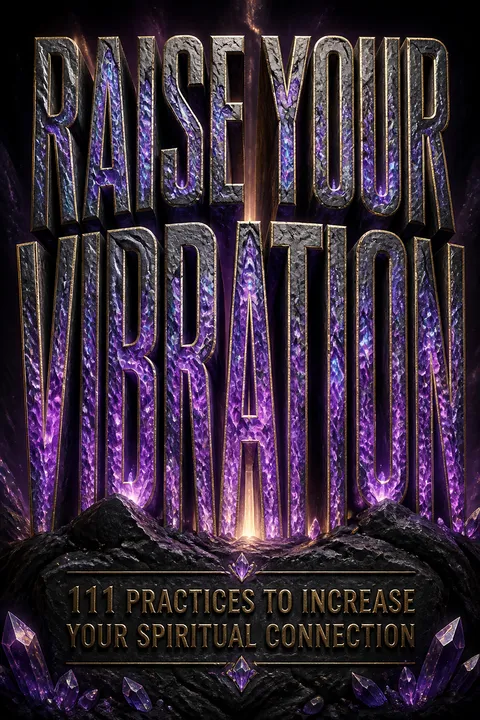
Raise Your Vibration is both a spiritual argument and a 111-day workbook. Its central claim is that connection, purpose, and a more loving way of living are cultivated through repeated attention. The book gives that claim an unusually broad toolkit: meditation, affirmations, yoga, breathing, music, food awareness, forgiveness, relationship boundaries, visualization, and communication with angels. Its organizing journey through chakras creates a sense of progression, moving from bodily grounding toward expression, perception, and integration.
The work is most persuasive when read as a practice manual for attention and self-compassion. Its strongest exercises are concrete and repeatable, and its insistence that meditation does not require a silent mind can lower the barrier to beginning. The focus on receiving as well as giving, and on saying no without abandoning kindness, also counters the idea that spiritual virtue requires self-erasure. The book's stories, especially Marion's, show how a painful interpretation can narrow a person's sense of possibility.
Its metaphysical explanations require a different standard of judgment. Gray presents energy, angels, chakras, signs, past lives, and manifestation as realities, but the text does not establish them as scientific findings. Claims that thoughts shape external events, that bodily symptoms indicate chakra imbalance, or that unusual sounds are messages should not be treated as medical or empirical guidance. Readers can still use these ideas symbolically, provided they distinguish a meaningful personal interpretation from evidence about the world.
That distinction clarifies the book's best use. Its rituals can support reflection, emotional regulation, and values-guided action without requiring belief in a literal cosmic feedback system. The 111 lessons offer more material than most readers need to complete; their deeper invitation is to select a few practices that fit, repeat them, and judge their value by changes in attention and conduct. Spiritual elevation is most credible here when it means becoming more present, honest, grounded, and generous, not escaping ordinary limits or blaming oneself for hardship.
Review Summary
Raise Your Vibration receives mostly positive reviews, with readers praising its uplifting content and practical spiritual exercises. Many find it helpful for daily inspiration and personal growth. The book's 111 "vibes" or lessons are appreciated for their bite-sized format and ease of integration into daily life. Some readers note the author's engaging writing style and soothing voice in the audiobook version. However, a few critics find the content shallow or too simplistic. Overall, the book is well-received as a tool for spiritual development and raising one's energy.
People Also Read







Glossary
daily spiritual practice
Repeated spiritual intentionA daily spiritual practice, or DSP, is an intention set for the day and revisited during ordinary activities. Gray describes it as broader than a single meditation session: it can include prayer, awareness, reflection, or another chosen exercise. Its purpose is to create regular opportunities to reconnect with one's values and inner life.
chakra
Spiritual energy centerChakra is a Sanskrit term meaning wheel, used in spiritual traditions to describe an energy center. Gray works with seven traditional centers along the spine, each associated in the book with themes such as security, creativity, will, love, expression, perception, and spiritual connection. He also discusses three additional centers. These are spiritual concepts, not established anatomical structures.
kundalini
Dormant spiritual energyKundalini is described in the book as primal energy resting at the base of the spine, often symbolized as a coiled serpent. In the spiritual account Gray presents, spiritual practice can awaken this energy and move it upward through the chakras, supporting a deeper state of awareness. This is a religious and metaphysical concept, not a measurable physiological process.
Sushumna channel
Central energy pathwayThe Sushumna channel is the central pathway in Gray's account of the subtle body. It runs along the spine and connects the chakras, allowing kundalini energy to rise. The book also describes two complementary streams, Ida and Pingala, crossing this central channel. These ideas come from spiritual models of the body rather than modern anatomical science.
Earth star chakra
Earth connection centerThe Earth star chakra is one of the additional energy centers Gray uses beyond the seven traditional chakras. He places it below the feet and associates it with grounding, connection to the planet, and receiving wisdom from the Earth. Exercises involving imagined roots and light are intended to help a practitioner feel more settled and connected.
soul star chakra
Soul wisdom centerThe soul star chakra is an additional center that Gray places above the crown of the head. He associates it with soul wisdom, spiritual memory, and the sense of recognition that can arise around a person, practice, or place. The book uses visualization and reflection to help readers explore that sense of connection.
stellar gateway
Cosmic intention centerThe stellar gateway is a spiritual center Gray places above the soul star. He presents it as a connection to cosmic possibility and as a focus for placing intentions into the universe. Exercises using it involve meditation, visualization, and future-oriented reflection. The term belongs to the book's metaphysical framework, not to a scientifically verified energy system.
lightworker
Person committed to serviceA lightworker is Gray's term for someone who seeks to make a positive difference through love, encouragement, healing, or service. The book frames this as a spiritual calling but says it need not require leaving a job or taking on constant work. At its most practical, the term describes a commitment to contribute positively in everyday life.
FAQ
1. What is "Raise Your Vibration: 111 Practices to Increase Your Spiritual Connection" by Kyle Gray about?
- Practical spiritual guide: The book offers 111 daily practices designed to help readers raise their energetic vibration and deepen their spiritual connection.
- Chakra-based journey: It takes readers through a journey of the chakras, introducing spiritual concepts, meditations, affirmations, and exercises for each energy center.
- Accessible spirituality: Kyle Gray presents ancient spiritual wisdom in a modern, relatable way, making practices like meditation, gratitude, and energy work approachable for everyone.
- Focus on daily practice: The core message is that consistent, daily spiritual practice is the key to personal growth, happiness, and a deeper connection with the universe.
2. Why should I read "Raise Your Vibration" by Kyle Gray?
- Step-by-step spiritual growth: The book provides a clear, structured path for anyone seeking to develop a daily spiritual practice, regardless of prior experience.
- Practical and actionable: Each lesson is short, practical, and easy to implement, making spiritual growth accessible even for busy people.
- Holistic approach: It addresses mind, body, and soul, offering advice on everything from diet and exercise to meditation and self-acceptance.
- Support for lightworkers: The book is especially helpful for those who feel called to make a positive difference in the world, offering encouragement and tools for personal and collective healing.
3. What are the key takeaways from "Raise Your Vibration" by Kyle Gray?
- You are energy: Everything in the universe, including you, is made of energy, and your thoughts, feelings, and actions affect your vibration.
- Daily spiritual practice matters: Consistent daily practices—like meditation, gratitude, and intention-setting—are essential for raising your vibration and spiritual growth.
- Chakra awareness: Understanding and working with your chakras can help you balance your energy and manifest positive change.
- Co-creation with the universe: You are not alone; the universe, angels, and spiritual guides are available to support you when you ask and align your energy.
4. How is "Raise Your Vibration" by Kyle Gray structured, and how should I use it?
- 111 daily lessons: The book is divided into 111 short, focused lessons, each with a specific practice, affirmation, or meditation.
- Chakra-based sections: Lessons are grouped into spheres that correspond to the chakras and additional energy centers, progressing from grounding to higher spiritual activation.
- One lesson per day: Kyle Gray recommends doing one lesson per day and revisiting it throughout the day to fully integrate the teaching.
- Flexible use: After completing the book, you can use it as an oracle by opening to a random page for daily inspiration or guidance.
5. What is the main philosophy or spiritual worldview in "Raise Your Vibration" by Kyle Gray?
- Oneness and interconnectedness: The book teaches that we are all connected through energy, and our inner world shapes our outer experience.
- Miracles and manifestation: Miracles are seen as shifts in perception, and everyone is capable of manifesting positive change by aligning thoughts and feelings with love.
- Non-dogmatic spirituality: The practices are not tied to any specific religion; the focus is on personal connection to the universe, the divine, or whatever term resonates with you.
- Empowerment and self-acceptance: Readers are encouraged to accept their own light, embrace their role as lightworkers, and trust their intuition.
6. What are chakras, and how does "Raise Your Vibration" by Kyle Gray use them?
- Energy centers explained: Chakras are described as energy centers in the body, each governing different aspects of physical, emotional, and spiritual well-being.
- Seven traditional chakras: The book covers the root, sacral, solar plexus, heart, throat, third eye, and crown chakras, explaining their functions and how to balance them.
- Additional chakras: Kyle Gray introduces the Earth star, soul star, and stellar gateway chakras, expanding the traditional system for deeper spiritual connection.
- Chakra-focused practices: Each section of the book offers practices, meditations, and affirmations tailored to activating and balancing a specific chakra.
7. What are some of the core daily practices recommended in "Raise Your Vibration" by Kyle Gray?
- Meditation and mindfulness: Regular meditation is emphasized as a way to become aware of your thoughts and connect with your inner guidance.
- Affirmations and intentions: Setting positive intentions and using affirmations help shift your mindset and raise your vibration.
- Gratitude and self-love: Practicing gratitude and self-acceptance are highlighted as powerful tools for spiritual growth and happiness.
- Physical and energetic self-care: The book includes advice on conscious eating, exercise, salt baths, and energy clearing to support your body and aura.
8. How does "Raise Your Vibration" by Kyle Gray address the role of angels, guides, and spiritual signs?
- Angels as helpers: The book teaches that everyone has guardian angels and can call on archangels and ascended masters for support, protection, and healing.
- Recognizing signs: Repetitive numbers (like 11:11), high-pitched noises, and hearing your name are described as signs from the universe or angels.
- Prayers and invocations: Many lessons include prayers to angels or guides, encouraging readers to build a personal relationship with spiritual helpers.
- Lightworker mission: Readers are invited to accept their role as lightworkers—people who bring positive change—and to trust in the guidance and support of the spiritual realm.
9. What is the significance of "vibration" in "Raise Your Vibration" by Kyle Gray, and how can I raise mine?
- Vibration as energy frequency: Your vibration is the energetic frequency you emit, influenced by your thoughts, emotions, actions, and environment.
- High vs. low vibration: High vibration is associated with love, joy, gratitude, and health, while low vibration is linked to fear, shame, and negativity.
- Raising your vibration: The book offers practical steps—like positive self-talk, forgiveness, creative expression, and service to others—to help you shift into higher states.
- Impact on manifestation: A higher vibration attracts more positive experiences and aligns you with the support of the universe.
10. How does "Raise Your Vibration" by Kyle Gray help with overcoming challenges like fear, shame, and negative thinking?
- Reframing challenges: The book encourages seeing challenges as opportunities for growth and shifting your perception from fear to love.
- Letting go of shame: Practices focus on self-acceptance, releasing comparison, and understanding that everyone is doing their best.
- Forgiveness and healing: Forgiveness is presented as a way to free yourself from the past and open up to miracles and love.
- Practical exercises: Each lesson includes actionable steps—such as affirmations, visualizations, and meditations—to help you process and release negative emotions.
11. What are some of the most powerful quotes from "Raise Your Vibration" by Kyle Gray, and what do they mean?
- "You are the creator of your world." This emphasizes personal responsibility and the power of your thoughts and feelings to shape your reality.
- "It’s not how big the miracle is – it’s how much room you make for it." This highlights the importance of openness and trust in allowing miracles to occur.
- "You can never fail, you can only feel." This reframes failure as a learning experience and encourages self-compassion.
- "We are all one." This core teaching underlines the interconnectedness of all beings and the importance of compassion and unity.
12. How can I integrate the teachings of "Raise Your Vibration" by Kyle Gray into my daily life for lasting change?
- Commit to daily practice: Set aside time each day for spiritual exercises, even if it's just a few minutes, to build consistency and momentum.
- Check in throughout the day: Regularly revisit your intentions, affirmations, or the day's lesson to reinforce positive shifts.
- Keep a journal: Track your progress, insights, and any signs or synchronicities you notice as you work through the practices.
- Share and connect: Discuss your experiences with friends or fellow practitioners, and consider using the book as an oracle for ongoing inspiration after completing the 111 lessons.
Download PDF
Download EPUB
.epub digital book format is ideal for reading ebooks on phones, tablets, and e-readers.








