

Key Takeaways
Stop searching for a person to supply the love you can cultivate within
The missing lesson. Vex King opens with the romantic films of his childhood: grand gestures, instant devotion, and a happy ending once the lovers find each other. The films left out the inner work that real relationships demand. King’s central claim is that love is an inner capacity, while relationships are the ways people express and sustain it together. A partner can help someone recognize and deepen that capacity, but cannot make them whole. He uses the image of a sphere: changing relationships occupy its surface, while a steady source of love lies at its center.
From idea to practice. This spiritual model is not offered as a scientific formula. Its practical point is that expecting a partner to repair every insecurity burdens the relationship with a job it cannot do. Self-knowledge and care create room to enjoy a partner as a person, rather than as a cure.
What's useful here is the distinction between an internal capacity for care and the external conditions that make a relationship workable. That distinction can loosen the pressure to find a flawless partner without implying that people should meet every need alone. The sphere is a spiritual metaphor, not an empirically testable account of the mind. Its value is practical: it asks whether a relationship expresses care in observable ways, rather than whether romance has magically completed someone.
Love may be unconditional; access to your life still needs conditions
Love is not a contract. King separates unconditional love from the commitments and behavior that make a relationship viable. A person can continue to care for an ex, a distant friend, or someone who has died without continuing a partnership with them. Relationships, unlike love as King defines it, require compatible needs, respect, trust, honesty, effort, and reciprocity.
Boundaries protect the bond. Unconditional love does not mean unconditional tolerance. King warns that people can use spiritual language to excuse one-sided relationships, or stay because they fear being alone. Boundaries clarify what behavior is acceptable and protect time, energy, and safety. For example, someone may love a partner while refusing to continue a conversation that involves shouting, or while leaving a relationship that repeatedly harms them. Care need not disappear when access ends.
This distinction prevents a common moral trap: treating loyalty as proof of love, even when a relationship is damaging. It also separates a person's feelings from their obligations, which makes it easier to leave without rewriting the past as meaningless. A useful caution is that boundaries are not a tool for controlling another person's choices. They describe what someone will do to protect their own limits. That difference keeps the idea grounded in agency rather than disguised punishment.
Study your old emotional routes before calling familiar chemistry your type
Old pathways shape desire. King uses the Sanskrit term samskaras for emotional and psychological imprints left by experience. Repeated responses can become familiar routes: a person raised with unpredictable affection might later feel drawn to partners who are distant or inconsistent. The familiar pattern can feel like chemistry, even when it produces distress. Childhood experiences can also contribute to people-pleasing, controlling behavior, or difficulty trusting care.
Make the pattern visible. King suggests noticing triggers and recurring outcomes rather than asking only why bad luck keeps happening. Journaling, meditation, therapy, or a quiet walk can help someone examine what situations provoke intense reactions and what beliefs sit beneath them. Awareness does not erase a past, but it can create a pause between an old impulse and a chosen response. The goal is understanding, not blaming every present difficulty on childhood.
The pathway image makes repetition easier to notice without treating behavior as destiny. It also connects self-reflection to learning: patterns can be reinforced through repetition, and new responses can be practiced in their place. The claim needs restraint, since attraction has many influences and cannot always be traced to childhood wounds. Still, asking what a familiar dynamic costs, and whether it resembles earlier experiences, is more useful than assuming intensity alone signals compatibility.
Choose observable character over chemistry, fantasy, and dating-game suspense
First impressions distort. The book describes the halo effect, a bias named by psychologist Edward Thorndike: one striking quality, such as beauty or success, can lead people to assume other positive qualities without evidence. In King's example, Sarah idealizes Mark, then explains away his arrogance and emotional distance because she remains attached to the polished version she first imagined. She is relating to a fantasy, not fully seeing the person in front of her.
Look for conduct over time. King recommends noticing how a potential partner treats people, handles responsibility, discusses past relationships, and responds to honest questions about values and conflict. He also warns against calculated delays and attention games, which create uncertainty rather than intimacy. Attraction matters, but it cannot stand in for empathy, respect, shared priorities, and consistent behavior.
This advice turns dating from a hunt for instant certainty into a process of gathering evidence. That is a useful corrective to both the halo effect and the tendency to treat emotional intensity as proof of compatibility. The book's emphasis on authenticity is strongest when paired with patience: one charming conversation cannot establish character, and one awkward moment cannot settle it either. Patterns across situations provide better information than a profile, a promise, or a particularly magnetic first date.
Build trust through honest vulnerability, self-trust, and boundaries
Closeness needs openness. King describes reciprocal self-disclosure as the mutual sharing of personal thoughts and feelings. It can deepen intimacy because each person becomes more knowable to the other. Vulnerability is not dumping every secret at once; it means expressing what is real at a pace supported by trust. Small disclosures can help establish whether someone responds with care before more difficult subjects are shared.
Know your own judgment. The book outlines four attachment styles: secure, anxious, dismissive avoidant, and fearful avoidant. These patterns describe common ways people respond to closeness and threat. An anxious person may seek repeated reassurance, while an avoidant person may pull away, creating a push-pull cycle. King recommends building self-trust by honoring small promises, identifying needs, and communicating them clearly. Attachment patterns can change; they are not fixed identities.
The section balances a real tension: intimacy requires exposure, but exposure without safety can make someone easier to harm. Gradual disclosure and attention to the other person's response offer a sensible middle course between guardedness and indiscriminate openness. Attachment styles can be helpful shorthand for recurring patterns, but they should not become diagnoses or excuses. A label is most useful when it opens a conversation about needs and behavior, not when it predicts what a person is capable of changing.
Treat conflict as a shared problem, not a contest to win
Notice the dance. King describes passive aggression, avoidance, attention-seeking, and manipulation as patterns that obscure what someone actually feels or needs. He also summarizes John Gottman's Four Horsemen of relationship conflict: criticism, stonewalling, defensiveness, and contempt. These behaviors can turn a disagreement into a threat to the relationship itself. The book cites Gottman's observation that healthy marriages showed roughly five positive interactions for each negative one, presenting it as a reminder to build warmth alongside repair.
Regulate, then discuss. When either person is highly activated, King suggests taking a break and returning to the issue at an agreed time. During the conversation, listen without preparing a rebuttal, reflect back what was heard, own a specific contribution, and stay with the current problem. Compassion can help with ordinary defensiveness, but it does not require tolerating abuse or contempt.
The strongest insight is procedural: good intentions are not enough if the way a couple argues repeatedly damages safety. Pausing before discussion protects the conversation from becoming a contest between activated nervous systems. Gottman's ratio is best treated as a research-informed prompt, not a universal scorecard or guarantee of relationship success. The distinction between conflict and abuse is essential, too. A partner's difficult history may explain harmful behavior, but explanation does not transfer responsibility to the person being harmed.
Keep tending the couple you create, not just each partner
A relationship is a third reality. King describes three parts of a partnership: each individual, plus the shared bond they create. His garden analogy makes the point: two people can care for themselves and each other, yet neglect the relationship's shared space. One partner cannot do all the tending. The work includes attention, compromise, honest check-ins, affection, and time spent together without distraction.
Small signals matter. A bid for connection is a small invitation to share a moment, such as showing a funny video, suggesting a meal together, or reaching for a hand. Responding with attention helps create a sense of participation. King also presents Respect, Intimacy, Communication, and Honesty as pillars of a meaningful relationship, and cautions against keeping score. Effort need not be divided exactly in half every day; it should be mutual over time.
The shared-bond model helps explain why two individually caring people can still feel disconnected: the relationship itself needs attention. Small invitations are especially revealing because they occur in ordinary life, not just during anniversaries or crises. The garden metaphor also supports flexibility: illness, stress, or unequal workloads can change who contributes more in a given period. The test is not perfect symmetry, but whether both people remain invested in a fair, responsive partnership rather than treating imbalance as permanent.
Leave relationships that shrink you, even when love remains
Love does not require staying. King argues that relationships can change as people, needs, and circumstances change. A person may still love a partner while recognizing that their values or future plans no longer fit. Warning signs include repeatedly sacrificing core needs, feeling unsafe, losing a sense of self, or accepting brief affection in place of sustained care. He distinguishes an isolated hurt from a destructive pattern, while emphasizing that abuse is not ordinary conflict.
Choose reality over potential. Idealization keeps someone attached to who a partner might become, rather than what the partner consistently does. King suggests asking whether the relationship supports autonomy, mutual effort, conflict repair, and emotional safety. When someone is being abused, safety and outside support matter more than trying to fix the relationship. Leaving can protect a person's ability to love without requiring them to deny what the relationship meant.
This is a necessary limit on advice about patience, forgiveness, and personal growth. Those virtues cannot turn coercion or repeated harm into a healthy partnership. The distinction between love and staying also reduces the false choice between condemning an ex and returning to them. One practical nuance is that leaving may involve financial, family, or safety constraints, so a decision is not always immediately actionable. Seeking trusted support and planning for safety are part of self-protection, not failures of resolve.
Grieve the real loss without returning to the imagined future
Breakups remove more than a person. King notes that people may also mourn shared routines, plans, security, and the future they pictured together. Grief is not proof that leaving was wrong. He recommends acknowledging feelings without judging them, giving the process time, and tending to basic needs and supportive relationships. Writing down what is felt can help make pain recognizable rather than leaving it to dominate silently.
Separate memory from prediction. After a breakup, the mind may replay the best moments or imagine that one more effort could have transformed the relationship. King urges readers to distinguish genuine memories from promises about what might have been. Self-forgiveness matters too: someone can learn from having stayed too long, missed warning signs, or made mistakes without using shame as a permanent verdict.
The distinction between grieving a relationship and endorsing it is psychologically useful. Loss often includes an imagined future, so a person may miss a life that never actually existed in the form they expected. Naming that loss can reduce the temptation to treat pain as evidence that reunion is necessary. The book's invitation to find lessons should remain gentle: meaning-making can help, but grief does not need to become a tidy growth story on schedule.
Treat singlehood as a life, not a waiting room
Relationship status is not a diagnosis. King challenges the assumption that single people are lonely and coupled people are fulfilled. A person can build meaningful connection through friends, family, community, creative work, and care for themselves; a romantic relationship can also be lonely or unsafe. His account of a glamorous couple whose social-media image concealed a fierce public argument illustrates how little a posed photograph reveals about a relationship.
Practice love in ordinary acts. King closes with actions available regardless of relationship status: listen without rushing to fix, show genuine interest, acknowledge another person's experience, and notice their strengths. He calls this choosing love, not as a demand to accept harmful behavior, but as a daily orientation toward care and understanding. The central practice is to meet people as they are, while remaining honest about one's own needs.
The point is not that romance is unimportant, but that it is one form of connection rather than a certificate of personal success. The social-media anecdote neatly exposes the gap between public performance and private reality. That same skepticism can be applied to anyone's life, including one's own: a polished image is not the same as well-being. Choosing care is a broad, useful practice, provided it remains compatible with discernment and does not become pressure to excuse mistreatment.
Analysis
The book's most effective move is to separate love as an inner orientation from a relationship as a shared practice. That distinction reorganizes familiar questions. Instead of asking whether love is strong enough to justify staying, the reader can ask whether the relationship shows respect, reciprocity, safety, and sustained effort. The book then builds a progression: notice inherited patterns, choose with clearer eyes, communicate with care, tend the bond, and leave when the bond diminishes the self. Its cinematic opening is apt because the critique is not of romance itself, but of stories that end at the moment ordinary work begins.
The spiritual claim that all people share a timeless source of love gives the book emotional coherence, but it is a metaphysical belief rather than an established psychological finding. Readers who do not share that worldview can still use its practical consequences: feelings do not confer ownership, and affection does not cancel the need for boundaries. Likewise, attachment styles are useful descriptions of relational tendencies, not fixed categories that determine a person's future. Gottman's interaction ratio is best read as a memorable research finding, not a universal formula for evaluating every couple.
The book is strongest when it joins compassion to accountability. Childhood wounds can illuminate defensive behavior, but they do not make harmful conduct acceptable. That distinction is particularly important in its treatment of abuse and leaving. One limitation is that advice about self-love can sound as if individuals can solve relationship problems mainly through inner work, even when practical constraints, unequal power, or a partner's unwillingness to change are decisive. The text partly corrects this by affirming reciprocity, safety, and the right to leave. Its durable contribution is a usable test: does this connection help both people become more honest, more themselves, and more capable of care?
Review Summary
Things No One Taught Us About Love receives high praise for its insightful exploration of self-love and relationships. Readers appreciate King's accessible writing style, practical advice, and emphasis on personal growth. Many find the book transformative, offering a fresh perspective on love and relationships. Reviewers highlight its relevance to various types of relationships, not just romantic ones. The book is commended for challenging conventional notions of love and providing tools for recognizing unhealthy patterns. Some readers wish they had encountered this wisdom earlier in life, finding it valuable for fostering healthier connections.
People Also Read








Glossary
samskaras
emotional imprints from experienceIn the book, samskaras are psychological or emotional impressions formed by past experiences. Repeated beliefs and reactions can become familiar patterns that shape how someone behaves, interprets events, and approaches relationships. A trigger can bring an old impression into present awareness. King presents reflection, meditation, journaling, and therapy as ways to recognize these patterns and choose responses more consciously.
Big-‘S’ Self-love
love grounded in awarenessBig-‘S’ Self-love refers to recognizing a deeper self that is distinct from changing thoughts, emotions, and bodily experiences. Drawing on the Hindu idea of atman, King describes this awareness as an enduring source of love and connection. It differs from small-s self-love, which means practical care for one's everyday mental, physical, and emotional needs.
Hakalau
soft-gaze awareness meditationHakalau is the meditation practice King describes as focusing with a soft gaze while allowing the broader visual field to enter awareness. The practitioner relaxes their eyes, notices peripheral vision, and returns attention gently when the mind wanders. King presents the exercise as a way to settle attention and become more aware of the present moment.
Four Horsemen
four damaging conflict patternsThe Four Horsemen are four harmful communication patterns identified in relationship researcher John Gottman's work: criticism, stonewalling, defensiveness, and contempt. In the book, they serve as warning signs that conflict is becoming corrosive. Recognizing them can help partners pause, regulate their reactions, and try more respectful ways of discussing the underlying problem.
RICH
four relationship pillarsRICH is King's acronym for Respect, Intimacy, Communication, and Honesty, four qualities he presents as foundations of a meaningful relationship. Respect matters during conflict as well as calm moments. Intimacy requires continued investment, communication keeps needs visible, and honesty makes it possible to make sound decisions about the relationship.
bid for connection
an invitation to share attentionA bid for connection is a small action that invites a partner into a shared moment. Examples include showing a funny video, suggesting an activity together, or reaching for a hand. A partner can respond with attention, ignore the bid, or reject it. King emphasizes that repeated responses to these everyday invitations help shape the felt quality of connection.
love languages
common ways of expressing careThe book discusses Gary Chapman's five love languages: words of affirmation, quality time, gifts, acts of service, and physical touch. They describe familiar ways people express and receive affection. King cautions against treating them as fixed categories or using them to keep score, since people's preferences can change and care appears in many forms.
attachment styles
patterns around closeness and securityAttachment styles describe recurring ways people respond to intimacy and perceived relationship threat. The book names secure, anxious, dismissive avoidant, and fearful avoidant patterns, linking them to early caregiving experiences. These patterns can shape adult relationships, but King stresses that they can change and may vary across different relationships.
FAQ
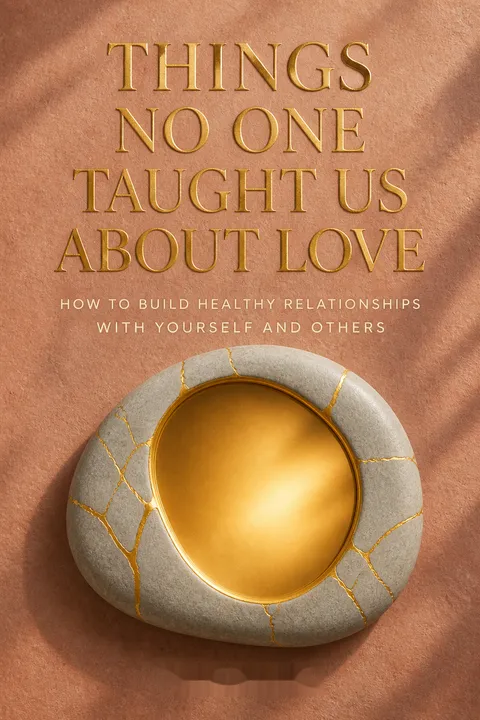
What's "Things No One Taught Us About Love" by Vex King about?
- Focus on Love and Relationships: The book explores the nature of love and how to build healthy relationships with oneself and others. It emphasizes the importance of self-love as a foundation for all other relationships.
- Structure and Content: Divided into five parts, the book covers the nature of love, first connections, cultivating healthy bonds, the realities of relationships, and letting go with grace.
- Personal and Universal Insights: Vex King shares personal anecdotes and universal truths about love, aiming to empower readers to enrich their connections.
- Practical Guidance: The book offers practical advice and exercises to help readers understand and improve their relationships, both with themselves and others.
Why should I read "Things No One Taught Us About Love"?
- Empowerment in Relationships: The book provides tools and insights to help you build more fulfilling and authentic relationships.
- Self-Discovery: It encourages self-reflection and self-love, which are crucial for personal growth and healthy relationships.
- Practical Advice: Vex King offers actionable steps and exercises to apply the concepts in real life, making it a practical guide.
- Universal Appeal: The themes of love and relationships are universal, making the book relevant to anyone seeking to improve their personal connections.
What are the key takeaways of "Things No One Taught Us About Love"?
- Self-Love is Foundational: Understanding and loving yourself is crucial before you can build healthy relationships with others.
- Love vs. Attachment: The book distinguishes between authentic love and attachment, emphasizing the importance of non-attachment in relationships.
- Communication and Vulnerability: Effective communication and vulnerability are essential for deepening intimacy and trust in relationships.
- Letting Go with Grace: Sometimes, letting go is necessary for personal growth, and the book provides guidance on how to do this gracefully.
How does Vex King define love in "Things No One Taught Us About Love"?
- Internal Experience: Love is described as an internal state of being that originates from within and is not dependent on external circumstances.
- Unconditional and Boundless: True love is unconditional and boundless, extending beyond personal relationships to encompass all of existence.
- Radiant and Transformative: Love is a radiant force that can transform individuals and relationships, leading to personal growth and fulfillment.
- Beyond Romantic Notions: The book challenges traditional romantic notions of love, advocating for a more holistic and spiritual understanding.
What is the role of self-love in "Things No One Taught Us About Love"?
- Foundation for Relationships: Self-love is the foundation upon which all other relationships are built, allowing individuals to love others more authentically.
- Daily Practice: It involves daily practices that prioritize mental, physical, and spiritual well-being, such as meditation, journaling, and self-reflection.
- Big-‘S’ Self-Love: The book distinguishes between small-‘s’ self-love (daily practices) and big-‘S’ Self-love (realizing one's true essence and interconnectedness).
- Protection Against Self-Betrayal: Self-love helps prevent self-betrayal by encouraging individuals to honor their needs and boundaries.
How does Vex King address attachment in relationships?
- Spiritual and Psychological Views: The book explores both spiritual and psychological perspectives on attachment, highlighting the importance of non-attachment.
- Non-Attachment in Love: Non-attachment allows for freedom and growth in relationships, preventing possessiveness and control.
- Healthy Bonds: Secure attachments are encouraged, where individuals support each other's growth without becoming overly dependent.
- Balancing Needs: The book advises balancing personal needs with those of a partner, fostering mutual respect and understanding.
What are some practical exercises from "Things No One Taught Us About Love"?
- Hakalau Meditation: An ancient Hawaiian practice that helps cultivate presence and awareness by focusing on peripheral vision.
- Self-Reflection Prompts: The book includes prompts to explore personal beliefs, values, and past patterns that influence relationships.
- Communication Techniques: Strategies for improving communication, such as active listening and expressing vulnerability, are provided.
- Boundary Setting: Guidance on setting healthy boundaries to protect personal well-being while maintaining relationship harmony.
What are the realities of relationships according to Vex King?
- Imperfect and Evolving: Relationships are not perfect and require continuous effort, understanding, and adaptation.
- Conflict and Resolution: Disagreements are natural, but resolving them fairly and with empathy strengthens the bond.
- Presence and Distraction: Being present is crucial for maintaining connection, while distractions can lead to relationship breakdowns.
- Growth and Change: Relationships evolve over time, and both partners must be willing to grow and adapt together.
How does Vex King suggest letting go with grace?
- Non-Attachment: Emphasizes the importance of non-attachment, allowing relationships to end naturally without clinging.
- Acceptance and Forgiveness: Encourages acceptance of reality and forgiveness, both of oneself and others, to move forward.
- Grieving and Renewal: Acknowledges the grieving process as necessary for healing and making space for new beginnings.
- Self-Reflection: Advises reflecting on personal growth and lessons learned from past relationships to foster future connections.
What are some of the best quotes from "Things No One Taught Us About Love" and what do they mean?
- "You are worthy of love that is pure, inspiring and wholesome." This quote emphasizes the inherent worthiness of every individual to experience authentic and fulfilling love.
- "We don’t fall in love, we rise in love." It challenges the notion of falling in love as a passive experience, advocating for an active, empowering process of rising in love.
- "Love is being, relationships are doing." This highlights the distinction between love as an internal state and relationships as actions that express that love.
- "The right partner will not complete you. You are already whole." It underscores the importance of self-completeness and finding a partner who complements rather than completes you.
How does Vex King address the concept of vulnerability in relationships?
- Key to Intimacy: Vulnerability is essential for creating deep connections and fostering intimacy in relationships.
- Courage and Trust: It requires courage to open up and trust that the other person will respond with care and understanding.
- Boundaries and Safety: While vulnerability is important, it should be balanced with boundaries to ensure emotional safety.
- Reciprocal Self-Disclosure: Encourages mutual sharing of personal experiences and emotions to build trust and understanding.
What is the significance of presence in "Things No One Taught Us About Love"?
- Love in the Present: Love is experienced in the present moment, not in memories or future fantasies.
- Focus and Attention: Being present requires focusing attention on the current moment and the people in it, free from distractions.
- Cultivating Presence: The book offers exercises to develop presence, such as mindfulness practices and active listening.
- Impact on Relationships: Presence enhances connection and understanding, reducing misunderstandings and fostering deeper bonds.
About the Author


Download PDF
Download EPUB
.epub digital book format is ideal for reading ebooks on phones, tablets, and e-readers.








