

Key Takeaways
Choose healing's durable lift over highs that leave you emptier.
Relief can become a loop. King defines trauma as lasting emotional and psychological pain that a person has not been able to process. To escape it, people may seek short-lived highs through substances, food, work, sex, or social media. His own breakup story shows a less obvious version: he kept reopening contact with an unfaithful partner because even painful arguments felt safer than the loneliness of ending things.
Healing is active work. Inner healing means examining old conditioning, loosening its hold, and building beliefs that help a person meet the future with more confidence. It does not erase pain or happen on a tidy schedule. King presents the practices as accessible support, not a substitute for professional care, especially when trauma is severe or overwhelming.
What's useful here is the distinction between immediate relief and recovery that expands a person's choices. A behavior that looks self-defeating may once have helped someone manage danger, scarcity, or distress, so shame alone rarely changes it. The book's emphasis on noticing the pattern before judging it fits well with approaches that treat coping behaviors as learned strategies. Its language of a higher or lower energy can be motivating, but the practical claim is clearer when understood as changing attention, habits, and relationships, rather than as a measurable force.
Use the seven-layer map to see beyond the symptom in front of you.
Healing spans more than thought. King organizes the book around seven layers drawn from yoga traditions. The journey moves from the physical body through emotion and reasoning, then intuition, connection to an inner self, a sense of belonging to something larger, and finally freedom. He offers this as a way to explore a whole person, not as a literal map of anatomy.
The structure shapes the practice. The early work attends to bodily experience and past conditioning; later exercises focus on beliefs, relationships, self-care, and freedom. The framework's practical point is that distress can affect sensation, thought, emotion, behavior, and connection at once. Addressing only one visible symptom may leave other parts of a person's experience untouched.
The framework's strength is its refusal to reduce a person to a diagnosis or a single symptom. That instinct echoes biopsychosocial models, which consider how bodily processes, beliefs, behavior, and social context interact. The layers also give readers a memorable route through a complicated subject. The limit is evidential: subtle or cosmic bodies are spiritual concepts, not established medical structures. The model works most responsibly as a reflective checklist for neglected aspects of experience, rather than as a scientific explanation for illness.
Let bodily discomfort guide attention, not dictate its cause.
Notice before interpreting. King describes seeing reminders of his former partner and feeling his heart pound, his chest tighten, and his breathing grow difficult. In a coaching story, a woman with back and hip pain feared the social gathering after her exercise class. She began attending class without going to the pub, and the pain eased. King treats the change as a clue to emotional distress, not merely a fitness issue.
Start with gentle awareness. His body scan invites a person to notice sensation from feet to head without forcing a change. He also suggests moving slowly and experimentally, as if encountering familiar movements anew. The exercise can be adapted by keeping the eyes open, which may feel safer for someone who becomes distressed with eyes closed.
The body scan directs attention toward interoception, the perception of internal sensations, which can help a person notice tension or arousal before it becomes overwhelming. The coaching story makes that connection vivid, but it cannot establish that emotion caused the client's pain. Physical symptoms have many possible causes, and persistent or worsening pain deserves appropriate medical assessment. A useful reading is that bodily signals can inform inquiry, while neither pain nor a scan can diagnose its source.
Choose relationships from your experience, not from their approval.
Support changes the terrain. Malika, a pseudonym, was raped at fifteen. Her family tried to help, but avoided discussing what happened and urged her to resume normal life. She spent years isolated and using substances and harmful relationships to cope. In adulthood, therapy and supportive new connections helped her begin addressing the trauma. The account shows how care can miss its mark even when loved ones mean well.
Shift the social question. Instead of spending an encounter guessing whether another person approves, King asks readers to notice their own response: Do I like this person? Do I feel comfortable? The aim is not to judge others, but to stop outsourcing self-worth and to choose relationships with mutual trust, respect, and support.
The chapter's strongest relational insight is that recovery does not happen in a social vacuum. Attuned support can offer safety, while pressure to move on can deepen isolation. Reframing the question toward one's own experience also counters approval-seeking without requiring hostility or withdrawal. The book sometimes describes this through matching vibrations; a more grounded interpretation is compatibility in behavior, respect, and felt safety. Malika's story should not be read as blaming her family or implying that different support would have guaranteed an easy recovery.
Trace present reactions to old rules before calling them your personality.
Old lessons can masquerade as truth. King imagines Brian, a child told that crying makes him weak and unworthy of respect. As an adult, Brian interprets his partner's loving concern during grief as disgust, because the childhood rule shapes what he thinks he sees. King distinguishes trauma-driven reactions, often urgent and focused on past danger, from intuition he describes as calmer and more present. This distinction is a prompt for reflection, not a test that guarantees which response is correct.
Map the memories. The personal history list records emotionally charged experiences and the beliefs attached to them. King advises rating intensity from one to ten and seeking a trauma-trained mental health professional for memories rated above six or seven. He also recommends taking breaks and seeking support if the exercise becomes overwhelming.
The Brian example captures how expectations can filter perception: a person may respond to an old rule rather than the evidence in front of them. The useful move is to ask what a reaction is protecting against. Still, calmness is not proof of intuition, and anxiety is not proof that a belief is false. Past experience can sharpen threat detection as well as distort it. Memory exercises also vary in emotional impact, so a paced, supported approach matters more than completing a list on schedule.
Set boundaries to protect connection without sacrificing your peace.
A limit can preserve closeness. Paige, a client in one story, stayed silent when her mother-in-law repeatedly arrived without warning and took over time with her new baby. Her difficulty was linked to an earlier fear of being rejected by her father. With help, Paige spoke with her husband and mother-in-law about the space her new family needed. She set a limit without cutting the relationship off.
Make the boundary concrete. King defines a boundary as a limit that communicates how someone wishes to be treated. He recommends noticing the trigger, identifying the need or value beneath it, stating the limit calmly, and following through if it is ignored. He also links unaddressed family pain and comparison habits to patterns that can be passed between generations.
This example shows why boundaries are more than assertive wording: a present conflict may carry the emotional weight of an earlier threat of abandonment. Naming the need can help make a request less accusatory and more actionable. A boundary governs one's own participation, not another person's feelings or choices, and consequences need to be realistic and safe. The discussion of inherited patterns is strongest as a family and cultural account of learned behavior; claims about transmission should not be taken to mean that every painful experience inevitably passes to descendants.
Answer childhood beliefs with adult care, evidence, and repetition.
Reparenting offers a new response. King uses this term for caring for oneself as an adult while revisiting needs or beliefs formed in childhood. A child mocked for a wrong answer might have learned to stay silent. In a reparenting exercise, the adult self imagines responding to that child with patience and encouragement instead. The point is not to rewrite what happened, but to change the meaning and response carried forward.
Make the replacement believable. King asks readers to write a more empowering version of a limiting belief, then record evidence for it and choose an action consistent with it. He describes repetition as a way to strengthen new mental habits. For example, a fear of having nothing to offer can be answered by noticing actual skills and practicing sharing an opinion in a low-risk setting.
This method combines compassionate self-talk with cognitive reappraisal: noticing a thought, examining its evidence, and rehearsing a more balanced alternative. The imagined adult response can also supply the validation missing from an old memory. Neural plasticity supports the general idea that repeated experience can change learned responses, but it does not make every affirmation true simply through repetition. Replacement beliefs work best when they are credible, connected to evidence, and tested in everyday behavior.
Use curiosity and tailored self-care to keep fear from shrinking life.
Curiosity reopens attention. King argues that fear can make the familiar seem safer and reduce interest in new experiences. He suggests approaching emotions with questions rather than condemnation: What might this feeling be signaling? What else could be true? Curiosity is not a demand to enjoy pain or ignore danger. It is a way to investigate experience without letting a first reaction become the whole story.
Build care from experience. Rather than prescribe one routine, King asks readers to try practices and note what genuinely helps. He suggests planning daily, weekly, and monthly options. Possibilities include journaling, walking, meditation, exercise, breathwork, or time with a trusted friend. A routine should fit the person and support the mind and body, not become another standard to fail.
Curiosity can loosen rigid interpretations by creating a small gap between sensation and judgment. Experiments in self-care add another useful idea: assess practices by their effects on a particular person, rather than by their popularity. This fits the broader principle of behavioral activation, where manageable activity can help counter withdrawal. The book is also right to distinguish emotional work from forced positivity. Self-care is not a replacement for treatment, and a routine should be adjusted when a practice increases distress or becomes burdensome.
Insert a pause so an old wound does not choose your response.
A trigger is a decision point. King recommends pausing when a comment or situation sparks a strong reaction. The pause allows a person to ask which old belief may be active, recall a more balanced belief, and choose how to respond. He describes how, after a painful breakup, he generalized distrust from one partner to women as a whole. Repeatedly challenging that conclusion helped him relate to women as individuals rather than through the old fear.
Return to the present. King uses the image of a wave that fears reaching shore and another that trusts its connection to the ocean. The story represents his idea of a steady inner self beneath changing experience. A grounding exercise asks readers to notice where they are, what they hear, and what they know to be true in the moment.
The pause resembles a core skill in emotion regulation: notice arousal, name the interpretation, and delay action long enough to select a response. It is especially valuable online, where instant replies can turn a transient wound into lasting conflict. The wave story gives a memorable image of identity as larger than one passing state. That spiritual interpretation may comfort some readers, while others may prefer to understand the steady self as a practiced capacity for perspective. Neither framing should require tolerating actual mistreatment.
Measure freedom by recovery and choice, not constant happiness.
Freedom allows difficult feelings. King does not define healing as permanent calm or cheerfulness. A person may still be triggered, but progress can mean returning to steadiness sooner, feeling less shame, and imagining a future that is not ruled by disaster. His future-self visualization asks readers to picture life five years ahead after sustained healing work, then notice what relationships, actions, and feelings matter in that scene.
Bring the picture into life. The final practice is an ordinary walk approached with relaxed posture and attention to the surroundings. The exercise asks readers to try on a sense of possibility in daily life. King frames setbacks as part of a continuing process, not proof that earlier effort was wasted.
This definition of freedom is more psychologically useful than equating wellness with uninterrupted positive mood. Recovery can be measured by flexibility: feeling distress, responding safely, and returning to valued activity. Future imagery may help clarify goals, especially when paired with concrete behavior, as the walking practice does. But visualization alone cannot guarantee outcomes, and a five-year picture may feel inaccessible to someone in acute crisis. Progress should be personal, observable, and compatible with professional support when needed.
Analysis
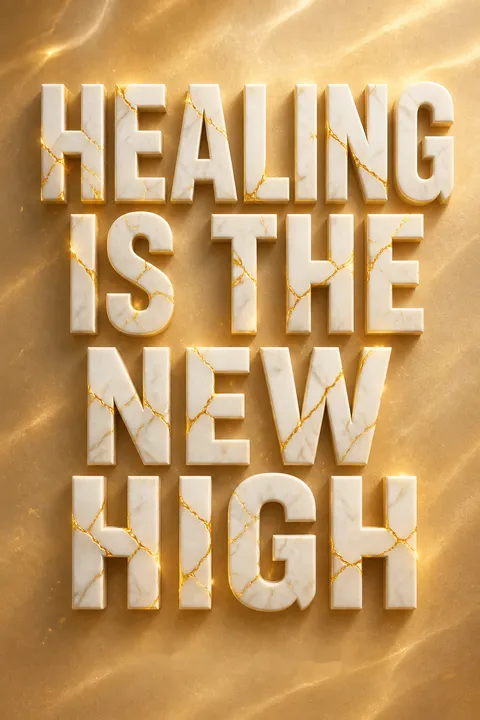
Healing Is the New High is part memoir, part practical workbook, and part spiritual framework. Its narrative arc moves from the author's humiliating and destabilizing breakup toward a broader account of childhood pain, learned beliefs, relationships, and freedom. The seven-layer structure gives that journey a shape: begin with the body, investigate remembered experience, revise interpretation, then practice living with greater choice. Stories make abstract claims legible, while exercises ask the reader to convert insight into repeated action.
The book's most durable contribution is its compassionate account of behavior. Patterns such as overeating, distrust, avoidance, or returning to harmful relationships are not treated simply as defects; they may have originated as attempts to manage insecurity or danger. That reframing can reduce shame and make change more possible. The practical emphasis on noticing bodily cues, examining beliefs, setting limits, and seeking supportive people is also more concrete than its spiritual vocabulary sometimes suggests.
The main interpretive challenge is separating useful metaphors from empirical claims. Vibration, subtle bodies, and universal energy organize the author's experience, but the text does not establish them as medical mechanisms. Likewise, a body sensation can point toward emotional distress without proving its cause, and intuition can reflect bias as well as insight. The memory-list and meditation exercises may stir intense distress, so they are not universally appropriate as unsupervised self-help. The book does advise professional support for high-intensity memories and states that it is not a substitute for medical care.
Read most productively, the framework is a set of prompts, not a diagnosis or a promise of cure. Its promise is modest but meaningful: repeated attention, more accurate beliefs, supportive relationships, and chosen behavior can make a person's responses less captive to old pain. Healing here is not becoming happy at all times. It is recovering room to act, connect, and imagine beyond the past.
Review Summary
Healing Is the New High receives mostly positive reviews, with readers praising its practical exercises, relatable content, and transformative impact. Many find it helpful for overcoming anxiety, trauma, and personal growth. Readers appreciate the author's writing style and the book's balance of spiritual and practical guidance. Some criticisms include feeling like a biography, being too basic, or overly spiritual. Overall, most reviewers highly recommend the book, finding it insightful and beneficial for their healing journey.
People Also Read



Glossary
seven bodies
Layers of the whole selfA yoga-derived framework King uses to organize inner healing across seven aspects of experience. The journey ranges from the physical body and emotions through reason, intuition, inner connection, connection with a wider whole, and freedom. King presents these layers as a holistic guide for reflection, not as scientifically established anatomical structures.
vibration
A felt quality of energyKing's term for the energy a person experiences internally and expresses outwardly. In the book, a higher vibration is associated with hope, confidence, resilience, and connection, while a lower one is associated with heaviness and distress. The concept functions mainly as spiritual and emotional language, not as a measurable physical frequency.
inner healing
Reworking pain and conditioningKing's name for the ongoing work of recognizing past conditioning, loosening painful beliefs, and developing a more empowering way to meet present and future experience. It includes reflection, bodily awareness, new habits, relationships, and self-care. The book treats this as personal growth that may complement, but does not replace, professional mental health care.
limiting beliefs
Learned beliefs that restrict choicesBeliefs about oneself or the world that King links to painful or confusing experiences, often from childhood. Examples include expecting rejection, assuming mistakes make a person unworthy, or believing safety depends on controlling everything. The book asks readers to identify these beliefs, question their usefulness, and practice more balanced alternatives supported by experience.
reparenting
Meeting old needs with adult careA process of revisiting a childhood experience from the perspective of the adult self and offering the understanding, reassurance, or guidance that was missing. King also uses the term for relearning how to meet present needs. The practice does not change the event; it aims to alter the beliefs and responses carried forward from it.
true Self
A steady sense beneath experienceKing's spiritual and reflective term for a stable core of identity that is not identical to passing thoughts, painful memories, or other people's judgments. He describes it as connected with a larger whole and as a source of steadiness. Readers may understand this as spiritual reality or as a metaphor for perspective and self-acceptance.
personal history list
A record of charged memoriesAn exercise in which a reader writes down memories that still carry emotional weight, from childhood onward, and rates their intensity. The list is meant to help identify beliefs connected to those experiences. King advises taking breaks and seeking support, especially when memories feel highly intense or the exercise becomes overwhelming.
intuition-based responses
Responses experienced as calm knowingKing's label for reactions that feel present-focused, steady, protective, and open to uncertainty. He contrasts them with trauma-based responses, which he describes as urgent, fearful, and dominated by past danger. These qualities are prompts for reflection rather than a validated diagnostic method, since calmness or anxiety alone cannot establish whether a judgment is accurate.
FAQ
What's "Healing Is the New High" about?
- Author's Journey: The book is written by Vex King, who shares his personal journey of overcoming emotional turmoil and finding freedom through inner healing techniques.
- Inner Healing Focus: It emphasizes the importance of inner healing as a means to let go of past trauma and emotional pain, and to create a new, empowering belief system.
- Practical Exercises: The book provides practical exercises designed to help readers raise their vibration and become their own healers.
- Holistic Approach: It integrates concepts from yoga philosophy and modern psychology to offer a comprehensive guide to emotional and spiritual well-being.
Why should I read "Healing Is the New High"?
- Empowerment: The book empowers readers to take control of their healing journey without relying on external gurus or expensive courses.
- Practical Tools: It offers simple, accessible exercises that can be integrated into daily life to produce long-lasting healing results.
- Personal Growth: Readers can expect to gain a deeper understanding of themselves and learn how to create a life filled with happiness, love, and hope.
- Universal Relevance: The book addresses common emotional struggles and provides insights that are applicable to anyone seeking personal development and emotional freedom.
What are the key takeaways of "Healing Is the New High"?
- Inner Healing: Healing involves letting go of past conditioning and embracing the unknown with confidence and resilience.
- Self-Responsibility: Readers are encouraged to take responsibility for their healing journey and to use the tools provided to transform their lives.
- Vibration and Energy: Raising one's vibration is crucial for manifesting positive changes and attracting better experiences.
- Holistic Self-Care: The book emphasizes the importance of caring for the mind, body, and spirit to achieve overall well-being.
How does Vex King define trauma in "Healing Is the New High"?
- Emotional and Psychological Pain: Trauma is described as enduring emotional and psychological pain resulting from experiences that the brain cannot process properly.
- Subtle and Overt: It can be both subtle, such as feelings of shame or humiliation, and overt, like deeply disturbing or shocking events.
- Universal Experience: The book acknowledges that everyone has experienced trauma in some form, but few are taught how to handle it effectively.
- Healing Focus: The focus is on healing these wounds to prevent them from affecting one's present and future life.
What is the significance of the "seven bodies" in "Healing Is the New High"?
- Holistic Framework: The concept of the seven bodies provides a framework for understanding the different layers of the self that need healing.
- Physical to Nirvanic: These bodies range from the physical to the nirvanic, each representing different aspects of human experience and consciousness.
- Interconnectedness: Healing requires working with all seven bodies to achieve harmony and high vibration.
- Practical Application: The book uses this framework to guide readers through a structured healing journey, addressing each body in turn.
How does Vex King suggest raising one's vibration in "Healing Is the New High"?
- Self-Love Practices: Engaging in self-care activities like meditation, healthy eating, and positive affirmations can help raise one's vibration.
- Positive Relationships: Surrounding oneself with supportive and positive people is crucial for maintaining a high vibration.
- Mindfulness and Awareness: Being present and aware of one's thoughts and emotions allows for better management of energy and vibration.
- Letting Go of Negativity: Releasing past trauma and limiting beliefs is essential for vibrating at a higher level.
What are some practical exercises from "Healing Is the New High"?
- Body Scan: A practice to become aware of physical sensations and identify areas of tension or discomfort that may hold emotional pain.
- Rewriting Beliefs: An exercise to identify and transform limiting beliefs into empowering ones that support personal growth.
- Visualization: Techniques to imagine a healed and empowered future self, reinforcing positive changes in the subconscious mind.
- Candle Gazing: A meditative practice to connect with one's inner fire and strengthen focus and mental clarity.
What role does self-care play in "Healing Is the New High"?
- Essential for Healing: Self-care is presented as a fundamental component of the healing process, necessary for maintaining balance and well-being.
- Daily Practices: The book encourages incorporating self-care routines into daily life to support ongoing emotional and spiritual health.
- Mind-Body Connection: Self-care practices help to nurture the mind, body, and spirit, promoting overall harmony and high vibration.
- Personalized Approach: Readers are guided to explore and establish self-care practices that resonate with their individual needs and preferences.
How does Vex King address relationships in "Healing Is the New High"?
- Impact on Healing: Relationships are seen as integral to the healing journey, with positive relationships accelerating healing and negative ones hindering it.
- Vibrational Alignment: The book emphasizes the importance of surrounding oneself with people whose vibrations align with one's own healing goals.
- Boundary Setting: Setting healthy boundaries is crucial for maintaining emotional well-being and protecting one's healing space.
- Healing Through Connection: Authentic and supportive relationships provide the love and trust needed for deep emotional healing.
What are the best quotes from "Healing Is the New High" and what do they mean?
- "Inner healing is the act of letting go of past conditioning, creating a new, empowering belief system for ourselves, and embracing the unknowns of the future with the confidence that we’re strong and capable." This quote encapsulates the essence of the book, highlighting the transformative power of inner healing.
- "Hurt people hurt people. And in contrast, I firmly believe that healed people help people." This emphasizes the ripple effect of healing, suggesting that personal healing contributes to a more compassionate and supportive world.
- "You’re your own healer – you have all of the tools for growth and change already within you." This quote empowers readers to take charge of their healing journey, reinforcing the idea that they possess the innate ability to heal themselves.
- "Trauma doesn’t exist in a vacuum – it affects all seven of our bodies." This highlights the interconnectedness of the different aspects of the self and the need for holistic healing.
How does "Healing Is the New High" integrate yoga philosophy?
- Yoga Sutras Influence: The book draws on principles from the Yoga Sutras of Patanjali, using them as a guide for inner healing and personal growth.
- Seven Bodies Concept: It incorporates the idea of the seven bodies, a concept from some schools of yoga, to provide a holistic framework for healing.
- Practical Application: Yoga philosophy is woven into practical exercises, making ancient wisdom accessible and relevant to modern readers.
- Non-Dogmatic Approach: The book presents yoga philosophy in a way that is undogmatic and adaptable, allowing readers to integrate it into their own healing journey.
What is the ultimate goal of "Healing Is the New High"?
- Emotional Freedom: The ultimate goal is to achieve emotional freedom by healing past trauma and creating a life filled with love, happiness, and hope.
- Self-Empowerment: The book aims to empower readers to become their own healers, taking control of their healing journey and personal growth.
- Higher Vibration: Raising one's vibration to attract positive experiences and manifest desired changes is a key objective.
- Holistic Well-Being: Achieving overall well-being by nurturing the mind, body, and spirit, and living in alignment with one's true self.
About the Author

Download PDF
Download EPUB
.epub digital book format is ideal for reading ebooks on phones, tablets, and e-readers.








