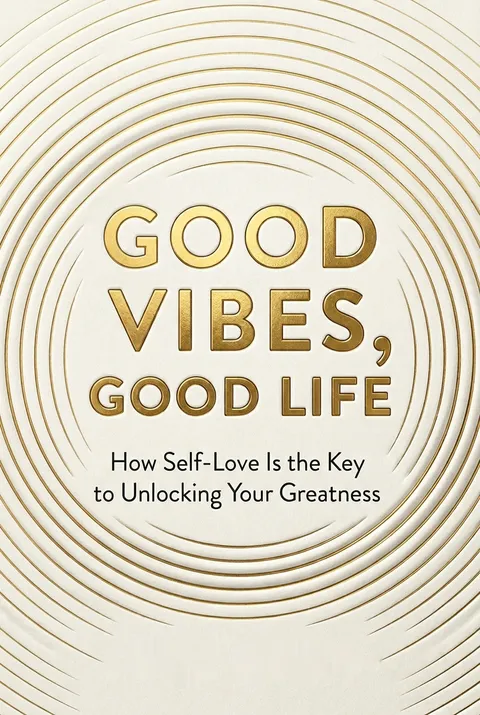


Key Takeaways
Practice self-love as acceptance paired with deliberate improvement
Self-love holds two truths. Vex King defines it as accepting yourself as you are while recognizing that you deserve better and taking steps toward it. Acceptance without growth can become an excuse to stay stuck; ambition without acceptance can make your worth depend on each new achievement. The book’s answer is to care for yourself as you would someone you love: without contempt, but with an honest desire for their wellbeing.
Kindness needs boundaries. King draws on a difficult childhood, including time in a housing shelter, to explain his search for a more peaceful life. A practical example makes the balance clear: a project leader can give an unreliable teammate fair warnings, then report continued neglect rather than sacrifice the whole team’s work. Self-respect is not cruelty, and compassion does not require endless accommodation.
The strongest idea here is that unconditional worth and demanding standards are compatible. That distinction avoids two familiar traps: self-improvement as punishment, and self-acceptance as resignation. It also makes self-love observable. The question is not merely whether someone feels kindly toward themselves, but whether their choices protect their health, time, and future. The project example usefully shows that a boundary can be fair rather than retaliatory. Its limit is that self-responsibility cannot erase constraints imposed by poverty, illness, or unsafe circumstances.
Let optimism change your conduct, not replace it
A lucky break began the story. After reading about the Law of Attraction, King focused on joining friends on holiday. A tax office later sent him an £800 refund, enough to make the trip possible. He took this as evidence that focused thought could attract desired events. But a later university crisis complicated that belief: positive thinking did not repair a fractured group project or erase his fear of failing.
Steadiness made action possible. At his sister’s wedding, King found himself calmer and more grateful. Back home, he pictured a successful degree result, studied for long hours, and kept working on the project. He passed comfortably, though not with the imagined grade. The book calls its spiritual model the Law of Vibration: thoughts, feelings, words, and actions should align with the life someone seeks. Its metaphysical claim is not established science, but the behavioral lesson is concrete.
The contrast between the unexpected refund and the university effort gives the book a useful corrective to wishful thinking. A positive outlook can change what a person notices, attempts, and persists through, without proving that the Universe delivers matching events. That distinction protects readers from blaming themselves when a hoped-for outcome fails to arrive. The most defensible version of the idea is alignment: aspirations matter most when they shape attention and behavior. Chance, institutions, and other people still influence results.
Investigate painful emotions instead of forcing positivity
Name the feeling before changing it. King argues that suppressing distress can leave its assumptions untouched. In his example, a client named Sarah receives no reply from someone she likes and concludes that she is unattractive and unwanted. The silence is real; the sweeping verdict about her worth is an interpretation. Separating those two things creates room to respond differently.
Trace the thought underneath. The book’s method is to identify the emotion, question the belief feeding it, look for the deeper insecurity, and develop a more balanced response. Sarah recognizes that she has tied her self-worth to another person’s attention. She can then remind herself that one unanswered message cannot determine whether she is lovable, and picture herself handling similar uncertainty with more confidence. The aim is not to pretend nothing hurts. It is to stop treating every painful thought as a reliable account of reality.
This is one of the book’s most practically grounded sections. It resembles cognitive approaches that distinguish an event from the conclusion attached to it: a delayed reply is evidence of a delay, not proof of personal rejection. That pause can reduce impulsive blame or reassurance-seeking. Still, replacing a harsh thought with a positive one is not always enough. Some emotions point to real mistreatment, grief, or unmet needs. Understanding the context matters as much as changing the interpretation.
Build daily conditions that make steadiness easier to reach
Mood has surroundings. King recommends spending time with supportive people, taking breaks from screens and social demands, seeking inspiration, and avoiding gossip that turns other people’s troubles into entertainment. He distinguishes a quick lift, such as laughing with friends, from practices intended to build a more durable response to stress. For him, meditation is not emptying the mind, but attending to breath, sensations, and thoughts without immediately reacting to them.
Repeat what helps. King says a year of roughly 15 minutes of daily meditation made him less reactive and more able to stay calm. He suggests starting with five minutes if a longer practice feels difficult. Gratitude is another exercise: rather than naming an object mechanically, consider what its absence would change. In his coaching example, a client became genuinely grateful for his car when he considered how it helped him get to work and collect his children.
The emphasis on repeated, ordinary practices keeps wellbeing from becoming a matter of inspiration alone. Social surroundings, attention, rest, and reflection all affect how much room a person has to respond rather than react. Gratitude works best here as a shift in attention, not as a demand to feel fortunate during hardship. The book sometimes describes these benefits through its language of higher vibration, but the practices remain useful without accepting a literal energy theory.
Protect your boundaries while staying accountable for your behavior
Support is not self-erasure. King describes a university flatmate who was in severe distress after a breakup and had harmed himself. King and others intervened, then King spent evenings trying to help. As he began feeling depleted, he took some distance before returning to offer support more steadily. His lesson is that caring for someone does not mean becoming their only source of help or ignoring your own limits.
Check your side of the relationship. The book also asks readers to notice when their own conduct hurts others. If a joke lands painfully, defensiveness does not undo the impact; listening and trying to understand does more. With family, partners, friends, or colleagues, the suggested sequence is to communicate, look for genuine change, and create distance if harmful behavior continues. This applies especially when disrespect, manipulation, or abuse is persistent.
This section balances a popular message about leaving harmful relationships with a less comfortable one: the reader may also be causing harm. Both matter. Boundaries are most useful when they describe what someone can accept and what they will do, rather than serving as a tool to control another person. The flatmate’s crisis also has a limit as a model: a friend’s care can matter, but self-harm requires appropriate professional or emergency support, not a private burden carried alone.
Stop using other people’s edited lives to measure your worth
Comparison distorts the evidence. King recalls feeling ashamed of his home and clothes as a child, especially when other children displayed expensive brands. As an adult, he warns that social media makes this habit easier: a polished photograph can conceal conflict, insecurity, or dozens of discarded attempts. The viewer compares a full, complicated life with someone else’s selected image and mistakes the difference for a verdict on personal success.
Measure growth against your own past. The book does not ask readers to ignore other people’s achievements; it suggests appreciating them without turning them into proof of personal inadequacy. King also challenges narrow beauty standards shaped by media and commerce. Appearance, income, and popularity can change, while kindness and character carry value beyond a particular image. Notice what has improved in your own life, and celebrate progress that might otherwise disappear beneath the next comparison.
The key insight is about unequal comparison: social platforms show curated outcomes, not the full conditions that produced them. That makes them poor instruments for judging a life. A personal benchmark can be fairer, particularly when progress is gradual or invisible to others. Yet self-comparison has its own risk if it becomes relentless self-optimization. Growth should include rest and relationships, not only a more impressive version of the self.
Question inherited beliefs before letting them define your future
Beliefs become filters. King compares the conscious mind to a gardener and the subconscious to soil: repeated ideas take root, including ideas accepted from family, peers, and experience. He describes growing up amid racist taunts and reacting with anger and violence. Over time, he saw that the reaction was learned, not an unchangeable identity. Noticing the thought and emotion created a chance to choose another response.
Test the story you tell yourself. King once believed that his circumstances made major success impossible. Instead of simply repeating an opposite slogan, he studied people who had faced severe obstacles and still achieved ambitious goals. Their examples gave him reason to doubt the limits he had absorbed. The practical question is whether a belief is accurate and useful, not whether it feels familiar. A thought can describe a learned expectation without being a fixed truth about what can happen.
The section’s most useful distinction is between having a thought and being that thought. That distance can interrupt automatic reactions, especially when an old belief is treated as destiny. Looking for counterexamples also makes change more credible than empty reassurance. However, changing interpretation is not the same as changing external conditions. A person facing discrimination or material hardship needs both psychological agency and practical support; mindset should not be used to explain away structural barriers.
Make goals vivid enough to guide action, but believable enough to use
Give intention a clear shape. King recommends writing goals in one’s own words, specifying what success would look like, and imagining the experience with more than a still image. His example of rapper J. Cole illustrates intention meeting work: Cole publicly signaled an ambition to produce for Jay-Z, continued pursuing music, and years later joined Jay-Z’s label. The story does not show that visualization alone caused the result; it shows how a goal can organize sustained effort.
Rehearse the process. King describes visualization as mentally constructing a scene, including its sounds, sensations, and emotions. He also cautions against affirmations that feel like obvious lies. A person who cannot yet believe a sweeping claim can build a case for it through smaller evidence and achievable steps. The useful test is whether a written goal or mental rehearsal clarifies the next action, rather than becoming a substitute for taking it.
Mental rehearsal is most compelling when understood as preparation, not supernatural delivery. A vivid image can make a distant objective easier to plan for and can help someone practice confidence before a demanding situation. The distinction between outcome imagery and process imagery matters: picturing a finished success may feel rewarding, while rehearsing the effort exposes what the goal actually requires. The book’s examples support aspiration, but they cannot establish that visualization reliably produces any particular outcome.
Break ambitious goals into steps small enough to start today
Action turns hope into evidence. King tells of winning a watch while needing money to clear a debt. At first he dismissed the prize because it was not cash. Once he saw that he could sell it, the watch became a practical step toward the amount he needed. The episode captures his central warning about manifestation: opportunity may require interpretation and effort, not passive waiting.
Make progress repeatable. For a large financial target, King suggests starting with a smaller amount and repeating the process rather than being overwhelmed by the total. He also advises reducing distractions, setting deadlines, using incentives, asking for help, and telling trusted people what you plan to do. His story of Malcolm, who researched a business idea for months before finally starting after redundancy, shows how preparation can become avoidance. Consistency matters, but a stalled plan may need adjustment rather than more stubborn repetition.
The move from a distant ambition to a defined next step is a strong antidote to procrastination. Small actions provide feedback: they show whether an assumption works and what skill or resource is missing. Accountability and environmental design can also make action less dependent on mood. A caution is necessary around King’s claim that lack of time signals low priority. Caregiving, disability, shift work, and financial pressure can make time genuinely scarce, so the remedy may be support or a smaller goal, not self-reproach.
Treat repeated setbacks as information, not proof that you are doomed
Pain can teach without being good. King argues that difficult experiences can shape strength and perspective, while acknowledging that people need time to grieve and heal. He recounts a teacher’s story of a man who missed a train that later crashed. The survivor found meaning in missing it, though that interpretation could not explain or comfort every person affected by the tragedy. Meaning, in this account, is a way an individual may understand an experience, not proof that every loss was destined.
Look for the repeated lesson. King suggests that recurring problems can reveal a pattern not yet addressed. Someone hurt by rushing into a relationship, for example, might decide to take more time learning about a future partner. The point is to notice warning signs and change a choice where possible, rather than treating suffering as an instruction to endure more of it. A lesson should increase discernment, not excuse avoidable harm.
The most humane version of this idea is that people can make meaning from pain without claiming that pain was necessary or deserved. That distinction matters in trauma, bereavement, and injustice, where declaring that everything happened for a reason can silence grief. The book’s practical emphasis on noticing patterns is more broadly useful: a setback can prompt reflection about choices and conditions. It should remain one source of information, not an automatic verdict on the person experiencing it.
Test your purpose through small acts that energize and serve others
Purpose can emerge through practice. King describes wanting to use his creativity to help people, while initially assuming clothing was the route. When that business struggled, he explored other outlets, including writing and sharing ideas online. His advice is not to quit every obligation in pursuit of a grand calling, but to follow genuine interest through manageable experiments. Drawing, for instance, could begin with sharing work rather than immediately expecting it to provide a full income.
Treat money as a tool. King argues that money can create security and options, but cannot supply lasting self-worth or purpose by itself. In his view, meaningful work joins personal excitement with adding value to other people’s lives. Happiness, too, is not secured permanently by a new home, partner, or purchase. External goals can matter, but they are better pursued as parts of a life than as guarantees that life will finally feel complete.
This approach makes purpose less like a hidden answer and more like a hypothesis tested through action. Small experiments can reveal both competence and sustained interest, while limiting the financial risk of an abrupt leap. The service element also keeps purpose from collapsing into personal branding or status. Still, not every meaningful activity has to become paid work, and survival jobs are not personal failures. A useful life can contain purpose outside employment, especially when economic choices are constrained.
Analysis
Good Vibes, Good Life is a personal-development book built from memoir, spiritual interpretation, and practical advice. Its central argument is that self-love joins acceptance with effort: a person can recognize present worth while still changing habits, relationships, and beliefs. That dual claim gives the book more substance than a simple instruction to think positively.
The narrative helps explain why the message matters to King. Memories of housing insecurity, anger, racism, and financial strain establish a search for control and meaning. Early success with the Law of Attraction, including an unexpected tax refund, gives that search a spiritual frame. A university crisis complicates the frame: positive expectation alone does not solve conflict, while renewed calm helps him study and persist. This shift from wishing to aligned behavior is among the book’s most persuasive threads.
Its practical advice is strongest when it concerns emotional awareness, boundaries, gratitude, meditation, and manageable action. Readers can try these practices without accepting the claim that the Universe returns matching vibrations. That distinction is important because the book sometimes presents metaphysical ideas as if they explain material outcomes. Its cited claims about food frequencies, water responding to words, or thoughts attracting events should not be treated as established scientific evidence. A charitable reading treats vibration as a personal metaphor for the interaction of mood, attention, language, and conduct.
The book’s faith in personal agency can also overreach. Poverty, illness, abuse, discrimination, and chance are not merely products of limiting beliefs, and adverse events are not reliably proof of a hidden purpose. King’s own accounts of hardship make the advice vivid, but his spiritual explanations cannot be generalized to everyone’s experience. The most durable adaptation is therefore both hopeful and grounded: accept emotional reality, question interpretations, protect boundaries, seek support, and take practical steps, while leaving room for circumstances beyond individual control.
Review Summary
Good Vibes, Good Life received mixed reviews. Many readers found it inspiring and transformative, praising its accessible writing and practical wisdom. They appreciated the focus on self-love, positive thinking, and personal growth. However, some critics found the content shallow, repetitive, and overly simplistic. They argued that the book relied too heavily on clichés and Instagram-style quotes. Some readers felt the advice was unrealistic or promoted toxic positivity. Overall, the book seems to resonate more with those new to self-help literature.
People Also Read


Glossary
Law of Attraction
Focus shaping desired outcomesKing presents the Law of Attraction as the idea that sustained attention to a desired outcome helps bring it into a person's life, while attention fixed on feared outcomes may reinforce them. In this book, it is a spiritual principle, not a demonstrated physical law. King later emphasizes that positive thought alone is insufficient without emotional alignment and action.
Law of Vibration
Alignment of inner and outer energyKing's spiritual model that thoughts, emotions, words, and actions carry energy and attract experiences that match their emotional quality. He uses vibration to explain why feeling and acting in harmony with a desired life may make that life more attainable. The idea is central to the book, but its universal, metaphysical claims are not established scientific findings.
vibration
Emotional state or energyKing uses vibration to describe a person's emotional and energetic condition. Loving, calm, and joyful feelings count as higher states; anger, despair, and hatred count as lower ones. He treats emotions as clues to this state and argues that habits, relationships, thoughts, and actions can shift it. This specialized use is spiritual language, not a measured account of personal energy.
ego
Thought-built social self-imageIn King's usage, the ego is a self-image built from thought and social identity that seeks approval and fears being diminished. It can drive defensiveness, comparison, gossip, and status-seeking when a person's sense of worth depends on others' reactions. The book contrasts this protective image with a more accepting, less reactive way of relating to oneself and other people.
greatness mentality
Commitment to personal growthKing's term for approaching life as an ongoing effort to become a fuller version of oneself, rather than accepting limits imposed by habit or other people's expectations. It is not defined by fame, wealth, or status alone. The book connects it with purpose, kindness, humility, appreciation, happiness, and making a positive contribution.
higher purpose
Meaningful contribution to othersKing describes a higher purpose as a personally meaningful way of using one's abilities, interests, and energy to add value to the world. He associates it with service and lasting fulfilment, not simply earning money or meeting social expectations. He encourages readers to explore genuine excitement through small actions rather than assuming a purpose must be grand or immediately obvious.
FAQ
What's "Good Vibes, Good Life" about?
- Self-Love as a Key: The book emphasizes self-love as the fundamental key to unlocking personal greatness and achieving a fulfilling life.
- Positive Vibes and Energy: It explores the concept of maintaining positive vibes and energy to attract good things into one's life.
- Practical Advice: Vex King provides practical advice and lifestyle habits that can help individuals raise their vibration and improve their overall well-being.
- Personal Growth Journey: The book is a guide for personal growth, encouraging readers to embrace their uniqueness and pursue their dreams with confidence.
Why should I read "Good Vibes, Good Life"?
- Empowerment and Inspiration: The book offers empowering perspectives and inspirational stories that can motivate readers to make positive changes in their lives.
- Practical Tools: It provides practical tools and techniques for cultivating self-love, improving mental health, and achieving personal goals.
- Holistic Approach: Vex King takes a holistic approach, addressing various aspects of life, including relationships, career, and personal development.
- Positive Mindset: Reading the book can help readers develop a positive mindset, which is crucial for overcoming challenges and achieving success.
What are the key takeaways of "Good Vibes, Good Life"?
- Self-Love is Essential: Embracing self-love is crucial for personal growth and happiness.
- Vibration and Energy: Maintaining a high vibration and positive energy attracts good things into life.
- Mindset Matters: A positive mindset and belief in oneself are fundamental for achieving goals.
- Action and Consistency: Taking consistent action towards goals is necessary for manifesting desires.
What is the Law of Vibration according to Vex King?
- Everything is Vibration: The Law of Vibration states that everything in the universe is made up of vibrations, including thoughts and emotions.
- Matching Frequencies: To manifest desires, one must match their vibrational frequency with what they want to attract.
- Emotional Reflection: Emotions are a reflection of one's energy and can indicate the frequency they are vibrating at.
- Conscious Control: By consciously controlling thoughts, feelings, and actions, individuals can change their reality.
How does Vex King define self-love in "Good Vibes, Good Life"?
- Balance of Acceptance and Growth: Self-love is about accepting oneself as they are while striving for personal growth and improvement.
- Unconditional Love: It involves loving oneself unconditionally, regardless of external circumstances or transformations.
- Empowerment and Liberation: True self-love empowers individuals and liberates them from societal expectations and limitations.
- Holistic Value Addition: Self-love encompasses anything that adds value to one's life, from diet to personal relationships.
What are some positive lifestyle habits recommended in "Good Vibes, Good Life"?
- Surround with Positivity: Being around positive people can help absorb their energy and elevate one's mood.
- Body Language and Smiling: Changing body language and smiling can trick the brain into feeling happier.
- Time for Relaxation: Taking time out to relax and disconnect from stressors is important for maintaining high energy.
- Express Gratitude: Regularly expressing gratitude can shift focus to the positive aspects of life and raise vibration.
How does Vex King suggest handling negative people in "Good Vibes, Good Life"?
- Distance Yourself: It's important to distance oneself from toxic individuals who drain energy and bring negativity.
- Protect Your Energy: Protecting one's own energy is crucial, even if it means limiting interactions with certain people.
- Understand Their Pain: Recognize that negative behavior often stems from the individual's own pain and insecurities.
- Respond with Kindness: Responding to negativity with kindness can repel those who thrive on conflict and drama.
What is the role of visualization in achieving goals according to "Good Vibes, Good Life"?
- Mental Practice: Visualization involves mentally practicing and experiencing goals before they manifest in reality.
- Engage All Senses: Effective visualization requires engaging all senses to create vivid and detailed mental scenes.
- Align with Desires: Visualization helps align one's vibration with their desires, making it easier to attract them.
- Train the Brain: The brain cannot distinguish between imagined and real experiences, making visualization a powerful tool.
What are some of the best quotes from "Good Vibes, Good Life" and what do they mean?
- "Stop trying to impress people. Impress yourself." This quote emphasizes the importance of self-validation over seeking approval from others.
- "You are not your thoughts. You are the witness of each thought." It highlights the idea that individuals can observe and change their thoughts rather than being controlled by them.
- "The more you count your blessings, the more blessings you’ll have to count." This quote underscores the power of gratitude in attracting more positive experiences.
- "You’ll get the job, the partner, the house, the car, etc. Just don’t rush the process; trust it." It encourages patience and trust in the process of achieving one's goals.
How does Vex King address the concept of pain and purpose in "Good Vibes, Good Life"?
- Growth from Pain: Painful experiences can lead to personal growth and the realization of one's potential.
- Lessons in Challenges: Challenges are opportunities for learning and can guide individuals towards their true purpose.
- Purposeful Existence: Everyone has a higher purpose, and fulfilling it brings meaning and satisfaction to life.
- Connecting the Dots: Reflecting on past events can reveal how they have shaped one's journey and contributed to their purpose.
What is the significance of the author's personal experiences in "Good Vibes, Good Life"?
- Authentic Insights: Vex King shares personal stories and experiences to provide authentic insights and relatable lessons.
- Overcoming Adversity: His journey from a challenging childhood to success serves as an example of overcoming adversity.
- Inspiration for Readers: The author's experiences inspire readers to believe in their potential and pursue their dreams.
- Practical Application: Personal anecdotes illustrate the practical application of the book's concepts and advice.
How does "Good Vibes, Good Life" suggest balancing mindset and action?
- Mindset Foundation: A positive mindset is the foundation for taking effective action towards goals.
- Consistent Action: Consistent action, even in small steps, is necessary to build momentum and achieve success.
- Mind-Action Harmony: Aligning thoughts, emotions, and actions creates harmony and facilitates manifestation.
- Balance of Effort and Patience: Balancing effort with patience ensures steady progress without burnout or frustration.
About the Author


Download PDF
Download EPUB
.epub digital book format is ideal for reading ebooks on phones, tablets, and e-readers.








