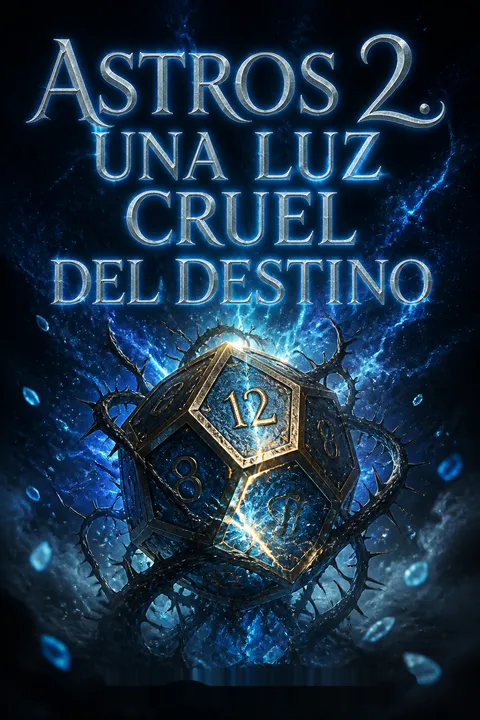


Plot Summary
Prologue
One hundred and seventeen years before the main story, Nausicaä, then known as Alecto, finds Heulfryn aboard the Dirge, a ship whose crew has trafficked, tortured, and killed for years. Heulfryn had been her sister Tisiphone’s faithless partner, and Nausicaä believes his betrayal helped drive Tisiphone to her death.
When he mocks Tisiphone, Nausicaä kills him and releases Starfire on the ship, trapping eleven souls in its unending flames. Her sisters and the Wild Hunt arrive as she is still screaming, and the massacre leaves Nausicaä banished from the Immortal Realm.
The prologue gives Nausicaä’s feared reputation a specific origin: she does not lash out at random, but turns grief and fury into an act she believes will deliver justice. Yet her revenge reproduces the cruelty she condemns, condemning eleven souls to torment along with the man she meant to punish. Her first words naming Tisiphone as dead make grief undeniable, but they do not make the violence harmless. The episode also establishes the central tension between law and justice: the law can leave atrocity untouched, while breaking it can create a second catastrophe. Nausicaä’s later intimacy with Arlo begins against this buried history.
The Crown's Uneasy Bargain
At a locked-down Palace of Spring, Arlo Jarsdel, an ironborn teenager, arrives with her mother Thalo to explain the attack on Hieronymus Aurum’s alchemical factory. Before she can hide her use of forbidden alchemy, Nausicaä reveals it and argues that Arlo needs training to survive the dangerous magic growing inside her.
She offers the High King information about philosopher’s stones and a suspected immortal plot in exchange. Queen Riadne of Seelie Summer adds an invitation for Arlo to spend the summer at her palace and receive an alchemy tutor. Arlo accepts, glad to be included in fae life. Riadne then issues her annual Challenge for the Bone Crown, making the invitation a political gamble as well as a personal opportunity.
The bargain turns Arlo’s private danger into public leverage. Nausicaä speaks for her before Arlo can decide what to disclose, but the result is not simply a loss of agency: the exchange gives Arlo access to training and a place in a community that has treated her as an inconvenience. Riadne’s invitation carries the same double quality. It offers inclusion, yet comes from a rival queen who is challenging Arlo’s great-uncle. The scene makes belonging a material resource, one that can protect a person while also placing them on a political board.
Riadne's Borrowed Sun
As a girl, Riadne is trained to stand straight and smile by a mother who regards her daughter’s sex as a political weakness. On Riadne’s sixteenth birthday, the young Azurean gives her a sword and promises to teach her, recognizing the warrior she wants to become. Their friendship deepens into a secret affair even as Azurean marries Reseda and Riadne is married to Vadrien.
When Azurean ends the relationship, Riadne’s grief hardens into a determination to claim the Bone Crown and the power she believes will make others respect her. Her mother’s cruelty helps teach her that love is a liability; Riadne learns to hide her own feelings behind control, ambition, and the promise that she will never again be made powerless.
Riadne’s ambition grows from a lifelong struggle to be taken seriously, but the story refuses to treat that wound as an excuse for what she later does. The sword Azurean gives her is both recognition and the beginning of a bond she cannot safely claim. Her mother’s contempt teaches her to confuse invulnerability with worth, while Azurean’s eventual rejection makes that lesson feel confirmed. The result is a character who can identify the cost of power yet still pursue it as a cure for humiliation. Her history makes her legible, not innocent.
Lightning Refuses Vehan
At the Nevada Fae Academy, Crown Prince Vehan Lysterne volunteers to summon natural lightning during a dangerous lesson on Yosemite’s Half Dome. His friend Theodore succeeds first, but Vehan cannot make the storm answer, and he pushes his depleted magic until blood runs from his nose.
Aurelian Bessel, Vehan’s childhood friend and retainer, forces his arm down before he can trigger a fatal Surge. In private, Vehan apologizes for snapping at him, while Aurelian hides how frightened he is by a flash of unfamiliar darkness in the prince’s aura.
The failure follows an alchemical encounter at the factory, and a scar over Vehan’s heart has begun to darken. Meanwhile, Aurelian keeps distancing himself because he believes Riadne can use his love for Vehan against them both.
Vehan’s public failure threatens the identity built around his expected greatness. Rather than admit his body is warning him, he treats depletion as a test of character and risks turning a magical crisis into a fatal one. Aurelian’s intervention is an act of care, but his strategy of withholding affection leaves Vehan to interpret protection as rejection. Their friendship is therefore strained by the very danger that should draw them together. The scene also gives the reader an early physical sign, the scar, that Vehan’s trouble is not ordinary exhaustion or a temporary loss of confidence.
Luck Comes as a Cat
Before Arlo leaves Toronto, her father Rory jokes about protecting her from an unknown royal boy, then seems briefly unsettled when she mentions Nikos Chorley, leader of the Assistance.
On the day of her departure, a black cat outside her building reveals itself as Luck, a titan who has finally returned to train her. Arlo is still unsure what being Luck’s Hollow Star means, but she invites the titan to travel with her. Her mother cannot escort her through the portal because of work, repeating an old hurt even as Arlo understands the demands on Thalo.
Celadon accompanies her instead, and Arlo arrives at the Luminous Palace with Luck disguised as her pet. The summer ahead promises lessons and acceptance, but also leaves Arlo’s questions unanswered.
Arlo’s departure gathers two versions of belonging into one moment. Her father’s half-remembered connection to the magical world hints that her family history is less ordinary than she believes, while her mother’s absence restages the familiar competition between family duty and personal attention. Luck offers extraordinary guidance, but not clarity; Arlo enters the palace with a powerful patron and little understanding of the role she has accepted. Her choice to go anyway is not confidence without fear. It is a willingness to step toward a life she has been denied, while carrying the people she trusts most close beside her.
The Guest of Summer
At the Luminous Palace, Vehan greets Arlo with relief, and Riadne gives her a lavish suite arranged with details from both Summer and Spring. Riadne introduces Leda, an ironborn dryad who will teach Arlo alchemy, but Celadon warns the queen not to turn his cousin’s lessons into a weapon against their family.
Aurelian recognizes that Riadne’s words carry a hidden compulsion, and he and Celadon privately agree to work together against her schemes. During Arlo’s first lesson, Councillor Sylvain arrives to restrict what she may learn and belittle her heritage.
Riadne later offers Arlo tea and listens warmly to her interests, easing her fear that the invitation is merely a trap. Arlo wants to believe the queen’s kindness is genuine, though Celadon remains wary.
The palace makes care and control difficult to distinguish. Riadne’s room and tutor answer needs that Arlo’s own Court has neglected, while her perfectionism and unexplained influence over others suggest that generosity can also be a method of securing trust. Celadon’s blunt challenge interrupts the expected royal deference and establishes him as a protector who will risk offense for Arlo. Leda offers a different model of authority: careful instruction shaped by the constraints imposed on ironborn. Arlo’s hope is psychologically credible because the kindness is real in its effect, even if its source and purpose remain uncertain.
Beneath the Goblin Market
A message falsely suggesting the High King wants a meeting draws Nausicaä to the Wishing Well, where Lethe leads her through the Goblin Market to a failed philosopher’s stone. Following the clue, she discovers an underground chamber filled with murdered creatures and ironborn children imprisoned for their hearts.
The crimes recall the ship that began her exile, and she and Eris, leader of the Wild Hunt, kill the Pied Piper and his redcap accomplices. Only one child survives the rescue. Eris returns Nausicaä’s Hunter’s cloak and asks her to help track Lethe and the stones spreading through the Courts. He warns that Arlo is a Wild Card whose choices may determine which immortals gain power, but Nausicaä keeps that burden from her friend.
The hidden chamber converts an abstract conspiracy into bodies that demand action. Nausicaä’s anger is sharpened by recognition: the crimes are not merely new, but repetitions of the brutality she once tried to punish. Eris’s offer of the cloak reconnects her to the family and institution that expelled her, without pretending the old wound has healed. His warning about Arlo introduces a painful asymmetry in their friendship: Nausicaä protects Arlo partly by withholding information, yet secrecy is also how she keeps emotional distance. The rescue saves one child, a small consequence that makes the scale of failure impossible to romanticize.
The Die's First Lesson
With Luck and Nausicaä, Arlo enters a warped forest where a wood imp’s failed stone has trapped victims in a ghostly parallel world. The frightened people cannot be led out while the spell remains active, so Luck teaches Arlo to use her die and her limited wind magic. Her first attempt to blow everyone to safety fails and hurls her painfully through the forest.
Nausicaä attacks Luck for exposing Arlo to that risk, then stays close while Arlo tries again. This time Arlo cages the imp in wind, allowing Nausicaä to seize his stone. The lesson leaves Arlo exhausted but gives her a first practical understanding of her power: chance can extend her abilities, but it cannot erase their cost.
The die is not a rescue from limitation; it makes limitation visible. Arlo’s failed roll injures her because desire alone cannot supply the strength her action requires. Luck’s lesson is therefore both mechanical and ethical: power needs judgment, and a successful outcome is not guaranteed by good intentions. Nausicaä’s anger at Luck exposes how differently the two immortals understand Arlo’s vulnerability. Arlo, meanwhile, persists not because she is fearless, but because people remain trapped while she hesitates. Her growth begins in a balance between compassion and restraint, rather than in effortless mastery.
The Siren's Last Choice
Following a clue left by Lethe, Nausicaä takes Arlo to a sea grotto where a failed stone has driven a siren to animate the dead. Nausicaä fights through the corpses while Arlo waits near the entrance, protected from the siren’s voice by a faerie braid. The siren jumps toward the water, seeking the home she has lost, and Nausicaä reaches for her too late.
Arlo uses her die and wind magic to catch the falling siren, but the siren chooses the water anyway and dies. Nausicaä breaks down, calling for Tisiphone, her sister. Arlo holds her through the panic, then finds a broken snow globe and a trace of strange magic among the clues Lethe has planted.
The scene refuses the comforting idea that rescue can always reverse damage. Arlo can prevent the siren’s fall, but she cannot make the siren choose life, and Nausicaä cannot turn this death into a different one for her sister. The contrast exposes the limits of Arlo’s new power without diminishing its emotional importance: she acts, and that action gives the siren a choice, even though the choice remains tragic. For Nausicaä, the encounter collapses past and present. Her grief surfaces through a name Arlo does not yet understand, deepening their intimacy while showing how little healing can be forced from outside.
The Colosseum's Champion
Theodore brings Celadon, Vehan, and Aurelian to the Grim Brotherhood’s underground Colosseum, where Celadon accepts a match without knowing its true stakes. A huge opponent named Jerald kills another fighter, then attacks Celadon before the bout properly begins.
Celadon uses wind to evade him, but the crowd turns hostile when the announcer identifies him as a High Prince. Lethe secretly intervenes, throwing a dagger that kills Jerald and then teleporting Celadon away.
Shaken and injured, Celadon overhears fragments of a conversation about Nausicaä, Tisiphone, and the ironborn before Lethe orders him not to repeat what he heard. The rescue leaves Celadon owing a dangerous Hunter, while Theodore’s connection to the Grim Brotherhood becomes impossible to ignore.
Celadon’s title offers no protection in the arena; it makes him a more attractive target. His survival depends on agility and on Lethe’s intervention, not on the status that usually shapes his life. The episode also exposes the cost of being a Reader: Celadon receives information when he is too injured and disoriented to interpret it, turning knowledge into another burden rather than a clean advantage. Theodore’s ties to the assassin guild reveal that his courtship role is partly a cover for political work. The scene binds several characters through debts and concealed motives, making rescue itself feel like the beginning of an obligation.
Questions at the Sword Ring
Arlo asks who can explain Nausicaä’s exile, and her die leads her to Riadne at the Summer training grounds. The queen gives Arlo a sword and teaches her to attack, while offering only fragments: Nausicaä learned painful truths, one of her sisters died, and the man she blamed was among the eleven people she killed.
Riadne also presses Arlo to reveal what makes her unusual, but Arlo keeps her titan-given abilities private. The lesson confirms Riadne’s talent for making every exchange serve her purposes. Arlo leaves with a weapon and a partial account, more aware that the queen’s help is entangled with questions she refuses to answer.
Riadne makes disclosure conditional on action: Arlo receives information while being positioned as a student under the queen’s control. Sword practice turns inquiry into a physical lesson in obedience and vulnerability, while Riadne’s partial account is enough to sharpen Arlo’s sympathy without giving her the full truth. Arlo’s withholding of her own abilities is a small but consequential act of self-protection. Their relationship therefore moves on unequal knowledge. Riadne can appear generous and still keep the terms of intimacy in her hands, a dynamic Arlo recognizes only gradually.
The Ice Wraith Crown
At Cape Farewell in Greenland, Nausicaä identifies a failed stone’s influence in an unnatural snowstorm and draws out a group of ice wraiths. Luck lends Arlo an enchanted sword and teaches her to spend a die roll on a skill she has only just learned. Arlo’s swordsmanship suddenly sharpens enough for her to fight the wraith carrying the stone.
She beheads it while Nausicaä tears the failed stone from its body. The victory horrifies Arlo, who retches at the sight of what she has done. Lethe appears briefly and leaves another clue, then Nausicaä recognizes that his trail leads to a place tied to her past. Arlo chooses to follow her despite the risk.
The skill enhancement gives Arlo competence without making competence painless. She can perform a lethal act she could not manage unaided, but the borrowed ability does not alter her moral or bodily response afterward. Her revulsion matters because it prevents the hunt from becoming a simple fantasy of empowerment. Luck’s power expands what she can do while leaving responsibility with her. Nausicaä’s reaction to Lethe’s clue shifts the emotional center from the mission to her own history, and Arlo’s decision to follow marks a change from helping on a hunt to choosing intimacy with someone in pain.
The Dirge Returns
Lethe draws Nausicaä and Arlo into a supernatural replay of the Dirge, the ship Nausicaä burned after killing Heulfryn. He returns her lost sword and forces her to fight the ghost of Heulfryn while the eleven trapped souls and Starfire reappear around them. Nausicaä falters under the old accusation that she failed Tisiphone, and Heulfryn disarms her.
Arlo intervenes with her enhanced swordsmanship, allowing Lethe to destroy the ghost and end the confrontation. He tells Nausicaä that her grief has made her vulnerable and warns that she may lose Arlo if she keeps letting the past govern her. Nausicaä leaves the ship shaken, while Arlo understands that her friend’s reputation cannot tell the whole story.
Lethe turns memory into an ordeal rather than a conversation. Nausicaä must confront not only Heulfryn but the moral residue of her revenge, including the souls she condemned. The accusation that she failed Tisiphone lands because it touches a guilt she has never resolved, even though the prologue established that Heulfryn’s cruelty was real. Arlo’s intervention changes the encounter’s power balance: she is no longer merely a witness to Nausicaä’s pain. Lethe’s warning about losing Arlo makes care feel like both a bond and a vulnerability, sharpening Nausicaä’s fear of attachment.
Poison in the Teacup
Back at the palace, Gentian brings Arlo tea and reveals that Nausicaä killed his father aboard the Dirge. He poisons Arlo in retaliation, and she collapses before anyone can stop him. Celadon orders the guards to find Gentian and summons Riadne and Leda to the infirmary.
Leda recognizes the poison and gives Arlo an antidote she had kept, and Arlo begins breathing normally again. Nausicaä breaks down beside the bed, blaming herself, while Celadon threatens Riadne over the failure to protect her guest. The incident exposes how the consequences of Nausicaä’s past reach people who were not present when she made her choices.
Gentian turns inherited grief into a weapon against someone who had no part in the original violence. His retaliation is intelligible without being just, and the poisoning makes clear that old harm can reproduce itself through people who believe they are settling a debt. Nausicaä’s guilt is intensified by the fact that Arlo’s danger is genuinely linked to her history, even though she did not choose Gentian’s action. Leda’s prepared antidote offers practical care where accusation cannot help. The rescue does not erase the injury; it leaves the group facing the human cost of vengeance.
The Son Beneath Glamour
While Arlo recovers, Celadon confronts his father, Azurean, with a photograph and demands the truth about his resemblance to the High King. Azurean removes the glamour hiding Celadon’s real appearance and confirms that Riadne is his birth mother. Their child was taken from Riadne and raised by Azurean and Reseda to prevent the Courts from discovering a child of Spring and Summer.
Celadon restores his true features but also discovers that the glamour had suppressed more of his magic. Elsewhere, Riadne’s memories reveal that she branded infant Vehan with an alchemical array, hoping to make him powerful, and accepted Lethe’s help when the mark failed. Her private history now makes both princes’ lives part of the same scheme.
Celadon’s revelation transforms resemblance from a source of private unease into evidence of a political theft. The glamour that protected him also withheld identity and power, illustrating how care can become control when adults decide a child cannot bear the truth. Riadne’s history complicates the present without absolving her: she has been denied a son and has also placed a dangerous mark on another. Both boys become sites where adults try to manage dynastic fear. The plot’s central conflict is thus not simply about crowns, but about who gets to define a child’s identity and future.
A Promise After Midnight
After Arlo wakes, Thalo stays by her bedside, while Nausicaä, Celadon, and the Summer princes keep watch. Aurelian finally admits to Vehan that he has loved him for years, and Vehan asks him to be his partner, promising not to abandon his own goodness if Aurelian is harmed.
Arlo and Nausicaä also stop treating their attraction as a contest: at a makeshift prom, Arlo confesses that she loves Nausicaä, and Nausicaä accepts her as a girlfriend. Before the Solstice, Arlo spends her first wish to gain enough alchemical skill to remove Vehan’s array. Riadne thanks her for the gift, while Nausicaä warns that the queen may have steered Arlo toward exactly this choice.
The romances offer forms of chosen trust in a story where political relationships are often arranged or coerced. Aurelian and Vehan make love explicit while acknowledging the risk of losing themselves to the roles their families demand. Arlo and Nausicaä likewise move from teasing and rescue toward a mutual commitment that does not promise instant healing. The wish complicates this emotional progress: Arlo’s generous act may be precisely what an ambitious adult needs. The scene places intimacy and political danger side by side, refusing the easy assumption that love makes a choice safe.
The Solstice Trap
At the Solstice, Arlo arrives in a gown designed by Vehan and enters with Nausicaä, newly willing to name their relationship. Riadne’s guests crowd them with questions, but Arlo and Nausicaä slip away to speak privately. Their reunion is interrupted when Vehan cannot find Aurelian. Arlo also catches Councillor Sylvain’s glamour flicker, a clue that his ironborn nature is concealed.
In the gardens, Riadne admits that Vehan’s chest mark is an alchemical array that will kill him if the seven stones are completed and Ruin is summoned. Arlo reveals Luck’s die and her wishes, then spends one to gain mastery enough to remove Vehan’s array. Riadne accepts the aid, but her reaction makes Nausicaä suspect the queen has engineered the offer.
Arlo’s wish is an act of friendship made under pressure, but it also hands Riadne knowledge that can be used to control her. The scene turns generosity into a political liability without suggesting Arlo was foolish to care. Her choice follows a coherent moral logic: Vehan is in danger, and she has a means that might save him. Nausicaä sees the larger pattern and warns her, but Arlo has reasons to trust the queen, not mere naivety. The moment exposes the unequal cost of trust: Arlo risks an irreplaceable wish, while Riadne gains a clearer view of Arlo’s power.
Iron Roots at Midnight
As the clock marks Summer’s arrival, Riadne compels Arlo to walk beside her and silences her protests. The ballroom’s trees turn to iron, and the poison in the air weakens the gathered guests. Riadne demands Arlo’s allegiance and offers to spare one family member; under pressure, Arlo names Celadon.
Councillor Sylvain activates the great alchemical array, revealing himself as ironborn, while iron roots tear through the Viridian family. Thalo, Reseda, Cerelia, Serulian, and other royals are killed before Arlo can break free.
Azurean accepts Riadne’s Challenge, fights her without seeking to kill her, then surrenders his crown and is stabbed through the heart. Riadne takes the Bone Crown as Arlo screams, with Celadon absent and Nausicaä missing from the room.
The climax makes the cost of Arlo’s trust brutally concrete. Riadne converts a social celebration into an instrument of coercion, using Arlo’s wish, her own persuasive power, and Sylvain’s alchemy to make a family’s destruction look like a formal transfer of authority. Arlo’s forced choice cannot save the person named, since Celadon is absent; the offer is not mercy but a way to make her participate in the threat. Azurean’s refusal to strike for the kill suggests unresolved love, but his surrender does not prevent slaughter. The ending leaves survival, succession, and the meaning of Arlo’s wish unsettled.
Epilogue
In the aftermath of the Solstice, Lethe keeps Aurelian away from the palace and brings him to Rory Jarsdel’s home. Rory does not recognize the Hunter, but Lethe insists that Rory’s memory is about to return and calls him his final Flamel.
The book ends before revealing what Rory remembers, why Lethe needs him, or what has become of Arlo, Nausicaä, Vehan, and the surviving royals. Lethe’s last move suggests that the Solstice massacre was one part of a larger design, and that Arlo’s human family is bound to the alchemical conspiracy more deeply than she knows.
The epilogue refuses the comfort of a clean aftermath. Rory, previously presented as Arlo’s ordinary human father, is revealed as someone whose identity and memories have been deliberately altered. Lethe’s claim that he is a Flamel connects Arlo’s family to the alchemical history driving the plot, while leaving the connection unresolved. This final shift widens the scale of the danger just as the main characters’ immediate survival becomes uncertain. The ending also makes memory a political instrument: what Rory remembers may change the meaning of Arlo’s past, and Lethe controls when that knowledge returns.
Analysis
The novel’s central conflict is about who is allowed to choose a life, and what happens when powerful people claim that protection requires control. Arlo’s ironborn identity has been treated as a defect by her own community, while alchemy, the practice most associated with her heritage, is outlawed because it can be abused. Her new access to power therefore carries a double demand: she must learn to protect herself, but she must also resist becoming an instrument for the adults who recognize her potential.
The book gives this problem bodily form. Philosopher’s stones grow through living hosts; Vehan’s array sits over his heart; Arlo’s die exacts fatigue and injury; and Riadne’s political plans turn a ballroom into a machine for violence. Magic is never merely an abstract resource. It is made from bodies, histories, and unequal access to consent. Riadne’s past helps explain why she equates power with safety, but the story shows the danger of allowing injury to justify domination. Her history makes her motives comprehensible without making her choices inevitable.
The relationships offer countermodels to that coercion. Arlo and Nausicaä build intimacy through repeated acts of care, but neither can heal the other by force. Vehan and Aurelian must stop treating love as a weakness to conceal, even as their political roles make openness dangerous. Celadon’s search for his parentage shows that protection through secrecy can become another form of deprivation. Across these bonds, trust is not blind confidence; it is a willingness to let another person know the truth and still respect their agency.
The ending refuses easy reassurance. Arlo’s compassion is used against her, the family she hoped to reconnect with is destroyed, and the conspiracy remains in motion. Her first wish may grant the knowledge needed to help, but it also makes her more valuable to the very people who would control her. The novel’s unresolved final turn leaves a sharp question: can choice remain meaningful when every available power has been shaped by someone else’s plan?
Review Summary
A Cruel and Fated Light receives mixed reviews, with an overall rating of 4.27/5. Fans praise the diverse, queer characters, intricate world-building, and exciting plot twists. Many appreciate the character development and relationships. However, some criticize the lengthy page count, repetitive descriptions, and slow pacing in parts. The court intrigue and political machinations are highlighted as strengths. Readers express excitement for the next installment, despite some frustrations with the writing style and pacing. The cliffhanger ending leaves many eager for the sequel.
People Also Read

Characters
Arlo Jarsdel
The reluctant wild cardArlo is an eighteen-year-old ironborn girl raised between her human father’s world and her fae mother’s family, fully accepted by neither. She is observant, compassionate, and inclined to underestimate her own competence, especially beside powerful fae and immortals. Her instinct is to help people in immediate danger, even when she does not understand the larger cost. This makes her vulnerable to manipulation, but it also gives her a moral center distinct from the ambitions of the Courts. Arlo’s attachment to Celadon, her growing trust in Nausicaä, and her desire to learn alchemy all arise from the same need: to belong without erasing what she is.
Nausicaä Kraken
The defiant Dark StarNausicaä is an immortal Fury known as the Dark Star, feared for her violence and protected by a fierce refusal to appear vulnerable. She uses sarcasm and provocation to keep others at a distance, but her loyalty becomes unmistakable when Arlo is threatened. Beneath her bravado is unresolved grief over her sister and anger at a magical order that allowed cruelty to continue unchecked. Nausicaä’s relationship with Arlo unsettles her long-standing preference for isolation: she wants closeness, yet fears that anyone she loves will become another loss. Her bluntness can wound, but it also makes her one of the few characters willing to challenge authority directly.
Vehan Lysterne
The faltering Summer heirVehan is the Crown Prince of Seelie Summer and Riadne’s only publicly acknowledged heir. Charming and playful in company, he carries intense pressure to prove his power and fulfill the expectations attached to his birth. His loyalty to his mother persists even when her strictness and secrets unsettle him, while his long love for Aurelian exposes a more vulnerable side he struggles to name. Vehan wants to become a good ruler, not merely a strong one, and is increasingly forced to distinguish duty from obedience. His magical confidence and emotional certainty both falter, making him more receptive to friendship and more frightened by the possibility that his life is being controlled.
Aurelian Bessel
The guarded Autumn retainerAurelian is a lesidhe fae from Seelie Autumn who serves as Vehan’s retainer and future steward. He is intelligent, observant, and protective, with a habit of disguising affection as duty because he believes closeness can be used against the people he loves. His years in Riadne’s household have taught him to watch for danger in every courtesy, while his attachment to Vehan makes separation both strategy and pain. Aurelian’s loyalty extends to his parents and younger brother as well as the prince, so he is constantly calculating how much risk he can take on their behalf. He is not naturally trusting, but he is capable of accepting help when someone proves they understand the cost.
Celadon Fleur-Viridian
The watchful High PrinceCeladon is the youngest child of the High King’s household, a celebrated fashion figure whose easy charm conceals years of isolation. His unusual Gift lets him hear conversations retained by the air, making him both useful and dangerous to those who rely on secrecy. He is fiercely attached to Arlo, whom he treats as his closest family, and protective of her without always recognizing when protection becomes control. Celadon is also navigating his gender and sexuality in a public life where strangers feel entitled to interpret him. His instinct to expose injustice is tempered by a painful awareness that information can endanger the people he hopes to protect.
Riadne Lysterne
The ambitious Summer queenRiadne is the powerful, exacting Queen of Seelie Summer, admired for her swordsmanship and feared for her political discipline. A daughter raised under gendered contempt, she learned to treat mastery as protection and dependence as a liability. Her public manner is controlled, her hospitality meticulous, and her attentiveness difficult to separate from strategy. Riadne can recognize exclusion because she has experienced it, yet she does not necessarily extend that recognition into mercy. Her ties to Azurean, Vehan, and Arlo are complicated by the demands of sovereignty and the private histories she keeps guarded. She is both a formidable host and a figure whose kindness invites scrutiny.
Luck
Arlo's mercurial patronLuck is a titan who guides Arlo as a Hollow Star and often appears in the guise of a black cat or a young person. Their manner is playful, cryptic, and sometimes unnervingly detached from mortal pain. Luck teaches Arlo how to use a die that can amplify her actions, alter outcomes, and grant a limited number of wishes. They believe in choice, but their lessons make clear that possibility carries consequences and that protection cannot remove every risk. Their favor offers Arlo unusual agency while also placing her at the center of conflicts among immortals.
Lethe
The memory-bending HunterLethe is a Hunter with the power to erase or alter memories, a gift that makes him difficult to trust and harder to understand. He appears wherever the philosopher’s stone plot touches the characters, sometimes rescuing them and sometimes arranging danger to force a revelation. His manner is theatrical, teasing, and cruelly patient, but his actions do not fit a simple role as ally or enemy. Lethe treats secrets as currency and seems to know more about Arlo’s potential than he is willing to explain. His connection to Riadne and the other immortals remains deliberately opaque.
Eris
The Hunt's stern leaderEris leads the Wild Hunt, a cadre of powerful Hunters who collect the dead. He is disciplined, restrained, and bound by laws that limit when he can use lethal force. His concern for his Hunters is stronger than his formal reserve suggests, and his restored cloak for Nausicaä signals a willingness to reopen a relationship damaged by her exile. Eris recognizes the larger danger in the philosopher’s stones, even when he cannot disclose everything he knows.
Thalo Viridian-Verdell
Arlo's formidable motherThalo is Arlo’s mother, a senior officer of the Falchion and the High King’s Right Hand. She is disciplined, politically perceptive, and so accustomed to responsibility that work often intrudes on family life. Her love for Arlo is intense, though she does not always recognize how her practical choices feel to a daughter seeking attention and acceptance. Thalo has had to withstand prejudice against her authority and her human partner, and she is protective without being gentle by temperament. Beneath the commander’s armor is a parent who fears failing the child she has spent her life trying to keep safe.
Rory Jarsdel
Arlo's human fatherRory is Arlo’s human father, a chemistry professor with a dry sense of humor and a habit of expressing worry through practical instructions. He appears to live outside the magical Courts, and his history with Arlo is affectionate but marked by separation from Thalo. His concern for his daughter is unmistakable, even when he cannot accompany her into the fae world. He seems to have gaps in his own past, though he does not openly understand them.
Theodore Reynolds
The charming Summer spareTheodore, usually called Theo, is a royal heir from one of Seelie Summer’s other powerful families. He is witty, flirtatious, and socially skilled, but his humor can conceal serious political calculation. Theo is close to Vehan and cares for him, though his role in the Summer Court is not simply that of a prospective partner. He has strong magical ability and a surprising willingness to take risks. His relationship with Aurelian begins in suspicion, then becomes more candid as both recognize how much they are trying to protect Vehan.
Leda
Arlo's ironborn tutorLeda is an ironborn dryad and Arlo’s alchemy tutor. She is precise, observant, and careful about what she reveals, traits shaped by a life in which her community’s magic is stigmatized. Leda understands alchemy as a discipline that can heal or harm according to its practitioner, and she takes Arlo’s potential seriously. Her reserve makes friendship difficult, but her practical knowledge and quiet interventions give Arlo an important source of support.
Gentian
The tea-serving pixieGentian is a pixie attendant in Riadne’s palace, enthusiastic about tea and quick to make Arlo feel welcome. His warmth is genuine but does not erase the grief and resentment he carries from his family’s history. Gentian shows how the consequences of old violence can survive in people far removed from its original cause, and how a courteous role can conceal a private grievance.
Azurean Lazuli-Viridian
The ailing High KingAzurean rules the eight Courts as High King and is also Arlo’s great-uncle. Once renowned for intelligence, magic, and charm, he is increasingly compromised by the Bone Crown and his declining health. He is caught between sovereign duty and private attachment, especially where Riadne is concerned. His power remains formidable, but his ability to use it consistently has become uncertain. Azurean’s history with Riadne and his family shapes the political conflict in ways that neither his titles nor his public composure can conceal.
Reseda Fleur
The High King's queenReseda is Azurean’s queen and the mother who raised Celadon alongside his older siblings. Elegant and socially adept, she values composure and family standing, but her relationship with Celadon is strained by their different temperaments and appearances. She is accustomed to the dangers of court life and rarely exposes uncertainty in public.
Councillor Briar Sylvain
The hostile alchemy watchdogSylvain is a Seelie Spring Councillor who distrusts Arlo and regards alchemy as a threat to the Courts. He uses his authority to restrict her lessons and treats her ironborn heritage with open prejudice. His rigid certainty makes him an effective obstacle to Arlo’s education, while his presence reflects the political fear surrounding forbidden magic.
Tisiphone
Nausicaä's absent sisterTisiphone is one of Nausicaä’s sisters and a central presence in her memories. Her longing for love and her relationship with Heulfryn shaped the grief Nausicaä still carries. Tisiphone is not present in the main story, but her absence influences how Nausicaä understands loyalty, blame, and the danger of leaving pain unspoken.
Heulfryn
The faithless former loverHeulfryn is a Winter fae whose beauty and charm conceal a pattern of selfishness. His relationship with Tisiphone and his presence aboard the Dirge become inseparable from Nausicaä’s grief and anger. He represents the harm that can hide beneath a polished surface.
Vadrien Hanlon
Riadne's royal husbandVadrien is Riadne’s husband, a respected warrior and a man whose principles sometimes conflict with the queen’s ambitions. He represents the possibility of an ordinary family life within a royal household, though he is not unaware of the dangers surrounding his wife.
Harlan Bessel
Aurelian's outspoken brotherHarlan is Aurelian’s younger brother, a budding pâtissier who is quick-witted and comfortable challenging his family. He has a lively, teasing relationship with Aurelian and helps reveal the warmth and ordinary affection that Aurelian misses while serving the Summer Court.
Cerelia Fleur-Viridian
The Spring heirCerelia is Azurean’s eldest daughter and the Crown High Princess of UnSeelie Spring. She is a royal heir whose position places her within the tense politics of the Viridian family.
Serulian Fleur-Viridian
Celadon's older twinSerulian is Celadon’s older twin sibling and a member of Azurean’s royal household. His relationship with Celadon is distant, shaped by the divisions and expectations inside the family.
Plot Devices
The Bone Crown
Power with a priceThe Bone Crown makes its wearer sovereign over the Courts, but its power exacts a toll on the ruler who bears it. Azurean’s declining health and erratic attention are tied to his long possession of it. Riadne’s annual Challenges give the Crown political force even before a duel begins, since each threat to the succession makes the Courts reconsider their loyalties. The Crown is both a governing instrument and a coveted object whose promise of authority can obscure the damage it causes. Its presence keeps private rivalries attached to the fate of the entire magical community.
Philosopher's stones
Seven keys to RuinThe stones are created through dangerous alchemy using living hosts, and failed versions still amplify magic while feeding on their possessors. Their creation drives the attacks on ironborn children and spreads an unstable power through the Courts. The stones are not isolated artifacts: together they can release Ruin, a titan bound away from the world. Riadne’s research, Vehan’s marked chest, Lethe’s interventions, and the growing number of victims all connect to this larger plot. The device converts the abstract ambition for power into a bodily cost, especially for people whose magic or blood makes them useful to an alchemist.
Luck's Star Die
Chance with consequencesLuck gives Arlo a jade die that can amplify her skills and actions, improve the odds of a chosen outcome, and grant four wishes tied directly to her. Failed rolls can injure or exhaust her, while wishes consume a limited resource and demand careful wording. The die gives Arlo options that her ordinary training cannot yet support, but it never removes her responsibility for choosing what to attempt. Its functions also connect her to a struggle among immortals, making each apparent personal advantage potentially important to a much larger conflict.
Alchemy arrays
Magic drawn in symbolsIronborn alchemy uses symbolic arrays to alter a material’s form, purpose, or animating force. Salt, mercury, and sulfur interact with symbols for elements and processes, making an array both a technical construction and an act of magic. Arlo can activate patterns instinctively, while Leda teaches her how their components work. The same discipline can create helpful transformations or monstrous results, from a shaped piece of iron to the cavum and philosopher’s stones. The arrays also leave visible evidence that allows the characters to connect otherwise separate incidents, including Vehan’s chest mark and the Solstice ballroom’s hidden design.
Geasa and Magnetism
Promises become restraintsA geas binds a promise with magical consequences, making political agreements more than verbal assurances. The High King uses geasa to set the conditions of Arlo’s alchemy training and other bargains. Riadne’s Mesmer Gift works differently: her Magnetism can bend another person’s attention and will through persuasive magic. Both devices turn speech into a form of power, but their moral differences matter. A geas makes terms explicit even when they are coercive; Magnetism can conceal the moment a person’s freedom is being narrowed. The characters’ difficulty distinguishing kindness from compulsion grows out of that contrast.
Download PDF
Download EPUB
.epub digital book format is ideal for reading ebooks on phones, tablets, and e-readers.








