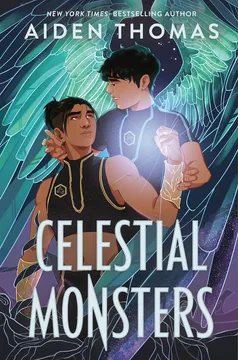


Plot Summary
Prologue
Sol creates the Gold gods, the duty-bound Jades, the cruel Obsidians, and finally mortals, whose capacity for joy gives the world its promise. The Jade god Suerte helps build a thriving home for humanity until the Obsidians unleash celestial monsters and destroy it. To fight them, Suerte becomes Mala Suerte, a god of vengeance, and joins the Golds in war.
Sol gives their life to imprison the traitor gods beneath the earth. The surviving gods establish the Sunbearer Trials, where a demigod's sacrifice keeps Sol's stones lit and the Obsidians sealed away. The arrangement has endured for centuries, but the story makes clear that this order has never been secure.
The creation story establishes a hierarchy that presents itself as natural: divine children inherit fixed virtues, while mortals are protected by their betters. Yet its own history destabilizes that claim. Suerte's transformation shows that a god's role can be altered by political catastrophe, and the Sunbearer ritual turns protection into a recurring demand for young lives. The final suggestion that the system has failed before the novel begins makes the mythology less a neutral account than an official story with pressure points. The reader enters a world where the institutions said to preserve peace may already be reproducing the violence they condemn.
The Nightbearer Opens the Gate
The Gold semidioses attack Venganza, Caos, and Chupacabra in the ruins beneath Venganza's temple, but the three gods overpower them. Xio, the boy they trusted during the Sunbearer Trials, watches beside Venganza and accepts his place as the god's son. His cut hand still bleeds black from the obsidian ceremonial dagger.
Venganza explains that the failed sacrifice let Xio's blood break the old seal and summon the Obsidians back. With Sol's light gone and the Sol Stone dark, the city stones will soon fail, leaving the cities exposed to the celestial creatures. Venganza keeps the young Golds as hostages and plans to restore an order where mortals serve gods. Xio is crowned Nightbearer, but Dezi's sorrowful gaze unsettles his hard-won triumph.
Xio's public betrayal is not presented as a sudden turn from friendship to malice. The scene makes belonging itself the prize: Venganza's praise and a title answer Xio's hunger to be recognized, while the Golds' fear supplies proof that he has finally acquired power. Yet Dezi's concern interrupts the satisfaction. Xio can read it as pity and reject it, but its presence signals that the relationships he wants to erase were emotionally real. The coup also exposes the ritual's fragility: one refused killing and one boy's blood undo a structure that claimed to protect everyone.
A Jade Takes the Road
Teo, the newly chosen Sunbearer, sets out with Niya and Aurelio to recover the Sol Stone and find Mala Suerte, hoping the god can explain Xio's betrayal. High priest Huemac gives Teo his blessing, relieving the fear that his mentor blames him for refusing to kill Auristela.
Their boat passes San Fuego, where fires consume Aurelio's home city and white smoke signals that residents need help. Teo steers toward shore rather than leaving them behind. He helps refugees escape, then joins Aurelio in facing a star-marked serpent and a flaming rooster.
Brilla, Aurelio's older sister and an established Hero, takes over the local rescue effort and urges the three to continue their larger mission. Teo leaves with guilt intact, but no longer believes he must save every person alone.
Teo's first decision after catastrophe is to turn aside from the mission for people in immediate danger. That instinct is compassionate, but it also reveals how easily he confuses responsibility with personal liability. The crowd's needs are real, and so are the limits of three exhausted teenagers. Brilla gives Teo a model of shared labor: she can protect San Fuego while he pursues the Sol Stone. Huemac's pride matters for the same reason. Teo can act without being morally perfect or universally approved; leadership begins when he accepts help and keeps moving.
A Child in Obsidian
As Xio walks the ancient prison, memories explain why he followed Venganza. A year earlier, a first period revealed his blood was black, and Mala Suerte confessed that Xio was born to an Obsidian family hunted during the gods' war.
His mortal mother died in that purge. Suerte had found him as a sleeping infant inside an obsidian orb in Venganza's ruins and raised him while hiding his identity. Xio ran away, reached the ruined altar, and contacted Venganza through a piece of the god's glyph hidden in his azabache bracelet.
Venganza promised him kinship and revenge. Now, in the restored temple, Xio accepts an obsidian crown and the title Nightbearer, eager to learn his inherited powers and prove he belongs among the gods who share his blood.
Xio's history links private shame to public erasure. He has been taught to interpret frightening accidents and social rejection as evidence that he is inherently bad, so the revelation of his ancestry offers both an explanation and a ready-made enemy. Venganza's account supplies a family, but it also supplies a script: injury must be answered with retaliation. Suerte's secrecy protected Xio from a lethal political order, yet it left him without the language to understand himself. The crown feels like recognition, but Xio's need to earn it hints that this new belonging may be conditional too.
The River of Stone Cats
The trio crosses the Río Serpiente on Teo's wings, then travels through punishing rain toward Lago Relámpago. In an abandoned town, stone jaguars awaken beneath cloud cover and attack residents sheltering indoors. Niya's blade cannot damage the creatures, and Aurelio's fire only drives them back temporarily.
Teo realizes their bodies are earth and urges Niya to use her own power. She drops her divine weapons, shatters two jaguars with her fists, and helps Aurelio hold off the third until starlight turns it back to stone.
The last creature injures Teo before Aurelio and Niya pull him free. The rescued townspeople blame Teo for the disaster and demand protection, deepening his doubt. Later, Niya admits she fears she cannot keep her friends safe, and Teo reassures her that they face the danger together.
The stone jaguars force the trio to abandon the Academy's familiar performance of combat. The weapons fail; Niya succeeds when Teo reminds her that her own earth power matters more than the equipment associated with heroic status. Teo's injury complicates that success, since bravery cannot make him invulnerable. The townspeople's anger then strips away the comforting idea that rescue automatically earns gratitude. Niya's confession exposes the cost of her confident persona: she has treated protection as an individual duty and reads every failure as proof of weakness. Teo begins to replace that burden with mutual reliance.
Afortunada Refuses Rescue
In Afortunada, the trio finds mortals coordinating repairs, evacuations, and monster control without waiting for Heroes. They reach Mala Suerte's temple, where Teo sees a mural showing the god's role in the old war and the destruction of Obsidian cities.
Suerte explains that those cities held human communities too; he joined the campaign that destroyed them and has regretted the deaths ever since. Thirteen years earlier, he found Xio preserved inside an obsidian orb and raised him to spare an innocent child from the Golds' judgment.
Suerte had hidden the truth, fearing the other gods would treat Xio as a weapon. He asks Teo not to let Xio be killed. Teo refuses another sacrifice, while accepting that he must try to reach the boy who once trusted him.
Afortunada makes its politics visible in practical acts: residents organize because their safety cannot depend on a distant divine intervention. Suerte's confession revises the moral map without absolving him. He helped defeat the Obsidians, but that victory included the destruction of human cities, so the distinction between righteous protection and atrocity becomes difficult to maintain. His care for Xio is genuine, while his secrecy also leaves Xio vulnerable to Venganza's version of history. Teo's refusal to promise a death reveals a new ethical boundary. He will pursue repair, but will not pretend that another ritual killing is the only possible answer.
The Village Above the Swamp
The trio continues downriver toward Los Restos, where the glowing wildlife suddenly flees. An ahuizotl, a water creature with a hand-tipped tail, drags Aurelio into a whirlpool. Niya dives after him, and Teo hauls them toward the boat while the creature nearly pulls them under again.
A teenager named Yucca lures it away with shells and jade, then her friend Paz helps the exhausted travelers reach a hidden village. Its human residents have lived beyond the gods' authority for generations.
Yucca distrusts the demigods, especially after learning that Teo's failed ritual helped bring back the Obsidians. The village's council permits them one night of shelter and medical care, but only after Teo explains that their mission is to stop the threat from spreading.
The encounter reverses the assumed division between divine power and mortal helplessness. The demigods nearly drown in a creature that Yucca understands how to distract, and the villagers have built defenses without a patron god. Their suspicion is not irrational hostility; it is an inherited response to divine systems that have harmed people while claiming to protect them. Paz's willingness to help and Yucca's caution create a useful tension between solidarity and self-preservation. Teo must explain his mission without demanding trust as a birthright. The village becomes a living alternative to the world he thought was inevitable.
Meat for the Crocodile
At the village, Teo sees elevated homes, floating gardens, shared kitchens, and practical safeguards designed by the residents themselves. An alarm interrupts breakfast when a giant cipactli smashes through the livestock fence.
Niya and Aurelio rush to fight it, and Teo joins them, but the creature's many hidden mouths make it more dangerous than they expect. Yucca and Paz stop the attack by feeding it raw meat and leading it toward the river on a raft. The cipactli follows the food back into the jungle instead of being killed.
Yucca rebukes the trio for treating every dangerous animal as a monster to defeat. Teo and his friends leave with supplies, carrying an unfamiliar lesson: the inhabitants of Los Restos survive by learning creatures' needs, not by assuming violence is the only tool.
The cipactli episode makes the village's ethics concrete. Yucca and Paz do not deny danger; they read it accurately and use food, teamwork, and distance to redirect it. The demigods' combat training is not useless, but it narrows their attention to domination as the default solution. Niya's eagerness to kill the creature comes from courage and a learned heroic role, not cruelty, which makes Yucca's challenge more consequential than a simple scolding. Teo has begun to see that knowledge can protect without spectacle. The village's methods model a politics built around coexistence and shared responsibility.
Fire Learns Its Limits
After leaving the village, Aurelio secretly tries the Scorching Circlet his mother gave him, hoping it will correct what he sees as a weakness. Its flames surge unpredictably, but Teo praises his skill and kisses him.
The circlet amplifies Aurelio's fire during the kiss, igniting Teo's clothing before Niya pulls them apart. Teo is unharmed, yet Niya's panic is less about the burn than the betrayal that has made her distrust every teammate. She admits she has been masking grief over Xio and fears losing Teo next.
Teo acknowledges that he has avoided talking about their friend, then promises not to leave Niya alone with that fear. Aurelio's power remains unresolved, but the three move forward with a clearer understanding of the strain each is carrying.
The near accident externalizes Aurelio's internalized belief that he must become more powerful to deserve protection or approval. The circlet does not simply grant ability; it magnifies emotion and makes his effort dangerous to someone he loves. Niya's reaction likewise emerges from betrayal rather than possessiveness. Xio's deception has damaged her basic confidence in other people, and the fire becomes a trigger for that injury. Teo's response matters because he stops treating Niya's outward energy as proof she is fine. Their friendship gains intimacy through naming fear, while Aurelio's shame remains a problem the group must handle with care.
Salt Against the Owl Witch
Xio finds the trio as La Lechuza, a human witch transformed into a powerful owl creature, hunts them through the jungle. They explain that Venganza sent them to help kill Teo, Niya, and Aurelio, but they now want to stop the Obsidians. The owl witch captures Niya and uses her as bait; Xio identifies salt as the creature's weakness.
Teo and Aurelio trust the warning, and the four drive La Lechuza away with handfuls of salt. Niya then snares Xio in a golden net, unwilling to forget the betrayal. Xio admits the Obsidians know the rescue party is coming and that the Golds remain imprisoned beneath Venganza's temple. Teo decides the information is worth the risk, and the group takes Xio along in manacles.
Xio's first attempt at repair is necessarily compromised: the trio cannot distinguish genuine defection from another manipulation until they act on the information. The salt tactic makes trust operational rather than sentimental. Teo does not forgive Xio; he chooses to test a warning because the alternative is entering an enemy temple blind. Niya's restraint is equally meaningful. She keeps Xio bound, giving her anger a boundary without allowing it to dictate the mission. Xio's help does not cancel the harm they caused, but it creates a first piece of evidence that their allegiance is changing.
A Candle Opens Below
Chupacabra tracks the group and overwhelms them in a brutal fight. Aurelio's circlet drives him into an uncontrolled blaze, and Teo burns his hands and wings pulling it off. Xio uses an Elixir of Charming to turn Chupacabra's resentment of Venganza against her, creating a chance to flee.
As the friends escape, Teo collapses from his injuries. Fantasma's candle opens a path to a hidden cenote, where the goddess uses the Gem of Regeneration and her own blood to heal him.
Teo then discovers that Aurelio carries the sacrificial dagger and planned to die rather than risk Auristela. He returns it and tells Aurelio his life is not expendable. Xio, meanwhile, begins to imagine that an Obsidian sacrifice might change the ritual, rather than repeat it.
This sequence compresses the group's crises into one intimate refuge. Teo's injuries make the cost of Aurelio's self-sacrifice impossible to keep abstract, while Aurelio's plan reveals how thoroughly he has absorbed his mother's hierarchy of worth. The cenote offers care without interrogation: Fantasma tends to the wounded before asking anyone to justify themselves. Xio's emerging idea shifts vengeance toward responsibility, but it is not yet a settled plan. Each character encounters a different limit: power can overwhelm, love can become self-erasure, and guilt can tempt someone to seek redemption through death.
Niya Breaks the Cells
At Fantasma's cenote, Teo, Niya, Aurelio, and Xio make a pact to pursue a world beyond the gods' sacrificial rules. Xio recognizes that their vengeance powers may turn the Obsidians' own fury against them. Teo's mother sends birds from across Reino del Sol, and the flock gathers to help at Venganza's temple.
Teo and Aurelio use the birds' noisy attack to distract the Obsidian gods while Xio and Niya descend to the prison tunnels. Xio blasts open the cells, freeing Atzi, Xochi, Marino, Dezi, Ocelo, and Auristela. Niya uses the Gem of Regeneration to restore Marino, who embraces Dezi after days apart. Auristela is freed from her ice prison. The reunited semidioses hurry upstairs as Teo and Aurelio struggle against the three gods.
The rescue joins forms of power the old hierarchy kept separate. Teo's relationship with birds, Xio's knowledge of the prison, Niya's strength, and the Golds' elemental abilities each become necessary rather than supplementary. The birds are not decorative symbols of Teo's lineage; they choose to act, and Teo must protect them from being treated as expendable reinforcements. Xio's role in freeing the people they imprisoned does not erase responsibility, but it makes accountability visible through action. Marino and Dezi's reunion offers the emotional counter-image to the cells: connection restored after deliberate isolation.
Venganza Loses His Power
The freed semidioses join the fight, but Venganza's magic feeds on their anger and turns their teamwork chaotic. Dezi gathers them into a unifying embrace, renewing their strength. Xio then absorbs Venganza's vengeance energy and redirects it, giving Aurelio the opening to seize the Sol Stone.
Teo summons the gods with Quetzal's feather. As the gods battle the Obsidians, Tierra explains that the ritual still demands a sacrifice. Auristela takes the dagger, but Xio claims the choice and moves to offer their own life.
Venganza attacks; Suerte's azabache charm shields Xio, and Suerte appears to protect the child he raised. He takes the dagger and sacrifices himself, releasing the power that restores Sol. Sol returns in light and destroys Venganza, Caos, and Chupacabra, banishing their forms back among the stars.
The climax refuses a simple victory through superior force. The group succeeds when Dezi counters rage with connection and Xio uses the very power that once served revenge to interrupt Venganza's control. Yet the old ritual survives long enough to demand a life, making the system's violence impossible to dismiss as merely a villain's invention. Xio's willingness to die is an act of responsibility, but Suerte's intervention exposes the cruelty of making a child prove goodness through self-destruction. The return of Sol defeats the immediate threat, while Suerte's sacrifice ensures that victory carries grief rather than easy absolution.
No More Mortal Sacrifices
Lumbre demands that Sol punish Xio, but Quetzal blocks her and Sol kneels to comfort the grieving child instead. Teo then confronts the gods over their distance from mortal life and their willingness to let children die in the Trials. The gods agree that their rule has failed.
Sol and Tierra announce that they will leave the world of the living, while Teo negotiates visits at the temple every ten years and on each god's holy day. With the Obsidians gone and the sun restored, semidioses and humans must govern Reino del Sol themselves. Teo reunites with Aurelio, and Niya reconnects with Auristela. The friends survive, but Suerte cannot return; Fantasma remains to move between worlds and watch over them.
The political resolution is not a restoration of the previous order. Teo's challenge converts his journey from rescue mission into a demand that authority answer to the people it governs. Sol's mercy toward Xio directly rejects Lumbre's attempt to make inherited identity grounds for extermination, while the gods' departure acknowledges their own complicity. The negotiated visits leave room for grief and continued relationship without returning divine rule. The restored sun therefore marks possibility, not a return to innocence. The human communities must build institutions capable of learning from harms the gods once concealed beneath tradition.
Epilogue
Six months later, Teo helps rebuild Quetzlan and works with Huemac and a new city council rather than training to become a Hero. He hurries to meet Aurelio, who is studying pastry arts, bringing a loaf for Paloma's memorial altar. Around them, mortals, Jades, and Golds share the work of governing and rebuilding.
The friends have chosen different paths: Niya trains as a Hero, Marino and Dezi serve their city, Xochi designs dresses, and Xio works with archaeologists to recover the history of Obsidian communities. Teo and Aurelio watch the sunset together, no longer measuring their worth by the roles their gods assigned them.
The epilogue measures change through ordinary choices rather than another crisis. Teo misses a meeting because he wants to keep a date, Aurelio pursues baking instead of heroic prestige, and Xio turns toward recovering histories rather than feeding vengeance. These are small actions, but their smallness is the point: agency now includes work, love, study, and remembrance, not only combat or sacrifice. Paloma's altar places the dead within public memory, countering a tradition that used young lives and then moved on. The sunset shared by Teo and Aurelio gives intimacy a future tense. A repaired world remains imperfect, but its inhabitants can shape it together.
Analysis
Celestial Monsters uses a rescue quest to expose the assumptions that make its world seem stable. The Sunbearer Trials claim to protect mortals, but they require children to inherit a death sentence; the Obsidian gods claim to correct old injustice, but plan to replace one hierarchy with another. Teo's refusal to kill Auristela begins the crisis, yet the narrative does not treat obedience as the price of maturity. His moral growth comes from learning that refusing a cruel choice is only the beginning. He must also organize help, listen to people outside divine institutions, and accept that he cannot personally save everyone.
The alternating Teo and Xio perspectives make that ethical conflict intimate. Teo's guilt is rooted in responsibility without control. Xio's anger grows from a history of concealment and exclusion, but Venganza turns that pain into a political instrument. Their parallel struggles show how systems recruit young people by offering them identities: savior, sacrifice, monster, heir. Friendship complicates those labels because it allows care to persist without pretending betrayal caused no harm. Teo's group chooses conditional trust, accountability, and cooperation rather than instant forgiveness or permanent exile.
The hidden village and Afortunada offer different models of protection. Their residents build collective systems, learn the habits of dangerous creatures, and refuse to wait passively for divine rescue. By contrast, the gods often confuse power with knowledge of what people need. Suerte's confession is crucial because it shows that opposition to injustice does not erase complicity; his later act of care cannot undo the cities destroyed in the past. The ending rejects a clean restoration. Sol returns, but the gods leave, and the work of governing passes to mortals and semidioses. The restored sun is not a return to the old world. It is the light under which its survivors must make a better one.
Review Summary
Celestial Monsters receives mixed reviews as the concluding book in the Sunbearer Trials duology, with an overall rating of 4.12/5. Many readers enjoyed the dual POV structure, particularly Xio's perspective, along with strong character dynamics, inclusive representation, and rich Latinx mythology. However, some felt it didn't match the first book's excitement, citing pacing issues, repetitive structure, rushed endings, and underdeveloped character arcs. The audiobook narration received consistent praise. Most agree it's a satisfying, if imperfect, series conclusion recommended for YA fantasy fans.
People Also Read



Characters
Teo
Reluctant Jade SunbearerTeo is a Jade semidiós, the son of Quetzal, whose wings and ability to speak with birds make him unusual even among the Trials' competitors. He is funny, impulsive, and quick to help, but his confidence often covers fear that he is less capable than the Golds around him. His instinct to protect people is genuine, though it can turn into an impossible demand that he solve every crisis himself. Teo values friendship and moral choice more than inherited status. His growing bond with Aurelio gives him a reason to risk emotional honesty, while his connection to birds reminds him that help can come from communities he did not expect.
Xio
孤lly Obsidian HeirXio is a thirteen-year-old semidiós, observant and intensely curious about the celebrated young Heroes around him. He collects their statistics and studies their abilities, turning knowledge into a way to feel less powerless. His dry humor and technical precision coexist with deep insecurity about belonging and identity. Xio is drawn to people who offer a clear explanation for his pain, which makes him vulnerable to certainty disguised as care. He also notices details others overlook and has a strong instinct for fairness, even when resentment clouds his judgment. His relationships with Teo and Niya reveal how much he wants friendship, despite his fear that accepting it will make him unsafe.
Aurelio
Reserved Fire HeirAurelio is the son of Lumbre and Auristela's twin brother. He is disciplined, practical, and exceptionally knowledgeable, with a habit of researching everything from cooking to natural disasters. His carefulness can look like coldness, but it often comes from training that has taught him to hide uncertainty and put duty first. Aurelio is a capable fire wielder who measures himself against his sister and his mother's expectations. He is gentler than his reputation suggests, especially when caring for injured friends or sharing food. His growing trust in Teo lets a more playful, affectionate side emerge, though learning to value himself beyond usefulness remains difficult.
Niya
Fearless Earth ChampionNiya is the daughter of Tierra, a powerful fighter whose strength and earth magic make her formidable in battle. She is exuberant, outspoken, loyal, and nearly impossible to discourage for long. Her humor and appetite for action can conceal how seriously she takes responsibility for the people around her. Niya expects herself to protect everyone, so danger can expose a fear she rarely allows others to see. Her friendship with Teo is affectionate and direct, while her complicated relationship with Auristela mixes rivalry with a deeper attachment. She is at her best when courage includes admitting uncertainty and letting others share the burden.
Mala Suerte
Guardian of the UnluckyMala Suerte is the god of fortune and the patron of Afortunada, a city that shelters people who have been excluded or left without support. He is guarded, sardonic, and content to let others mistake his reserve for menace. Beneath that reputation is a deep sense of responsibility shaped by the devastating choices he made during the gods' war. He values mortal independence and gives his people practical resources rather than demanding their dependence. His care for children is central to his life, though his instinct to protect through secrecy can leave those he loves without the truth they need.
Venganza
Obsidian God of RevengeVenganza is the Obsidian god of vengeance, a commanding strategist whose patient manner can make his threats more unsettling. He frames power as restitution for the wrongs done to his people, but his vision of justice reproduces domination by placing mortals beneath divine rule. Venganza understands how strongly Xio wants a family and uses that need to draw the boy into his cause. His composure conceals a consuming certainty that revenge can repair the past, even when it creates fresh victims.
Auristela
Proud Fire TwinAuristela is Aurelio's twin, the daughter of Lumbre, and one of the most admired young Golds. She is glamorous, competitive, sharp-tongued, and accustomed to being treated as the standard others must meet. Her fierce protectiveness of Aurelio sits beside a stubborn belief in duty and the traditions that shaped her. Auristela's anger can injure people around her, but it also masks genuine fear of failing the role assigned to her. She is a commanding fire wielder with a strong sense of family and a complicated bond with Niya.
Quetzal
Teo's Protective MotherQuetzal is the Jade goddess of birds and Teo's mother. Warm, affectionate, and closely attuned to her child, she offers him comfort without demanding that he become a conventional Hero. Birds carry her care across great distances, connecting Teo to home even when he is far away. Quetzal's gentleness does not erase her place among the gods who shaped Reino del Sol, and her choices are tested by the consequences of that history. Her relationship with Teo is a source of steadiness as he learns to question both divine authority and his own assumptions.
Tierra
Niya's Earthbound FatherTierra is the god of the earth and Niya's father. He is patient, physically powerful, and more comfortable listening than commanding. Niya trusts his judgment deeply, and his affection for her is evident in their easy closeness. As a creator and ruler, Tierra carries responsibility for the world his fellow gods have built, including its unequal systems. His quiet manner can make him seem distant from conflict, but he is capable of reconsidering tradition when confronted with the harm it causes.
Sol
Creator of the Sun StonesSol is the creator deity whose light sustains Reino del Sol and whose ancient sacrifice forms the basis of the Sunbearer ritual. Their presence is felt through the stones and ceremonies even when they cannot speak directly to the young semidioses. As the first source of the world's divine order, Sol carries enormous symbolic authority, but the story also asks whether later generations have mistaken tradition for the creator's true intent. Sol's silence leaves room for both faith and doubt.
Caos
Obsidian Maker of DisorderCaos is an Obsidian god who shapes spaces, creates barriers, and distorts perception. Their shifting, starry appearance and layered voice make them difficult to read. Caos treats creation and disorder as closely linked practices, and their strange amusement can turn a frightening situation into something even less predictable. They work beside Venganza and Chupacabra, bringing formidable magical skill to the Obsidian cause.
Chupacabra
Obsidian Wolf GoddessChupacabra is a wolf-headed Obsidian goddess with extraordinary speed, sharp instincts, and an appetite for frightening her opponents. She delights in combat and treats intimidation as entertainment. Her relationship with Venganza is shaped by shared history and unequal influence, while her pride makes her sensitive to being treated as an instrument. Chupacabra's physical threat is matched by a volatile temperament that can make her harder to predict than the other Obsidian gods.
Atzi
Young Lightning CompetitorAtzi is a thirteen-year-old daughter of Tormentoso and one of the youngest competitors in the Trials. She is intelligent, direct, and capable with lightning, but the demands placed on her often leave her trying to survive rather than excel. Atzi understands that privilege affects how people are treated, yet she refuses to let others define her worth through bloodline or rank. Her frankness can unsettle Xio, partly because she recognizes the flaws in his anger without denying the injustices behind it.
Xochi
Floral Jade CompetitorXochi is the daughter of Primavera, with an affinity for plants and a lively, observant presence among the competitors. She can be conciliatory without being passive, and she often tries to keep friendships intact when tempers rise. Xochi is attentive to the people around her, including those others overlook, and her warmth gives the group a counterweight to the Academy's competitive pressures.
Marino
Water Wielding GoldMarino is the son of Agua, a strong semidiós whose water powers can become precise and dangerous. He is steady, considerate, and especially attentive to Dezi, with whom he shares a close relationship. Marino's calm often helps mediate conflict among the competitors, though he can be underestimated when he is not displaying his full abilities. He values communication and loyalty, and his quiet courage becomes clearest when he is physically weakened.
Dezi
Amor's Signing SonDezi is the son of Amor and communicates through sign language. He is observant, gentle, and unusually difficult to provoke into anger. His relationship with Marino is affectionate, and his attention often turns toward how other people are feeling rather than toward status or competition. Dezi's quiet presence should not be mistaken for passivity. He possesses a powerful emotional gift and a strong ability to bring people into connection.
Yucca
Cautious Swamp GuardianYucca is a sixteen-year-old resident of the hidden village near Los Restos. Practical, sharp, and openly distrustful of semidioses, she has learned to protect her community without relying on divine authority. She understands local creatures and uses observation rather than bravado to manage danger. Yucca's suspicion is grounded in a history of being forgotten or threatened by the gods, while her loyalty to her neighbors can push her to help people she does not trust.
Paz
Openhearted Village ScoutPaz is a young resident of the hidden swamp village and Yucca's close friend. Friendly, curious, and quick to help, she believes community means extending care beyond familiar boundaries. Her optimism can frustrate Yucca, but Paz is not naïve about danger; she simply refuses to let fear make every decision. She helps the trio understand how her village survives among the creatures of Los Restos.
Fantasma
Tender Keeper of DeathFantasma is a goddess associated with death, whose gentle manner contrasts with the unnerving places and objects around her. She communicates warmth through practical care, offering food, shelter, and healing without demanding anything in return. Teo treats her as a friend, and she responds with genuine affection. Her connection to the world beyond the living gives her an unusual role among the gods, but her kindness is immediate and tangible.
La Lechuza
Owl Witch of Los RestosLa Lechuza is a solitary, owl-like predator with a human face and a history among the outcasts of the divine wars. She is intelligent, nearly silent in flight, and skilled at using fear to unsettle her prey. Unlike the other celestial creatures, she speaks and plans, making her a threat that cannot be met by strength alone.
Huemac
Teo's Steadfast MentorHuemac is a Quetzal high priest and Teo's mentor. He is practical, caring, and willing to trust Teo with difficult responsibilities. His confidence gives Teo emotional support without pretending the crisis is small.
Brilla
Veteran Fire HeroBrilla is Aurelio and Auristela's older sister and a seasoned Hero. She is capable, direct, and confident in the division of responsibility, stepping in to protect San Fuego while encouraging the younger semidioses to continue their mission.
Plot Devices
The Sunbearer Trials
Ritualized Divine ProtectionEvery ten years, demigod children compete in the Sunbearer Trials, and the last competitor is expected to die in a ceremony that replenishes the Sol Stones. Those stones protect the cities and keep the Obsidians imprisoned. The tradition joins public spectacle to lethal obligation, teaching young competitors to treat sacrifice as both honor and necessity. Teo's refusal to kill Auristela disrupts the ceremony, while Xio's obsidian blood helps break the seal. The Trials therefore function as the plot's inciting mechanism and as the clearest institution through which the novel questions who benefits from a system called protective.
Sol Stones and Dagger
Power Through SacrificeThe Sun Stones draw power from the central Sol Stone and are renewed through a sacrifice at the Trials. The ceremonial dagger is made of obsidian, which can injure demigods and gods who would otherwise heal quickly. Once the ritual fails, the Sol Stone goes dark and the cities lose their protection. Recovering it gives Teo's group a way to call the gods and attempt to restore Sol, but the old ritual still demands a life. The dagger makes that demand physically present during the climax, forcing the characters to confront whether the only way to protect the world is to repeat its inherited violence.
Xio's Azabache Bracelet
A Link Between Two FathersThe jet and coral bracelet is given to Xio in childhood as a protection charm. A piece of Venganza's obsidian glyph hidden in it allows Xio to communicate with the imprisoned god and coordinate the plan. The original jet charm remains connected to Suerte's care, a meaning Xio does not understand at first. During the climax, that charm shields Xio from Venganza, revealing that Suerte's protection endured even when Xio believed himself abandoned. The bracelet turns a small personal keepsake into a channel for both manipulation and love, linking the political plot to Xio's changing understanding of family.
The Gods' Traveling Gifts
Tools With Emotional CostsBefore Teo's journey, the gods give the young semidioses objects that address particular needs: Agua's endless-water decanter, Primavera's healing gem, Guerrero's shield and blade, Tormentoso's wind bag, Amor's charm elixir, Fantasma's candle, and Quetzal's feather. These items provide water, healing, defense, escape, persuasion, transport, and communication at crucial moments. Their use does not remove the characters' need to make decisions. The Scorching Circlet, given to Aurelio by Lumbre, amplifies his fire but also exposes his insecurity and can intensify danger. Together, the gifts make divine support useful while showing that power is never a substitute for trust or judgment.
Celestials and Lost Sunlight
A World Made VulnerableThe Obsidians' original celestial creatures return when the sun and the protective stones go dark. They are stronger than the ordinary monsters of Los Restos, and some depend on light or darkness in specific ways: stone jaguars awaken when clouds hide the stars, while other creatures respond to food, salt, or distraction. Their attacks turn the divine crisis into immediate danger for cities and isolated communities. The creatures also test the difference between fighting an enemy and understanding an animal. The village's methods for redirecting them supply practical knowledge the Academy's combat-centered education has neglected.
Download PDF
Download EPUB
.epub digital book format is ideal for reading ebooks on phones, tablets, and e-readers.








