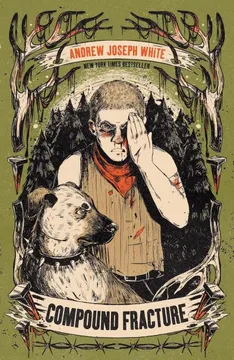


Plot Summary
Photographs at the Riverbank
Sixteen-year-old Miles Abernathy lives beneath the shadow of a century-old feud between his family and the Davieses, whose ancestor executed labor organizer Saint Abernathy. Before heading to his high school’s graduation party, Miles hides his father Jeffery’s campaign papers and sends his parents an email explaining that he is a boy.
He has also copied photographs Jeffery took after Sheriff Davies ran a car off the road, killing Cooper O’Brien’s mother and badly burning Dallas Foster. The pictures appear to show the sheriff at the scene.
Miles gives a copy to Cooper, hoping they can expose him. Before they can decide what to do, sheriff’s son Noah Davies and his friends intercept Miles in the woods. Eddie Ruckle films as the boys pursue him, and Miles runs for his life.
The Sheriff’s Hospital Bargain
Cooper finds Miles gravely injured in the woods and drives him to the understaffed hospital. Miles wakes disoriented, badly beaten, and haunted by glimpses of a coal-dusted man wearing a red bandana.
Doctors repair internal injuries and broken bones, while Miles fears the attack may have included sexual assault but cannot remember enough to request an examination. His mother Linda postpones discussing his coming-out email, still calling him by his birth name. Sheriff Davies visits alone and makes clear that Miles’s family will suffer if he remembers who attacked him or keeps the photographs.
Miles agrees to the sheriff’s version of events. After four days, he is discharged, but the strange miner continues to appear, and the silence Miles has accepted feels less like safety than another family obligation.
A Name in the Truck
Cooper picks Miles up from the hospital because Linda must return to work, then brings him home to his waiting dog, Lady. The drive gives Miles room to explain that he is transgender and wants to be called Miles.
Cooper accepts the name without making him defend it, becoming the first person besides Miles himself to use it. At home, his parents struggle to acknowledge the change: Jeffery falters, while Linda avoids the subject and uses Miles’s old name when he is absent.
His grandparents arrive to help, but the sheriff’s threats make even ordinary visits feel dangerous. Cooper keeps coming by, offering company as Miles recovers. Their old friendship returns in small routines, though neither knows how to name the tenderness growing between them.
The Dumpster Corral
When Miles visits Big Kelly’s to collect his paycheck, owner Kelly puts him on leave for the summer, costing his struggling family badly needed income. In the back hall, he encounters Eddie, now hired as his replacement, and learns Eddie sent the attack video to Sheriff Davies.
Miles strikes Eddie with the heavy kitchen door, demanding to know what the sheriff has seen. Eddie threatens to expose Miles’s lie about his memory and endanger his father’s job. Miles lunges; Eddie slips on gravel, hits his head on a concrete wheel stop, and dies.
Cooper helps conceal the body, and the two use Miles’s research to take it through the abandoned mine to a deep shaft. At Cooper’s apartment, Cooper cuts Miles’s hair. Their shared shock and closeness lead to a kiss, then Cooper proposes killing the remaining Davies allies.
Saint’s Red Bandana
Miles recoils from Cooper’s plan, then discovers that quitting the hospital painkillers abruptly has left him in withdrawal. His visions intensify until he recognizes the miner as Saint, his great-great-grandfather, from a family photograph. The bandana Miles recovered in the mine matches the one Saint wears in the image.
During a night visit to the burned theater, Saint reveals a chest binder and points toward another miner in the photograph, Billy Hawk, suggesting a life and love hidden from official records. Saint gives Miles a railroad spike from the ruins, and Miles takes it as a charge to fight back.
At home, Jeffery finds him sick and frightened, uses Miles’s name, and tries to understand his gender without demanding that he explain himself. Miles agrees to join Cooper’s plan, though the meaning of Saint’s silent guidance remains uncertain.
The Red Holler Returns
At a church basement therapy group, Miles flees the attention of other students and runs into Dallas, the childhood friend he lost after the car crash. Dallas has returned to Twist Creek with their brother Michael and sister-in-law Amber, who run the Red Holler, a worker-owned restaurant covered in radical labor art and practical community resources.
Dallas is openly nonbinary and welcomes Miles as a trans boy, then listens as he describes his attack, family estrangement, and exhaustion around people. Their own scars and disability have not erased their humor or bluntness.
Miles finally finds someone who understands the effort he spends masking discomfort. The reunion reconnects him to a friendship interrupted by the feud and shows him that resistance in Twist Creek might mean building something together, not only striking back.
Evidence on the Table
Miles brings the crash photographs to the Red Holler, where Amber is gathering evidence of Sheriff Davies’s abuses for a public campaign at the Fourth of July festival. Dallas studies the image of their burned family’s car and agrees it should be used.
Miles knows the photographs may expose them to retaliation, but hands them over anyway. His mother is slowly trying to learn about trans people, though her uncertainty still wounds him. Cooper, meanwhile, sees the photographs as a reason to punish the Davieses, and the pair target Paul Miller, Noah’s quiet accomplice, while Paul’s family is away.
Cooper plans to shoot him; Miles provides the code to Jeffery’s gun safe. Miles is unsure whether his feelings for Cooper are romantic, but he accepts their closeness while both mistake shared danger for a clear plan.
The Processing Plant
On the night they intend to kill Paul, Miles and Cooper reach the Millers’ illegal game-processing plant and find Paul working alone. Paul has guessed they killed Eddie and says Noah never believed him.
When Cooper hesitates with the gun, Miles learns why Paul stayed: Sheriff Davies seized his family’s property and bound them to the business, while Noah threatened to shoot him for wanting to leave. Miles offers Paul a chance to disappear if he answers whether he regrets helping attack him. Paul’s answer shows no remorse.
Miles still lets him go, but Cooper shoots Paul through the jaw before he can leave. The injury is devastating, and Paul suffers as Miles begs Cooper to end it. Cooper refuses; the two flee, leaving Paul to die. Miles confronts Cooper, then abandons him on the road and calls Dallas.
A Festival Outing
At the Fourth of July festival, Miles reunites with Dallas and sees the Red Holler’s flyers circulating among the crowd. Cooper arrives angry, accuses Miles of betraying him by sharing the crash photographs, and cruelly tells Dallas they should have died instead of his mother.
Miles protects Dallas with Lady and orders Cooper away. Sheriff Davies then turns the gathering into a spectacle: Noah announces Miles’s transgender identity and invites him onto the stage for a public award, stripping him of the choice to come out on his own terms.
Miles gives a brief statement rejecting the idea that survival makes him admirable, then leaves the stage. Inside the envelope, he finds a note showing that Noah knows Eddie is dead too. The sheriff also announces Paul’s death, confirming that the killings are no longer secrets.
The Holler Goes Up
After the festival, Miles tells his family he is a boy, and Linda finally corrects the relatives who use the wrong name. His grandparents embrace him, while Jeffery learns that Miles secretly gave Amber the crash photographs.
The next evening, at the Red Holler’s protest show, Miles takes the microphone and publicly identifies Noah as the boy who attacked him and Sheriff Davies as the man who protected him. Davies enters the crowded restaurant and challenges the evidence, but Amber refuses to back down. When the sheriff orders everyone out, the crowd holds its ground.
He shoots Amber in the shoulder; Noah then appears with a burning bottle and sets the restaurant ablaze. Miles and Dallas escape through the kitchen with Linda’s help. The Red Holler burns, and the community’s first open confrontation with the sheriff ends in injury and flight.
Cooper on the Porch
Miles drives Jeffery and Dallas home while his parents and the Fosters stay behind to help Amber. On the porch, they find Cooper shot and butchered like an animal. His keys remain in his pocket, a small familiar detail made horrific by the violence around it.
Mr. O’Brien collapses in grief, while the families treat Amber’s wound and prepare for the sheriff’s next move. In the midst of the vigil, Mamaw gives Miles an old photograph naming Billy Hawk, the miner beside Saint and Lucille.
Miles realizes Billy died in the mine disaster that helped ignite the original strike. Before dawn, Noah contacts Miles using Cooper’s stolen phone and offers to meet alone. The family decides Miles will lure him to the mine, where the old shaft can give them leverage against Sheriff Davies.
The Mine Takes Another Son
Miles enters the mine alone, carrying Jeffery’s handgun, Paul’s knife, rope, and the red bandana. Noah arrives and boasts that Cooper told him everything, then tries to force Miles to surrender to his father. Miles fires at the rock wall to show he can act, but Noah attacks and takes the gun.
Miles uses the knife to stab Noah in the neck, killing him. As Miles reaches for a phone signal, Sheriff Davies shoots him in the face and carries him to the burned theater, where he retrieves the railroad spike and prepares to reenact Saint’s execution.
Saint appears, pulls the spike from his own throat, and distracts Davies long enough for Lady to attack him. Miles’s family arrives. Papaw raises his shotgun while the neighbors gather and do not intervene; Davies does not survive the encounter.
The County Keeps Quiet
Miles survives, but his damaged eye must be removed, and the rural hospital cannot promise whether a prosthetic will be possible. He attends Cooper’s small riverbank funeral with Mr. O’Brien; Noah’s family holds a separate service, while no funeral is held for Sheriff Davies.
Nobody asks for the full truth, and the community maintains that silence. Miles adds Saint to his legal name and considers leaving school for a GED. At the Red Holler’s scorched remains, residents gather to debate how to rebuild local government and whether the sheriff’s office can be trusted at all.
Miles and Dallas settle into a queerplatonic partnership, while their families and neighbors help one another through the aftermath. When a state trooper arrives, the group silently agrees not to reveal where Davies is buried or who killed him.
Analysis
Compound Fracture makes history a local force rather than a distant backdrop. The 1917 mine disaster, Saint’s execution, and the Abernathy-Davies feud recur in property, family habits, and enforced silence. Miles’s archive gives him a way to understand that inherited violence, but information alone cannot free him: the photographs are dangerous precisely because Davies controls the institutions that might judge them. The novel’s central tension is therefore not truth versus ignorance, but truth versus the structures that decide whose account counts.
Miles’s personal discoveries resist being separated from that political struggle. Coming out, learning about autism, and questioning whether he is aromantic are not ornamental subplots. Each forces him to confront the cost of performing normality for other people. He has spent years manually decoding social cues and concealing discomfort, much as his family has learned to conceal its history. Recognition brings relief, but it does not instantly repair relationships or make the world safe. His parents’ imperfect attempts to understand him show care as an evolving practice rather than a single approving gesture.
The book also refuses to make retaliation emotionally clean. Miles and Cooper imagine violence as protection, then discover that killing does not restore what was taken or make them adult. Paul’s constrained life complicates the division between perpetrator and victim, while Cooper’s grief turns loyalty into a demand that Miles cannot accept. By contrast, the Red Holler offers a model of politics built through shared work, public testimony, and practical accommodation. Its destruction makes collective action costly, not futile.
Saint’s uncertain presence sharpens the question of inheritance. Miles first reads the railroad spike as permission to answer violence with violence. Later, the community gathered at the Red Holler suggests another legacy: people can resist together rather than reproduce the lone avenger’s script. The ending remains uneasy. The sheriff is gone, but institutional repair is unresolved, and the county’s silence protects its residents while concealing a crime. Survival is neither purity nor victory. It is the beginning of a difficult argument about what a community owes its wounded, its children, and the truth.
Review Summary
Reviews for Compound Fracture are largely positive (4.37/5), with readers praising its brutal yet heartfelt portrayal of Appalachian working-class struggles, trans and autistic representation, and atmospheric writing. Many highlight the compelling autism rep, family dynamics, and the safe fate of the dog, Lady. Critical reviews cite pacing issues, overly moralistic characters, heavy-handed political messaging, and an idealized portrayal of rural conservatism. The book is noted as more thriller than horror compared to the author's previous work.
People Also Read
Characters
Miles Abernathy
The family historianMiles is a sixteen-year-old transgender boy raised in a poor West Virginia family shadowed by generations of violence. He studies records, political history, and family documents because knowledge gives shape to dangers adults refuse to explain. Autistic traits, though not formally diagnosed in the story, help account for his sensory distress, social exhaustion, intense interests, and preference for directness. He often manages emotion by calculating the response others expect, yet his fierce loyalty and instinct for fairness keep breaking through that practiced composure. His love for his family and home complicates any simple wish to escape. Miles wants to protect people, but he must learn that protection can become another name for secrecy, self-sacrifice, and harm.
Cooper O’Brien
The boy who stayedCooper is Miles’s childhood friend, a recent high school graduate who keeps the family’s gas stations running while caring for his ill father. He is warm and physically confident, but years of grief and premature responsibility have left him exhausted and guarded. His mother died in the crash that ties his family to the Abernathys’ feud, and he has spent much of his youth making himself useful rather than admitting what he needs. Cooper accepts Miles’s name readily and offers him a rare sense of ease. His attraction and loyalty are real, but grief can twist his desire for justice into a demand for retaliation. He embodies the cost of asking a teenager to become an adult before he is ready.
Dallas Foster
The returning co-conspiratorDallas is Miles and Cooper’s childhood friend, now a nonbinary teenager living with their brother Michael and sister-in-law Amber. They survived severe burns in the crash and carry visible scars, limited mobility, and the complicated attention those injuries draw. Their humor is loud and sometimes deliberately irreverent, but it protects a person still negotiating trauma, disability, and belonging. Dallas offers Miles something few people can: uncomplicated recognition as a trans boy, plus the patient familiarity of someone who remembers his habits from childhood. Their political commitment grows from lived experience of corruption and exclusion, yet they retain the right to decide when their body or history is not available for public use.
Saint Abernathy
The dead labor organizerSaint is Miles’s great-great-grandfather, a socialist miner and strike organizer executed during the Twist Creek Calamity of 1917. The surviving records portray a fierce, difficult man who risked himself against mine owners and law enforcement, but they conceal much of his private life. His red bandana marks labor solidarity, while the gaps in his history suggest how thoroughly marginalized people can be erased from official accounts. Saint appears to Miles as a silent, often unsettling presence rather than a conventional guide. His significance lies partly in what Miles imagines and partly in the archival fragments that make that imagination possible. He represents a family legacy that can inspire resistance without prescribing revenge.
Jeffery Abernathy
Miles’s wounded fatherJeffery is Miles’s father, a mechanic still living with the physical and psychological injuries of the earlier car crash. He avoids hospitals, struggles with mobility, and carries the financial burden of a family with little security. Jeffery wants to improve the county through local politics, but fear of renewed violence makes him cautious about involving his son. His love tends to appear through practical care, food, repair work, and vigilance. He initially struggles with Miles’s transition, yet his willingness to listen and use Miles’s name gives their relationship room to change.
Linda Abernathy
The practical motherLinda works at a nursing home and keeps her family functioning through medical knowledge, blunt judgment, and relentless attention to bills and care. She is compassionate but can retreat from conversations that frighten her, especially when Miles comes out. Her hesitation is not simple rejection: she is also trying to protect a child she knows the county may target. Linda must distinguish her fear for Miles from the needs Miles is naming. Her nursing instincts make her an anchor during crises, while her gradual effort to understand her son reveals a parent capable of revising what she thought she knew.
Sheriff Davies
The county’s smiling tyrantSheriff Davies inherits a family history of violence and turns public authority into private control. He threatens the Abernathys, protects his son, manipulates local institutions, and makes the burned theater a standing reminder of what resistance can cost. His polished clothes and practiced friendliness conceal a worldview in which people are property, rivals are threats, and accountability is weakness. He understands that fear works best when neighbors enforce it on themselves, so he pressures families into silence rather than relying only on force. Davies is the living continuation of the feud’s political machinery, not merely a cruel individual.
Noah Davies
The sheriff’s heirNoah is Sheriff Davies’s son and the likely successor to his influence in Twist Creek County. He uses charm and public manners as cover for cruelty, testing how much power he can exercise without consequence. His history includes animal abuse and intimidation, and he treats other people’s fear as entertainment. Noah’s conduct is shaped by the example and protection of his father, but the story does not excuse him as a mere copy. He actively chooses to extend the family’s control, especially over young people with fewer ways to defend themselves.
Amber Foster
The co-op’s clear-eyed organizerAmber is Dallas’s sister-in-law, Michael’s wife, and an autistic organizer who helps establish the Red Holler as a worker-owned restaurant and community hub. Direct, practical, and often more comfortable with concrete plans than social niceties, she makes care tangible through resources, accommodations, and collective action. Amber recognizes Miles’s distress and offers ways to make ordinary tasks manageable without treating him as incapable. Her politics are grounded in the working conditions and institutional failures surrounding her, not in abstract performance. She is willing to take risks, but she respects the limits and consent of the people whose experiences become part of a campaign.
Michael Foster
The co-op’s steadfast hostMichael is Dallas’s older brother and Amber’s husband. He helps run the Red Holler and gives the Fosters a stable home after years of injury and displacement. He is protective, sociable, and quick to anger when Sheriff Davies threatens his family or community. Michael supports Amber’s organizing while remaining attentive to Dallas’s needs, though he sometimes struggles to find language that feels right when discussing their scars. His loyalty is not quiet neutrality: he makes space for people and ideas his county would rather exclude.
Paul Miller
The trapped accomplicePaul is Noah’s quiet friend and accomplice, a young man shaped by the violent hierarchy surrounding him. He helps restrain Nancy’s dog and participates in the attack on Miles, yet he is also trapped by Sheriff Davies’s control of his family’s land and business. Paul’s silence can look like passivity, but it often masks calculation and fear. He understands more than he says and has learned to survive by staying useful to people with power. His circumstances complicate the question of responsibility without erasing the harm he causes.
Eddie Ruckle
The violence’s eager witnessEddie is Noah’s friend, an avid recorder of cruelty who films the attack on Miles and helps spread the footage. He has also violated his underage stepsister’s privacy. His habit of turning other people’s suffering into material shows how violence can be encouraged by an audience as well as an aggressor.
Lady
Miles’s watchful dogLady is Miles’s black mouth cur, trained to track and guard. She gives him companionship that does not demand eye contact or conversation, and she notices changes in his stress before other people do. Her instinct to place herself between Miles and danger makes her a source of both practical protection and emotional steadiness.
Mr. O’Brien
Cooper’s grieving fatherCooper’s father is a former sheriff candidate, now physically and emotionally diminished by the crash that killed his wife and by opioid addiction. He depends on Cooper while loving him deeply, a reversal that leaves both father and son carrying more than they can comfortably name. His history with Jeffery links the families through both friendship and blame.
Mamaw
The family’s steady elderMiles’s grandmother is practical, sharp-tongued, and deeply loyal to the Abernathy family. She knows the feud’s history firsthand and understands why her grandson studies it. Her affection arrives through food, fussing, and blunt reassurance, while her respect for family memory helps connect Miles to people the county tried to erase.
Papaw
The family’s armed memoryMiles’s grandfather carries the family’s history in silences, hunting knowledge, and old grief. He has lived through retaliation between the Abernathys and Davieses and knows how quickly violence can become inheritance. Protective and unsentimental, Papaw offers practical help while embodying the dangerous comfort of an eye-for-an-eye response.
Billy Hawk
Saint’s lost partnerBilly is the miner whose name survives on a family photograph and in a list of men killed in the mine disaster. He was Saint’s partner and Lucille’s father. His absence from most records makes the family’s past feel deliberately incomplete.
Plot Devices
The crash photographs
Evidence against the sheriffJeffery’s photographs record the aftermath of the crash that killed Cooper’s mother and injured Dallas, with Sheriff Davies visible near the wreck. Miles finds the originals hidden in his father’s lockbox, makes copies, and gives one set to Cooper. Davies pressures Miles to surrender them, but their existence continues to shape choices long after Miles agrees to conceal them. When Miles eventually gives the images to Amber, they become part of a broader public case against the sheriff. The photographs make private family trauma potentially legible as public evidence, while their handling exposes the danger of truth when the person accused controls local law enforcement.
Saint’s appearances
History made intimateThe coal miner with the red bandana appears to Miles during his hospitalization, recovery, and confrontation with the feud. Miles gradually recognizes him as Saint Abernathy through the family archive and a matching bandana. The apparitions are never cleanly separated from trauma, medication withdrawal, or Miles’s own imagination, leaving their literal status unresolved. Their narrative function is nonetheless concrete: Saint connects Miles’s present danger to the strike and execution that shaped the family, and prompts him to revisit what resistance might mean. The ghost is not simply an ancestor offering instructions; Miles has to interpret the artifacts and decide which parts of a violent inheritance he will carry forward.
The abandoned mine
A hidden history becomes leverageThe disused mine preserves the physical setting of the 1917 disaster and the labor conflict that followed. Miles knows its old map and hidden sub-shaft, information he uses first to conceal Eddie’s body and later to lure Noah into a confrontation. The mine’s unstable passages also embody the danger of assuming that the past can be controlled or repurposed safely. Its function changes from secret disposal site to a place where the feud’s present violence is forced into the open. The mine links the coal company’s old exploitation to the Davies family’s contemporary rule, without suggesting that history repeats in exactly the same way.
The Red Holler
A base for collective resistanceAmber and Michael’s worker-owned restaurant gives local residents a place to find resources, organize, and speak about Sheriff Davies without relying on the courthouse he controls. Dallas brings Miles into that community, and Amber uses the crash photographs alongside other evidence in a public campaign. The Red Holler turns politics from Miles’s private reading and family archive into a shared local project. Its vulnerability matters as much as its promise: the sheriff can threaten the people gathered there and attack the building, but he cannot make the community’s knowledge disappear as easily as he has erased earlier records.
The red bandana and spike
An inheritance Miles must interpretThe bandana links Miles’s apparition to Saint’s surviving photograph and to the labor movement that once organized miners in Twist Creek. The railroad spike recalls Saint’s execution and becomes a charged object Miles carries during his confrontation with Noah. These relics can suggest revenge, martyrdom, or solidarity, but their meaning is not fixed by age or bloodline. Miles eventually recognizes that Saint’s history also contains love, political organizing, and collective struggle. The objects therefore test whether an heir must reenact an ancestor’s violence or can use the past to imagine a different form of resistance.
Download PDF
Download EPUB
.epub digital book format is ideal for reading ebooks on phones, tablets, and e-readers.








