

Plot Summary
Prologue
In 1991, Monica Howard lets her husband send their rebellious teenage daughter, Casey, to Camp Resolution, believing its promise to cure her homosexuality. Weeks later Casey returns obedient and strangely composed.
Monica’s doubts sharpen when she hears a voice answer Casey from an open grave, then finds Casey attacking Wayne with a split jaw and tendrils. The creature wearing her daughter’s face kills Monica. Her story opens the book with the terrible possibility that conversion has not changed a child but replaced her.
Monica’s compulsive cleaning gives physical form to her effort to keep the family’s disorder out of sight. She sees danger but has been trained to distrust her own perceptions, while the church and her husband convert coercion into parental duty. The horror of Casey’s return therefore works on two levels: the body is literally altered, and the family’s language has already made violence sound like care. Monica’s recognition comes too late to undo her choice, establishing the novel’s central cruelty: institutions can make a parent’s fear of a queer child more persuasive than the child’s need for protection.
Vanishing Children
In 1995, Shelby, a trans girl still called Andrew by her family, returns to her boyfriend Tyler’s apartment to find her parents’ emissaries waiting. Tyler does not intervene as they handcuff Shelby and force her into a van. Across the country, Nadine is seized after her father catches her with Tess, while Gabe, Felix, Jo, John, and Malcolm are also sent away by families who call rejection help.
The children arrive at a remote Utah compound run by Pastor Eddie and his staff. Their hair is cut, their names are denied, and a guard with a shotgun watches them line up in the desert. From the first day, escape means facing not only the camp but the adults who brought them there.
The abductions establish that the camp’s power begins before its gates: parents, romantic partners, and religious authorities have already taught these teenagers that their own testimony is suspect. The shared destination does not erase their different histories. Shelby’s abandonment by Tyler, Nadine’s resistance to her father, and Gabe’s terror of being exposed each make the same institution feel personal rather than abstract. The children are not simply imprisoned by a fence; they have been delivered by people whose approval they still want. That contradiction explains why defiance comes unevenly and why the camp’s promises can briefly reach even those who know they are being harmed.
The Camp’s Rules
Camp Resolution divides children by assigned sex and makes them work before dawn. The boys dig cattle fences and ditches; the girls cook, clean, and run until exhaustion. Counselor Cheryl forces a sick girl, Smith, to keep running after she collapses, while older campers beat Malcolm and threaten anyone who resists.
Ms. Armitage’s lessons offer bizarre theories of memory, bodies, and social pressure in place of ordinary schoolwork. Gabe notices that the lessons seem to cause headaches, and the food tastes increasingly wrong.
The children also glimpse impossible signs: strange animal pellets in the desert, Cheryl crawling beneath a cabin, and a lush garden hidden inside a barren crater. Camp discipline is frightening, but something beyond its cruelty is taking shape.
The camp makes oppression routine by distributing it through schedules, chores, lessons, and peer enforcement. Its children are pushed to police one another, which gives the adults more reach than the guards alone could provide. The invented curriculum matters because it blurs punishment with explanation: the students are taught to distrust ordinary knowledge just as their bodies begin registering a real, inexplicable threat. The crater’s abundance and the pellets are not yet answers, but they expose a crack in the camp’s story of simple religious discipline. The setting itself refuses to behave like a normal place, forcing the children to treat their own unease as evidence.
A Hole in the Dark
After Nadine, Shelby, Jo, and others share vodka through a trapdoor beneath a cabin, they compare recurring dreams of digging until they uncover their own buried faces. The nightmares, headaches, and strange lessons convince Nadine that the camp is doing more than breaking their spirits.
Shelby and Nadine kiss, giving both a rare moment of chosen intimacy. The group’s trust grows through smaller acts too: John stops Malcolm from attacking another boy, and Felix begins to accept help instead of enduring everything alone.
Meanwhile, Cheryl disappears beneath another cabin, and Malcolm spots a dog moving through the camp’s shadows. They have no proof of what is happening, but they now share enough evidence to stop dismissing one another as frightened or unstable.
The shared dream turns private distress into collective knowledge. Each child has been isolated by a different form of shame, so comparing memories is a practical act of resistance, not merely emotional comfort. The false floor beneath the cabin also gives their solidarity a literal shelter: the camp’s imposed order has a hidden underside where they can speak freely. Shelby and Nadine’s intimacy is especially significant because it is neither a cure nor a reward. It is a relationship they choose for themselves, in a world that keeps trying to define their bodies and desires for them. Their trust makes the coming danger harder to face, but it also gives them reasons to act.
Graduates Return Changed
Smith vanishes from her bunk after being summoned for private counseling. Nadine challenges Cheryl and is punished with a tire during the morning run; when Felix objects, other girls beat him while staff watch. Later, the camp gathers around a fire to celebrate graduates returning from a wilderness trip.
The newcomers look polished and emotionally vacant. Pastor Eddie then straps Nadine to a stool and beats her in front of the campers, claiming she stole food. Felix is brought forward next.
Candace, once a friendly, shrinking girl, now helps restrain Nadine and appears transformed. The spectacle makes the group understand that the camp’s missing children are not simply being disciplined or sent home. Whatever happens on the wilderness trips produces people who return looking like someone else.
The public punishment is designed as a lesson in the cost of resistance, but it also destroys the camp’s disguise. Nadine’s beating makes the adults’ violence visible, while Candace’s changed presence gives that violence a more intimate, uncanny dimension. The graduates have learned to perform gratitude, suggesting that the camp does not merely demand obedience; it manufactures a convincing display of consent. The children now face a double bind: submit and risk becoming unrecognizable, or resist and invite immediate brutality. This turning point changes their problem from surviving abuse to escaping before their identities can be taken from them.
The Night Escape
Nadine organizes a breakout using food, a map, and a phone in the farmhouse. Jo and Brady slip inside during the night and find an address identifying Resolution, Utah. Jo reaches her grandfather, Oji, but Enoch interrupts the call. Brady strikes Enoch with the phone, killing him, and Jo flees with the address.
Elsewhere, the drugged campers wander through the compound in a euphoric haze; Jo and Brady climb out, while Gabe is captured after Corey kills a dog and attacks him. The others are seized in their cabins. Jo cannot save Brady when a creature wearing Cheryl’s face takes him, so she hides in a tree until morning. Their escape has failed, but Jo now knows where they are and has a way to seek help.
The escape attempt exposes how the camp’s control works through both force and altered perception. The drugged children briefly experience freedom as an ecstatic certainty, but that certainty leaves them vulnerable and unable to judge danger. Jo’s phone call offers a fragile connection to the outside world, then ends in sudden violence when Brady kills Enoch to help her escape. Her inability to save Brady is not a failure of loyalty so much as the brutal limit imposed by the attackers. The group is separated, yet Jo carries the one piece of information that can turn their flight into a rescue attempt.
Fire at the Farmhouse
Jo finds Malcolm’s hidden Cold War bunker, takes its dynamite, and uses it to blast the camp’s buildings and barn. The explosion gives the captured teenagers a chance to fight back as the farmhouse fills with smoke and the creature beneath it stirs.
Nadine reaches the kitchen for matches, hoping to ignite gas and destroy the house, but the Cuckoo breaks through the floor and attacks her. She lights the match anyway, sacrificing herself in the blast.
Jo returns from the woods and joins the others as they flee; John shoots the creature wearing Pastor Eddie’s face. They escape with Gabe, who has been held beside a newly formed double, but the fire consumes the farmhouse and leaves Nadine behind. Their rescue is real, and its cost is permanent.
The explosion is both a tactical opening and a refusal to let the camp control the terms of escape. Jo’s use of the bunker turns an earlier discovery into a weapon, while Nadine’s decision to light the match protects the others at the cost of her own life. Her courage is not presented as invulnerability: she has been beaten, injured, and frightened, yet she acts when there is no clean option. The Cuckoo’s physical presence finally names the threat behind the camp’s transformations. What remains after the fire is not triumph but a group bound by grief, guilt, and the knowledge that survival may require choices no child should have to make.
Across the Empty Desert
Jo leads the survivors toward town using a map from the bunker, while the Cuckoo pursues them through the desert by sending a smaller, animal-like creature that mimics Nadine’s voice. The group refuses to follow it, and Jo uses the shotgun to kill it. Heat, thirst, injuries, and hunger wear them down; they share ration packs and even drink urine to keep moving.
Old resentments flare, but they keep walking together. At last they reach Resolution and find Oji waiting outside the feed store after Jo’s call. She collapses into her grandfather’s arms. The others have escaped the camp, but they leave behind Smith, Brady, Nadine, and the children who never made it out. Their rescue begins with one person believing Jo.
The trek strips the survivors of the camp’s language and leaves them with bodily need, memory, and one another. The Cuckoo’s use of Nadine’s voice weaponizes grief, making refusal an act of love as much as caution. Their arguments on the march show that shared trauma does not automatically make a group harmonious; cooperation is a repeated decision made under pressure. Oji’s arrival matters because Jo had to risk trusting a family member after the adults in her life failed her. His belief does not repair the losses, but it provides the first relationship outside the group that can hold their account without dismissing it.
The Survivors Scatter
After the rescue, the young survivors drift through temporary homes, precarious jobs, and troubled relationships. Some try to treat Camp Resolution as a nightmare; others, especially Felix, keep searching for similar programs and collecting evidence.
By 2011, he traces a new van to Cook Canyon, Nevada, where another conversion program appears connected to the Glovers. He calls the people who survived with him. Lara, Jo, John, Shelby, and Mal are now adults with lives they have struggled to assemble, and none is eager to return to the desert.
Their reunion brings old intimacy and old injuries back at once. Felix believes a child named Abby Donovan is in danger, and his friends must decide whether their shared past obliges them to act again.
The time jump refuses the easy promise that surviving a monster ends its influence. The group’s separation is partly self-protection: reminders of the camp make closeness painful, while ordinary adult pressures offer convincing reasons to avoid reopening the past. Felix’s investigation converts trauma into labor, but his persistence has also isolated him from the life he might have built. The others are not simply reluctant; they have learned that exposure can cost jobs, partners, and mental stability. Their reunion asks whether solidarity can be renewed without pretending that the years apart did not happen.
The Doubles’ House
Felix gathers the survivors in Reno and explains that the Cuckoo is again using conversion programs to find children. They buy ketamine, which Felix suspects may disrupt the creature, and follow Lara to her parents’ house in Idaho. Inside, the home is sealed in heat and humidity, overrun by fungal growth and strange plant forms.
They find an imitation of Gabe being cultivated among the growth and pin it down. Lara drives a drill into its skull while Shelby adds ketamine. The copy convulses and collapses. Nearby lie the remains of Lara’s family, and she recognizes the scale of what the creature has done to her past. They leave the house and set it ablaze, but their intrusion has exposed their return to the Cuckoo.
The house makes the Cuckoo’s violence domestic: it does not merely attack strangers but occupies the rooms where childhood memories were made. Lara’s decision to destroy the double is both practical and intimate, because she must face a counterfeit tied to her own family’s disappearance. The group’s use of ketamine begins as an experiment rather than a proven weapon, which keeps their plan uncertain. Burning the house removes a nest, but it also announces that the survivors are no longer hiding. Their action cannot restore Lara’s family; it can only prevent the stolen home from continuing to function as a nursery.
The Motel Ambush
At a motel, Mal keeps a phone after the others discard theirs, unable to sever contact with their controlling partner, Charlie. The mistake gives the Cuckoo’s network a way to find them. Armed followers attack the motel, and a woman shoots at the group as they flee. Lara senses the fear and deaths around them with painful intensity; the attack kills bystanders and leaves the survivors shaken.
Felix lashes out at Mal, blaming them for the dead, then recognizes that his anger has become another form of violence. John restrains him, and later Felix apologizes. The group abandons its remaining phones, changes vehicles, and continues toward Cook Canyon, carrying the consequences of the ambush as well as the supplies they need.
Mal’s mistake is not a simple plot convenience: it grows from an attachment they have struggled to leave, showing how coercive relationships can persist through need and guilt. The Cuckoo exploits that vulnerability at a scale that turns private hesitation into public danger. Felix’s response repeats the punitive logic he opposes, assigning blame before he can acknowledge fear and grief. John’s intervention prevents the group from turning inward at the moment it most needs cohesion. The deaths of strangers make their mission morally heavier: fighting the Cuckoo now means accepting that their choices can endanger people who have never heard of the camp.
Cook Canyon Burns
Near Cook Canyon, the group uses guns and improvised firebombs to break through a sheriff’s roadblock staffed by creatures in uniform. They set fires across town to draw the Cuckoo’s defenders away from the farmhouse. The survivors split between the burning streets and the compound.
Jo is shot during the escape, and John is badly injured when a truck crashes into their vehicle. Mal fights Betty, now enlarged and transformed into one of the Cuckoo’s servants, while Lara, Felix, and Shelby enter the farmhouse.
Inside, they find Mrs. Glover dying beside a creature wearing a young woman’s face. Felix shoots it. Lara removes Mrs. Glover’s oxygen mask, then leads the others toward the hidden chambers beneath the house, where the Cuckoo is growing its copies.
The attack turns the survivors’ long history of being hunted into an offensive, but it does not grant them control. Fire disrupts the colony’s defenses while also multiplying danger in a town full of occupied bodies. The losses and injuries make the division of the group consequential: some must keep the street battle alive while others enter the house. Lara’s actions toward Mrs. Glover are ethically harsh, yet the old woman’s complicity has helped sustain the breeding ground. The farmhouse is no longer a mere setting from the first escape; it is the physical center of an operation the survivors now have to confront directly.
Ketamine Against the Cuckoo
Below the farmhouse, the survivors find the Cuckoo’s vast body and the children’s doubles growing in sacs. Lara is absorbed by the creature, but her old psychic connection lets her enter its mind. She attacks its sense of unity from within, making its many parts panic and lose recognition of one another.
Felix throws ketamine into its exposed flesh, intensifying the collapse. Aboveground, the infected town’s creatures begin to convulse as the Cuckoo’s control fails.
Betty turns on herself, and Mal survives her attack; John, wounded but alive, is found by the others. The underground chambers collapse over the Cuckoo. Lara does not come back out. The survivors have destroyed the creature’s central body, but Jo and Lara are dead, and the victory leaves the group bereaved.
The final weapon is not superior force but a contradiction inside the Cuckoo’s defining desire: its unity becomes a vulnerability when Lara makes it experience separation as terror. Ketamine disrupts the organism’s control, while Lara’s psychic link gives her access to the mind that organizes its bodies. The climax therefore literalizes the novel’s conflict between enforced sameness and chosen connection. The survivors’ bonds are imperfect, but they are freely formed; the Cuckoo’s unity erases the people it claims to join. Lara’s death makes the victory costly rather than cleansing, and the collapse prevents the group from mistaking survival for restoration.
Abby Leaves the Camp
After the fighting, the survivors reach another desert camp and find Abby Donovan, Nadine’s younger sister, among frightened teenagers whose counselors have disappeared. Abby does not know Shelby or why armed strangers have arrived.
Shelby identifies herself through her connection to Nadine and unlocks the gate. She offers the other campers a way out rather than repeating the abandonment that sent the first generation into Camp Resolution. The rescue gives Nadine’s story a living consequence: her sister will not be left alone inside the same system.
The survivors remain injured, grieving, and unsure how much of the Cuckoo’s network has been destroyed, but they have interrupted one more recruitment cycle and brought the children beyond the fence.
Abby’s rescue is a modest, concrete answer to the novel’s opening betrayal. Shelby cannot undo Nadine’s loss or guarantee every child a safe future, but she can refuse the camp’s most basic demand: that victims be treated as problems to be managed behind a fence. The scene also shifts the survivors from escapees to protectors, without pretending that this role is easy or free of fear. Shelby speaks through a relationship Abby can understand, not through an elaborate explanation of the monster. The gate matters because it changes what happens next for children who have not yet been taught to distrust their own need for help.
Epilogue
In 2018, Abby walks in San Francisco Pride beside Margo, her girlfriend, and feels at home among the people she once might have been taught to fear. Then she sees a strange boy approaching through the crowd.
The sight pulls her back into the old uncertainty: any familiar face might conceal a copy, and any smile might open into something inhuman. Abby holds Margo’s hand tighter but cannot tell whether the boy is a threat or simply another person crossing the parade.
The epilogue gives Abby a life the camp tried to prevent: a chosen relationship, a public queer community, and a future not organized around parental approval. Yet survival has not restored uncomplicated trust. The boy’s approach turns Pride’s open, crowded joy into a test of perception, showing how the Cuckoo’s deeper injury persists after its central body is destroyed. Abby’s fear does not cancel the happiness she has built with Margo; both are present at once. Ending on uncertainty refuses a false cure for trauma and leaves the reader inside the survivors’ practical burden of deciding whom to trust.
Analysis
Cuckoo makes conversion therapy literal body horror: the demand that queer children become someone else is transformed into an organism that steals bodies, imitates loved ones, and calls erasure a form of belonging. The metaphor is not merely decorative. The Cuckoo’s copies exploit recognizable social habits: parents trust institutions, communities accept a child who appears more obedient, and authorities disregard those most likely to be dismissed as unstable. The monster flourishes not despite ordinary prejudice but through it.
The camp’s daily machinery is crucial to that critique. Work assignments, classroom lessons, religious language, and peer punishment turn abuse into a system that recruits its victims. The novel does not treat the campers’ disagreements or harmful behavior as proof that they are incapable of solidarity. Instead, their alliances form unevenly, through shared information, meals, jokes, desire, and the decision to keep walking when terror offers a familiar voice.
Its treatment of embodiment resists a simple opposition between body and self. The characters experience their bodies through dysphoria, fat stigma, hunger, injury, pleasure, and other people’s scrutiny. The Cuckoo’s collective body appears to promise release from loneliness, but its unity depends on consuming difference. In contrast, the survivors’ intimacy is imperfect and chosen; it requires boundaries, apologies, and attention to another person’s needs.
The ending refuses to make survival synonymous with healing. Abby reaches a future with love and community, yet the final boy at Pride leaves her unsure whether familiarity can be trusted. The survivors destroy the central colony and rescue another group of children, but cannot recover everyone they lost or know how far the Cuckoo’s influence spread. The book’s hard-won hope lies in action rather than certainty: believe the threatened child, open the gate, and stay beside one another even when fear remains.
Review Summary
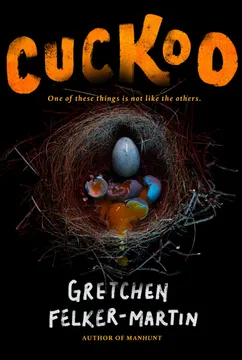
Reviews for Cuckoo are polarizing, averaging 3.4/5. Many praise the stunning prologue and Felker-Martin's visceral, unflinching prose, comparing the novel to Stephen King's IT and Invasion of the Body Snatchers with a queer lens. Fans of extreme horror appreciate its raw anger and tenderness toward queer characters. Common criticisms include an unwieldy cast of POV characters, repetitive gross-out descriptions, graphic sexual content involving minors, pacing imbalance between Parts 1 and 2, and the monster feeling underdeveloped. The audiobook's full cast narration received widespread praise.
People Also Read








Characters
Shelby
The steadfast survivorShelby is a trans girl whose family and boyfriend abandon her to Camp Resolution under the name Andrew. She arrives expecting rejection and has learned to manage danger by making herself small, cleaning, and anticipating other people’s contempt. Her bond with Nadine gives her a rare experience of being desired without qualification, while her friendships with the other campers teach her that self-protection need not mean isolation. As an adult, she still carries shame and grief, but she can offer Abby a choice she was denied. Shelby’s care is not passive: she persists beside frightened people and helps turn survival into a commitment to the next child.
Nadine
The defiant organizerNadine is a sharp-tongued, athletic teenager sent away after her father discovers her relationship with Tess. She meets authority with open resistance, using anger and physical courage to keep others from deciding what she is allowed to be. Her toughness is real, but it is also a defense against a family that has already made her feel disposable. At camp she becomes the group’s practical strategist, noticing danger and pushing the others toward action even when they resent her urgency. Her tenderness toward Shelby complicates her hard exterior, revealing a young person who wants intimacy and recognition as much as she wants escape.
Jo
The clear-eyed navigatorJo is a Japanese American teenager whose parents reject her after she comes out, while her grandfather Akira continues to affirm her. She is observant and often able to connect clues others dismiss, but she struggles with loneliness, self-doubt, and the belief that wanting someone means chasing them. At camp she notices Cheryl’s movements and later uses an address and a map to make a route beyond the compound. Jo’s courage does not mean she feels fearless; she repeatedly acts while frightened and uncertain. Her relationship with Akira gives her a model of love that does not depend on obedience.
Felix
The relentless investigatorFelix is a trans boy raised in a violent household where his father’s control shapes his sense of what can safely be said. At camp he initially treats endurance as the only available strategy, but his friendships slowly make him willing to intervene and rely on others. As an adult, he spends years tracking conversion programs and gathering evidence about the Cuckoo, sacrificing stability to prevent other children from being taken. His persistence is both a strength and a source of isolation. Felix wants to protect the people he loves, yet often expresses fear as anger, a pattern he must confront if the group is to remain together.
John
The gentle strongholdJohn is a fat, gay teenager whose father and stepmother treat his body as a problem to be corrected. He carries the expectation that affection will always come with humiliation, and at first he uses humor and physical strength to survive ridicule. His growing friendship with Malcolm and his loyalty to the camp group expose a gentler side that he has learned to hide. John is capable of force, but he is most compelling when he uses his size to protect rather than dominate. As an adult, he still struggles with his body and the emotional costs of old relationships, while retaining a deep capacity for tenderness.
Malcolm, later Mal
The deflecting comedianMalcolm is a gay Black boy whose jokes are a practiced way to make people like him and to keep painful subjects at a distance. His family history includes a brother’s suicide, a volatile mother, and a father who escapes rather than intervenes. At camp, humor helps him form connections, but it can also wound people before he recognizes their vulnerability. As an adult, Mal is a trans artist working through shame, unstable relationships, and the habit of assuming they are unwanted. Their bond with John reveals both a longing for intimacy and a fear of what intimacy may demand.
Gabe
The searching young girlGabe is a trans girl whose parents send her to camp after discovering her attraction to boys and her desire to wear feminine clothes. She is quick to judge others, especially anyone whose body triggers her own shame, and she tries to win safety through charm, beauty, and self-denial. The camp’s cruelty intensifies her fear that she will never be recognized as herself. Her friendships with John, Shelby, and the other campers begin to challenge her habit of turning insecurity into contempt. Gabe’s story centers on the difficult difference between imagining a self and being permitted to live as that self.
Lara
The haunted returnerLara is a survivor of Camp Resolution who has built an adult life through sex work, performance, and careful control of how others see her. She is perceptive about desire and skilled at using it, but her memories of the camp have left her vulnerable to isolation and periods of psychological crisis. The possibility that the Cuckoo has reached her family forces her to reconsider the distance she has kept from the other survivors. Lara brings a complicated mix of self-possession, anger, and grief to the group. Her work as a dominatrix and her experience with altered states become part of how she understands power, bodies, and fear.
Abby Donovan
Nadine’s younger sisterAbby is a shy, chubby teenager whose parents send her to a conversion program after she asks them to recognize her as a girl. She grows up with a painful mixture of maternal desperation and paternal rejection, leaving her uncertain whether home would be safer than the camp. The older survivors offer her a different kind of family, one built around consent and practical care. As an adult, Abby has a girlfriend and a place in queer community, though the camp’s legacy still shadows her sense of safety.
Monica Howard
The frightened motherMonica is Casey’s mother, trapped in a marriage where her husband’s certainty routinely overrides her doubts. She responds to fear by cleaning and by trying to believe that obedience will restore family peace. Her instinct that the camp is dangerous competes with years of religious pressure and self-blame. Monica’s unease reveals how an adult can recognize harm while lacking the language and support to oppose it. She is neither simply cruel nor innocent: her choices have consequences for Casey, and her dawning awareness arrives inside a world built to make her distrust herself.
Casey Howard
The daughter sent awayCasey is a teenager whose lesbian identity becomes a source of conflict with her parents and their church. She is remembered through the fear and guilt of her mother, who struggles to reconcile her daughter’s rebellion with the family’s demand for obedience. Casey’s story establishes the danger of institutions that claim to repair queer children by teaching them to deny themselves. Her return from camp unsettles the household and turns Monica’s suppressed suspicions into immediate terror.
Akira Takahashi, Oji
Jo’s believing grandfatherAkira is Jo’s grandfather, a tender presence in a family that treats her identity as shameful. He offers affection without making Jo earn it, and his belief becomes a lifeline when she reaches him from the camp. His own history includes a queer love he has kept private, giving him a quiet understanding of what social rejection costs. Akira’s gentleness is not weakness: he is willing to act when Jo asks for help, and he provides the survivors with a rare example of adult loyalty.
Pastor Eddie
The camp’s brutal preacherPastor Eddie runs Camp Resolution through religious rhetoric, physical punishment, and a paternal performance that disguises coercion as care. He tells parents their children can be corrected, then demands silence and submission from the children themselves. His authority depends on making cruelty seem ordinary and on encouraging campers to enforce his rules for him. Eddie’s concern for his own family and his participation in the camp’s work reveal a man who treats personal grief as permission to control other people.
Meredith Glover
The camp’s grieving patronMeredith Glover is a frail, intensely religious woman whose grief over her daughter’s death leaves her vulnerable to the promise of an impossible restoration. She supports the camp and its ideology while remaining bound to Pastor Eddie’s household. Her desire to recover what she lost becomes entangled with the institution’s treatment of queer children. Meredith embodies the danger of grief when it is redirected toward control rather than mourning, while also showing how private despair can make monstrous bargains feel like consolation.
Betty Cleaver
The camp’s cruel enforcerBetty is an older camper who gains status by helping counselors punish new arrivals. Her brutality toward weaker children is linked to her own history of abuse, humiliation, and unspoken desire. She clings to the camp’s hierarchy because it offers a temporary sense of safety and importance. Betty’s relationship with Athena reveals a capacity for attachment that her public cruelty conceals. She is a reminder that systems of abuse recruit the injured to repeat the violence that has been done to them.
Cheryl
The watchful counselorCheryl is a compact, disciplined counselor who uses routines and physical force to control the girls’ cabin. Her polished composure makes her authority difficult for the campers to read, and her movements sometimes appear more animal than human. She serves as one of the camp’s closest enforcers, carrying out punishment while presenting it as instruction.
Smith
The frightened camperSmith is a thin, anxious camper who struggles through the camp’s runs and punishments. Her quiet manner makes her easy for counselors and older campers to target. She misses the person she loved before her family discovered their relationship, and she carries private knowledge of adult hypocrisy that deepens her isolation.
Candace
The gentle first friendCandace is a friendly, heavyset camper who offers Gabe practical kindness at meals. Her early warmth gives the new arrivals a glimpse of companionship inside the camp. She is vulnerable to its pressures and becomes one of the clearest measures of how deeply its program can alter a child’s behavior.
Plot Devices
Camp Resolution
Institutional camouflageThe conversion camp provides a believable human structure for the novel’s horror: families send children there willingly, staff claim religious and therapeutic authority, and the compound’s remote location blocks outside scrutiny. Its chores, punishments, lessons, and graduation rituals make coercion look like an organized program. That cover allows the Cuckoo to hide among people already trained to dismiss queer children’s accounts of harm. The camp’s ordinary mechanisms of control also prepare the teens to recognize how an institution can turn abuse into routine.
Shared dreams and lessons
Warning systemThe campers’ recurring dreams of digging up their own faces connect their private fears before they understand the source. Headaches, hallucinations, and Ms. Armitage’s nonsensical curriculum reinforce the sense that their minds and bodies are being manipulated. These experiences work as both clues and a form of involuntary communication, forcing the teenagers to compare what they have seen rather than dismiss it as individual instability. Later, the same openness to one another’s memories gives the survivors access to the Cuckoo’s shared consciousness.
The Cuckoo’s copies
Identity theft made fleshThe Cuckoo grows doubles from living, bodily material and uses them to replace people while preserving enough of their appearance to pass among family and community. Its mimicry turns familiar faces into sources of danger and lets the creature exploit the world’s tendency to trust parents, counselors, and neighbors. The stolen identities are especially effective because the people around them often want to believe that a child has been cured or a loved one has returned. The replicas embody the camp’s demand that queer people disappear behind acceptable masks.
Ketamine
Disrupting the hive mindFelix notices that the camp tests for drugs and develops the theory that ketamine can interfere with the Cuckoo’s psychic control. The survivors use the drug first on a double and then carry it into their attack on Cook Canyon. It does not function as a simple antidote or guaranteed weapon; it creates an opening by destabilizing the creature’s ability to keep its many parts unified. Its use also turns an improvised plan into a deliberate strategy grounded in evidence gathered by the survivors.
The bunker and dynamite
Escape becomes counterattackMalcolm follows a stray dog to a hidden fallout shelter stocked with food, weapons, and dynamite. The bunker first provides supplies and a map for the teenagers’ escape across the desert. Later, Jo returns to its dynamite and uses it to blast the camp and create a chance for the captives to fight their way out. The shelter’s Cold War design contrasts with the Cuckoo’s invasion: human beings prepared for an imaginable catastrophe, while the real threat grew unnoticed in homes and institutions.

Download PDF
Download EPUB
.epub digital book format is ideal for reading ebooks on phones, tablets, and e-readers.








