

Plot Summary
Prologue
In 1993, a desperate young woman waits in the dark, then follows a truck whose driver has no idea she is there. Her two-year-old daughter is asleep in the car. Days later, Reno police find the woman dead in a motel room, her body showing signs of both drug use and a fatal head injury.
A security camera records a man driving away in her car, but the investigation changes when her family reports that a child is missing. The toddler has vanished, leaving the officers with a dead mother, a possible killer, and no explanation for where her daughter went.
The opening gives Blue’s story the shape of a crime before the novel reveals it as a story of belonging. The mother’s invisibility to the truck driver echoes the child’s later lack of official identity, while the police investigation turns private abandonment into an unanswered public case. By keeping the toddler’s fate unknown, the prologue makes absence active: the reader knows that someone is missing before Blue herself understands what is missing from her history. The mystery is not only who killed the woman, but how a child survived the gap between her mother’s death and the life she remembers.
The Paper Blue Throws Away
At Boulder High, nineteen-year-old senior Blue Echohawk arrives late to her last class and meets Darcy Wilson, a young British history teacher whose calm response unsettles her usual performance of defiance. Wilson asks students to write their personal histories.
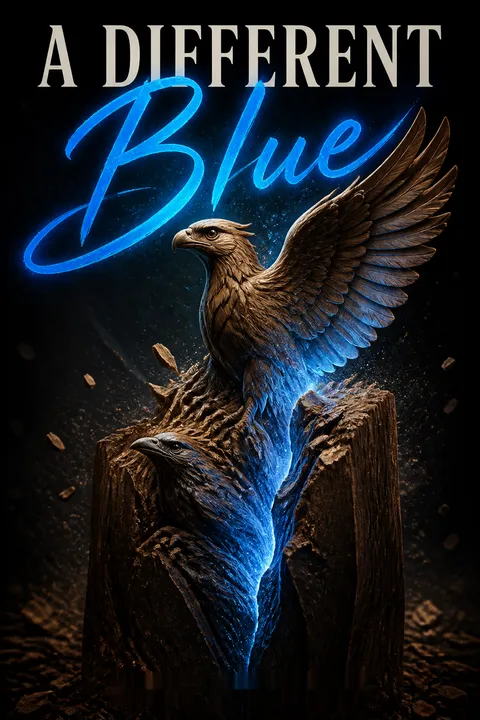
Blue cannot make herself fill the page, so she writes a few words about a discarded blackbird, crumples the sheet, and leaves it behind. She works evenings at Bev’s Cafe and spends her free hours carving desert wood in a storage unit, the craft taught by Jimmy, the man who raised her.
Her closest companions are Manny and Graciela Olivares, the teenagers next door who have adopted Blue as their reluctant chauffeur and protector. She acts as if nobody can reach her, then keeps thinking about the teacher who wants her story.
Blue’s first defense is not silence alone, but authorship of a hostile identity: she decides in advance what others will think and uses provocation to control the encounter. Wilson’s assignment interrupts that strategy by asking for history rather than a performance. Her discarded page is a concrete act of refusal, but his decision to retrieve it will turn the classroom into a place where she must confront the past she has treated as waste. Woodworking offers the counter-model: Blue already knows that what looks ugly may contain a form worth uncovering.
Jimmy Does Not Return
Blue remembers the life before Boulder City: she and Jimmy travel through the Southwest in his truck and camper, living on his wood carvings and their own quiet routines. When Jimmy leaves their camp near Mount Charleston with Icas, their old dog, neither returns that night. Icas eventually limps back, dehydrated and too weak to stand.
With their water running low, Blue loads the dog and Jimmy’s tools into the truck, leaves a note, and drives toward town despite barely seeing over the steering wheel. Police stop her, take Icas for medical care, and bring Blue to a foster home while search-and-rescue teams look for Jimmy. She clings to the belief that he will come back, because until then he has always returned.
The memory explains why Blue experiences care as both practical and fragile. Jimmy’s love is expressed through food, tools, and the dependable return of a truck to camp, not through conventional family language. When he disappears, Blue does not wait passively: she risks driving into traffic because the dog and the tools are the only responsibilities she can still protect. The scene also establishes her competence as an adaptation to neglect, not proof that she has never needed help. Her bravery begins as a child’s urgent improvisation.
The Hawk Is Gone
Years after Jimmy vanishes, searchers find his remains in a crevice, and Blue learns that the quiet man she called her father is dead. Overwhelmed, she tries to drown herself in a bathtub, but Cheryl’s boyfriend Donnie pulls her out. He comforts her with a touch that feels soothing to a lonely child, then continues offering affection when Cheryl is away, teaching Blue to confuse physical attention with safety.
Cheryl eventually tells Blue that Jimmy was not her biological father. He had found her as a toddler after her mother left her in his truck, and police later identified that mother as a woman who had died in Reno. Blue hears the facts as a second abandonment: even the father she lost, she fears, was never truly hers.
This disclosure joins bereavement to a crisis of identity. Blue loses not only Jimmy, but the certainty that their bond gave her a place in the world. Donnie’s comfort matters because it is neither wholly comforting nor openly violent: a child deprived of safe attachment learns to accept a blurred boundary as care. Cheryl offers information without the tenderness Blue needs, so factual truth lands as rejection. The blackbird image becomes more than a metaphor for loneliness; it is Blue’s attempt to narrate a life whose adults have left her without a stable account of who she is.
History Finds Her Nerve
Wilson keeps returning Blue’s rescued, wrinkled history paper and builds lessons around the stories people tell about themselves. When he discusses Julius Caesar crossing the Rubicon, Blue recognizes the danger of decisions that cannot be undone; when he teaches Joan of Arc, she begins to see how powerful women are discredited.
She challenges Wilson, mocks his polished background, and resents his childhood friend Pamela Sheffield, whose ease and privilege seem to confirm Blue’s belief that the world sorts people into lucky and unlucky groups.
Wilson counters with a story about people scattered from one crowded sack, then urges Blue to focus on where she is going. Meanwhile, Graciela begins copying Blue’s makeup and clothes to attract Brandon Bates, exposing how Blue’s hard-edged image can become a model for someone younger.
Wilson’s history lessons work because they give Blue a vocabulary for conflicts she has already lived: political control, imposed labels, and the difference between appearance and evidence. Her resentment of Pamela is not merely envy; it protects Blue from hoping she might cross social boundaries and be welcomed. Graciela’s imitation makes that protection ethically complicated. Blue’s look is a shield she chose, but it can also teach a vulnerable friend that desirability is the route to attention. The classroom turns self-knowledge from an abstract exercise into a question of what her example makes possible for others.
Manny Brings the Gun
After Graciela sends Brandon intimate photographs and he circulates them, Manny enters Wilson’s classroom with a gun, searching for Brandon and threatening the people he believes are protecting him. Blue moves toward Manny while Wilson keeps him talking, and the frightened students evacuate after Manny breaks down in tears.
Blue takes the weapon and removes its ammunition; police arrive and take Manny into custody. In the aftermath, Gloria Olivares leaves town with Manny and Graciela, and Blue fears she has lost the family she had built.
Seeking escape, she goes to Mason Bates, Brandon’s older brother. There she overhears Mason and his friends laughing about a secretly taken nude photograph of Blue that Brandon has shown around. She leaves Mason, and the image connects her own exploitation to Graciela’s humiliation and Manny’s desperate response.
The crisis makes private sexual exploitation visible as a chain of consequences rather than a single scandal. Brandon’s circulation of the images injures Graciela and Blue, while Manny’s attempt to answer that injury with a gun threatens the very people he wants to protect. Blue intervenes because friendship has become more important than her reflex to avoid danger, but the aftermath gives her no clean victory: Manny’s family disappears, and her own complicity in treating sex as a source of temporary power becomes harder to deny. The novel refuses to separate personal choices from the social conditions that exploit them.
Music Opens a Door
After leaving Mason, Blue discovers her truck battery is dead and slips into the school to find Wilson, only to hear him playing cello in his classroom. The music loosens the grief and shame she has been holding back.
For the first time, she prays, asking for the ugliness inside her to be taken away, then walks home with Wilson and tells him about Jimmy, her uncertain birthday, and the life she has kept hidden. Wilson does not pretend that prayer will erase consequences; he listens and offers companionship.
Blue’s carving also enters public view when Wilson’s sister Tiffa buys nearly all the sculptures displayed at Bev’s Cafe, while Wilson keeps her piece inspired by Joan of Arc. His belief in her work gives Blue a reason to imagine a future not defined by her reputation.
The cello does not solve Blue’s problems; it gives her an experience of feeling without immediate transaction. That distinction matters to someone who has used attention and sex to quiet loneliness. Her prayer asks for moral renewal, but Wilson’s response preserves agency by not promising that remorse will reverse harm. The art sale offers a parallel form of recognition: Tiffa values the work Blue has made from difficult material, while Wilson understands the story embedded in it. For the first time, Blue receives attention for what she can create rather than what others can take.
A Room of Her Own
Blue discovers she is pregnant after sleeping with Mason and initially hides from the result, missing school and work. At Planned Parenthood, she expects to end the pregnancy, but when the test confirms it she cannot make herself treat the child as a label she can simply remove.
She leaves carrying the sample cup, then decides she will continue the pregnancy. Wilson helps her secure a small apartment in his renovated Pemberley house for affordable rent, with a large basement where she can carve.
Blue moves out of Cheryl’s smoke-filled apartment and throws away nearly all her old clothes, replacing them with bright dresses that leave room for her changing body. She has not solved the question of motherhood, but she has claimed a safer home and begun making choices with the child’s life in mind.
Blue’s decision is not presented as a sudden conversion into certainty. She is frightened, ambivalent, and aware that continuing a pregnancy will bind her to consequences she cannot yet imagine. What changes is her refusal to make the decision through self-erasure. Moving into Pemberley gives that choice material form: clean air, privacy, and a workshop turn independence into something more than a slogan. The discarded clothes mark a shift in self-presentation, but the deeper change is that Blue starts building conditions in which another person might be safe.
A Family Offered Forward
At a Fourth of July gathering, Blue learns that Tiffa and her husband, Jack, have long hoped for a child. Seeing Tiffa tenderly settle her nephew into bed, Blue tells her that she wants the baby to be anticipated and cherished, then asks whether Tiffa and Jack would adopt.
They consult a lawyer, who explains that the arrangement requires Mason to surrender his parental rights. Blue confronts Mason with the paperwork and warns that she will seek child support if he refuses to cooperate. He signs the documents in court, though he admits he had wanted a more serious relationship with her.
Blue chooses the adoption because she believes the child deserves a broad, dependable family, not because her pregnancy has made her indifferent. The decision gives Tiffa and Jack hope while leaving Blue to carry its emotional cost.
Blue’s adoption decision grows from her own history of being scattered among adults, but she does not simply repeat that history in reverse. She tries to design a network of belonging for her child, choosing Tiffa and Jack because they can offer the steadiness she lacks. Her choice is loving and also self-protective; she doubts her readiness to parent and fears that need alone would make her keep the baby. Mason’s signature resolves the legal obstacle, not the emotional one. The scene insists that a responsible choice can still hurt the person making it.
Reno Before the Birth
As her pregnancy nears its end, Blue tells Detective Bowles what Cheryl revealed about the dead woman in Reno and asks police to identify her mother. A DNA test is arranged, and Wilson and Tiffa accompany Blue north. On the return drive, Tiffa tells Blue that Wilson himself was adopted.
Blue feels betrayed that he withheld a truth so close to her own dilemma, and the two argue in a storm that brings rain, flooding, and snow across Nevada. Wilson explains that he stayed silent because he did not want his experience to steer her decision.
Their reconciliation comes as Blue’s contractions intensify. Rather than risk delivering at a roadside motel, Wilson drives through the worsening weather toward Las Vegas. The search for her origins has begun, but its first consequence is a laboring Blue and a frightened friend who refuses to leave her alone.
The DNA test transforms Blue’s private uncertainty into an investigation, but the emotional conflict is not solved by access to records. Wilson’s adoption could have offered reassurance, yet his silence makes Blue feel denied the very knowledge she needs. His motive, however, is not indifference: he is trying to protect her freedom to decide without borrowing his life as a template. The storm externalizes the danger of forcing revelations into a single journey. At the same time, Wilson’s decision to remain present during labor shows that intimacy can mean staying through consequences, not directing them.
Melody Leaves Blue’s Arms
At the hospital, labor stalls, the storm disrupts services, and Blue’s pain becomes too intense to manage without help. Wilson walks the corridors with her, holds her through contractions, and urges staff to return when the delivery suddenly advances.
Blue gives birth to a daughter, holds her briefly, and feels the force of a love that makes the planned adoption almost impossible to bear. The baby is taken for care before Tiffa and Jack can arrive, leaving Blue devastated and Wilson beside her through the night.
The next day, Tiffa and Jack reach the hospital and name the child Melody Blue. Blue lets them take their daughter home, then grieves through physical recovery and the absence of the baby she carried. Wilson supports her, but gradually withdraws as she begins to heal.
The birth makes Blue’s decision bodily rather than hypothetical. She can sincerely want a secure life for her child and still experience separation as an acute loss; neither feeling cancels the other. The storm delays the adoptive parents and leaves Wilson as the only witness to the moment when Blue’s abstract plan becomes a living daughter in her arms. His later distance may be an attempt to let her recover, but it also exposes the limits of care offered without openly named desire. Grief is not a failure of adoption; it is evidence of attachment.
The Kiss at Midnight
At Tiffa’s New Year gathering, Wilson kisses Blue after his sisters tease him for giving her only a polite peck. His second kiss, away from the party, confirms that their friendship has changed, but Wilson immediately worries that he has crossed too many boundaries: he once taught her, his sister adopted her baby, and Blue lives in his house.
He describes himself as a possible father figure, a comparison Blue rejects with fury. After this charged admission, Wilson retreats and spends more time with Pamela, leaving Blue unsure whether the kiss meant desire or merely a lapse in judgment.
Blue refuses to chase him, even as she listens for his cello through the vent. Their connection has become undeniable to her, but Wilson’s fear of impropriety keeps it suspended.
The kiss exposes the contradiction between Wilson’s actual intimacy with Blue and the categories he uses to contain it. Calling himself a father figure is an attempt to make desire morally manageable, but it also infantilizes a woman whose adulthood has been shaped by surviving without protection. Blue’s anger defends her right to be seen as an equal, not a dependent. His retreat then repeats a familiar pattern for her: tenderness is offered, followed by distance. The scene leaves romance unresolved because attraction alone cannot repair the imbalance created by silence and fear.
The Gallery and the Wound
Before Blue’s first major gallery exhibit, Wilson sees her dressed for the event and assumes she is returning to her old sexualized persona. His accusation wounds her, so she goes to the Sheffield without him. Tiffa displays Blue’s sculptures, and the work sells, including a major commission from an influential collector.
Wilson arrives with Pamela, but Blue avoids him. Later he follows her home, furious at her jokes about being treated like a call girl and admitting that he is deeply drawn to her. Blue refuses his advances until he can distinguish wanting her from loving her.
Wilson leaves, then plays Willie Nelson through the cello vent so she knows he is thinking of her. The next morning, he tells Blue plainly that he loves her. She admits she feels the same, and they decide to return to Reno for her DNA results.
The exhibit gives Blue public evidence of her talent, but the most consequential judgment still comes from Wilson, whose mistaken suspicion revives the sexual label she has been trying to shed. Her refusal to accept his immediate desire is a decisive act of self-definition: she will not let chemistry substitute for respect. The music that follows is meaningful because it is a gesture without a demand. Wilson’s next-day confession finally makes his feeling legible, while Blue’s answer converts an unequal, uncertain bond into a chosen relationship. Recognition must be more than applause; it must alter how someone treats her.
A Name in Reno
The forensic match brings Blue and Wilson back to Reno, where investigators confirm that Blue is the daughter of Winona Hidalgo, the young woman found murdered at the Stowaway. The file reveals that Blue’s biological father is Ethan Jacobsen and that her maternal grandmother, Stella Hidalgo, lives in Utah.
Blue also learns the name on her birth certificate: Savana Hidalgo, and the date she was born. A photograph of Winona shows a young woman whose smile and dark hair resemble Blue’s.
Among the evidence, Blue recognizes the blue blanket with elephants that she remembers from early childhood; Jimmy had named her after the word she used for it. The discovery overwhelms her. Wilson takes her out of the station when she can no longer bear the file, then holds her through the night without turning comfort into sex.
The records provide a name, a date, and biological links, but they do not instantly create belonging. Blue’s recognition of the blanket is more intimate than the official DNA match: it is a fragment of memory that connects the infant she was to the person she has become. Learning that Jimmy named her after the comfort object she was reaching for reframes her identity without erasing the love that followed. Wilson’s restraint in the hotel answers her vulnerability with safety. The revelation deepens her history, but it cannot dictate what she must feel about it.
The Hawk Was Family
Blue visits Stella, who describes Winona’s troubled adolescence and explains how the young woman left home after becoming pregnant. When Blue mentions Jimmy Echohawk, Stella recognizes his name and produces an old photograph: Jimmy had been her first love and Winona’s biological father.
Stella had gone to Washington for a career in Native affairs, never told Jimmy she was pregnant, and later lost track of him. The missing letters and photographs suggest Winona may have searched for the father she never knew, perhaps finding Jimmy and leaving Blue with him after recognizing him.
Blue cannot know exactly why, but she understands that Jimmy was her grandfather, not a stranger who took her. She meets Ethan too, then accepts that her birth name and family history can join, rather than replace, the life she built with Jimmy.
The central revelation does not make the past neat; it makes its pain newly shared. Stella’s ambition helped advance Paiute community interests, but it also cost her a relationship and left Winona with an unanswered father-shaped absence. Blue’s childhood was shaped by that absence in turn. The possibility that Winona deliberately returned her to Jimmy remains uncertain, and the novel does not force it into a comforting certainty. What Blue can know is that Jimmy’s care was real and that the biological truth strengthens rather than displaces their bond.
Savana Writes Her Ending
Blue chooses to keep using the name that Jimmy gave her while accepting Savana as part of her history. She reconnects with Stella and visits Ethan, who acknowledges her and offers a chance to know his younger children.
Blue also asks Stella whether her public achievements were worth what she gave up; Stella admits that service to a cause did not excuse the people she hurt. Back at Pemberley, Wilson recognizes the old tale of White Hawk and the Star Maiden as a reflection of Jimmy and Stella, then reminds Blue that her own story is still unfolding.
Blue revises the blackbird fable that once ended with a fall: now the bird lifts her head, steadies her wings, and flies. Her past remains scarred, but she no longer mistakes scars for proof that she is broken.
The ending refuses the fantasy that discovering a biological family will repair every loss. Blue’s resolution is instead an ability to hold several truths at once: she is Savana, she is Blue, and Jimmy’s chosen fatherhood remains central. Stella’s admission prevents achievement from serving as a simple moral defense of abandonment, while Blue’s contact with Ethan leaves room for cautious connection rather than instant intimacy. Revising the blackbird’s ending matters because Blue changes the story’s action, not its history. She cannot undo the fall, but she can decide what her next movement means.
Analysis
A Different Blue treats identity as something built through relationships, stories, and repeated choices, not as a secret that can be solved by finding the correct birth certificate. Blue’s legal name, remembered name, and chosen name each describe a different layer of her life. The DNA investigation answers who her biological parents are, but the final revelation that Jimmy was her grandfather does not create his love retroactively. It confirms that the care she trusted was real, even when the story she had been told was incomplete.
The novel also distinguishes redemption from escape. Blue’s first prayer brings relief, but it does not spare her from pregnancy, grief, or the consequences of earlier choices. Her decision to continue the pregnancy and place Melody with Tiffa and Jack is therefore not framed as proof of purity. It is an imperfect act of responsibility made by someone who fears she may not yet be able to parent well. The sorrow that follows does not invalidate the decision; it shows that love cannot be reduced to possession.
Wilson’s teaching and Blue’s carving offer complementary ways of interpreting a life. History asks how belief shapes action; carving asks what form can emerge when material is difficult and damaged. Blue’s eventual confidence does not depend on sanding away every scar. It depends on refusing to let other people’s labels dictate what the scars mean. Family, in this account, is neither purely biological nor freely invented: it is made durable by care, truth, and the willingness to remain present when another person’s story becomes painful.
Review Summary
A Different Blue receives mostly positive reviews, with readers praising its emotional depth, character development, and themes of self-discovery and redemption. Many appreciate the slow-burn romance between Blue and Wilson, finding their relationship authentic and moving. The book's incorporation of history, art, and literature is well-received. Some readers find the pacing slow or struggle to connect with the characters, but overall, the novel is lauded for its powerful storytelling and the author's ability to evoke strong emotions.
People Also Read







Characters
Blue Echohawk
The guarded woodcarverBlue is a sharp, restless senior who uses provocative clothes, sexual attention, and sarcasm to keep other people from seeing how uncertain she feels. Raised on the road by a quiet carver, she trusts practical skill more than promises and turns mesquite, juniper, and mountain mahogany into expressive sculptures. Her wit can be generous or cutting, especially when someone seems sheltered from hardship. She is drawn to history because stories let her examine identity at a safer distance than confession does. Beneath her bravado is a strong capacity for loyalty, visible in how she protects Manny and Graciela. Her central struggle is learning to make choices from self-respect rather than shame.
Darcy Wilson
The history teacherWilson is a young British teacher whose delight in literature and history makes his classroom feel unlike the rest of Blue’s life. He is intellectually quick, musically gifted, and committed to asking students how their beliefs shape their choices. His manners and sense of propriety can become obstacles when emotion asks him to act before he has found a perfectly defensible explanation. With Blue, he offers attention without demanding disclosure, though his attempts to protect her sometimes become overcautious. His own family history gives him a personal understanding of identity and adoption, even when he is slow to share it. He values her intelligence as much as her resilience.
Jimmy Echohawk
The wandering carverJimmy is a Pawnee woodcarver who lives simply, travels through the Southwest, and teaches Blue by letting her watch his hands work. Quiet almost to the point of disappearance, he is observant, patient, and more comfortable showing care through action than explaining himself. He shares stories about birds, Native legends, and the hidden forms inside rough wood, giving Blue a language for seeing possibility beneath appearances. His mistrust of institutions and reluctance to speak up make his choices complicated, but his tenderness toward the child in his care is never in doubt. He shapes Blue’s sense of home, craft, and family.
Tiffa Snook
The art-world advocateTiffa is Wilson’s energetic older sister, an art curator with a gift for making people feel welcomed into her circle. She recognizes Blue’s sculptures before Blue can comfortably claim them as serious work, buys her pieces, and helps place them before influential collectors. Her humor and exuberant affection sit alongside a private longing for motherhood. Tiffa is direct enough to push her brother and generous enough to make space for Blue’s difficult decisions without treating her as a project. She represents a form of family built through active welcome, practical commitment, and affection expressed openly.
Winona Hidalgo
Blue’s absent motherWinona is a young Native American woman whose early life is known through police records, family memories, and the gaps she leaves behind. Her mother remembers a popular, attention-seeking girl who struggled after an unexpected pregnancy and the rejection of the baby’s father. Blue inherits no clear account of Winona’s motives, only fragments that invite fear and speculation. She matters as both a person shaped by hardship and an absence around which Blue constructs ideas about her own worth. The novel resists reducing her to the single act that separates her from her child.
Stella Hidalgo
The Paiute community advocateStella is a poised, determined woman whose work for Paiute community recognition has demanded ambition and sacrifice. She is composed in public, but her memories of family carry regret and unresolved tenderness. Stella’s belief in service gives her a strong sense of purpose, while experience has taught her that a worthy cause does not cancel personal responsibility. She offers Blue a perspective on Native identity and family history without being able to supply easy answers.
Manny Olivares
The fiercely loyal friendManny is a quick-talking, affectionate teenager who is comfortable expressing himself in ways other boys around him do not always understand. He adores his younger sister, Graciela, and treats Blue as a trusted protector. His warmth is genuine, but his fierce sense of responsibility can turn into impulsive action when someone he loves is hurt. Manny’s easy self-acceptance challenges Blue’s belief that a person must fit a fixed label before they can belong.
Graciela Olivares
The searching younger sisterGraciela is Manny’s younger sister, a pretty and dreamy teenager whose limited experience leaves her vulnerable to attention from older boys. She admires Blue and imitates her appearance, mistaking confidence for a recipe that can be copied. Her desire to be noticed is understandable, but it leads her toward choices she is not prepared to manage. She is closely loved by Manny and receives practical support from Blue, even when she pushes both of them away.
Mason Bates
Blue’s unreliable loverMason is an older, attractive former high school athlete who shares Blue’s physical life without initially asking much about her emotional one. He drinks too much, can be possessive, and is quick to react when he feels challenged. Blue assumes their arrangement is uncomplicated, though his later behavior suggests he wanted more than she understood. Mason’s connection to Brandon places him inside the social world that harms Graciela and Blue, while his own confusion complicates any easy judgment of him.
Cheryl Sheevers
The reluctant guardianCheryl is Jimmy’s half-sister, a casino dealer whose work and relationships leave little room for attentive parenting. She provides Blue with a place to stay after Jimmy disappears, but offers little warmth and delivers painful truths bluntly. Cheryl is neither a nurturing substitute nor a simple villain; she acts from obligation, fatigue, and self-preservation. Her unstable home helps explain why Blue seeks independence as soon as she can afford it.
Ethan Jacobsen
The guarded biological fatherEthan is a former high school athlete who rejected responsibility when Winona became pregnant. By adulthood he has a family and a quieter life, but the past remains visible in the daughter he never knew. He is not presented as a monster or a ready-made father figure; Blue has reason to approach him cautiously. His willingness to acknowledge her opens a possibility of connection without erasing the years in which he was absent.
Jack Snook
Tiffa’s steady partnerJack is Tiffa’s husband, a warm and practical doctor who shares her hopes for a family. He supports her enthusiasm while offering a dependable presence, and he treats Blue’s difficult decision with respect. His steadiness helps make the home he and Tiffa offer feel like a real commitment rather than a romantic impulse.
Beverly
Blue’s trusted employerBeverly owns the cafe where Blue works and has known her since her childhood visits with Jimmy. She is generous without being sentimental, offering Blue work, practical help, and honest advice about success and regret. Her affection gives Blue a rare experience of being seen without being judged by her appearance or reputation.
Gloria Olivares
The overworked motherGloria works punishing hours to support Manny and Graciela. Her absence from home reflects economic pressure more than a lack of love, and she depends on Manny to care for his sister.
Icas
Jimmy’s old dogIcas is Jimmy and Blue’s elderly, nearly blind dog. His return to camp in a weakened state forces Blue to seek help and marks the moment she can no longer wait alone.
Donnie
Cheryl’s boundary-crossing boyfriendDonnie rescues Blue from the bathtub after Jimmy’s remains are found and offers comfort that feels soothing to a grieving child. His later attention blurs the line between care and exploitation, shaping Blue’s early understanding of intimacy.
Pamela Sheffield
Wilson’s polished old friendPamela is an elegant, well-traveled friend from Wilson’s childhood who is comfortable in the affluent world Blue distrusts. Her presence sharpens Blue’s awareness of class difference and her uncertainty about where she belongs.
Detective Bowles
Blue’s childhood officerBowles is one of the officers who finds Blue after she drives Jimmy’s truck to seek help. Years later, his recognition gives her a practical route toward reopening the question of her birth family.
Detective Moody
The Reno case investigatorMoody responded to the original motel death and remains troubled by the missing child. His persistence helps turn Blue’s family history from a private suspicion into an investigation supported by evidence.
Plot Devices
The personal-history assignment
A past put on paperWilson’s repeated writing assignments give the novel a structure for revealing Blue’s history in stages. Students first sketch their lives, then examine a defining decision, the beliefs that guide them, and the labels they give themselves. Blue’s refusal to write, her discarded pages, and her unfinished blackbird story show how strongly she resists being defined by events she did not choose. The assignments let Wilson teach without simply lecturing Blue about her life, while giving her a private form through which she can revise the meaning of her past.
Bird stories and names
A changing map of belongingBirds recur through Jimmy’s lessons, Blue’s blackbird story, the tale of Sapana and the hawk, and the story of White Hawk and the Star Maiden. Each legend gives Blue an image for isolation, rescue, fear, or return. The names Blue, Savana, Stella, and Echohawk gather different histories without making any single one the whole truth. As Blue changes her blackbird’s ending, the story becomes a way to imagine a future rather than a claim that the past never hurt her.
Wood carving
Emotion made visibleBlue’s carving is a practical craft inherited from Jimmy and a way to communicate what she cannot yet say directly. She finds forms inside difficult wood by cutting away bark, defects, and excess material, then learns that gaps and imperfections help give a piece its shape. Her sculptures respond to history lessons and personal losses, while the growing recognition of her work creates financial independence. Carving makes the novel’s ideas concrete: Blue does not erase damage from the wood; she decides how to work with it.
Wilson’s cello
Safety without explanationWilson’s cello first reaches Blue when she is stranded at school and unable to keep her grief contained. The music prompts her first prayer, later becomes a private comfort through the vent in her apartment, and eventually accompanies shared moments with Wilson and her unborn child. The instrument communicates emotion without requiring Blue to answer questions or perform confidence. Its role changes as their bond develops, moving from a sound she overhears alone to music Wilson plays in her company.
The DNA investigation
Evidence against uncertaintyBlue’s account of the dead Reno woman gives Detective Bowles a way to revisit a case that had stalled when the missing toddler could not be located. A forensic comparison eventually connects Blue to records, photographs, and relatives she never knew. The investigation supplies verifiable facts, but it cannot tell Blue what her mother intended or replace the life she shared with Jimmy. Its most important consequence is not a tidy explanation, but a fuller set of choices about which relationships and names she wants to carry forward.
About the Author
Other books by Amy Harmon








Download PDF
Download EPUB
.epub digital book format is ideal for reading ebooks on phones, tablets, and e-readers.








