

Plot Summary
Home Under Strange Watch
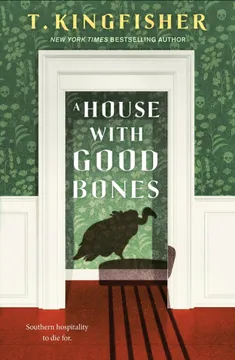
At thirty-two, Samantha Montgomery expects to spend six months excavating in Oregon. When archaeologists uncover human remains and the project pauses, the archaeoentomologist drives from Arizona to stay with her mother, Edith, in North Carolina. A black vulture waits on the mailbox, cell service fails, and the familiar house feels newly strange.
Edith has lost alarming amounts of weight and repainted her once-bright rooms in muted shades. She insists she is well, but her nerves show through her hospitality. A Confederate wedding painting, once removed by Edith, now hangs above the fireplace. Sam has come home because work disappeared; the house gives her reasons to wonder what else has changed while she was gone.
The return begins as a practical interruption, not a chosen homecoming. Sam’s stalled fieldwork sends her back into a family space she thought she understood, where paint, furniture, and her mother’s body become evidence she cannot easily interpret. Her scientific habits encourage observation, but intimacy complicates what she sees: she wants to avoid alarming Edith even as she starts cataloguing signs of distress. The vulture’s ordinary presence becomes an apt first disturbance. It belongs to the local ecology, yet its watchful posture makes the house feel exposed before anything explicitly supernatural occurs.
The Garden Falls Silent
Sam notices that Edith’s rose garden has no insects, not even the cobweb spiders expected in the dusty shed. A lone ladybug appears, then thousands swarm Sam’s bedroom overnight. She and Edith spend hours collecting them and release them outside rather than call an exterminator.
The scale of the invasion makes Sam question whether the roses or something nearby has disrupted the garden. A call to her brother Brad adds a more painful explanation for Edith’s behavior: she has discouraged Brad’s wife, Maria, from visiting after a cabinet fell and broke Maria’s foot.
Brad also recalls seeing their grandmother force a thorny rose stem into young Sam’s hand. Sam had remembered it as a nightmare, and now the memory changes what she thinks she knows about her childhood.
The insect events translate unease into evidence Sam can recognize. An empty garden violates her professional understanding, while the sudden swarm reverses that absence with comic, bodily horror. Her choice not to poison the ladybugs shows care for living things even when they invade her bed. Brad’s memory then unsettles Sam more deeply than the infestation: the family’s shared account has concealed a childhood injury. The past is not simply a set of memories to be corrected; it has been shaped by what children could safely say and what adults were able to deny.
Neighbors Know More
A morning crash brings Phil, Edith’s handyman and Mr. Pressley’s grandson, into the house. Sam mistakes him for a burglar, then later meets him properly at a neighborhood cookout. His ease with gardening and his concern about the ladybug swarm make him a welcome ally. There she also meets Gail, a retired wildlife rehabilitator with a flower-filled garden and a rescued vulture named Hermes.
Gail hints that the vultures keep watch on Edith’s house because of its past, and Edith becomes visibly tense. That night, Sam experiences sleep paralysis: a twiglike presence combs through her hair and repeats a warning associated with roses. She dismisses it as a brain glitch, but the sensation leaves the house harder to regard as merely unsettling.
The neighbors give Sam two competing models of attention. Phil responds to practical problems with patient help, while Gail recognizes a danger she cannot yet explain. Their presence matters because Sam is no longer interpreting the house alone, although she still treats her own mother’s fear as less credible than an outsider’s expertise. The sleep-paralysis episode tests the boundary between bodily experience and supernatural explanation. Sam’s scientific skepticism remains reasonable, but the scene reveals its emotional use: calling the event a glitch lets her postpone asking why Edith and Gail are frightened.
A Hand in the Roses
After cutting roses for Edith, Sam finds her mother shaken by the flowers and notices a child’s hand in the background of an old graduation photograph. Phil confirms that it looks like a real hand, not a trick of Sam’s vision.
Searching the family name leads Sam to her great-grandfather Elgar Mills, a notorious occultist whose correspondence describes an attempt to create magical children and warns that they may turn against their maker. Edith’s bathroom notes reveal that she is trying to reassure herself that she is not imagining things.
Sam tries to test the garden scientifically, digging for a pitfall trap, but strikes a buried glass jar packed with human teeth. Her inquiry has moved from an odd photograph to evidence her family deliberately put underground.
The hand changes Sam’s problem from uncertainty about perception to uncertainty about history. Her instinct is to verify, enlarge, compare, and research, methods that usually protect her from jumping to conclusions. Yet each test supplies more disturbing evidence: Phil sees the hand, Elgar’s letters point toward unnatural creation, and the buried jar makes family secrecy material. The notes on Edith’s mirror expose a parallel investigation, one her mother has been conducting alone. Sam’s archaeological impulse, normally a disciplined way of recovering ordinary life, now risks disturbing something deliberately buried.
Edith Names the Haunting
When Sam shows Edith the teeth, her mother recognizes the pattern behind her own fear and finally explains it. Edith believes her dead mother, Gran Mae, has been haunting the house since the previous year. Doors slam, pictures fall, and a realtor was injured when a shelf released its mugs.
Edith repainted the rooms and removed personal art in hopes of calming the presence; she also warned Maria away after another accident. She remembers Gran Mae collecting teeth from cremated remains as well as guarding her children’s baby teeth.
The jar vanishes after Sam finds it, and Sam understands why Edith has been leaving notes and praying. Her mother’s fear is not confusion about the past. It is an attempt to survive something still active in the house.
Edith’s confession reframes the earlier changes as strategy rather than decline. The bland paint, altered art, and religious gestures are accommodations to a threat she believes can punish resistance. Her secrecy comes from a familiar family role: she tries to protect her children by withholding frightening knowledge, even when silence leaves Sam to misread her. The teeth deepen the ambiguity. They suggest a ritual practice, but they also embody Gran Mae’s possessive treatment of family, turning the children’s bodies into things she could keep. Sam’s discovery forces care and truth into the same conversation.
Vultures Mark the House
The next morning Mr. Pressley warns Sam that vultures are watching Edith’s home, and she sees dozens perched across the lane. Gail explains that Gran Mae was more than a difficult gardener: she had inherited a fragment of Elgar’s sorcery and poured it into the roses as a barrier against something buried below.
Sam returns to find Edith preparing a strained Sunday dinner. Gran Mae has appeared at the table in a body made of layered petals, rose vines, and ladybugs.
Edith tries to keep the visitor calm, while the apparition demands family obedience and treats the house as her own. Sam can no longer dismiss her mother’s account. The grandmother who once ruled the family through manners and shame has returned with power to make those old commands physical.
The vultures function as witnesses before Sam has accepted what they see. Their collective attention makes private family trouble visible across the neighborhood, and Gail supplies a framework that joins the garden, the teeth, and Elgar’s letters. Gran Mae’s return gives that framework a body, but not a human one: the matriarch’s social authority has become literal plant power. Edith’s instinct is still to manage the threat through accommodation. Sam’s first task is not yet to defeat it, but to recognize that an old family hierarchy has become an immediate physical danger.
Sunday Dinner Turns Hostile
Gran Mae lashes Phil to a chair with rose stems and orders Edith to serve a proper meal, reviving the family’s old rituals of obedience. Sam learns that Elgar created the underground children, that they rebelled, and that Gran Mae used roses and jars of teeth to keep them away. Removing the jar has broken the protection.
When Gran Mae berates Edith, Sam finally confronts her instead of appeasing her. Gail arrives and sprays the rose-made figure with herbicide, forcing it to retreat. The house then drops into darkness and earth, carrying Sam, Edith, Gail, and Phil into a buried, unfamiliar place. The apparent victory has removed Gran Mae, but it has also dismantled the barrier that kept Elgar’s creations outside.
The dinner scene turns domestic coercion into spectacle. Gran Mae uses hospitality, gender expectations, and filial obedience to reproduce the family order that once silenced Edith and shaped Sam’s childhood. Sam’s resistance is consequential because she defends her mother without pretending the past was harmless. Gail’s intervention breaks Gran Mae’s immediate control, but the victory is structurally incomplete: the roses were not only an instrument of the ghost, they were also a protective system. The house’s plunge reveals the cost of solving one danger without understanding what it contained.
The Children Break Through
In the buried darkness, pale, grub-bodied children press through the doors and windows, drawn by the house and the family blood connected to Elgar. One bites Gail’s arm before Phil knocks it away.
The group retreats upstairs and escapes through a bedroom window onto the roof, while the creatures force their way into the room behind them. Gail realizes the roses once formed a protective circle, but the remaining bushes are buried and the family is stranded above the soil. Sam cannot summon their power by feeling for it.
Instead, she jumps from the roof and crosses the unstable dirt toward the rose roots, pursued by the creatures. One catches her ankle, but she reaches the thorny stems and grips them, bleeding. She commands the roses to drive the monsters away, though at first nothing happens.
The underground children are not abstract evil; their mewing, curiosity, and feeding make them frighteningly animal and difficult to reason with. Their presence exposes the inadequacy of inherited warnings: Gran Mae used them to frighten children, but never explained that they were real or how the roses contained them. The adults respond through cooperation rather than certainty. Sam’s decision to leave the roof is an act of practical courage, not mastery. She has no spell or plan, only the knowledge that the roses once held a boundary and the willingness to risk her body at its broken edge.
The Roses Answer Sam
The buried roses begin to glow, and Sam feels their power run through her as she grips the stems. Her grandmother’s memories and rage surge through her, but Sam finds the old protective command and drives the children back from the family. When they keep closing in, she reaches deeper into the roses and orders them to burn. Thorned vines lash outward, destroying the creatures and blackening the garden.
The power leaves Sam badly injured and hollowed out. Hermes, Gail’s rescued vulture, appears above them in golden light and opens a way through the darkness. Mr. Pressley finds the survivors as the buried space begins to fail. His explanation to the authorities is a sinkhole, and the cavern collapses after the family escapes.
Sam does not inherit Gran Mae’s power as a simple gift. She must use its protective capacity while resisting the grandmother’s cruelty and loneliness that travel with it. The roses respond to blood and attention, but Sam supplies a different purpose: protecting living people rather than enforcing obedience. Burning them ends the immediate threat at a personal cost and destroys the family’s old defense. Hermes’s light offers a contrasting form of power, grounded in care and companionship rather than domination. The rescue also returns the story to its ordinary community, where a skeptical neighbor’s vigilance matters as much as magic.
Leaving Lammergeier Lane
Doctors treat Sam’s thorn-punctured hands, Gail’s bitten arm, and Edith’s injured ankle; the family gives officials a sinkhole explanation. Edith and Sam recover at Gail’s house, where Hermes receives a feast of mice and liver.
Brad arrives, and Edith agrees to move to Arizona with him, choosing distance from the land and whatever may remain beneath it. The house cannot be salvaged, but the hellgrammite print survives because it was being reframed. Phil gives Sam his number before she leaves, turning their awkward attraction into a possible future rather than a promised romance.
Gail cannot guarantee every underground child is gone, so the move is also practical protection. Sam departs with her mother, carrying a clearer understanding of what care can and cannot repair.
The resolution refuses a tidy restoration. The house, its rose garden, and the family’s former routines are lost, while survival depends on moving rather than mastering every consequence. Edith’s decision to leave marks a change from appeasing Gran Mae to choosing her own safety and accepting help from Brad. Sam’s connection with Phil remains tentative, appropriately modest after a crisis that has rearranged her sense of the possible. The surviving print offers a small continuity with her earlier, ordinary life. What endures is not the haunted home but a more honest family bond, built by naming harm and acting together.
Analysis
A House With Good Bones makes the suburban home its central instrument of pressure. Its horror begins with renovations, a changed painting, a thinning mother, and a garden that has lost its insects. Each clue is domestic enough to invite a harmless explanation, which lets Sam’s skepticism feel like a form of competence before it becomes a form of avoidance. Her professional habit of examining traces is both her strength and the action that breaks the buried boundary.
The family’s history is organized around respectability. Gran Mae’s demand for a tidy, conventional household is not just aesthetic; it teaches Edith and the children to manage appearances rather than challenge authority. Edith’s muted rooms and careful reassurances extend that training into adulthood. The supernatural threat makes this inherited compliance literal: Gran Mae’s power can bind bodies, while her old judgments still find the vulnerable places in Sam and Edith. Sam’s resistance matters because she refuses the family’s familiar bargain of silence in exchange for temporary peace.
The roses complicate any simple division between inheritance and freedom. They preserve Gran Mae’s power, but they also kept the underground children away for years. Sam cannot reject the legacy without consequence, nor can she use it unchanged. When she turns the roses toward protection and then destroys them, she accepts responsibility without accepting her grandmother’s worldview. The vultures and Hermes offer another model of relation: care based on attention and mutual recognition, not ownership. The ending does not restore the house or promise that every danger is gone. Instead, Edith chooses distance, Sam believes her, and the family leaves with a more honest account of what it has survived.
Review Summary
A House with Good Bones receives mixed but generally positive reviews, averaging 3.66/5. Many readers praise protagonist Sam's humor, unique archaeoentomology background, and the creepy atmosphere. Common criticisms include a slow burn first 80%, with the horror elements concentrated in the final 20%, and a somewhat predictable plot twist. Reviewers frequently note the book's blend of comedy and horror, Southern Gothic elements, insect imagery, and themes of family trauma and racism. The audiobook narration by Mary Robinette Kowal receives particular praise.
People Also Read





Characters
Samantha Montgomery
Bug-loving field scientistSam is a thirty-two-year-old archaeoentomologist whose work combines archaeology with close study of insects. She trusts observable evidence, dry humor, and research more readily than emotional conversations, partly because she has learned to manage discomfort by turning it into a problem she can investigate. Her affection for her mother is genuine, but her first instinct is to explain away Edith’s fear rather than risk believing something impossible. Sam’s curiosity drives her to examine the garden, the family photographs, and the buried past. She is also attentive to small living things, a form of care that becomes essential when the house’s mysteries demand more than detached observation.
Edith Montgomery
Worried, loving motherEdith is Sam’s mother, a warm and accommodating woman who has spent much of her life making other people feel cared for. She works as a media escort and remains socially capable, but her anxious habits can make it difficult for her children to tell when she is in genuine distress. Her history with her own mother taught her to keep the peace, even when peace required surrendering her preferences. Edith loves Sam and Brad fiercely, yet her instinct to protect them through silence leaves them without the context they need. Her central tension is between long-practiced compliance and the possibility of naming what she has endured.
Gail
Wildlife rehabilitator and witchGail lives near the end of Lammergeier Lane and tends a diverse garden that attracts pollinators. A former wildlife rehabilitator, she still cares for injured animals, including a rescued vulture. She is direct, observant, and unwilling to flatter people into comfort, but her bluntness comes with practical generosity. Gail knows Edith well and respects her judgment, even when she cannot disclose everything she suspects. Her bond with the local wildlife and her knowledge of the uncanny place her between the neighborhood’s ordinary routines and its less visible dangers.
Phil
Steady local handymanPhil is Edith’s lawn-care worker and a master gardener who also helps maintain her house. He is the grandson of the suspicious Mr. Pressley, whose behavior he manages with weary familiarity. Phil is patient, good-humored, and more curious about Sam’s insect research than she expects. His instinct is to help, even when he does not understand the danger, and his steady presence gives Sam a trustworthy ally close to home.
Gran Mae
Controlling family matriarchGran Mae is Sam and Brad’s late maternal grandmother, remembered as exacting, socially conservative, and deeply invested in respectability. She cared about tidy rooms, carefully arranged roses, and the appearance of a conventional family. Her authority shaped the household after Sam’s father died, leaving both children with memories that mix familiar family rituals and fear. Gran Mae’s influence persists through the stories she told, the garden she cultivated, and the standards her daughter learned to anticipate. She is difficult to understand because tenderness and domination coexist in the family’s memories of her.
Brad Montgomery
Protective older brotherBrad is Sam’s older brother, a former Marine who lives in Arizona with his wife, Maria. He notices that Edith has been acting differently and tries to get Sam to check on her. As a child, he watched out for Sam when their grandmother’s behavior frightened him, though he kept much of that burden to himself. His protective instincts persist into adulthood, expressed through concern, offers of practical help, and loyalty to his wife and mother.
Maria
Brad's perceptive wifeMaria is Brad’s wife and a beloved member of the family. She is close to Edith, and their shared warmth and humor make Edith’s sudden reluctance to see her especially troubling. Maria is perceptive about family behavior and offers Brad a perspective shaped by her own cultural traditions. Though she spends little time on the page, her exclusion helps reveal how seriously Edith fears for the people she loves.
Elgar Mills
Absent sorcerer patriarchElgar is Sam’s great-grandfather, a reclusive and eccentric figure whose history survives through old photographs, newspaper accounts, and letters. He was known locally for occult interests and corresponded with people pursuing ritual magic. His family remembers little about him, while the documents Sam finds suggest a man preoccupied with power and the creation of life. Elgar’s choices cast a long shadow over descendants who had no part in them.
Mr. Pressley
Suspicious neighborhood sentinelMr. Pressley is an elderly neighbor who watches Lammergeier Lane with binoculars and distrusts strangers. His house reflects his isolation and his habit of preparing for threats others do not see. He is Phil’s grandfather and treats even ordinary visitors with suspicion. Beneath that difficult manner, his attention to the neighborhood makes him an unexpectedly useful witness.
Hermes
Rescued vulture companionHermes is Gail’s permanently injured rescue vulture, unable to return to the wild after losing a wing. He moves with an ungainly confidence, investigates people with his beak, and is rewarded with food and patient care. Gail trains him as an ambassador bird because people often fear vultures without understanding their social nature. His bond with Gail reflects the book’s contrast between fear of the unfamiliar and attentive companionship.
The Goldbergs
Neighborly hostsThe Goldbergs are friendly neighbors who host the cookout where Sam meets Gail and reconnects with the lane’s social circle. Their welcoming home provides an ordinary counterpoint to the tension gathering around Edith’s house.
Plot Devices
The Rose Garden
Family power made tangibleGran Mae’s rose garden first appears to be an unusually well-kept patch of suburbia, but its silence and the strange events around it make Sam look closer. Roses carry the family’s history in a physical form: thorns draw blood, roots conceal objects, and the plants respond to human intention. Their power is not morally neutral. The garden can protect, but the force behind it was shaped by a controlling woman’s fear and anger. Sam’s relationship with the roses turns the climax into a question of how inherited power can be used differently.
The Teeth Jars
A buried protective boundarySam’s archaeological instincts lead her to a jar of human teeth beneath the roses. The find links Gran Mae’s odd insistence on keeping baby teeth to the family’s hidden history, while Edith recalls her mother collecting teeth from cremated remains. The jars are not merely evidence of disturbing behavior: they are part of the barrier that keeps Elgar’s creations away from the house. Digging one up helps expose the danger the family had kept contained.
The Underground Children
Elgar's buried legacyThe children are the result of Elgar Mills’s attempt to create life through sorcery. Gran Mae’s childhood warnings make them sound like a conventional threat used to frighten misbehaving children, but the family discovers that they exist beneath the soil and can reach the house. Their curious, grub-like bodies and kittenlike sounds make them both pitiable and dangerous. They embody the consequences of creation without responsibility, and their hunger drives the survivors to use the roses in a new way.
The Vulture Flock
Witnesses and guidesThe black vultures appear first as part of the rural neighborhood, perching on the mailbox and circling above Lammergeier Lane. Their behavior gradually signals that something about Edith’s house has drawn their attention. Gail explains their social nature and cares for Hermes, a rescued bird who becomes a bridge between human and animal worlds. The flock’s watchfulness and Hermes’s later intervention counter the assumption that scavengers are merely ominous. They are attentive creatures with their own relationships and roles in the landscape.
Sam's Fieldwork
Evidence as emotional pressureSam’s training gives the story a method for approaching the uncanny. She checks insects, compares photographs, researches Elgar, and uses a pitfall trap to test what lives in the garden. Each method produces evidence rather than certainty, and the discoveries become harder to explain away. Archaeology’s central act, uncovering what was buried, becomes both Sam’s professional habit and the source of danger. Her scientific outlook does not vanish; it must expand to accommodate experiences it cannot neatly classify.
Download PDF
Download EPUB
.epub digital book format is ideal for reading ebooks on phones, tablets, and e-readers.








