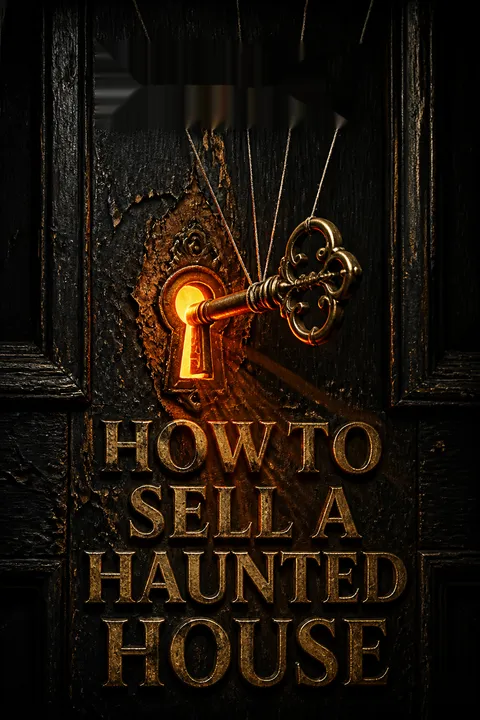


Plot Summary
The Call from Charleston
Five years after deciding motherhood might bring her closer to her mother, Louise Joyner is raising five-year-old Poppy in San Francisco when her estranged brother Mark calls: their parents, Nancy and Eric, have died in a rain-soaked car crash. Mark waited nearly two days to tell her.
Louise leaves Poppy with her former partner Ian and flies home, where she finds the family house strangely abandoned: her father’s cane and a hammer lie near the living-room chair, the television is on, a vent hangs open, and the attic hatch has been nailed shut. Mark has already hired a junk-removal crew and arranged cremation. When he refuses to pause, Louise wrestles the death certificates from him and prevents the crew from emptying the house.
Louise’s return is driven by grief, but she expresses that grief as an urgent need to manage. Lists, paperwork, and preserving possessions let her convert an unmanageable loss into tasks with edges. Mark’s delay and unilateral decisions turn sibling estrangement into immediate conflict: each treats control as evidence of care, while reading the other’s methods as neglect. The physical irregularities in the house complicate Louise’s practical explanation of events without yet displacing it. The opening establishes that the family’s crisis has two fronts, the uncanny disruption inside the house and the old relational pattern that makes cooperation difficult.
Pupkin Returns to the Chair
At Aunt Honey’s beach house, Louise’s relatives help organize a funeral and insist that Mark attend. Their stories about Nancy are warm, but when Louise asks what happened before the crash, Aunt Honey admits only that Nancy called in alarm because Eric had suffered some kind of attack.
Afterward, Louise returns to the dark family house and finds Nancy’s favorite puppet, Pupkin, sitting in Eric’s chair before the television. Assuming Mark planted it to frighten her, she seals it in a garbage bag and drops it in the bin.
The next day, Mark honors his mother and father with an exuberant puppet-themed service, complete with a congregation of puppeteers and kazoos. Louise is moved by his tribute and apologizes for their fight, though she does not yet understand what binds Mark to the puppet world.
The family’s mourning is both communal and evasive. Aunt Honey can arrange a service with confidence but cannot explain the alarming call that preceded the crash, continuing a family habit of treating painful facts as dangerous. The puppet’s unexplained appearances invite a supernatural reading, yet Louise defaults to the sibling explanation because Mark has long used provocation and performance to get under her skin. At the funeral, his theatricality becomes an act of genuine care: he gives their parents a farewell shaped by their shared life. Louise briefly allows that he knows them differently, but the moment of connection cannot yet overcome the legal and emotional conflict awaiting them.
A Will Picks Sides
After the funeral, family lawyer Brody explains why the wills produce an outcome neither sibling expected. Eric died first, so Nancy inherited his estate; her will then leaves everything, including the house, to Mark and makes him executor.
Louise’s father’s will would have left his estate to her, but the order of death changes everything. Mark celebrates the inheritance and immediately considers how to sell the house; Louise had planned to divide its value with him regardless. Brody gives her a sealed letter from Nancy.
Alone at the hotel, Louise reads her mother’s explanation: she believed Louise could care for herself and Poppy, while Mark needed financial help. The letter deepens the old wound of unequal treatment, but its schedule also bequeaths Nancy’s entire art collection to Louise.
The will turns childhood roles into legal fact. Louise has been the competent one, expected to earn her own security, while Mark has been treated as perpetually in need of rescue. Nancy’s letter frames favoritism as protection, but the rationale repeats the very imbalance it claims to solve: Louise’s competence becomes a reason to give her less. The art clause is easily mistaken for a consolation prize, yet it gives Louise a legitimate claim to the objects that embody her mother’s private labor. In a family where affection often replaced difficult conversation, a document speaks with brutal clarity, though it cannot explain what Nancy feared or wanted beyond the estate.
The House Becomes Leverage
Louise realizes that Nancy’s art collection means not only the paintings but also her handmade frames, string art, ornaments, puppets, and other creations. She invokes that inheritance to stop Mark from clearing the house, insisting she must remove the work before he can sell.
As she sorts, she finds how much her mother made and how little room the family had ever given those creations. Mark guards the property, mocks Louise’s motives, and argues that the artwork is just clutter.
When Louise throws the taxidermied Squirrel Nativity into the bin, three apparently living, blind squirrels attack her in her parents’ bedroom. She fights them off with a badminton racquet, then sees the damaged nativity in the trash and cannot make sense of what happened. Overwhelmed, she abandons the house and tells Mark he can sell it.
Louise’s legal leverage disguises an emotional wager. She claims to be honoring Nancy’s wishes, but she also wants to interrupt a lifetime pattern in which Mark receives indulgence and she receives responsibility. Her slow, inventory-minded approach initially seems like the opposite of hoarding; in practice, it keeps her inside the family home and postpones a decision about what can be relinquished. The attack on her destabilizes her reliable distinction between objects and living beings. Yet she does not accept that disruption as evidence. She leaves by converting fear into a reason to withdraw, revealing how deeply her identity depends on the belief that reality can be made orderly by refusing uncertainty.
Mercy Calls It Haunted
Mark stops Louise before she can leave Charleston, offering her a share of the house if she helps settle the estate. She agrees to stay, partly for Poppy’s future, and joins him for a walkthrough with their cousin Mercy, a successful local realtor.
They find the Mark and Louise dolls moved into their parents’ bedroom, hear footsteps and thumps above them, and discover more unsettling signs in the bathroom and attic. Louise blames pipes, squirrels, and the house’s age. Mercy refuses to list the property, judging its strange noises and atmosphere a liability.
Mark accepts her assessment and fears a cleansing might harm their parents’ spirits. Louise rejects his belief in ghosts, but she cannot dismiss the sounds she heard. To keep him from abandoning the sale, she persuades him to stay for a final family Pizza Chinese dinner.
The haunting becomes consequential when it enters the housing market. Mercy’s professional judgment gives the uncanny a practical cost: the property cannot be sold until the disturbance is addressed. Louise resists not simply because she is skeptical, but because accepting Mark’s explanation would mean admitting that her own senses and the house’s history cannot be contained by her preferred account. Mark’s fear that cleansing might erase his parents reveals the grief beneath his talk of energy and spirits. Their argument shows two strategies for avoiding finality: Louise insists on facts that can be handled, while Mark seeks a continued presence he can negotiate with.
The Pond Between Them
Over the traditional feast of pizza and Chinese takeout, Mark asks Louise to confront their childhood rather than blame the house. He remembers being a toddler who fell through ice at the Calvins’ pond while Louise watched and walked away.
Louise insists she was only five and recalls neither leading him onto the ice nor abandoning him. Mark says the memory returned during a later ice-skating trip and that the family dismissed his account instead of hearing him.
Their argument exposes how thoroughly they have built separate histories: Louise remembers a brother who acted out and received endless forgiveness, while Mark remembers a sister whose approval mattered and a family that denied his terror. When he leaves, he warns her not to sleep in the house, but Louise refuses to let his fear dictate what is real.
The pond memory converts sibling rivalry into a question of testimony. Louise has organized her identity around being the reliable child, so Mark’s accusation threatens more than her self-image; it challenges the shared account on which that identity rests. Mark, in turn, has carried an early terror without a family witness willing to validate it. Their parents’ silence did not settle the memory but made each sibling’s version lonelier and harder to revise. Louise treats disagreement as proof that Mark is inventing drama, while Mark reads her certainty as another act of dismissal. The scene prepares the story’s deeper claim that denial can preserve a household’s surface while leaving its injuries active.
Mark’s Puppet Years
At Waffle House, Mark recounts why he dropped out of Boston University. After seeing an experimental marionette show, he joined Organ, a radical puppet collective led by Clark, with Sadie and Richard. The group staged provocative antiwar performances, then created a disturbing pageant for schoolchildren that left pupils crying and the company unpaid.
Seeking new artistic purpose, Clark put on Pupkin, the puppet Mark had brought from home, and urged the group to surrender to its character. Their masked improvisations grew more destructive: the artists wrecked the house, lost time, and eventually harmed people and animals.
Mark realized too late that the play had become a refuge from responsibility. He set fire to the workshop, escaped to Boston, and returned home with Pupkin. Ashamed and terrified of what he had done, he lied to Nancy about the experience and never told Louise.
Mark’s account reframes apparent aimlessness as a collision between artistic hunger and evasion. He wanted a theater that could answer political crisis with something alive, but after the group’s failure, its immersive method offered a way to stop being accountable for consequences. Pupkin becomes the perfect instrument for that bargain: a role can feel liberating precisely because it lets the performer disclaim agency. Mark’s shame then hardens into secrecy, repeating his family’s preferred response to catastrophe. His story also supplies a history for the puppet’s power without fully explaining it. The horror grows from the gap between the group’s language of art and the injuries its members would not face.
The Truth at Waffle House
After Mark finishes, Louise finally acknowledges what he remembers: Pupkin spoke inside her head when she was five, ordered her to lead Mark onto the frozen pond, and made her leave him there. Mark survived, but both siblings were left with a secret neither could name.
Together they suspect Pupkin also attacked Eric before the fatal drive, prompting Nancy to rush him toward the hospital in the rain. Back at the house, the puppet attacks Louise with a sewing needle. Mark arrives with a gun and shoots Pupkin, but the puppet takes control of Mark and turns on his sister with a hammer.
Louise fights to survive and cuts off Mark’s arm with a circular saw, freeing him. After emergency surgery, Mark asks her to finish what they planned. Louise burns Pupkin in the backyard, believing the threat is gone.
Confession changes the siblings’ conflict from competing accusations into shared knowledge, but it does not make them safe. Louise’s admission validates Mark’s memory and forces her to see that her childhood fear was not merely a weakness she should have mastered. Their reconstruction of the crash remains an inference, but it connects Pupkin’s jealousy to the family’s earlier injuries and recent deaths. The confrontation then makes the cost of belief physical: Mark’s body becomes the battlefield, and Louise must harm him to save him. Burning the puppet appears to close the threat, yet the timing of that apparent victory is deliberately unstable. The act of disposal cannot undo what the family has hidden or passed along.
Poppy Wears the Puppet
Louise returns to San Francisco expecting to reunite with Poppy, only to find her daughter wearing a new puppet modeled on Pupkin, made with help from Ian’s mother. Poppy has attached herself to it, and Louise’s attempt to tear it away leaves bruises on her daughter’s arm.
Ian sees a grieving child and a mother behaving alarmingly; he does not believe the puppet is dangerous. When it remains on Poppy’s arm, Louise backs away rather than risk hurting her again. The next morning, Poppy uses the puppet while making a smoky, dangerous mess in the kitchen, then scratches her own arm with a knife.
Louise calls Mark, who believes her immediately and says the family needs Aunt Gail’s help. Louise boards a flight back to Charleston with Poppy and Pupkin, using Nancy’s name to keep the puppet calm.
The return to California should restore Louise’s ordinary life, but it instead reveals that the family’s central danger has crossed generations and geography. Her protective instinct becomes frighteningly ambiguous when she physically pulls at Poppy, and Ian’s alarm is understandable even though he lacks the information Louise carries. The puppet exploits the very attachment that gives a child comfort, making separation feel like violence. Louise’s retreat from Poppy’s room is not simple surrender; it is recognition that force may deepen the harm. Asking Mark for help marks a major change in their relationship. For once, Louise does not need to be the sole competent person in the room.
Freddie Beneath the House
Aunt Gail gathers the family and brings Louise to Barb, a specialist in cursed dolls and puppets. Barb’s attempted spiritual confrontation fails when Pupkin answers with Nancy’s childhood bedtime story and identifies himself by the name Freddie.
Mark recognizes the name: Nancy’s younger brother died as a child. Louise takes Poppy to Aunt Honey in the hospital and demands the truth. Aunt Honey admits that Freddie did not die of lockjaw, as the family had claimed. At five, he drowned after seven-year-old Nancy left him unattended at a hotel pool.
Their mother could not bear the truth and later buried Freddie’s body in the backyard, forcing Aunt Honey to keep the secret. Louise understands that Pupkin is tied to Freddie and that Poppy’s worsening condition cannot wait.
The revelation joins the supernatural plot to a family history of grief managed through concealment. Freddie’s death was not only tragic; the adults transformed it into a story Nancy could survive, while leaving her to carry guilt without honest support. Pupkin’s attachment to Nancy now echoes that loss and the later fear of replacement. Aunt Honey’s confession breaks a promise, but her loyalty had protected the family’s silence more than its members. Louise’s urgency is sharpened by seeing how an old secret can become a present danger to a child. The scene refuses to treat truth as automatically healing; its value lies in making action and mourning possible.
The Bone Orchard Opens
Louise and Mark return to the house with Poppy, hoping to locate Freddie’s grave and release the child bound to Pupkin. A storm builds as the siblings follow Pupkin’s hints through the dark rooms. Their mother’s puppets attack in a writhing mass, and Mark is overtaken by Pupkin; Louise escapes into the yard and begins digging beside the cypress and bamboo.
A giant body assembled from the puppets emerges and advances on her. Mark whistles for Spider, his childhood imaginary dog, who attacks the puppet mass and tears it apart.
While the creatures fight, Louise digs until Spider uncovers a buried metal trunk. Inside lie Freddie’s remains. Louise tells Pupkin that Freddie is dead and must go home. She removes the soaked puppet from Poppy and puts it on her own arm, staying with the frightened child as the Tickytoo story carries Freddie away.
The climax makes the family’s buried history literal: the house’s supernatural disorder is anchored in a body kept beneath the yard and a child’s death kept beneath a false story. Louise’s survival depends on changing tactics. She cannot solve the crisis through documentation or force alone; she follows Mark’s intuition, relies on Spider, and digs with her own hands. The puppet swarm embodies grief without direction, while Pupkin’s demand for endless play is a refusal to accept time and death. Louise’s final choice to take the puppet from Poppy and bear its fear herself is maternal care without denial. She does not promise that loss is fair, only that the child will not face it alone.
A House After Grief
Louise and Poppy wake in the hospital, while Mark survives surgery but loses his arm. Police and paramedics have destroyed Nancy’s puppets in the storm, and Louise cries over the ruined work before asking the junk-removal crew to clear the yard.
She introduces Poppy to the stuffed animals from her own childhood, offering a gentler inheritance than the puppet. Months later, the family buries Freddie beside his parents and sister. Mark renovates the house, and Louise visits with Poppy; the old rooms have become unfamiliar, and Poppy accepts that her grandparents are gone.
Before they leave, the siblings smell Eric’s stollen baking in the empty kitchen, a final presence neither can explain. The house eventually attracts a buyer, and Louise and Mark remain connected by the shared story and the grief that still brings them to call each other.
Resolution does not restore what the family lost. The puppets that defined Nancy’s creative life are gone, Mark must adapt to a changed body, and Louise cannot make Poppy’s experience disappear. Instead, the ending redistributes care: Louise gives her daughter the stuffed animals that once taught her attachment, while Mark turns the house from a repository of unspoken history into a place that can be changed. The scent of stollen offers comfort without proof, allowing the siblings to experience memory as presence without rebuilding the old denial. Their bond is modest rather than magically repaired. They now have a truth they can share, and that truth gives grief somewhere to go.
Analysis
The novel treats haunting as a problem of inheritance before it treats it as a problem of ghosts. Louise and Mark inherit not only a house, money, and their mother’s handmade objects, but also roles that have governed them since childhood. Louise is expected to be capable and self-sufficient; Mark is handled as fragile, talented, and perpetually unfinished. Their parents’ silence around grief makes these roles seem natural, even as each sibling experiences the family as unfair in a different way. The supernatural plot exposes the danger of that arrangement by giving suppressed memories physical force.
Pupkin is frightening because he occupies the space between performance and attachment. Nancy’s creative practice depends on treating an object as if it can speak, while the children learn that this imagined life carries emotional consequences. The novel does not reduce imagination to delusion; it asks when play becomes a way to refuse responsibility, and when a family’s shared fiction prevents it from naming injury. Mark’s puppet collective repeats that confusion on a larger scale, turning artistic surrender into an excuse for destructive behavior. Louise’s rationalism, meanwhile, is not pure objectivity. Her need for facts also shields her from experiences that threaten the identity she built around control.
The buried child connects the central supernatural threat to the family’s oldest act of concealment. Nancy’s mother could not bear to acknowledge that a child had died through a moment of neglect, so the family substituted a more bearable story and preserved the body in secret. That concealment protected Nancy from immediate blame but isolated her inside guilt. The pattern repeats when Mark and Louise each carry childhood memories alone, and again when Louise tries to handle Poppy’s danger without help.
The ending offers no restoration of the dead or the lost. Instead, Louise and Mark become capable of sharing an account of what happened, accepting that care sometimes means witnessing pain rather than making it disappear. Their modest reconnection, the proper burial, and the altered house suggest that healing is not a return to innocence. It is the difficult work of giving grief an honest place in the family.
Review Summary
How to Sell a Haunted House receives mixed reviews, with some praising its blend of horror, humor, and family drama, while others find it disappointing. Readers appreciate Hendrix's character development and unique take on haunted house tropes, particularly the use of creepy puppets and dolls. Many find the story engaging, though some criticize its slow pacing and length. The book explores themes of grief, family secrets, and childhood trauma. While some readers consider it Hendrix's best work, others struggle with its blend of horror and comedy.
People Also Read








Characters
Louise Joyner
The family fixerLouise is a disciplined product designer, a single mother, and Nancy and Eric’s practical older child. She trusts plans, evidence, and competence because they let her create stability where family relationships have felt unpredictable. Her distance from Mark and her complicated love for Nancy are shaped by years of being praised for self-sufficiency while watching her brother receive indulgence. As a parent, Louise wants to be honest and dependable, but grief exposes how easily good intentions can become control. Her central psychological tension is between protecting those she loves and admitting that she cannot manage every danger alone. She is observant, stubborn, and capable of reconsidering her own account when someone else’s pain becomes impossible to dismiss.
Mark Joyner
The overlooked younger brotherMark is Louise’s younger brother, a Charleston bartender and former theater student whose charm often masks insecurity and unfinished ambitions. He enjoys performance, improvisation, and vivid explanations, qualities his family has alternately celebrated and used to excuse his failures. He experiences Louise as judgmental and controlling, while she sees him as irresponsible and protected from consequences. Beneath their mutual irritation is a deep longing to be recognized by his sister and parents. Mark is drawn to intuition and symbolic meaning, though his confidence in those things can lead him into danger. His humor and theatricality are not merely evasions; they are also ways he seeks connection when direct emotional honesty feels too exposing.
Nancy Joyner
The devoted puppet-makerNancy is Louise and Mark’s mother, a former aspiring actor whose energy finds its fullest expression in puppetry, crafting, church performances, and family rituals. She remembers birthdays, makes things by hand, and delights in gathering people around her. Her warmth can feel overwhelming to Louise, who needs room to become her own person, while Mark is more willing to enter Nancy’s imaginative world. Nancy’s insistence on cheerfulness and her reluctance to discuss painful subjects complicate the care she gives. She wants to keep loved ones close, but her methods can blur the line between comfort and avoidance. Her creative devotion shapes the atmosphere of the family home and the way her children understand attachment.
Eric Joyner
The steady economistEric is Louise and Mark’s father, a retired economics professor known for patience, dry humor, and practical curiosity. He teaches Louise about electronics and gives his children a model of calm problem-solving. His measured manner counterbalances Nancy’s energy, though it can also leave difficult family tensions unspoken. He tends to believe that careful thought and sensible decisions will carry the household through trouble.
Poppy
Louise’s grieving daughterPoppy is Louise’s five-year-old daughter, a bright child who loves her grandmother and depends on predictable routines. Her questions about death reveal how intensely she is trying to understand a world that has changed without warning. She is imaginative, affectionate, and sensitive to separation, with the ordinary needs of a child often lost amid the adults’ crisis. Poppy’s relationship with Louise shows both the tenderness and strain of parenting under grief: she wants reassurance, but she also needs her mother to keep promises and remain emotionally present. Her small observations, especially her attention to stories and toys, give the novel a child’s clear-eyed view of what adults leave unexplained.
Ian
Poppy’s fatherIan is Louise’s former partner and Poppy’s father. He is intelligent, financially successful, and accustomed to a cultivated life built around rare records and personal taste. His practical support for Poppy is real, but conflict with Louise often leaves him impatient with her decisions and eager to assert his own judgment. He values stability for their daughter, especially when Louise’s choices disrupt routine. Their relationship is no longer romantic, yet co-parenting requires them to negotiate trust, responsibility, and boundaries.
Aunt Honey
The family matriarchAunt Honey, Louise’s great-aunt and Nancy’s aunt, is blunt, commanding, and fiercely protective of family custom. She gathers relatives when they are in trouble and is often the person who will say plainly what others soften or avoid. Her stubbornness can make her seem immovable, especially when land, family history, or old promises are involved. She carries an older generation’s understanding of loyalty, in which keeping a secret can feel like an act of love. Her sharp humor and practical authority make her both a source of comfort and a formidable person to challenge.
Aunt Gail
The spiritual authorityAunt Gail is Aunt Honey’s daughter and a devout Christian who approaches frightening events through prayer and spiritual warfare. She is disciplined, composed, and confident in her religious understanding, sometimes mistaking certainty for knowledge. Her faith gives her a language for confronting fear, while her protective instincts make her willing to act when family members ask for help. She is serious about moral order and less comfortable with ambiguity than Louise.
Mercy
The family realtorMercy is Louise’s cousin and a successful Mount Pleasant realtor. She reads houses in terms of light, layout, buyer confidence, and sale value, but she is also attentive to the family grief attached to the property. Her optimism and professional pragmatism help the siblings imagine a way through the estate dispute. Mercy can be persuasive, sometimes bulldozing past hesitation, because she believes practical action is a form of care.
Constance
The forceful cousinConstance is Mercy’s sister and Louise’s cousin, a tall, direct woman who protects her relatives without requiring them to explain themselves first. She can confront Mark when he behaves selfishly, yet she also understands that family members are more complicated than their worst habits. Her straightforward warmth offers Louise a kind of closeness she has allowed to fade. Constance helps turn private grief into shared family action.
Brody
The family’s estate lawyerBrody is Constance’s husband and the attorney who prepared Nancy and Eric’s wills. He tries to explain legal consequences without taking sides, even when Mark pushes him and the siblings’ grief fills the room. His role is procedural but important: the documents he handles reveal how small differences in timing can produce enormous emotional consequences. Brody’s steady manner contrasts with the family’s tendency to avoid uncomfortable facts.
Barb
The doll specialistBarb is a friend of Aunt Gail who studies cursed dolls and objects she considers spiritually dangerous. Large, exuberant, and unembarrassed, she uses humor and physical warmth to disarm people who are frightened. Her approach is unlike Aunt Gail’s stern religious method: Barb watches, listens, and tries to understand what an object wants before confronting it. She is eccentric but serious about the emotional stakes of her work.
Pupkin
Nancy’s unsettling puppetPupkin is a red-and-yellow glove puppet with a chalk-white face, a fixed grin, and a long history in Nancy’s life. He appears in family stories, church performances, and the children’s memories, though Louise has always found him frightening. Nancy treats him as a companion and gives him an unusually central place in the household’s imaginative world. Pupkin’s presence blurs the boundary between performance and private life: he can represent comfort to one person and menace to another. His role in the family is difficult to separate from the stories Nancy tells and the attachments her children form.
Spider
Mark’s imaginary dogSpider begins as an imaginary dog invented by Mark and accepted by his family when the children wanted a real pet. Mark gives Spider changing colors and features, allowing the creature to take whatever shape his play requires. Spider represents the Joyners’ willingness to treat imagination as a shared family language. To Louise, the childhood game is a tender memory of closeness with Mark, even though she has long assumed it belonged safely to the past.
Clark
Organ’s intense directorClark is the tall, intellectually ambitious leader of Organ, the radical puppet collective Mark joins in Boston. He treats puppetry as a force capable of disrupting political and social conventions. His conviction gives Mark a sense of belonging and artistic purpose, but he is also willing to push performance beyond ordinary limits.
Sadie
Organ’s daring performerSadie is a performer in Organ whose confidence and unconventional presence immediately captivate Mark. She helps build the group’s puppets and takes part in its street theater and political work. To Mark, she embodies the freedom and possibility he hopes to find outside his family’s expectations.
Richard
Organ’s practical puppeteerRichard is a member of Organ, a skilled maker who contributes to its elaborate props and political performances. His attention to materials and production gives the collective’s ideas a physical form. He shares the group’s desire to create work that unsettles its audience, even when that ambition brings consequences they did not anticipate.
Plot Devices
Pupkin
The attachment made dangerousNancy’s glove puppet is both a cherished performance object and the focus of the novel’s supernatural threat. Pupkin’s fixed, cheerful face contrasts with the harm associated with him, while his history in family stories makes him emotionally difficult to discard. The puppet’s appearances connect the present house to Louise and Mark’s childhoods, their mother’s creative life, and the family’s unresolved grief. His movement and influence force the siblings to decide whether they trust their senses, their memories, or one another. Pupkin also gives physical form to an unsettling question: what responsibilities follow when affection and imagination are treated as if they can make an object alive?
Tickytoo Woods
A story that holds griefTickytoo Woods is the imaginative landscape Nancy builds around Pupkin through bedtime stories. It includes recurring places and characters that give the children a familiar route through danger, separation, and return. For Mark, the stories remain a private refuge and become entangled with his later experiences in experimental theater. In the present, their remembered geography offers a way to interpret the house and yard when ordinary explanations fail. The story-world is neither simply a child’s fantasy nor an easy escape: it comforts, conceals, and preserves emotional experiences the family cannot discuss directly.
The wills and art clause
Inheritance as family verdictThe wills determine the siblings’ legal control of the house and possessions according to which parent died first. Nancy’s bequest gives Mark the estate while assigning Louise the art collection, creating both a painful judgment and an unexpected means of delaying the house’s sale. The documents turn old family roles into enforceable instructions: Mark is treated as the child who needs support, while Louise is assumed to be capable of supporting herself. The art clause also gives significance to the creations Louise once dismissed, making her mother’s labor central to the struggle over what the family preserves and what it discards.
The Joyner house
A home built from secretsThe modest Charleston house is at once an estate to be sold, a museum of Nancy’s crafts, and the setting for Louise and Mark’s childhood memories. Its attic, vents, garage, bedrooms, and backyard each contain signs that the family has left events unexplained or possessions untouched. The house’s changing real-estate value places practical pressure on the siblings, while its objects make their history tangible. As the story escalates, the domestic space turns into a physical map of what the Joyners have hidden. Renovation later allows the property to become something other than a fixed monument to the past.
Freddie’s buried remains
The literal buried family pastThe family’s account of Freddie’s death has been preserved through silence and an inaccurate explanation. His remains, hidden in the backyard, connect the old tragedy to the present disturbances in the house. The secret explains why Nancy resisted changes to the property and gives the siblings a concrete task when Poppy is in danger. Finding the remains does not erase the pain or make the past fair; it makes an honest burial possible. The grave turns the novel’s recurring language of family history into an actual place that the living must uncover and address.
FAQ
Synopsis & Basic Details
What is How to Sell a Haunted House about?
- Grief and Family Secrets: The story follows Louise, a woman returning to her childhood home after her parents' sudden death, where she must confront her estranged brother, Mark, and the unsettling legacy of their family.
- Supernatural and Psychological Horror: The narrative blends elements of supernatural horror with psychological tension, as Louise grapples with strange occurrences in the house and the unsettling presence of her mother's puppets and dolls.
- Unresolved Trauma and Sibling Rivalry: The novel explores themes of grief, family secrets, and sibling rivalry, as Louise and Mark navigate their complicated past and the emotional baggage they carry.
Why should I read How to Sell a Haunted House?
- Unique Blend of Horror and Humor: Grady Hendrix masterfully combines genuine scares with dark humor, creating a reading experience that is both thrilling and entertaining.
- Exploration of Family Dynamics: The novel delves into the complexities of family relationships, exploring themes of grief, guilt, and the lasting impact of childhood trauma.
- Intriguing Mystery and Supernatural Elements: The story keeps readers engaged with its unsettling atmosphere, unexpected twists, and the mystery surrounding the haunted house and its strange inhabitants.
What is the background of How to Sell a Haunted House?
- Southern Gothic Setting: The story is set in Charleston, South Carolina, a location that lends itself to the Southern Gothic genre with its history, atmosphere, and cultural nuances.
- Puppetry and Performance: The background of the mother's puppet ministry and her love for performance adds a layer of theatricality and symbolism to the narrative, influencing the characters and the plot.
- Family History and Trauma: The story is deeply rooted in the family's history, exploring the impact of past events and unresolved trauma on the present, creating a complex and layered narrative.
What are the most memorable quotes in How to Sell a Haunted House?
- "I'm a mother now.": This quote, spoken by Louise after discovering her pregnancy, marks a pivotal moment of self-realization and sets the stage for her journey.
- "When you are Real, you don't mind being hurt.": This quote from The Velveteen Rabbit, a recurring motif, highlights the novel's themes of love, pain, and the complexities of human relationships.
- "You should have a drink, too.": This line, spoken by Mark after delivering the news of their parents' death, encapsulates his coping mechanisms and the dysfunctional family dynamics.
What writing style, narrative choices, and literary techniques does Grady Hendrix use?
- First-Person Perspective: The story is primarily told from Louise's point of view, allowing readers to experience her emotional journey and psychological struggles firsthand.
- Blending Horror and Humor: Hendrix seamlessly blends elements of horror with dark humor, creating a unique and engaging narrative tone that keeps readers on edge while also providing moments of levity.
- Foreshadowing and Symbolism: The author uses subtle foreshadowing and recurring symbols, such as the puppets and dolls, to create a sense of unease and to hint at the deeper themes of the story.
Hidden Details & Subtle Connections
What are some minor details that add significant meaning?
- The String Art: The string art that Nancy creates, often depicting mundane objects or scenes, symbolizes her attempts to control and contain her world, reflecting her need for order amidst chaos.
- The Mismatched Chairs: The description of the dining room chairs as mismatched and old foreshadows the fractured nature of the family and their inability to fit together harmoniously.
- The Broken Window Pane: The broken window pane in the garage, initially a minor detail, becomes a recurring motif, symbolizing the vulnerability and brokenness of the family and their home.
What are some subtle foreshadowing and callbacks?
- The Velveteen Rabbit: The recurring references to The Velveteen Rabbit foreshadow the themes of love, loss, and the blurring lines between reality and imagination, as well as Louise's own childhood trauma.
- The Christmas Tree Factory: Mark's failed investment in a Mexican Christmas tree factory foreshadows his tendency to make impulsive decisions and his inability to manage his life, highlighting his character flaws.
- The "You're Embarrassing Me!" Line: Nancy's frequent use of "You're embarrassing me!" foreshadows her need for control and her inability to handle difficult emotions, revealing her own insecurities.
What are some unexpected character connections?
- Aunt Honey and Freddie: The revelation of Aunt Honey's connection to Freddie and her knowledge of his death adds a layer of complexity to her character and reveals the depth of the family's secrets.
- Mark and Pupkin: Mark's unexpected connection to Pupkin, revealed through his knowledge of the puppet's stories and his ability to mimic its voice, highlights the puppet's influence on the family and its ability to manipulate them.
- Louise and Her Dad: The shared love of logic and reason between Louise and her dad, revealed through their shared activities and his advice, creates a subtle connection that contrasts with her more emotional relationship with her mother.
Who are the most significant supporting characters?
- Aunt Honey: As the keeper of family secrets and a link to the past, Aunt Honey plays a crucial role in revealing the truth about Freddie's death and the family's history.
- Mercy and Constance: Louise's cousins provide a sense of normalcy and support, offering a contrast to the dysfunctional dynamics of her immediate family and helping her navigate her grief.
- Brody: Constance's husband, an estate lawyer, serves as a catalyst for the conflict between Louise and Mark, and his presence highlights the legal and financial complexities of their parents' death.
Psychological, Emotional, & Relational Analysis
What are some unspoken motivations of the characters?
- Nancy's Need for Control: Nancy's obsession with her puppets and her need to be the center of attention stem from her own childhood trauma and her desire to control her environment and her family.
- Mark's Desire for Validation: Mark's erratic behavior and his need for attention stem from his deep-seated insecurities and his desire for validation from his family, particularly his mother.
- Louise's Fear of Vulnerability: Louise's reliance on logic and her attempts to control her emotions stem from her fear of vulnerability and her desire to protect herself from the pain of her past.
What psychological complexities do the characters exhibit?
- Louise's Repressed Trauma: Louise's repressed memories and her struggle to reconcile her past with her present reveal the psychological impact of her childhood experiences and her inability to fully process her grief.
- Mark's Self-Destructive Tendencies: Mark's self-destructive behavior, his substance abuse, and his inability to maintain stable relationships reveal his deep-seated emotional pain and his struggle to cope with his trauma.
- Nancy's Manic Episodes: Nancy's manic episodes, her obsessive crafting, and her need for attention reveal her underlying emotional instability and her inability to confront her own pain.
What are the major emotional turning points?
- Louise's Breakdown at the Intersection: Louise's emotional breakdown at the intersection where her parents died marks a turning point in her journey, forcing her to confront the reality of their loss and her own grief.
- The Fight Over the Death Certificates: The physical fight between Louise and Mark over the death certificates represents the culmination of their unresolved sibling rivalry and their inability to communicate effectively.
- Louise's Decision to Let Mark Plan the Service: Louise's decision to let Mark plan the funeral service marks a shift in their relationship, as she begins to acknowledge his perspective and his connection to their mother.
How do relationship dynamics evolve?
- Louise and Mark's Shifting Dynamic: The relationship between Louise and Mark evolves from one of estrangement and rivalry to one of reluctant cooperation and, ultimately, a shared understanding of their family's past.
- Louise and Nancy's Complicated Bond: The complex relationship between Louise and her mother is explored through flashbacks and Louise's reflections, revealing a mix of love, resentment, and a desire for connection.
- Louise and Poppy's Mother-Daughter Bond: Louise's relationship with Poppy is a driving force in the narrative, highlighting her desire to protect her daughter from the darkness of her past and her determination to be a better mother than her own.
Interpretation & Debate
Which parts of the story remain ambiguous or open-ended?
- The Nature of Pupkin: The true nature of Pupkin remains ambiguous, leaving readers to question whether he is a supernatural entity, a manifestation of the family's trauma, or a figment of their imaginations.
- The Cause of the Car Accident: The exact cause of the car accident that killed Louise's parents is never fully explained, leaving readers to wonder if it was truly an accident or if there were other forces at play.
- The Meaning of the Ending: The ending, while providing a sense of closure, leaves some questions unanswered, particularly regarding the long-term impact of the events on Louise and Mark and the future of their relationship.
What are some debatable, controversial scenes or moments in How to Sell a Haunted House?
- Louise's Treatment of Mark: Louise's harsh treatment of Mark, particularly her decision to spit in his face, raises questions about her own morality and her ability to empathize with her brother's pain.
- The Portrayal of Mental Illness: The novel's portrayal of mental illness, particularly in relation to Nancy's behavior and Louise's own struggles, may be seen as controversial, raising questions about the author's intent and the sensitivity of the depiction.
- The Use of Violence: The graphic violence in the novel, particularly the descriptions of the puppet attacks and Mark's self-inflicted injury, may be seen as excessive or gratuitous by some readers, raising questions about the author's use of shock value.
How to Sell a Haunted House Ending Explained: How It Ends & What It Means
- The Defeat of Pupkin: The final confrontation with Pupkin, where Louise and Mark work together to destroy the puppet, symbolizes their triumph over their family's dark past and their ability to break free from the cycle of trauma.
- The Reburial of Freddie: The reburial of Freddie's remains represents a final act of closure for the family, allowing them to honor his memory and move forward with their lives.
- New Beginnings: The ending, while bittersweet, offers a sense of hope for the future, as Louise and Mark begin to heal from their past and embrace the possibility of new beginnings, both separately and together.
About the Author
Other books by Grady Hendrix







Download PDF
Download EPUB
.epub digital book format is ideal for reading ebooks on phones, tablets, and e-readers.








