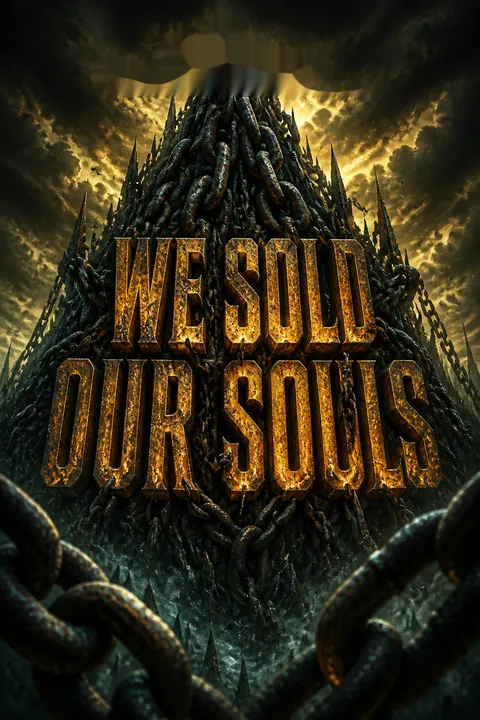


Plot Summary
A Riff Finds Its Players
In a freezing Pennsylvania basement, teenage Kris Pulaski secretly buys a battered guitar and struggles until she can play the opening riff of Black Sabbath’s Iron Man. Terry Hunt, a boy from school who recognizes the song, becomes her first serious audience; they trade records, argue about metal, and decide to form a band.
Kris recruits Scottie Rocket, Tuck Merryweather, drummer Bill, and initially JD, whose chaotic playing eventually gives way to Bill’s precision. Dürt Würk builds its following through years of cramped clubs and punishing tours. Kris writes Troglodyte, a dark mythology about a prisoner watched by the Blind King, and the band’s best, most personal music gathers around it.
Kris’s first riff is more than a young musician’s breakthrough. It gives her a way to convert private frustration into a shared, audible world, and the band forms around that act of recognition. The friends do not simply share a taste in music; they use it to author identities that their families, school, and small industrial town cannot provide. Troglodyte’s underground mythology grows from the same need: to name the forces that make ordinary life feel inescapable. The music is both refuge and instrument, a way of imagining an exit before any character knows what kind of prison they inhabit.
The Blind King Returns
At forty-seven, Kris works nights at a Best Western, where a naked guest urinates across the reception desk and her brother Little Charles dismisses the incident instead of confronting him. He then tells her their late mother’s house has been sold and gives her six weeks to leave. Driving through Gurner, Kris sees a billboard announcing that Terry’s stadium-sized Koffin project is returning for a farewell tour.
The image jolts loose the life she spent years trying to quiet: the band, the lawsuit, the medication, and the music she has not played in six years. Kris returns to her childhood basement, uncovers her guitar and amplifier, and plays until the fear recedes. She decides to find Terry and reclaim what she believes he took.
The present-day humiliation and the billboard work together: Kris is not merely nostalgic for a lost career, she is watching the distance between her life and Terry’s become physically enormous. Her brother’s announcement removes even the modest shelter she has left, while the hotel incident shows how thoroughly she has learned to swallow anger. Playing again interrupts that learned passivity. The guitar does not magically restore her youth or solve her finances; it gives her access to a self she had been trained to regard as dangerous. Her decision to confront Terry begins as a personal reckoning, before she understands the scale of the threat.
Melanie Wants West
In West Virginia, twenty-six-year-old Melanie Gutiérrez sees the same Koffin billboard and remembers how the band’s songs once helped her through grief and loneliness. Her animation degree has brought debt, not a career; she waits tables at Pappy’s and feels trapped in the town where classmates keep dying from overdoses.
Inspired by Terry’s apparent escape from a poor hometown, Melanie proposes driving to Las Vegas for the concert and continuing west afterward. Her boyfriend Greg agrees vaguely, then reveals a fresh neck tattoo, gaming debts, and a false claim that he has been working.
Melanie stops saving for their shared move and starts planning to go alone. She works extra shifts and takes freelance jobs, hoping the festival can become a deadline strong enough to change her life.
Melanie’s hope begins with a mistaken model of success. She sees Terry’s fame as proof that a person can escape the geography and economics that confine her, not knowing that his rise is built on exploitation. Still, her plan matters because it gives her a future tense: work has a destination, and sacrifice has a measurable purpose. Greg’s deception exposes how little of their relationship is actually moving forward. Melanie’s vulnerability is not foolishness but scarcity of alternatives. The book sets her longing beside Kris’s disillusionment, making the same music first look like a ladder and later like a product with a hidden cost.
Scottie’s Last Warning
Kris drives to Allentown to see Scottie Rocket, her former bandmate and closest friend, after he signals that he needs her. She finds him living in a basement crowded with unsold Dürt Würk merchandise. Scottie shows her tiny surveillance devices and claims Terry is monitoring the old band through phones and televisions.
Kris doubts his fears, but recognizes their old musical shorthand when he recalls a lyric from their touring days. Scottie then receives a call and, believing he has been ordered to kill Kris, turns the gun on himself instead.
Kris takes his note and keys, escapes the locked basement, and reaches the kitchen as Scottie’s wife Angela calls for help. Men disguised as UPS drivers arrive, kill Angela and her children, and search the house. Kris hides, then flees, convinced Terry has made her the next target.
Scottie’s return forces Kris to confront the difference between care and belief. She comes hoping to recover an old friendship, but initially treats his evidence as symptoms because accepting it would require her to revise the story she has told herself about Terry. Their shared song fragments briefly restore trust, then the gun makes the danger undeniable. Scottie’s death is both devastating and deliberate: he refuses to kill Kris, but cannot escape the command he believes is inside him. The disguised delivery men turn everyday infrastructure into a weapon and leave Kris with a truth that sounds unbelievable precisely because it has been made to look like ordinary crime.
Contract Night’s Missing Hours
Kris seeks help from Tuck, the former bassist who has built a comfortable family life and still resents her role in Dürt Würk’s collapse. Scottie’s note and Kris’s account persuade Tuck to drive with her to Bill, the band’s former drummer, now a wheelchair user who runs a luxury rehabilitation center at the old Witch House.
On the way, Kris remembers the night the band was offered a major-label deal after Terry antagonized Slayer and got Dürt Würk thrown off its tour. Terry and manager Rob Anthony presented contracts that made Terry owner of the name and publishing; Kris refused, then returned to find her bandmates incapacitated and panicked them into leaving. She drove drunk through the rain, crashed the van, and later signed away her rights under pressure from lawsuits and medical expenses.
The contracts transform a familiar rock-band conflict into a durable legal trap. Terry’s ambition is not simply artistic compromise: he has arranged ownership so that the people who made the music become employees in its mythology. Kris’s attempt to save her friends from a danger she cannot name produces the crash that lets the deal close around her, leaving her with both guilt and a convincing reason to distrust her own judgment. Tuck’s surviving resentment shows how trauma can harden into a private settlement: he has built a stable life, but the missing hours remain unresolved. His willingness to accompany Kris is the first crack in that settlement.
Well in the Woods
Bill welcomes Kris and Tuck to Well in the Woods, a polished retreat built around the Witch House’s underground spring, then listens as Kris explains Scottie’s death. He and Tuck drug her and have her held in a white room, where restraints, medication, and therapeutic language recast her alarm as illness.
For three days, Kris obeys outwardly while silently rebuilding Troglodyte from memory. Staff burn her leather jacket and prepare to destroy her guitar, but a tropical storm knocks out the power. In a resident’s room, Kris sees a pale, corpse-like creature feeding on a man.
The sight restores the missing memory: on contract night, similar beings attacked the band, and Kris struck one before driving away. She uses her guitar as a weapon, breaks through a wall to uncover the old Blue Door, and escapes underground.
Well in the Woods makes coercion look like care. Its gentle schedules and therapeutic vocabulary remove Kris’s ability to name what is being done to her, while the butterfly imagery turns submission into a promised recovery. Her silence is therefore not evidence of defeat; it is a protected space in which memory and music can remain intact. The storm interrupts the institution’s controlled environment, and the creature supplies the proof that ordinary explanations cannot absorb. Kris’s guitar changes function from instrument to weapon and then to key: the object she was told to surrender becomes the means by which she opens the wall and leaves.
The Road Below
The Blue Door leads Kris to the sealed basement well, whose opening she reaches by smashing through the retreat’s wall. She descends into the shaft, squeezes through water pipes and rock passages, and crawls through bat guano until she emerges on a roadside hillside.
By then it is August, months after the dates she hoped to stop. Hungry, injured, and without identification, Kris takes clothes from a Salvation Army and survives on rides, donated food, and stolen sleep.
In St. Louis she tunes a young street musician’s guitar and plays with her, rediscovering that music can earn money and connect strangers. Kris then travels to Kansas to find JD, the former drummer she once replaced. He says Terry sold the band’s souls and swears to protect her on the road.
The escape is a physical enactment of the album’s central image: getting out means enduring the narrow passage rather than finding a clean rescue. Kris emerges into a world that has not changed, and the date makes her feel that the effort has come too late. Yet the busker scene alters her sense of what music is for. A guitar can still feed someone and create a temporary alliance without a contract or audience of hundreds of thousands. JD’s elaborate explanations may be unreliable in detail, but his vow offers something more concrete: a companion who will take her seriously and help her move.
A Mob Finds Them
JD drives toward Las Vegas by stealing cars and following the strange guidance he finds in Troglodyte, while radio reports and Rob’s interviews portray Kris as a violent fugitive. At a New Mexico rest stop, a crowd recognizes her from a phone image and surrounds her, filming as Koffin’s Stand Strong plays from a van.
JD returns to keep his oath, but freezes rather than drive through the people trapping them. The mob pulls him from the car and tears him apart. Kris escapes in the vehicle, then cleans herself at a gas station and cuts her hair.
Melanie, driving west with her new transmission, offers her a ride. Kris hides her identity under the name Deidre, accepting help from the young woman even as grief and fear make her wary of everyone.
The crowd is more frightening than a conventional villain because it is made of ordinary spectators who mistake recording for understanding. The phones reproduce the Hundred Handed Eye in miniature: each person sees a framed image of Kris and joins the hunt without encountering her as a person. JD’s refusal to harm them is humane, but it leaves him exposed to a violence no individual could control. His death deepens Kris’s guilt even as she learns that survival cannot depend on another protector. Melanie’s offer arrives at the point where isolation has become fatal, beginning a relationship built on a lie that will gradually give way to recognition.
Melanie Takes Her In
On the drive to Las Vegas, Melanie believes Kris has fled an abusive husband, while Kris lets the cover story stand. Their first clash comes when Kris calls Koffin worthless and Melanie defends the songs that carried her through difficult years.
Kris apologizes, and the women find common ground in Dolly Parton, sharing music and stories as they cross the desert. Melanie admits she has only nine dollars, so Kris accepts her offer of a hotel room. The next morning, Melanie introduces Kris to Hunter and his friends, who reveal her real identity after she leaves the table.
They urge Melanie to report her, promising access to Terry and the festival. Melanie refuses, then invites Kris to Hellstock as protection for herself. Before the group departs, disguised UPS men seize Kris in her room.
Their car ride gives the novel a rare space where neither woman has to perform for a crowd. Melanie’s affection for Koffin is rooted in lived experience, while Kris’s contempt comes from knowing the music’s machinery; their argument exposes the distance between a song’s public meaning and its creator’s private history. Dolly becomes a bridge because both women can discuss the music without demanding immediate agreement about Terry. Melanie’s choice not to expose Kris is significant even though she does not yet know the full story. The later invitation is reciprocal: Melanie wants someone capable of protecting her, and Kris needs a route into the festival.
Terry’s Desert Bargain
The UPS men force Paxator on Kris and prepare to stage her death as a suicide, but they stop when Terry orders her delivered to Hellstock. In a hidden recreation of Gurner’s old Sporting House, Terry admits he traded the band’s souls to Black Iron Mountain for fame, then sacrificed hundreds of thousands of fans at the farewell concerts hoping to regain his lost creativity.
He wants Kris to write a new Troglodyte and help him bargain for more. Kris refuses to give him the album he wants. Rob Anthony arrives and explains that the festival is designed to feed the creatures through the sleeping crowd.
Kris punches Rob, trades clothes with a maid, and slips away. At the backstage area, Tuck gives her access to the stage, where she can confront Terry in public.
Terry’s confession complicates the familiar bargain between artist and industry. He has gained wealth and control, but the exchange has hollowed out the very faculty he wanted recognized: the ability to make something original. His motive is not remorse but a renewed attempt to leverage Kris’s creativity against the power he served. Rob’s language makes mass sacrifice sound administrative, an orderly transaction that protects the comfortable world he helped build. Kris rejects the premise that her music is another asset to trade. By choosing the stage, she moves the conflict from secret contracts and private rooms into a public space where others can witness what the system tried to erase.
Troglodyte Takes the Stage
At Hellstock, Melanie’s companions turn on her in the crushing crowd, sexually assaulting and nearly killing her. A woman sound technician and her colleague pull Melanie up into the sound tower just as Kris walks onto the stage with a borrowed guitar. Kris starts Troglodyte, forcing Terry to sing the songs he helped bury.
Tuck joins on bass, and the crowd responds as the band moves through the album’s story of surveillance, captivity, and escape. Kris then performs the final track, which Terry had cut from the record, and urges the crowd to resist forces that dictate what they should want. The festival erupts into fires and violence. Kris disappears in the chaos, while Terry, Tuck, and the surrounding crowd are left amid the wreckage.
The performance does not provide a neat victory over Black Iron Mountain; instead, it breaks the silence that made the system seem inevitable. By playing the whole album, Kris reunites its scattered meanings and gives the audience a narrative different from Koffin’s commercial spectacle. The crowd’s response is powerful but unstable: the same collective energy that can hear the songs also becomes a destructive mass. Melanie’s rescue by the sound crew counters the boys’ violence with a practical act of solidarity. Kris’s final song offers a path out without claiming that art alone can undo the damage. The performance makes resistance audible, not automatically safe.
Epilogue
Hellstock leaves Strawberry Valley in ruins, with hundreds injured, hundreds arrested, and Kris missing. Tuck searches for her, while stories spread that she was killed, smuggled away, or seen playing at small venues under another name. Three years later, he hears a young busker struggling through Poincaré’s Butterfly and leaves money in her guitar case, wondering if Kris has passed through.
Terry, meanwhile, keeps trying to write, only to discover that his new riffs belong to other bands; he deletes them and starts again. Melanie is in Los Angeles, practicing Beneath the Wheel in a basement after work. Her fingers hurt, but she keeps going.
The aftermath refuses to turn survival into a clean public record. Kris’s disappearance protects her from the systems that tracked and categorized her, but it also leaves her friends and audience unable to claim certainty about what happened. Tuck’s donation to the busker is a modest gesture of remembrance rather than proof of reunion. Terry’s creative failure shows that the exchange he made cannot restore what it consumed. Melanie’s practice completes a quieter transmission: the music that first helped her imagine escape now gives her a skill and a discipline with which to begin. The ending makes continuation, not fame, the clearest form of hope.
Analysis
We Sold Our Souls treats artistic ambition as a real human need and a vulnerability that can be exploited. Kris and Terry begin as teenagers who use heavy metal to imagine lives larger than Gurner. Their shared dream of becoming legendary later becomes the language through which Terry justifies selling control of their work, then their souls. The bargain is supernatural, but its mechanics echo familiar arrangements: contracts that transfer ownership, industries that reward marketable identities, and institutions that label resistance as illness.
The book is especially alert to how power disguises itself as help. Little Charles softens Kris’s anger instead of addressing her complaint. Well in the Woods offers wellness routines while restraining and drugging her. Rob describes exploitation as sensible business, and Terry calls sacrifice protection. These are distinct forms of coercion, but each asks the person being harmed to doubt their own account. The horror grows from that erosion of credibility as much as from the creatures themselves.
Kris’s music gives her a way to recognize what has happened, but the story does not pretend art can repair every loss. Scottie and JD cannot be restored, and Hellstock’s collective response becomes violent rather than simply liberating. Still, playing Troglodyte publicly breaks Terry’s control of its meaning. The songs reconnect private memory to shared experience, allowing a crowd to hear what the commercial show had buried.
Melanie’s arc extends this idea beyond the stage. She begins by treating Koffin as evidence that escape is possible, then discovers the distance between a song that once helped her and the machinery that produced it. Her final practice matters because it is neither celebrity nor revenge. It is labor that she chooses for herself. The novel’s answer to an overwhelming system is not that one person can destroy it outright, but that music, memory, and solidarity can keep its claims from becoming the only story people hear.
Review Summary
We Sold Our Souls receives mostly positive reviews, averaging 3.69/5 across nearly 35,000 ratings. Fans, particularly metalheads, praise its authentic portrayal of heavy metal culture, strong female protagonist Kris Pulaski, and creative chapter titles using real album names. Many highlight the engaging horror elements, clever plot twists, and emotional resonance as a love letter to rock music. Common criticisms include an underwhelming ending, underdeveloped mythology, and tonal inconsistency. Readers consistently commend Hendrix's writing style, though some found the plot confusing or the second half weaker than the first.
People Also Read







Characters
Kris Pulaski
Guitarist who will not yieldKris is Dürt Würk’s lead guitarist and the author of Troglodyte, a musician whose discipline and fierce independence once made her the band’s creative center. She is alert to condescension and quick to anger, but years of legal pressure, poverty, and medication have taught her to mistrust her own force. Her loyalty to her bandmates survives even when they resent her, and her guitar remains the clearest expression of a self she has been asked to suppress. Kris is driven by a need to recover the truth of what happened and to make her music matter on its own terms. Her story tests whether anger can become purposeful action rather than self-destruction.
Terry Hunt
The Blind KingTerry is Kris’s gifted childhood friend and former bandmate, later the polished frontman of Koffin. He understands performance instinctively and knows how to turn provocation into attention, but he is also impatient with limits and hungry for a kind of permanence that ordinary success cannot provide. His relationship with Kris holds both genuine musical intimacy and the wound of artistic betrayal. Terry treats ambition as justification, convincing himself that compromise and harm are necessary costs of becoming legendary. His carefully managed image contrasts with the insecurity beneath it: he needs others to recognize his greatness, even as he loses confidence in his ability to create.
Melanie Gutiérrez
A waitress seeking escapeMelanie is a twenty-six-year-old waitress with an animation degree, student debt, and a deep attachment to Koffin’s music. She is tired of a hometown where ambition seems to end in debt or overdose, but she still believes a deliberate plan can open a way out. Her enthusiasm can make her vulnerable to people who offer easy certainty, yet she has a perceptive eye for other people’s discomfort and a generous instinct toward strangers. Melanie’s connection to music is emotional and practical: songs preserve memories, while her eventual effort to learn guitar turns admiration into action. She offers Kris companionship without demanding that Kris immediately explain herself.
Scottie Rocket
Kris’s road-worn brotherScottie is Dürt Würk’s energetic guitarist and Kris’s closest friend from the years on the road. In the band, he balances her steadiness with restless invention; away from it, he carries old wounds and struggles to build a stable life. His shared jokes and song fragments with Kris are more intimate than conventional declarations, a language forged through years of travel and performance. Scottie wants to be believed and to protect the people he loves, though his fear can overwhelm his ability to distinguish danger from persecution. His history with Kris makes her return both a source of hope and a painful reminder of what the band lost.
Tuck Merryweather
Dürt Würk’s steady bassistTuck is the band’s bassist, a physically imposing man whose temperament is more thoughtful than aggressive. As a young musician, he used metal to resist the future other people had planned for him. He later builds a family and a comfortable life, valuing stability without fully resolving his history with Kris or the band. Tuck is cautious about reopening old injuries and initially sees Kris’s urgency as a threat to the life he has made. Yet his affection for the group remains, expressed through practical help and a deep musical memory. His character embodies the difficult work of deciding whether moving on means healing or merely avoiding a question.
Bill
The band’s precise drummerBill replaces Dürt Würk’s original drummer and brings technical discipline to a band that thrives on force and instinct. He is careful, anxious, and attentive to structure, qualities that make him useful in rehearsal and susceptible to systems promising order. His later work in rehabilitation draws on a language of healing and self-improvement. Bill believes that people need help accepting their limitations, a conviction that can blur the line between care and control. His relationship with Kris is shaped by shared history and old grievances, especially around her strong influence over the band’s choices.
Jefferson Davis, called JD
The band’s original drummerJD is Dürt Würk’s first drummer, a volatile and eccentric young musician whose lack of discipline eventually costs him his place in the band. He retreats into Viking metal, elaborate beliefs, and a life mostly hidden from other people. Beneath the strangeness is a strong desire to be taken seriously and to belong to a group that will not mock him. Kris’s return gives him a chance to make himself useful, and he approaches that chance with solemn loyalty. His mixture of insight, paranoia, and bravado makes him hard to assess, but his commitment to Kris is sincere.
Rob Anthony
The band’s smiling managerRob is the charismatic manager who turns Dürt Würk’s frustration into a major-label opportunity and helps reshape the band as Koffin. He is fluent in persuasion, using charm, business language, and a talent for reframing bad news as opportunity. Rob sees people as pieces in a system he believes he understands, and he prizes order over the messy claims of loyalty or fairness. His confidence is not the same as courage: he prefers to keep danger at a distance and treat its costs as someone else’s problem. Through him, the story gives exploitation a friendly face and a polished explanation.
Little Charles
Kris’s accommodating brotherLittle Charles is Kris’s brother and the person who helps her obtain the Best Western job. He approaches conflict by softening it, redirecting anger toward calming exercises, and avoiding formal consequences. That style may be intended as care, but Kris experiences it as another way her grievances are made smaller. He also handles practical family matters, including the sale of their mother’s house, without fully reckoning with what the decision means to Kris. His role reveals how dismissal can arrive not only through open hostility but through well-meaning habits of minimizing someone’s distress.
Angela
Scottie’s protective partnerAngela is Scottie’s wife and the mother of their children. She is wary of Kris’s sudden return and worried about Scottie’s mental health, but she tries to understand whether his behavior signals a passing crisis or something more serious. Angela’s practical attention to her household contrasts with Scottie’s increasingly disordered fears. She is not simply an obstacle to Kris’s reunion with her old friend; she is a person trying to keep her family safe while dealing with a problem she cannot see clearly.
Lily
Tuck’s fiercely guarded partnerLily is Tuck’s partner, protective of the home and family they have built. She remembers Kris through an earlier painful encounter and has little reason to trust her sudden arrival. Her readiness to confront Kris reflects both old resentment and a fierce instinct to defend her children. Lily sees the past as something Tuck has survived and does not want Kris to reopen it. Her skepticism sharpens the conflict between Kris’s urgent warning and the ordinary responsibilities Tuck is reluctant to abandon.
Greg
Melanie’s stalled boyfriendGreg is Melanie’s boyfriend, met through political activism and united with her by shared frustration about economic pressures. He talks easily about structural injustice but resists the difficult work of changing their circumstances. Gaming, debt, and a secret tattoo expose the gap between his stated support and his actions. Greg is not presented as a grand villain; his passivity and entitlement are smaller, familiar forces that keep Melanie waiting for a life they have not built together.
Hunter
Melanie’s Vegas contactHunter is Melanie’s online acquaintance in Las Vegas, a confident gambler and aspiring real-estate success story. He presents himself as a guide to a more ambitious life and offers access to the Koffin shows. His polished assurances and easy nicknames make it difficult for Melanie to distinguish genuine support from self-interest. He represents the seductive promise of a shortcut out of her circumstances.
Miranda
Well’s calming attendantMiranda leads the wellness exercises and personal sessions at Well in the Woods. She speaks in a soothing vocabulary of presence, acceptance, and self-care, and presents herself as a patient guide for people in distress. Her polished manner helps make the retreat’s routines feel benevolent, even when they limit residents’ choices. Miranda’s role shows how therapeutic language can be used to reassure and to discipline at the same time.
Bobbie Gilroy
A veteran sound technicianBobbie is a longtime board technician who repeatedly crosses paths with Dürt Würk and later works the Hellstock sound tower. She is practical, experienced, and attentive to the music rather than the spectacle around it. Her skill lets her recognize what is happening onstage and respond quickly when Melanie is in danger. Bobbie represents the often-invisible labor that makes a performance possible.
Plot Devices
Troglodyte
A musical map through captivityTroglodyte is Dürt Würk’s album-length story of a prisoner watched by the Blind King, chained to a Wheel, and searching for a Blue Door. Kris writes its songs before understanding how closely their images resemble the forces shaping her life. Later, the album becomes a memory aid during confinement, a guide through the underground escape, and the music she uses to interrupt Terry’s festival spectacle. Its final track, cut from the original release, gives the story a missing destination. The album is not a magical answer so much as a structure that helps Kris recognize patterns and continue moving.
Black Iron Mountain
A system that feeds on soulsBlack Iron Mountain is the name Dürt Würk gives to the hidden power behind the Blind King and the Hundred Handed Eye. The story presents it through both supernatural creatures and ordinary structures of attention, commerce, debt, and control. Terry makes a bargain with it, while the band’s imagery gives Kris a way to interpret the bargain’s effects. Its reach is deliberately hard to measure: it can appear as a monstrous presence, a surveillance network, or a culture that teaches people to accept what harms them.
The Hundred Handed Eye
Surveillance made into a huntThe Hundred Handed Eye describes the power to watch people through phones, televisions, cameras, drones, radio, and public attention. Scottie finds surveillance devices, while Kris sees how broadcasts and phone images turn her into a target. At Hellstock, thousands of spectators filming her become a human version of the same watching force. The device connects supernatural menace to technologies and crowds that already exist, making the threat feel less like a distant monster than a habit of seeing people as images to be tracked, judged, and shared.
The Blue Door
An exit hidden behind a wallThe Blue Door is part of Troglodyte’s escape story and a literal door sealed behind the altered walls of the Witch House. Bill’s retreat claims the basement has been filled in, but Kris discovers that the door remains. She breaks through the wall with her guitar and uses the passage to reach the well beneath the house. The door links the album’s imagined geography to the physical route out of confinement, while also marking the difference between accepting a story of impossibility and testing the wall oneself.
The Butterfly
A sign of enforced changeThe butterfly appears as a tattoo on Scottie, a logo at Well in the Woods, and an image used to describe residents becoming calmer and more compliant. The retreat frames transformation as healing, but the symbol’s repetition makes it feel like a mark of institutional ownership. It also recalls Poincaré’s Butterfly, a Troglodyte song about a small disturbance revealing that another world exists beyond Black Iron Mountain. The image therefore holds two competing meanings: imposed reinvention and the possibility that a small act can alter a larger pattern.
About the Author
Other books by Grady Hendrix




Download PDF
Download EPUB
.epub digital book format is ideal for reading ebooks on phones, tablets, and e-readers.








