

Key Takeaways
Horror became adult when evil moved into ordinary family life.
A new mainstream audience. Before the late 1960s, horror was treated as pulp entertainment, while mainstream publishing rarely recognized it as a serious adult genre. Ira Levin’s Rosemary’s Baby changed that with a controlled story of a woman’s pregnancy and a satanic conspiracy in modern New York. In 1971, Thomas Tryon’s The Other and William Peter Blatty’s The Exorcist reached the bestseller lists together. Their success helped make domestic life, children, and religious belief credible sources of terror.
Three models, one breakthrough. The book groups these novels as the Unholy Trinity: a psychological thriller, a religious melodrama, and a lyrical tale of evil twins. They generated film adaptations, imitators, and a powerful sales formula. Suddenly Satan could appear in a city apartment or a family home, not only in an ancient castle.
The shift matters because familiar settings make supernatural danger feel less containable. A castle can be avoided; a pregnancy, a child, or a marriage cannot be left at the curb so easily. The books also show how commercial success can change the definition of a genre: once readers bought horror for adults, publishers had a reason to market it as such. Yet the trio did not make horror respectable by removing its sensationalism. They made sensation feel personal.
Gothic romance trained readers to fear the house before horror did.
A visual bridge. In 1959, editor Jerry Gross noticed his mother reading Rebecca and began searching for out-of-print gothic romances. The books he revived placed young women in old houses with brooding men, buried secrets, and a threat that might be supernatural or domestic. Their covers made the premise instantly legible: a woman in a flowing dress, fleeing a dark building with one illuminated window.
Romance turned to horror. That visual language shaped the first wave of horror paperbacks. The house became a place where danger could hide inside courtship, marriage, and family life. In 1972, Kathleen Woodiwiss’s The Flame and the Flower, an explicitly passionate historical romance, sold 2.6 million copies and helped displace the gothic formula. Horror inherited its domestic setting and its visual shorthand even as romance moved toward sexier storytelling.
Cover art here is not decoration added after a story is complete. It is a compact genre lesson, teaching a browser what kind of fear, heroine, and setting to expect before the first page. The repeated image of a woman escaping a house also turned a private threat into a recognizable cultural symbol. Its limits are visible too: the heroine’s danger often arrives packaged with a romantic resolution, which can blur the difference between menace and desire.
Satan sold because the decade feared identity, authority, and hidden conspiracies.
A new enemy. The Manson murders and the 1974 bestseller Helter Skelter helped make the satanic cult a believable paperback villain. Earlier occult plots often placed evil in remote settings. Now it could be a group living among ordinary people, manipulating families and institutions. The Black Exorcist, by Joseph Nazel, recast the premise through Black Los Angeles, where a fake religious cult hides a Mafia operation before genuine supernatural evil breaks through.
Panic became a market. Michelle Remembers, published in 1980, presented recovered memories of elaborate Satanic abuse as fact. The book helped fuel the Satanic Panic, despite the account being discredited. Horror paperbacks turned the period’s fears into plots about mind control, ritual abuse, and elites secretly steering society. Their Satan could tempt people with success, then threaten the very sense of self that success supposedly promised.
The satanic plot works as a story about trust under pressure. When institutions seem corrupt and private motives are hard to verify, a hidden conspiracy offers a single villain behind scattered harms. That structure can make diffuse anxieties narratively satisfying, but it can also turn rumor into apparent evidence. The account of Michelle Remembers is a reminder that a compelling story is not a reliable record. The Black Exorcist also shows how the same imported formula changes when placed in a specific community.
Use killer children to see adult fears about family, parenting, and control.
The home turns against adults. Horror fiction had long imagined dangerous children, but the paperback boom gave them fresh urgency. The Pill, changing abortion laws, and the first successful in-vitro fertilization in 1978 made reproduction a public subject of debate. Stories answered with possessed, adopted, engineered, or simply violent children, and with parents unable to explain or control them.
Not every horror needs a demon. In Mendal W. Johnson’s Let’s Go Play at the Adams’, neighborhood children imprison and torture their babysitter, with no supernatural cause offered to comfort the reader. V. C. Andrews’s Flowers in the Attic made family itself a gothic prison, centering children abused and confined by adults. Together, these books reveal how often the genre’s monsters are entangled with ordinary power: who gets believed, who is trapped, and who is allowed to call a home safe.
Children can unsettle readers because they expose the gap between cultural ideals of innocence and the actual limits of adult control. The period’s reproductive changes gave that unease a concrete setting, especially when new medical technologies seemed unfamiliar. But the books do not always distinguish social explanation from lurid provocation. Johnson’s story is powerful precisely because it refuses a supernatural excuse, while other plots may use the evil child as a shortcut around harder questions about neglect and violence.
Animal attacks turned pollution and ecological guilt into a human buffet.
Nature strikes back. The environmental disasters of the late 1960s and early 1970s made pollution difficult to ignore. In 1974, Peter Benchley’s Jaws helped launch a wave of animal-attack fiction. James Herbert’s The Rats made the threat urban and immediate: rats swarm through London, while official solutions fail and a practical schoolteacher takes action. Soon novels sent insects, fish, birds, crabs, and even plants after people.
A moral lesson with teeth. These stories often blamed careless development, reckless experiments, or weak local leadership for unleashing the threat. The creatures also supplied a brisk, grotesque spectacle, from killer moths to an army of crabs. Their ecological message could be blunt: humans mistreat nature, then discover they are not its only predators. The books’ jokes and excess are part of the point. They turn environmental dread into something readers can picture attacking the front door.
Creature fiction makes a slow crisis legible by giving it a body and a deadline. Pollution and habitat damage unfold across systems, while a swarm can be seen, feared, and fought within a single story. That translation is vivid, but it can simplify causality: a monster is easier to defeat than the economic incentives and political failures that produced environmental harm. The strongest examples hold both impulses together, offering wild entertainment while making human confidence look more fragile than it did before.
A haunted house often means a family priced out of its own life.
Real estate becomes a trap. Robert Marasco’s Burnt Offerings helped establish the bargain-home nightmare: a family short on money rents an impressive old mansion, then finds that the house is reshaping their behavior. Marian’s obsessive upkeep feels like ownership, but the family’s access to the property never gives them the wealth or status it represents. In this version, the haunting is inseparable from class and the desire to escape cramped circumstances.
Place carries the decade’s stress. Other books translated urban danger and rural distrust into supernatural threats. Joan Samson’s The Auctioneer follows a farming community gradually stripped of its belongings and autonomy. The Amityville Horror sold a supposedly true haunting, but the book notes that one son later described abuse by his stepfather as a far more damaging source of terror. The haunted address can conceal a human story that the supernatural plot makes easier to sell.
The house is a useful horror device because it combines shelter, money, identity, and family relationships in one place. That makes class anxiety feel intimate rather than abstract. Marasco’s rented mansion is frightening not only because it may be alive, but because the family’s imagined upward mobility depends on serving it. The Amityville account adds an ethical warning: when supernatural spectacle dominates a story, real harm can be pushed out of view. Horror can expose that substitution, but it can also participate in it.
Science, cities, and technology became monsters when institutions lost public trust.
Expertise turns suspect. Robin Cook’s Coma made a hospital conspiracy the engine of a medical thriller: patients become comatose while their organs are secretly sold. Other paperbacks imagined dangerous fertility clinics, reckless experiments, and scientists whose innovations escaped their control. Computers, psychic powers, hypnosis, and UFOs offered similar possibilities, mixing genuine public interest with dubious claims and high-speed plot machinery.
The city becomes a system. In Fritz Leiber’s Our Lady of Darkness, a fictional theory called Megapolisomancy treats a city’s streets, pipes, and cables as lines of occult power. New York’s fires, crime, and abandonment could then be read as symptoms of a living, hostile place. These stories turn infrastructure into an antagonist: the same systems people depend on may conceal risks no individual can see or manage.
The shared fear is less that knowledge itself is evil than that powerful systems are opaque to the people exposed to them. Hospitals, municipal networks, laboratories, and computers all promise control, yet the paperback plot imagines a point where no one can identify who is accountable. This is a durable source of suspense. The genre’s pseudoscience sometimes muddies the distinction between evidence and speculation, but its institutional distrust can still be read as a question about oversight, not simply a rejection of science.
Make room for voices outside the polished monster’s point of view.
Different communities, different horrors. Joseph Nazel’s The Black Exorcist brings Black Los Angeles street life into a story adapted from a familiar possession premise. Bari Wood’s The Tribe follows a Black police officer close to a Jewish family of Holocaust survivors, linking violence in Brooklyn and Long Island to historical trauma and neighborhood conflict. Elizabeth Engstrom’s fiction gives close attention to poor, disabled, and otherwise marginalized characters without pretending that their actions are always admirable.
Representation remains uneven. Many paperbacks also used Indigenous cultures as a source of convenient curses and monsters. They often imagined ancient spirits as threats to white developers, while giving little attention to the ethical problem of repeatedly exploiting Indigenous history for scares. The genre’s wild openness made room for unfamiliar voices, but it did not make its portrayals fair by default. The books are valuable both for their imaginative range and for the stereotypes they expose.
A monster’s viewpoint can widen a genre by moving attention away from the people usually treated as its default heroes. Nazel and Engstrom offer different kinds of local knowledge, while Wood uses relationships across race and memory to complicate easy divisions between insiders and outsiders. Yet inclusion is not the same as imaginative freedom for everyone: Indigenous characters and beliefs can remain props in stories centered on white protagonists. Reading the books critically preserves their historical value without mistaking publication for equitable representation.
When horror saturated the rack, publishers renamed it thriller and moved on.
The business changed the story. A 1979 Supreme Court decision concerning Thor Power Tool inventory made unsold books more costly for publishers to hold. Paperbacks increasingly had only weeks to attract buyers, strengthening the demand for quick, blockbuster sales. Cover gimmicks, author brands, and high-concept premises became especially valuable in a market flooded with new titles.
The label shifted with demand. By the late 1980s, gore and serial-killer plots crowded the horror shelves. Thomas Harris’s The Silence of the Lambs won major awards and its film adaptation became a hit, giving publishers a commercially attractive model that could be sold as a thriller rather than horror. The rebranding did not mean fear had disappeared. It meant that publishers and booksellers changed the shelf label, while horror imprints and magazines contracted.
The market history complicates the idea that genres evolve only because readers’ tastes change. Tax treatment, inventory risk, shelf space, and marketing language also decide which stories remain visible. A thriller label can broaden a book’s audience, but it can also obscure the lineage of the material that made the book possible. The paperback boom’s rapid production brought experimentation and saturation together. The same system that rewarded novelty could discard a title before its long-term readership had a chance to form.
Keep the strange paperbacks in circulation; obscurity is not a verdict.
A boom can vanish quickly. Horror imprints and magazines dwindled through the early 1990s. Zebra, a major home for paperback horror, reduced its output in 1993 and stopped publishing horror titles in 1996. Dell’s Abyss line, which gave space to writers such as Kathe Koja, Michael Blumlein, and Poppy Z. Brite, lasted only a few years. Meanwhile, artists often went uncredited, and publishers reused or altered cover art without preserving its makers’ names.
Readers became archivists. The books survived in used shops, private collections, blogs, and the memories of fans who tracked authors and illustrators. The author’s tour through these forgotten shelves argues that low prices and out-of-print status do not settle a book’s worth. Some paperbacks are dated, careless, or offensive; others remain formally strange and emotionally sharp. Keeping them available allows readers to judge the work rather than inherit the market’s silence.
This recovery project treats popular fiction as cultural evidence, not merely as disposable entertainment. Its objects preserve changing fears, publishing decisions, visual conventions, and the careers of artists whose labor was easy to erase. Archival enthusiasm still needs discernment: a forgotten book is not automatically a masterpiece, and historical interest does not excuse harmful portrayals. The reward is a fuller account of what readers encountered and what publishers were willing to print. Preservation restores the possibility of disagreement, discovery, and informed judgment.
Analysis
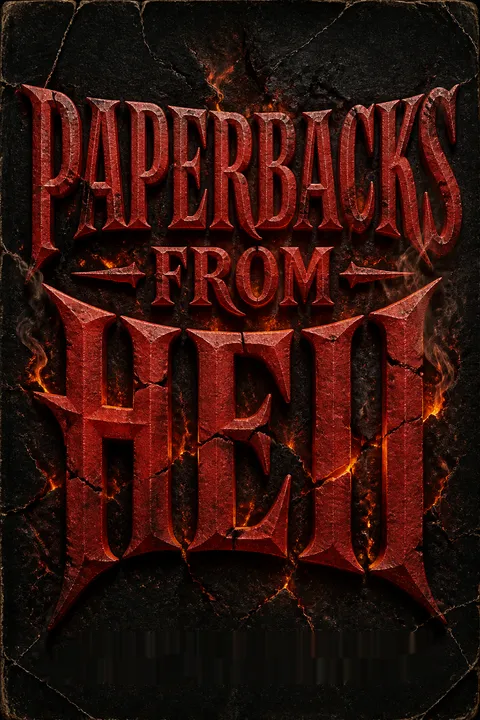
Paperbacks from Hell is a genre history told through the objects that carried horror to ordinary readers: cheap books, painted covers, drugstore racks, and imprints competing for attention. Its central argument is that the 1970s and 1980s horror boom was not a single literary movement. It was a collision of cultural anxiety and commercial opportunity. Satanic conspiracies translated fears of social disorder into family melodrama. Killer animals gave environmental damage a visible body. Haunted properties made class and economic insecurity feel supernatural. Medical and technological thrillers dramatized distrust of systems that promised expertise while concealing risks.
The book’s structure mirrors that unruly market. It moves by recurring monsters and settings rather than by a tidy account of authors or publication dates. That approach makes the era’s variety vivid, though it can leave some historical claims more suggestive than demonstrated. Its humor is a method of criticism: the absurd plots reveal how aggressively publishers chased novelty, but the jokes can also make it easy to skim past the genuine craft and human pain inside the books. The discussion of Ken Greenhall, Bari Wood, Michael McDowell, and Elizabeth Engstrom counters that tendency by emphasizing voice, social observation, and emotional precision.
The account is strongest when it connects form to material conditions. Covers teach readers what to expect; short shelf lives reward immediate impact; blockbuster economics reduce publishers’ tolerance for books that sell steadily rather than spectacularly. The eventual turn toward thrillers is therefore not simply a literary judgment. It is also a change in marketing categories and institutional risk. Likewise, the book’s recovery of forgotten artists and authors suggests that canons are built not only by acclaim but by preservation, reprinting, and access.
Its limitations are instructive. A genre that welcomed extreme invention could still reproduce racism, sexism, and stereotypes, especially when Indigenous cultures became a ready-made source of threats. The book notices this contradiction rather than resolving it. That tension is part of the subject: popular horror can expose the fears of its moment while carrying forward the blind spots of the same culture. The result is both an entertaining tour of paperback excess and a case for reading commercial fiction as history.
Review Summary
Paperbacks from Hell is a beloved exploration of 70s-80s horror paperbacks, praised for its humor, insights, and stunning cover art reproductions. Reviewers appreciate Hendrix's witty writing, thorough research, and genuine enthusiasm for the genre. The book covers various horror subgenres, discussing notable authors, artists, and publishing trends. Many readers found it nostalgic and entertaining, sparking interest in forgotten titles. While some wished for more coverage of certain authors, most agree it's a must-have for horror fans and book collectors.
People Also Read


Glossary
Unholy Trinity
Three defining horror bestsellersThe book’s collective name for Rosemary’s Baby by Ira Levin, The Other by Thomas Tryon, and The Exorcist by William Peter Blatty. Their commercial success in the late 1960s and early 1970s helped establish horror as adult popular fiction and supplied different models for later books: psychological suspense, evil children, and religious conflict.
Megapolisomancy
Fictional magic of citiesA fictional theory in Fritz Leiber’s Our Lady of Darkness that treats a city’s infrastructure as a network of occult forces. Streets, subway tunnels, pipes, and cables form lines of power. The idea turns the modern city into an active supernatural presence and gives paranormal shape to fears associated with urban disorder.
dark fantasy
Grant’s atmospheric horrorCharles L. Grant’s name for horror that emphasizes mood, character, and creeping unease rather than gore or traditional monsters. His stories often unfold in recognizable small towns and suburbs, where ordinary relationships and quiet supernatural disturbances overlap. The term later became associated with quiet horror.
quiet horror
Understated, mood-driven horrorA style associated with Charles L. Grant and other writers who favor atmosphere, implication, and psychological tension over graphic violence. Its stories may feature ghosts and supernatural events, but their emotional force often comes from loneliness, family strain, or small disruptions to everyday life.
inhumanoids
Monsters framed as outsidersThe book’s label for humanlike or supernatural threats portrayed as foreign, ancient, or otherwise outside the boundaries of ordinary American life. These monsters include creatures imported from other countries and beings linked to Indigenous histories. The category reveals how paperback horror used outsider figures, sometimes reproducing cultural stereotypes in the process.
splatterpunk
Gore-heavy transgressive horrorA label coined by writer David Schow for a late 1980s movement in horror fiction that foregrounded graphic violence, confrontational subjects, and stripped-down prose. Writers including Clive Barker, John Skipp, and Craig Spector treated bodily horror as a challenge to conservative moral culture. The movement’s shock tactics also drew criticism for excess and limited representation.
paperback original
First issued in paperbackA novel published first as a mass-market paperback rather than appearing in hardcover before its paperback edition. The format helped publishers sell inexpensive fiction through drugstores and other everyday retail outlets. During the horror boom, paperback originals offered publishers speed and access to new writers, but they also faced short sales windows and high commercial pressure.
FAQ
1. What’s "Paperbacks from Hell" by Grady Hendrix about?
- History of Horror Paperbacks: The book is a deep dive into the boom of horror fiction paperbacks from the 1970s and 1980s, exploring their rise, cultural impact, and eventual decline.
- Genre Exploration: Hendrix examines the wild, weird, and often forgotten subgenres of horror, from killer kids to satanic cults, animal attacks, and haunted real estate.
- Cover Art and Publishing: The book also celebrates the lurid, eye-catching cover art and the artists, publishers, and marketing strategies that defined the era.
- Personal Journey: Hendrix weaves in his own journey of discovering and collecting these books, making it both a history and a love letter to the genre.
2. Why should I read "Paperbacks from Hell" by Grady Hendrix?
- Nostalgic and Entertaining: It’s a fun, witty, and affectionate look at a forgotten era of publishing, perfect for horror fans and pop culture enthusiasts.
- Cultural Insight: The book offers a unique lens on how horror fiction reflected and shaped anxieties about society, technology, family, and the supernatural.
- Visual Feast: With dozens of full-color reproductions of vintage covers, it’s a treat for anyone interested in book art or design.
- Rediscovering Lost Gems: Hendrix highlights overlooked authors and books, providing a roadmap for readers seeking hidden treasures in horror fiction.
3. What are the key takeaways from "Paperbacks from Hell" by Grady Hendrix?
- Horror as Social Mirror: Horror paperbacks often mirrored contemporary fears—about family, science, the environment, and social change.
- Boom and Bust Cycle: The genre experienced a massive surge in popularity, followed by oversaturation and a market crash in the early 1990s.
- Genre Innovation: The era was marked by wild experimentation, with subgenres like Satanic Panic, killer animals, evil children, and medical horror.
- Legacy and Influence: Many of today’s horror trends, tropes, and even publishing practices can be traced back to this paperback boom.
4. How does Grady Hendrix structure "Paperbacks from Hell"?
- Chronological and Thematic: The book is organized both by time period and by subgenre, moving from the roots of horror in the 1960s through the boom years and into the 1990s.
- Chapters by Theme: Each chapter focuses on a specific horror trope or trend, such as Satanic cults, creepy kids, animal attacks, haunted houses, and weird science.
- Profiles and Anecdotes: Hendrix includes profiles of key authors, artists, and publishers, as well as personal anecdotes and reviews of standout books.
- Visual Elements: The book is richly illustrated with cover art, making the structure both narrative and visual.
5. What are the main horror subgenres explored in "Paperbacks from Hell"?
- Satanic and Occult Horror: Explores the influence of books like "Rosemary’s Baby" and "The Exorcist" and the resulting wave of demonic and cult-themed fiction.
- Killer Kids and Creepy Children: Looks at the popularity of evil children in horror, from "The Other" to "The Omen" and beyond.
- When Animals Attack: Covers the animal horror craze sparked by "Jaws" and followed by rats, cats, dogs, crabs, and more.
- Haunted Real Estate: Examines the haunted house and cursed land subgenres, including "Burnt Offerings," "The Amityville Horror," and others.
- Weird Science and Medical Horror: Discusses the rise of science-gone-wrong stories, medical thrillers, and body horror.
- Gothic and Romantic Horror: Traces the evolution of gothic romance into horror, with a focus on family secrets and domestic terror.
- Inhumanoids and Monsters: Details the proliferation of vampires, werewolves, mummies, and other monsters, often with new twists.
- Splatterpunk and Serial Killers: Chronicles the rise of ultra-violent, transgressive horror and the shift toward serial killer fiction.
6. How did the horror paperback boom of the 1970s and 1980s start, according to "Paperbacks from Hell"?
- Cultural Catalysts: The success of "Rosemary’s Baby," "The Exorcist," and "The Other" in the late 1960s and early 1970s made horror mainstream and marketable.
- Publishing Trends: Publishers rushed to capitalize on the trend, rebranding older books and commissioning new ones with lurid covers and sensational marketing.
- Societal Fears: The era’s social upheavals—war, crime, changing family structures, and new technology—fueled demand for horror that reflected contemporary anxieties.
- Drugstore and Supermarket Sales: The mass-market paperback format made horror accessible and affordable, reaching a wide audience through nontraditional outlets.
7. What role did cover art and marketing play in the success of horror paperbacks, as described in "Paperbacks from Hell"?
- Eye-Catching Covers: Lurid, shocking, and often bizarre cover art was essential for grabbing attention on crowded racks and driving impulse purchases.
- Artistic Innovation: Artists like Jill Bauman, Rowena Morrill, and George Ziel became legends for their distinctive, memorable work.
- Marketing Gimmicks: Publishers used die-cut covers, stepback art, foil embossing, and even included records or other gimmicks to stand out.
- Branding and Trends: Certain visual motifs—skeletons, dolls, haunted houses—became shorthand for horror, helping readers quickly identify the genre.
8. Who are some of the key authors and artists highlighted in "Paperbacks from Hell"?
- Authors: The book spotlights both famous and forgotten writers, including V.C. Andrews, Anne Rice, James Herbert, Michael McDowell, Ken Greenhall, and William W. Johnstone.
- Artists: Celebrated cover artists such as Jill Bauman, Lisa Falkenstern, Rowena Morrill, and George Ziel are profiled for their contributions.
- Unsung Heroes: Hendrix also discusses lesser-known but influential figures, including editors, art directors, and publishers who shaped the genre.
- Diversity of Voices: The book acknowledges the lack of diversity in the era but highlights notable exceptions, such as Joseph Nazel’s "The Black Exorcist."
9. How does "Paperbacks from Hell" by Grady Hendrix connect horror fiction to broader social and cultural trends?
- Reflecting Social Anxieties: Horror novels mirrored fears about the family, science, sexuality, race, and the environment, often exaggerating or exploiting them.
- Satanic Panic and Moral Outrage: The book details how real-world panics—like the Satanic Panic and fears about Dungeons & Dragons or heavy metal—were both influenced by and reflected in horror fiction.
- Changing Attitudes: The rise and fall of certain subgenres (e.g., gothic romance, animal attacks, splatterpunk) tracked with shifts in public taste and cultural concerns.
- Publishing Industry Shifts: The boom and bust of horror paperbacks paralleled changes in the publishing industry, including the rise of blockbuster marketing and the decline of the midlist.
10. What led to the decline of the horror paperback boom, according to "Paperbacks from Hell"?
- Market Oversaturation: Too many similar books flooded the market, leading to reader fatigue and declining sales.
- Changing Tastes: The rise of thrillers and the rebranding of horror as "thriller" or "suspense" shifted attention away from traditional horror.
- Industry Changes: The Thor Power Tool decision and other economic factors forced publishers to focus on blockbusters, squeezing out midlist horror.
- Cultural Shifts: The end of the Cold War, changing social anxieties, and the rise of new media (like video games and movies) also contributed to the genre’s decline.
11. What are some of the most memorable or outrageous books and moments discussed in "Paperbacks from Hell"?
- The Little People: A novel featuring Nazi leprechauns (Gestapochauns) is highlighted as a prime example of the era’s wild creativity.
- Michelle Remembers: The book that helped spark the Satanic Panic is dissected for its influence and dubious claims.
- Dead White: A story about killer clowns on a circus train, emblematic of the era’s anything-goes approach.
- Satan’s Love Child and Eat Them Alive: Notorious for their over-the-top sex, violence, and sheer weirdness, these books exemplify the excesses of the boom.
12. What are the best quotes from "Paperbacks from Hell" by Grady Hendrix and what do they mean?
- "These stories are timeless in the way that truly matters: they will not bore you." — Hendrix emphasizes that, despite their flaws, these books are never dull and always strive to entertain.
- "The book you’re holding is a road map to the horror Narnia I found hidden in the darkest recesses of remote bookstores." — This quote captures the sense of discovery and adventure that drives Hendrix’s exploration.
- "If we forget about these books, where else will we find a town invaded by killer clowns... or an army of six-inch-tall Nazi leprechauns?" — Hendrix argues for the preservation and appreciation of even the most bizarre corners of genre fiction.
- "Hope is what’s left at the bottom of the box." — In the
About the Author
Other books by Grady Hendrix



Download PDF
Download EPUB
.epub digital book format is ideal for reading ebooks on phones, tablets, and e-readers.








