

Plot Summary
Prologue
A century before Mal’s1 story, the witch Tabitha Wysteria7 races through burning Elmwych to find her lover, the wyverian prince Hadrian. She discovers him dead beneath a burning willow, then curses the kingdoms that helped destroy her home.
A hundred years later, darkness will fall, she warns, and only fire breaking through shadow can earn forgiveness. Tabitha7 disappears into the marsh, leaving a prophecy behind her grief. The account makes history feel less like a settled record than a wound passed from one generation to the next.
The opening gives readers a vivid cause for the coming conflict, but not a trustworthy explanation of it. Tabitha’s grief is undeniable; the kingdoms’ guilt is presented through the eyes of someone bereaved and furious. That gap between emotional truth and historical certainty becomes the story’s engine. Her curse is both an act of vengeance and a message whose meaning later generations distort. By beginning with a personal loss before introducing royal politics, the book makes the coming war feel intimate: its grand alliances grow from one burned town, one dead lover, and a promise no one can interpret safely.
Blood Answers the Seer
Princess Mal Blackburn,1 the fourth child of the wyverian royal family, visits the Seer7 in the Forest of Silent Cries to ask whether the witches are preparing for war. The Seer7 confirms the threat, then tells Mal1 that ending an ancient curse requires killing the Fire Prince.2 A prophecy names two children, one chosen and one cursed, and says one must kill the other to save the kingdoms.
Mal1 has never met Ash Acheron,2 but the idea settles beside an older fear: her purple eyes mark her as different in a family whose other children have shadows and defined royal roles. The Seer’s7 answer gives Mal1 a purpose, though it also turns her future husband2 into a target.
Mal’s first response to danger is to seek a role within it. Her unease about her eyes and her place in the family makes the prophecy compelling because it recasts exclusion as destiny: what marked her as an anomaly might make her necessary. The Seer offers certainty where Mal’s family and gods have offered silence, but that certainty is dangerously incomplete. The predicted solution is murder, framed as duty before Mal has any knowledge of Ash as a person. From the outset, the book links the hunger to belong with the temptation to surrender judgment to prophecy.
A Bride for the Fire
King Ozul12 summons Mal1 to his study and asks her to retell the history of two orphaned royal boys, then explains the part his story leaves out. A century earlier, Prince Hadrian Blackburn broke an oath to marry Princess Aithne and chose a witch instead. The resulting conflict ended with the Kingdom of Magic destroyed and the kingdoms divided.
Now King Egan13 of Fire proposes that Mal1 marry his son,2 Ash,2 to repair the old alliance. Mal1 understands that her sister9 Haven9 must inherit their own throne and that she is the expendable fourth child. Still, she accepts, believing the marriage can unite the kingdoms and let her fulfill the Seer’s prediction. Her family promises to accompany her, but her parents cannot leave their realm.
The marriage is presented as a choice, yet Mal’s sense of responsibility makes refusal feel impossible. Her father explicitly leaves the decision to her, but she has already absorbed the family’s hierarchy: Haven is needed at home, her brothers have designated roles, and Mal’s difference makes her useful elsewhere. The arrangement repeats the old oath marriage that helped fracture the kingdoms, suggesting that political repair may reproduce the structure of the original harm. Mal calls her sacrifice a path to becoming queen, a way to claim agency within a bargain designed by others.
Green Fire Over the Wasteland
Mal1 leaves the Kingdom of Darkness with Haven,9 Kai,4 and Kage,5 flying toward Fire across the ruins of the former Kingdom of Magic. The wasteland confirms how completely the witches’ homeland was erased. Green blasts suddenly erupt from the empty landscape, forcing Nyx20 to dodge until Mal1 is thrown from her mount.20
She lands among ruined walls and meets two young witches, Dawn and Allegra, whose purple eyes mirror her own. Before Mal1 can question them, they vanish in green smoke. Nyx20 finds her, and the royal party continues toward Fire, but the attack has already exposed a dangerous contradiction: the kingdoms insist the witches are nearly gone, while witches have just tried to bring Mal1 down.
The journey makes the abstract history physical. Mal sees the charred remains of a kingdom and then experiences its surviving people as an immediate threat, not a legend. Her brief encounter with Dawn and Allegra offers recognition without explanation: their shared eyes suggest kinship, but their attack and disappearance leave Mal unable to interpret it. The episode also establishes that the wasteland is not empty and that official reassurance is unreliable. Mal enters Fire carrying both a political mission and a question about herself that her family has not answered.
The Savage Meets the Prince
At the Fire court, Mal1 arrives in riding clothes and with her sword, alarming Alina Acheron,3 Ash’s sister,3 and the nobles who expect a compliant bride. In the training yard, Mal1 asks why drakonian women are barred from fighting. When the soldiers laugh, she defeats two of them without drawing a weapon.
Ash2 watches, then invites her to demonstrate what she can do, but their first dance ends badly: Mal1 presses him for answers, and he calls her demands rather than questions. She leaves convinced he is arrogant and contemptuous. Ash,2 meanwhile, is captivated by the force she displays and the way she refuses to soften herself for his court. Their marriage begins as a clash between two people who have mistaken silence for indifference.
The first meeting turns gender and cultural difference into visible action. Mal’s challenge is not a general speech about equality; she defeats men who believe women should not train, making their assumptions look foolish in front of their prince. Ash’s silence has a different source than Mal’s anger, but she cannot know that yet, so their attraction arrives tangled with misreading. Each sees a threat to the rules they know: Mal sees a prince who will not engage, while Ash sees a woman whose presence unsettles his court and his practiced self-control.
A Blade in the Arena
As the other Houses arrive for the wedding week, the desert princess Hessa15 recognizes Mal’s1 unusual eyes and tells her the prophecy may describe a chosen child and a cursed child, though Mal1 cannot tell which role is hers.
For the Champions’ Battle, Mal1 refuses to appoint a proxy and enters the arena herself. Ash2 chooses to fight her. Their weapons meet in a contest that becomes more serious as the light fades; Mal1 finally places her blade at his throat, revealing that she had been holding back.
Ash2 answers with a gesture of respect drawn from wyverian custom. Their exchange does not resolve the prophecy, but it changes the terms between them. For the first time, Mal1 sees a rival capable of meeting her strength rather than merely containing it.
The arena supplies a language the two future spouses can share before they can speak honestly. Mal’s choice to fight for herself rejects the custom that others should represent her, while Ash’s decision to meet her on equal ground complicates her picture of him. Their mutual respect is earned through risk, not arranged by their families. Hessa’s prophecy adds uncertainty rather than instruction, loosening Mal’s confidence in the Seer’s simple command. The fight makes attraction possible because each character sees the other act with skill, restraint, and independent will.
Alina Rejects Her Script
Alina3 has spent her life managing Ash’s2 anxiety and obeying a court that treats her beauty as her chief value. When the family arranges her marriage to phoenixian Prince Zahian Noor,18 she fears another life decided for her. Kai Blackburn,4 Mal’s1 secondborn brother, first tempts Alina3 into a forbidden night flight, then takes her to the volcanic dragon nests and teaches her that drakonian women can do more than watch.
Their attraction turns into a kiss, but Kai4 pulls away when he realizes Alina3 may be reaching for him chiefly to escape her betrothal. After she refuses the match and her mother11 strikes her, Alina3 asks Kai4 to train her. He gives her a light, armor-piercing sword and begins teaching her to listen for danger.
Alina’s development parallels Mal’s, but her constraint is social rather than prophetic. The court praises her appearance while denying her the skills that would make her less dependent on it. Kai’s most consequential act is not the kiss but his refusal to confuse desire with rescue. He recognizes that choosing him would not automatically make Alina free; she must want a life for herself before she can choose a partner. Her request for training turns a romantic crisis into a first practical step toward self-determination.
A Wedding in Red
On her wedding morning, Mal1 discovers that the Fire court has supplied a red gown despite her request for the traditional black of her people. She wears it because there is no time to replace it, but the choice makes her feel erased inside another kingdom’s custom. When she faints during the ceremony, Ash2 cuts open her restrictive corset and carries her back to her rooms.
He then reveals that he has prepared a chamber with dark stone, her books, and carvings of her temple and castle. Mal1 had planned to kill him, yet she covers him with a blanket when she finds him asleep in a chair rather than claim the shared bed. Their marriage remains guarded, but Ash’s2 effort gives her the first evidence that he may see her as a person, not a treaty.
The wedding turns cultural accommodation into a material question: whose colors, clothes, and rituals define the bride? Mal’s red gown makes her body legible to the Fire court but alienates her from her own identity. Ash’s private room counters that public erasure with careful attention to what she misses. The scene does not erase the political coercion or Mal’s murderous plan; its power lies in the contradiction. A person she has been told to kill is capable of kindness, and the first crack in her resolve comes through care rather than seduction.
The Dagger Behind the Diary
After Mal1 and Ash2 begin to trust each other, the search for the curse’s history grows urgent. Wren Wynter,6 a restless princess from the Kingdom of Ice, steals a glamoured notebook from the maid Klara’s8 room. Mal1 and Wren6 expose Klara8 as Vera,8 a witch who has been posing as a servant and claims she wants the curse broken.
Kage5 and Wren6 steal a history book from the forbidden Library of Flames, while Hessa15 and her sister16 Sahira16 identify the missing weapon in its records: a desert dagger once given to Hadrian. The knife disappeared after the Great War, and the record of Hadrian’s body is also suspiciously incomplete. These gaps turn the familiar tale into a mystery and give Mal1 a destination.
The investigation shifts the story from accepting inherited accounts to testing them against material evidence. The notebook, the incomplete burial record, and the desert dagger each preserve a fragment that official histories have failed to connect. Yet the people holding the evidence are not straightforward allies: Vera is useful but distrusted, and the desert princesses have their own reasons for searching. Wren’s curiosity and Kage’s scholarship form an unlikely partnership that makes knowledge an action, not a passive resource. Mal’s mission gains direction just as its moral certainty begins to weaken.
Nyx Falls from the Sky
During a patrol with Ash,2 Mal1 discovers that the Fire King13 plans to take land beyond the wall separating Fire from the witch ruins. The threatened expansion explains why the witches attack: the kingdoms have mistaken a defensive homeland for vacant territory. Green magic destroys the watchtower and exposes the witches’ use of glamour.
As Mal1 and Ash2 fight back, Allegra pushes Mal1 from Nyx,20 then a barrage of magic tears the wyvern20 apart. Mal’s1 grief releases a power she has spent her life suppressing. She becomes shadow, shields Ash2 when he falls, and cuts a path through the attackers so the survivors can escape. Nyx20 is dead, Ash2 is gravely injured, and Mal1 has become something her family has never seen.
The attack reveals the political cost of treating conquered land as available for expansion. The Fire King’s plan is not incidental; it gives the witches a concrete reason to fight, even as their violence devastates people who did not make that decision. Nyx’s death breaks Mal’s last restraint, and her power emerges through grief rather than ambition. The transformation is protective as well as destructive: she saves Ash while avenging the attack. Her new capacity complicates the prophecy, since the supposed instrument of a curse now appears capable of defending the very kingdoms she was sent to unite.
Love Under the Prophecy
Ash2 wakes after three days and learns that Mal1 survived, while the Fire King13 dismisses the border battle as a riding accident. Mal1 grieves for Nyx20 and tells Haven9 that she had accepted the marriage intending to kill Ash,2 though she has not carried out the plan.
Their growing love makes that confession harder to face. Queen Cyra11 then privately tells Ash2 and Alina3 that her severe headaches are visions: she believes Ash2 is the chosen child and that killing Mal1 will break the curse. Ash2 refuses to harm his wife.1
Meanwhile, Mal1 and Ash2 become intimate and begin sharing the room Ash2 prepared for her. He eventually admits that he loves someone, meaning Mal,1 but she avoids him because she cannot reconcile his love with the murder she once intended.
Love does not dissolve the prophecy; it makes its demand more costly. Ash’s refusal to accept his mother’s interpretation is an ethical choice, not proof that he has resolved the curse. Mal’s growing affection creates guilt because she knows what she came to do, while Ash’s guarded speech makes his confession unusually vulnerable. Cyra’s visions offer another authoritative account, but one that contradicts the Seer’s. The competing prophecies show how easily people convert uncertainty into commands, especially when a command seems to promise safety.
The Betrayal Before Dawn
On the morning of Alina’s3 engagement celebration, Hagan10 tells Ash2 that Mal1 intends to retrieve the dagger and kill him. Ash2 initially refuses to believe it, but Mal1 admits that she came to the marriage with that purpose and later changed her mind. Hagan’s10 interruption prevents her from explaining fully. Ash,2 devastated by the truth, withdraws his trust and orders Mal1 to retrieve the weapon and do what she came to do.
She leaves for the Kingdom of Darkness on Kage’s5 wyvern, Daku, carrying the blade’s location in her mind and Ash’s2 rejection with her. Hagan’s10 warning is not an act of loyalty: he is concealing his own connection to the coming violence. Mal1 departs while the castle’s wedding guests remain dangerously unaware.
The rupture comes from a real betrayal, even though Mal’s intentions changed. Ash is hurt not because prophecy makes him fearful, but because the person who made him feel safe had concealed a plan to kill him. Mal’s inability to explain the difference between her earlier purpose and her present love shows the limits of private transformation: a changed heart cannot retroactively make secrecy harmless. Hagan exploits that fracture by presenting himself as a protector. The scene converts intimacy into vulnerability and leaves both spouses moving toward the same catastrophe separately.
Tabitha Names the Daughter
At the Forest of Silent Cries, Mal1 finds the Seer7 and recognizes her as Tabitha Wysteria,7 the witch believed to have died a century earlier. Tabitha7 says the Fire King’s13 forces killed Hadrian and blamed her, and that she cursed the kingdoms in grief. Her curse requires Mal1 to kill Ash,2 but only if Ash2 loves her; otherwise, the kingdoms will fall into an endless sleep while Ash2 alone survives.
Tabitha7 also reveals that she altered Mal1 before birth, giving her the purple eyes and magic that made her seem connected to the witches. She offers the dagger, but answers Mal’s1 questions about her origins only in part. Mal1 learns that her true nature is tied to shadows, not witchcraft, and returns with the weapon.
Tabitha’s account reverses the moral story Mal inherited, but it does not make Tabitha innocent. She exposes a history of collective violence while admitting that her curse endangers people who had no part in it. Her explanation gives Mal a sharper understanding of the weapon and a more painful choice: the cure depends on the very love that makes the killing unbearable. The revelation about Mal’s altered birth also shows how political histories shape identity before a child can act. Yet Tabitha withholds the deepest answer, keeping knowledge itself within the struggle for power.
The Seven Houses Fall
While Mal1 is away, Hagan10 reveals himself as a warlock and attacks the gathering. He kills Zahian,18 then mutilates Alina3 and leaves her to die; Hessa15 helps her escape, but Sahira16 is killed during their flight. Adara14 appears among the attackers, and the Fae princess Flora17 and her sisters are found murdered.
Vera8 kills Queen Cyra,11 while King Egan13 and the other gathered royals are slaughtered. Hagan10 captures Ash2 and displays Alina’s3 severed horns to break him. Haven9 dies when Hagan10 snaps her neck, and Kage5 is trapped by magic. The assault is not a single duel but a coordinated attack against the heirs of every House, leaving Alina,3 Hessa,15 Bryn,19 Wren,6 Kage,5 and Ash2 fighting to survive.
The attack makes the old war present again by targeting the next generation in one place. Hagan’s violence is personal, rooted in grievance against the kingdoms that destroyed his home, but his revenge reproduces the indiscriminate logic he condemns. Alina’s mutilation attacks the identity the court prized in her, while the murder of the gathered heirs threatens political continuity itself. The massacre also exposes the cost of treating the wedding as proof that peace has already been achieved. Alliances assembled for ceremony offer little protection when the institutions behind them have not confronted their shared history.
The Dagger Enters the Fire
Mal1 returns to find the castle collapsing and her family under attack. In shadow form, she arrives on Nyx,20 breaks Hagan’s10 hold over Ash,2 and unleashes the dead against the witches. They obey her, but they cannot restore Haven.9 Mal1 and Ash2 escape on Nyx,20 then mourn together beside the volcanic terrain. Ash,2 believing everyone he loves is gone and that his death can end the curse, asks Mal1 to use the dagger.
She knows a phoenixian can be reborn through fire, though only once. After asking whether he trusts her, Mal1 drives the dagger into his heart and sends him into the lava. The act breaks the curse, but it appears to cost Ash2 his life. Mal1 has fulfilled the prophecy by transforming its meaning into a choice for his survival.
The climax refuses an easy distinction between sacrifice and violence. Mal’s power can command the dead, but it cannot undo Haven’s death, establishing a boundary even at the height of her transformation. Her use of the dagger fulfills the literal requirement while relying on a possibility the prophecy never promised: Ash’s phoenixian rebirth. Trust becomes the condition that prophecy could not supply. Mal acts not as a passive chosen instrument but as a person making a dangerous decision with incomplete knowledge. The cure therefore carries both love and coercion, and its success immediately raises the question of what the curse had been holding back.
Ash Returns with Sight
Ash2 rises from the fire reborn, but the experience has changed him. He has seen the past and the moment of his own death, and returns with the power of a Seer. He tells Mal1 that the curse was not merely a punishment; it had been protecting the kingdoms by keeping the gods trapped. Mal,1 he explains, is not a witch.
She is the God of Shadows, and her father is the God of the Dead. The revelation overturns the story’s central categories: the curse that seemed to threaten the world was also its barrier, and Mal’s1 unusual birth was divine rather than accidental. The book closes with the gods newly released and an approaching threat that the kingdoms have never faced.
Ash’s return resolves the immediate question of whether Mal’s choice saved him, then enlarges the story’s scale beyond royal politics. The curse’s double function makes moral certainty impossible: it was cruel, but it also contained a danger the kingdoms did not understand. Mal’s identity is reclassified from anomaly to deity, yet this does not grant her uncomplicated freedom; it makes her newly central to a conflict she did not choose. Ash’s vision gives the couple knowledge but not security. Their survival ends one crisis while opening a larger one.
Epilogue
With the curse lifted, Tabitha7 expects at last to leave the Forest of Silent Cries and reunite with Hadrian. Instead, the God of the Dead appears and tells her that the curse had kept him from reaching her. Tabitha7 admits she allowed Mal1 to break it because she wanted the kingdoms to survive and herself to be reborn with Hadrian.
The god reveals that Mal1 is his daughter and the key to another curse, then kills Tabitha7 before she can escape. He turns toward the wyverian castle to find Mal,1 making clear that Ash’s2 return has released a danger larger than the war just fought.
The epilogue recasts Tabitha’s curse as a desperate containment measure rather than only an act of revenge. Her willingness to let it break costs her the reunion she hoped for, but she chooses the survival of the kingdoms over her own future. The God of the Dead’s arrival makes that sacrifice tragic without making it futile: Tabitha has protected others, but the danger she feared has not vanished. His claim over Mal turns the ending into a confrontation between parental possession and the daughter’s emerging agency. The final threat is therefore intimate as well as cosmic.
Analysis
The novel builds its romance and political conflict around a shared mistake: characters inherit explanations for the past and treat them as instructions. Mal1 is told that killing Ash2 will save the kingdoms; Ash’s mother11 believes he must kill Mal;1 the Fire court calls the witches a defeated threat while planning to seize their land. Each account makes violence seem necessary by leaving someone else’s experience out. The fragmented diary, the hidden dagger, and the characters’ clashing memories turn historical revision into a practical struggle over who gets to define guilt.
The romances develop through acts that challenge inherited roles. Mal1 fights rather than appointing a champion, and Ash’s2 prepared room shows that intimacy can begin with attention to her customs. Alina’s3 connection with Kai4 likewise matters most when he recognizes that she must choose herself, not merely choose him. These relationships do not abolish political power, but they offer alternatives to obedience disguised as love.
The final revelations complicate any simple triumph. Mal’s1 choice to stab Ash2 can be read as an act of trust and a desperate wager, while the curse proves both harmful and protective. The kingdoms survive one catastrophe only to learn that their enemies and history were never fully understood. The ending’s deepest lesson is not that prophecy should be ignored or obeyed, but that no inherited story can substitute for responsibility toward the people it places in danger.
Review Summary
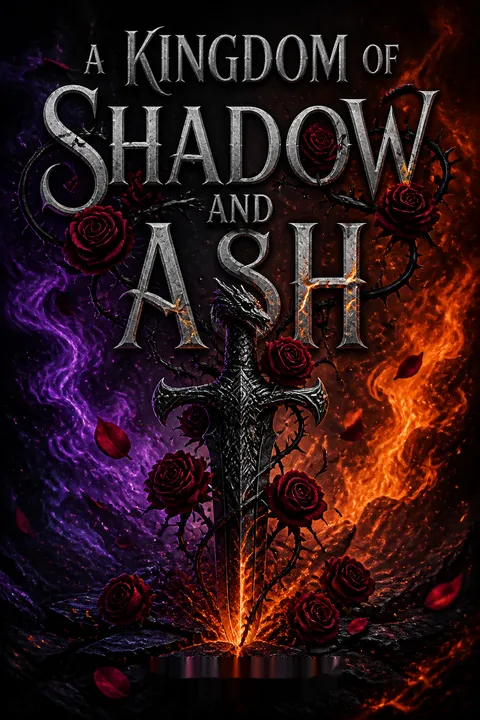
A Kingdom of Shadow and Ash receives overwhelmingly positive reviews (4.11/5 stars), praised for its rich world-building, complex characters, and intricate plot. Readers love protagonist Mal Blackburn's fierce yet tender nature and the multiple POV structure that enhances storytelling. The arranged marriage premise with enemies-to-lovers romance captivates fans, though some note slow pacing initially. Side characters, particularly Kai and Alina, steal hearts. The magic system, mythical creatures (wyverns, dragons, phoenixes), and political intrigue draw comparisons to Sarah J. Maas. Critics mention occasional confusion and excessive descriptions, but most readers eagerly await the sequel.
People Also Read




Characters
Mal Blackburn
The shadow-born princessMal is the fourth child of the wyverian rulers, marked by purple eyes in a family whose other children fit established roles. She is a skilled fighter, curious about other kingdoms, and uncomfortable with cruelty toward the helpless. Her sharp humor and readiness to act can conceal a deep fear that she is an error rather than a person with a place. She wants purpose, but also resists being treated as a political object. Her relationships with her siblings give her warmth and protection, while her growing bond with Ash2 forces her to question what duty and destiny demand of her.
Ash Acheron
The hesitant Fire PrinceAsh is heir to the Kingdom of Fire, a disciplined swordsman whose public reserve hides anxiety about speaking before crowds. He is often judged as cold or cruel because he keeps his thoughts private, but his attention to small details reveals a more considerate nature. Ash feels the pressure of becoming king and carries a strong sense of responsibility toward his sister3 and people. His bond with Mal1 begins in mutual suspicion, then grows through shared danger and earned respect. He is drawn to her independence, though he must learn to make his own vulnerability visible.
Alina Acheron
The caged Fire PrincessAlina is Ash’s2 younger sister, raised to embody the beauty and polish expected of a drakonian princess. She loves her brother2 and has long helped him manage the pressures of court, but the role has left little room for her own ambitions. She wants to fight, fly, and make decisions about her life, yet the customs around her treat those desires as improper. Her connection with Kai4 awakens both attraction and the possibility of being seen as more than an ornament. Alina’s pride and sharp temper protect a person who has rarely been asked what she wants.
Kai Blackburn
The fiercely loyal brotherKai is Mal’s1 secondborn brother and a formidable warrior whose charm often masks his seriousness. He is protective of Mal1, resents the marriage arranged for her, and worries that his duty to the Kingdom of Darkness will leave him unable to help. With Alina3, he is teasing but perceptive; he recognizes that desire cannot substitute for her own choice. His loyalty is expressed through action, from standing beside Mal1 at the temple to encouraging Alina3 to learn how to defend herself. Kai’s confidence in danger contrasts with the pain he has difficulty admitting when someone he cares for must choose a different path.
Kage Blackburn
The watchful scholarKage is Mal’s1 bookish brother, a careful reader of histories, maps, and political custom. He tends to observe before acting and can sound detached even when deeply concerned. His loyalty is expressed through research and quiet intervention rather than reassurance. Kage questions the cost of isolation between kingdoms and takes the old histories seriously, making him an important guide when familiar accounts prove incomplete. His shadow crow, Spirox, reflects his watchful temperament. Wren’s6 irrepressible presence challenges his preference for solitude, drawing out a more responsive side than he readily admits.
Wren Wynter
The restless northern princessWren is a small, quick-moving princess of the Kingdom of Ice who prefers climbing, spying, and exploring to formal court life. Her rapid chatter can make others underestimate how closely she watches people and places. She is curious about secrets, skilled at slipping into spaces unnoticed, and loyal to her twin brother19 Bryn19. Wren’s irreverence brings levity to tense company, especially around Kage5, but she is not careless about danger. She treats unfamiliar people with openness while remaining capable of acting decisively when those she cares about are threatened.
Tabitha Wysteria
The witch behind the recordTabitha is a witch from the destroyed Kingdom of Magic whose written reflections preserve a personal view of the Great War and its aftermath. Her attachment to Hadrian and her concern for the fate of witches shape her understanding of the kingdoms’ politics. She writes about love, faith, and the Council with a mixture of conviction and unease, often noticing how powerful institutions disguise self-interest as duty. Tabitha’s perspective carries emotional force, but the distance between her account and the public histories encourages readers to question what each version leaves out.
Vera
The watchful castle maidVera first appears as Mal’s1 careful personal attendant, a quiet presence who helps her navigate unfamiliar court customs. She is observant, guarded, and more curious than her subordinate position would suggest. Mal1 senses that Vera is not entirely what she seems, while Vera pays close attention to Mal’s1 unusual eyes and emerging abilities. Her place between the royal household and the wider conflict makes her difficult to read. Vera’s choices are shaped by loyalty to her people and a calculation of what might prevent a greater disaster.
Haven Blackburn
The future queenHaven is Mal’s1 eldest sister and the heir to the Kingdom of Darkness. Elegant, perceptive, and politically capable, she has spent her life preparing to rule. Her affection for Mal1 is genuine, though she can be firm when she believes her sister1 is acting without considering the consequences for their family. Haven’s calm exterior reflects years of training in diplomacy, not an absence of feeling. She values alliance-building and stability, and she understands that leadership often means carrying responsibility others do not see.
Hagan
Ash’s trusted Red GuardHagan is a senior member of the Red Guard and Ash’s2 longtime companion. His disciplined bearing makes him seem dependable, while his history with Alina3 gives their encounters a strained intimacy. He understands the expectations placed on the royal siblings and often acts as a practical guard between them and danger. Alina’s3 anger toward him suggests unresolved hurt from their youth, and his presence complicates the boundary between personal attachment and service to the crown.
Queen Cyra
The calculating Fire QueenCyra is Ash2 and Alina’s3 mother, a poised queen who manages court appearances and family strategy with exacting control. She is deeply interested in history, though her access to the Fire Kingdom’s formal institutions is restricted by custom. Her severe headaches unsettle her children and sometimes remove her from public life. Cyra’s concern for her heirs is real, but it operates alongside a strong belief that royal survival depends on planning and sacrifice. Her relationship with Alina3 is affectionate in name yet often shaped by authority and expectation.
King Ozul
Mal’s burdened fatherOzul rules the Kingdom of Darkness with a reputation for steadiness and care for his people. He is a loving father, but the burden of the past weighs heavily on him, and he has sought answers about Mal’s1 unusual place in the family. His private conversations with her reveal a king who knows that political history can injure the people who inherit it. Ozul tries to give Mal1 a choice even when the circumstances surrounding that choice are shaped by royal duty.
King Egan
The Fire KingEgan is Ash2 and Alina’s3 father and ruler of the Kingdom of Fire. He presents the marriage alliance as a way to repair old divisions and gather the kingdoms together. His courtly warmth and confidence help make the wedding appear hopeful, but his decisions are shaped by royal power and inherited assumptions. Egan trusts the structures of his kingdom, including its traditions around gender and succession, and does not always see how those rules constrain his children.
Adara
Ash’s guarded former loveAdara is a figure from Ash’s2 youth whose relationship with him left a lasting mark. Her presence is tied to his fear of being deceived and to the way he guards his feelings. She is poised and difficult to read, and her appearance among the wider conflict unsettles Ash’s2 sense of what he knows. The history between them is private, but its effects shape his caution with Mal1 and his reluctance to trust love when it arrives under political pressure.
Hessa
The desert-born strategistHessa is a princess of the Kingdom of Sand, trained in combat and political observation. She speaks plainly, studies people closely, and understands the importance of unity among communities that might otherwise be divided. Her knowledge of the prophecy and her kingdom’s history gives her a perspective unavailable at the Fire court. Hessa is confident without being careless, and she is willing to act when others hesitate.
Sahira
Hessa’s warrior sisterSahira is Hessa’s15 sister, a skilled fighter whose ease and grace make her difficult to ignore. She shares her sister’s15 experience of desert politics and the discipline of their warrior tradition. Her calm manner can conceal a sharp strategic mind, and she understands that appearances often serve as a useful distraction.
Flora Hawthorne
The perceptive Fae princessFlora is a princess of the Kingdom of Fauna, known for her beauty, social ease, and close connection to nature. She notices emotional truths that others try to hide and speaks with a candor that can disarm or unsettle. Flora is skilled at moving through courtly conversation without surrendering her own judgment. Her presence offers Alina3 a rare encounter with someone who understands the pressure of being assigned a role by birth.
Zahian Noor
The phoenixian princeZahian is a prince of the Kingdom of Light, confident and socially fluent. He uses humor and directness to test the people around him, and he is alert to the private tensions beneath royal ceremonies. His kingdom’s connection to Fire makes him a plausible political partner for Alina3, though he represents a future she has not chosen.
Bryn Wynter
Wren’s watchful twinBryn is Wren’s6 twin brother and the expected heir of the Kingdom of Ice. He is quieter and more reserved than Wren6, with the patience of a hunter and a strong protective bond with his sister6. His seriousness makes him an effective counterweight to her restless energy.
Nyx
Mal’s bonded wyvernNyx is Mal’s1 fast, fiercely independent wyvern, bonded to her since childhood. She responds to Mal1 rather than to ordinary commands and serves as mount, companion, and trusted partner in danger. Nyx embodies the freedom Mal1 associates with the skies and the closest thing she has to an extension of herself.
Plot Devices
The Hundred-Year Curse
A clock made of historyTabitha’s7 curse predicts darkness a century after the Great War and gives the kingdoms a deadline they do not understand. The story’s competing accounts present it as punishment, a threat to the royal heirs, and eventually a protective barrier. Its contradictory meanings drive Mal’s1 decision to marry Ash2, the search for the dagger, and the final choice to risk his death. The curse turns political history into a present-tense problem while exposing how little the kingdoms know about the forces shaping their world.
The Chosen and Cursed Prophecy
A murder framed as dutyThe Seer7 tells Mal1 that one child must kill the other to save the kingdoms, and identifies the Fire Prince2 as her target. Later, Hessa15 and Queen Cyra11 offer conflicting versions of who is chosen and what the killing will accomplish. The prophecy drives Mal’s1 initial plan and Ash’s mother’s11 attempt to direct him, while its ambiguity prevents any character from acting with full certainty. It functions less as a reliable map than as pressure that exposes what each person believes they owe their people.
Tabitha’s Glamoured Diary
History hidden in plain sightA notebook disguised by witch magic contains Tabitha’s7 personal reflections on the Council, the kingdoms, Hadrian, and the brewing conflict. Wren6 steals it from a maid’s quarters, and its concealed writing helps expose how public histories simplify the Great War. The diary supplies clues but not a complete explanation, which keeps the characters searching other records and questioning what the book omits. As a physical remnant of Tabitha’s7 perspective, it connects the old conflict to Mal’s1 present without making its author’s account automatically objective.
Glamour and Disguise
Enemies inside the courtWitches use glamour to alter appearances and pass as servants, guards, or other familiar figures. The device makes the Fire court vulnerable because trust depends on appearance and station; Mal’s1 suspicions about Vera8 and Wren’s6 attention to changing servants help uncover the deception. During the attack, glamour also hides the witches’ numbers beyond the border wall. Disguise therefore works both as a tactical advantage and as a thematic pressure: the kingdoms have mistaken visible identity for proof of loyalty.
Shadows and Bonds
Power tied to belongingWyverian royals normally receive shadow creatures that accompany and protect them, but Mal1 has none. Her absence of a shadow reinforces her sense of exclusion until her power over darkness emerges during the battle. The bond between rider and beast also gives Nyx’s20 role emotional weight: she is not merely transportation but Mal’s1 closest companion. Together, these motifs prepare the revelation that Mal’s1 relationship to shadows is far greater than the family’s familiar custom, and that her identity cannot be measured by what she appears to lack.
Download PDF
Download EPUB
.epub digital book format is ideal for reading ebooks on phones, tablets, and e-readers.








