


Key Takeaways
Hold faith and doubt together instead of shrinking God to a side.
A life of paradox. Sarah Arthur presents Madeleine L’Engle as both a celebrated Christian writer and a restless questioner. L’Engle resisted dividing life into sealed camps: faith or science, sacred or secular, fact or fiction. A lonely child who found company in books grew into an author of more than sixty works, admired as a mentor but remembered by her family as complicated and sometimes difficult. The point is not to make her a flawless hero. It is to see how a flawed person could still illuminate something beyond herself.
An icon, not an idol. L’Engle used the idea of an icon as a window onto a reality larger than the person depicted. Her friend and editor Luci Shaw challenged her theology, and the two could disagree, understand each other better, and even sing together. Admiration, in this telling, should not require pretending that a person has no blind spots.
What's striking is that both-and thinking is not simply a habit of collecting opposites. It asks people to stay in relationship while testing what each side can actually explain. That resembles intellectual humility in science, where provisional models can be useful without being mistaken for the whole world. The approach is especially valuable in polarized settings, where disagreement is often treated as proof of bad faith. Still, not every conflict resolves in a productive middle. Some claims are incompatible, and some require a clear moral judgment. The strength of L’Engle’s example lies less in refusing decisions than in refusing premature certainty.
Treat ordinary life as sacred, not as faith's lesser, secular zone.
A book between camps. A Wrinkle in Time was difficult to classify and reportedly rejected by publishers at least twenty-seven times before publication in 1962. Its Christian references were too explicit for some literary gatekeepers. Some conservative Christian critics, by contrast, accused the novel of spiritual danger and sought to keep it from young readers. It went on to win the 1963 Newbery Medal, demonstrating that a story could cross boundaries its audiences tried to enforce.
The sacred in the everyday. L’Engle rejected the idea that God belongs only in church, religious books, or approved activities. The Incarnation, her central Christian reference point, means that God entered ordinary human life. For her, art, family routines, scientific curiosity, and even bodily life could become places of spiritual attention. The useful question is not whether an activity has been labeled secular, but whether it serves truth, beauty, and human flourishing.
This argument challenges a familiar form of cultural sorting: treating religious content as safe and ordinary culture as suspect. It also avoids the opposite assumption that faith must disappear from public art to be acceptable. The idea connects with the study of institutions, which shows how labels shape what people consider legitimate before they encounter the work itself. Yet calling all life sacred cannot mean calling every act good. A spiritual vocabulary needs ethical tests: does a practice honor other people, tell the truth, and resist harm? L’Engle’s expansive vision works best when openness is paired with discernment.
Tell stories that train courage, not rules that merely announce it.
Stories shape action. Arthur argues that stories do more than entertain or illustrate a moral. They help people imagine who they are, what matters, and what they might do when a hard choice arrives. Jesus often answered questions through parables rather than lists of principles. L’Engle drew on the same power of narrative, giving young characters families, mentors, books, and communities that shaped their moral instincts.
A truth that takes form. L’Engle was influenced by George MacDonald, who believed imaginative stories could awaken a reader’s conscience without simply dictating conclusions. She also drew on the Christian idea of the True Myth: myths can echo a larger truth, while Christianity uniquely claims that its central story took place in history through Jesus. Arthur shows how this approach affected readers: one remembered that L’Engle’s novel A House Like a Lotus helped her work toward forgiving a father who had abandoned the family.
Narrative offers a kind of rehearsal. A reader can encounter betrayal, courage, or forgiveness in a protected imaginative space, then carry a vocabulary for those experiences into life. This complements moral instruction: rules can clarify boundaries, while stories help people notice what a situation feels like and whom it affects. Narrative identity theory similarly treats life as partly organized through the stories people tell about themselves. The risk is that an emotionally compelling story can also normalize a harmful script. Stories deserve attention not only for the lessons they seem to teach, but for whose choices and consequences they make visible.
Let scientific discovery enlarge wonder, not dictate what faith may believe.
A route back to belief. L’Engle described reading physicists such as Albert Einstein and Max Planck as part of her movement toward Christian faith. Their work made the universe seem more astonishing, not less. During a family camping trip, she read about the vast and tiny scales of creation; those questions helped spark the imaginative world of A Wrinkle in Time. The novel’s tesseract, a way of folding space to cross distance, turns scientific speculation into a story device rather than a settled scientific claim.
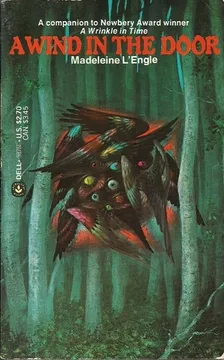
Curiosity without false certainty. L’Engle argued that scientific accounts of how the universe works need not settle questions about purpose, value, or God. Arthur also describes her interest in cell biology: learning about mitochondria changed the direction of A Wind in the Door. Science gave the novelist new material and new metaphors, while the fiction invited readers to wonder at connections between the small and the cosmic.
The strongest version of this view treats science and theology as different modes of inquiry, not rival answers to every question. Scientific methods excel at testing claims about observable processes; they do not, by themselves, settle what makes a life meaningful. But the relationship cannot be reduced to science supplying fresh metaphors for faith. New evidence can require religious readers to revise interpretations of scripture or creation. That possibility is not a failure of faith. It is the cost of taking both the natural world and one’s account of it seriously.
Make art with rigor; pious subjects cannot rescue careless craft.
Art as a vocation. In Walking on Water, L’Engle treated writing as a form of spiritual service, not a hobby that mattered only after more respectable work was done. Her own career required years of persistence through rejection, including a discouraging stretch while raising children and helping run a country store. She encouraged artists to take their work seriously because creativity, in her view, is one way human beings respond to a Creator.
Craft carries conviction. The point is not to insert religious language into every story. L’Engle argued that a work should first be made as well as the artist can make it. A pious message cannot compensate for thin characters, false emotion, or lazy prose. Arthur also emphasizes that artistic practice should not be isolated from faith communities: writers need audiences and institutions willing to support imagination, not merely use art to deliver a predetermined lesson.
This account links artistic discipline with attention: revision, form, and truthful characterization become ways of respecting both subject and audience. It also resists a market tendency to treat explicitly religious work as valuable chiefly for its message. Excellence can make a work more hospitable to readers who do not share its theology. Still, artistic vocation should not become a shield against criticism or a claim that an artist’s needs outrank everyone else’s. The standard of craft is meaningful precisely because it includes responsibility to the people represented, the people addressed, and the communities that sustain the work.
Tell your story without taking other people's lives away from them.
Emotional truth has limits. Arthur describes recognizing her own childhood fire story in L’Engle’s memoir, only to learn that L’Engle’s version was a composite rather than a literal account. The emotional experience felt true, but the episode had not happened exactly as presented. That tension becomes more serious when memoir touches family. L’Engle’s relatives said her books sometimes idealized their marriage and portrayed family members in ways that did not match their experience.
Other people are not characters. Her son Bion appeared in fiction as the eternally young Rob Austin, and L’Engle struggled to acknowledge his later alcoholism and death. Arthur does not dismiss L’Engle’s gift for conveying emotional realities; she asks what happens when a writer’s preferred narrative overrides another person’s memory, privacy, or growth. Memoir and fiction can reveal meaning, but they do not cancel the obligation to listen to those who were there.
This is the book’s sharpest ethical correction to its celebration of storytelling. Memory is selective, and memoir inevitably shapes events into scenes and patterns. But when a writer has greater public authority than the people being described, narrative skill can make one version feel definitive. The issue is especially acute with children, who may later have to live inside a parent’s public account of them. Consent, review, and accountability cannot eliminate every disagreement, but they can make room for other people’s agency. A story’s emotional force is not proof that its details are harmless or fair.
Practice faith in the dark before you need it to carry you.
Hope without guarantees. L’Engle faced losses that no hopeful slogan could undo: her father died when she was seventeen, her husband Hugh died of cancer, and her son Bion died from end-stage alcoholism. She also survived a serious car accident far from home. She held to the possibility that goodness would prevail, but she knew that prayer did not guarantee the outcome a person wanted.
Small practices sustain belief. L’Engle kept regular prayer and Bible reading, attended worship, received Communion, and ended the day with Compline, an evening prayer service in the Anglican tradition. She compared repeated prayer to practicing musical scales: it could feel empty on a given day, yet still form the habits that made faith possible. These rituals did not erase grief. They gave her a structure for continuing through it with help from friends and community.
Rituals can stabilize attention when emotion is unreliable. Repetition gives a person a known action to take when circumstances are too large to interpret, and communal practice can keep suffering from becoming entirely private. That does not make ritual a cure, nor does it mean every tradition or institution is safe for every person. The useful distinction is between practice as control and practice as accompaniment. L’Engle’s routine does not promise that darkness will quickly lift; it offers a way to remain oriented and connected while it lasts.
Make belief visible as a lovely light, not a weapon.
A story as a handhold. Arthur recounts Jessica Mesman Griffith’s experience of returning to a painful family situation after her mother’s death. Driving through a dark, rainy night with her children, she listened to A Wrinkle in Time. In the novel, Meg finds her father, but he cannot make everything right. That moment helped Griffith face her own pain without letting it consume her, and to keep going for her children. The book did not solve her circumstances; it helped her imagine a next step.
The witness of joy. L’Engle believed that Christian faith should be communicated through lives that make others curious about its source, not through contempt for those who disagree. Her legacy, as Arthur presents it, is a call to combine courage with humility: name evil, acknowledge personal failure, and keep making room for love, art, friendship, and wonder. The goal is not to become an untarnished symbol, but to point beyond oneself.
The episode shows why fiction can matter in crisis without pretending it offers therapy or a guaranteed rescue. A character’s predicament can give readers language for feelings they cannot yet articulate, then make an alternative response imaginable. That is a modest but powerful form of influence. The emphasis on attraction rather than attack also has a public dimension: trust grows when conviction is paired with care. Yet beauty alone is not evidence that a belief is true. Its ethical value appears in how people treat one another, especially when disagreement or suffering makes easy performances of kindness impossible.
Analysis
Sarah Arthur’s portrait is organized around a tension: Madeleine L’Engle was influential because she resisted boundaries, but her own life shows why boundary-crossing needs ethical limits. The book’s most persuasive contribution is not simply its defense of religious imagination. It connects imagination to several kinds of practice: reading stories as moral rehearsal, treating scientific curiosity as a source of wonder, making art with discipline, and sustaining belief through ritual when emotional certainty fades. L’Engle’s influence is traced through readers whose faith, vocation, or capacity to forgive was altered by encountering her characters and ideas. That testimony makes the legacy concrete without reducing it to book sales or awards.
The narrative also complicates its own admiration. L’Engle’s memoirs could blur memory and invention, and her family sometimes felt that her public stories constrained their private identities. Arthur’s willingness to include that damage prevents the icon from hardening into an idol. It also reveals a broader problem: narrative power is unequal. A gifted writer can make an interpretation of shared life feel more authoritative than the recollections of those who lived it. The book’s ethical insight is that imaginative truth and factual accountability are not substitutes for each other.
The both-and approach is valuable, but it can be misused if it turns every disagreement into a paradox to be patiently reconciled. Some oppositions involve unequal power, demonstrably false claims, or real harm. The book is strongest when openness remains accountable to evidence, craft, and other people’s testimony. Its religious framework will not persuade every reader, especially those who do not share its account of Christ. Yet its wider argument travels: art can make complex questions approachable, curiosity can deepen rather than threaten conviction, and hope need not depend on pretending that suffering has already been resolved. L’Engle’s legacy is therefore less a settled system than a demanding posture: remain open to surprise, practice what sustains you, and do not confuse a person’s light with its source.
Review Summary
Reviewers widely praise A Light So Lovely as a thoughtful, honest exploration of Madeleine L'Engle's spiritual legacy, balancing admiration with candid acknowledgment of her flaws. Most appreciate Arthur's interview-based approach, weaving together perspectives from writers, friends, and family. The book's thematic structure around paradoxes—faith/science, sacred/secular, religion/art—resonates strongly. Some critics note occasional redundancy or heavy theological tangents. Nearly all readers, whether lifelong L'Engle fans or newcomers, report feeling inspired to revisit her work.
People Also Read



Glossary
Both/and
Holding tensions togetherL’Engle’s approach to apparent opposites, such as faith and science or sacred and secular. Rather than assuming one side must cancel the other, it remains open to complexity and surprise. The term does not require treating all opposing claims as equally true; it resists deciding in advance that God or meaning can exist only within one category.
Icon
A window beyond itselfIn Arthur’s account, an icon is not an object to worship but an image or person that directs attention toward a larger reality. L’Engle could be understood as an icon when her writing pointed readers toward God, love, or truth. The distinction matters because admiration can become idolatry when the person is mistaken for the source of what they reveal.
Iconoclast
A challenger of cherished assumptionsA person who questions or dismantles an idol, including an idea treated as unquestionable. L’Engle argued that even people who need models of faith need someone nearby who can challenge their assumptions. In her friendships, this meant honest disagreement without reducing the other person to an enemy.
Kairos
L’Engle’s time-bending storiesL’Engle’s label for fiction involving unusual relations between time and space, including the stories about the Murry and O’Keefe families. These novels include A Wrinkle in Time and its related books. Arthur contrasts Kairos with Chronos, the label used for more realistic stories set in ordinary time.
Chronos
L’Engle’s real-time storiesL’Engle’s label for stories set in the recognizable world and unfolding in ordinary time, often associated with the Austin family novels. Such books may contain hints of wonder or the unusual, but they do not center on the time-and-space disruptions found in the Kairos stories.
True Myth
Myth fulfilled in historyA Christian literary idea associated in the book with C. S. Lewis and J. R. R. Tolkien. Myths and imaginative stories can echo deep truths, while Christianity claims that its central story became historical reality in Jesus. L’Engle saw fiction as capable of pointing toward that truth without being identical to it.
Scandal of particularity
Universal meaning through one particularA theological term for the Christian claim that redemption for all people came through specific historical particulars: a time, a people, and Jesus of Nazareth. L’Engle found this idea compelling because it joined cosmic significance to concrete human life. For her, God’s care for the universe did not make individual persons less particular or valuable.
Tesser
Travel by folding spaceIn A Wrinkle in Time, tessering is a form of travel that folds space so characters can cross vast distances. The book draws on ideas about dimensions and space-time but uses them as imaginative story material, not as a claim that the fictional method is established physics. The term also became part of L’Engle’s affectionate encouragement to readers facing difficult transitions.
Echthroi
Forces that erase particularityIn A Wind in the Door, the Echthroi are hostile forces that seek to negate or erase the created identity of living things. Meg Murry resists them by naming and affirming the particular worth of beings they would reduce to nothing. The idea gives a cosmic form to the book’s concern with love, individuality, and the harm of treating people as interchangeable.
Compline
Nighttime communal prayerAn evening prayer service in the Christian liturgical tradition, including the Anglican tradition practiced by L’Engle. It typically brings together Scripture, prayer, and reflection at the close of the day. L’Engle used Compline as a regular practice with friends, not as a guarantee of emotional comfort but as a dependable way to end the day in prayer.
Download PDF
Download EPUB
.epub digital book format is ideal for reading ebooks on phones, tablets, and e-readers.








