

Key Takeaways
Build a marriage around shared wonder, not romantic chemistry alone.
Two different beginnings. Madeleine grew up in a solitary, book-filled New York world; Hugh was raised in a more conventional Tulsa family, where his father’s financial losses brought years of hardship. They met in the theatre, where conversation, shared work, and delight in beauty drew them together. Their marriage outgrew attraction into friendship and companionship without losing passion.
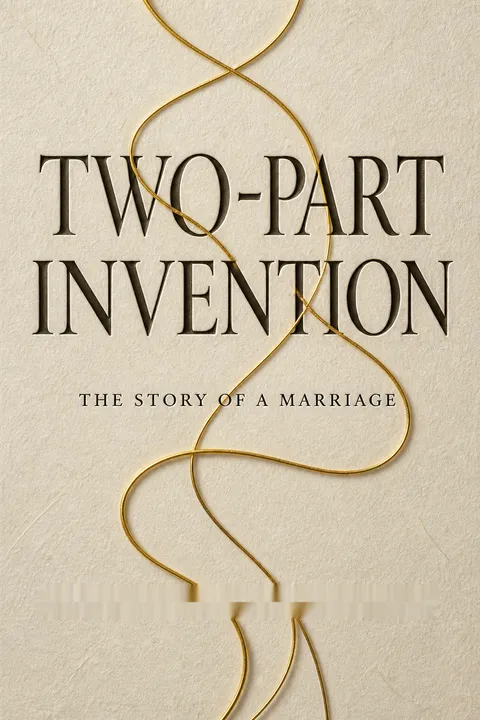
A house made a home. Crosswicks, the crooked Connecticut farmhouse they bought in 1946, became a symbol of their life together. They repaired it, raised children there, and made it welcoming despite its sloping floors and constant need for work. The title’s musical image suggests two distinct voices woven into a shared composition. Their bond rested on affection, but also on common pleasures, values, and attention to the world.
What's striking is that compatibility appears here less as sameness than as a shared way of noticing. Music, landscapes, conversation, and hospitality gave the couple a recurring language for recognizing one another. That resembles the idea of relational attunement: closeness grows when partners respond to what the other finds meaningful. Still, shared taste is not a universal formula for durable love. The deeper principle is mutual participation, not matching playlists or beliefs. The farmhouse makes that principle visible: a relationship becomes a home through repeated acts of care, not through architectural perfection.
Keep your own vocation alive inside the life you build together.
Known before marriage. Hugh proposed knowing that Madeleine had published novels and intended to keep writing. She did not treat marriage as a reason to abandon her work, even when family life and the general store consumed much of her time. Her writing brought repeated rejection, but she kept returning to the typewriter. Hugh, too, eventually left the store to resume acting, the work he felt called to do.
Love needs two selves. Early in their marriage, Madeleine wrote about loving Hugh fully while retaining the core of herself. She also learned that spouses need not disclose every private thought to prove intimacy. In her view, a marriage belongs to both partners, but each person remains an individual. Their shared life depended on that balance, not on one person dissolving into the other.
This memoir makes a useful distinction between intimacy and fusion. In psychology, secure attachment is often described as closeness that supports exploration, rather than closeness that requires constant reassurance or self-erasure. Madeleine’s commitment to writing and Hugh’s return to acting illustrate that tension in concrete terms. The arrangement was not effortless: caregiving, income, and family demands repeatedly constrained her work. That matters because personal vocation is not protected by good intentions alone. It also requires time, resources, and a partner who treats the other’s ambition as real.
Treat shared routines as relationship infrastructure, not romantic leftovers.
Ordinary life holds a marriage. Theatrical work kept Hugh away for long stretches, while Madeleine managed writing, children, and the household. During their years running a village store, they carved out a quiet hour before dinner for conversation. Back in New York, their evenings often meant cooking together, eating by candlelight, walking the dog, and talking through the day.
Routines had to change. When Hugh returned to theatre, their old habit of staying up late no longer fit the children’s school schedule. Madeleine discussed the problem with the children and arranged for them to manage their mornings so she could be awake when Hugh came home. She also insisted that the couple keep time for one another. Their routines were not fixed rules; they were practical choices that helped the family remain connected.
The domestic details are not decorative. They show how a relationship is supported by repeated, low-visibility coordination: meals, schedules, conversation, and shared responsibilities. Family research often emphasizes that rituals can create predictability and belonging, especially when work disrupts time together. Yet this example should not become a prescription for one spouse to absorb all household adjustment. Madeleine’s plan depended on competent children and a family willing to negotiate. A routine strengthens intimacy when it is jointly understood, not when one person’s needs quietly become everyone else’s obligation.
Let love include anger, distance, and repair, not only tenderness.
Courtship was not seamless. During the Cherry Orchard tour, Hugh suddenly withdrew from Madeleine. She was hurt, but chose not to chase him or demand an explanation. Months passed before they began seeing one another again. Their later marriage also included separations for work, misunderstandings, and periods when one partner seemed emotionally far away.
Conflict changed with time. Madeleine describes both spouses as volatile, but says their anger was direct rather than expressed through constant small injuries. They learned to accept each other’s rough edges, and disagreements became less frequent. She sees a long marriage as a changing relationship, with strained periods as well as renewed closeness. That does not make every painful episode beneficial; it means a difficult season need not define the whole bond.
The account resists the glossy idea that lasting love means uninterrupted harmony. Relationship research distinguishes constructive disagreement from contempt, avoidance, or coercion, although intensity alone cannot tell which is present. Madeleine’s description of honest anger offers one possible form of repair, but it is specific to this couple and should not be generalized to unsafe relationships. The more transferable insight is that a partnership needs ways to return to contact after distance. Patience can create space for that return, but silence is not automatically wisdom, and waiting should not replace necessary communication.
When you cannot fix suffering, make your presence useful.
Illness narrowed her choices. Hugh’s bladder cancer treatment brought severe nausea, weakness, ulcers, and other complications. Madeleine could not remove the disease or make his body recover on command. She could sit beside him, hold his hand, encourage food when he could manage it, and write while he slept. At home, family members tried to make the days gentler, with meals, walks, and familiar views of the fields.
Presence was active care. Madeleine’s family helped her see that doing nothing to cure the illness did not mean doing nothing for Hugh. A hand held during a painful procedure, a nurse’s patience, or a family member’s help with transport could make an unbearable day more human. She also recognized that loved ones sometimes pushed too hard because helplessness made them desperate to help.
This is a sharp lesson in the difference between control and care. In caregiving, practical presence can protect dignity even when it cannot change the prognosis. It also requires attention to the patient’s limits: the family’s urging Hugh to eat came from love, but sometimes added pressure to a problem he could not control. The memoir therefore avoids turning compassion into a simple virtue story. Effective support combines emotional availability with listening, clinical competence, and respect for what the ill person can actually bear.
Hold faith without calling every outcome God's approval or punishment.
Prayer made room for protest. As Hugh’s condition worsened, Madeleine rejected the idea that she should suppress prayers asking for a different outcome. For her, prayer could voice the heart’s longing even when the intellect knew that illness was already present. She also resisted treating cancer as divine punishment or as evidence that God had abandoned them.
Faith meant accompaniment. Madeleine believed that suffering could arise from human choices and their accumulated consequences, not from God deliberately inflicting pain on an individual. She could not explain why Hugh was ill or promise that prayer would produce recovery. Instead, she held to the belief that a loving God could be present within pain. Her position did not erase doubt; it gave doubt a place to speak.
The strongest theological move here is refusing to make suffering proof of moral failure. That protects the sick person from blame and allows prayer to function as honest expression rather than a technique for controlling events. The argument also has limits: broad claims that disease reflects humanity’s past choices cannot identify why a particular person becomes ill, and can accidentally invite new forms of blame. The memoir’s more durable contribution is its distinction between seeking meaning and claiming certainty. Faith becomes accompaniment, not an explanation that closes the question.
Choose medical care by weighing life, dignity, and the cost of prolonging death.
Treatment involved real tradeoffs. Hugh received platinum chemotherapy, which the family hoped would control the cancer. The treatment was punishing, and his health deteriorated through complications. When the cancer threatened kidney function, he chose major surgery despite the risks. Madeleine and the family continued to ask whether further intervention could restore life or merely extend dying.
A promise guided the final choice. After Hugh’s condition worsened again, the family agreed to a no-code order, declining resuscitation that could have left him isolated in intensive care without reversing the underlying illness. This did not mean abandoning all care. It meant honoring an earlier promise not to prolong dying through measures Hugh would not have wanted. The doctors supported the decision, and Hugh’s final days remained focused on comfort and human contact.
The memoir shows why medical decisions cannot be reduced to a contest between fighting and giving up. Modern treatment can extend survival, but its burdens and the patient’s values matter alongside its technical promise. A no-code order is not the same as refusing all treatment; it specifies what should happen during cardiac or respiratory arrest. Advance conversations can make such choices less chaotic, though no document removes the emotional cost. The essential ethical question is whether an intervention serves the person’s life as they understand it, not merely whether medicine can perform it.
Let a circle of people carry what one caregiver cannot.
Support became practical. During Hugh’s long hospitalizations, their son and daughter-in-law helped with decisions and daily care. Their daughters stayed connected across distance, and friends, godchildren, clergy, and local church members visited, prayed, brought food, and offered rides. Nurses cared for Hugh with skill and kindness, sometimes holding a basin through the night as he was sick.
Community kept life from shrinking. Madeleine still taught, wrote, swam, and spent time with family, though her attention remained fixed on Hugh. The support around them did not remove fear, but it made the burden less solitary. After his death, the church community organized food and a reception, while family members handled calls and practical tasks. Care was not one person’s private achievement; it was a network of small acts.
The book treats community as infrastructure, not a vague feeling of belonging. Rides, food, professional care, and visitors reduce the number of tasks concentrated on a single caregiver. This aligns with contemporary attention to caregiver burden, which recognizes that support must be tangible to matter. The memoir’s unusually strong network also reflects specific circumstances: a close family, an established rural community, and professional connections. Readers without those resources may need to build support deliberately through neighbors, faith groups, or formal services. The principle remains: care should be shared before exhaustion makes asking harder.
Give grief time, ritual, and room to remain unfinished.
Loss was marked openly. After Hugh died, family and friends gathered for a funeral that held both joy in his life and sorrow at his death. The service included familiar hymns and readings by the grandchildren, followed by a reception at Crosswicks. Madeleine did not treat celebration as a reason to hide grief. She also accepted the ordinary help of friends and family as the house filled with visitors.
Grief continued afterward. She returned to public work, but small reminders could bring the loss sharply back. She describes grief as changing in intensity rather than following a neat schedule. Memory, family gatherings, and the house they had shared helped her carry the relationship forward. She does not present recovery as forgetting Hugh or finishing grief once and for all.
The funeral matters because ritual gives private loss a public shape. It tells a community how to gather, remember, and help, while allowing mourners to experience sorrow without performing quick recovery. Contemporary grief perspectives also question rigid stage models, since bereavement varies across people and over time. Madeleine’s return to work does not prove that she is done grieving; it shows that ordinary life and grief can coexist. Ritual cannot remove loss, but it can give people a structure for carrying it together.
A shared life can outlast the body as memory, practice, and identity.
Marriage changed form at death. Madeleine accepts that the marriage vow ended with Hugh’s death, but not that their shared life became meaningless. After forty years, the habits, memories, and choices they had built together were part of who she was. Their house, music, family traditions, and remembered conversations carried traces of that life into the future.
The word we remained. Madeleine did not claim certainty about what happens after death. She did believe that Hugh’s influence continued in her, and that she could carry their history without pretending he was still physically present. The title’s two-part image fits this ending: two people make something shared, and that shared creation can remain meaningful even when one voice falls silent.
This is a powerful account of narrative identity: people understand themselves partly through relationships that have shaped their habits, values, and memories. Continuing bonds with the dead need not imply denial; they can be a way of integrating loss into an ongoing life. The memoir carefully distinguishes that emotional continuity from certainty about an afterlife. Its claim is therefore both intimate and modest. A shared history cannot undo death, but it can remain active in the choices, rituals, and relationships of the person who survives.
Analysis
Two-Part Invention is a memoir of marriage structured by contrast: the bright beginnings of courtship, years of family and work, and the final illness that exposes what the relationship has become. Its central insight is not that love conquers adversity. Hugh’s cancer is not conquered, and Madeleine does not pretend that faith or devotion makes suffering fair. Instead, the book shows how a marriage becomes durable through shared attention, negotiated routines, distinct vocations, and the ordinary work of caring for one another.
The title’s musical metaphor captures an important tension. A partnership creates a shared life without requiring two people to become interchangeable. Madeleine’s writing remains hers; Hugh’s acting remains his; the marriage is the composition made from their separate capacities. Crosswicks gives that idea a physical setting. Its crooked structure is not repaired into perfection, but inhabited, maintained, and made welcoming. The house is both an image of endurance and a record of labor.
The illness narrative also gives the book ethical force. It portrays medical treatment as neither unambiguously heroic nor simply futile. The family accepts a risky operation, then eventually declines resuscitation that would conflict with Hugh’s wishes. The distinction between treating illness and prolonging dying is central, as is the insistence that patients remain people with dignity, not problems for medicine to solve.
The memoir’s limits are part of its value. Its marriage depended on particular resources, including family support, a close community, and a partner who respected Madeleine’s vocation. Her choices cannot serve as a universal template, especially where gendered labor or unsafe conflict is involved. Her theology may not persuade every reader, but its refusal to blame the sick offers a broadly humane lesson. The book finally argues that love is not proven by preventing loss. It is shown in how two people build a life, care for each other inside uncertainty, and carry that life after death.
Review Summary
Reviews for Two-Part Invention are largely positive, averaging 4.24/5. Readers praise L'Engle's elegant, meditative writing about her 40-year marriage to actor Hugh Franklin, particularly her wisdom on love, faith, and loss. Many highlight memorable quotes about marriage's growth through "hills and valleys." Some readers note the book's authenticity is questioned by L'Engle's own family, who called it "largely fictional," citing affairs and struggles omitted from the account. Despite this, most find it a moving, nourishing meditation on love, grief, and companionship.
People Also Read




Glossary
Two-Part Invention
A shared life made togetherThe title’s musical metaphor for a marriage formed by two distinct people whose lives become interwoven. The partners contribute separate voices rather than disappearing into one another. In L’Engle’s account, the marriage creates a shared identity and history while preserving each person’s vocation, temperament, and inner life.
kything
Wordless communion between peopleL’Engle uses kything to describe a silent form of communication that deepens between people who have lived closely together. It is conveyed through presence, touch, and shared understanding rather than explicit speech. She describes it as a way she and Hugh remained connected even when illness made ordinary conversation difficult.
echthroid projections
Fearful imagined futuresL’Engle’s term for the mind’s tendency to project frightening possibilities into an uncertain future. She likens these thoughts to small, persistent disturbances that intensify anxiety. Her practical response is to notice the projections, avoid treating them as facts, and return attention to the present day and the people who need care.
incarnational view of the universe
God present in embodied creationA theological perspective in which the divine is not separate from material life but is present in the created, embodied world. L’Engle connects this view to the Christian belief in God becoming human, and to her attention to bodies, food, nature, illness, and human dignity. It helps her understand care for people as spiritually significant.
Crosswicks Journals Series
About the Author
Other books by Madeleine L'Engle







Download PDF
Download EPUB
.epub digital book format is ideal for reading ebooks on phones, tablets, and e-readers.








