

Key Takeaways
Read a child soldier as a child shaped by war, not a born monster.
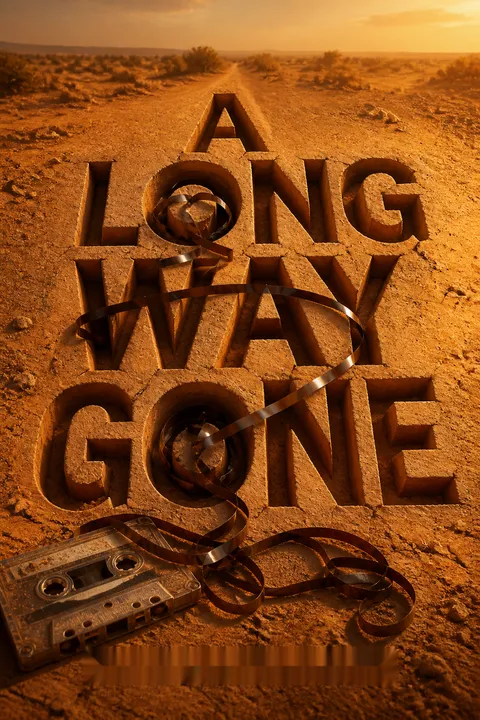
Before the guns arrived. Ishmael Beah begins with a childhood of family tensions, school, soccer, and a rap group formed with his older brother, Junior, and friends. They learned lyrics from cassettes and practiced for talent shows. Their music and dancing mattered because they belonged to a life organized around play and possibility, not violence.
War interrupts ordinary life. In 1993, at age twelve, Ishmael and Junior are away from home for a performance when rebels attack their town. They cannot find their family. On the journey back, they see civilians killed and towns emptied. Their childhood is not a prelude to some hidden violent nature. It is a life abruptly broken by armed conflict.
The memoir's opening makes its moral argument through contrast: readers first meet children absorbed in music, friendship, and family, then watch violence overtake those familiar routines. That sequence resists the convenient idea that brutality belongs to a separate kind of person. Developmental psychology likewise treats children as especially shaped by the relationships and institutions around them. The contrast does not erase the harm Ishmael later causes. It makes responsibility more accurate by showing how a child's agency can be manipulated, constrained, and damaged without making the child a monster by nature.
When war removes home, hunger and fear can make armed groups look like refuge.
Flight becomes daily life. After escaping Mattru Jong, Ishmael and his companions sleep in abandoned villages, eat whatever they can find, and repeatedly risk returning to dangerous places for food. Their group is treated with suspicion because other children have been forced to fight. Even villagers who help them may fear that sheltering strangers will bring danger to their own families.
Safety has a price. The boys are separated and reunited, lose friends, and endure constant hunger. When Ishmael reaches Yele, a village occupied by government soldiers, it briefly seems safe. But after the soldiers' losses mount, they tell the boys that staying requires helping the army. War has narrowed the choices: leaving may mean death, while joining offers food, protection, and a place in a group.
This is a powerful account of how coercion can work without a formal kidnapping. A child who lacks food, trusted adults, and safe passage may accept an armed group's offer because every alternative looks worse. That helps explain recruitment without treating it as consent. The memoir also shows why individual rescue is not enough: a child returned to a community that fears, rejects, or cannot feed him remains vulnerable. The limits of choice matter, but they do not make the resulting violence harmless to victims.
Watch how revenge, drugs, and routine turn killing into a soldier's daily work.
The army builds a role. At Yele, military leaders tell the boys that fighting will protect the village and avenge their families. Training gives them weapons, teaches them to attack, and urges them to imagine enemies as responsible for their losses. The boys are rewarded for aggression and are told that the army is righteous, even as its forces loot, kill prisoners, and attack civilians.
Violence becomes repetitive. Ishmael describes taking cocaine mixed with gunpowder, marijuana, and pills that keep him energized and numb. War films, including Rambo movies, supply images of toughness to imitate. After his first battle, he shoots repeatedly, then joins raids and executions. The transformation does not arrive as one dramatic decision. It is reinforced through drugs, group approval, orders, and repetition.
The memoir makes recruitment legible as a social process. The boys are given a new identity, a grievance to organize around, a group to belong to, and routines that reward obedience. Those mechanisms resemble coercive group dynamics in many settings, though armed conflict adds lethal force and extreme deprivation. The army's language of protection is especially revealing because it masks violence against civilians. Understanding that contradiction is not a way to excuse atrocities. It shows why prevention must address command structures and material conditions, not only a recruit's attitudes.
Removing a child from combat begins recovery, but it does not finish it.
The battlefield follows him. After roughly two years as a soldier, Ishmael is taken from his unit to Benin Home, a rehabilitation center in Freetown. The abrupt change does not make him feel safe. He craves drugs, fights other boys and staff, suffers migraines, and wakes from nightmares. Ordinary activities can trigger memories, while silence leaves room for fear and guilt to return.
Recovery takes time. The staff provide food, medical care, school supplies, and counseling, but the boys often reject their help. Ishmael gradually begins to engage through music and conversations with Esther, a nurse. The memoir does not present rehabilitation as a clean break or a simple cure. It shows a slow effort to build enough trust and stability for a life beyond the squad.
A change of location can stop immediate exposure to combat, but it cannot instantly undo learned survival responses. The memoir's account of withdrawal, nightmares, anger, and distrust fits a broader understanding of trauma as something carried in habits and relationships, not only in conscious recollection. It also complicates the comforting idea that a well-intentioned program can repair everything. Safety and treatment create conditions for recovery; continuity, family support, and social acceptance remain essential, and the book shows how easily those conditions can be disrupted.
Let trust grow through ordinary care, not demanded confession.
Small gestures open a door. Esther does not begin by interrogating Ishmael about what he has done. She asks his name, offers friendship, and gives him a Walkman with rap music. Listening to songs and writing down lyrics give him something familiar to focus on. When he does talk about the war, she listens without treating him as either a spectacle or a threat.
Connection is not absolution. Ishmael initially resents staff members who tell him the violence was not his fault. With Esther, that reassurance begins to feel genuine, though it does not remove his guilt. Her patience gives him room to approach painful memories at his own pace. Their relationship helps him remember that he is still a child, capable of interests and attachments beyond the role of soldier.
The value of Esther's care lies in its combination of warmth and respect for choice. She does not demand a full account as the price of attention; music, conversation, and shared time make contact possible first. Trauma-informed practice often emphasizes safety, agency, and trust for precisely this reason. The memoir also preserves an important distinction: compassion can reduce a survivor's isolation without declaring that victims' suffering does not matter. Acknowledging constrained childhood and acknowledging harm are compatible moral tasks.
Build a real community around survivors, because political violence can undo private safety.
Family becomes possible again. With help from Leslie, a social worker, Ishmael is reunited with an uncle he barely knows. His uncle, aunt, and cousins welcome him into their home, share meals, tell stories, and give him room to adjust. Ishmael returns to school and begins to imagine a future. Ordinary family life is comforting, but it remains difficult for him to show happiness or explain his past.
The war reaches the city. In May 1997, a coup brings soldiers and rebels into Freetown. Food becomes scarce, armed men terrorize civilians, and Ishmael's uncle dies during a period when medical help is unavailable. Fearing that he will be forced back into fighting, Ishmael leaves for Guinea. His story shows how a survivor's fragile recovery depends on public safety as well as private care.
The uncle's household offers more than shelter: it restores routines, relationships, and a place within a family. Yet the 1997 coup demonstrates that individual resilience cannot compensate for political collapse. This is a useful distinction for humanitarian work: psychosocial support matters, but it cannot substitute for security, functioning health services, and protection from renewed recruitment. The memoir is not a policy manual, and its ending is not a model of complete recovery. It is a precise reminder that rebuilding a life requires institutions sturdy enough to protect it.
Preserve the survivor's whole life, including music, family memories, and cultural stories.
Memory holds more than violence. Ishmael's account repeatedly returns to rap lyrics, soccer, family meals, and the stories told by elders in his community. He remembers his grandmother's explanation of why people should behave like the moon, and he recalls the tale of Bra Spider, whose clever scheme leaves him hungry. These memories keep childhood visible even when war dominates the present.
Testimony restores context. At a United Nations gathering, Ishmael speaks about how hunger, family loss, and the search for safety drew children into armed groups. He is not only describing atrocities. He is also presenting the music, humor, customs, and relationships that war tried to erase. The fuller portrait matters: a survivor is not reducible to either the violence endured or the violence committed.
The memoir's recurring stories and songs function as more than decorative detail. They give readers a cultural and emotional context in which to understand what has been lost, and they help Ishmael recognize continuity between his childhood and his later life. Narrative can also restore a degree of authorship to someone whose choices were repeatedly taken away. Still, testimony has limits: one person's story cannot stand in for every child affected by war. Its strength lies in making an individual life particular enough to challenge abstraction.
Break revenge's chain before another child inherits the enemy.
Retaliation reproduces loss. Ishmael joins the army partly because he wants to avenge his missing family. Military leaders sharpen that anger into a reason to kill. At the United Nations, he describes the danger: one act of revenge gives another family a reason to retaliate, and the sequence has no natural stopping point. His own experience turns that warning into more than a slogan. He was both a child harmed by war and a child trained to harm others.
Protection means interrupting the cycle. Near the end of the memoir, Ishmael recalls a village story about a hunter forced to choose between the deaths of his parents. The tale offers no painless answer, only a terrible choice. His life points toward a harder response than vengeance: protect children from recruitment, help survivors reintegrate, and refuse to make the next child pay for the last injury.
The memoir's account of revenge is strongest when read as a social cycle rather than a private emotion. Individual retaliation may feel like restoring agency, but it can reproduce the very conditions that made the original harm possible. Peacebuilding therefore has to do more than persuade people to forgive. It must reduce threats, create credible alternatives to armed groups, and address injuries in ways that do not assign their costs to children. The book's own story also cautions against making survivors responsible for ending a cycle that adults and institutions sustain.
Analysis
A Long Way Gone is a memoir structured less like a policy argument than like a passage through successive forms of danger: childhood, flight, forced enlistment, rehabilitation, temporary family life, and renewed political violence. Its central achievement is to keep these stages connected without suggesting that one cancels another. Ishmael is a victim of war, a participant in violence, and a child whose capacity for attachment survives. The narrative refuses the simplicity of either innocence without consequence or guilt without context.
The book's sensory and cultural details carry much of its ethical force. Rap cassettes, cassava meals, moonlit stories, soccer, and family rituals make the lost world concrete. Because these details appear alongside hunger, executions, and drugged combat, readers encounter war not as a distant category but as the destruction of recognizable ordinary life. Music and storytelling also become threads of continuity: they connect the boy before the war to the young man who can eventually speak about it.
The memoir's account of recruitment is particularly useful because it shows violence being made habitual through belonging, orders, drugs, weapons, and revenge narratives. The boys are not merely persuaded by an abstract ideology; they are placed inside a system that rewards killing and narrows alternatives. This makes the book relevant to discussions of child protection and reintegration, while also exposing the limits of explanations centered only on individual psychology.
There is a necessary tension in the book's emphasis on resilience. Ishmael's ability to survive and rebuild is compelling, but resilience should not be mistaken for an obligation placed on children to recover despite failed institutions. His move to a rehabilitation center and a caring uncle offers possibility, while the 1997 coup demonstrates how quickly political violence can destroy the safety that makes recovery possible. The memoir's lasting argument is therefore both human and structural: children can live beyond what war has done to them, but only if adults create space for that future and protect it.
Review Summary
A Long Way Gone receives high praise for its powerful, gut-wrenching portrayal of child soldiers in Sierra Leone. Readers commend Beah's honest, vivid writing and his ability to convey the horrors of war. Many find the book deeply moving and difficult to read due to its intense subject matter. While some criticize the abrupt ending or desire more historical context, most appreciate Beah's courage in sharing his story and raising awareness about child soldiers. Reviewers consistently describe the memoir as haunting, heartbreaking, and important.
People Also Read



Glossary
RUF
Sierra Leone rebel movementThe Revolutionary United Front, a rebel movement that began attacking villages in Sierra Leone in 1991. The chronology describes its initial aim as overthrowing the corrupt APC government. In Ishmael's account, the RUF is associated with attacks on civilians, forced recruitment, and the violence that drives children from their homes.
brown brown
Cocaine mixed with gunpowderA drug mixture Ishmael identifies as cocaine combined with gunpowder. He describes child soldiers using it alongside marijuana and white pills to feel energized, aggressive, and numb. The memoir presents drug use as part of the soldiers' daily routine and as one factor that helped them continue fighting and endure violence.
repatriation
Return to civilian societyIn the memoir, repatriation refers to the process of moving former child soldiers out of armed groups and back toward civilian life. It does not necessarily mean a safe return to one's original home. Ishmael is placed with an uncle in Freetown after rehabilitation because his immediate family cannot be located.
Sobels
Soldiers allied with rebelsA term used in the memoir for the forces formed when Sierra Leone army soldiers and RUF rebels collaborated during the 1997 coup. The name captures the breakdown of a clear distinction between the army and the rebels. Their alliance deepens the danger for civilians, including Ishmael, who has already left military service.
kalo kalo tactics
Feigned retreat and ambushA hit-and-run battle tactic described in the memoir. One group fires and appears to retreat, encouraging opponents to pursue them past a second group lying in ambush. The soldiers then attack the pursuing force from behind. Ishmael recounts seeing this tactic used during fighting for control of a village.
FAQ
What's A Long Way Gone: Memoirs of a Boy Soldier about?
- Memoir of a child soldier: The book is a memoir by Ishmael Beah, detailing his experiences as a child soldier during the civil war in Sierra Leone.
- Themes of war and survival: It explores the impact of war on children, the loss of innocence, and the struggle for survival amidst chaos.
- Personal transformation: Beah recounts his transformation from a carefree boy to a soldier, reflecting the psychological scars left by war and his quest for redemption.
Why should I read A Long Way Gone: Memoirs of a Boy Soldier?
- Insight into child soldiers: The memoir provides a rare perspective on the plight of child soldiers, challenging readers to confront the harsh realities of war.
- Powerful storytelling: Beah's writing is poignant and lyrical, making the narrative engaging and emotionally impactful.
- Awareness and advocacy: Reading this memoir raises awareness about child soldiers globally and encourages advocacy for their rights and rehabilitation.
What are the key takeaways of A Long Way Gone: Memoirs of a Boy Soldier?
- Resilience of children: Beah emphasizes that children can outlive their sufferings if given a chance, serving as a beacon of hope.
- Consequences of war: The memoir illustrates the brutal consequences of war on individuals and communities, altering the fabric of society.
- Importance of storytelling: Beah underscores the power of storytelling in healing and understanding trauma, fostering empathy and driving change.
What are the best quotes from A Long Way Gone: Memoirs of a Boy Soldier and what do they mean?
- “I would always tell people that I believe children have the resilience to outlive their sufferings, if given a chance.”: This quote emphasizes hope and the potential for recovery despite trauma.
- “When you are in war, you are not a human being anymore.”: It reflects the dehumanizing effects of war, illustrating the loss of self and morality.
- “I had lost my sense of touch.”: This signifies the emotional numbness Beah experienced as a coping mechanism during the horrors of war.
How does Ishmael Beah describe his childhood before the war in A Long Way Gone?
- Carefree and joyful: Beah's early childhood was filled with joy, music, and friendship, showcasing a typical boyhood.
- Strong family ties: He emphasizes the importance of family, particularly his relationships with his mother, father, and brother.
- Innocence lost: The contrast between his innocent childhood and the violence of war highlights the tragedy of his transformation.
What events led to Ishmael Beah becoming a child soldier in A Long Way Gone?
- Escalation of conflict: The civil war in Sierra Leone escalated rapidly, leading to the displacement of families and communities.
- Abduction and recruitment: Beah was eventually captured and forced to join the army, accepting this new identity for survival.
- Desensitization to violence: As he was trained and forced to commit atrocities, Beah became desensitized to violence as a survival mechanism.
How does Beah depict the psychological effects of war in A Long Way Gone?
- Trauma and nightmares: Beah frequently experiences nightmares and flashbacks, illustrating the lasting impact of his traumatic experiences.
- Loss of identity: The memoir shows how war can strip individuals of their identities, reducing them to mere soldiers.
- Struggle for redemption: Beah seeks redemption and healing from his past, reflecting the complex process of reclaiming his humanity.
What role does music play in Ishmael Beah's life and narrative in A Long Way Gone?
- Connection to childhood: Music serves as a powerful reminder of Beah's childhood innocence and joy.
- Coping mechanism: During the war, music becomes a way for Beah to cope with the horrors he faces.
- Symbol of hope: Ultimately, music symbolizes hope and the possibility of healing, remaining a part of his identity.
How does A Long Way Gone address the theme of survival?
- Physical and emotional survival: Beah's narrative illustrates the dual aspects of survival in a war-torn environment and amidst trauma.
- Community and connection: The importance of community and connection is emphasized, providing support and a sense of belonging.
- Resilience and hope: Despite overwhelming odds, Beah maintains hope for a better future, believing in healing and redemption.
What impact did A Long Way Gone have on the conversation about child soldiers?
- Raising awareness: Beah's memoir brought global attention to the issue of child soldiers, highlighting their experiences and the need for advocacy.
- Humanizing the issue: By sharing his personal story, Beah humanizes the statistics and reports surrounding child soldiers.
- Inspiring change: The memoir has inspired discussions about the rights of children in conflict zones and the importance of rehabilitation.
How does Beah’s narrative address the concept of identity in A Long Way Gone?
- Struggle with self-identity: Beah grapples with his identity as he transitions from a child to a soldier, feeling like a stranger to himself.
- Reclamation of identity: Beah seeks to reclaim his identity after the war through rehabilitation and storytelling.
- Cultural identity: The narrative touches on the importance of cultural identity and belonging, reflecting on his roots and heritage.
How does Beah depict the process of rehabilitation in A Long Way Gone?
- Challenges of reintegration: Beah describes the difficulties he faced in reintegrating into society after the war.
- Role of community: The importance of community support in rehabilitation is highlighted, playing a crucial role in his recovery.
- Power of storytelling: Beah emphasizes storytelling as a therapeutic tool, helping him process trauma and connect with others.
Download PDF
Download EPUB
.epub digital book format is ideal for reading ebooks on phones, tablets, and e-readers.








