

Key Takeaways
Treat your ordinary day as a field of miracles, not a waiting room.
Look past the spectacular. The book begins with conception: an egg roughly one-tenth of a millimeter in size meets one of hundreds of millions of sperm, and the newly fertilized egg releases a brief burst of zinc. Batterson sees similar wonder in breathing, blood circulation, and the planet's motion through space. His point is not that every event breaks natural law. The dependable systems of life are astonishing, too.
Practice gratitude before crisis. After decades of severe asthma, Batterson says he has not taken a breath for granted since his lungs healed in 2016. But the lesson is not to wait for illness to notice breathing. Ordinary life is already rich with intricate processes and unearned gifts. The book's central invitation is to exchange habitual indifference for attention and praise.
What's compelling is the shift in what counts as remarkable. Familiarity makes reliable things feel invisible, even though reliability is precisely what lets life proceed. The book turns scientific detail into a prompt to attend, not simply a collection of trivia. That distinction matters: wonder need not depend on believing that an event violates nature. A reader can find the biological description moving while disagreeing about its theological meaning. The practice of noticing remains available either way.
Step outside the tent before deciding what God or your future can do.
Change the frame. In the biblical story Batterson centers, Abram is distressed because he and Sarai have no child, despite God's promise of descendants. God takes him outside and tells him to look at the stars. The physical change matters: inside, Abram is enclosed by a small ceiling; outside, he confronts a scale beyond easy calculation. Batterson uses the scene to challenge people to stop treating present limits as the whole story.
Let nature reset attention. The book describes a study in which participants immersed in the outdoors for three days scored 50 percent higher on a creativity test than before the trip. A separate study found that a short walk in a city park improved calm and focus, but phone use erased those gains. Nature is presented as a practical route out of routine and narrowed thinking.
A change of setting can interrupt mental loops because attention is partly shaped by what surrounds it. The tent and the open sky make that abstract point memorable: a problem looks different when it is no longer the only thing in view. Still, the outdoor prescription should not become a new measure of spiritual worth. Disability, climate, safety, and access affect who can readily seek wilderness. The deeper method is to find a change of scale or context that opens attention.
Let curiosity turn the natural world into a daily practice of worship.
Learn to look closely. Batterson's model is the naturalist Louis Agassiz, who gave a student a fish and asked him to study it. The student kept looking over many days, noticing details such as the scales, teeth, and gills that a quick glance missed. George Washington Carver made prayer walks through the woods and studied peanuts so carefully that he identified hundreds of uses for them. Both stories frame careful observation as a form of reverence.
Let knowledge deepen wonder. The book rejects a forced choice between faith and science. A flower can be beautiful to an artist and more intricate still to someone who understands its cells and its role in pollination. Batterson calls this holy curiosity: a receptive habit of asking how things work, what they reveal, and what can be learned from them.
Curiosity here is more than collecting facts. It is a posture that resists premature certainty and makes attention generous. That posture can connect scientific work, spiritual practice, and ordinary conversation without pretending they are identical. A scientific account can describe a mechanism; a theological interpretation asks what that mechanism means. Confusing those questions weakens both, while allowing them to coexist can enrich the experience of learning. The book's strongest invitation is to stay interested long enough to see more.
Make room for play; delight belongs inside a serious spiritual life.
Take enjoyment seriously. Batterson argues that play is not merely a break from meaningful life. He points to the biblical image of sea creatures made for play, and to the extraordinary variety of possible structures made from just six Lego bricks. The public ministry of Jesus also begins, in one Gospel story, with a wedding celebration whose wine has run out. Batterson reads the event as evidence that joy and generosity belong in the picture of God.
Protect a child's attention. The book describes children as naturally curious and playful, then argues that adult routines can suppress those capacities. Play, art, music, games, and shared laughter can renew imagination and relationships. Batterson recounts turning to comedy during his wife's cancer treatment, not as a cure, but as a way to make room for joy amid fear.
Play is a way of exploring possibility without requiring every action to justify itself through productivity. That freedom supports creativity and can make relationships less rigid. The theological claim also challenges a familiar picture of religion as chiefly restraint. At the same time, play should not be prescribed as a substitute for grief, treatment, or material support. Its value is not that it fixes every hardship, but that delight can remain part of a full life even when hardship is present.
Name blessings precisely to train attention away from scarcity.
Make gratitude specific. Batterson describes a church challenge to thank God for things people usually overlook. One physician named processes inside her body, from cellular energy production to the chemistry of digestion. Her expertise gave her an unusually detailed list, but the exercise can begin with any knowledge: parenting, cooking, music, or repairing a car. The book also describes a couple sharing numbered gratitude journals on their Sabbath, turning private notice into shared joy.
Retrain what you notice. The reticular activating system is a brain network involved in selecting what receives attention. Batterson suggests that keeping a gratitude journal makes blessings easier to spot, much as learning a new word makes it suddenly seem to appear everywhere. He also uses cognitive reappraisal, such as comparing a disrupted flight with the hardships of historical travel, to loosen the grip of complaint.
Specific gratitude is stronger than a vague instruction to feel positive because it directs attention toward concrete features of a day. Recording and sharing observations can also make appreciation social rather than solitary. The important limit is that gratitude does not erase anxiety, injustice, or loss. Claims that gratitude and anxiety cannot coexist are too absolute for many real experiences. A more credible reading is that gratitude can offer one counterweight to distress, not that distress proves a failure to be grateful.
Hold God's vastness and nearness together when life feels small.
Use more than one lens. The book's theological map has three parts: God exceeds human scale, attends closely to individual lives, and is fundamentally good. Batterson illustrates scale through the stars and the immensity of the universe, then turns to cells, DNA, and the intricate processes inside the body. The telescope and microscope are paired images: one reveals how small human perspective is, while the other suggests that small details are not insignificant.
Resist a manageable God. Batterson warns against shaping God to match personal history, politics, or preferred explanations. He uses Edwin Abbott's story Flatland, whose inhabitants cannot imagine a dimension beyond the ones they know, as a picture of the limits of human perspective. The point is not to solve every mystery, but to leave room for a reality larger than one's current model.
The pairing of cosmic scale and intimate care addresses two different fears: that human beings are insignificant, and that they are unseen. Holding both ideas together is more emotionally demanding than choosing one. It also encourages humility about what finite observers can know. The boundary deserves care, however: the vastness of the universe does not by itself prove that a personal God exists. The book offers a faith-based interpretation of scale, not a scientific demonstration of that conclusion.
Give people belonging through attention, touch, and shared life.
See the person, not the problem. Batterson recounts the Gospel story of a woman who had been isolated for twelve years because of a medical condition. Jesus heals her and addresses her with a word of kinship, restoring more than physical health in the story. The book uses the encounter to argue that welcome, touch, and recognition can counter the loneliness that comes from being reduced to an illness or label.
Build community across difference. Batterson cites a 2020 Harvard study reporting serious loneliness among 61 percent of young adults ages eighteen to twenty-five. He presents churches and other communities as places where people can be known by others with different backgrounds and perspectives. Shared prayer, meals, conversation, and support are not interchangeable with medical care, but they can make isolation less absolute.
Belonging is communicated through repeated, ordinary acts: remembering a name, listening without rushing, and offering companionship when nothing can be fixed. Such practices give spiritual language a visible social form. Touch can be meaningful, but it is never universally welcome, so attention to consent and personal boundaries is essential. Community also requires accountability; a group is not healing merely because it gathers. Its value depends on whether members are treated with dignity and can speak honestly.
Question the story that God is withholding good from you.
Notice the framing. In Batterson's reading of Eden, the serpent redirects attention from the abundance of the garden to the single tree Adam and Eve cannot eat from. He calls this original doubt: the suspicion that God is less generous than claimed. The book connects that pattern with scarcity thinking and a tendency to fixate on what is missing while overlooking what is available.
Challenge the life lie. A life lie is a false story about oneself that becomes an excuse or identity. Batterson illustrates it with Moses, who says he cannot speak well when another biblical account describes him as powerful in speech. The proposed response is to examine both the story one tells about God and the story one tells about oneself, rather than accepting inherited shame or limitation as fact.
The emphasis on framing is useful because people often mistake a selective account for the whole situation. Reconsidering a self-description can reveal strengths that fear or habit has hidden. But positive reframing must not become a demand to deny real deprivation, abuse, or unfair treatment. Some limits are imposed by circumstances, not merely by a discouraging inner narrative. A sound use of this idea asks both, 'What am I overlooking?' and 'What evidence supports the story I am telling?'
Let pain deepen meaning without pretending that suffering is good.
Praise without denial. Batterson describes a near-fatal intestinal emergency and his wife's two cancer diagnoses. Those experiences did not make pain pleasant or guarantee an easy outcome; they changed what ordinary things, such as sleeping at home or watching children, meant to him. He also tells of Sarajevo cellist Vedran Smailović, who played music in bomb craters during the siege, making beauty in a place marked by death.
Choose a response, not the event. The book draws on Viktor Frankl's idea that people can search for meaning even when they cannot control circumstances. Batterson distinguishes this from claiming God directly caused every hardship. Praise, in this account, is a way to resist letting suffering dictate the whole story, not a promise that prayer will remove pain or that every loss has an obvious lesson.
Meaning-making can preserve agency when control is limited, and the cellist's music shows how creative action can resist despair without undoing violence. That distinction is ethically important: beauty beside suffering is not proof that suffering was necessary. Religious language can comfort, but it can also burden people if they are told to praise before they are ready or to interpret trauma as a gift. Compassion begins by allowing grief to speak in its own time.
Treat your work as co-creation, not merely a way to earn.
Make order from possibility. Batterson calls the Genesis instruction to cultivate and care for the earth a continuing human commission. He uses the Hebrew term kabash for bringing something under control or shaping it into order. In this broad interpretation, artists arrange colors, writers shape language, and craftspeople make useful things. A tennis racket stringer, though rarely celebrated, can affect an athlete's performance and the people supported by that career.
Offer skill as service. The book argues that ordinary work can honor God when it is done with care and contributes to human flourishing. A well-made object or a reliably completed task is not less spiritual because it happens outside a church. Batterson treats creativity as participation in creation, while emphasizing stewardship rather than ownership of the gifts and materials involved.
This view gives dignity to work that religious culture can overlook, especially skilled, practical labor. It also links craft to consequences beyond the maker: quality and care often serve people the worker never meets. Yet calling work sacred should not excuse exploitation or poor conditions. The language of vocation is most persuasive when paired with fair compensation, rest, and respect for workers. Meaningful labor matters, but no one should have to spiritualize mistreatment to make it bearable.
Follow wonder toward the God whose presence is already pursuing you.
Treat longing as a clue. The book ends with stories of birds and sea creatures finding their way back across unfamiliar distances. Batterson uses their homing instinct as an image for a human longing to return to God. He calls this nostalgia for God: a spiritual homesickness, not simply a desire to recover childhood belief or return to an earlier version of religion.
Keep seeking and rebuilding. The conclusion ties the journey together through its recurring practices: count stars, study flowers, and follow small beauties rather than walking past them. Batterson's Christian claim is that people may feel they are searching for God, while God is already seeking them. For readers who are rebuilding faith, the invitation is to pursue a larger, more attentive, and more compassionate understanding rather than settle for a cramped one.
The homecoming image gives the book's many observations a narrative destination. Wonder is not treated as an escape from ordinary life, but as a way of becoming more awake to it and to the relationships that give it meaning. The image can resonate even beyond religious belief: longing often points toward values a person has neglected. Still, longing alone cannot establish a doctrine. It is a starting point for inquiry, not a substitute for reflection, evidence, or honest doubt.
Analysis
This is a devotional argument built as a guided change in attention. Its three-part movement, from cosmic scale to bodily intimacy to divine goodness, gives the book a memorable architecture: telescope, microscope, and stethoscope. A succession of scientific facts and human stories trains readers to look again at ordinary experience, then interprets that renewed attention through Christian theology. The book's strongest contribution is less a new doctrine than a practice: notice, investigate, give thanks, and let wonder shape how people are treated.
The storytelling makes the practice concrete. Abram leaves his tent; John Muir climbs into a storm; a student studies one fish for days; a cellist plays amid a bomb crater. Each episode turns attention into an action, not just an emotion. That matters because awe can otherwise remain a fleeting spectacle. Here, awe is linked to gratitude, play, craftsmanship, community, and perseverance.
The adaptation should distinguish the book's theological interpretation from its scientific illustrations. Scientific complexity and beauty can inspire religious reflection, but neither automatically demonstrates a creator or a particular account of God. Some physiological and psychological claims in the text are presented with greater certainty than the evidence warrants, and the book's criticism of evolutionary explanations simplifies a complex scientific field. Those limits do not erase its central pastoral insight, but they make careful reading valuable.
The book is most humane when it refuses to equate faith with comfort. Batterson recounts long illness, cancer, and grief, and frames praise as a response that can coexist with pain, not as a technique guaranteed to remove it. That distinction should govern the whole message. Gratitude can widen attention without obliging people to call harm good; wonder can make life feel richer without settling every question. The lasting value is an invitation to become more attentive, more curious, and more generous toward the world and people one might otherwise overlook.
Review Summary
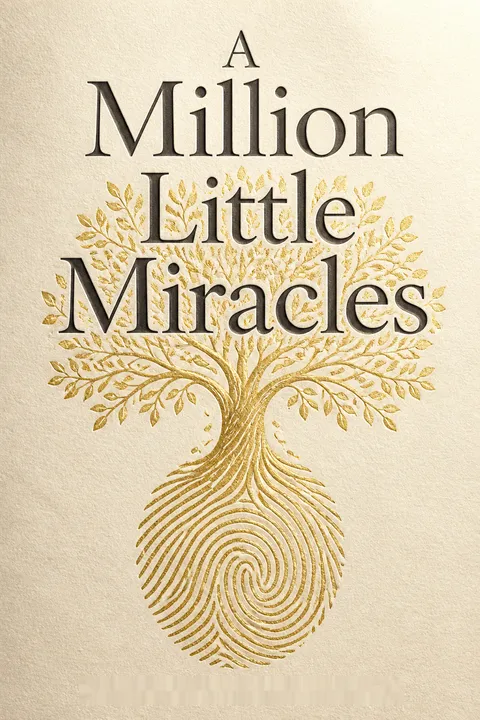
A Million Little Miracles is praised for its inspiring exploration of everyday miracles, blending science and faith to encourage readers to appreciate God's presence in daily life. Reviewers commend Batterson's ability to rekindle a sense of wonder and gratitude, highlighting the book's thought-provoking content and accessible writing style. Many readers found it uplifting and perspective-changing, with several mentioning its potential as a gift or study resource. Some critics noted the abundance of examples and scientific content, but overall, the book received positive reviews for its ability to deepen faith and appreciation for life's miracles.
People Also Read








Glossary
Holy curiosity
Reverent, active inquiryA habit of approaching God, people, and the natural world with sustained interest rather than indifference. In the book, curiosity is not opposed to faith. Careful study of a cell, flower, animal, or person can deepen appreciation and become a way of honoring creation.
God Most High, God Most Nigh, and God Most Good
A three-part view of GodThe book's organizing description of God's character. God Most High refers to divine transcendence, beyond human limits and scale. God Most Nigh describes God's intimate presence and care for individual lives. God Most Good emphasizes God's benevolence. Together, the three ideas shape the book's movement from cosmic wonder to personal attention and trust.
Two-foot field trip
A small change of perspectiveBatterson's phrase for a simple physical or perceptual step that helps someone see familiar life differently. It can mean stepping outside, looking at the sky, taking a walk, or closely observing something nearby. The point is not distance traveled, but leaving habitual surroundings or attention long enough to regain perspective.
tov
Goodness joined with delightA Hebrew word translated as good, which Batterson interprets as carrying a wider sense of beauty, pleasure, wonder, and joy. He connects it to God's response to creation and uses it to argue that enjoying what is good can itself be an act of worship, provided enjoyment is joined with gratitude and care.
kabash
Bring disorder into orderA Hebrew verb Batterson interprets as bringing something unruly under control. He applies it to the human responsibility to cultivate and care for creation, and extends the idea to creative work: shaping colors, words, materials, or tasks into something useful, beautiful, or beneficial.
Wonder switch
Capacity for childlike wonderA metaphor for the human ability to experience ordinary life as fascinating, meaningful, and alive with possibility. The book suggests that routine, shame, distraction, and painful experiences can dull this capacity, while attentive time in nature, play, learning, and worship can help restore it.
Dandelion principle
One thing, many meaningsThe idea that an ordinary object can carry very different meanings depending on who encounters it and how. A dandelion may be a weed, a source of food, a medicine, a child's wish, or a subject of beauty. The principle encourages attention to the relationships and contexts that make commonplace things significant.
life lie
A false guiding self-storyA term associated with psychologist Alfred Adler and used by Batterson for a false belief a person builds a life around. It may function as an excuse to avoid responsibility or become a damaging identity. The book's example is Moses describing himself as a poor speaker despite another biblical account portraying him as powerful in speech.
Adjacent possible
What becomes possible nextA concept associated with Stuart Kauffman that describes possibilities opened by existing developments. A new invention, for example, can enable further inventions. Batterson applies the idea to Christian faith by treating Jesus' miracles and resurrection as signs that realities previously judged impossible may become possible.
Original doubt
Suspicion of God's goodnessBatterson's description of the suspicion introduced in his reading of the Eden story: the belief that God is withholding good. He links this doubt to focusing on a forbidden choice while ignoring the abundance around it, and to broader habits of scarcity, resentment, and mistrust.
Nostalgia for God
Longing for communion with GodA spiritual homesickness for closeness with God, expressed through the book's analogy to animals that find their way back across unfamiliar terrain. Batterson presents this longing not as a reason to return to an earlier, simplified faith, but as a prompt to seek a deeper relationship with the God he believes is already seeking people.
FAQ
What’s A Million Little Miracles about?
- Exploration of Miracles: The book focuses on recognizing the miraculous in everyday life, encouraging readers to find the extraordinary in the ordinary.
- God's Nature: Mark Batterson describes God as "bigger than big, closer than close, and gooder than good," aiming to deepen the reader's understanding of God's presence.
- Personal Growth: It serves as a guide to spiritual growth through gratitude and curiosity, encouraging active engagement with faith and appreciation of creation.
Why should I read A Million Little Miracles?
- Renewed Perspective: The book offers a fresh lens to view life, helping readers appreciate unnoticed miracles and rekindle wonder and gratitude.
- Practical Insights: Batterson provides actionable advice on cultivating gratitude and curiosity, with exercises and reflections for spiritual enhancement.
- Inspiration and Hope: Filled with uplifting stories, it inspires hope and encourages readers to see God's hand in both grand and mundane life aspects.
What are the key takeaways of A Million Little Miracles?
- Recognizing Miracles: Emphasizes the importance of appreciating small miracles, with the idea that unacknowledged blessings can lead to pride.
- God's Intimacy: Illustrates God's intimate involvement in our lives, fostering a deeper relationship and awareness of His presence.
- Curiosity and Exploration: Advocates for "holy curiosity," urging exploration of creation for a richer spiritual life and appreciation of God's handiwork.
What are the best quotes from A Million Little Miracles and what do they mean?
- "You have never not [experienced a miracle]. In fact, you are one!": Highlights the miraculous nature of life itself, encouraging recognition of one's existence as a miracle.
- "If you see the miraculous as mundane, life becomes a bore.": Stresses the importance of perspective in experiencing life fully, suggesting that recognizing the extraordinary leads to a vibrant life.
- "Never lose a holy curiosity.": Encourages maintaining wonder and exploration, urging readers to discover beauty and miracles around them.
How does A Million Little Miracles encourage gratitude?
- Daily Practice: Suggests cultivating gratitude by recognizing and praising small miracles, transforming perspective and enhancing joy.
- Gratitude Journals: Encourages keeping a journal to document daily blessings, reinforcing appreciation and increasing happiness.
- Shift in Focus: Promotes shifting attention from problems to blessings, reducing anxiety and fostering a positive outlook.
What specific methods does Mark Batterson suggest for recognizing miracles in A Million Little Miracles?
- Two-Foot Field Trips: Encourages stepping outside to observe the world, reconnecting with nature and appreciating creation's beauty.
- Counting Stars: Uses the biblical story of Abram as a metaphor to look beyond immediate circumstances and recognize God's vast promises.
- Engaging with Creation: Advocates for hands-on exploration of the world, fostering a deeper connection with God and His creation.
How does A Million Little Miracles address the concept of God's presence?
- God's Immanence: Emphasizes God as "closer than close," encouraging a personal relationship and recognition of His presence in daily life.
- Everyday Miracles: Illustrates God's presence through everyday miracles, urging attentiveness to signs of His work in our lives.
- Prayer and Worship: Discusses prayer and worship as means of connecting with God, cultivating a sense of His nearness.
What role does curiosity play in A Million Little Miracles?
- Holy Curiosity: Introduces "holy curiosity," encouraging a sense of wonder and exploration for deeper understanding of God and creation.
- Learning from Nature: Emphasizes observing and learning from nature to gain insights into God's character and surrounding miracles.
- Encouragement to Explore: Urges seeking new experiences and knowledge, fostering lifelong learning and appreciation for the miraculous.
How does A Million Little Miracles connect science and faith?
- Integration of Disciplines: Argues that scientific exploration enhances understanding of God, seeing faith and science as complementary.
- Miracles in Biology: Discusses biological processes as examples of God's miraculous design, inviting appreciation of life's complexity.
- Faith and Reason: Emphasizes that faith and reason are not mutually exclusive, encouraging both scientific inquiry and spiritual exploration.
What is the Dandelion Principle mentioned in A Million Little Miracles?
- Beauty in the Ordinary: Illustrates that what seems like a weed can be a source of beauty, encouraging appreciation of hidden value in life.
- Perspective Shift: Emphasizes perspective's importance in recognizing miracles, uncovering the extraordinary in the mundane.
- Complexity of Life: Reflects life's complexity, suggesting everything has purpose and significance, encouraging deeper exploration.
How does Mark Batterson use nature to illustrate his points in A Million Little Miracles?
- Nature as Reflection: Uses nature examples to illustrate God's creativity and miracles, helping readers connect with the divine.
- Lessons from Creation: Encourages learning from nature, suggesting it teaches valuable lessons about faith and reliance on God.
- Encouragement to Explore: Frames nature as inspiration, inviting readers to engage with the world and appreciate God's handiwork.
How does A Million Little Miracles address the theme of community?
- Importance of Relationships: Emphasizes humans are created for relationships, mirroring the Trinity's communal nature for well-being.
- Church as Community: Discusses the church's role in fostering connection among diverse individuals, highlighting its unifying potential.
- Support in Times of Need: Underscores the importance of being seen, heard, and loved within a community, vital for experiencing God's love.
About the Author
Other books by Mark Batterson









Download PDF
Download EPUB
.epub digital book format is ideal for reading ebooks on phones, tablets, and e-readers.








