

Plot Summary
The Yew Tree Walks
Thirteen-year-old Conor O’Malley is already living with his mother’s exhausting medical treatments and a nightmare he cannot tell anyone about. One night, the ancient yew tree near his house tears itself from the churchyard and reaches his bedroom window. Conor expects to fear it, but the nightmare he carries is worse.
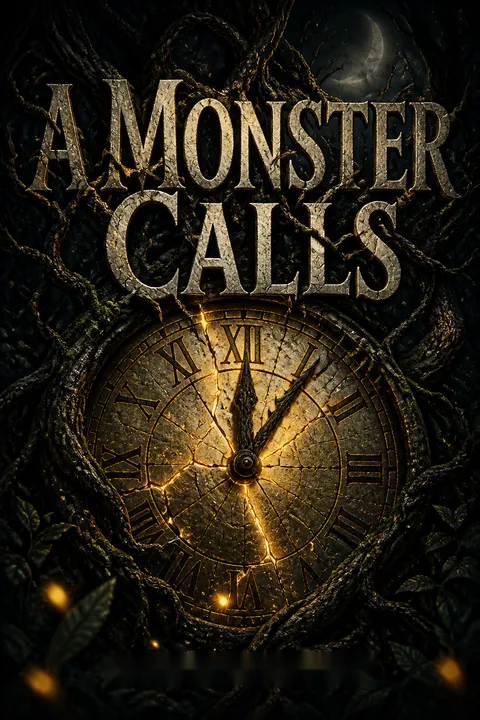
The next morning, leaves on his bedroom floor prove the visit was not simply a dream. The monster returns and sets its terms: it will tell three stories, then Conor must tell a fourth, his own truth. If he refuses, it will consume him. Conor does not understand what he has called, or why, but the stories begin drawing him toward what he cannot say.
The monster’s arrival gives physical form to a crisis Conor has been trying to keep private. His lack of fear is not courage so much as a measure of how thoroughly illness and the recurring nightmare have displaced ordinary childhood fears. The demand for a true story turns narration into an ordeal: Conor cannot stay safely outside his experience by listening to someone else’s tales. The yew tree is both familiar landscape and impossible visitor, linking the ordinary world of his home to the inner terror he refuses to name.
Princes Lie, Friends Leave
At school, Harry and his followers target Conor, while Lily, his childhood friend, tries to intervene. Conor denies the bullying when a teacher asks, leaving Lily to take the blame; he resents her because she once shared news of his mother’s illness without permission. The monster’s first tale seems to confirm Conor’s wish for simple justice: a prince blames his step-grandmother for murdering his beloved, and the villagers overthrow her.
Then the monster reveals the prince killed the farmer’s daughter himself to seize power, while the queen was innocent of that murder. The monster rescued her from the mob. Its story offers no clean heroes, and it warns Conor that the person he needs saving from is not his grandmother.
Conor’s refusal to defend Lily repeats the wound between them: he protects himself by denying what happened, even when someone else pays the price. The first tale complicates that reflex. Its prince turns grief and political ambition into a righteous excuse for murder, while the supposed villain is guilty of other things but not this crime. Conor wants a story that confirms his anger toward his grandmother; instead, the monster denies him an easy target. Moral ambiguity here is not a puzzle to solve but a challenge to the self-serving stories people tell about their actions.
A House Comes Apart
When Conor’s mother is hospitalized, his grandmother tells him he will stay with her. His father, Liam, arrives from America, but Conor’s hope that he might be taken to live with him collapses: Liam says his home has no room and promises only a visit. After Liam leaves early because his baby daughter is ill, Conor breaks his grandmother’s treasured clock.
The monster arrives at 12:07 and tells a tale of an apothecary who could have used a yew tree to heal a parson’s daughters. The parson refused until they were dying, then offered up his beliefs too late. The monster destroys the parsonage; Conor joins in, and wakes to find his grandmother’s sitting room wrecked by his own hands.
The tale’s destruction gives Conor a temporary outlet for anger he cannot direct at illness, his father, or the uncertainty of where he belongs. Liam’s refusal makes the future feel decided by adults who call their choices necessary, while Conor has almost no say in them. By joining the monster’s imagined demolition, he converts helplessness into action. The cost is immediate: the damage lands in his grandmother’s home, and she responds with grief rather than the punishment he expects. His violence expresses pain, but it cannot make the adults’ decisions less real.
The Boy Who Is Seen
Conor learns that a new treatment for his mother is made from yew trees and briefly hopes the monster has come to save her. His father warns that the medicine may not work, but Conor cannot accept the possibility. At school, Harry turns his attention away from bullying and instead offers Conor a handshake before declaring him unseen.
The monster begins its third tale about an invisible man who summons a monster to force others to notice him. As the tale enters the dining hall, Conor attacks Harry with the monster’s strength, breaking his arm and nose. The school sees the violence, yet the headmistress declines to exclude him, knowing Harry had bullied him and that Conor is facing more than school discipline can address.
The invisible man’s story makes social neglect tangible, but its solution is destructive: being noticed through violence does not restore connection. Conor’s assault gives him the recognition he has been denied, while leaving him more isolated than before. His belief in the yew medicine also shows how hope can become a shield against information he already suspects is true. The adults’ refusal to punish him may be compassionate, but Conor experiences it as another denial of agency. He wants consequences because they might make his pain legible, not because discipline can repair it.
The Hope Runs Out
After the attack, Conor’s classmates avoid him, and his grandmother barely speaks to him. Lily passes him a note apologizing for revealing his mother’s illness and telling him she still sees him as a friend. Soon afterward, Conor is brought to the hospital, where his mother explains that the yew based treatment has failed and there are no further options.
Conor accuses her of lying because she kept believing it might work. She tells him his anger is allowed, and that she understands what he has not been able to say. Conor leaves with his grandmother and insists on returning to his own home, the one beside the tree. He goes there because he needs to confront the monster.
Lily’s apology offers recognition without demanding that Conor immediately forgive her. It arrives just as the treatment’s failure strips away his last practical hope. His anger at his mother is not evidence that he loves her less; it is a response to the intolerable distance between reassurance and what he has sensed all along. Her permission to be angry removes the pressure to perform bravery for her sake. Conor’s return home is a move toward the truth he has avoided, even as he continues to frame the monster as a possible rescuer.
He Lets Her Fall
Conor demands that the monster heal his mother. Instead, it says it came to heal him and carries him into the nightmare he has hidden for months. He sees his mother slipping over a cliff while he grips her hands. The monster forces him to admit that, in the nightmare, he loosens his hold because he wants the waiting and pain to end.
Conor has feared this wish makes him responsible for losing her. The monster distinguishes a thought from an action: wanting relief, even relief that carries an unbearable cost, does not cause his mother’s illness. Once Conor tells the truth, the nightmare releases him. His grandmother finds him, embraces him, and acknowledges that they both love the same person.
The nightmare gives guilt its most convincing image: Conor’s hands seem to make him the agent of the loss he fears. His confession is not a revelation that he intends harm, but an admission that love and exhaustion can coexist. The monster’s answer resists a false moral test in which a loving child must have only selfless thoughts. Conor’s wish for an end to suffering is human, not causal. His grandmother’s embrace begins another repair, showing that speaking honestly can create room for connection even when it cannot change what is happening.
The Truth He Can Hold
The monster brings Conor to the hospital, where his mother lies weak and barely awake. His grandmother holds her daughter’s hand, and Conor takes the other. With the monster steadying him, he finally admits that he does not want his mother to go. She understands, and Conor leans over the bed to hold her.
He knows he cannot keep her there by gripping harder, but he no longer has to disguise his fear or his exhaustion as certainty that everything will be fine. The monster remains beside him for this moment. Conor’s mother has seen him, and he knows he will survive the loss, however terrible it will be.
The ending does not offer a cure or turn grief into a problem Conor can solve. Instead, it changes what he can do in the presence of loss. Earlier, his grip in the nightmare represented a demand to control the inevitable; now he holds his mother while acknowledging that he cannot prevent her leaving. The monster’s final help is not supernatural rescue but support for an honest act of attachment. Conor’s survival is not presented as forgetting or accepting pain neatly. It begins with being able to say what he wants and remain beside his mother anyway.
Analysis
A Monster Calls treats grief not as a clean sequence of denial, anger, and acceptance, but as a collision of feelings that can be true at the same time. Conor loves his mother and wants her to survive; he also wants the frightening wait to end. His shame comes from confusing that wish for relief with a wish to cause her death. The monster’s stories prepare him to question the moral stories he tells about himself and other people. Their princes, healers, and ministers cannot be reduced to heroes or villains, just as Conor cannot be judged by a thought he never chose to act on.
The book also shows how well-meant protection can deepen loneliness. His mother reassures him, his father urges bravery, and school adults offer sympathy, but Conor needs someone to make room for what he already suspects. His grandmother’s practical care initially feels like a threat to his home; their shared love for his mother later gives them common ground. The monster cannot cure the illness, and the ending does not pretend that honesty removes grief. It gives Conor a more bearable task: stop punishing himself for being human, tell the truth, and stay present with the person he loves.
Review Summary
A Monster Calls is a deeply moving and emotionally powerful book that resonates with readers of all ages. Many reviewers were profoundly affected by its honest portrayal of grief, loss, and acceptance. The story's unique blend of fantasy and reality, along with its stunning illustrations, creates a haunting and unforgettable experience. While some found it heartbreaking, others appreciated its ability to articulate complex emotions. The book's exploration of human nature and the blurred lines between good and evil struck a chord with many readers, making it a widely recommended and impactful read.
People Also Read



Characters
Conor O’Malley
A boy bracing for lossThirteen-year-old Conor is practical, observant, and used to caring for himself while his mother undergoes treatment. He hides the nightmare that haunts him and resists the pity of classmates and teachers. His anger often arrives before he can name the fear beneath it, making him push away the people trying to help. He longs for adults to be honest with him, yet struggles to speak honestly about his own feelings. His journey centers on facing conflicting emotions without mistaking them for actions.
The Monster
An ancient truth tellerAn ancient being that usually takes the form of the yew tree near Conor’s home, the monster is forceful, impatient, and difficult to classify as benevolent or cruel. It tells stories whose moral turns refuse easy judgments, then demands that Conor tell his own. Its power can destroy houses and intervene in Conor’s life, but it does not offer the simple rescue he hopes for. It functions as both a frightening presence and a guide who insists that truth matters more than comforting explanations.
Conor’s mother
Conor’s loving anchorConor’s mother faces a serious illness and the exhausting treatments that follow. Even when she is weak, she tries to protect her son from fear and preserve their closeness through small gestures, humor, and familiar routines. Her optimism gives Conor something to hold onto, but it also makes it harder for him to ask what she knows. She understands that he needs space for anger and difficult feelings, not only reassurance. Their bond is warm, candid, and central to Conor’s sense of home.
Conor’s grandmother
A guarded family anchorConor’s grandmother is controlled, particular, and accustomed to managing practical problems herself. She worries about her daughter and tries to prepare a stable home for Conor, but her brisk manner makes care feel like an order rather than comfort. Conor resents her rules and fears what her presence implies about his mother’s future. Beneath their difficult fit, both are bound by their love for Conor’s mother. She must learn to make room for his grief as well as his needs.
Liam
A divided, distant fatherConor’s father lives in America with a new family and visits far less often than Conor would like. He tries to sound encouraging and asks how Conor is coping, but his reassurances often avoid the question Conor most wants answered. His obligations to his infant daughter and his limited time sharpen Conor’s sense of being left behind. He is not indifferent, but affection alone does not make him available in the way Conor needs.
Lily Andrews
A childhood friend seeking repairLily has known Conor since childhood and once felt as close as family. Her attempt to defend him at school is complicated by the fact that she previously shared news of his mother’s illness without his permission. Conor’s hurt turns her efforts into a source of conflict, even when she means well. Lily is outspoken and loyal, but must recognize that good intentions do not erase a breach of trust. Her friendship gives Conor a possible route back toward being seen as himself.
Harry
A charismatic school bullyHarry is academically successful, controlled, and skilled at making cruelty appear almost reasonable. He leads Anton and Sully in targeting Conor, while remaining alert to how adults perceive him. His bullying is persistent but not simple-minded; he studies Conor’s reactions and seems to sense that Conor is waiting for something to happen. That unsettling attention makes their conflict more than a series of schoolyard pranks.
Miss Kwan
A watchful school leaderMiss Kwan is Conor’s head of year. She notices Harry’s bullying and tries to offer Conor a chance to talk, while respecting how firmly he refuses help. Her concern is sincere, though Conor experiences it as unwanted pity. She represents the adults at school who see more than he wants them to see, but cannot force trust.
Anton and Sully
Bully’s eager followersAnton and Sully follow Harry’s lead, laughing at his jokes and helping make Conor’s school life hostile. Their willingness to join in gives Harry’s bullying an audience and makes it harder for Conor to find a safe place among classmates.
Plot Devices
The Monster’s Stories
A crooked moral mirrorThe monster tells three tales that overturn the simple division between good and evil. Their reversals challenge Conor’s wish to identify a single villain and foreshadow the difficulty of accepting his own mixed feelings. Each story also prompts a physical or emotional response from him, moving him closer to the truth he must tell.
The Recurring Nightmare
Guilt made visibleConor’s recurring nightmare places his mother at the edge of a cliff while he struggles to hold on. Its repeated ending conceals the feeling he is most ashamed to admit. The monster’s final story forces Conor to remain inside the nightmare long enough to name that feeling and distinguish it from real responsibility.
The Yew Tree
A living link to hopeThe ancient tree is at once a landmark outside Conor’s home, the monster’s chosen form, and a source associated with healing. Its leaves, berries, and branches leave traces that make Conor doubt that the visits are only dreams. When he learns that his mother’s new medicine comes from yew trees, the connection gives his hope a concrete shape, though not the outcome he wants.
FAQ
Synopsis & Basic Details
What is A Monster Calls about?
- Grieving boy's journey: A Monster Calls follows Conor O'Malley, a thirteen-year-old boy grappling with his mother's terminal illness, who is visited by a monster in the form of a yew tree.
- Stories and truth: The monster tells Conor three stories, after which Conor must tell his own truth, forcing him to confront his deepest fears and emotions.
- Complex emotional landscape: The story explores themes of grief, loss, guilt, and the complexities of human nature, using fantastical elements to delve into Conor's psychological and emotional state.
Why should I read A Monster Calls?
- Emotional depth and honesty: The novel offers a raw and honest portrayal of grief, making it a powerful and moving experience for readers of all ages.
- Unique storytelling approach: The blend of fantasy and realism, along with the monster's thought-provoking stories, creates a unique and compelling narrative.
- Exploration of complex themes: It tackles difficult subjects like death, guilt, and the nature of truth, prompting readers to reflect on their own experiences and beliefs.
What is the background of A Monster Calls?
- Inspired by Siobhan Dowd: The novel was conceived from an original idea by Siobhan Dowd, who passed away before she could write it, and was completed by Patrick Ness.
- Exploration of grief: The story is set against the backdrop of a contemporary setting, focusing on the emotional and psychological impact of a parent's terminal illness on a child.
- Universal themes: While the setting is modern, the themes of loss, fear, and the search for truth are universal, making the story relatable across different cultures and time periods.
What are the most memorable quotes in A Monster Calls?
- "Stories are wild creatures...": This quote highlights the unpredictable and powerful nature of stories, a central theme in the novel, emphasizing their ability to challenge and transform.
- "You do not write your life with words...": This quote underscores the importance of actions over thoughts, suggesting that true meaning is found in what we do, not just what we think or say.
- "I did not come to heal her, I came to heal you.": This quote reveals the true purpose of the monster's visit, shifting the focus from Conor's mother's illness to his own emotional healing.
What writing style, narrative choices, and literary techniques does Patrick Ness use?
- Direct and evocative prose: Ness employs a straightforward yet emotionally charged writing style, using vivid imagery and sensory details to immerse the reader in Conor's world.
- Shifting perspectives: The narrative primarily follows Conor's point of view, but occasionally shifts to the monster's perspective, offering insights into the story's deeper themes.
- Symbolism and metaphor: The novel is rich in symbolism, with the yew tree, the nightmare, and the monster's stories serving as metaphors for Conor's internal struggles and the complexities of grief.
Hidden Details & Subtle Connections
What are some minor details that add significant meaning?
- The clock at 12:07: The recurring time of 12:07 when the monster appears is not just a random time, but a symbol of the disruption and unease in Conor's life, marking the moment when his reality shifts.
- Yew tree leaves and berries: The presence of yew tree leaves and berries in Conor's room after the monster's visits serves as physical evidence of the monster's reality, blurring the lines between dream and waking life.
- The broken clock: The broken clock in Grandma's house, stopped at 12:07, mirrors the disruption in Conor's life and the breakdown of his sense of time and normalcy.
What are some subtle foreshadowing and callbacks?
- Mum's comments about the yew tree: Conor's mother's repeated comments about the yew tree foreshadow its significance as the monster and the source of her potential healing, creating a sense of impending fate.
- The "little talk": The repeated mention of the "little talk" foreshadows the inevitable conversation about his mother's condition, building tension and highlighting Conor's avoidance of the truth.
- Harry's "understanding": Harry's comment about having an "understanding" with Conor foreshadows the violent confrontation, revealing the complex power dynamics and the need for Conor to be seen.
What are some unexpected character connections?
- Grandma and Conor's shared grief: Despite their initial conflict, Conor and his grandmother share a deep connection through their love for his mother, which is revealed in their final moments together.
- Lily's genuine remorse: Lily's attempts to reconcile with Conor, despite his initial rejection, reveal her genuine remorse and her desire to repair their friendship, highlighting the theme of forgiveness.
- The monster's empathy: The monster, despite its terrifying appearance, shows empathy and understanding towards Conor, acting as a guide and a source of comfort, challenging the traditional notion of monsters.
Who are the most significant supporting characters?
- Conor's Grandmother: She represents the practical and often harsh realities of life, forcing Conor to confront the future without his mother, and ultimately provides a sense of stability.
- Lily Andrews: She embodies the complexities of friendship and betrayal, highlighting the importance of forgiveness and connection in the face of adversity.
- Harry: He serves as a catalyst for Conor's emotional outburst, forcing him to confront his feelings of invisibility and the need to be seen, even through violence.
Psychological, Emotional, & Relational Analysis
What are some unspoken motivations of the characters?
- Conor's desire for control: Conor's actions, such as cleaning the house and hiding the leaves, stem from his desire to control his environment and cope with the chaos of his mother's illness.
- Grandma's fear of loss: Grandma's strictness and focus on order are driven by her fear of losing her daughter and her desire to protect Conor from further pain.
- Harry's need for power: Harry's bullying behavior is motivated by his need for power and control, stemming from his own insecurities and desire to be seen as dominant.
What psychological complexities do the characters exhibit?
- Conor's conflicting emotions: Conor experiences a complex mix of love, anger, guilt, and fear, highlighting the psychological turmoil of a child facing the impending loss of a parent.
- The monster's dual nature: The monster embodies both terrifying and comforting aspects, reflecting the duality of human nature and the complex emotions associated with grief.
- Grandma's hidden vulnerability: Beneath her stern exterior, Grandma reveals a deep vulnerability and grief, showcasing the emotional toll of her daughter's illness and her own fear of loss.
What are the major emotional turning points?
- Conor's confession in the nightmare: Conor's admission that he wants his mother's suffering to end is a major turning point, marking his acceptance of the truth and the beginning of his emotional healing.
- The destruction of Grandma's sitting room: This act of violence represents Conor's pent-up anger and frustration, highlighting his need to be seen and acknowledged, even through destructive means.
- The final conversation with his mother: The final conversation with his mother, where he admits he doesn't want her to go, is a moment of profound emotional release, allowing him to finally let go.
How do relationship dynamics evolve?
- Conor and his mother: Their relationship evolves from one of shared hope and denial to one of acceptance and love, as they both confront the reality of her impending death.
- Conor and his grandmother: Their relationship shifts from one of tension and conflict to one of shared grief and understanding, as they find common ground in their love for Conor's mother.
- Conor and Lily: Their relationship moves from estrangement and betrayal to forgiveness and reconciliation, highlighting the importance of connection and empathy in the face of adversity.
Interpretation & Debate
Which parts of the story remain ambiguous or open-ended?
- The monster's true nature: The monster's origin and purpose remain ambiguous, leaving the reader to question whether it is a figment of Conor's imagination or a real entity.
- The meaning of the stories: The monster's stories lack clear morals, prompting readers to interpret their meaning and relevance to Conor's situation, highlighting the subjective nature of truth.
- The extent of Conor's healing: While Conor reaches a point of acceptance, the long-term impact of his grief and the extent of his healing are left open-ended, reflecting the ongoing nature of grief.
What are some debatable, controversial scenes or moments in A Monster Calls?
- Conor's violent outburst at school: The scene where Conor attacks Harry is controversial, raising questions about the appropriateness of violence as a response to bullying and the monster's role in it.
- The monster's destruction of the parsonage: The monster's destruction of the parsonage, despite the parson's good intentions, challenges traditional notions of justice and morality, sparking debate about the nature of good and evil.
- Conor's admission of wanting it to be over: Conor's confession that he wanted his mother's suffering to end is a controversial moment, raising questions about the morality of such thoughts and the complexities of grief.
A Monster Calls Ending Explained: How It Ends & What It Means
- Conor's acceptance: The ending sees Conor finally accepting his mother's impending death, having confronted his deepest fears and emotions through the monster's guidance.
- Letting go: The act of holding his mother's hand while also letting her go symbolizes his acceptance of loss and his ability to move forward, highlighting the importance of both holding on and letting go.
- The monster's purpose: The monster's final act of staying with Conor until the end underscores its role as a guide and a source of comfort, emphasizing that healing comes from facing the truth, not escaping it.
About the Author
Other books by Patrick Ness
Download PDF
Download EPUB
.epub digital book format is ideal for reading ebooks on phones, tablets, and e-readers.








