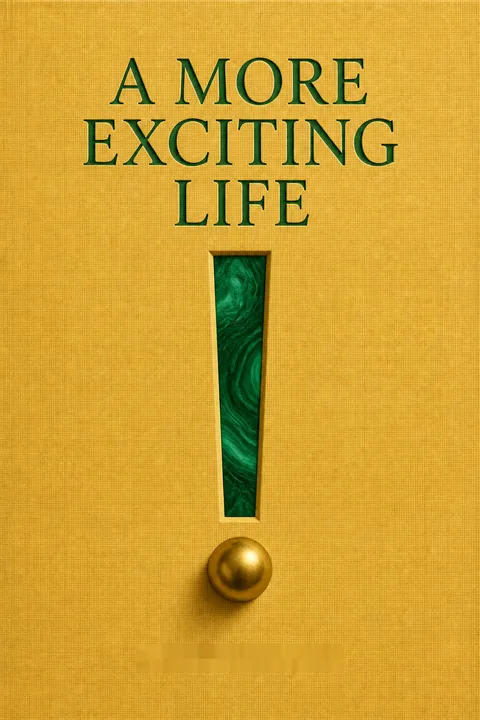


Key Takeaways
Build excitement by recovering your own desires, not collecting bigger thrills.
Excitement begins inside. A life can look perfectly respectable and still feel flat: work gets done, obligations are met, but the person living it feels absent. The book argues that the problem is often not a shortage of dramatic experiences. It is difficulty recognizing what one wants, and feeling entitled to pursue it after years of adapting to other people’s expectations.
Choose a life that feels yours. Psychological freedom means making room for novelty, ambition, pleasure, risk, and honest communication. The psychoanalyst Donald Winnicott’s question, as presented here, is whether someone feels they are leading their own life, not simply whether they appear happy. Travel can be enjoyable, but it cannot substitute for recovering a sense of personal agency.
The distinction between excitement and stimulation is useful in a culture that sells novelty as a product. Autonomy research similarly treats self-directed choice as central to motivation and well-being. The more difficult question is which desires deserve pursuit: an impulse can be authentic without being wise or harmless. The book’s emphasis on psychological permission works best alongside reflection about consequences, obligations, and other people’s rights. Freedom is not the absence of limits; it is having a meaningful role in choosing which limits to accept.
Tell the truth in manageable doses; vulnerability can invite connection.
Silence has a social cost. People conceal ordinary hurts, guilt, tenderness, anxiety, sexual feelings, and boredom because they expect judgment. That concealment can make everyone appear more composed and content than they are, raising the perceived price of honesty for the next person. The result is loneliness disguised as good manners.
Disclose with care. The book distinguishes a contained account of difficulty from an urgent demand that someone else fix it. Saying that a season has felt lonely, for example, can make room for sympathy without making another person responsible for rescuing the speaker. It also separates reassurance from flattery: reassurance is sincere recognition of someone’s difficulty and worth, not praise offered to gain advantage.
Careful self-disclosure can give another person permission to respond honestly, a dynamic also explored in research on reciprocal conversation. The practical insight is not that every truth belongs in every room. Trust, timing, and power matter: a vulnerable admission to a safe friend differs from disclosure to a hostile manager. Candor is most useful when it is both genuine and appropriately bounded. That balance makes openness a form of connection rather than an obligation to reveal everything.
Make a calm complaint before resentment hardens into rage.
Find the middle ground. The book adapts Aristotle’s idea that good conduct often lies between deficiency and excess. In a conflict, silence can become sulking, while a long-suppressed complaint may erupt as rage. Mature self-assertion means making a clear case for one’s interests with respect and composure, without assuming that speaking up guarantees agreement.
Say what needs to change. A partner might be told that a family decision should not be made without consultation; a colleague might be asked to stop leaving all the difficult tasks to one person. The same principle applies to boundaries: a warm, definite no can express care for both people, rather than hostility. The book traces the difficulty of setting limits to childhoods where objection was treated as disobedience.
Assertiveness is often treated as a communication trick, but this account correctly identifies the emotional challenge: the speaker must believe their needs are legitimate. Clear requests also give the other person something concrete to answer. Still, not every relationship permits a safe or fair conversation. In cases involving intimidation or retaliation, direct confrontation can increase danger. Calm speech is a useful skill, not a guarantee that a powerful or abusive person will respond reasonably.
Expect most attempts to disappoint, then cherish the rare exceptions.
Use the 80/20 idea carefully. The Pareto distribution describes patterns in which a minority of causes account for a majority of results. The book recalls the observation that a small share of pea pods yielded most of a garden’s peas, and that wealth showed a similar imbalance. It applies this pattern to personal life as a perspective: many experiences will be mediocre, while a smaller number of people and moments provide much of what is genuinely good.
Make room for imperfect reality. The argument is not to stop seeking better work, love, or conversation. It is to expect friction rather than treat every disappointment as evidence of personal failure. If a rare friendship or unusually good day is not the norm, it may be easier to recognize and value it.
As a corrective to perfectionism, the 80/20 image encourages attention to what actually nourishes a life instead of demanding that every part be excellent. But a distribution observed in some economic settings is not a universal law of relationships, happiness, or daily experience. Taken literally, the claim could excuse poor conditions that are changeable. Its strongest use is as a prompt to distinguish ordinary imperfection from serious, persistent harm, and to notice where effort yields the greatest return.
Name inherited rules that keep you auditioning for parental approval.
A family can leave invisible instructions. The book calls a parent’s lasting influence an emotional shadow: unspoken rules that tell a child what they must do, feel, or avoid to remain worthy of affection. A child might absorb that success is disloyal, spending on oneself is selfish, or happiness risks making a parent feel abandoned. These commands can shape adult choices long after their source is gone.
Bring the rules into view. The book describes a belated adolescence: the work of defining oneself apart from a parent’s expectations. Speaking with a trusted, impartial person can help expose rules that seemed like facts while they remained unspoken. Understanding a parent’s limitations may bring compassion, but it does not mean surrendering one’s identity to them.
The idea captures how families transmit expectations without formal instructions. Developmental psychology also recognizes that children adapt to the emotional conditions around them, sometimes carrying those adaptations into adulthood. Naming a pattern can create distance from it, but it cannot establish that every struggle originated with a parent. Family stories are complex, and memory is interpretive. The useful question is not simply who caused a difficulty, but whether an inherited rule still serves the adult who is following it.
Treat depression as serious suffering, not proof of a hidden single cause.
Sadness and depression differ. The book distinguishes sadness, which a person can often connect to a particular loss, from depression, in which a person may feel hopeless or numb without being able to explain why. It offers a psychodynamic interpretation: painful anger or grief may be difficult to face and may turn inward as self-blame. In that view, recovery can involve discovering and mourning specific losses, with patient support.
Do not mistake a theory for a diagnosis. The book also allows that medication may help someone endure the work of therapy. Its account should be understood as one way of interpreting some experiences, not as a rule that depression always hides a particular trauma or grievance. Depression can have multiple interacting causes, and professional assessment matters.
The distinction between a named loss and diffuse despair can help explain why generic encouragement sometimes misses the mark. The caution is equally important: depression does not reliably reveal a repressed event, and searching for one can create blame or false certainty. Contemporary care can include psychotherapy, medication, and attention to physical and social conditions. A person’s inability to explain their depression does not mean the suffering is unreal, or that insight alone is the right treatment.
Argue about the emotional wound beneath the schedule, not courtroom evidence.
The stated issue may be a proxy. Long-term partners can spend substantial time arguing over lateness, household rules, or a remark made at a family gathering. The book estimates that arguments may occupy up to 10 percent of a couple’s time, yet says the detailed case for who is right often misses the real need: to feel valued, heard, accepted, or secure.
Translate accusation into feeling. Instead of prosecuting a partner’s behavior, a person can explain what it brings up: being contradicted in public may feel like abandonment; repeated lateness may feel like being ignored. This does not make practical disagreements irrelevant. It gives both partners a chance to address the emotional impact as well as the logistics.
Moving from blame to emotional impact resembles practices in couples therapy that replace global accusations with specific descriptions of experience and need. It can lower defensiveness and reveal what repair would actually require. But the book’s claim that relationship fights are fundamentally about vulnerability should not erase material disagreements or unequal labor. Sometimes the schedule is the issue. Emotional honesty is most helpful when it clarifies the practical problem rather than explaining it away.
Keep discovering your partner; intimacy never means you know them completely.
Familiarity can impersonate knowledge. The book argues that partners often stop asking searching questions once they know each other’s routines and favorite stories. Manet’s painting of asparagus offers a model for looking again: an ordinary object can reveal detail when viewed with fresh attention. The same approach can bring a partner’s overlooked hopes, childhood misunderstandings, uncertainties, and changing desires back into view.
Treat love as learning. A partner may help someone grow in confidence, gentleness, or another quality they value. The relationship can be understood as a mutual education, not ownership of a person. Asking what the relationship is helping each person learn can also make a thoughtful ending imaginable when its purpose has been fulfilled, rather than treating every separation as proof that the love was meaningless.
Curiosity counters the common tendency to reduce close people to stable roles: the reliable one, the difficult one, the parent. Questions can restore complexity, especially when they invite answers that are not already expected. The educational metaphor is illuminating but should not turn a partner into a personal development project. Love involves shared life, pleasure, and care, not only lessons. Curiosity is valuable when it meets the other person as an independent subject rather than extracting insight for one’s own growth.
Leave relationships that repeatedly damage you, even when apologies sound sincere.
Promises are not the same as change. The book describes a painful pattern: a partner may admit harm and promise to improve, yet make only temporary adjustments. Another may deny the harm and insist that the injured person is imagining it. Either response can deepen confusion when love and hope make leaving difficult.
Get an outside perspective. A trusted friend or psychotherapist can help the person check their understanding and plan a safer exit. The book connects a repeated pull toward cruel or neglectful partners with what it calls emotional masochism: accepting painful treatment in keeping with a harsh view of one’s own worth. That label is not a reason to blame someone for being harmed; it points toward the need to recognize the pattern and seek support.
This is a valuable distinction between remorse as a feeling and accountability as sustained behavior. Outside perspective can be especially important when a person’s confidence in their own judgment has been eroded. The label emotional masochism should be used cautiously: harmful relationships are shaped by power, resources, fear, and practical constraints, not simply private psychology. Leaving can require planning and assistance. A person need not prove a partner’s motives before taking repeated damage seriously.
Use boredom to question work, status, and the life you were assigned.
The inner school can persist. The book describes adults who still act as if life were an exam: seeking approval from authority, following a single prescribed route, and treating external scores as measures of worth. It also challenges the idea that work should be dull by definition. Persistent boredom can be a signal to ask whether a job or obligation fits, although it cannot answer that question by itself.
Make room for reflection. Constant activity may keep someone from considering what work is for, while apparent idleness can create space for that thinking. The book also questions the pressure to be exceptional, suggesting that caring for a household, raising children, and doing ordinary work well can be meaningful achievements. It invokes Sannyasa, a stage in a Hindu four-stage life model devoted to inner and spiritual development after years of worldly responsibilities.
The contrast between busy execution and reflective effort is sharp and useful. Organizational life often rewards visible activity more readily than careful reconsideration, even when reconsideration prevents wasted effort. Still, boredom is information, not an automatic instruction to quit; fatigue, depression, repetitive tasks, and poor working conditions can feel similar. The challenge is to investigate the signal while accounting for financial realities and responsibilities. Ordinary work can be dignified without pretending every workplace is fulfilling.
Build pleasure around your own tastes, including desires you struggle to admit.
Pleasure requires self-knowledge. The book contrasts Giacometti’s early work, shaped by prevailing artistic styles, with the distinctive figures he later made after finding a more personal vision. It uses that shift to ask readers to examine what they genuinely enjoy in leisure, from the details of a dinner to a particular object or activity, rather than copying respectable ideas of fun.
Give desire an honest hearing. The same permission applies to sexuality. A fantasy can express a wish for trust, surrender, power, or release without being a plan for real life. The book argues that understanding desire privately can reduce shame and make communication with a partner easier. Winnicott’s terms True Self and False Self describe, respectively, spontaneous personal expression and a compliant persona built to meet others’ demands.
Individual taste is easy to dismiss as trivial, but it is one way people discover what feels vivid and personally meaningful. Separating fantasy from intention also helps prevent the mistaken assumption that an imagined scenario is a wish for real-world harm. The invitation to explore desire still requires consent, communication, and care for a partner’s boundaries. Authenticity does not mean acting out every impulse; it means being able to understand one’s preferences without reflexive shame.
Make time feel longer by noticing what familiarity taught you to overlook.
Attention changes the felt pace. The book argues that time seems denser when experience is novel and sharply noticed, as it often is in childhood. Repetition can make years blur together. New experiences may help, but novelty need not require expensive travel: a different walk, a deeper question to an old friend, or a fresh look at an ordinary object can restore attention.
Value the day in hand. The book points to artists who studied familiar subjects closely, and to Van Gogh’s painting of irises during a period of severe distress, as examples of attention to small things. Its practical conclusion is modest: notice a flower, a clear sky, a kind exchange, or a day without catastrophe. Gratitude does not erase hardship; it makes existing sources of comfort visible.
This account links subjective time to attention and memory rather than merely to the clock. Novelty can create richer memories, while deliberate attention can make familiar surroundings feel less interchangeable. The point need not become another demand for constant mindfulness. Some days are consumed by pain, exhaustion, or survival, and a person cannot always manufacture wonder. Noticing a small good thing is an option for attention, not a test of whether someone is appreciating life correctly.
Analysis
The book’s central move is to redefine excitement as a psychological capacity rather than a calendar full of adventures. Its chapters return to one underlying conflict: people adapt to family expectations, social scripts, and the fear of rejection until their lives are orderly but strangely uninhabited. From that premise follow its recurring practices: name what is concealed, express anger without cruelty, set limits, and notice what genuinely gives pleasure. Art is not decoration in this argument. Paintings and artists model sustained attention to ordinary subjects, showing how familiarity can conceal complexity.
The strongest sections connect private feeling to social behavior. Resentment grows when people cannot complain; conflict becomes more workable when partners identify the hurt beneath accusation; and a relationship can be understood as mutual learning rather than possession. These are memorable reframings because they change the question from who is defective to what need or fear is being protected. The most useful qualification is that psychological interpretation is not a complete explanation of human difficulty. A person may be bored because a job is exploitative, depressed for interacting biological and social reasons, or unable to leave a partner because of money, housing, or safety. Individual agency matters, but so do conditions that cannot be altered by insight alone.
The book’s deliberately bleak claims, especially its personal-life version of the 80/20 pattern, work better as antidotes to entitlement than as empirical laws. Likewise, its account of depression should be read as one psychodynamic perspective, not a universal diagnostic formula. At its best, the book encourages curiosity without prescribing one approved lifestyle: an ordinary domestic life, a strange private pleasure, or a carefully chosen refusal can each be a form of freedom. Its durable question is whether the person’s daily life contains enough of their own attention, desire, and voice to feel inhabited.
Review Summary
A More Exciting Life receives high praise for its insightful and thought-provoking content. Readers appreciate its fresh perspectives on finding excitement in everyday life, focusing on inner mindset rather than external factors. The book is described as heartwarming, profound, and easy to read, offering practical advice for personal growth and emotional intelligence. Many reviewers found it relatable and inspiring, with some considering it a must-read. While a few critics noted occasional repetitiveness or disagreed with certain viewpoints, the overall reception is overwhelmingly positive.
Glossary
Pareto distribution
Uneven distribution of resultsA pattern in which a relatively small share of causes accounts for a relatively large share of outcomes. The book cites examples from pea yields and the distribution of wealth, then applies the pattern to personal life as a way to expect many mediocre experiences and appreciate the relatively few that feel especially good. It is a guiding analogy here, not a demonstrated universal law of happiness.
emotional shadow
Inherited rules about loveThe lasting influence of a parent’s unspoken expectations about what a child must do or avoid to deserve affection. These implicit rules can shape adult choices about success, relationships, money, and independence. The book argues that naming the rules, often with help from a trusted observer, can make them easier to question.
True Self
Spontaneous personal expressionA term associated with psychoanalyst Donald Winnicott for a person’s spontaneous, creative, and emotionally alive self. In the book, a child needs enough safety to express this self before adapting to the demands of the outside world. When spontaneous expression is repeatedly discouraged, adult life may become overly compliant and cautious.
False Self
Protective compliance personaWinnicott’s term for a compliant way of presenting oneself that adapts to what others expect. The book contrasts it with the True Self, describing how people may rely on pleasing behavior when spontaneous feelings seem unsafe or unwelcome. Some adaptation is part of social life; the concern is losing meaningful contact with one’s own wishes.
emotional masochism
Repeated acceptance of hurtThe book’s term for a pattern of remaining in painful emotional relationships that seem to confirm a person’s low opinion of themselves. Unlike consensual sexual masochism, it offers no pleasure-based justification in the book’s account. The concept is intended to make self-sabotaging patterns visible, not to blame people for mistreatment or ignore practical barriers to leaving.
Sannyasa
A turn toward inner lifeThe fourth stage in the Hindu four-stage life sequence described in the book. After periods focused on study, household and family responsibilities, and advising others, Sannyasa represents a turn away from worldly obligations toward spiritual and psychological development. The book uses it to suggest that self-reflection and inward attention deserve a place in a complete life.
About the Author
Other books by The School of Life







Download PDF
Download EPUB
.epub digital book format is ideal for reading ebooks on phones, tablets, and e-readers.








