

Key Takeaways
Treat confidence as a learnable skill, not a personality lottery
More than technical skill. Confidence is not presented as a rare temperament some people inherit. It is a capacity built from ideas about human nature and one’s place in the world. Technical training can teach someone to solve equations or operate equipment, but it may not help them ask a stranger for directions, propose an idea, or risk romantic rejection. Those situations call for a broader kind of confidence: the willingness to act without certainty of approval or success.
A practical reframe. The book’s central promise is that excessive hesitation can be studied and gradually changed. Instead of treating reluctance as a fixed personality flaw, examine the assumptions beneath it: perhaps failure seems uniquely humiliating, authority seems infallible, or success seems reserved for other kinds of people. Changing those assumptions can widen the range of actions that feel possible.
The distinction between technical competence and general confidence is useful because people often mistake preparation for permission. Someone may know a subject thoroughly and still hesitate to speak, especially when the feared outcome is social judgment rather than factual error. Confidence here is less a feeling of certainty than a willingness to enter situations where certainty is unavailable. That is a more trainable target. Still, ideas alone cannot replace practice or real expertise. A person facing a meaningful skill gap needs instruction as well as a more generous view of failure.
Risk looking foolish; dignity is not the admission price for living
The trap of self-respect. People can become underconfident by trying too hard to protect their dignity. They avoid asking for help, expressing attraction, or seeking promotion because each act could make them look foolish. The imagined alternative is a life of mature composure, but the book argues that this version of normality is an illusion.
Everyone is ridiculous. Erasmus’s 1509 book In Praise of Folly presents even learned people as irrational, awkward, and prone to mistakes. Pieter Bruegel’s painting Dutch Proverbs turns human foolishness into a crowded comic scene, with people behaving absurdly in many different ways. Their point is not that mistakes are admirable. It is that they are ordinary. Accepting this lowers the stakes of trying: rejection or embarrassment becomes an expected human event, not proof that one has been exposed as uniquely unworthy.
This is a close cousin of exposure therapy, where manageable contact with a feared situation can weaken its power. The crucial move is not to convince oneself that embarrassment will never happen, but to learn that it is survivable. The comic examples also puncture the social illusion that other people are consistently polished. One caution: calling oneself foolish can slide into self-contempt if taken literally. The useful target is perfectionism, not self-respect. A person can accept fallibility while still expecting fair treatment and correcting avoidable mistakes.
Assume impressive people are privately as fallible as you are
The outside view misleads. People know their own fears, embarrassing memories, and confused motives from within, but see others mainly through public behavior. This imbalance makes successful or authoritative people appear more naturally capable than they are. A child may imagine a teacher has always been an adult; an outsider may see a decorated admiral, while someone close knows his debts, awkward habits, and old blunders.
Imagine the hidden person. The book draws on Montaigne’s observation that even rulers and philosophers have ordinary bodily needs. The deeper point is psychological: status does not remove anxiety, regret, or private oddness. Art and imagination can help fill in the unseen interior of people who intimidate us. Their flaws do not prove they lack ability. They show that imperfect people can occupy serious roles without being impostors.
This corrects a familiar information asymmetry: private experience is compared with other people’s public presentation. The result can be a distorted sense that everyone else has an inner steadiness that one lacks. Imagining the hidden life of a powerful person makes authority less mystical and can restore a realistic sense of possibility. It should not be mistaken for proof that all people have equal competence or access. Humanizing experts is compatible with learning from their expertise, and with recognizing that some roles demand preparation the observer has not yet acquired.
Treat rejection as a system’s imperfect decision, not final truth
Institutions are not parents. A proposal may be rejected with a vague explanation, a business idea dismissed by an adviser, or a shop assistant may steer someone away from a perfectly usable phone. In each case, the person receiving the judgment may assume that the decision reflects careful, benevolent expertise. The book traces this trust partly to childhood, when authority figures often did have a duty to protect us.
Separate ideals from institutions. Augustine distinguished the imagined City of God, an ideal order of wisdom and benevolence, from the City of Man, actual human institutions that can be careless, self-interested, or mistaken. Maturity means seeing decision-makers as people with limited attention and partial information. Their rejection may contain useful evidence, but it is not automatically an impartial verdict on the idea or its author.
The distinction between ideal institutions and real ones helps prevent an error of category: a formal process can look authoritative without being reliably wise. This supports a productive middle position between obedience and reflexive cynicism. A rejection deserves examination, not automatic submission or dismissal. Ask what evidence the decision-maker had, what incentives shaped the choice, and whether the judgment can be tested elsewhere. Institutions can also aggregate expertise better than any one individual. Their fallibility is a reason to scrutinize decisions, not to assume that personal preference is always superior.
Remember that history is still happening in your ordinary present
The present looks settled. Everyday institutions and customs can feel permanent because people stand too close to them. A school, workplace, or familiar social rule may seem as fixed as the landscape, especially when its history is invisible. That feeling discourages alternatives: if the market is already full or a convention has always existed, trying to change it can look foolish.
Distance reveals change. Looking across centuries makes transformation unmistakable. Governments, beliefs, technologies, and ways of life have all been remade. The book uses T. S. Eliot’s image of a quiet winter afternoon in an old chapel to show how even an apparently timeless setting belongs to an unfolding present. The forms around us are not all inevitable. Seeing the current moment as part of history makes modest acts of invention, reform, or dissent easier to imagine.
Historical distance changes the perceived boundary between possible and impossible. What once looked permanent becomes contingent when its origins and replacements are visible. This is a powerful antidote to status quo bias, the tendency to treat existing arrangements as natural simply because they are familiar. Yet malleability should not be confused with easy change. Institutions carry dependencies, incentives, and unequal power. The useful lesson is not that any individual can remake society at will, but that present arrangements are choices and inheritances, not laws of nature.
Expect worthwhile work to hurt before its polished result appears
Success hides its drafts. Audiences usually encounter a finished novel, a smooth performance, or a functioning product, not the failed attempts and anxious revisions behind it. Artists and entrepreneurs may also have reasons to make difficult work look effortless. As a result, beginners can interpret their own struggle as evidence that they lack talent, rather than as a normal stage of making something.
Prepare for the rough passage. The sculptures displayed at the ancient Greek Temple of Aphaia showed warriors being wounded, knocked down, or attacked while fleeing. Their public placement made hardship part of the expectation of battle, not a secret discovered only after enlistment. The book applies that logic to modern work: confidence grows when setbacks are understood as standard costs of serious effort. It is not certainty that obstacles will disappear; it is knowing that obstacles do not automatically mean the path is wrong.
This insight challenges survivorship bias: polished achievements are visible, while discarded drafts and private struggle are not. Better expectations can protect motivation by preventing ordinary friction from being misread as personal failure. The Temple of Aphaia example is especially effective because it treats preparation as cultural, not merely individual. Still, hardship is not proof that a goal is worthwhile. Some obstacles signal a bad strategy, unsafe conditions, or a need to change direction. A realistic account of difficulty should help distinguish expected effort from needless damage.
Let mortality make inaction feel risky too
Delay has a cost. People often focus on the dangers of acting: a new relationship may end, a career change may fail, or a move may prove regrettable. But doing nothing also spends time and can leave important longings unanswered. Because death feels abstract, it is easy to behave as though there will always be another year to begin.
Make the limit visible. The Dutch still-life tradition called Vanitas uses reminders such as skulls to emphasize that life is temporary. The book argues that a regular encounter with mortality can rebalance fear: embarrassment or a difficult transition may feel less terrifying beside the possibility of a life steadily deferred. This is not a case for impulsiveness. It is a prompt to include the cost of waiting in decisions, rather than treating inaction as a risk-free default.
Mortality works here as a corrective to a common accounting error: visible risks of action receive more attention than the quieter opportunity cost of delay. The reminder can make priorities clearer without dictating a particular choice. That distinction matters, because urgency is not the same as wisdom. Some decisions benefit from patience, consultation, or a safer plan. A useful mortality prompt asks whether waiting serves a real purpose or merely protects against temporary discomfort. It should sharpen judgment, not replace it with panic.
Separate hostile opinions from verdicts on your right to exist
Disapproval can feel existential. A hostile review, workplace rival, or online critic may seem to possess authority over the target’s entire identity. The book links this vulnerability to childhoods where affection appeared tied to achievement or public approval. If external praise once served as proof of being lovable, criticism can feel like evidence of being fundamentally defective.
Build an inner boundary. The book distinguishes a critic’s opinion of an action from a judgment of a person’s worth. Some criticism identifies a real flaw and deserves attention; some reflects prejudice, envy, or poor judgment. Dutch paintings of ships in violent storms offered viewers an image of danger met with preparation: an apparently chaotic sea was survivable for a well-built vessel and practiced crew. Likewise, hostile reactions need not become self-condemnation. Correct genuine errors without handing critics the authority to define the whole self.
The separation of behavior from worth is a psychologically important boundary. It preserves the capacity to learn from criticism without letting any single evaluation become an identity sentence. The storm-ship image makes resilience concrete: stability depends partly on preparation, not on controlling the weather. Still, dismissing a critic as envious can become its own defense against accountability. A sound response checks both the source and the substance of feedback. Emotional distance creates room for that assessment; it should not pre-decide the result.
When success provokes panic, investigate the old fear beneath it
Self-sabotage has several roots. The book uses self-sabotage for behavior that undermines a desired outcome, such as provoking a partner or alienating a senior colleague just as success becomes possible. It suggests three possible fears: achievement may seem likely to make loved ones feel left behind; hope may feel dangerous because earlier disappointments were devastating; or success may seem undeserved because a person knows their own imperfections.
Protect the goal, not the fear. These explanations are invitations to investigate, not diagnoses that fit every case. Reassuring an important caregiver may address fears of abandonment without sacrificing achievement. Someone bracing for disappointment can remember that adult life offers more sources of hope than childhood did. And success need not be morally earned with perfect character. Fortune distributes both gifts and suffering unevenly, so accepting a good outcome is not an act of fraud.
The section treats self-defeating behavior as an attempt at emotional protection, which is often more illuminating than labeling it irrational. A sudden urge to provoke, withdraw, or dismiss a valued opportunity can signal that success has acquired a hidden cost. The explanatory possibilities should be handled carefully: a person cannot infer a caregiver’s envy or a childhood cause from one bad decision. The practical value lies in pausing before acting, identifying the feared consequence, and finding a response that addresses the fear without destroying the desired relationship or opportunity.
Keep kindness; stop confusing meekness with virtue
Confidence has a bad reputation. Some people associate self-assertion with rude customers, domineering colleagues, or people who treat their own wishes as supreme. Religious traditions have often warned against arrogance, while Marxist criticism has connected economic success with exploitation. These critiques can make confidence seem morally suspect, even when the actual problem is cruelty or entitlement.
Use confidence in service of good. The book argues that confidence can coexist with manners, generosity, humor, and sensitivity. Its purpose is to help good ideas and abilities become active in the world, not to excuse selfishness. Excessive meekness may leave unkind or foolish people with more influence simply because decent people hesitate to challenge them. The test is not whether someone asserts themselves, but how they do it and what their assertiveness enables.
This distinction is ethically useful: assertiveness describes the ability to act and speak, while arrogance concerns how a person regards others. Treating them as identical can make restraint look virtuous even when it allows avoidable harm to continue. Confidence can support negotiation, boundary-setting, or principled disagreement without requiring dominance. At the same time, claims of benevolent intent do not guarantee benevolent effects. The strongest version of this argument pairs self-assertion with accountability: speak clearly, remain open to correction, and consider who bears the cost of the action.
Analysis
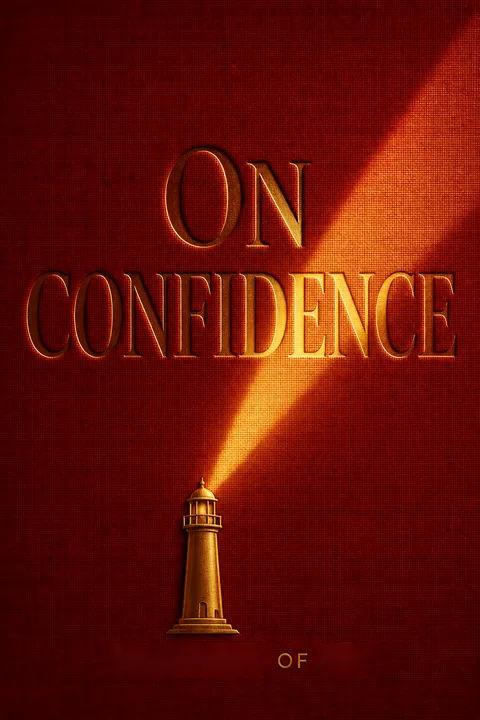
On Confidence treats hesitation not as a single defect but as a set of stories that make action appear more dangerous than it is. The self is imagined as uniquely foolish, while other people seem composed; institutions are mistaken for impartial authorities; the present looks settled; struggle looks like evidence of inadequacy; criticism becomes a verdict on identity; and waiting appears safer than it is. Across these different fears, the book repeatedly restores scale. Human beings are fallible, systems are limited, history remains open, and time is finite.
Its most useful contribution is this reframing of confidence as permission to participate before certainty arrives. That is distinct from self-esteem understood as feeling good about oneself, and from bravado that denies risk. The book does not promise immunity from rejection or failure. It asks readers to stop treating those outcomes as rare proof of personal unfitness. The recurring historical images make the case memorable: Erasmus and Bruegel normalize foolishness, the Aphaia sculptures make hardship visible, and Dutch storm paintings portray danger as manageable through preparation.
The argument is strongest when it identifies distortions in perception and proposes a more realistic interpretation. It is less secure when it speculates about the childhood origins of people-pleasing, self-sabotage, or dependence on approval. These are plausible patterns, not universal explanations, and adult behavior may also reflect present constraints, material risk, or genuine lack of skill. Confidence should therefore be paired with inquiry: What is the actual danger? What can be learned from this refusal? What preparation is missing? What would waiting cost? Those questions preserve the book’s courage while preventing confidence from becoming indiscriminate risk-taking. The result is neither heroic self-belief nor passive acceptance, but a more proportionate view of the self, other people, and the world.
Review Summary
On Confidence is a concise book that explores the nature of confidence and why people lack it. Readers appreciate its simple language and relatable examples, though some find it lacking in practical advice. The book argues that confidence is a skill that can be developed by accepting imperfections in oneself and others. While some reviewers found it insightful and helpful, others felt it didn't offer enough depth or new information. The book's brevity is seen as both a strength and weakness.
People Also Read







Glossary
Impostor Syndrome
Feeling unfit for successA sense that one is a fraud when entering a prestigious or responsible role. In the book, this feeling arises partly from imagining that successful people are fundamentally different from oneself. Because people see their own doubts from the inside but encounter others through polished public behavior, they mistake hidden human vulnerability for evidence that they alone are unqualified.
City of God
Ideal human institutionAugustine’s name for an imagined realm where institutions would be wise, benevolent, and aligned with human hopes. The book contrasts this ideal with institutions as they actually operate. The term helps explain why people can feel betrayed when a real organization fails to behave like a perfectly fair and caring authority.
City of Man
Imperfect human institutionsAugustine’s description of the actual human world of institutions. Such organizations may sometimes be well intentioned, but they can also be careless, self-interested, or indifferent. In the book, recognizing the City of Man helps people treat decisions by managers, advisers, or other authorities as fallible judgments rather than unquestionable truths.
Vanitas
Art reminding viewers of mortalityA tradition of art that uses symbols such as skulls to emphasize the fleeting nature of life. The book refers to Vanitas images as practical reminders that time is limited. Their purpose is not simply to create gloom, but to make postponed choices and the costs of inaction more visible.
Self-sabotage
Undermining a desired outcomeBehavior that damages a goal a person consciously wants, such as provoking a valued partner or alienating a colleague when advancement is possible. The book suggests that this can protect against fears about success, hope, or deservingness. The term describes a pattern to investigate, not a diagnosis that explains every self-defeating choice.
Fierce pessimism
Expecting human fallibilityA skeptical stance toward the assumption that other people are consistently fair, wise, and well intentioned. In the book, expecting prejudice, cattiness, or error makes hostile reactions less surprising and less authoritative. This is not a claim that everyone is malicious, but a defense against treating every critic as a reliable judge of one’s worth.
FAQ
What's On Confidence about?
- Exploration of Confidence: On Confidence by The School of Life examines confidence as a skill that can be cultivated, rather than an innate trait. It explores the psychological and social dimensions of confidence.
- Impact of Society: The book discusses how societal expectations and pressures influence individual confidence levels, emphasizing the importance of understanding these external factors.
- Practical Advice: It offers practical strategies for building confidence, including self-reflection, setting achievable goals, and embracing vulnerability.
Why should I read On Confidence?
- Personal Growth: The book provides insights into personal development, encouraging readers to reflect on their confidence levels and identify areas for growth.
- Relatable Insights: It uses relatable anecdotes and examples, making the concepts accessible and applicable to everyday life.
- Empowerment: Understanding the dynamics of confidence can empower readers to pursue their goals and overcome obstacles.
What are the key takeaways of On Confidence?
- Confidence is Learnable: Confidence is not a fixed trait but a skill that can be developed through practice and perseverance.
- Embrace Vulnerability: Embracing vulnerability is a pathway to building genuine confidence, leading to greater self-acceptance and resilience.
- Social Context Matters: Social contexts and relationships significantly impact confidence levels, and understanding these dynamics can help individuals navigate their environments effectively.
What are the best quotes from On Confidence and what do they mean?
- "Confidence is a skill, not a gift from the gods.": This emphasizes that confidence can be cultivated through effort and learning, encouraging proactive steps in building confidence.
- "We are often our own harshest critics.": This highlights the tendency to be overly critical of oneself, which can undermine confidence, and suggests practicing self-compassion.
- "Failure is a part of growth.": This quote encourages viewing failure as a learning opportunity rather than a setback, promoting a growth mindset.
How does On Confidence define confidence?
- Skill-Based Definition: Confidence is defined as a skill that can be developed through understanding and practice, rather than an innate trait.
- Dynamic Nature: Confidence is portrayed as a dynamic quality that fluctuates based on experiences and contexts.
- Influence of Environment: External factors, such as social support and cultural norms, significantly shape an individual's confidence.
What practical methods does On Confidence suggest for building confidence?
- Set Achievable Goals: Start with small, manageable goals to build a sense of accomplishment and reinforce self-belief.
- Practice Self-Compassion: Treat oneself with kindness to counteract negative self-talk and foster a positive self-image.
- Seek Feedback: Constructive feedback from trusted individuals can provide valuable insights and help identify strengths and areas for improvement.
How does On Confidence address the role of failure in building confidence?
- Failure as a Learning Tool: Failure is an integral part of the learning process and should be viewed as an opportunity for growth.
- Resilience Development: Facing and overcoming failures can develop resilience, crucial for building lasting confidence.
- Redefining Success: Success should include lessons learned from failure, helping maintain confidence even in the face of challenges.
How does On Confidence relate to societal expectations?
- Social Comparison: Societal expectations and comparisons to others can negatively impact confidence, and the book encourages focusing on unique journeys.
- Cultural Influences: Different cultures perceive and value confidence differently, shaping individual experiences of confidence.
- Empowerment through Authenticity: Embracing one's authentic self can build confidence, fostering a sense of belonging and self-acceptance.
How does On Confidence address impostor syndrome?
- Understanding Impostor Syndrome: Impostor syndrome stems from a skewed perception of successful individuals, leading to feelings of inadequacy.
- Humanizing Success: Even accomplished people experience self-doubt, normalizing these feelings and alleviating the pressure to appear perfect.
- Encouragement to Act: Overcoming impostor syndrome involves taking action despite feelings of inadequacy, emphasizing persistence and embracing challenges.
What role does self-perception play in confidence according to On Confidence?
- Influence of Self-Image: Self-perception significantly impacts confidence levels, shaping interactions and decisions.
- Cognitive Dissonance: Conflicting beliefs about oneself can undermine confidence, and addressing these discrepancies is essential for building a coherent self-concept.
- Affirmation Practices: Regularly affirming one's strengths and achievements can help shift negative self-beliefs.
How can On Confidence help in professional settings?
- Enhancing Workplace Confidence: Insights on cultivating confidence in professional environments can lead to better performance and career advancement.
- Networking and Relationships: Building professional relationships and networking can enhance confidence, providing support and opportunities for growth.
- Leadership Development: Confidence is critical for effective leadership, empowering individuals to take on leadership roles and inspire others.
What psychological concepts are explored in On Confidence?
- Imposter Syndrome: The phenomenon where individuals doubt their accomplishments and fear being exposed as frauds.
- Growth Mindset: Belief in developing abilities through effort and learning, essential for fostering resilience and confidence.
- Cognitive Behavioral Techniques: Techniques to challenge negative thoughts and beliefs, reshaping self-perception and enhancing confidence.
About the Author
Other books by The School of Life







Download PDF
Download EPUB
.epub digital book format is ideal for reading ebooks on phones, tablets, and e-readers.








